Home Blog Page 67

Gold buying prices per gram in Zimbabwe, 22 August 2025

Gold buying prices per gram in Zimbabwe today, 22 August 2025, from the official gold buyer and exporter Fidelity Gold Refinery (FGR).

SG 90% and ABOVE US$101.42/g.
SG ABOVE 89% BUT BELOW 90% US$100.35/g.
SG ABOVE 80% BUT BELOW 85% US$99.27/g.
SG ABOVE 75% BUT BELOW 80% US$98.20/g.
SAMPLE BELOW 10g BUT ABOVE 5g US$96.59/g.

Fire Assay CASH $102.96/g.

NB: Fire Assay cash price is for gold above 100g; no sample is deducted.

A sample of not more than 10g is deducted for the Fire Assay Transfer price.

A 2% royalty is charged on all deposits (Small-scale miners).

A 5% royalty is set for Primary Producers.

EV Sales Surge in June 2025 Fuels Lithium Demand

0

Global demand for critical minerals surged in June 2025 as electric vehicle sales continued their upward march. New data from Adamas Intelligence show that the deployment of lithium, nickel, cobalt, manganese, and graphite into passenger xEV batteries climbed sharply, reflecting both rising volumes and shifting battery chemistries.

By Ryan Chigoche

Lithium remained the key driver of electrification. A total of 54,138 tonnes of lithium carbonate equivalent were deployed worldwide in June, up 23 per cent year on year and 11 per cent from May.

CATL accounted for the largest share with 16,857 tonnes, while BYD led automakers with 7,801 tonnes.

Yet despite the growth, average lithium intensity per vehicle slipped by one per cent from last year, evidence of continuing efficiency improvements in battery design.

Nickel deployment reached 30,870 tonnes, a six per cent increase compared with June 2024.

CATL again topped the supplier rankings with 8,188 tonnes, while Tesla deployed 5,252 tonnes to retain its position as the leading automaker.

On average, nickel use per vehicle fell 14 per cent year on year, underscoring the industry’s gradual shift toward lithium iron phosphate and other low nickel chemistries.

Cobalt demand remained steady but muted. In June, 5,551 tonnes were deployed globally, just one per cent higher than a year earlier.

CATL supplied 1,844 tonnes, while Tesla deployed 611 tonnes. Average cobalt intensity declined sharply to 2.2 kilograms per vehicle, an 18 per cent drop compared to June 2024, underscoring the move away from cobalt-heavy formulations.

Manganese use showed little momentum, totalling 6,791 tonnes, flat year on year but seven per cent higher than in May. CATL deployed 2,433 tonnes, while Tesla contributed 466 tonnes. The global sales weighted average fell 19 per cent compared with last year to 2.7 kilograms per vehicle.

Graphite, however, saw one of the strongest surges, reflecting its indispensable role as the dominant anode material.

In June, 88,285 tonnes of synthetic and natural graphite were deployed globally, a rise of 27 per cent year on year and 11 per cent month on month.

CATL supplied 27,444 tonnes, while BYD deployed 15,057 tonnes, leading among automakers. Average graphite intensity per vehicle increased by three per cent to 35.1 kilograms.

Driving these shifts was the continuing momentum in global EV sales.

In June, passenger xEV sales reached 2.51 million units, up 8 per cent from May and 24 per cent year on year.

Asia Pacific accounted for the bulk of growth with a 32 per cent annual increase, while Europe rose 12 per cent.

Sales in the Americas declined 6 per cent from May but were still 8 per cent higher than a year earlier.

Battery capacity deployment mirrored this trend, totalling 93,792 MWh globally, an increase of 25 per cent year on year. CATL again led suppliers, while BYD remained the leading automaker.

The data highlights two distinct trends: lithium and graphite demand are rising strongly in step with overall sales, while average nickel, cobalt, and manganese loads per battery continue to decline as automakers diversify chemistries.

With Asia Pacific leading global adoption and CATL, BYD, and Tesla driving volumes, the second half of 2025 is expected to bring even greater pressure on the supply of critical minerals.


$1.5 Million Gold Smuggling Plot Crushed, ZRP Nabs 15.7kg Hidden in Prado

0

The Zimbabwe Republic Police (ZRP) has confirmed the arrest of three suspects following an attempted gold smuggling case involving a Toyota Prado Land Cruiser.

According to police spokesperson Paul Nyati, the breakthrough came after a crucial lead. “The ZRP confirms that a tip was received on 19/08/25 that gold was about to be smuggled out of the country whilst hidden in a Toyota Prado Land Cruiser vehicle,” read part of the police statement.

Detectives from the CID Minerals, Flora and Fauna Unit swiftly tracked the vehicle, intercepting it and apprehending the suspects. The operation led to the recovery of 15.7 kilogrammes of gold valued at US$1,568,860.00.

The seized gold has since been secured at Fidelity Gold Refinery in Msasa. Police confirmed that investigations into the matter are ongoing.

Authorities have reiterated their commitment to clamping down on illicit mineral dealings, warning syndicates that Zimbabwe’s borders will not be used as conduits for illegal gold smuggling.

CAFCA Sales Slump as Mines Slash Spending

0

Local cable manufacturer CAFCA Limited has reported steep declines in sales, with reduced mining investment emerging as the biggest drag on performance, Mining Zimbabwe can report.

By Ryan Chigoche

In its trading update for the third quarter ended 30 June 2025, the Zimbabwe Stock Exchange-listed company said mining-related sales volumes fell 62 per cent year on year.

The slump reflects subdued capital spending in the sector as global commodity prices cooled, curbing demand for heavy-duty copper and aluminium cables used in shafts, plants and transmission lines.

The weakness was not confined to mining. Utilities also scaled back, with demand falling 49 per cent as liquidity shortages delayed projects.

Although retail and distribution volumes grew 23 per cent through improved distributor engagement and a revamped factory shop, the rebound was too small to offset sharp losses in mining and utilities.

Overall, sales volumes dropped 14 per cent year on year, while revenue slipped 5 per cent despite a 31 per cent quarter-on-quarter recovery.

Adding to the strain, rising input costs pushed raw material prices higher. Copper rose 15 per cent year to date and aluminium 28 per cent during the reporting period, increases CAFCA had to absorb to protect market share.

While the copper rally benefited producers, it hurt downstream manufacturers who depend on the metal as a key input. In response, CAFCA has accelerated a shift towards aluminium, a cheaper substitute.

Aluminium conductor volumes surged 74 per cent in the first quarter compared to 13 per cent growth for copper, and a new stranding machine was installed to expand capacity in line with global trends in power and construction cabling.

However, aluminium’s lower conductivity limits its application in high-value markets, leaving CAFCA exposed to competition from international rivals with greater research and development capacity.

Domestic policy shifts have added further pressure. Statutory Instrument 157 of 2024 liberalised the cable market, opening the door to imports, including cheap and counterfeit products that eroded margins. At the same time, regional exports remained flat due to liquidity challenges, while U.S. tariffs on metals introduced fresh volatility to supply chains.

CAFCA’s difficulties mirror broader turbulence in the metals industry. Earlier this year, Impala Platinum flagged the possible early closure of its Canadian palladium mines after profits slumped on weak prices.

In Zimbabwe, falling base metal revenues are already dampening mining activity, cutting into CAFCA’s order book even as gold receipts provide some relief.

To contain costs, the company has reduced production shifts from three to two and introduced a new planning model to improve efficiency.

Yet the steep fall in mining-linked orders shows how dependent CAFCA’s fortunes are on commodity cycles and investment trends.

When mining firms scale back spending, suppliers like CAFCA feel the impact almost immediately, a reality starkly underlined in its latest results.

Premier Confirms Zulu Plant Commissioned, Shifts Focus to Optimisation and Growth

0

AIM listed mining and exploration junior Premier African Minerals Limited has announced that its Zulu Lithium and Tantalum Project in Fort Rixon has successfully completed the second phase of OEM test runs, marking a significant milestone as the Primary Flotation Plant is now commissioned and operating continuously, Mining Zimbabwe can report.

By Rudairo Mapuranga

According to the company’s latest update, all plant components are now integrated and automated, with both Zulu and its equipment suppliers satisfied with the progress achieved. The plant has already demonstrated the ability to produce saleable spodumene concentrate with grades exceeding the minimum 5% Li₂O threshold, reaching as high as 6.2% Li₂O on multiple occasions.

Premier noted that the facility has effectively transitioned from its commissioning stage to a refining and optimisation phase. While optimisation work will continue, as is standard practice for any newly producing plant, the company is now positioning Zulu for its “growth and operational chapter.”

In a notable strategic shift, Premier’s board has decided to delay the purchase of a Secondary Flotation Plant. The company explained that some operating parameters have changed since the original test work was carried out last year. The new managing director will first conduct a comprehensive review of the rationale and potential benefits before the board proceeds with the investment.

Premier also confirmed progress on its previously announced non-binding letter of interest with a major trading house. Following a second site visit, the prospective offtaker reiterated that its minimum requirement is a saleable spodumene concentrate. Negotiations are expected to begin soon, with Premier emphasising that securing a binding agreement will be pivotal in advancing Zulu’s commercialisation and addressing outstanding financial obligations.

CEO George Roach highlighted that while Zulu is still in its early operational phase, rising spodumene prices offer an encouraging market backdrop. “We are pleased with the progress made so far and remain focused on advancing Zulu from its current early stage to the diversified industrial minerals producer we believe it can become,” Roach said. He stressed that achieving full optimisation and financial stability will require fresh funding alongside careful management.

ENPROTEC, which had originally worked under Stark during the early stages of Zulu’s development, continues to provide technical support at the request of the Zulu team. Importantly, ENPROTEC has endorsed Premier’s announcement, confirming that the plant has now officially moved from a commissioning stage into refining and optimisation.

ENPROTEC, a multi-disciplinary engineering and mineral processing group with a global footprint, is known for delivering end-to-end solutions to the mining industry. Its confirmation lends additional credibility to Premier’s progress update.

The commissioning of the Zulu plant is a long-awaited milestone for Premier African Minerals after a series of delays, optimisation challenges, and funding hurdles. While questions remain around financing and long-term production stability, today’s update marks a tangible shift toward operational maturity.

With a commissioned flotation plant, a rising lithium price environment, and ongoing offtake negotiations, Premier now faces the critical task of sustaining production consistency, securing binding agreements, and transitioning Zulu into a profitable lithium producer.

Mimosa Output Slips 1% in FY2025 as Power Disruptions Disrupt Momentum

0

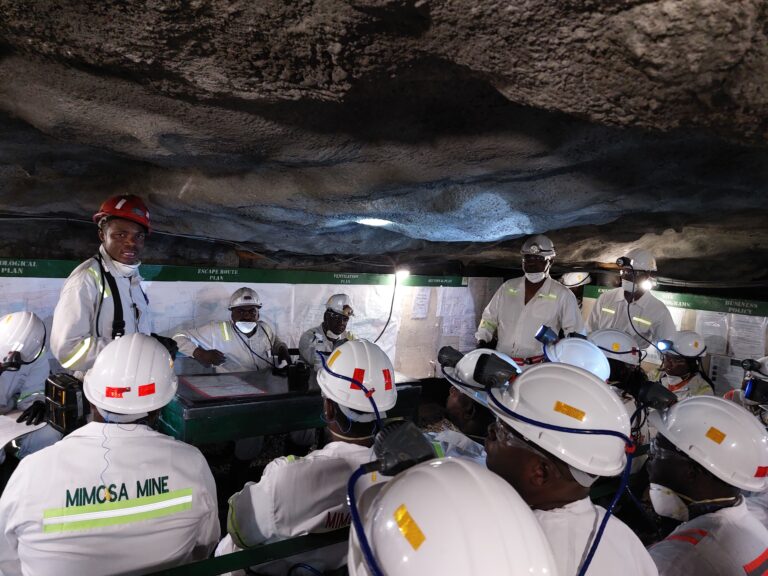
The country’s second biggest platinum group metals (PGMs) producer, Mimosa Mining Company, jointly owned by Implats and Sibanye-Stillwater, recorded a slight dip in production for the financial year ended 30 June 2025, producing 253,900 ounces of 6E concentrate compared to 255,400 ounces in FY2024, representing a 1% decline year on year, Mining Zimbabwe can report.

By Rudairo Mapuranga

While the decrease may appear marginal, the cause raises significant concern. According to Implats’ production update, intermittent regional power disruptions were the main culprit behind Mimosa’s subdued momentum. The mine, which has built a reputation as a stable and low-cost mechanised operation, found itself grappling with unscheduled outages that impacted plant throughput and recovery efficiency.

The challenges at Mimosa are not unique. Across Zimbabwe’s mining sector, electricity supply remains the most pressing operational risk. Platinum mining and processing require consistent power to maintain equipment efficiency, plant throughput, and metallurgical stability. Disruptions not only reduce output but also increase costs, as equipment idles and recovery rates drop when systems are restarted.

For Mimosa, a mine that has for years delivered consistent results, the 1% dip highlights how even slight interruptions in power can derail performance. The operation mines between 2.8 and 3.0 million tonnes of ore annually, with grades averaging around 3.6 grams per tonne. Any disturbance to its finely balanced production model can shave ounces off the final tally, translating into millions of dollars in lost revenue for both shareholders and the country.

Mimosa contributes significantly to Zimbabwe’s platinum group metals (PGM) exports, which remain the country’s second-largest source of foreign currency after gold. The 1% decline, though seemingly small, equates to more than 1,500 ounces of lost 6E production. At prevailing prices, this represents roughly US$2 million in unrealised export earnings.

For Zimbabwe, where every ounce counts in strengthening the balance of payments, sustaining and improving output at operations like Mimosa is critical. The mine employs over 1,400 workers directly and supports thousands more indirectly through supply chains, making production consistency central not just for Implats and Sibanye-Stillwater, but for the broader Midlands economy.

Despite the headwinds, Mimosa’s ability to maintain production above the 250,000-ounce level demonstrates resilience. The mine continues to optimise its mechanised mining model, focusing on efficiency gains and disciplined cost management. This stability has ensured that Mimosa remains one of Implats’ most predictable joint venture operations, even as other group assets in South Africa grapple with safety stoppages and restructuring.

However, long-term resilience will demand a strategic solution to Zimbabwe’s power woes. Industry players have repeatedly called for greater collaboration between miners and ZESA, including investment in alternative energy solutions such as solar farms and hybrid systems. Mimosa has already been exploring such initiatives, but scaling them up will be essential if the mine is to buffer itself against grid unreliability.

With global demand for PGMs under pressure from the automotive sector’s transition to electric vehicles, Zimbabwean producers are under increasing scrutiny to sustain output and reduce costs. Mimosa’s performance in FY2025 demonstrates both the opportunities and risks inherent in Zimbabwe’s mining environment.

The mine’s near-flat output shows operational discipline, but the electricity challenge remains a structural impediment that could erode competitiveness if left unchecked. For policymakers, the lesson is clear: investment in reliable infrastructure is no longer optional; it is the backbone of mining-led economic growth.

Zimplats Output Falls 6% in FY2025 Amid Fleet Challenges and Smelter Expansion Commissioning

0

Zimbabwe’s largest platinum producer, Zimplats, reported a decline in production for the year ended 30 June 2025, with 6E production in matte falling by 6% to 606,300 ounces, down from 645,900 ounces in FY2024, Mining Zimbabwe can report.

By Rudairo Mapuranga

According to Zimplats’ parent company Implats’ annual production update, the drop was driven primarily by poor fleet performance, which constrained mining operations during the year. This was compounded by the lock-up of concentrates as Zimplats commissioned its expanded smelter complex. While the short-term production loss is notable, the commissioning of the smelter represents a significant long-term investment in beneficiation and value addition in Zimbabwe.

Zimplats operates a large-scale underground mining complex, producing more than seven million tonnes of ore annually. The efficiency of its fleet, from load-haul-dump units to drill rigs and underground trucks, is critical in maintaining ore flow to concentrators. In FY2025, underperformance of this fleet reduced mining flexibility, constraining ore delivery and lowering refined output.

Fleet challenges are not new to Zimbabwe’s underground mines, where equipment replacement cycles are often extended due to capital constraints and long lead times for imports. For Zimplats, these issues appear to have compounded at a time when the operation was simultaneously rolling out one of its largest capital projects in decades.

The lock-up of concentrates during the smelter commissioning phase further weighed on reported output. Essentially, material that would normally have been converted into matte ounces was tied up in the processing pipeline as new capacity was brought online. This is a temporary effect, but it had a measurable impact on FY2025 numbers.

Once fully operational, the expanded smelter complex will position Zimplats as a stronger beneficiation player. Zimbabwe has long pursued policies encouraging in-country processing of PGMs, and Zimplats’ investment aligns with government objectives of maximising value retention from mineral exports. The smelter expansion is expected to reduce reliance on toll treatment in South Africa and improve operational efficiencies over time.

Zimplats’ performance has a direct bearing on Zimbabwe’s economy. As the country’s single largest PGM producer, Zimplats contributes over 50% of total national output. A 6% decline in production, therefore, translates into a material reduction in foreign exchange inflows. Using prevailing market prices, the shortfall equates to more than US$50 million in lost export revenues in FY2025.

However, the commissioning of the new smelter underlines Zimplats’ continued commitment to long-term investment in Zimbabwe, despite the short-term disruption. The project not only increases beneficiation capacity but also creates downstream jobs, expands the local contractor base, and enhances the company’s ability to withstand future logistical bottlenecks.

Looking ahead, Zimplats’ performance will depend on resolving fleet challenges and ensuring smooth ramp-up of the smelter. The mine’s multi-billion-dollar investment pipeline, including concentrator expansions and mine redevelopment projects, indicates that Implats remains confident in Zimbabwe as a PGM jurisdiction.

For policymakers, Zimplats’ FY2025 update is a reminder of the dual challenges facing Zimbabwe’s mining industry: operational bottlenecks that can dent short-term output, and the broader imperative of creating an enabling environment for long-term investment.

Despite a 6% decline, Zimplats remains the bedrock of Zimbabwe’s platinum industry and a crucial player in the country’s journey toward achieving its 2030 vision.

India Rings China for Rare Earth Assurance as Beijing Reopens Spigot

0

China has signalled a tentative easing in rare earth supply tensions, pledging to address India’s critical needs even as it quietly lifted restrictions and sharply increased overall rare earth exports, the sector restarting a delicate balancing act between diplomacy and dominance, Mining Zimbabwe can report.

By Rudairo Mapuranga

Amid faltering supply chains, Indian officials have confirmed that China has agreed to address India’s rare earth requirements, alongside commitments on fertilisers and tunnel boring machines, as the two countries seek to thaw trade relations mired in regional tensions. Although India is blessed with the third-largest rare earth reserves globally, estimated at 6.9 million tonnes, it lacks indigenous magnet production capabilities and remains heavily reliant on Chinese supply.

Simultaneously, customs data shows that China’s rare earth exports rose 69% in July to 6,422 tonnes, marking the highest levels recorded since January. This rebound comes after China imposed export curbs in April and May in response to U.S. tariff measures, sending shockwaves through global automakers and high-tech industries.

For India, China’s pledge represents a short-term lifeline but not a solution. While diplomatic assurances are welcome, India’s domestic capability remains small, producing even less rare earth than its smaller rivals. The recent export recovery may restore supplies, but deeper resilience requires industrial self-sufficiency.

India has already responded with its own measures. A National Critical Mineral Mission worth ₹343 billion (approximately US$4–5 billion) is underway to boost rare earth mining and processing. The government has also allocated ₹1,345 crore (approximately US$160 million) to establish domestic rare earth magnet production, with mainstay firms like Mahindra & Mahindra and Uno Minda involved.

This push for homegrown capacity comes amid growing concerns that China could weaponise its dominance of rare earth processing, where it controls over 90%, as a strategic tool. India must move quickly to shift from diplomacy to deliverables. Through exploration, strategic partnerships including with Australia, Argentina, and the U.S., and battery-to-magnet manufacturing initiatives, India seeks to turn its latent potential into tangible security.

China’s dual strategy, diplomatic assurances to India and export relief, reflects its cautious repositioning amid diplomatic overtures to New Delhi. It also sends a message to global consumers: Beijing still holds the rare earth lever, and supply flows remain under its control.

For India, this is neither a reprieve nor a victory. It is a clear reminder that supply security requires self-reliance. Investments in domestic capability, partnerships with trustworthy international suppliers, and policy reforms across mining, refining, and manufacturing will determine how effectively India can shield itself from future jolts.

Gold buying prices per gram in Zimbabwe, 21 August 2025

Gold buying prices per gram in Zimbabwe today, 21 August 2025, from the official gold buyer and exporter Fidelity Gold Refinery (FGR).

SG 90% and ABOVE US$101.61/g.
SG ABOVE 89% BUT BELOW 90% US$100.54/g.
SG ABOVE 80% BUT BELOW 85% US$99.46/g.
SG ABOVE 75% BUT BELOW 80% US$98.39/g.
SAMPLE BELOW 10g BUT ABOVE 5g US$96.77/g.

Fire Assay CASH $102.15/g.

NB: Fire Assay cash price is for gold above 100g; no sample is deducted.

A sample of not more than 10g is deducted for the Fire Assay Transfer price.

A 2% royalty is charged on all deposits (Small-scale miners).

A 5% royalty is set for Primary Producers.

Gold buying prices per gram in Zimbabwe, 20 August 2025

Gold buying prices per gram in Zimbabwe today, 20 August 2025, from the official gold buyer and exporter Fidelity Gold Refinery (FGR).

SG 90% and ABOVE US$101.30/g.
SG ABOVE 89% BUT BELOW 90% US$100.23/g.
SG ABOVE 80% BUT BELOW 85% US$99.16/g.
SG ABOVE 75% BUT BELOW 80% US$98.09/g.
SAMPLE BELOW 10g BUT ABOVE 5g US$96.48/g.

Fire Assay CASH $101.84/g.

NB: Fire Assay cash price is for gold above 100g; no sample is deducted.

A sample of not more than 10g is deducted for the Fire Assay Transfer price.

A 2% royalty is charged on all deposits (Small-scale miners).

A 5% royalty is set for Primary Producers.