Home Blog Page 676

MNANGAGWA TAKE OVER: What has changed in the Mining sector

0

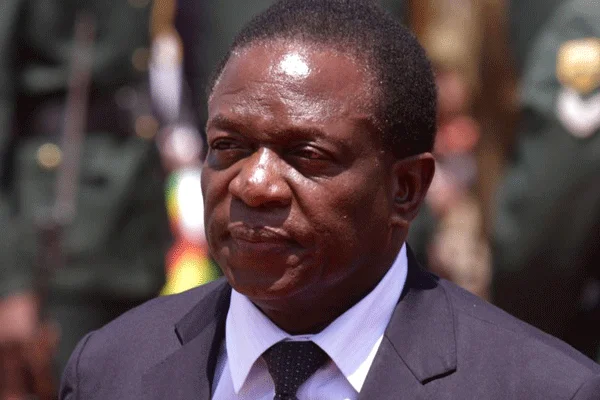
The ascendance of President Emmerson Mnangagwa following the departure of Robert Mugabe through a military
intervention came with it massive changes within the mining landscape, key to it being a change in policies.

Keen to revive the mining sector after years of reticence by foreign investors during Robert Mugabe’s rule, President
Mnangagwa has managed to turn the country’s investment environment into a darling for many.

His summit to power has seen the country amassing a great deal of investments and other tangible commitments coming from hostile countries as far as United States of America.

All this has been driven by the “Zimbabwe is open for business” mantra, which has become the Government’s magic bullet going into the coming harmonised elections.

What has changed during Mnangagwa rule?

The takeover of Mnangagwa saw Zimbabwe amending its Indigenisation and Economic Empowerment legislation
to limit majority ownership by state entities to only diamond and platinum mines and not the entire mining sector as espoused in the previous legislation. The indeginisation legislation introduced during the tenure of Mugabe was
designed to increase black Zimbabweans’ participation in the mining sector but were open to abuse.

The legislation had become an elephant in the room for Mugabe’s Government and it also became a major hindrance to attraction of tangible and clean investments in the mining sector.

The amendments were included in the Finance Act, which covers the 2018 budget and were signed into law.
According to the new amendments, only state-owned mining entities will hold majority shares in diamond and platinum companies.

Besides the amendments, Zimbabwe has overcome unprecedented change since November 2017, when President
Mnangagwa took office. This political change has boosted business confidence and caught the attention of the
international market.

This change at the top has encouraged a unanimous feeling across the country and the international community. The mining sector in particular is one which is drawing lots of positive attention.

The Zimbabwean mining industry faces many challenges which were highlighted at the conference: Many projects in the country have been starved of any form of funding for over 10 years. Estimates have suggested that Zimbabwe will need $7 billion to fund any immediate capital expenditure requirements if the mining industry is to
return to anything like its former self.

What has been the massive development during the coming of Mnangagwa has been a change of perception from
investors. Caledonia Mining Corporation chief executive Steve Curtis recently noted the coming of a new political dispensation has generated massive interest from investors especially from America.

He said if the current investment is to be maintained by sound policies, the Zimbabwean mining sector is set for
massive and sustained growth.

How much investment has come in during Mnangagwa rule?

The Mnangagwa administration has managed to have fruitful engagements with several investors eyeing the local
mining sector. Not much investments have been realised besides the $4,2 billion platinum deal earmarked for the
Mhondoro-Ngezi area.

Another investment to note has been a promise by Russia to start injecting funds into its Darwendale platinum project. The revelations were made by the Russian Foreign Affairs Minister Sergei Lavrov during his visit recently
in Zimbabwe.

A majority of investors who have engaged Government so far have been making commitments but no real investment has been done. It has been a matter of promises and mining analysts are of the opinion that most investors are waiting for elections outcome.

Commitments and Promises made so far

An American investor MGG Holdings made a commitment to invest close to $60 million towards the Zimbabwean mining sector mainly focusing on chrome and gold.

The world’s second biggest diamond mining company, Alrosa, is currently in Zimbabwe exploring investment opportunities amid huge optimism the Russia-based firm, whose annual turnover stands at $4 billion, could soon
start operating locally.

The mining giant is only second to De Beers, and specialises in exploration, mining, manufacture and sale of diamonds. It has African operations in Botswana and Angola.

President Mnangagwa was recently in China where he also signed a lot of memorandum of understanding with Chinese companies willing to invest in the Zimbabwean mining sector.

Outlook

A lot has been expected from Mnangagwa in a short space of time since his ascendance to power. However with sound and consistent policies, the local mining sector is set for a boom.

More investors are expected going forward.


This article first appeared in the Mining Zimbabwe Magazine may 2018 Issue

WACKER NEUSON Introduces flexible and compact Light Tower Range LTS

0

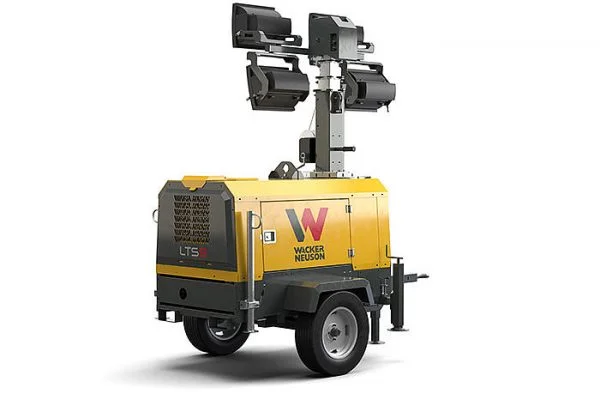
Work on building sites often extends late into the evening or happens only after nightfall, especially when it comes to road and bridge construction, concreting or other events. A reliable light source is indispensable for these operations. Wacker Neuson’s new LTS Light Tower emulates daylight very closely in its light quality, free of shadowing.

With the new LTS Light Tower, Wacker Neuson is showing yet again that compact dimensions and high performance can be combined successfully. Whether working in warmer conditions, avoiding heavy traffic volumes during the day or working with fresh concrete and finishing a project during the night – LTS Light Towers have the operating capacity for any area of application.

The adjustable vertical mast extends to more than eight meters in height and can be rotated 340 degrees. Four engine options with 50 or 60 Hz and the possibility to order two and three cylinder versions with a CE certificate makes the Wacker Neuson light tower applicable for a variety of applications, such as building sites, events and storerooms. The LTS Light Towers long servicing interval makes it an industry leader and ensures longer operating times and lower downtime.

There are two LTS models available: the LTS4K, with an efficient Kubota engine and kitted out with LED lights. The LTS8L is equipped with a powerful Kohler engine and has metal halide standard illumination. Additionally, the machines are made with a 60 Hz option. The compact design and the vertical tower of the Wacker Neuson LTS towers facilitate the transport of up to 10 units on a standard truck. In addition, minimal space is needed on building sites, events and storerooms.

More information can be found at
http://www.wackerneuson.co.za/en/products/lighting/lighttowers/model/lts/

Mine Machines – Mining Utility and Support Vehicles

0

Mine Machines, is a fully Zimbabwean based company, providing 30 years of nationwide innovation and support, to our growing mining industry.

The practical ethos of delivering BETTER SAFER MINING, through retained expertise, know-how and experience, has enabled Mine Machines to provide a full ‘suite’ of Trackless Mining Equipment, to suit the exact needs and operating conditions in this market.

The proven and familiar face of utility vehicle reliability has some new and exciting additions. UV Botswana are launching the next generation of underground and surface utility vehicles, designed and certified, to service Zimbabwe’s increasingly mechanised mining demands.

The recent launches of both the Rock Ranger 150 and Reef Rover 050 are notable success stories, both locally and abroad, as multi-purpose, mining compliant, underground supervisory and transportation vehicles. Several models afford applications as diverse as ambulance duties, through to service recovery, with hydraulic/pneumatic power take off functions also optional. These models have now been complimented with the latest utility vehicle addition, the Mine Scout, providing an ideal means to transport supervisors, technicians and artisans, with ample space for tools, spare parts and testing equipment.

A ‘work anywhere’, 4 x 4 utility machine for both open cast, through to low profile underground mines, available with mine safety compliances, as standard features. As with all models, the Mine Scout can be powered by Tier 2, through to Tier 4 type diesel engine options, providing superior centre articulation, manoeuvrability, vehicle safety and operator comfort – Air conditioning is also offered.

How many breakdowns can your Artisans ‘now’ attend to, in a single Shift?”

The UV –UT18P MINEBUS (18 MAN) has also been designed from the pedigree established by this successful 4 tonne range of Utility vehicles. The first low profile, rigid frame personnel carrier, to carry 18 passengers, will soon be delivered. This unit is equipped with bench seating which can be removed, allowing the vehicle to perform roles other than personnel transport if required.

With this proven technology and the experience gained, a complete 8 tonne range, more suited to support conventional mining operations, is now available.

The first of the new designs, was for a scissor lift utility vehicle, built for installation work in headings with a 6m height. Fitting of vent fans, ducting and other services can be safely and efficiently carried out using the 3 tonne work platform. This was followed by the 8 tonne personnel (Up to 32 people) carrier, as well as a Dump truck, intended for hard rock and tunneling operations.

These exciting developments has allowed for expansion into areas outside of the sub region. The latest unit to roll off the UV production lines is a dedicated lube/fuel carrier, with up to a 5000 litre capacity. The vehicle can be configured to meet customer specific requirements, with modular tank design to prevent cross contamination of multiple products. As a proud and direct service link, Mine Machines’ continues to have success in the supply of equipment and associated products. Adequate levels of suitably trained and accredited staff, ensures a strong technical support foundation, including field service and product support backup.


BETTER. SAFER. MINING in Zimbabwe.
Tel : +263 9 77827 / 77929 / 60528
Cell: + 263 77 214 4737
Email: [email protected]

The death of giants

0

…..a sad reality in the mining industry.

Retrospecting as a case study of the mining industry in Zimbabwe. What really transpired?

Dickson Rudairo Mapuranga

What happened to African Associated Mines of Gaths, Mashaba and Shabani, is a question that I am not going to react to, what are the solutions to the revival of these mines, who has the capacity of restoring  these forgotten giants back to life in the mining industry?

The third highest producer of asbestos in the world disappeared into the abysses of nameless creatures in an unpredictable turnout. AA mines were bringing in at their full capacity foreign currency that was able to sustain the economy of Zimbabwe and backing the Zimbabwean dollar as one of the strongest currencies on earth. The fall of these giants was followed by a rapid fall of the economy and the Zim dollar.

AA mines owned Turnal and Fibre cement and 14 other industrial companies, its fall saw the collapse of many sectors in the economy and social setups. Sports was at its greatest level supported and sponsored by AA mines throughout Zimbabwe. Gaths mine stadium used to be one of the biggest stadiums in Zimbabwe but at this interval, we may conclude it is now antiquity.

AA mines produced white fibre asbestos which is less dangerous than the blue one produced in South Africa and Russia which gave them an advantage in the world market. They were producing sewer pipes, and rooftops among other asbestos apparatus. Infrastructure development depended mostly on asbestos from these mining giants, their revival means the country is heading to a very comfortable and prosperous voyage.

It is a miserable actuality that the revival of these mines needs hundreds of millions of dollars, according to one mining expert, it would be a very noble idea to see AA mines reoperation at its full capacity, and the country will be optimistic that good things will present themselves in the near future.

Many theories would be drawn to a conclusion on what happened to the leading giants of Zimbabwe’s producers of asbestos but these concepts will never recuperate the operation and rebuilding of AA mines. What needs to be done is giving an in-depth response to the situation and coming up with an unbiased solution.

The future rests in ASM

0


Zimbabwe Miners Federation (ZMF) Mashonaland central chairperson Masango Mahlahla speaking  at the Mashonaland central outreach program held in Bindura last month said Zimbabwe like other African countries need to realize that supporting indigenous miners (Artisanal and Small Scale Miners ASM) and fostering their future is the way to go.

Dickson Rudairo Mapuranga

Mahlahla said that African mines are owned by foreigners who after mining would return profits back to mother countries living Africans in abject poverty, therefore it is the duty of Africa to stand tall and promote its indigenous small and artisanal miners,

“From time immemorial African mines are run and owned by Foreigners with millions of dollars migrating from our continent… we look forward to raising our miners to new heights of transformation, growth of mining operations from small to medium and from medium to large, cultivating a new crop of indigenous large scale Zimbabwean Miners.” Said Mahlahla.

He outlined that to achieve growth in ASM, ZMF is working closely and tirelessly with its stakeholders such as local government, ministry of Mines, Banks, Fidelity, the central government among other key stakeholders to come up with clear road map that is going to impose the formalization of mining in Mash Central and Zimbabwe at large.

“With recognition of the industry, we look forward to the integration and inclusion of ASM miners in organizational plans as companies begin to offer tailored services and programs to Miners in the province” said Mahlahla.

Mahlahla urged ASM to understand the vision that ZMF is selling to its stakeholders and to work professionally in order to achieve a feet like that which the giant moguls in the mining industry have reached,

“I urge you all to listen carefully and understand the vision and the necessary factors that affect us… let us take this opportunity to understand what ASM is doing” said Mahlahla.

Speaking at the same occasion ZMF president Henrietta Rushwaya said that valuable lessons are emerging through regional ‘multi-stakeholder’ mining dialogues taking place between the Ministry of Mines and regional stakeholders over the past couple of months enabling agreements about formalization of mining to take centre stage in a way that recognizes and incorporates ASM.

The event was also attended by various people such as the minister of state in Mashonaland central as the guest of honor- Monica Mavhunga, ZMF Mashonaland central executive, vice president Eng Murove, along with the small scale and artisan miners community and other decision makers from different entities.

Zimbabwe Economic Minerals

0

Zimbabwe is renowned for its vast mineral resources, boasting a wide variety of economically significant deposits that form the backbone of its mining industry.

From precious metals like gold and platinum to industrial minerals such as lithium and coal, the nation’s subsoil harbors immense potential for economic growth and global trade. As the mining sector continues to drive Zimbabwe’s economy, understanding the country’s diverse mineral landscape is crucial for investors, policymakers, and stakeholders.

This article delves into the minerals that make Zimbabwe a key player in the global mining scene.

ZIMBABWE MAIN ECONOMIC MINERALS

GOLD 

Gold mining and exploration in Zimbabwe has been going on from ancient times and it is estimated that a third (about 700 tonnes) of all historical gold production was mined locally from the seventh century until the introduction of mechanized mining methods with the arrival of Europeans about a century ago. There are over 4000 recorded god deposits, nearly all of them located on ancient workings.

The occurrence of gold in Zimbabwe is mainly confined to hydrothermal vein and shear zone deposits found exclusively in rocks of the Basement Complex age formed 2400 million years or more ago. The only noteworthy production from outside the Zimbabwe craton has been Renco Mine, which is in ancient deformed, high-grade metamorphic rocks of the Archean age North Marginal Zone of the Limpopo Mobile Belt and a number of mines in the Proterozoic Piriwiri Group of metamorphosed argillaceous sedimentary rocks with minor volcanics. Some gold is also recovered as a by-product from copper deposits in the Deweras Group Sediments. The production of alluvial gold, present along all the major rivers draining the greenstone belts, has largely been the domain of illegal gold panners.

SILVER

It occurs as native silver in association with other minerals such as gold, copper and lead. With exception of the Osage Mine in Zimbabwe it is declared as a by products from the mining of platinum, gold and copper.  Gold mines in the Odzi greenstone belt have the highest silver and gold ratios.

PLATINUM GROUP ELEMENTS

Platinum Group Metals (PGMs) consist of platinum, palladium, rhodium, ruthenium, iridium and osmium and have a high demand worldwide because of their wide variety of uses in industry. Zimbabwe’s Great Dyke, a linear early Proterozoic layered mafic-ultramafic intrusion trending over 550km at a maximum width of about 11kilometres, has the second largest platinum reserves in the world after the Bushveld Complex in South Africa. An estimate of 2.8 billion tonnes PGM ore at 4g/t are estimated to lounge on the Dyke.  Notably, PGMs are mined as primary metals only in the Bushveld in South Africa and along the Great Dyke in Zimbabwe.

The occurrence of PGE mineralization in the Great Dyke was recorded in the early 1920s. Following these documentations and the discovery of PGMs in the Merensky Reef of the Bushveld Complex of South Africa, there was a boom in PGM prospecting between 1925 and 1926 that resulted in the discovery of Wedza Mine. Since the 1950s, several companies have undertaken exploration. Currently platinum exploration on the Great Dyke has been carried out by CAMEC (Todal Mining) in the Bougai section in Shurugwi, and Global Platinum Resources in Chegutu.

Mining is currently being carried out at Mimosa, Ngezi and Unki Platinum Mines. Mining operations ceased at Hartley Platinum Mine in 2000, because of bad ground conditions. Demand for PGMs has seen an increase in exploration and evaluation of Zimbabwe’s platinum deposits.

Off the Great Dyke, the potential for PGM mineralization exists in the following areas

  • Mashava Igneous Suite
  • Bubi Greenstone Belt

DIAMONDS

Zimbabwe is located within an exceptionally rich diamondiferous metallogenic province. Large areas of the country are covered by the Archaean Craton and the Archaean Limpopo Belt which are likely to have the best developed mantle root and diamond potential along with discoveries of the mineralized kimberlites on the Craton (Murowa, Sese, Colossus) and on the Limpopo Belt (River Ranch) which make Zimbabwe an excellent exploration target with potential for economic kimberlites. The diamond exploration success in the neighbouring Botswana and South Africa, the greatest producers of gem quality diamonds has made a positive impact on the diamond prospectively of the country.  More than 120 kimberlites have been discovered but economic grades occur in two deposits the River Ranch and the Murowa Diamond Mines. Currently evaluation is being carried out on several kimberlites in the southern area of the country while some were found to be non-commercial. Of late, the discovery of diamondiferous Proterozoic conglomerates in the Umkondo basin has led to the opening of several diamond mines within the Chiadzwa area, e.g. Mbada, Marange Resources, and Anjin etc.

CHROME

Zimbabwe has the 2nd largest high grade chromium ores in the world after South Africa with reserves of approximately 10 billion tonnes.

Chrome is mainly mined along the Great dyke of Zimbabwe and occurs as seam/strati form deposits. In greenstone belts off the dyke it occurs as podiform structures in serpentinites, e.g. in Zimasco mine on Shurugwi Mashava. In Mashava chrome is found in greenstone remnants in the Limpopo mobile belt south of Mberengwa. Chrome also occurs as elluvial deposits in the greenstone areas,

Giant crystals of up to 1.5m have been found on the dyke.  Chrome is mainly used stainless steel production, as a metal coat, in the chemical industry and in metallurgical processes.

COAL

Zimbabwe has vast high grade coal deposits occurring as fossilized carbon. It occurs in lower Karoo sediments. These are the middle Zambezi basin to the north and save Limpopo basin in the south of the country hosts about 12 billion tonnes of good quality coal. About 29 coal localities are known but major producers are Hwange colliery and Makomo resources. The country’s full potential is however yet to be exploited.

NICKEL

In Zimbabwe nickel occurs within the Archean craton in rocks of komatitic composition e.g. at Trojan mine. It also appears layered/unlayered mafic-ultramafic intrusive bodies e.g. Empress, Madziwa Great dyke. It’s also found in nickel laterite e.g. northern part Great Dyke hydrothermal shear zone deposits. There are nickel deposits in several serpentinite areas in greenstone belts with igneous complexes around the country. The country has got huge potential in komatiite and laterite and more than 30 nickel deposits are known. Currently production is at Trojan mine in Bindura.

COAL BED METHANE

Coal bed methane is a gas intrinsically associated with coal. Coal is both a source and reservoir for methane gas occurrence in Zimbabwe. It mainly occurs in the middle Zambezi Basin e.g. in lupine concession. It’s also found in the Save Limpopo basin e.g. Save Runde district.

Reserve is still a resources studies to ascertain if the gas could be exploited commercially have not been concluded. Coal bed Methane is used for Electricity generation, Ammonia production for fertilizer and in Iron production.

COPPER

There are over 70 known deposits in Zimbabwe that have produced copper either as a primary or secondary product. The main producing area has been the Magondi Basin in an area stretching for over 150km. Similar copper deposits are found in the south eastern part of the country in the Umkondo Basin. Several copper prospects also occur in hydrothermal deposits in Archaean Greenstone Belts and in granite e.g. Inyathi, Copper duke. Primary copper production virtually ceased following closure of Mhangura, now being produced as a by-product of other minerals e.g. PGM, Gold, Nickel

IRON

Zimbabwe has huge iron deposits associated with banded ironstone formations in greenstone belts. Major deposits are estimated to be over 30 billion tonnes of reserves. Magnetite deposit associated with Carbonatites e.g. Gungwa and Dorowa, Banded Iron Formation in Archaean Greenstone Belts, magnetite schists e.g. Chiredzi deposits (Mongula and Manyoka), layered Igneous complexes source of titanium and vanadium also e.g. ChuatsaBanded Iron Formation, Archaean Greenstone belts e.g. Kwekwe, Buhwa and oxidation of other minerals e.g.  Ripple Creek Deposits with high grade ore are found in Buchwa and Ripple Creek. Significant ironstone deposits include the huge Mwanesi deposit west of Chivhu and Nyuni near Masvingo. Manyoka and Mongula and several similar deposits in the Limpopo Mobile belt are also important deposits.

PEGMATITE MINERALS

Pegmatites which are ubiquitous in several geological environments especially on the edges of greenstones and in metamorphic belts, are a source of a variety of minerals including tantalite, tin and wolframite, beryl, mica, feldspar, and gemstones such as emerald, aquamarine, chrysoberyl, alexandrite and euclase.

DIMENSION STONES

Granites, gneisses, migmatites, gabbro-norites, dolerite, marbles and quartzites, suitable for use as dimension stones are typical rocks belonging to Zimbabwe’s geological environments. The most well-known dimension stone in Zimbabwe is black granite ubiquitous in the north-eastern part of the country which has attracted considerate foreign investors.

Lithium

Zimbabwe has the largest lithium reserves in Africa and the fifth-largest deposits worldwide. It has the highest number of Lithium projects under exploration on the continent.

The Ministry of Mines and Mining Development and the Minerals Marketing Corporation of Zimbabwe list Areas of verified Lithium deposits in Zimbabwe are Goromonzi, Mudzi, Buhera, Bikita, Chegutu, Hwange, Harare, Insiza, Rushinga, Mutoko, Mutare and Hwange. However, Lithium continues to be discovered in various areas across the country.

So far the mineral has been discovered in areas such as Mberengwa, Fort Rixon, Bindura, and Kadoma.

ASBESTOS

Asbestos occurs as chrysotile. It’s found in ultramafic complexes e.g. ,Mashava Igneous Complex, in massive serpentinites and slip fibre zones in which shears are filled with matted fibres in the Great dyke  e.g. Ethel mine. There are 60 deposits scattered in the Masvingo, Insiza, Gwanda, Mberengwa, and Shurugwi, which have been worked on for chrysotile.

Zimbabwe was once the world’s 3rd largest producer of asbestos before the demand declined. After gold asbestos was once largest income producer in the mining sector. Production ceased with the closure of Gaths Mine and Shabani Mine.


Gold Development Initiative Fund (GIDF) full requirements

0

The Gold Development Initiative Fund (GDIF) is administered by Fidelity Printers and Refiners (Private) Limited (FPR) which is the sole buyer, refiner and exporter of gold in Zimbabwe. The GDIF was created by the Reserve Bank of Zimbabwe (RBZ) as part of its initiatives to enhance economic productivity through promotion and development of the gold mining industry in Zimbabwe. The loan facility is primarily for the acquisition of gold mining plants and equipment in order to enhance gold production by miners.

We offer flexible and world-class mining investment solutions to our clients. We work with you to understand your unique financing and cash flow needs, to come up with the best financing options for your gold mining operation.

Our team is composed of dedicated and seasoned banking and mining investment professionals. Our single point of contact system means you will move easily and quickly through the investment and financing process with an expert who thoroughly understands your needs.

No matter where your mine is located, or the size of your operation, we are built to deliver the solutions you need anywhere in Zimbabwe. As our valued partner, we aim at growing your business to the next level.

At Fidelity Printers and Refiners (Pvt) Ltd (FPR), under the Gold Development Initiative Fund, we support gold mining operations with focused and customized financial products that keep mining business moving forward. No matter where the mine is located, or how many ounces they mine, we can join hands and help with everything
from project to corporate financing.

Who can apply for the Gold Development Fund

All gold producers in Zimbabwe.

LOAN APPLICATION CHECKLIST

COMPANY (Applicable to incorporated mining entities)
• Application Letter (indicating the purpose)
• Board Resolution to Borrow / Surety
• Certified Copy of Certificate of Incorporation
• Certified Copy of Memo & Articles of Incorporation
• Certified Copy of CR14 and CR2
• List of shareholders & percentage age shareholding
• Shareholders Agreements (where applicable)
• Management Agreements (where applicable)
• Holding Company details if applicable

DIRECTORS’ / SHAREHOLDERS / OWNERS DETAILS

Passport photo taken within six months of application
Certified Copy of ID / Passport/ Driver’s License
Proof of current residence

MINE LICENSES & BUSINESS AGREEMENTS

• Certified Copy of Mine Ownership Certificate
• Certified Copy of EIA License
• Certified Copy of Explosives License
• Shareholders / Partners Agreements (where applicable)
• Management Agreements (where applicable)

MINE MANAGEMENT DETAILS

• Organizational Structure and Labour Strength
• Details of Executives and Management
• CVs for Executives and Management

TECHNICAL INFORMATION

• Geological Report (critical)
• Mine Production History
• Mining Production Plan or Forecast (including Mining Methods)
• Gold Processing Production Plan including Flowsheet Diagrams
• Life of Mine (LOM) Plan (applicable to Medium and Large Scale)
• Environmental Impact Assessment (EIA Certificate)
• Site of Works Plan / Surface Plans
• Infrastructure Status Report
• Due Diligence Report (if ever it was done)
• Bankable Document (FBS or Business Plan)

FINANCIAL INFORMATION

• Financial statements of the applicant for the previous 2 years
• Latest Management Accounts i.e. Income Statement & Balance Sheet
• Explanatory Notes to the Financial Statements
• Asset Register
• Tax clearance certificate
• Cash flow projections to cover the tenure of the loan & assumptions used
• Debtors & Creditors Age Analysis
• Quotations


WHO TO GET IN TOUCH WITH

Head Gold Development Initiative Fund, Fidelity Printers and Refiners (Pvt) Ltd
Gold Development Initiative Fund Department
No 1 George Drive, Msasa
Harare, Zimbabwe
Tel: +263 242 486694/7, 242 486670, 242 487131
Matthew Chidavaenzi


Four reasons why ASM decline in gold delivery.

0

Artisanal and Small Scale Miners (ASM) for the better part of the year have been the biggest producers of gold until this November when their delivery to Fidelity Printers and Refiners (FPR) declined by almost 44 percent compared to the previous month.

By Dickson Rudairo Mapuranga

This sharp decrease has resulted in ASM falling behind large Scale miners for the second time in a calendar year after doing so in July. Zimbabwe Miners Federation (ZMF) said that there are two chief explanations behind this severe reduction in gold deliveries to FPR, that is, fuel shortages and decline in the value of RTGS and Bond note against the USD.

In every failing economy, many sectors are affected negatively resulting in a decline in production and development, due to the prevailing economic situation in Zimbabwe, Mining Zimbabwe has identified four reasons which led to the decline in gold delivery by ASM to FPR.

Alternative market                    

The Parliamentary Portfolio on Mines and Mining development last month urged the government to remove FPR’s monopoly as the sole gold buyer to promote competition, the monopoly was accused of creating an illegal market due to unfair prices offered by FPR to the miners. With the prevalent cash shortages and the decline of RTGS against the United States Dollar, many ASM might have been tempted to seek souk in the parallel market. Thus, the enormous amount of gold FPR used to obtain from ASM might have found its way to the black market which offers good money than FPF.

Fuel shortages

The shortage of fuel played a major role in the decline of production, according to one artisanal miner, serious shortages of fuel from October have affected ASM gold miners who are more depended on diesel than large scale gold miners. Many ASM operates in remote areas where electricity is scarcely established. Since most of their apparatuses depend on diesel and petrol, the fuel crisis has led some ASM suspending operations.

Cash Crisis and inflation

The swift collapse of RTGS and the Bond money against the USD on the parallel market led to a fly rocketing of prices both on the informal and the formal sector, according to one expert in the mining industry, the government failed to recognize that when producing small quantities the thirty percent RTGS given to ASM is very impactful on the margins and profitability of small operations versus large small scale operations that have access to further government funding. Thus small scale miners either kept their gold or stopped delivering it to FPR for other markets.

Closure of gold mills

One expert in mining said that the government inspection operations resulted in the closure of several stamp mills which were located strategically close to ASM, the closure of these mills has created a burden on ASM who is now forced to transport core to a distant mills for processing, fuel crisis is further worsening the already prevailing situation, therefore productivity is affected in the in several areas due to closure of gold mills.

Can Small scale miners mine Diamond?

0


Recently the government approved the Zimbabwe National Diamond Policy to regulate and to ensure accountability in diamond mining, the policy saw only four firms being approved by the government to undertake diamond exploration and mining in Zimbabwe, any other entity wishing to mine diamond will do so after entering into a joint venture with one of the approved companies.

Dickson Rudairo Mapuranga

Some experts believe that the future of the mining industry in Africa rests in the hands of Artisanal and Small scale miners (ASM), thus encouraging an open door policy for ASM to be considered in mining diamond.

Lately Zimbabwe Consolidated Diamond Company (ZCDC) which is one of the approved firms to mine diamond in Zimbabwe was reported to have indicated that they made a decision to bring in artisanal miners into diamond extraction in order to boost production.

One expert said that ASM is a source for poverty alleviation, it is fair to note that the entire African continent has to recognize the contribution of ASM in the mining industry, where some belts are not viable for Large Scale Miners, ASM’s contribution is needed, and therefore the government should consider ASM in diamond mining.

An adept in the diamond industry said that what is important is not so much on ASM although some affirmative action is needed to bring wealth into the hands of communities, the process of awarding the four should just be awake to the need for exclusivity. The capacity of companies is something that should be considered as diamonds play a vital role in economic resuscitation, an oligopolistic situation for now works. However, it is important to note that with proper systems to monitor them, diamond production and deposits discoveries can be up in no time using ASM.

Small scale miners believe that if they can be allowed to mine gold which is more complicated than mining diamond, therefore, the move to block them would be unjustified. However, gold is something that most ASM are familiar with and has been mined by Africans from the inception, diamond had been known but the issue is ascertaining value, thus, through ASM a lot of wealthy might be lost due to ignorance.

According to some miners, giving diamond mining licenses to ASM was never a wise option, the gold mining permits in their possession are questionable too, don’t invest in mineral exploration and don’t spend in increasing their mines. Some are holding large deposits but have no money to invest, ASM in gold mining are celebrating for producing very little, with no vision of becoming bigger and produce more.

.

Mashurugwi terrorise Mazoe, Guruve residents

0

Machete-wielding illegal gold panders infamously known as “Mashurugwi” are wreaking havoc in artisanal mining compounds, terrorising settlers and farmers in parts of Mazowe and Guruve.

Force is what they are known for, thwarting any resistance through machetes and other terror weapons, be it over mine claims, women or even booze in the small scale mining areas such as Zuvarabuda in Mazowe and Kamushenjere Mine in Guruve.

“Mashurugwi” is a title derived from Shurugwi the mining town where the menacing thugs reportedly began their activities; the group knows no bounds and are not afraid to unleash bloodbath in areas they set foot on.

Small scale miners are living in fear and some have since halted operations while their homes are no longer a safe hiding place.

“We are now living under the cloud of fear, if someone is beaten up reports go to police but you will soon see the guys roaming again,” said one small scale miner.

“If you open a shaft and come to discover gold samples, the machete wielding guys forcibly take over,” another small scale miner said.

“A number of women have been raped while some of the thugs are on the guard and if one dares to complain then you will be risking the lives of your family members,” said another small scale miner.

Following a ZBC story in which artisanal were fingered for damaging the rail road at Tatagura, some artisanal miners blamed the menacing Mashurugwi for the destruction saying they are the only people brazen enough to dig under the railway.

“We have lived in this area for a long time and even the police can testify that infrastructural damage began after the emergence of the ruthless Mashurugwi,” said one artisanal miner.

The Headman of the area said: “I once tried to stop them as the headmen but I was beaten up.”

“If you ask around you will realise that most of the guys who do the damage are not from this area. Yesterday, we had a meeting about this and our wish is to have an association that stands for our plight as small scale miners,” another artisanal miner chipped in.

Small scale miners have called upon authorities to find ways of vetting miners and ensuring they have traceable identity documents so that residents of the area are protected. ZBC