Home Blog Page 73

Zimbabwe Launches e-Regulations Platform to Streamline Investment Procedures and Boost Competitiveness

0

Zimbabwe has officially launched its e-Regulations platform, a centralised digital portal aimed at simplifying and demystifying regulatory procedures for investors and businesses. The move is a key step in the government’s broader push to enhance the ease of doing business, strengthen transparency, and create a more predictable investment climate, Mining Zimbabwe can report.

By Ryan Chigoche

The platform, developed by the Zimbabwe Investment and Development Agency (ZIDA) in partnership with the United Nations Conference on Trade and Development (UNCTAD), will serve as a real-time online guide to administrative processes across 21 government ministries, departments, and agencies. It outlines step-by-step procedures—including requirements, costs, contact points, and timelines—for setting up and running a business in Zimbabwe.

The launch event in Harare was presided over by Chief Secretary to the President and Cabinet, Martin Rushwaya, who emphasised that the platform is a strategic response to long-standing investor concerns about bureaucratic inefficiencies.

“The operationalisation of the e-Regulations Portal is one of the strategies for implementing a decision made by Cabinet to urgently review the current highly regulated operating environment, which has proved to be an output loss to business both at entry and established levels. Without doubt, these reform measures will reduce the time and procedures of doing business and improve Zimbabwe’s global competitiveness.”

“The e-Regulations Portal is designed to consolidate and codify investment-related procedures into a simple, accessible, and interactive digital ecosystem that not only aligns our regulatory practices with international benchmarks but also improves accountability across government agencies.

Let me reiterate that this intervention is situated within the broader tapestry of Zimbabwe’s public sector transformation and reform agenda,” Rushwaya added.

The launch comes at a time when Zimbabwe is working to attract more foreign direct investment (FDI) to accelerate economic recovery and support large-scale industrialisation, particularly in sectors such as mining, energy, agriculture, and manufacturing. Investors have often cited unclear procedures, delays, and excessive red tape as major impediments to doing business in the country.

ZIDA Chief Executive Officer Tafadzwa Chinamo said the e-Regulations portal represents a new era in Zimbabwe’s investment facilitation framework—one grounded in transparency, efficiency, and accountability. He noted that the launch was only the first phase in a much larger reform process.

“Today signifies far more than the unveiling of a digital platform; it marks a fundamental shift in how we, as a government and as a nation, approach the enabling environment. This launch reaffirms Zimbabwe’s commitment to fostering a transparent, efficient, and investor-friendly environment. The e-Regulations portal is not an end in itself—it is the foundation.

The next step of this initiative will focus on streamlining and simplifying the procedures that you are about to see today. Through methodical review and collaboration, we will identify opportunities to reduce costs, eliminate redundancies, and shorten turnaround times. This ongoing work will ultimately culminate in the development of the online Investor Single Window—an integrated digital platform designed to enable businesses to complete all essential registration and licensing procedures in a seamless, efficient, and transparent manner,” Chinamo said.

He added that the rollout is guided by Zimbabwe’s commitment to global best practices, including the WTO Investment Facilitation for Development initiative, which advocates for predictable and accessible administrative processes for both domestic and foreign investors.

To reinforce the platform’s effectiveness, the government has reactivated the Ease of Doing Business Inter-Ministerial Committee, which will work alongside ZIDA to continually review and modernise regulatory frameworks. In parallel, the Business Be Ready Survey, a diagnostic tool under the National Development Strategy 1 (NDS1), is identifying pain points within the investment environment, helping to target reforms where they are most urgently needed.

The ultimate objective, officials said, is to transition from fragmented manual procedures to a fully integrated Investor Single Window, where businesses can complete all key transactions—from registration to licensing—on one digital platform.

This model has already proved effective in fast-growing economies such as Rwanda, Singapore, and Mauritius.

For Zimbabwe, which aims to achieve upper-middle-income status by 2030, the e-Regulations platform is more than a technical innovation. It is a critical pillar of national economic transformation, ensuring that as the country opens its doors to global capital, it does so with speed, clarity, and credibility.

The launch also resonated strongly with Zimbabwe’s development partners, particularly the European Union. At the event, Maria Commert Homo, EU representative, said:

“Today, with the launch of this e-Regulations portal, Zimbabwe is taking a major step towards addressing that need, and we really commend the government for its proactive and quick approach. The e-Regulations portal is a powerful tool that will provide investors with easy access to information on regulations, procedures, and requirements for doing business in Zimbabwe. This will not only improve the ease of doing business, but also increase transparency, reducing the complexity and uncertainty that can often deter investment.”

She added that the portal will be an invaluable resource for European companies looking to invest in Zimbabwe, as it will provide them with the information they need to make informed decisions and navigate the investment process with confidence.

The alignment between Zimbabwe’s reform efforts and international partners like the EU highlights growing global confidence in the country’s economic future.

Gold Deliveries Increase Over 20 Percent Year-on-Year in July 2025

Zimbabwe’s gold deliveries to Fidelity Gold Refinery (FGR) in July 2025 recorded a marginal 1.42% decrease from the previous month but posted a significant 20.3% increase compared to July 2024, demonstrating continued strength in the country’s gold sector, particularly among artisanal and small-scale miners (ASM), Mining Zimbabwe can report.

By Rudairo Mapuranga

According to official data seen by this publication, total gold deliveries in July 2025 stood at 4,205.02 kg, down 1.42% from 4,265.49 kg recorded in June 2025.

The decline was primarily driven by a 3.41% drop in small-scale gold deliveries, which fell to 3,199.84 kg in July from 3,312.61 kg in June. Despite the drop, the ASM sector remains dominant, contributing over 76% of July’s total deliveries.

In contrast, large-scale miners delivered 1,005.18 kg in July, up 5.49% from 952.88 kg in June, showing signs of steady recovery following earlier restructuring within some major operations.

Year-on-year, total gold deliveries rose by 20.3% from 3,495.08 kg in July 2024 to 4,205.02 kg in July 2025.

This was underpinned by a 36.5% increase in deliveries from small-scale miners, which jumped from 2,343.31 kg in July 2024 to 3,199.84 kg in July 2025. This surge reaffirms the sector’s pivotal role in the country’s gold output.

However, large-scale gold deliveries declined by 12.72% year-on-year, from 1,151.77 kg in July 2024 to 1,005.18 kg in July 2025. The decrease may reflect ongoing infrastructure investments and production realignments in the sector.

The strong July figures follow an exceptional first half of 2025. As previously reported by Mining Zimbabwe, gold deliveries rose by 45.85% in the first six months of 2025 compared to the same period in 2024, with ASM deliveries almost doubling.

Zimbabwe recorded 20,103.55 kg of gold from January to June 2025, up from 13,784.29 kg in 2024. ASM contributions accounted for 14,561.68 kg, a 96.31% increase from 7,416.97 kg a year earlier.

The stellar performance has been attributed to improved confidence in formal gold marketing channels, with the Fidelity Gold Refinery offering over US$105 per gram, encouraging miners to deliver their gold legally.

While the slight month-on-month dip in July deliveries may raise concerns about short-term fluctuations, the broader trend remains overwhelmingly positive. Strong year-on-year growth, particularly from small-scale miners, suggests Zimbabwe remains on track to exceed its 40-tonne gold output target for 2025, provided supportive policies and fair market conditions continue.

More Than Two Years Later, Globe & Phoenix School Rebuild 78% Complete After Mining Horror That Shocked Zimbabwe

0

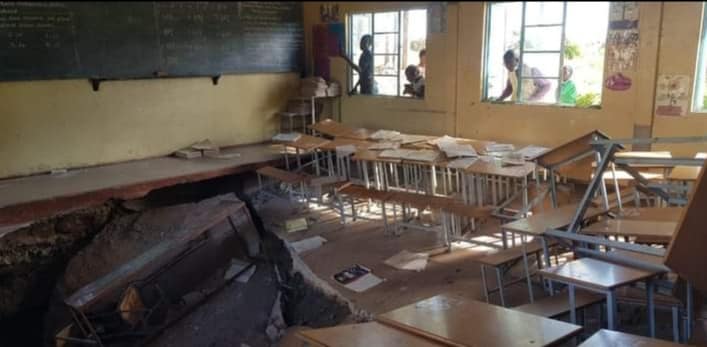
It’s been over two years since the ground at Globe and Phoenix Primary School in Kwekwe opened up, swallowing classrooms, injuring terrified children, and exposing just how recklessly illegal mining can intersect with our communities, Mining Zimbabwe can report.

By Rudairo Mapuranga

Back then, in March 2023, videos of frantic teachers pulling pupils from rubble went viral. News outlets reported on the tragedy that injured at least 14 learners, a scene that stunned Zimbabwe and put Kwekwe’s underground chaos on the global map.

Fast forward to today: the government says the reconstruction of Globe & Phoenix is 78% complete, with September 2025 set as the date for reopening the new campus that will accommodate 785 learners, a massive relief for families who have watched their children study in makeshift facilities since the collapse.

Permanent Secretary in the Ministry of Information, Nick Mangwana, confirmed the progress:

“The reconstruction of Globe and Phoenix Primary School, which was decommissioned due to illegal mining activities, is now 78% complete. The new site toured today by stakeholders, is on track for completion by September 2025 and will accommodate 785 learners. Currently, the project consists of an administration block, ablution facilities, and seven double-classroom blocks with trusses installed. An additional five double-classroom blocks have reached the roofing stage. All building plans have been approved, and site clearing is at an advanced stage.”

Let’s remember how we got here: the collapse wasn’t a natural disaster—it was a man-made horror caused by unregulated, greedy digging beneath the school, with illegal miners tunnelling like termites under a vital piece of public infrastructure. This wasn’t an isolated incident either; it was the culmination of years of artisanal miners chasing ore right into the heart of Kwekwe, ignoring laws and endangering lives.

While the reconstruction is commendable, it’s impossible to talk about rebuilding without asking whether Zimbabwe is finally serious about protecting schools, hospitals, and other community assets from the dangers of illegal mining. What is stopping local authorities from clearing out the syndicates who continue to operate dangerously close to homes and learning institutions? And who will hold accountable those who allowed mining activity so near a school in the first place?

Yes, the school’s rebirth offers a symbol of hope, but if we don’t tackle the root causes of illegal mining head-on, Globe and Phoenix won’t be the last tragedy we rebuild from. We need enforcement, we need community education, and we need policies that don’t just punish offenders after disaster strikes, but prevent these disasters entirely.

While walls can be rebuilt, the trauma inflicted on those children the nightmares, the fear of floors crumbling beneath their feet—won’t vanish so easily

Gold buying prices per gram in Zimbabwe today, 6 August 2025

Gold buying prices per gram in Zimbabwe today, 6 August 2025, from the official gold buyer and exporter Fidelity Gold Refinery (FGR).

SG 90% and ABOVE US$102.54/g.
SG ABOVE 89% BUT BELOW 90% US$100.46/g.
SG ABOVE 80% BUT BELOW 85% US$100.37/g.
SG ABOVE 75% BUT BELOW 80% US$99.29/g.
SAMPLE BELOW 10g BUT ABOVE 5g US$97.66/g.

Fire Assay CASH $103.09/g.

NB: Fire Assay cash price is for gold above 100g; no sample is deducted.

A sample of not more than 10g is deducted for the Fire Assay Transfer price.

A 2% royalty is charged on all deposits (Small-scale miners).

A 5% royalty is set for Primary Producers.

China’s Mineral Export Curbs to US Defence Sector Could Reshape Global Supply Chains — Zimbabwe Must Watch Closely

0

China has begun restricting exports of critical minerals to Western defence industries, a move that’s already causing production delays and driving up global prices, The Wall Street Journal reported earlier this week.

By Ryan Chigoche

The new controls, which target rare earth elements vital to military and high-tech applications from fighter jet engines and missile guidance systems to satellite components, tighten an already fragile supply chain.

For resource-rich countries like Zimbabwe, which hold significant deposits of these strategic minerals, the shifting dynamics present both a warning and a potential opening.

The move has rattled U.S. defence contractors, some of whom report waiting up to two months for rare earth magnets from non-Chinese suppliers.

Prices for key inputs like samarium, used in jet engines, have reportedly surged, being offered at up to 60 times their usual rate.

Supplies of other strategic minerals such as gallium and germanium are also dwindling, raising the risk of production slowdowns even among major manufacturers.

Although far removed from the U.S.-China standoff, Zimbabwe is not immune to the ripple effects. In fact, these developments may present a rare strategic opportunity.

Zimbabwe holds significant reserves of lithium, rare earths, and other speciality minerals, many of which remain underexplored or underdeveloped.

As global supply chains reconfigure, the rush to secure non-Chinese sources could draw renewed attention and investment toward Zimbabwe’s mineral sector.

Currently, Chinese firms dominate local lithium projects such as Bikita Minerals, Arcadia, and Sabi Star. However, Western governments and companies may now begin seeking alternative jurisdictions for future supply security.

If Zimbabwe can ensure transparent licensing, investor-friendly policies, and firm commitments to local value addition, it could attract diversified interest from markets looking to reduce their dependence on Chinese-origin minerals.

However, this will require a delicate balancing act. Zimbabwe must protect its existing partnerships with Chinese firms while creating space for Western capital and offtake agreements.

As global powers adjust their sourcing strategies, the country must avoid becoming locked into a one-dimensional mineral supply arrangement.

The geopolitical tension over minerals is no longer just a distant issue between Washington and Beijing—it could soon determine which mining nations thrive in the decade ahead.

Why Zimbabwe Needs a Critical Minerals Strategy — Now

China’s export controls have sent a clear warning to the West: diversify your mineral supply chains or face disruption. For Zimbabwe, this is more than a headline; it’s a call to action.

With untapped reserves of lithium, rare earths, and other strategic minerals, Zimbabwe is well-positioned to respond to this global realignment. But the window of opportunity will not remain open indefinitely. The country urgently needs a coherent, forward-looking Critical Minerals Strategy.

This strategy should begin with comprehensive mapping and systematic development of the country’s rare earth and speciality mineral deposits. It must also include robust policies on beneficiation and value addition to avoid falling into the familiar pattern of exporting raw materials without capturing downstream value.

In addition, Zimbabwe must build a diversified investment framework that not only accommodates its long-standing partnerships with Chinese companies but also actively welcomes Western and multilateral investors.

Managing geopolitical risk will be essential, allowing the country to remain neutral and adaptable in a rapidly shifting global environment. Equally important is the need for transparent, predictable, and investor-friendly regulations that can inspire confidence and attract long-term capital.

Without such a roadmap, Zimbabwe risks being left behind in the global reshuffling of mineral supply chains. Even worse, it could find itself overly dependent on China at a time when much of the world is seeking to reduce that very reliance.

The battle for control of critical minerals is accelerating, and Zimbabwe must now decide whether it will remain a passive player or take a strategic position.

A national critical minerals strategy is no longer a luxury—it is the key to unlocking long-term value from the country’s rich geological endowment and securing its place in the global mineral economy of the future.

ZINIRE to Converge Industry Minds in Victoria Falls to Address Mining Ground Stability

0

On the 20th of September, the majestic backdrop of Victoria Falls will host more than just tourists and global adventurers; it will become the convergence point for Zimbabwe’s finest rock engineering minds as the Zimbabwe National Institute of Rock Engineering (ZINIRE) stages its 2025 Annual General Meeting and Symposium, Mining Zimbabwe can report.

By Rudairo Mapuranga

Held under the timely theme “Managing Fall of Ground into the Future,” the symposium is more than just a calendar event — it’s a strategic gathering as the mining sector grapples with increasing geotechnical risks, deepening shafts, ageing infrastructure, and a rising call for safety-driven production.

Hosted at Elephant Hills Hotel, this AGM and symposium isn’t merely about institutional updates. It is a space where science meets experience, where ideas around rock mechanics, strata control, and mine stability will be shared, debated, and shaped into practical responses for an industry that has lost too many lives to preventable fall-of-ground incidents.

Not Just Another Talk Shop

For many in the mining ecosystem, “Fall of Ground” is no abstract terminology — it’s a grim reality that continues to haunt shafts across the country. With several fatalities in both large- and small-scale operations linked to rockfalls and poor support systems, this AGM could not have come at a better time.

What makes the ZINIRE Symposium stand out is its technical relevance. It is tailored for rock engineers, strata control officers, mine planners, civil engineers, SHEQ practitioners, MRM managers, geologists, and virtually anyone who influences how Zimbabwe mines.

It is also one of the few platforms that integrates students, ensuring knowledge transfer is not siloed at the top but flows to the next generation of mining professionals.

Fall of Ground: A National Concern

Zimbabwe’s mining industry has recorded multiple injuries and fatalities due to fall-of-ground hazards — a clear indication that rock engineering cannot remain a backroom function. The symposium will push the sector to rethink how support systems are designed, how data is used to predict geotechnical threats, and how policies can be aligned with modern ground control science.

It’s not just about ticking safety boxes; it’s about ensuring that every miner — whether in a mechanised platinum mine or a deep artisanal gold pit — returns home alive.

Open Call for Technical Papers

To ensure that knowledge is not just top-down, ZINIRE is calling for technical papers from practitioners and researchers across the sector. Those wishing to present during the symposium must submit their abstracts by 31st August 2025 to ZINIRE’s technical committee, led by Patrick Mushangwe and Freddy Chikwiwira. This ensures the AGM becomes a ground for home-grown solutions rooted in our own mining context, not borrowed theories from foreign operations.

Registration and Sponsorship

Registration for delegates is $150, while students attend for free — a deliberate gesture aimed at empowering the next generation. Corporate players are encouraged to support through tiered sponsorship packages ranging from Bronze ($500) to Platinum ($2,000+), with added visibility and opportunities to present from the Silver tier upwards.

This year’s ZINIRE AGM is not just about engineering talk — it’s about shaping the mining narrative around resilience, data-driven operations, and investor confidence built on safety.

For a mining sector that is determined to grow its contribution to the economy while reducing its human cost, events like these are no longer optional — they are essential.

Q2’25 Gold Demand Soars to Record $132 Billion Amid Global Uncertainty

0

Gold demand surged significantly in the second quarter of 2025, reaching a record value of $132 billion, a 45% increase from the previous year, according to the World Gold Council’s Gold Demand Trends report, Mining Zimbabwe can report.

By Ryan Chigoche

Total demand, which includes investments made outside regular markets, rose by 3% to 1,249 tonnes in the same period. This growth was largely driven by strong interest in gold-backed exchange-traded funds (ETFs), fueled by uncertainty in global trade, geopolitical tensions, and rising gold prices, the Council noted. Investors’ increased appetite for gold bars and coins also contributed, attracted by gold’s reputation as a safe investment during volatile times. This marked the strongest first half for bar and coin investments since 2013.

Central banks continued to play a major role, adding 166 tonnes to their reserves in Q2. Although their buying pace slowed slightly compared to previous quarters, their overall interest in gold remains robust.

According to the World Gold Council’s recent Central Bank Gold Survey, 95% of central banks expect global gold reserves to grow over the next year, with 43% planning to increase their holdings—the highest level recorded since the survey began.

Central bank purchases in 2023 exceeded 1,129 tonnes, marking the third-largest annual total on record and extending a 16-year buying streak. Rising inflation, geopolitical risks, and waning trust in traditional reserve currencies like the U.S. dollar—now at its lowest global reserve share since 1994—are key drivers behind this trend.

Meanwhile, demand for gold jewellery showed mixed trends. The physical amount of gold used dropped to near 2020 pandemic levels, reflecting price sensitivity among consumers, particularly in key markets like India and China. However, global spending on jewellery increased due to higher gold prices, underscoring gold’s enduring cultural value even as affordability challenges persist.

The technology sector faced headwinds amid potential U.S. tariffs that pressured gold demand in electronics manufacturing. Nonetheless, demand for gold linked to artificial intelligence-related technologies remained a bright spot, reflecting gold’s vital role in emerging high-tech applications.

Gold prices hit record levels, averaging $3,280.35 per ounce in Q2, up 40% from the previous year and 15% from the prior quarter, with June reaching a new price peak.

On the supply side, gold production grew by 3% year-on-year, with mine output reaching a record 909 tonnes. Despite high prices, recycling remained low as many Indian consumers chose to trade old jewellery for new pieces or use gold as collateral for loans rather than selling it outright.

Additional off-market investments and shifts in gold stocks contributed 170 tonnes to demand, driven by strong interest from wealthy global investors and institutional buyers seeking greater control amid uncertain market conditions.

Overall, the second quarter of 2025 reaffirmed gold’s position as both a strategic asset for central banks and a trusted safe haven for investors worldwide. With strong fundamentals and broad-based demand, analysts expect gold’s momentum to continue throughout the remainder of the year.

Tariff Tensions Rise as Sibanye Targets Russian Palladium Imports

0

Despite global palladium prices enjoying a 31% rally so far this year, thanks to subdued production in South Africa and thin liquidity in the spot market, the storm brewing in the palladium world is far from over, Mining Zimbabwe can report.

By Rudairo Mapuranga

A new twist has emerged, and it’s not coming from Russia or China—but from a South African-rooted mining giant with local Zimbabwean ties. Sibanye-Stillwater, the 50/50 joint owner of Mimosa Mining Company alongside Impala Platinum (Implats), has filed a petition urging the United States to impose tariffs on palladium imports from Russia.

At first glance, this might seem like a distant geopolitical issue. But in reality, it’s a high-stakes economic chess move that could shape the price and supply dynamics of platinum group metals (PGMs) globally, Zimbabwe included.

“We believe that Russian palladium imports are being sold below market prices due to various factors, beginning primarily after the Russian invasion of Ukraine in 2022,” said Neal Froneman, Sibanye-Stillwater’s outspoken Chief Executive, in a statement issued July 31.

“Obtaining relief from dumped and subsidised Russian imports will give Sibanye-Stillwater, its employees, and the entire US PGM industry an opportunity to compete on a more level playing field,” he added.

What Happens Abroad Affects Us Here

It’s important to understand that Sibanye is not just another name in global mining headlines. The company is deeply entrenched in Zimbabwe’s PGM story, holding a 50% stake in Mimosa Mining Company, one of the country’s largest and most stable PGM producers.

Mimosa, located near Zvishavane, has long been a model of underground mining efficiency and is critical in Zimbabwe’s US$40 billion mining roadmap. Moves by one of its parent companies to influence global PGM trade policy, therefore, carry implications for the entire region’s investment confidence, pricing structures, and downstream processing decisions.

Why the Tariff Talk Now?

Froneman’s petition calls on the US government to impose duties on Russian palladium imports, citing “dumping” a term used when foreign companies sell goods in another country at unfairly low prices, usually below production cost.

Since the Ukraine conflict began in 2022, Russia’s Nornickel, the world’s top palladium producer with 40% of global supply, has continued shipping metal to the US without interruption. Unlike aluminium, nickel, and oil, palladium has remained untouched by Western sanctions until now.

According to analysts at Heraeus, US imports of Russian palladium rose 42% year-on-year between January and May 2025, totalling over 500,000 troy ounces. That’s not just a trade figure; it’s a market-shaping volume.

Froneman argues that these low-cost imports are depressing prices, harming American PGM producers—including Sibanye’s own Stillwater operation in Montana, where a $500 million asset impairment was recorded recently due to price softness.

What’s at Stake for Zimbabwe and the Region?

Any move that disrupts the free flow of PGMs, especially palladium, could have major ripple effects across Zimbabwe’s mining economy. While the proposed tariff might protect US producers in the short term, it could stir global price volatility, trigger metal re-routing, and affect refining partnerships and tolling agreements in Southern Africa.

“Although placing duties on Russian metal would not necessarily impact the market balance of palladium, it could result in the re-routing of global physical metal flows, leading to price volatility,” Heraeus analysts warned.

For Zimbabwe, which exports most of its PGMs unrefined and relies on South African refineries and smelters (such as Zimplats’ expanded smelter), market volatility often translates to uncertain forex inflows, planning challenges, and constrained capital reinvestment.

And for Mimosa, whose ownership lies squarely with Sibanye and Implats—two giants with direct exposure to global shifts—this issue can’t be viewed from afar.

Russia, China, and the Bigger Game

As the US considers Sibanye’s petition (a decision is expected within 13 months), Russia has remained mum. Nornickel declined to comment, but trade data shows that China is now the second-largest buyer of Russian palladium after the US.

This tells us one thing: A new metal Cold War is taking shape, one driven not by ideology, but by catalytic converters, clean air laws, and electrification. In this new order, countries with PGMs are both courted and contested.

A Bull Run Ahead?

Interestingly, while all this tension unfolds, analysts believe palladium prices could continue to rise into 2025 for the first time in four years. Some attribute this to tight supplies, others to platinum’s recent rally, which often carries palladium along with it in price trends.

For Zimbabwe, this could be a golden moment hidden in palladium’s shadow—an opportunity to lobby for local refining, fair pricing mechanisms, and more control over mineral value chains. But for that to happen, policymakers must stay awake to global shifts and play proactively, not just reactively.

Sibanye’s tariff call might sound like a transatlantic legal manoeuvre. But for those watching Zimbabwe’s mining future, it’s a loud reminder: global mining boardroom decisions can—and do—affect local mines, workers, and communities.

Mimosa isn’t just producing platinum and palladium from beneath Zvishavane’s hills. It’s part of a much larger contest—one in which trade policy, geopolitics, and mineral nationalism collide.

And in that contest, Zimbabwe must find its voice—and fast.

ZCDC Security Foils Illegal Diamond Prospecting as Two Jailed

0

Two men have been sentenced to two years in prison each after they were caught prospecting for diamonds without a licence in the Marange diamond fields, a powerful reminder of Zimbabwe’s strict stance on illegal mining in one of Africa’s richest diamond deposits, Mining Zimbabwe can report.

By Rudairo Mapuranga

According to the National Prosecuting Authority of Zimbabwe (NPAZ), Charles Ziwoya (46) and Keith Muzuwe (24) were arrested on July 30, 2025, by Zimbabwe Consolidated Diamond Company (ZCDC) security guards patrolling the Chiadzwa area. The pair was found in possession of two sacks filled with diamond ore, commonly referred to as “chubs,” as they tried to sneak out of the mining concession under the cover of darkness.

The suspects were apprehended around 3 a.m. and handed over to the ZCDC Criminal Investigations Unit before being taken to the Zimbabwe Republic Police in Marange for further processing. The Mutare Magistrates’ Court convicted both men of illegal prospecting for minerals without a licence, sentencing them to the mandatory minimum of two years in jail—a sentence designed to deter others from invading the highly secured diamond fields.

While some might see these arrests as routine, they are in fact a stark demonstration of Zimbabwe’s diamond policy in action. Under the country’s 2018 Diamond Policy, only four companies are licensed to mine diamonds:

  • Zimbabwe Consolidated Diamond Company (ZCDC)
  • Anjin Investments
  • Alrosa Zimbabwe
  • Murowa Diamonds

All other prospecting or mining activities in diamond-rich areas like Marange are strictly prohibited, with illegal panning or trading carrying harsh penalties. The policy is part of Zimbabwe’s strategy to bring order, accountability, and maximum benefit to the state and its citizens after years of smuggling, leakages, and violent illegal mining syndicates that once plagued Marange.

Speaking after the conviction, the NPAZ reminded the public that illegal prospecting—not only for diamonds but also for gold or other minerals—attracts a mandatory two-year jail term without the option of a fine, highlighting that #CrimeDoesNotPay.

As Zimbabwe pushes towards harnessing its natural resources under President Mnangagwa’s 2030 Vision, the government’s unwavering enforcement of mining laws and the diamond policy will remain central to efforts to ensure diamonds contribute meaningfully to the country’s economy instead of being siphoned off by rogue elements.

50kg Gold Ore Recovered as Police Nab Suspects in Small-Scale Mine Robbery at Happy Valley

0

Police in Bulawayo have busted a robbery syndicate targeting small-scale miners, recovering 50 kilogrammes of gold ore and arresting two suspects linked to a violent raid at Happy Valley C Mine, a small-scale operation emblematic of the sector’s growing vulnerability to criminal gangs, Mining Zimbabwe can report.

By Rudairo Mapuranga

According to the Zimbabwe Republic Police, Dylan Ndlovu (26) and Vuyani Ndlovu (28) were arrested on 2 August 2025 in connection with the robbery, which saw five men storm the small-scale mine, assault mine workers, and loot valuables from the mine house. The suspects allegedly made off with three smartphones, three blankets, a solar panel, a pair of shoes, and groceries—everyday essentials vital for workers at small mining operations.

In a statement confirming the arrests, National Police Spokesperson Commissioner Paul Nyathi declared:
“The Zimbabwe Republic Police reiterates that there is no going back in the fight against crime in the country. The police will ensure that robbery syndicates are brought to justice and the law takes its course without fear or favour.”

The police recovered the stolen shoes, a button stick, a 20-litre bucket, the 50kg of gold ore, and a hammer mill cracker, a piece of processing equipment suggesting the suspects intended to quickly monetize their loot.

Three other accomplices remain on the run as police intensify efforts to dismantle the gang. The incident starkly highlights the increasing dangers faced by Zimbabwe’s small-scale miners, who are not only battling economic hardships but also a surge in violent criminal activity in gold-producing areas.

Authorities have called on the public to assist with information that could lead to the arrest of the remaining suspects.