Home Blog Page 81

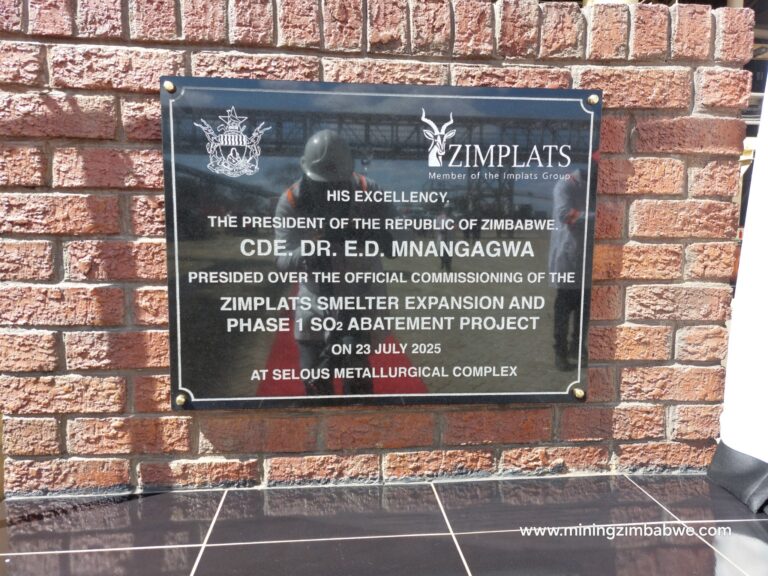
President Mnangagwa Commissions Game-Changing Zimplats Projects

0

President Emmerson Dambudzo Mnangagwa officially commissioned two major projects by Zimbabwe Platinum Mines (Zimplats): a 38MW expanded smelter and the first phase of a 185MW solar project at the Selous Metallurgical Complex today, Mining Zimbabwe can report.

By Rudairo Mapuranga

The commissioning marks a pivotal moment in the implementation of Zimbabwe’s Vision 2030 and National Development Strategy 1 (NDS1), positioning the mining sector not only as a driver of economic growth but also as a central pillar in the country’s quest for sustainable development.

“These projects… are a testament to the strength of collaboration between the Government, industry, and the communities,” President Mnangagwa said during his keynote address. “They bring about tangible economic benefits, including jobs, foreign currency savings, fiscal contributions, and advancing the adoption of green and clean energy sources by our industry.”

The President, clearly moved by the achievement, described the event as a “remarkable milestone” in Zimbabwe’s industrialisation agenda and a confirmation of what can be accomplished through aligned vision and strategic partnerships.

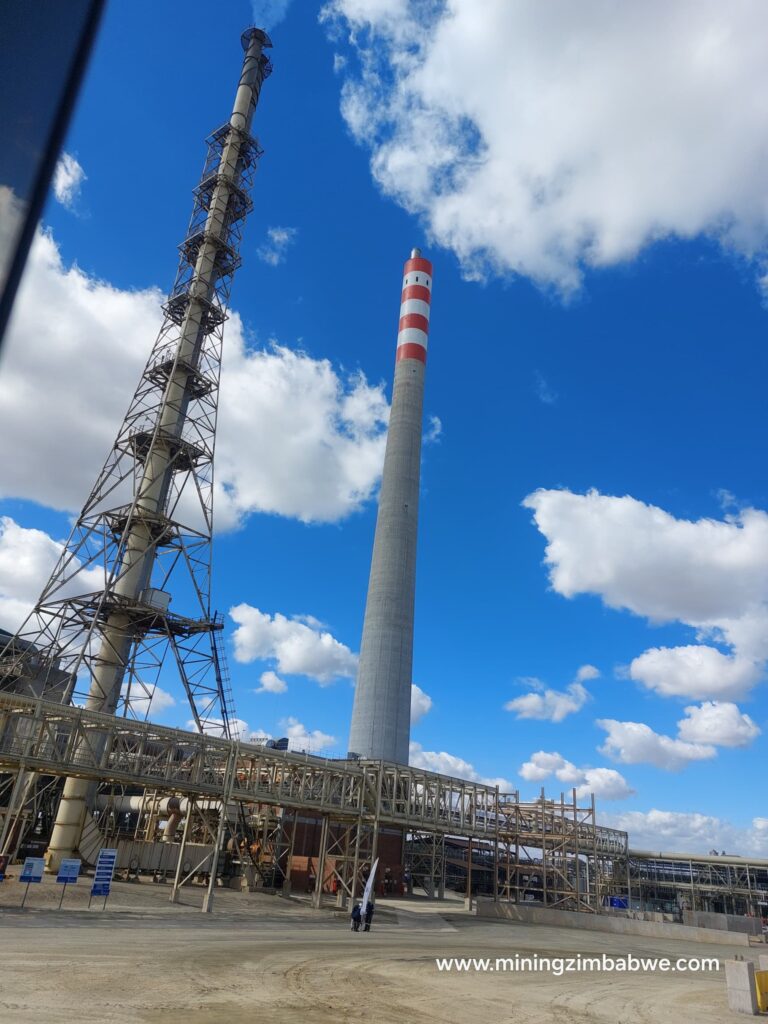
At the heart of the commissioning was Zimplats’ 38MW smelting plant expansion — a US$398 million investment that triples the company’s smelting capacity to 380,000 tonnes of concentrate annually. More than just numbers, the project places Zimbabwe firmly on the global platinum beneficiation map.

“With an investment of USD 398 million, this project will allow Zimplats to increase its smelting capacity threefold,” the President announced. “This expansion will ensure that Zimbabwe becomes a leader in the global platinum market, as Zimplats has created capacity to toll refine concentrates from third parties.”

The smelter occupies a space equivalent to 12 football stadia and utilises cutting-edge technologies including integrated furnace feed controllers, digital twinning, and advanced control systems. At peak, the construction project created over 1,600 jobs — many of them for locals.

“This demonstrates Zimplats’ commitment to industry-wide growth and collaboration,” the President said. “It is through such collaborative efforts that we can maximise the benefits of our natural resources for the benefit of all Zimbabweans.”

Green Power, Greener Ambitions

In line with Zimbabwe’s climate change obligations and the global call for reduced carbon emissions, Zimplats’ 35MW solar plant is already powering 8% of the company’s electricity needs. The US$37 million project is a shining example of responsible mining innovation, blending clean energy with operational efficiency.

“The environmental benefits… are significant,” the President stressed. “This development aligns with our national objectives to combat climate change.”

Featuring 74,880 solar panels on a single-axis tracking system, the plant spans 109 hectares and has already created over 800 jobs, most filled by members of surrounding communities. Zimplats has committed to planting trees to replace those cleared during construction — further reflecting its commitment to sustainability.

From Dialogue to Deliverables

President Mnangagwa applauded Zimplats for its “ongoing empowerment programme” and highlighted the deep-rooted collaboration between government and the company. The program, he explained, is grounded in three pillars — local enterprise development, rural industrialisation, and community social investment.

“To this end, the LEDs programme has incubated 23 small and medium enterprises engaged in manufacturing, provision of engineering and other services,” the President noted.

He also praised Zimplats for investing in five associate companies in which the Mhondoro-Ngezi, Chegutu, and Zvimba Community Share Ownership Trust has shareholding. These initiatives, the President affirmed, are “aimed at creating sustainable and empowered communities.”

A Leader Committed to Local Solutions

Throughout his speech, President Mnangagwa underscored the importance of local beneficiation, energy independence, and empowering Zimbabwean communities. While acknowledging challenges such as inflation and energy constraints, he reiterated his administration’s commitment to ensuring that mining remains competitive and sustainable.

“We must also acknowledge the challenges that the mining industry faces… As a government, we are committed to ensuring that our natural resources are utilised responsibly and for the benefit of our people,” he said.

He challenged other mining companies to take a cue from Zimplats: “This investment of USD 37 million in renewable energy is a clear indication that embracing green technologies is not just an environmental imperative but also a smart economic decision.”
Caledonia Hints at Strong 2025 Profitability Ahead of Upcoming Q2 Earnings Release

0

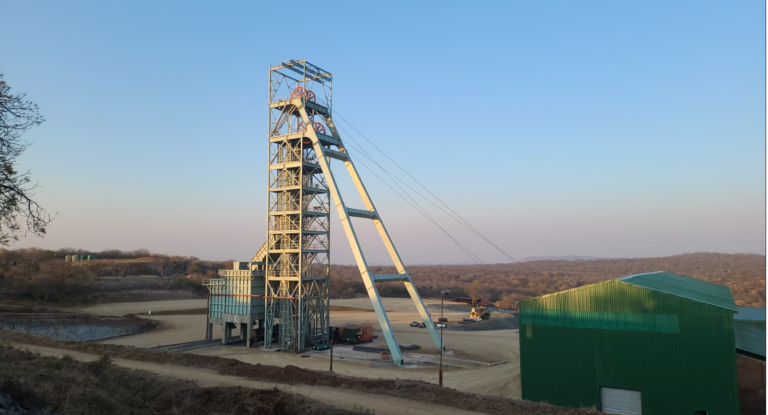
One of the country’s leading gold producers, Caledonia Mining Corporation Plc, expects to report a profitable second quarter, buoyed by firm gold prices and strong operational performance at its Blanket Mine in Zimbabwe.

By Ryan Chigoche

The company is preparing to release its financial results on August 11.

The upcoming results will cover the quarter and half-year ended June 30, 2025.

In a recent statement, the company said this anticipated profitability builds on a solid first quarter, reflecting sustained production strength alongside favourable market conditions.

With the current production profile at Blanket Mine and assuming the continuation of strong gold prices, Caledonia estimates that profitability for the full year 2025 will significantly exceed market expectations.

Commenting on these developments, Mark Learmonth, Chief Executive Officer, said:

“We were pleased with the excellent production results announced on July 16, 2025. Combined with a robust and sustained gold price, we are enjoying strong profitability. This reflects the hard work and dedication of the team at Blanket Mine and at group level, which we have strengthened significantly in recent times.”

This anticipated profitability follows a record quarterly output in Q2 2025, with Blanket Mine producing 21,070 ounces of gold—the highest second-quarter total in the mine’s history. This marks an increase from 20,773 ounces produced in Q2 2024.

The strong performance lifted gold output for the first half of 2025 to 39,741 ounces, representing a 5.1% increase compared to the 37,823 ounces produced during the same period last year.

In light of this solid performance, Caledonia has raised its full-year production guidance to between 75,500 and 79,500 ounces.

Zimplats’ 35MW Solar Plant Commissioned by President as One of 11 Milestone Energy Projects

0

President Emmerson Dambudzo Mnangagwa is today officially commissioning the first phase of Zimplats’ 35MW solar power project in Selous, a landmark development that is being celebrated as one of Zimbabwe’s most significant energy achievements in recent years.

By Rudairo Mapuranga

The plant, which will ultimately contribute 185MW when fully complete, is not just a victory for Zimplats, but a signal that Zimbabwe’s mining industry is increasingly taking responsibility for its own energy needs and carbon footprint.

In a recent announcement by the Minister of Information, Publicity and Broadcasting Services, Hon. Dr Jenfan Muswere, Zimplats’ solar plant was listed among 11 successful energy infrastructure projects implemented across the country, spanning thermal, solar, and mini-grid technologies.

But Zimplats stands out — not just because of its size, but because it is the only one among the 11 being commissioned by the President himself, underlining the project’s national significance.

The solar farm, situated at Selous in Chegutu District, Mashonaland West, has already started feeding into Zimplats’ operations and is expected to ease demand on the national grid. This is part of the company’s broader strategy to deploy 185MW of renewable energy to support its mining and processing activities.

According to a Zimplats statement, the next phases of the solar rollout will include additional sites to reach full capacity. This comes at a time when the company is also finalising its US$521 million base metal refinery and ramping up smelter commissioning, positioning itself as a leading example of beneficiation and ESG leadership in Zimbabwe.

“The commissioning of the first phase of Zimplats’ solar project reflects the company’s commitment to decarbonisation, energy security, and sustainable mining,” Zimplats said.


The Bigger Picture: Energy Milestones Across Zimbabwe

Zimplats’ solar development was named alongside ten other successful energy projects across the country. These include thermal power plants in Hwange, Buhera, Beitbridge, and Mvuma; community mini-grids in Gutu and Gokwe North; and new solar stations in Guruve and Kwekwe. Notably, the 10MW New Glovers Solar Plant in Kwekwe, also highlighted by ZERA, is one of the few IPP projects nearing full implementation.

While not all of these projects have received high-profile commissioning events, their cumulative impact signals a shift in Zimbabwe’s power generation landscape — particularly as private players take on more responsibility in addressing electricity deficits.

According to the government, these projects contribute towards stabilising power supply, supporting industrial growth, and bringing clean energy to off-grid communities.

But in truth, it’s the mining industry that is pushing the real transition. From Zimplats to Caledonia to Prospect Lithium, miners are no longer waiting for the ZESA switch to power their ambitions. They’re building their own.


Mining Leading the Clean Energy Push

Zimplats’ bold investment into solar energy comes as the mining sector continues to face load-shedding disruptions, rising costs of diesel, and global investor pressure for cleaner operations. As one of the top contributors to Zimbabwe’s GDP, the mining industry has been forced to think beyond just extracting minerals and towards sustaining operations through innovation and resilience.

With over US$1.8 billion already invested in its Zimbabwe operations, Zimplats’ solar rollout is part of a broader infrastructure agenda that includes the new concentrator, smelter upgrades, and its long-awaited base metal refinery.

This isn’t charity, it’s strategic survival. And it’s ESG with teeth.


A Message for the Country: This Is Possible

Today’s commissioning by President Mnangagwa is more than just a ribbon-cutting ceremony. It is a national message — that with the right policy framework and private sector commitment, Zimbabwe can light up its industries, rural areas, and future using its own hands.

It also challenges other sectors — agriculture, tourism, and manufacturing — to follow suit and take energy development into their own hands.

But let’s be clear: without serious investment protection, quicker approvals, and stable economic fundamentals, many of these good stories risk remaining isolated headlines.


What Zimplats Has Done Right:

  • Forward-thinking: They didn’t wait for the government or ZESA to fix the power crisis.

  • Environmental focus: This is clean energy, ESG-compliant, and investor-attracting.

  • Scalability: The full plan is for 185MW — enough to power small towns.

  • Integration: The solar farm is linked to beneficiation projects like the smelter and BMR.


Zimbabwe Can Power Its Own Future

Zimplats has shown what is possible when vision meets capital and commitment. Other companies must follow. The government must continue to create space for the private sector to lead. And communities — both rural and urban — must benefit.

Because energy is not just about electricity. It’s about empowerment.

And today, Zimbabwe has taken a bold step forward.

Mining, Messages, and the Mysterious Visitors of Ruwa: Zimbabwe’s Forgotten Warning from the Stars

0

On September 16, 1994, a quiet morning at Ariel School in Ruwa, Zimbabwe, turned into one of the most perplexing and profound moments in modern history. Over sixty schoolchildren reported seeing a strange craft descend from the sky and land near the bush surrounding their school. They claimed that beings with large heads, slender bodies, and massive black eyes emerged and communicated with them, not through speech, but telepathically.

By Rudairo Mapuranga

The children, aged between six and twelve, were terrified, confused, and deeply affected. But what happened next was even more telling: instead of the world listening, it dismissed them.

Today, the Ariel School incident is often cited among the most compelling cases in UFO history. However, in Zimbabwe and much of Africa, it remains largely unacknowledged, obscured by layers of disbelief, skepticism, and colonial-era dismissal. Critics called it mass hysteria, a hoax, or childish imagination. But perhaps the truth is far more unsettling: that these children were telling the truth, and the world simply wasn’t ready to hear it, especially coming from Africa.

Why were the children not believed? Why did the narrative quickly shift toward discrediting them? And most importantly, what did the beings say? According to many of the children, the message was clear: humanity is endangering the planet through technology and environmental destruction.

Let’s pause here. This wasn’t just a UFO sighting. It was, at its heart, a warning. In the middle of a peaceful Zimbabwean schoolyard, far from Hollywood and telescopes, came a plea for environmental stewardship through the eyes of innocent children.

In a world now suffering under the weight of climate change, biodiversity collapse, water scarcity, and land degradation, that message rings louder than ever. Zimbabwe, too, stands at a crossroads. As we dig deeper into the earth to extract value through mining, especially with the rise of lithium, gold, platinum, and rare earths, we must ask:

Are we balancing development with sustainability? Or are we speeding toward the same crisis those children may have been warned about three decades ago?

Mining is essential for national development, and Zimbabwe’s Vision 2030 relies heavily on the sector to achieve a middle-income economy. Yet unregulated artisanal mining, pollution of river systems, deforestation, and failure to rehabilitate mined-out land are creating scars that may never heal. Are we listening to the earth, or only to the profit margins?

What if the alien beings weren’t just watchers of the sky, but guardians of the earth? What if the beings chose Ruwa not by accident, but because Africa, with its relatively untouched lands and spiritual heritage, still has a chance to choose a different path?

Zimbabwe’s mining sector is growing rapidly. Lithium, called “white gold,” is fueling a green energy transition globally. Zimbabwe is home to massive lithium deposits in Bikita, Goromonzi, and Kamativi. But while the demand for lithium grows, so does the pressure on our environment. Tailings dams, water use conflicts, relocation of communities, and ESG obligations are now central challenges. Yet amid these technical and economic realities, we seldom return to the soul of the matter: what is our relationship with the land?

The Ariel School incident offers us an unusual lens—spiritual, moral, and ecological. It reminds us that our development must have direction, not just speed. Just as the children saw beings who warned about the destruction of Earth, Zimbabwe today sees the consequences of extractive industries that are not always mindful of the future.

Ruwa, at that moment, became a stage not just for an unexplained encounter, but for a conversation about truth, power, and planet. The children’s testimony was powerful, unified, and remarkably consistent—even decades later. Most of them, now adults scattered around the world, still stand by what they saw.

Their voices were pure. They had no incentive to lie. They weren’t seeking YouTube views or TV deals. They were traumatised. Some were mocked. Others were silenced by their families. But their truth never changed. That matters.

As we move toward more advanced mining practices, there is a push for environmental audits, community beneficiation, and the inclusion of local voices. Could we learn from the Ariel School children, who spoke a truth that was inconvenient but sincere? Could we apply the same principle listening to communities around Hwange, Mutoko, Marange, and Penhalonga, where mining operations often clash with traditional land use, water rights, and cultural values?

This story is not only Zimbabwean. It is planetary. But we, as Zimbabweans, hold the key to reshaping how the world sees it, not as a fringe incident, but as a profound message rooted in African soil.

Let us imagine a scenario: a young Zimbabwean geologist sits at a lithium mine near Arcadia, reading about the Ariel School case for the first time. Instead of dismissing it, he reflects: “If children once carried a message from beyond, maybe we are being asked to carry one now—from the Earth itself.”

That’s the power of the Ariel legacy. It invites introspection. It offers an opportunity to build a mining sector that doesn’t just extract—but regenerates. One that doesn’t just enrich the nation—but preserves its natural and spiritual wealth.

Imagine if every Environmental Impact Assessment (EIA) process began with a reading of the Ariel testimony. Imagine if miners, engineers, policymakers, and community leaders saw themselves not just as extractors, but as stewards—guardians of the earth, just as those children were briefly guardians of a cosmic message.

The warning given in 1994 could be the compass we need in 2025. Climate change is no longer a theory. Droughts, cyclones, and erratic rainfall patterns have reshaped farming. Rivers are running dry. Even artisanal miners know this—digging deeper for less, watching the rains delay year after year. What if we listened not just to machines and markets, but to memory? What if we remembered what was said that morning in Ruwa?

In schools, we teach science, geography, and economics. But the Ariel story teaches something deeper: the interconnectedness of all things—the land, the sky, the water, and the unseen forces that may still walk beside us.

This is not about superstition or folklore. It is about respecting knowledge, whether it comes in textbooks, satellite data, or the silent testimony of a child staring wide-eyed at the sky.

In 1994, the stars came to Ruwa. The world turned away. But today, we can turn back and listen—not only to what those children said, but to what the land, the air, and the spirit of our nation are still trying to say.

We were warned. Are we ready to act?

Gold buying prices per gram in Zimbabwe, 23 July 2025

Gold buying prices per gram in Zimbabwe today, 23 July 2025, from the official gold buyer and exporter Fidelity Gold Refinery (FGR).

SG 90% and ABOVE US$103.59/g.
SG ABOVE 89% BUT BELOW 90% US$102.50/g.
SG ABOVE 80% BUT BELOW 85% US$101.40/g.
SG ABOVE 75% BUT BELOW 80% US$100.31/g.
SAMPLE BELOW 10g BUT ABOVE 5g US$98.66/g.

Fire Assay CASH $104.14/g.

NB: Fire Assay cash price is for gold above 100g; no sample is deducted.

A sample of not more than 10g is deducted for the Fire Assay Transfer price.

A 2% royalty is charged on all deposits (Small-scale miners).

A 5% royalty is set for Primary Producers.

Zimbabwe’s Mineral Export Revenues Dip Despite 27% Surge in Volumes

0

Zimbabwe recorded a 27% increase in mineral export volumes during the first half of 2025, but total earnings fell short of last year’s levels due to tumbling global prices for key minerals, according to the Minerals Marketing Corporation of Zimbabwe (MMCZ).

By Ryan Chigoche

Data from the state-run agency show that mineral exports brought in US$1.4 billion between January and June 2025, down from US$1.56 billion over the same period in 2024.

The sharp drop in revenue came despite a strong uptick in production, underscoring how commodity price volatility continues to weigh on Zimbabwe’s mining sector.

Lithium grows in tonnes, not dollars

The lithium sector continued its rapid expansion, with spodumene concentrate exports rising to 586,197 tonnes, up from 451,824 tonnes in the first half of 2024. However, revenues fell by 24% due to declining lithium prices on the global market.

Coal and steel push ahead

Coal exports also showed strong performance, with shipments jumping 121% to 253,848 tonnes, driven by increased production capacity. Steel exports, MMCZ said, are also surging, benefiting from growing regional demand.

Diamonds disappoint amid falling prices and job cuts

Zimbabwe’s diamond sector took a heavy hit in the first half of 2025, with export volumes plunging 60% to 2.7 million carats and revenue falling 37%, according to the MMCZ.

This comes amid a prolonged global downturn in rough diamond prices, which have dropped from over US$3,000 per carat in 2020 to under US$1,000, as lab-grown alternatives gain traction and consumer demand weakens.

At the same time, operational challenges persist. The Zimbabwe Consolidated Diamond Company (ZCDC) recently retrenched around 400 workers, citing foreign currency shortages and declining profitability.

Logistics continue to choke export potential

Despite rising production, MMCZ highlighted that poor logistics remain a serious barrier to maximising export value, especially for bulk minerals like steel, coal, and granite.

“Limited inland logistic capacity, heavily reliant on road transport, continues to impede the efficient movement of materials to market. This also places local producers at a disadvantage against regional competitors benefiting from superior road and rail infrastructure and port access, particularly impacting steel, granite, coke, and coal exports where freight costs are risking customer churn,” said MMCZ.

Railways: A broken link slowly being repaired

Zimbabwe’s railway infrastructure, once the backbone of mineral logistics, has been eroded by decades of neglect, underinvestment, and aging equipment.

The National Railways of Zimbabwe (NRZ) operates at a fraction of its intended capacity, forcing mining companies to rely on expensive road transport and choking the flow of key exports to ports.

In a bid to reverse this, Zimbabwe last year entered into a US$533 million partnership with China Railway Group Ltd to modernise its rail network.

The project aims to overhaul critical infrastructure, improve locomotive availability, and streamline freight logistics.

The goal is to restore the railway as a competitive channel for bulk mineral movement and close the widening gap with neighbours like Mozambique and Zambia, whose upgraded corridors have given them a clear export advantage.

As global demand for critical minerals intensifies, Zimbabwe’s ability to resolve its transport constraints will be pivotal in unlocking greater value from its growing mineral output.

Zimbabwe’s Gold Export Earnings Surge to US$1.84 Billion in First Half of 2025

0

Zimbabwe’s gold sector is enjoying a period of exceptional growth, with export earnings in the first half of 2025 soaring to US$1.84 billion—more than double the US$870 million recorded during the same period in 2024.

By Ryan Chigoche

The strong performance puts the country firmly on track to achieve its ambitious full-year revenue target of US$3.2 billion.

This surge in earnings is largely underpinned by a sharp increase in physical gold deliveries.

Total gold output reached 20,103.55 kilograms (approximately 20.1 tonnes) during the first six months of 2025, marking a 45.85% rise compared to the 13,784.29 kilograms delivered over the same period last year.

Favourable global market conditions further amplified the sector’s performance. In the first half of the year, international gold prices climbed by 26%, driven by a weaker US dollar, stable interest rates, and heightened geopolitical tensions that prompted investors to seek refuge in gold.

This created an ideal environment for Zimbabwe to convert its production gains into substantial foreign currency inflows.

According to the Reserve Bank of Zimbabwe (RBZ), June stood out as a particularly strong month, with gold export receipts reaching approximately US$394 million—a remarkable 146% increase from the US$160 million recorded in June 2024. This strong mid-year performance highlights the momentum building within the sector.

The central bank noted that gold continues to anchor Zimbabwe’s foreign currency earnings, providing critical support for import requirements and helping to stabilise the local currency. With reserves under pressure, these recent gains are offering a much-needed buffer to the economy.

Production patterns also reveal an evolving structure in the mining industry. The increasing contribution from the artisanal and small-scale mining (ASM) sector underscores its resilience and growing importance in the gold value chain.

Buoyed by improved access to processing facilities, informal financing channels, and competitive pricing, small-scale miners have become a key driver of national output—offsetting a notable slowdown in large-scale operations.

As the country’s most valuable mineral export, gold continues to play a pivotal role in Zimbabwe’s broader economic outlook. Globally, the precious metal has already recorded 26 new all-time highs in 2025, extending the bullish trend seen in the previous year.

However, the World Gold Council has cautioned that investor sentiment may shift in the second half of the year if inflation continues to ease and equity markets regain strength—factors that could dampen gold’s safe-haven appeal.

Despite these potential headwinds, Zimbabwe’s gold sector appears robust. With strong production fundamentals, growing small-scale contributions, and supportive international pricing, the industry remains one of the country’s most vital economic pillars for 2025 and beyond.

Mazowe Mine Is Bleeding — How Many More Must Die Before Government Acts?

0

In the hills and terrains of Mazowe, where the ground once echoed with the sound of drills, progress, and promise, a chilling silence now hangs — interrupted only by the occasional scream, the crash of a collapsing shaft, or the muted mourning of families preparing yet another funeral.

By Rudairo Mapuranga

This is not fiction. This is Mazowe. A place once hailed as a beacon of gold mining potential, now reduced to a graveyard of broken laws, shattered families, and abandoned safety protocols. It is no longer news when someone dies at Mazowe Mine. It is expected. It is routine. It is normalised and that is a tragedy.

On a cold winter night recently, two men seeking nothing more than warmth sat by a fire. An explosion ripped through the silence, leaving one dead on the spot and another fatally wounded. Before the nation could process that loss, another shaft at Mazowe’s Starlake area claimed six more lives in a horrific collapse. The Zimbabwe Republic Police (ZRP) confirmed the fatalities. Yet even this, a mass casualty event, has not stirred the level of urgency one would expect in a civilised nation.

Why are we silent when the numbers grow louder?

A Culture of Death

The latest deaths at Starlake, a shaft at Mazowe Mine, are not isolated incidents. They follow a deadly pattern that has engulfed the mine. Week in, week out, miners perish. And yet, we continue as if nothing is wrong. Six miners dead here. Three crushed there. Bodies retrieved by fellow miners with bare hands, laid out under makeshift tarpaulins. These are not just statistics. They were sons, fathers, brothers. And their only crime was trying to survive.

Redwing Mine shut down in 2024 following a similar tragedy, prompting a government stop order. Mazowe, a mine of equal national significance, received a similar directive around the same time. But at both Redwing and Mazowe, action did not come. One can only wonder: why the double standard in Zimbabwe?

Lawlessness Reigns

Mazowe Mine is no longer controlled by its rightful owners. The mine has been overtaken by chaos. Over 10,000 artisanal miners, operating illegally, have taken control of its shafts and its destiny. They mine day and night without oversight, blasting rock with questionable explosives, navigating unsafe tunnels with no protective gear, no ventilation, no engineering support. These are not miners. These are desperate citizens, pushed to the brink by an economy that has failed them and a government that refuses to act.

Despite a stop order from the Ministry of Mines in March 2024, mining at Mazowe never stopped — not for a day. Police who ought to enforce the order claim they need “authorisation” to act. It has become so commonplace that journalists have stopped reporting every incident. The deaths are no longer shocking. They are routine.

Namib Minerals and the Ghost of Investment

Namib Minerals, the rightful owners of Mazowe Mine, have announced a staggering US$300 million investment plan aimed at modernising the mine, reviving underground operations, creating jobs, and increasing gold production.

But lawlessness has made the mine inaccessible. Namib cannot even begin exploration because the very ground they own is held hostage by people with picks, shovels, and guns. The company has one court-sanctioned agreement with a contractor that expired in 2023. Since then, several other entities have illegally claimed rights to operate there. Some have even filed court applications against Namib despite having no legal cooperation agreements.

The situation is absurd: the only entity with a legitimate stake in the mine cannot access its property, while those with no documentation dig freely as they chase gold.

Where Is the Government?

It is the duty of the government to enforce mining regulations. The Ministry of Mines has every right to shut down illegal operations, and the police have every legal basis to evict those trespassing on Mazowe Mine property. Yet nothing is being done. This is not a matter of policy gaps. This is a failure of will.

If 80 kilograms of gold are being extracted illegally every month, as some insiders allege, then that gold is being smuggled, depriving the nation of revenue.

The Makorokoza Dilemma

We must also confront the psychology of the artisanal miners — the makorokoza. These are not evil people. They are often victims of circumstance. But desperation cannot justify lawlessness. What is unfolding at Mazowe is not informal mining. It is anarchic extraction. There is no accountability. No records. No responsibility. If a miner dies, no one answers. No compensation. No justice.

Artisanal mining must be formalised, regulated, and Policed. Until then, Mazowe will remain an undesirable zone masquerading as a gold field.

The Legacy at Risk

Mazowe Mining Company is no stranger to Zimbabwe’s mining legacy. Once a cornerstone of the nation’s gold production, it has been reduced to a so so mine, its legacy tarnished by neglect and encroachment by unregulated actors. In January 2024, Namib announced its intention to resume underground operations. But lawlessness has halted every step of progress. Equipment has been stolen, infrastructure vandalised, and safety completely abandoned.

We must ask: how can a country that speaks of a US$40 billion mining economy allow one of its flagship mines to become a graveyard?

Solutions We Cannot Delay

It is not enough to mourn. Zimbabwe must act.

  1. Immediate Eviction: The Ministry of Mines, in collaboration with the Zimbabwe Republic Police, must immediately enforce the stop order issued in 2024. All illegal mining operations at Mazowe must cease.

  2. Secure the Mine: Deploy security forces to guard strategic shafts and secure assets belonging to Namib Minerals.

  3. Fast-Track Investment Approval: Remove bureaucratic bottlenecks and offer Namib full government backing to commence its US$300 million investment.

  4. Artisanal Mining Zones: Create designated areas for artisanal miners, with government-supervised safety protocols.

  5. Zero Harm Policy: Implement an ESG framework that places human life above profit. No shaft should be operational without certified safety infrastructure.

  6. National Inquiry: Set up a parliamentary inquiry into fatalities at Mazowe Mine. Let every name of the deceased be read into the record.

The Time for Silence Has Passed

This is not just about Mazowe. This is about our national conscience. Every week, another funeral procession leaves the gates of Mazowe. Every week, a mother weeps, a child is orphaned, and a dream is buried. And still, the nation watches.

Enough.

We do not need another death to know that Mazowe Mine is bleeding. We need courage. We need will. We need leadership.

The graveyard is full. It is time to bring the mine back to life — the right way.

Gold buying prices per gram in Zimbabwe, 22 July 2025

Gold buying prices per gram in Zimbabwe today, 22 July 2025, from the official gold buyer and exporter Fidelity Gold Refinery (FGR).

SG 90% and ABOVE US$102.88/g.
SG ABOVE 89% BUT BELOW 90% US$101.79/g.
SG ABOVE 80% BUT BELOW 85% US$100.70/g.
SG ABOVE 75% BUT BELOW 80% US$99.61/g.
SAMPLE BELOW 10g BUT ABOVE 5g US$97.98/g.

Fire Assay CASH $103.42/g.

NB: Fire Assay cash price is for gold above 100g; no sample is deducted.

A sample of not more than 10g is deducted for the Fire Assay Transfer price.

A 2% royalty is charged on all deposits (Small-scale miners).

A 5% royalty is set for Primary Producers.