Home Blog Page 83

Zimbabwe Slashes Electricity Imports by 87% on Strong Domestic Generation Surge

0

Zimbabwe generated 2,418 gigawatt hours (GWh) of electricity in the first quarter of 2025, reflecting a 6.1% increase from the previous quarter — a performance that enabled the country to cut electricity imports by a significant 87.4%. The majority of the power came from the Hwange Power Station, which contributed 69.2% of total output, followed by Kariba South Hydro at 24.3%, according to the latest data from the Zimbabwe National Statistics Agency (ZimStat).

By Ryan Chigoche

This domestic generation surge is being bolstered not only by improved performance at national utilities but also by increasing contributions from the mining sector. Several large-scale mining operations now operate independent or captive power plants, playing a growing role in easing pressure on the national grid.

Zimplats, the country’s largest platinum miner, continues to expand its solar and gas energy portfolio, while Caledonia Mining’s Blanket Mine is feeding power from its 12 MW solar plant, commissioned in 2023, into its operations. These initiatives are part of a broader trend that has seen mining companies invest heavily in energy security to mitigate load-shedding and ensure stable production.

According to ZimStat, the electricity generation index for the quarter was 97, up from 91.4 in Q4 2024, highlighting sustained improvements in power output. This growth significantly reduced Zimbabwe’s reliance on imports, with only 305.5 GWh of electricity imported, down from 487.8 GWh in the previous quarter and 505.4 GWh in Q1 2024.

Import breakdown shows that 34% of the electricity came from South Africa’s Eskom, while Mozambique’s HCB and EDM supplied 37.5% and 10.2%, respectively.

Despite the gains in generation, the total electricity distributed within the quarter stood at 1,544 GWh, a 25.9% decrease compared to the 2,084.2 GWh distributed in Q4 2024. On a year-on-year basis, this was a 23.8% decline from 2,026.4 GWh recorded in Q1 2024. This reflects ongoing challenges in transmission and distribution infrastructure, even as production rises.

The growing role of independent power producers (IPPs) and captive plants in the mining sector is expected to continue shaping Zimbabwe’s power landscape, improving self-sufficiency while supporting key export-driven industries.

US Court Dismisses US$93 Million Arbitration Claim Against ZMDC

0

In a significant legal victory for Zimbabwe’s state mining sector, the US Court of Appeals in Washington, D.C. has thrown out an attempt by two Mauritian firms to enforce an arbitration award worth US$93 million against the Zimbabwe Mining Development Corporation (ZMDC). The ruling hinges on a key jurisdictional point that cheered local officials and offers a potential roadmap for handling cross-border mining disputes, Mining Zimbabwe can report.

By Rudairo Mapuranga

According to the US court, the matter brought by Amaplat Mauritius Ltd. and Amari Nickel, stemming from a 2014 International Court of Arbitration ruling in Zambia, could not proceed in Washington. While the arbitration tribunal had ordered ZMDC to pay US$42.9 million to Amaplat and US$3.9 million to Amari—plus 5% annual interest—the accumulated total eventually reached US$93 million, thanks to years of compounding interest.

In 2019, the Mauritian companies sought to enforce that award through Zambia’s High Court, hoping to seize ZMDC assets in the region. When the proceedings stalled there, they turned to the US, seeking enforcement assistance. But the appellate court was unmoved.

“The Court … concluded that the District Court lacked subject-matter jurisdiction over the dispute,” the announcement stated.

The ruling is limited to US jurisdiction—it does not block Amaplat or Amari from pursuing enforcement in other countries. A spokesperson for the Mauritian firms noted, “It has no application or precedential value to actions brought against Zimbabwe in other countries.”

Nevertheless, the Zimbabwean government has hailed the outcome. Mines and Mining Development Secretary Pfungwa Kunaka described the judgment as “a welcome result,” reinforcing the country’s resolve to defend its mining assets through global legal channels. Mining Minister Winston Chitando and legal teams for ZMDC have not issued further comment at this time.

Why This Matters

This ruling marks a diplomatic and commercial milestone for Zimbabwe. It makes clear that foreign arbitration awards cannot automatically be enforced anywhere, and that a claimant’s choice of jurisdiction is crucial. For ZMDC—and Zimbabwe’s broader state enterprise portfolio—it offers a degree of insulation against overzealous international enforcement campaigns.

The case itself harkens back to a failed nickel-platinum joint venture that collapsed a decade ago. While the arbitration tribunal found in favour of the Mauritian firms, the matter has been mired in procedural delays and legal challenges across multiple jurisdictions. Analysts say this case may prompt Zimbabwean entities to reconsider how and where they stake their legal grounds when entering international contracts.

Looking Ahead

The ruling does not close the door entirely. Amaplat and Amari are expected to explore enforcement options in countries where Zimbabwean assets exist—possibly in jurisdictions that do not guarantee exclusivity to foreign sovereign immunity or where collection can be pursued against offshore finances.

Whatever happens next, Zimbabwe’s win in the US sends a clear message: owning a mining title in this country must not be treated as automatic global collateral, and claims must clear jurisdictional hurdles before assets can be seized.

As ZMDC eyes recovery and re-energises its investment plans, especially in critical minerals, this legal precedent may offer a shield—and a template—for future agreements negotiated with international partners. It’s a reminder that large-scale project success isn’t just unlocked in the mine—but often in the courtroom as well.

Lithium and Nickel Deployment Surge as Global EV Market Maintains Upward Momentum

0

Global lithium and nickel deployment in electric vehicle batteries surged in May 2025, driven by continued growth in passenger xEV sales and battery capacity, particularly across the Asia-Pacific region, according to the latest Adamas Intelligence report. Despite a broader decline in average material intensity per vehicle, total raw material volumes continued to rise, reflecting robust demand across the EV supply chain.

By Ryan Chigoche

Data from the latest monthly report shows that 48,916 tonnes of lithium carbonate equivalent (LCE) were deployed in newly sold passenger xEVs globally—a 9 percent increase from April and up 22 percent year-on-year. Of this total, 65 percent was lithium carbonate and 35 percent was lithium hydroxide. Chinese battery maker CATL led among suppliers with 15,488 tonnes deployed, while BYD topped the list of automakers at 6,827 tonnes.

Nickel deployment followed a similar upward trend. In May, 28,407 tonnes of nickel were used in passenger xEV batteries, rising 8 percent month-on-month and 7 percent compared to the same period last year. CATL again dominated among cell manufacturers with 8,300 tonnes, while Tesla led all xEV brands, deploying 3,326 tonnes.

However, despite these gains in total volume, the average nickel content per battery declined by 14 percent to 12.2 kilograms, while lithium intensity fell 3 percent year-on-year to 21.0 kilograms per battery. The drop in average intensity is largely attributed to the growing share of plug-in hybrids (PHEVs), which typically use smaller battery packs compared to full battery electric vehicles (BEVs).

The rise in raw material deployment was underpinned by a strong performance in global xEV sales. A total of 2.33 million passenger xEVs were sold worldwide in May, reflecting a 7 percent increase from April and a 25 percent jump over the same month in 2024. The Asia-Pacific region recorded the highest growth, with sales up 10 percent month-on-month and 28 percent year-on-year. Europe and the Americas also posted gains of 4 percent and 3 percent respectively from April, and 25 percent and 15 percent year-on-year.

Zimbabwe Gears Up to Supply EV Battery Materials

The sharp rise in global lithium and nickel deployment offers a timely opportunity for Zimbabwe, which hosts Africa’s most advanced lithium sector and growing upstream processing capacity. Since 2021, Chinese investors have poured over US$1 billion into local projects.

Sinomine’s Bikita Minerals is Africa’s only continuously operating lithium mine, now with a 2 million-tonne-per-year spodumene and lepidolite plant and a recently commissioned cesium (pollucite) processing facility. Bikita has also unveiled plans for a US$400 million smelter for further product refinement.

Prospect Lithium Zimbabwe (Arcadia), owned by Zhejiang Huayou Cobalt following a US$378 million acquisition in 2022, produced over 128,000 tonnes of spodumene concentrate in Q1 2025 (up 48 percent sequentially) and is advancing a 50,000-tonne-per-year lithium sulfate plant.

Premier African’s Zulu project has been recommissioned with improved flotation capacity, targeting spodumene output to serve growing global demand. Other initiatives include Chengxin/Max Mind’s Sabi Star in Buhera and Canmax’s Kamativi project. Zimbabwe plans to ban concentrate exports by 2027 to promote domestic beneficiation.

While nickel production remains limited, these lithium-focused developments position Zimbabwe as a pivotal upstream supplier to meet the surging deployment of battery metals in EVs highlighted by the Adamas report.

Other battery metals also registered volume increases in May, though per-vehicle intensity continued to trend downward. Cobalt deployment rose to 5,080 tonnes, up 10 percent from April and 1 percent year-on-year. Yet the average cobalt content per battery dropped significantly to 2.2 kilograms, down 19 percent compared to May 2024. CATL and Tesla led their respective categories with 1,800 tonnes and 374 tonnes of cobalt deployed.

Manganese usage increased 9 percent month-on-month to 6,327 tonnes, registering a marginal 1 percent gain year-on-year. Like cobalt, average manganese content per battery also declined, falling 19 percent to 2.7 kilograms. CATL led cell suppliers in manganese deployment with 2,355 tonnes, while VW topped automakers at 373 tonnes.

Graphite demand remained strong, in line with the broader increase in EV output. A total of 79,520 tonnes of synthetic and natural graphite was deployed globally in May, up 9 percent from April and 25 percent over the same month last year. CATL accounted for 24,885 tonnes, followed by BYD with 13,178 tonnes.

Unlike other materials, the average graphite content per battery remained flat year-on-year at 34.1 kilograms.

The continued rise in total deployment of lithium and nickel despite falling per-unit averages highlights the pressure on global raw material supply chains as the EV market scales up. With Asia-Pacific leading demand growth and companies like CATL, BYD, and Tesla at the forefront, the need for sustained mining output and secure upstream supply remains a critical issue.

At the same time, automakers and battery producers are increasingly shifting toward chemistries that balance performance with cost and material availability. While average material intensities are falling, total demand for lithium, nickel, and other inputs continues to accelerate, reinforcing long-term bullish fundamentals in the battery metals sector.

Global Gold Mining and Lino Manganese Set to Benefit from New 25MW Solar Power Plant as Zimbabwe’s Renewable Energy Momentum Grows

0

Zimbabwe’s transition to clean energy continues to gain momentum, with two key mining players—Global Gold Mining (Private) Limited and Lino Manganese Mining (Private) Limited—poised to benefit directly from a new solar project aimed at boosting power supply in the resource-rich Hwange region, Mining Zimbabwe can report.

By Rudairo Mapuranga

The Zimbabwe Energy Regulatory Authority (ZERA) has received a fresh application from Lafrica Energy (Private) Limited, which seeks to establish a 25-megawatt (MW) solar photovoltaic (PV) plant in Hwange. According to ZERA, the power generated from this upcoming solar facility will be dedicated to supplying Global Gold and Lino Manganese operations, signalling a growing trend where mining houses are securing their own energy sources amid ongoing national electricity challenges.

“The power generated from the solar plant will be consumed by Global Gold Mining (Private) Limited and Lino Manganese Mining (Private) Limited,” ZERA said in its public notice.

The proposed project will involve the construction of a new 88/33kV substation and a 16-kilometre, 132kV Single Wolf power line that will link the Lafrica Energy Hwange Solar Power Plant to the Hwange Local Substation, further strengthening the regional power infrastructure.

In a parallel development, New Glovers Solar (Private) Limited, another player in Zimbabwe’s renewable space, has approached ZERA with a request to upscale its existing 10MW project at Glovers Farm in Munyati, Kwekwe, to a larger 110MW solar facility. This bold step comes as the original 10MW plant nears 80 percent completion, reflecting investor confidence and the growing appetite for solar as a reliable energy source.

“The amendment has been necessitated by the successful implementation of the first 10MW plant at New Glovers Solar, which is now 80 percent complete, and the appetite by the developers and promoters of the company to continue to aid in the generation of clean energy for the nation at large,” ZERA said.

Zimbabwe has now licensed over 100 Independent Power Producers (IPPs), an encouraging sign of private sector interest in addressing the country’s long-standing electricity deficit. These projects span a wide spectrum of renewable energy options, including hydro, thermal, and biogas, though solar energy dominates—fitting for a country blessed with abundant sunlight throughout the year.

While the licensing numbers are promising, only a handful of these projects are fully operational. Many are still stuck in the pre-implementation phase due to various challenges, ranging from lack of funding and delayed financial closure to technical and regulatory hurdles. Nevertheless, the recent applications by Lafrica Energy and New Glovers Solar suggest a shift, with more developers now prepared to move from paper to power.

For mining operations like Global Gold and Lino Manganese, energy security is not just a preference—it’s a necessity. Power shortages have historically affected mineral production cycles and investor confidence. By tapping into solar, these companies are not only reducing their carbon footprint but also building resilience into their business models.

Zimbabwe’s broader energy vision seeks to diversify away from over-reliance on hydropower and ageing thermal plants. Climate change and reduced rainfall patterns have made dependence on Kariba increasingly untenable. At the same time, the government is pushing for industrial growth and rural electrification—both of which require a stable, sustainable power backbone.

Solar IPPs, especially those backed by offtake agreements with large mining or manufacturing clients, are emerging as viable contributors to this new energy architecture.

The Lafrica Energy project, by serving Global Gold and Lino Manganese, underscores this synergy between clean energy and mining—two of the country’s most critical sectors. And with ZERA’s continued support and clear regulatory frameworks, Zimbabwe might soon start seeing more of these projects breaking ground and lighting up industries.

The future of Zimbabwe’s energy sector is not just in the hands of the government anymore. It’s being shaped by forward-thinking private entities like Lafrica Energy, Global Gold Mining, and New Glovers Solar—proving that when mining and clean energy converge, the results can be transformative.

Mines Bill Falls Short for Zimbabwe’s Small-Scale Miners – EMAZ President

0

The Mines and Minerals Amendment Bill has been praised by some as a step forward, but for Emerging Miners Association of Zimbabwe (EMAZ) President Chatyoka Hyde, it is a far cry from what Zimbabwe’s small-scale miners need, Mining Zimbabwe can report.

By Rudairo Mapuranga

In a powerful critique, Hyde told Mining Zimbabwe that the Bill continues a legacy of exclusion, duplication, and superficial recognition of the country’s most active mining players.

“The truth is, this Bill was never crafted with the small-scale miner in mind,” said Hyde. “Its origins go back to 1999, and it was bankrolled by the Canadians. At that time, it was built around the needs of corporate capital—not our people on the ground.”

While the government and some policymakers have touted the 2025 version of the Bill as progressive because it now ‘recognises’ small-scale miners, Hyde disagrees.

“That recognition is not genuine. The Act already licenses small-scale miners—we didn’t need this Bill to do that. What the Bill does is try to define a ‘small-space miner,’ not a small-scale miner in the true operational and economic sense,” he said.

What Should Define a Small-Scale Miner?

Hyde believes that any proper legal definition of a small-scale miner must go beyond land size. It should reflect the nature of investment, machinery used, energy sources, technical expertise, and production volumes.

“If you’re using a jackhammer and diesel power, how are you the same as someone with a processing plant and 24/7 electricity? Our sector is diverse. Some of us are growing, others are starting. A legal definition should reflect that.”

He argues that scale should be measured holistically—from the level of capital injection to the sophistication of technology and energy demand.

“You can’t claim a miner is large-scale simply because of the size of the land. Look at the resources, the skillset, the equipment. Many of us are still manually breaking rocks with pickaxes,” Hyde said.

Overregulation and Duplication

One of the major concerns EMAZ raises is the overregulation and duplication created by the Bill. Hyde explains that in the past, a miner would receive a license and immediately begin operations. Today, however, the process has become long-winded and increasingly frustrating.

“Now, even after getting your license, you must also go to EMA (Environmental Management Agency), submit for an Environmental Impact Assessment, and conduct consultations with local farmers. Fair enough—environmental protection is necessary. But why does the Bill act as if EMA does not already exist?” he questioned.

According to Hyde, the current system already provides enough safeguards to protect farmers and the environment.

“When a miner submits to EMA, the farmer’s interests are automatically considered. You are told where not to mine—the homestead, the roads, the fields, the boreholes. EMA certifies everything after ensuring you’ve addressed all concerns,” he said.

He believes the Bill, instead of trusting the existing EMA framework, adds another unnecessary layer by requiring further permissions from farmers, even after EMA approval.

“This is pure duplication. EMA already demands community consultations and ensures compliance. Why should a miner be blocked from operating just because a farmer with no mining knowledge refuses consent—even after EMA says it’s okay?”

A Call for Dialogue, Not Division

Hyde called for the Farmers Union and the Miners Federation to sit down and agree on a framework that promotes coexistence and shared benefit—not conflict.

“We are not enemies. The problem is this Bill turns us into adversaries. Instead of criminalising miners, let’s agree on how both parties can benefit from activities on the land. If a farmer wants something, let’s talk about what percentage of production could go toward local community development,” he said.

Restrictions That Don’t Reflect Growth

Beyond duplication, Hyde is also concerned about the general tone of the Bill, which he feels is too restrictive.

“There’s this underlying assumption that small-scale miners are a problem to be controlled. That we’re chaotic, illegal, and dangerous. But we are contributing over 60% to gold production. We’re employing thousands. Why is the law designed to fence us in instead of lifting us up?” he asked.

Hyde also warned that such overregulation could stifle the growth of upcoming miners.

“Some of us want to formalise. We want to grow. But the Bill makes that harder. Too many steps, too many fees, too many unclear definitions. That’s not how you build an industry. That’s how you kill it slowly.”

EMAZ Wants the Law to Be Grounded in Reality

For Hyde and the thousands of miners he represents, the message is simple: a good law should reflect reality, not just theory. It should make it easier to formalise, easier to produce, and easier to operate responsibly.

“This country is built on minerals. Yet the people digging them out are treated like trespassers. The Bill must change that. Let it empower us—not criminalise us,” said Hyde.

As Parliament continues to engage with stakeholders on the final shape of the Mines and Minerals Amendment Bill, voices like Hyde’s will be critical in ensuring the legislation doesn’t leave behind the very people who are holding up Zimbabwe’s mining economy.


Gold buying prices per gram in Zimbabwe, 18 July 2025

Gold buying prices per gram in Zimbabwe today, 18 July 2025, from the official gold buyer and exporter Fidelity Gold Refinery (FGR).

SG 90% and ABOVE US$100.82/g.
SG ABOVE 89% BUT BELOW 90% US$99.75/g.
SG ABOVE 80% BUT BELOW 85% US$98.69/g.
SG ABOVE 75% BUT BELOW 80% US$97.62/g.
SAMPLE BELOW 10g BUT ABOVE 5g US$96.02/g.

Fire Assay CASH $101.35/g.

NB: Fire Assay cash price is for gold above 100g; no sample is deducted.

A sample of not more than 10g is deducted for the Fire Assay Transfer price.

A 2% royalty is charged on all deposits (Small-scale miners).

A 5% royalty is set for Primary Producers.

Gold buying prices per gram in Zimbabwe, 17 July 2025

Gold buying prices per gram in Zimbabwe today, 17 July 2025, from the official gold buyer and exporter Fidelity Gold Refinery (FGR).

SG 90% and ABOVE US$100.98/g.
SG ABOVE 89% BUT BELOW 90% US$99.91/g.
SG ABOVE 80% BUT BELOW 85% US$98.84/g.
SG ABOVE 75% BUT BELOW 80% US$97.77/g.
SAMPLE BELOW 10g BUT ABOVE 5g US$96.17/g.

Fire Assay CASH $101.51/g.

NB: Fire Assay cash price is for gold above 100g; no sample is deducted.

A sample of not more than 10g is deducted for the Fire Assay Transfer price.

A 2% royalty is charged on all deposits (Small-scale miners).

A 5% royalty is set for Primary Producers.

“We Need Enabling Laws, Not half baked statutes” – Nyenje

0

Zimbabwe Miners Federation (ZMF) Midlands Province Chairman, Makumba Nyenje, has raised a red flag over the proposed Mines and Minerals Amendment Bill, warning that while it makes progress in recognising small-scale mining, it still fails to support the sector with practical laws, enabling, and inclusive, Mining Zimbabwe can report.

By Rudairo Mapuranga

Speaking to Mining Zimbabwe on the sidelines of the Planet Gold Zimbabwe workshop on the Bill, Nyenje said the Bill must be revised to reflect the realities and struggles of small-scale miners—the majority of whom are Zimbabwean citizens operating with limited capital and facing regulatory hurdles that often favour large-scale players.

“We are happy that the Bill has finally acknowledged small-scale mining as a growing industry. But we are disappointed that it imposes many restrictions and misses key areas that must empower us. A small-scale miner cannot be treated like a multinational. We are still growing,” said Nyenje.


Possession Laws: Criminalising Miners for Owning Minerals

One of the most glaring issues, Nyenje said, is the criminalisation of mineral possession, particularly gold. Despite miners being encouraged to sell to Fidelity Gold Refinery, possession of gold without immediate documentation can still lead to arrest and prosecution, even in legitimate circumstances.

“Possession must not be a criminal offence—smuggling should be. If I pick a stone with lithium or gold-bearing ore, should I be jailed for that? The law must differentiate between criminal intent and legitimate small-scale mining activity,” he argued.

He called for clear legal protections for miners who operate within formal channels and deliver to authorised buyers.


Ore Movement Restrictions: A Barrier to Production

Nyenje also criticised the current law requiring ore movement permits, saying it creates unnecessary bureaucracy and opens room for extortion and corruption.

“If I have a registered claim and I want to send ore to a nearby mill, why should I need a permit? We need fewer restrictions, not more. The law should make mining easier, not more difficult,” he said.

He proposed a digital self-declaration system to maintain traceability without burdening miners.


Clear Definition of Small-Scale Mining and Access to Critical Minerals

Nyenje urged lawmakers to clearly define what constitutes a small-scale miner, including claim size, production volume, and capital level. The current Bill, he said, is vague and could allow large actors to exploit provisions meant for genuine small operators.

“Small-scale miners should have clear guidelines. The law should also tell us which minerals we can mine. Some should be reserved for citizens or small players, especially in critical areas like lithium, chrome, and gold,” he said.

He added that Zimbabwe needs a published list of critical minerals, with transparent rules on who can mine or process them.


Provincial Representation and Decentralised Dispute Resolution

The ZMF Midlands chair also raised concerns about the composition of the Mining Affairs Board, calling for full provincial representation of small-scale miners, not just a token presence.

“We want small-scale miners from every province to have a voice—or at least dispute resolution committees that work at provincial level. Right now, it’s too centralised and far removed from the realities on the ground,” Nyenje said.


Computerisation and Paperless Licensing

While the Bill references the digital Mining Cadastre System, Nyenje said more must be done to eliminate excessive paperwork, which continues to clog the system.

“We want a modern system. The Cadastre must work, but also remove these manual letters, physical files, and gatekeeping. It’s 2025—we need to apply, renew, and pay online,” he said.


Inclusivity: Women, Youth, and PWDs Must Be Recognised

Nyenje stressed the need for the Bill to include specific provisions that empower women, youth, and persons with disabilities (PWDs), who often face cultural and financial barriers to entering the mining sector.

“These are the people doing the work. The law must see them, support them, and create opportunities for them,” he said.


Recognition of ZMF and Other Industry Bodies

Finally, the ZMF Midlands leader called for formal recognition of representative bodies such as the Zimbabwe Miners Federation (ZMF) and the Chamber of Mines within the Bill, particularly in governance, dispute resolution, and policy-making.

“ZMF represents the voices of small-scale miners. We must have a place in law—not just as stakeholders, but as partners in regulation and development,” he said.


A Law That Must Work for Zimbabweans

Nyenje’s remarks reflect growing discontent within the ASM sector, even as the government pushes to reform mining legislation. With small-scale miners contributing more than 60% of Zimbabwe’s gold output, many believe the law must protect and empower them, not punish or exclude them.

“We are not asking for special treatment. We are asking for fair treatment. We want a law that allows small-scale Zimbabwean miners to grow, formalise, and contribute more to the economy,” Nyenje concluded.

Planet Gold Pushes for Safer Alternatives in Gold Processing

0

Zimbabwe’s small-scale miners are on the verge of a major shift in how they extract gold. Through the Planet Gold Zimbabwe initiative, the government is rolling out new technologies and support structures to eliminate mercury use in artisanal gold mining—part of Zimbabwe’s commitment to the Minamata Convention.

By Rudairo Mapuranga

Speaking to Mining Zimbabwe on the sidelines of the Planet Gold Zimbabwe Mines and Minerals Bill analysis workshop held at Cresta Oasis Hotel on Wednesday, Planet Gold Zimbabwe Project Manager Ms. Nyaradzo Mtonhori explained that the initiative is being driven by the Ministry of Mines and Mining Development in collaboration with the Ministry of Environment, Climate and Wildlife. Their shared goal is to reduce mercury use by over 4.85 tonnes within five years.

“We are working to reduce mercury use through introducing mercury-free gold processing technologies, while also easing the path to formalisation for artisanal and small-scale gold miners (ASGM),” said Mtonhori.

According to Mtonhori, the project is grounded in Zimbabwe’s National Action Plan on Mercury, which flows from the Minamata Convention—an international agreement designed to reduce and eliminate mercury emissions. Zimbabwe became a signatory in 2021.

So far, Planet Gold has completed a site profiling exercise in 11 mining districts, assessing the types of ore and mining activity taking place. Through this process, the project is identifying which districts are best suited for the different mercury-free technologies being piloted. The National Metallurgical Laboratory is currently analysing samples to determine how new technologies can be aligned with the unique conditions of each district.

“Our aim is to match ore characteristics to mercury-free processing techniques. Once that is done, we will begin introducing the new technologies and train miners on how to use them. Our target is not just the equipment, but a complete behavioural change,” she said.

She noted that while cyanide has been considered as an alternative, the project’s preference is for chemical-free solutions that don’t present new hazards.

“Cyanide is another hazardous chemical, so we are aiming to avoid replacing one problem with another. That’s why our approach leans towards gravity-based methods and cleaner options,” she said.

The rollout of mercury-free processing technologies is expected to begin next year, but implementation of the overall programme has already started. “We started implementation in November last year and we’re now seven months in. We are ahead of other countries running Planet Gold programmes,” Mtonhori noted.

One of the biggest concerns raised by small-scale miners is whether they will be able to afford or manage these new technologies. Many miners rely on mercury because it is simple and accessible. Planet Gold Zimbabwe’s approach is therefore centred on gradual transition and training.

“We are not imposing anything on miners,” said Mtonhori. “We want to work with them, let them see the benefits of switching away from mercury. This includes showing how safer methods can actually increase gold recovery.”

In recent consultations facilitated by the Zimbabwe Miners Federation (ZMF), the feedback has been supportive, but caution remains. Many miners say they are still waiting to see how the technologies will perform in practice.

ZMF CEO Mr. Wellington Takavarasha acknowledged the importance of the initiative. “We support the reduction of mercury use, especially if safer and more efficient technologies are made available. But it must be done in a way that supports our miners, not criminalises them,” he said.

Mr. Takavarasha warned against approaching the transition as a top-down directive. “We don’t want a situation where miners are arrested for using mercury while the alternatives are not yet available or affordable,” he said.

He also raised concerns about duplication of institutions and overregulation. “We want to see a well-coordinated effort between government departments, Planet Gold, and miners. This is not just an environmental matter—it’s a livelihoods matter,” he said.

The Planet Gold Zimbabwe project, with a budget of over US$24 million, is one of the country’s largest donor-backed mining initiatives. If successfully implemented, it will place Zimbabwe among global leaders in responsible small-scale mining.

Mtonhori believes that Zimbabwe has the potential to become a model of safe, formalised small-scale mining in Africa. “We have a strong technical team, committed partners, and most importantly, miners who are ready to learn and adapt. The signs are positive,” she said.

As the pressure to phase out mercury increases globally, Zimbabwe’s early adaptation gives it a competitive advantage. But for the initiative to succeed, it must keep its focus on the people who matter most: the miners.

“The message we want to send to miners is that this change is for their safety, their families, and their future. We are not here to take mining away from them. We are here to help them do it better,” said Mtonhori.

For now, all eyes are on the upcoming rollout of the mercury-free processing systems. If the uptake is high and the results meet expectations, it could reshape Zimbabwe’s small-scale mining sector—and create a new chapter of responsible resource development in the country.

Kuvimba Shifts to Open Pit for Darwendale Platinum Project as Prices Surge

0

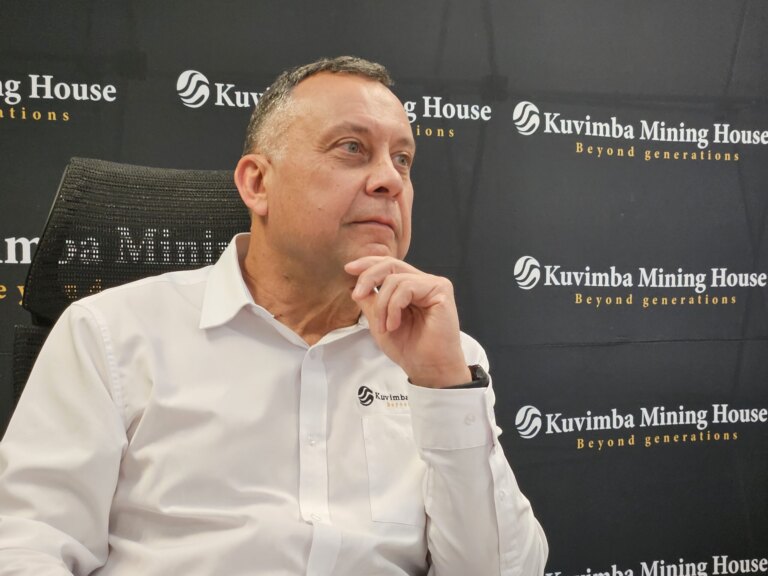
Zimbabwe’s sovereign wealth fund-owned mining group, Kuvimba Mining House, has dramatically restructured its long-stalled Darwendale platinum project, opting for an open-pit development instead of the previously planned expensive underground model, Mining Zimbabwe can report.

By Rudairo Mapuranga

The move, driven by soaring platinum prices, is expected to accelerate a project once envisioned as the country’s largest mine.

A Shift from “Big Bang” to Pragmatic Start

Initially conceived in 2014 by then-President Robert Mugabe and Russia’s Foreign Minister Sergey Lavrov, Darwendale was meant to be a flagship underground mine, requiring around US$450 million in capital. However, the project faltered in 2022 following the withdrawal of its Russian partner amid slumping platinum prices.

Kuvimba CEO Trevor Barnard said the company is now adopting a more modest, phased approach: launching with an open-pit mine at around US$50 million, funded through its parent, the Mutapa Investment Fund, internally generated cash, and strategic borrowing.

“That is quite a change in scope and phasing,” said Barnard. “It’s very difficult to raise US$450 million specifically for a platinum project in Zimbabwe.”

Riding the Wave of Rebounding Platinum Prices

The timing of this strategy is no coincidence. Platinum prices surged a remarkable 36% in Q2, capped off with a 28% jump in June alone, topping US$1,430/oz—the highest monthly level since 1986.

Analysts highlight the perfect storm of robust Chinese demand, constrained output in South Africa, and speculative market activity as key drivers of the rebound. These market dynamics have reignited interest in projects that were previously shelved.

Regional Momentum in Platinum

Kuvimba isn’t alone in capitalising on this upswing. Tharisa PLC, which delayed its US$391 million Karo PGM project in Zimbabwe during the price downturn, recently confirmed it is accelerating final development following renewed market confidence.

Building on a Track Record in Gold

While awaiting the full-scale revival of Darwendale, Kuvimba has built credibility through its gold operations—producing 116,000 oz in 2024 from three functional gold mines. This steady performance strengthens its balance sheet and gives the company greater flexibility to support Darwendale’s new phased model.

A Model for Future Resilience

Kuvimba’s revised strategy offers a template for financial prudence in Zimbabwe’s mining sector. By aligning project pacing with revenue cycles and domestic investment, the company lowers its exposure to debt and external pressure.

“It’s extremely challenging to secure US$450 million specifically for platinum projects in Zimbabwe,” remarked Barnard.

As platinum prices continue to surge, Zimbabwe’s mining sector is entering a period of renewed opportunity. But success hinges on practical execution. The initial US$50 million investment must deliver rapid operational gains and investor confidence, lest the project falter again.

Kuvimba’s Darwendale pivot could signal the return of Zimbabwe as a serious player in platinum mining—but only if prudent planning, adaptability, and strong financing come together to deliver results.