Home Blog Page 88

Nickel Overtakes Lithium as Top EV Battery Metal by Value, Adamas Report Shows

0

Nickel has surpassed lithium as the most valuable battery metal used in electric vehicles (EVs) so far this year, according to a new report by Toronto-based research firm Adamas Intelligence.

By Ryan Chigoche

This shift comes despite falling prices across the battery metals sector and growing adoption of nickel-free battery chemistries.

Much like cobalt and lithium, nickel has endured extreme price volatility since the EV boom sent demand projections sky-high. A memorable peak occurred in March 2022, when a short squeeze involving Elliott Management’s Paul Singer and Tsingshan’s Xiang Guangda drove prices above $100,000 per tonne within minutes.

The incident triggered over $12 billion in cancelled trades, legal disputes, and a major rethink of the London Metal Exchange’s rules—but its market impact was short-lived.

Nickel sulphate prices, used in EV battery cathodes, briefly soared above $30,000 per tonne (100% Ni basis) but have steadily declined since, averaging around $17,000 in the second quarter of 2025.

Lithium’s fall has been even steeper. After peaking above $80,000 per tonne in late 2022, prices collapsed to $8,450 by June this year—a nearly 90% drop in under three years.

Yet despite these price corrections, nickel has taken the lead in deployed value in EVs. Between January and May 2025, global EV sales consumed $2.2 billion worth of nickel, edging out lithium’s $2.15 billion, according to the Adamas Intelligence data.

This trend highlights the continuing importance of nickel-rich chemistries in EV battery design, particularly for high-performance and long-range vehicles.

This comes even as nickel-free alternatives like lithium iron phosphate (LFP) gain traction. LFP batteries now represent nearly half of all EV battery capacity deployed this year, a dramatic rise from less than 1% at the start of the decade.

In Zimbabwe, the nickel landscape reflects broader global challenges. The country’s largest nickel producer, Bindura Nickel Corporation (BNC), remains shut due to ongoing operational and financial difficulties.

As a result, national output is now primarily derived from PGM operations run by major players such as Zimplats, Mimosa Mining Company, and Unki Mine, where nickel is recovered as a byproduct.

Despite the price slump and supply shifts, nickel continues to hold its ground as a critical material in the energy transition—remaining a key target for investors and battery manufacturers alike.

Kavango Targets High-Grade Gold at Nara, With Potential to Process 5–20g/t Ore

0

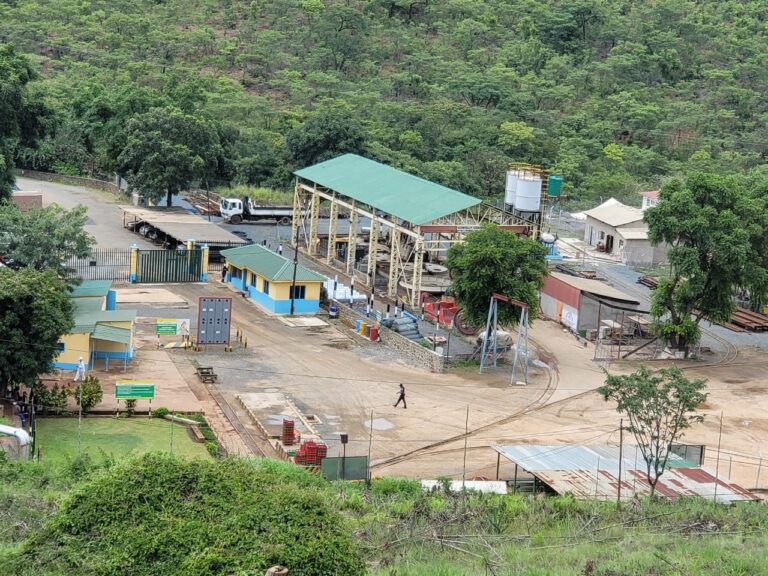
Kavango Resources is positioning the historic Nara gold mine for a major comeback, with early observations suggesting the potential to process high-grade ore ranging between 5 and 20 grams per tonne (g/t). This became clear during the new General Manager Everjoy Ngomatiti’s recent tour of the mine, which brought senior management face-to-face with both the site’s promise and its challenges.

By Ryan Chigoche

During the tour of the Killarney shaft — a key part of the Nara project — Kavango executives outlined their technical vision for reviving the mine, located within Zimbabwe’s historically rich Filabusi greenstone belt. The shaft, once mined down to the seventh level, is now flooded from levels five through seven. However, its historical production of approximately 20,000 ounces between 1938 and 1959 offers a solid foundation for redevelopment.

“Looking at the history of this mine as well, they mined about 20,000 ounces between 1938 and 1959. And we also don’t have the other data, but from the look of things, we’re talking of grades ranging between five grams per tonne to 20 grams per tonne, with the reef, which is like 20 centimeters to up to 1.5 meters wide. So there’s lots of potential. I believe there’s potential. Of course, we still need to come in and do the drilling, get more geological data, but there’s lots of potential here,” Ngomatiti said.

This would be a significant achievement, especially considering that one of the country’s biggest miners, Freda Rebecca, currently processes ore with a grade of around 1.55 grams per tonne.

Kavango believes the Nara project area may host up to four kilometres of gold-bearing strike. Identifying and proving up the first mineable resource along this corridor is now a priority.

“So, looking at the entire project area, we believe we have up to four kilometers of strike stretching from the west of the ground to the east behind us. So one of the key objectives that Everjoy and I have been looking at for the first time today is how we can build up our first mineable resource to deploy our exploration team here with that specific objective in mind,” Kavango CEO Ben Turney added.

The recent site visit marked the first time that Kavango’s new General Manager, Everjoy Ngomatiti, toured the mine since assuming office just a fortnight ago. CEO Ben Turney personally accompanied him on the ground inspection of the historic Killarney shaft. Despite the flooding challenges, the company sees significant underground development opportunities. Preliminary drill tests have been completed, with results expected soon.

With Everjoy at the helm, Kavango’s underground development plan involves a phased rollout using spiral declines, requiring approximately 400 metres of strike length per section. The company intends to define, model, and control an initial 400-metre block before opening a portal, then proceed incrementally in similar-sized segments.

Reflecting on the aging infrastructure and the way forward, Kavango’s General Manager Everjoy Ngomatiti outlined the company’s focus on three key pillars: modernization, productivity, and efficiency.

He explained that improving efficiency will require modernizing the existing headgear to a larger, more productive, and more efficient design. Additionally, Ngomatiti noted that the current processing facilities rely on outdated milling techniques, and Kavango plans to replace these with more advanced carbon-in-pulp (CIP) and carbon-in-leach (CIL) plants to enhance processing performance.

He also highlighted the site’s strong gold potential, drawing from both its historical production records and recent geological assessments.

Kavango recently secured financial backing from Purebond to support the development of Nara. The site now joins the company’s growing Zimbabwean portfolio, which also includes the Hillside gold project. However, Nara is being described internally as a flagship asset due to its scale and near-term potential.

“This is the biggest project in Kavango’s portfolio. Nara is much larger than Hillside. It’s taken us longer to exercise the Nara option simply because we’ve needed to do much more work here,” Turney said. “But over the coming months, we’ll be putting out a series of announcements, providing the market and our shareholders with the data that we’ve gathered and the interpretation. We’re really excited to be here now today. It’s excellent that Purebond has given us the finances to be able to exercise this option. And with Everjoy now on the team, working with the rest of our people that we’ve recruited, we really can’t wait to get stuck into this project,” Turney said.

Zero-Upfront Solar Systems Emerge as Alternative for Power-Hit Mines

0

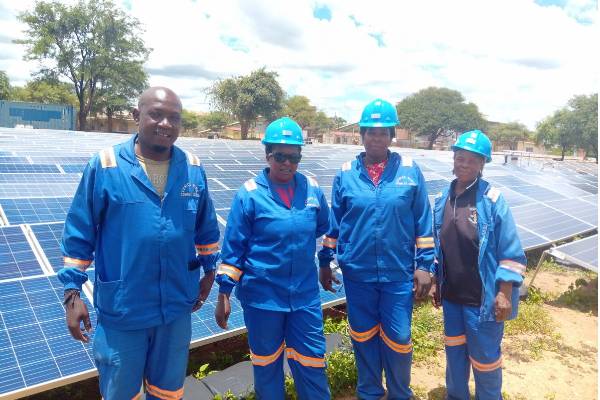
As Zimbabwe’s mining sector continues to battle electricity shortages, rising costs, and operational disruptions, a new energy model is quietly gaining ground — one that could reshape how mines access power. A Build-Operate-Transfer (BOT) solar solution, spearheaded by Seke Energy in partnership with Chinese multinational SANY International, is being rolled out as a zero-upfront-cost alternative tailored to miners using one megawatt and above.

By Rudairo Mapuranga

This development comes at a critical time. Zimbabwe’s miners, particularly in the Platinum Group Metals (PGM) sector, are facing compounded pressures — from crippling load shedding and rising energy tariffs to foreign currency losses and excessive taxation. According to the Chamber of Mines Zimbabwe, the country’s mining operations are becoming less competitive, with electricity accounting for up to 30 percent of total production costs.

The new BOT model offers an alternative: a solar power plant fully funded, installed, and operated by Seke Energy and SANY for an agreed period (typically 8–12 years), after which full ownership of the plant is transferred to the miner. During the BOT period, miners pay a fixed rate — currently between 10 and 13 US cents per kilowatt-hour — which is comparable to or lower than ZESA tariffs. After ownership is transferred, costs drop to around 4 US cents per kilowatt-hour, covering only maintenance.

“We’re targeting miners with proven reserves and stable operations,” says Ashley Maumbe, Managing Director of Seke Energy. “If a mine uses one megawatt or more, we set up a solar system with backup storage at no upfront cost. Once the BOT period is over, the plant becomes theirs.”

The model has also been adapted to support small-scale miners. Where a single operator may not meet the minimum threshold, clusters of five or more miners operating in the same area can be grouped to share a system.

“Small-scale miners usually lack access to reliable energy and can’t afford to invest in solar independently,” Maumbe explains. “But if they come together, we can install a one- or two-megawatt system and deliver shared power under the same BOT arrangement.”

This shift comes as the PGM sector, once a strong contributor to national export earnings, now struggles with viability. In a recent Mining Zimbabwe article, Chamber of Mines CEO Isaac Kwesu cited electricity disruptions, currency conversion losses, and a 77% effective tax burden as key factors threatening the survival of PGM mines. He warned that if urgent interventions are not introduced, some operations could scale down or shut entirely.

The Ministry of Energy and Power Development has acknowledged the need for private-sector solutions to ease pressure on the national grid, which continues to struggle with demand far outstripping generation capacity. The BOT model provides one such solution — decentralized, predictable, and affordable power, installed on-site and managed under contract.

Unlike diesel generators, which have become a common — but expensive and environmentally unfriendly — fallback, solar offers long-term sustainability. With the systems designed to last up to 25 years, the benefit to miners extends well beyond the BOT period.

Crucially, the model also shields miners from foreign currency volatility and policy inconsistencies. Currently, miners are paid 75% of their earnings in forex, yet many services, including electricity, are billed in USD at rates determined by ZESA. The solar BOT model locks in pricing, giving miners cost stability.

Industry observers note that the BOT model represents a broader shift in mining operations — from reliance on central utilities to self-sustained, private energy systems that enhance production reliability and reduce downtime.

While adoption is still in its early stages, interest is growing, particularly in regions like Mashonaland West, Midlands, and Matabeleland South, where power challenges have consistently disrupted output.

The financing structure also aligns with the challenges miners face in accessing credit or capital for infrastructure. By covering all upfront costs, Seke Energy removes a major barrier to entry for solar adoption, especially among small-to-medium-sized producers.

“You don’t need to go to the bank or raise funding. We take on the risk and the capital burden. The miner only pays for power used and eventually owns the plant,” Maumbe says.

As Zimbabwe continues its push toward a US$40 billion mining economy, energy remains one of the most pressing constraints. Solutions like the BOT solar model present a practical, scalable approach that could help unlock production capacity while contributing to the country’s renewable energy targets.

What sets this model apart is not just its technical viability, but its fit-for-purpose design: built around the needs, limitations, and realities of Zimbabwe’s miners.

“This isn’t about selling solar. It’s about solving a structural problem. If miners can’t operate due to power shortages, the entire economy suffers. What we’re offering is energy security — and a pathway to ownership.”

With miners increasingly seeking stable, affordable, and independent power sources, zero-upfront solar systems under BOT may soon become the norm — not the exception — in Zimbabwe’s evolving mining landscape.


Youth Advocate for Representation on the Mining Affairs Board

0

Zimbabwe’s young mining professionals and entrepreneurs are calling for direct representation on the proposed Mining Affairs Board under the Mines and Minerals Bill, 2025. With the country’s demographic dominated by youth and their growing footprint across all levels of the mining value chain, youth organisations say their contribution must now be reflected in national mining governance structures, Mining Zimbabwe can report.

By Rudairo Mapuranga

The newly proposed Board structure includes members from key government ministries, the Chamber of Mines, small-scale mining, the Environmental Management Agency, and other industry players. However, no explicit seat is reserved for youth or young professionals, despite their increasing role in shaping the sector’s future.

Young Miners Foundation (YMF) Chief Executive Officer Payne Farai Kupfuwa said that although the inclusion of small-scale miners on the Board is a progressive step, there is a critical need for a dedicated youth representative.

“As the Young Miners family, our humble submission is that, given that youths constitute over 65% of Zimbabwe’s demographic structure and dominate the small-scale mining sector with over 80% participation, it is imperative that their interests are represented on the Mining Affairs Board,” Kupfuwa said.

He added that youth representation would not only enrich the Board’s decision-making with fresh perspectives, but would also formalise the voice of a majority group that is often excluded from policymaking.

“While a representative for small-scale mining is a step in the right direction, a dedicated youth representative would provide a crucial perspective, ensuring that our concerns and ideas are integrated into the decision-making process. This would enable us to move from the periphery to the centre of policy formulation and implementation, fostering more inclusive and youth-friendly mining policies,” he said.

Also weighing in, Hazel Tsungai Karoro, Secretary General of the Association of Junior Mining Professionals of Zimbabwe (AJMPZ), said it is vital to recognise that youth in mining are not limited to artisanal activities, but are engaged in all stages of the mining value chain, including prospecting, exploration, extraction, processing, and high-tech value addition.

“Our association isn’t just focused on ASM. We’re involved in building the full mining value chain—from finding the minerals in the ground, to extracting them efficiently, processing them responsibly, and finally adding value through innovation. Some of our members are already working on future-focused projects like electric vehicle components and battery minerals,” Karoro said.

She stressed that the contribution of young geologists, engineers, metallurgists, surveyors, and processing experts is indispensable to Zimbabwe’s ambition to grow a US$40 billion mining sector that aligns with global energy and technology trends.

“Innovation in mining is being driven by young professionals. If the Mining Affairs Board is to shape the future of the sector, it must include the voices of those who are the future,” Karoro added.

She further emphasised the importance of gender inclusion in youth representation, calling for the appointment of representatives who understand the challenges faced by young women in the sector, and who can advocate for gender-responsive policy development.

“Representation must be intersectional. Young women are participating across mining professions and must not be excluded from the leadership table. The Board must reflect not only age diversity but also gender equity,” she said.

Both YMF and AJMPZ agree that youth inclusion on the Mining Affairs Board should not be symbolic or tokenistic, but instead grounded in practical engagement that allows young stakeholders to influence policy, regulation, and strategic direction.

With the mining sector poised to drive Zimbabwe’s industrialisation and energy transition, youth advocates believe that representation on the Mining Affairs Board would position young people as co-architects of the country’s mining future, rather than mere participants.

“Youths have the energy, the ideas, and the innovation. What we ask for now is the platform,” said Karoro.

As the Mines and Minerals Bill continues through public consultation and review, the call for a youth seat on the Mining Affairs Board presents lawmakers with an opportunity to bridge the generational gap in mining governance—and ensure that the future of Zimbabwe’s minerals is also the future of its young people.

Gold buying prices per gram in Zimbabwe, 7 July 2025

Gold buying prices per gram in Zimbabwe today, 7 July 2025, from the official gold buyer and exporter Fidelity Gold Refinery (FGR).

  • SG 90% and ABOVE US$101.23/g.
  • SG ABOVE 89% BUT BELOW 90% US$100.15/g.
  • SG ABOVE 80% BUT BELOW 85% US$99.08/g.
  • SG ABOVE 75% BUT BELOW 80% US$98.01/g.
  • SAMPLE BELOW 10g BUT ABOVE 5g US$96.41/g.

Fire Assay CASH $101.76/g.

NB: Fire Assay cash price is for gold above 100g; no sample is deducted.

A sample of not more than 10g is deducted for the Fire Assay Transfer price.

A 2% royalty is charged on all deposits (Small-scale miners).

A 5% royalty is set for Primary Producers.

Gold buying prices per gram in Zimbabwe, 5 July 2025

Gold buying prices per gram in Zimbabwe today, 5 July 2025, from the official gold buyer and exporter Fidelity Gold Refinery (FGR).

  • SG 90% and ABOVE US$101.23/g.
  • SG ABOVE 89% BUT BELOW 90% US$100.15/g.
  • SG ABOVE 80% BUT BELOW 85% US$99.08/g.
  • SG ABOVE 75% BUT BELOW 80% US$98.01/g.
  • SAMPLE BELOW 10g BUT ABOVE 5g US$96.41/g.

Fire Assay CASH $101.76/g.

NB: Fire Assay cash price is for gold above 100g; no sample is deducted.

A sample of not more than 10g is deducted for the Fire Assay Transfer price.

A 2% royalty is charged on all deposits (Small-scale miners).

A 5% royalty is set for Primary Producers.

Securico ordered to Pay How Mine US$675,000 After Gold Heist

0

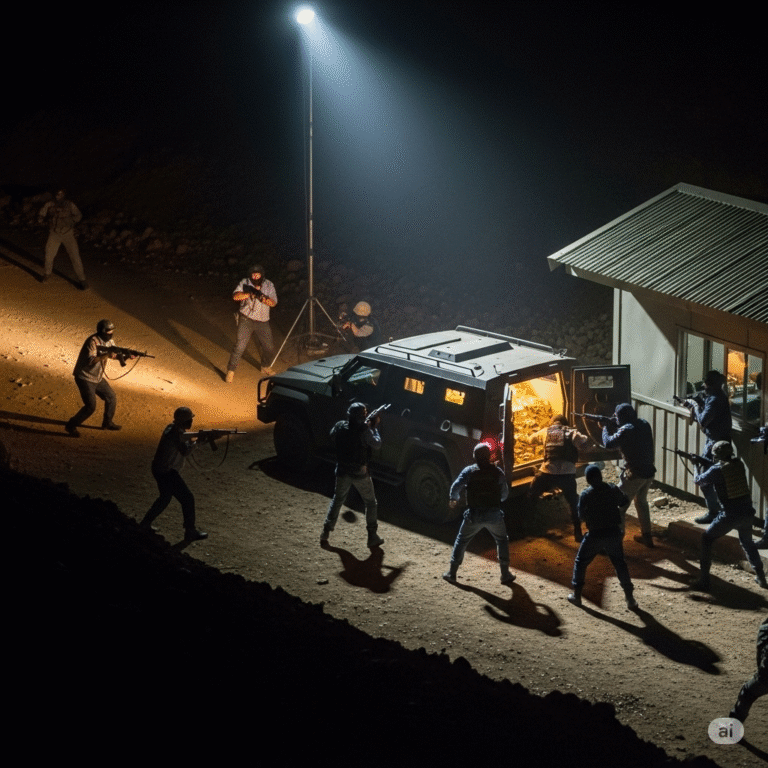
The High Court has ordered DDNS Security Operations, trading as Securico, to pay US$675,000 to How Mine after the security firm lost 11.95kg of gold bullion during an armed robbery on October 4, 2022, while transporting the precious cargo to Bulawayo.

How Mine accused Securico of failing to provide adequate and competent security for the consignment. The mine argued that the company did not use an armoured truck, deployed security personnel without panic buttons, and some guards lacked airtime to raise an alarm during the robbery.

Securico disputed the claim, maintaining that the robbery was an unforeseeable event and no amount of preparation or foresight could have prevented the loss.

However, in a judgment handed down on July 1, Justice Joseph Chilimbe ruled in favour of How Mine.

The judge stated:

“I must take due regard of the fact that officially, both parties (How Mine and Securico) were alive to the risks confronting bullion runs, not least of which was the compromise of security arrangements.

I must relate to a paradox emerging from the law and facts herein from that aspect. Securico as a public carrier was obliged, under the Praetor’s Edict’s strict liability, to deliver the consignment intact. It therefore assumed risk when it accepted the commission to ferry How Mine’s bullion under security arrangement which by Securico’s standards, were less than adequate.

But the law extended a reprieve to Securico in the event that loss of consignment was occasioned by superior force. The resultant anomaly however being that the same insufficient arrangements were, according to the evidence given and arguments raised by Securico, contributory to the causus fortuitus. Does the question not arise then that defendant walked into a situation which it knew very well could arise? What then is the effect of this possible conclusion on the defence of vis major (unavoidable event or circumstance, beyond the control of parties involved) tendered herein?

In its plea, Securico averred that the event was unforeseeable. In evidence, its witnesses accepted that robberies formed a well-known risk.”

Justice Chilimbe also criticised the failure by the security team to trigger alarms or call for backup, noting that this lack of response “bordered on negligence.”

He added that Securico transported the gold using “soft skin” vehicles instead of armoured vans and knowingly operated with limited firepower. The company had also instructed its guards not to engage robbers in gunfights, prioritising the preservation of life.

Said the judge:

“That decision (to preserve life) was crucial to the evaluation of the guards’ response during and after the robbery. The question being; – where a carrier sets out on a dangerous enterprise involving the prospect of violent depredations, does it not in fact assume the risk of loss where it restrains its personnel from boldly engaging the despoilers? And does that risk not escalate where there are known security inadequacies? Including deployment of a soft skin van which the staid Mr Marko Mukazi (Securico crew commander) condemned as clearly unfit for purpose?”

He concluded:

“… I reach the conclusion that Securico failed to discharge the requisite onus of proving the defence of vis major. How Mine succeeds in the main.

Securico is ordered to pay How Mine the sum of US$675,000 and interest thereon at the rate of 5 percent per annum with effect from October 4, 2022, up to date of payment in full.”

Advocate Thabani Mpofu represented How Mine, while Romeo Chatereza appeared for Securico.

Recruitment Agency Representative in Damage Control After Discriminatory Mining Job Advert

0

The recruitment agency behind a mining job advert that appeared to favour foreign-educated candidates has issued a private apology in an attempt to quell backlash from a local labour union.

By Ryan Chigoche

The vacancy, advertised by Precision Recruitment International, was for a Mine General Manager position at an established mining company operating in Zimbabwe. The advert included a line specifying a preference for a qualification “preferably obtained from a university outside Zimbabwe,” a phrase that immediately provoked outrage and accusations of bias against local professionals.

This development comes after this publication highlighted the discriminatory language, with local labour unions also voicing concerns, condemning the agency for promoting exclusionary recruitment practices.

In a written email apology sent privately to a local labour union, seen by Mining Zimbabwe, a representative of the agency accepted responsibility for the wording, clarifying that the client had no input in the phrasing and had not requested any preference based on educational background. The recruiter claimed sole responsibility and confirmed the controversial phrasing was removed once concerns were raised.

“I am writing to offer my sincere apologies regarding the wording used in a recent advertisement for a Mining General Manager position that I posted last week. Upon reflection, I fully acknowledge that the phrasing in the advert did not align with Zimbabwe’s fair recruitment principles and could understandably raise concern. I wish to clarify that it was never my intention to undermine local talent or to deviate from ethical recruitment practices. My objective was solely to explore a broader pool of candidates, including those abroad, while still holding deep appreciation for the wealth of mining expertise available locally,” read part of the message.

While the agency acknowledged its mistake, its choice to issue a private apology rather than a public one has done little to ease frustrations within the sector. Many stakeholders expected a more transparent and accountable response, especially given the sensitivity of the issue.

Besides, the labour union only responded after being made aware of the job post by this publication.

The agency’s private apology sounds more of a damage control exercise than a genuine demonstration of accountability.

By placing sole responsibility on the wording and distancing the client from the issue, the agency risks appearing dismissive of the sector’s legitimate concerns.

Adding to that, merely apologising after public outcry is insufficient, and real progress will require a transparent commitment to addressing the underlying biases that allowed such an advert to be published.

The incident has reignited a broader debate about the devaluation of Zimbabwean-trained professionals in senior recruitment. Many contend that favouring foreign credentials, especially in a sector that relies heavily on local knowledge and leadership, undermines not only individuals but the national workforce as a whole.

As Zimbabwe’s mining industry continues to expand, pressure is mounting for more transparent, fair, and locally aligned hiring practices. For many, the agency’s private apology may have admitted fault, but it has yet to answer the larger questions it raised. Meanwhile, other stakeholders are also being urged to collaborate and enhance the quality, recognition, and perception of local qualifications to ensure Zimbabwean professionals receive fair opportunities.

Zimbabwe Gold Deliveries Up 22.3% in June, 36.6% in Q2 on ASM Growth

0

Zimbabwe’s gold sector recorded a significant resurgence in June 2025, with total deliveries to Fidelity Gold Refinery (FGR) increasing by 22.3% month-on-month (MoM) to 4,265.4926 kilograms, up from 3,488.0623 kg in May, Mining Zimbabwe can report.

By Rudairo Mapuranga

The robust performance was driven by a sharp rebound in artisanal and small-scale miner (ASM) output and consistent contributions from large-scale producers.

ASM deliveries in June stood at 3,312.6102 kg, reflecting a 29.9% MoM increase from May’s 2,552.0986 kg. Large-scale miners also registered a modest uptick, with deliveries rising to 952.8824 kg, up 1.81% from 935.9637 kg in May.

The June output marks a recovery after a brief slowdown in May when total gold deliveries had fallen 9.48% MoM from April’s 3,853.5812 kg. The latest rebound affirms Zimbabwe’s steady upward trend in gold production, fueled largely by small-scale miners responding to high global gold prices and better returns from Fidelity Gold Refinery.


Second Quarter Output Up 36.6% from Q1 2025

Zimbabwe’s second-quarter gold production surged to 11,607.1361 kg, a 36.6% increase from 8,496.4132 kg recorded in the first quarter of 2025. This dramatic growth was largely driven by artisanal and small-scale miners, whose output rose from 5,770.8580 kg in Q1 to 8,790.8174 kg in Q2 — representing a 52.3% quarter-on-quarter increase.

Large-scale miners delivered 2,816.3187 kg in Q2, compared to 2,725.5552 kg in Q1, a 3.3% increase, highlighting the slower growth pace among formal operators amid persistent structural and capital-related challenges.

These figures reaffirm the dominance of the ASM sector, which continues to contribute the lion’s share of Zimbabwe’s gold output. In 2024, ASM accounted for more than 65% of total production, and the trend appears to be accelerating in 2025.


Year-on-Year Growth Reflects Sector Momentum

Although May saw a dip compared to April, the year-on-year (YoY) statistics illustrate sustained sectoral momentum. Total gold deliveries in May 2025 rose 27.6% YoY, reaching 3,488.0632 kg compared to 2,734.1329 kg in May 2024. ASM deliveries alone increased 52.06% YoY, while large-scale miners posted an 11.34% decline, reflecting the resilience and agility of small players amid national and global headwinds.

In contrast, April 2025 stood out as the strongest month yet, with 3,853.5812 kg delivered — a 47% YoY increase from April 2024’s 2,386.9067 kg. ASM contributed 2,926.1086 kg, marking an 82.42% YoY jump, while large-scale producers delivered 927.4726 kg, a 20.65% YoY decline.


Gold Exports and Investment Outlook

Driven by the strong performance in the first half of the year, Zimbabwe’s gold export earnings soared past US$740 million in the first five months of 2025 — up from US$590 million during the same period in 2024. The export growth is attributed to both volume increases and record global gold prices, which recently surpassed US$3,000 per ounce.

Economist Dr. Prosper Chitambara noted that gold’s appeal as a safe-haven asset amid global economic uncertainty has increased investor interest, strengthening Zimbabwe’s position as a key regional player. Tax consultant Simba Hamudi also predicted that gold would likely maintain its top spot in export receipts throughout 2025.


Ambitious Targets and Investment Needs

The Zimbabwe Miners Federation (ZMF) has projected that gold output for 2025 could reach 52 tonnes, well above the official 40-tonne government target. ZMF President Henrietta Rushwaya emphasized the capacity of the ASM sector to deliver, provided that formalisation and input support are scaled up.

“This year, I’m sure we’re going to surpass the 40 tonnes that the government has earmarked for national gold production. We’ll probably come up with between 50 to 52 tonnes,” Rushwaya said.

Meanwhile, former Chamber of Mines President Thomas Gono underscored the need for over US$1 billion in investment to achieve Zimbabwe’s ambitious 100-tonne annual gold production vision, highlighting critical areas such as exploration, mechanisation, and beneficiation.

ZDAMWU Urges Industry-Wide Collaboration to Strengthen and Promote Zimbabwe’s Mining Engineering Qualifications

0

The Zimbabwe Diamond and Allied Minerals Workers Union (ZDAMWU) is urging industry stakeholders to collaborate in enhancing the global standing of local mining qualifications for the benefit of both the sector and its workforce.

By Ryan Chigoche

The vacancy, posted by Precision Recruitment International, called for a General Manager with a Mining Engineering degree “preferably obtained from a university outside Zimbabwe.”

This phrasing provoked fierce backlash within the mining sector, with local professionals viewing it as a direct devaluation of Zimbabwe’s hard-earned educational credentials.

While ZDAMWU condemned the advertisement for what it views as discrimination against locally obtained mining engineering qualifications, the Union’s General Secretary, Justice Chinhema, emphasizes the need for joint efforts among industry players to improve the quality of local qualifications and prevent such situations in the future.

“We call on industry stakeholders, regulatory authorities, and training institutions to work together to strengthen the quality and global competitiveness of Zimbabwean mining qualifications. This includes enhancing local training programs, accreditation standards, and continuous professional development opportunities. We believe that local qualifications, when supported by quality training and experience, are valuable assets that can meet international standards and contribute significantly to the growth of the mining sector without necessarily creating a form of discrimination,” Chinhema said.

“While we acknowledge that international standards and exposure can benefit professionals, we strongly advocate for the development and recognition of Zimbabwean mining engineering qualifications. Our local universities and technical colleges are capable of producing highly competent mining engineers who understand the unique geological, environmental, and socio-economic contexts of Zimbabwe’s mineral resources,” he added.

Meanwhile, stakeholders had their say on Mining Zimbabwe’s Facebook page.

Honest Mapuranga

The person who is earmarked for this position got his/her degree outside Zim. So it’s a way of justifying corruption and nepotism.
Jon Priest

They are discriminating against degrees earned in Zim which can be read many ways, all of them negative. I am surprised at their ignorance and they should be told to remove the advert and be more equitable.
Ranga Mberi

There’s no polite way of saying this, Mining Zimbabwe — it is nonsense chaiyo. Chete.
Sadly, kungoti lots of my people are now, understandably, so low on confidence that they justify anything thrown at them that puts them down.
Wendy Rufaro

That post has a candidate already arikusuiter kuva nedegree rekunze 🤦🏽‍♀️ Wits alumni
Samuel Mushuku

Exactly, Zimbabwean universities produces incompetent engineers.
Simbarashe Chinyerere Saunyama

Precision Recruitment International is quite a significant player in the recruitment space. This isn’t good practice at all. If their client want a person schooled outside Zim, they should have advertised without that specification and then pick the candidates from the applicants. This open discrimination is unethical, especially given that the mine is in Zimbabwe.
Prince Ngara

The quality of teaching and as a result the quality of graduate is vastly different. Our engineers can’t even solve simple challenges.
Wilfred Sibanda

In Zimbabwe, we don’t have engineers; instead, we have maintenance technicians.

Although the advertisement has drawn widespread criticism, it also offers an opportunity for self-reflection. It challenges stakeholders to critically assess the current shortcomings within Zimbabwe’s education system and to take proactive steps toward restoring the country’s reputation for producing high-calibre graduates, both within Africa and globally.

The Association of Mine Managers of Zimbabwe (AMMZ) conducts technical visits to various Mines across the country. Mining University Lecturers should take advantage and join the visits to keep abreast of advancing technologies.

Factors such as the current industrial action by university lecturers and ongoing challenges faced by tertiary institutions have, unfortunately, contributed to perceptions that undermine the value of local qualifications. Addressing these issues is vital to rebuilding pride and confidence in Zimbabwe’s engineering education and its professionals.

The Ministry of Mines and Mining Development is yet to comment on the ad. However senior officials have been in touch with this publication and are investigating which Mine the ad is from.