Home Blog Page 89

Ariana Resources Identifies Gold-in-Soil Anomaly, Enhancing Prospects at Dokwe Project

0

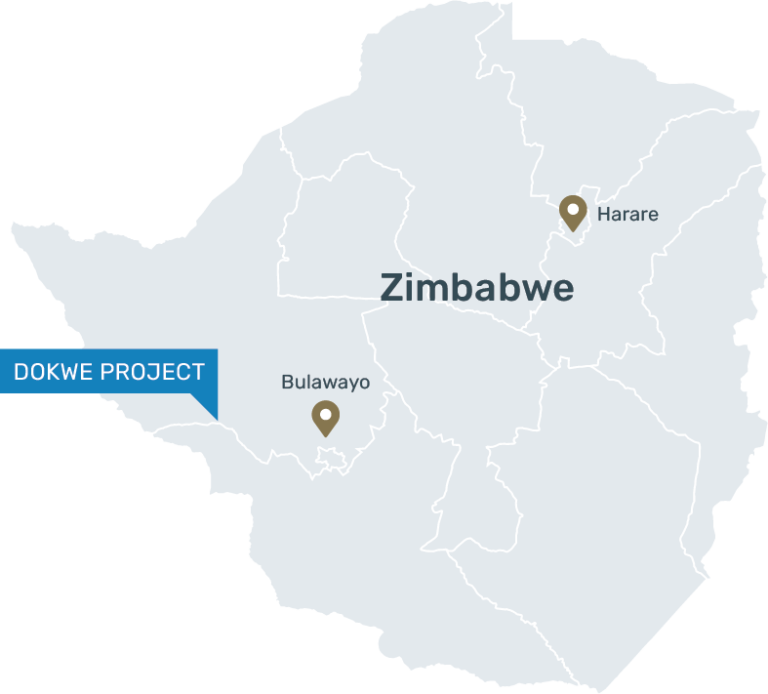
Ariana Resources plc, the AIM-listed mineral exploration and development company, has announced the discovery of a significant 500-metre-long gold-in-soil anomaly at its Dokwe Gold Project in Zimbabwe, located just 125 metres northeast of the planned Dokwe North pit boundary.

By Ryan Chigoche

The anomaly, detected using a combination of portable X-ray fluorescence (pXRF) and detectORE technology, marks a major step forward in the project’s exploration campaign.

Geochemically, the newly identified anomaly closely mirrors the gold and arsenic signature already known above the Dokwe North deposit, reinforcing confidence in the continuity of mineralisation. Ariana says the area presents a strong target for near-term drilling, with no prior drilling having taken place within the anomaly zone.

“This is a highly significant discovery and will be tested as a priority,” said Managing Director Dr Kerim Sener. “It’s located immediately along strike from Dokwe North and aligns geologically with the known mineralised zones.”

The discovery adds further momentum to a string of positive updates from Ariana this year. In March, the company reported a 9% increase in its In-Pit Mineral Resource Estimate (MRE), now totalling 19.7 million tonnes at 1.54 g/t gold (977,000 ounces) in the Measured and Indicated category at a 0.6 g/t cut-off.

Across all categories, the resource stands at 1.42 million ounces of gold at a 0.3 g/t cut-off, making Dokwe Zimbabwe’s largest undeveloped gold project.

The updated geological model, particularly at Dokwe North, has significantly improved the delineation of higher-grade zones, offering more flexibility in mine design and scheduling.

In April, as reported by Mining Zimbabwe, Ariana presented an independent valuation of the Dokwe North deposit to shareholders, placing the asset’s worth at US$160 million based on a gold price assumption of US$2,000/oz. Notably, this figure excludes the 0.5% net smelter return royalty payable to Yataghan Investments.

The valuation highlights growing confidence in Dokwe’s economics. Ariana’s current mine plan targets a 2 Mtpa processing facility and a 10-year mine life with projected annual production of up to 100,000 ounces of gold. The valuation, however, assumes a more conservative output of 60,000 ounces per year.

The Dokwe Project lies within the Tsholotsho District, 110 km northwest of Bulawayo, in the western Bulawayo-Bubi Greenstone Belt. The resource is primarily hosted in Archaean volcanic rocks, with gold mineralisation occurring where sub-vertical shear zones intersect southeast-dipping lithological contacts—most notably within dacite, tuff, and porphyry units, often showing visible coarse gold.

As of July, Ariana has collected and analysed over 6,100 soil samples as part of a regional pXRF programme across the 42 km² project area.

The gold-in-soil anomaly northeast of Dokwe North was first flagged by an arsenic anomaly (4–8 ppm) through cover, leading to a follow-up detectORE analysis, which confirmed elevated gold levels. The new zone, trending northeast for approximately 500 metres, has now become a central target for Ariana’s upcoming drilling campaign.

“This discovery aligns with everything we’ve learned about the geological setting and mineralisation controls at Dokwe,” said Sener. “It also showcases the power of detectORE to identify buried mineralisation across broader regional terrains.”

Looking ahead, Ariana intends to apply detectORE and pXRF technologies across other underexplored zones in the Bulawayo-Bubi Greenstone Belt, testing whether Dokwe forms part of a larger camp-scale system. A new drilling programme set to begin in June 2025 will focus on metallurgical, geotechnical, and step-out exploration drilling to further define the resource and advance project development.

With growing resource confidence, a compelling valuation, and continued exploration success, Ariana Resources is firmly positioning Dokwe as a cornerstone asset in Zimbabwe’s evolving gold sector.


Gold buying prices per gram in Zimbabwe, 4 July 2025

Gold buying prices per gram in Zimbabwe today, 4 July 2025, from the official gold buyer and exporter Fidelity Gold Refinery (FGR).

  • SG 90% and ABOVE US$101.23/g.
  • SG ABOVE 89% BUT BELOW 90% US$100.16/g.
  • SG ABOVE 80% BUT BELOW 85% US$99.09/g.
  • SG ABOVE 75% BUT BELOW 80% US$98.02/g.
  • SAMPLE BELOW 10g BUT ABOVE 5g US$96.41/g.

Fire Assay CASH $101.77/g.

NB: Fire Assay cash price is for gold above 100g; no sample is deducted.

A sample of not more than 10g is deducted for the Fire Assay Transfer price.

A 2% royalty is charged on all deposits (Small-scale miners).

A 5% royalty is set for Primary Producers.

Zimbabwe’s Gold Exports Surge Past US$740 Million

0

Zimbabwe’s gold sector is enjoying a resurgent year, with export earnings surpassing US$740 million in the first five months of 2025, significantly up from just over US$590 million during the same period last year, Mining Zimbabwe can report.

By Rudairo Mapuranga

Buoyed by record-high global prices and robust deliveries from artisanal and small-scale miners (ASM), the country’s gold industry is not only consolidating its position as the top foreign currency earner but also exceeding production forecasts.

According to the Reserve Bank of Zimbabwe, gold exports remain on an upward trend, supported by global market prices that recently breached US$3,000 per ounce — their highest level on record. The bullish prices have fuelled investor confidence and revitalised local mining operations, particularly among small-scale producers.

Economist Dr. Prosper Chitambara attributed the positive momentum to global demand for gold as a safe-haven asset amid economic uncertainty.

“Gold is trending upwards, and this has ignited more investor interest, increasing the overall value of Zimbabwe’s exports,” he said.

Tax consultant Simba Hamudi echoed this sentiment, stating that if the current trajectory continues, gold will remain the top contributor to Zimbabwe’s export receipts through to the end of the year.


ZMF Projects Record Production

The Zimbabwe Miners Federation (ZMF) has forecast that the country could produce up to 52 tonnes of gold in 2025, well above the government’s target of 40 tonnes. Speaking in Harare, ZMF President Henrietta Rushwaya expressed confidence in the sector’s ability to deliver.

“This year, I’m sure we’re going to surpass the 40 tonnes that the government has earmarked for national gold production. We’ll probably come up with between 50 to 52 tonnes,” Rushwaya said.

Her optimism is grounded in the extraordinary performance of the ASM sector, which contributed nearly 69% of total gold output in 2024. With improved incentives from Fidelity Gold Refinery, better prices, and increasing formalisation, small-scale miners are expanding their production capacity and becoming more bankable.


Production Trends and Market Realities

Official data from Fidelity Gold Refinery indicates that while gold deliveries declined 9.48% in May compared to April 2025 — falling to 3,488.06 kg from 3,853.58 kg — the year-on-year picture remains overwhelmingly positive. Compared to May 2024, gold output rose 27.6%, highlighting the strength of the sector.

The ASM sector delivered 2,552.10 kg in May 2025, marking a 52% increase from the same month last year, despite a slight dip from April’s record haul. Large-scale miners, meanwhile, delivered 935.96 kg in May — a modest month-on-month gain but an 11.34% drop compared to May 2024, underlining the challenges they face with high production costs and limited access to capital.

April 2025 stands out as the year’s strongest month so far, with deliveries totalling 3,853.58 kg — a 47% increase from April 2024. ASM was responsible for 2,926.11 kg, an 82.42% year-on-year surge, while large-scale producers contributed less than 1,000 kg.

The first quarter of 2025 recorded 8,496.41 kg of gold deliveries, up 40.5% from Q1 2024. ASM’s contribution of 5,770.86 kg represented a staggering 99% increase compared to the previous year.


Calls for Investment and Structured Support

ZMF President Rushwaya stressed the need for increased support to ASM players, calling on the government to introduce an input support scheme similar to that used in agriculture.

“If farmers get inputs every season, why can’t we have a similar programme for small-scale miners? This would boost production dramatically,” she said.

Rushwaya also reaffirmed the need for structured stakeholder engagement to resolve land-use conflicts and strengthen sustainable mining practices.

“We need structured engagement between all stakeholders. That’s the only way to protect our communities, grow the sector, and formalise ASM operations sustainably.”


100-Tonne Ambition Requires Over US$1 Billion

Former Chamber of Mines President Thomas Gono recently stated that Zimbabwe could reach 100 tonnes of gold production annually, but only if bold investments are made across the value chain. Gono estimates that over US$1 billion is needed to fund exploration, mechanisation, and processing capacity for both ASM and large-scale operations.

“There is no doubt Zimbabwe can reach 100 tonnes of gold production per year, but it will require coordinated investment of over a billion dollars,” Gono said.


Challenges Remain

Despite the optimism, Rushwaya raised concerns over some aspects of the Mines and Minerals Bill, particularly around community protection and the participation of foreign miners within claims meant for locals.

“We now have pegging taking place less than 100 metres from people’s homes — even across graveyards. That’s disrespectful and must be addressed,” she warned.

Rushwaya also challenged the continued allocation of 40-hectare claims to foreign nationals.

“A person coming to mine 40 hectares cannot be called an investor. That space is meant for locals,” she added.


A Sector in Transition

The Zimbabwean gold mining industry is at a turning point. Global prices, strong ASM performance, and increased formalisation have created momentum, but long-term success will require sustained investment, modernisation of legal frameworks, and consistent stakeholder support.

With the right policies and partnerships, Zimbabwe could not only surpass its 2025 targets but also lay the foundation for a century-defining gold economy.

Planet Gold Aims to Reduce Mercury Use by 5 Tonnes in 5 Years

0

The Planet Gold Zimbabwe project is targeting a major environmental milestone—eliminating over 4.85 tonnes of mercury from the country’s artisanal and small-scale gold mining (ASM) sector over the next five years, Mining Zimbabwe can report.

By Rudairo Mapuranga

Speaking to Mining Zimbabwe, Planet Gold Project Manager Nyaradzo Mutonhori said this effort is part of Zimbabwe’s broader commitment to safer, more sustainable mining practices under the Minamata Convention on Mercury. She noted that the programme is being co-chaired by the Ministry of Mines and Mining Development and the Ministry of Environment, Climate and Wildlife.

“We aim to reduce the use of mercury by 4.85 tonnes in five years. This aligns with Zimbabwe’s National Action Plan under the Minamata Convention, which is hosted by the Ministry of Environment,” said Mutonhori.


Searching for Safer, Chemical-Free Gold Processing Methods

The project is currently evaluating alternative technologies to mercury use, with a strong preference for chemical-free methods over options like cyanide, which, while effective, also poses serious health and environmental risks.

“While cyanide may be considered, it’s still a hazardous chemical. We are focused on identifying safer, mercury-free, and ideally chemical-free processing technologies,” Mutonhori explained.

She said the project is committed to finding solutions that avoid introducing new risks into mining communities while improving gold recovery and reducing environmental harm.


National Coordination Through a Multi-Stakeholder Committee

Planet Gold Zimbabwe is being implemented through a Project Steering Committee that includes key institutions such as the Zimbabwe Miners Federation (ZMF), Fidelity Gold Refineries, the Ministry of Health and Child Care, and several other regulatory departments.

“It’s a coordinated national effort. We have all the critical stakeholders on board, from miners to regulators. Collaboration is central to achieving our goals,” she said.


Tackling Mercury Use in ASM: A National Priority

Mercury remains widely used in Zimbabwe’s ASM sector due to its low cost and simplicity in gold amalgamation. However, the toxic metal poses significant threats to human health, ecosystems, and water sources, especially in rural mining communities.

Zimbabwe’s commitment to mercury reduction under the Minamata Convention signals a shift toward a modernised and responsible mining model—one where economic development does not come at the cost of public health and the environment.

ZDAMWU Slams Job Advert That Appears to Undermine Zimbabwean Mining Qualifications

0

A mining company preparing to launch operations in Zimbabwe has come under fire from the Zimbabwe Diamond and Allied Minerals Workers’ Union (ZDAMWU) and other industry stakeholders after advertising a senior leadership role that appears to devalue Zimbabwean mining engineering qualifications.

By Ryan Chigoche

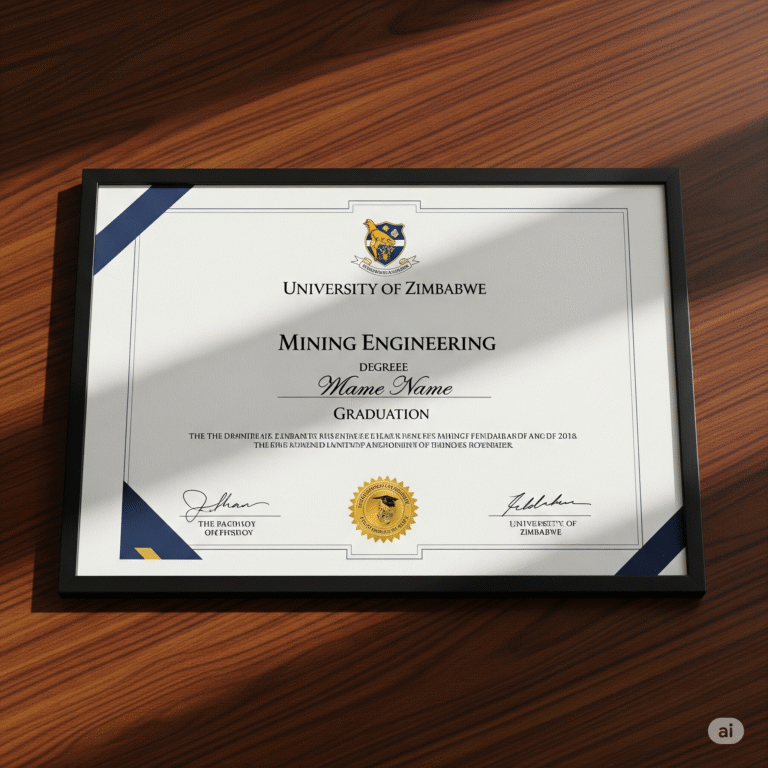
The job vacancy, posted by recruitment agency Precision Recruitment International, calls for a General Manager with a Mining Engineering degree “preferably obtained from a university outside Zimbabwe.”

The wording has drawn sharp criticism from ZDAMWU, which told Mining Zimbabwe that the advert raises serious questions about the recognition and value placed on local qualifications and skills.

“The recent advertisement… raises important questions about the perceived value and recognition of local mining engineering qualifications and whether the investors coming to invest in Zimbabwe do value local qualifications and skills,” said ZDAMWU General Secretary Justice Chinhema.

Zimbabwe’s mining sector has, for decades, been led by professionals trained at local institutions. Even during the country’s most difficult economic periods, local engineers have played a central role in sustaining production across gold, platinum, diamond, and other mineral operations.

Critics argue that the advert sends a damaging message about the credibility of Zimbabwean qualifications at a time when many local engineers continue to lead major mining projects both domestically and abroad.

The controversy has also reignited debate over the state of Zimbabwe’s engineering education system. While some acknowledge that ongoing economic challenges may have strained local institutions, many insist that Zimbabwean-trained engineers remain highly capable and experienced in managing mining operations in the country’s unique geological and socio-economic context.


ZDAMWU Calls for Fair Recruitment Practices

In comments to Mining Zimbabwe, ZDAMWU acknowledged that international exposure can benefit professionals but strongly warned against undermining local skills.

“It is crucial that these qualifications are seen as credible and competitive on both local and international platforms,” ZDAMWU said.

While strongly advocating for the development and recognition of Zimbabwean mining engineering qualifications, the union warned that giving preference to foreign qualifications “may inadvertently undermine the confidence of local professionals and could contribute to a perception that local expertise is less valuable.”

ZDAMWU urged mining companies to adopt “fair and transparent recruitment policies” that recognize the quality of Zimbabwean qualifications and experience. It also called on regulatory bodies, training institutions, and industry stakeholders to work together to strengthen local training programs and enhance global competitiveness.

“ZDAMWU remains committed to advocating for fair employment practices, recognition of local talent, and the development of a robust and self-sufficient mining workforce in Zimbabwe,” Chinhema said.

The advert comes at a time when the government is actively pushing for greater local content, empowerment, and skills recognition across the mining sector. As the controversy continues to spark debate, attention will now turn to how the mining company and its recruitment partners respond.

Gold buying prices per gram in Zimbabwe, 3 July 2025

Gold buying prices per gram in Zimbabwe today, 3 July 2025, from the official gold buyer and exporter Fidelity Gold Refinery (FGR).

  • SG 90% and ABOVE US$101.34/g.
  • SG ABOVE 89% BUT BELOW 90% US$100.27/g.
  • SG ABOVE 80% BUT BELOW 85% US$99.20/g.
  • SG ABOVE 75% BUT BELOW 80% US$98.12/g.
  • SAMPLE BELOW 10g BUT ABOVE 5g US$96.52/g.

Fire Assay CASH $101.88/g.

NB: Fire Assay cash price is for gold above 100g; no sample is deducted.

A sample of not more than 10g is deducted for the Fire Assay Transfer price.

A 2% royalty is charged on all deposits (Small-scale miners).

A 5% royalty is set for Primary Producers.

A mine posts a job with a Mining Engineering degree “preferably obtained from a university outside Zimbabwe”

0

A mining operation in Zimbabwe has sparked widespread condemnation after advertising a senior leadership role that appears to undermine the value of Zimbabwean mining engineering qualifications.

By Ryan Chigoche

The vacancy, posted by Precision Recruitment International, calls for a General Manager with a Mining Engineering degree “preferably obtained from a university outside Zimbabwe.”

This phrasing has provoked fierce backlash within the mining sector, with local professionals viewing it as a direct devaluation of Zimbabwe’s hard-earned educational credentials.

Zimbabwe’s mining sector has long relied on locally trained engineers to lead its operations. Many earned their degrees during periods when Zimbabwean universities were regarded as producing some of the best mining engineering graduates in the region.

These qualifications have served as the foundation for decades of success, with local mine managers steering operations through some of the country’s toughest economic and operational challenges, including hyperinflation, power shortages, and regulatory uncertainty.

Today, most senior managers at active mines hold Zimbabwean qualifications and have risen through years of hands-on experience, leveraging deep practical knowledge of local geology and regulatory frameworks. This expertise remains crucial and difficult to replace.

Global Recognition of Zimbabwean Engineers

Zimbabwean mining engineers are not just valued at home; their skills and leadership are sought after internationally. Many hold senior roles such as Mine Managers, Operations Directors, and even Chief Operating Officers across Southern Africa and Australia.

Their success in jurisdictions with more stringent safety and environmental standards challenges the notion that Zimbabwean qualifications are inferior.

Against this backdrop, the insistence on a foreign degree for a role requiring at least 10 years of senior experience raises important questions.

Candidates of this seniority graduating from Zimbabwean universities around or before 2005 were educated under systems still highly respected internationally.

Critics argue that preferring foreign degrees unfairly sidelines qualified local professionals and perpetuates an outdated bias against Zimbabwean education.

Adding to that, such a preference often leads to the appointment of expatriates, who come with added costs like relocation packages, expatriate allowances, and higher salaries.

In an industry increasingly focused on cost optimisation and value for shareholders, this approach risks financial inefficiency and operational disruption.

Contradiction With Government Policy and Local Content Framework

Zimbabwe’s mining policy strongly supports local content and skills development, encouraging foreign investors to employ and promote Zimbabwean professionals.

By prioritising foreign degrees, the company risks running afoul of these policies, potentially attracting regulatory scrutiny and harming its standing with government authorities.

This recruitment language echoes colonial-era attitudes that equate foreign education with superiority, undermining years of progress in decolonising Zimbabwe’s mining leadership.

It also perpetuates harmful stereotypes that unfairly diminish local professionals despite their proven capabilities.

By choosing to bypass local talent rather than investing in mentoring and upskilling, the company signals a lack of commitment to the long-term growth of Zimbabwe’s mining workforce.

This approach is short-sighted and jeopardises the sustainability of the sector’s human capital.

This development comes at a time when Zimbabwe’s mining industry is entering a growth phase, with new lithium, gold, and platinum projects coming online.

At this pivotal moment, it is important that investors act as partners in local empowerment, nurturing and elevating local leadership rather than sidelining it.

As the debate intensifies, many are calling on regulators, professional bodies, and government agencies to step in and ensure recruitment practices are fair, transparent, and aligned with Zimbabwe’s national development goals.

Zimbabwe’s mining sector deserves leadership that recognises and values its own engineering professionals who have proven their mettle on both the local and global stages.

Premier Converts Interest Owed to Canmax into Shares

0

London Stock Exchange-listed mining and exploration junior, Premier African Minerals Limited, has issued over 5.7 billion new shares to Canmax Technologies Co., Ltd., converting close to US$940,000 in accrued interest into equity, as the two companies continue to deepen their strategic collaboration on the Zulu Lithium and Tantalum Project in Fort Rixon, Mining Zimbabwe can report.

By Rudairo Mapuranga

The transaction, which sees £688,957.63 (US$938,755.14) worth of interest transformed into 5,741,313,598 ordinary shares, follows the terms laid out in an amended offtake and prepayment agreement between the two parties. The shares, priced at 0.012 pence each—the same as the direct subscription announced on 11 June 2025—are expected to be admitted to trading on the AIM market of the London Stock Exchange around 8 July 2025.

The new shares will rank equally with existing ordinary shares. Upon issuance, Premier’s total issued share capital will stand at just over 76 billion shares, which shareholders may use as a new benchmark for disclosing ownership under the UK’s financial transparency regulations.

This equity conversion is part of a broader realignment of the commercial relationship between Premier and Canmax. In December 2024, both companies amended their original 2022 offtake and prepayment agreement after Premier defaulted on its obligation to deliver a minimum of 1,000 tonnes of lithium spodumene concentrate per month in late 2023. The company had secured US$34.64 million in prepayments from Canmax to construct and commission the Zulu Lithium plant.

Due to the missed deliveries in November and December 2023, Canmax carried forward a balance of US$3 million and raised the applicable interest rate on the outstanding amount to 12% per annum from 1 December 2023. Despite these setbacks, Canmax remained supportive, opting for a collaborative path rather than invoking more severe contractual remedies.

The most recent amendment, announced late last year, includes several key safeguards designed to protect Canmax’s investment while giving Premier time to find new partners and stabilise production. The Long Stop Date for Premier to settle its obligations was extended to 31 December 2025 or until the company secures a Canmax-approved buyer for the lithium product. Among the conditions, Premier must not pledge its assets without written consent from Canmax and must maintain financial transparency and operational compliance. Premier’s board members have also personally committed to fulfilling these obligations.

Importantly, Canmax now retains the right to partially convert outstanding obligations into Premier shares, maintaining a 13.38% stake in the company on a fully diluted basis.

Premier’s CEO, George Roach, has previously acknowledged the challenges faced in bringing Zulu Lithium into full production but maintains confidence in the project’s potential and Canmax’s ongoing support.

With this share issuance and Canmax’s growing equity stake, the relationship between the two companies appears to be evolving from simple prepayment-for-offtake terms into a more strategic, equity-based partnership. For Zimbabwe, this signals renewed investor confidence in one of its most prominent lithium projects—a critical mineral for the global electric vehicle and energy storage sectors.

As the Zulu project edges closer to stabilised production, Canmax’s involvement will likely provide not just capital, but crucial technical oversight and market credibility, potentially positioning Zulu Lithium as a long-term player in Africa’s rapidly expanding battery minerals landscape.

Gold Demand Surges as Investors Seek Stability in Volatile Times 

0
According to the World Gold Council, as highlighted in the newly released In Gold We Trust Report 2025, global demand for gold bars and coins rose significantly in the first quarter of 2025. Total demand increased by 325 tonnes, marking a 3% year-on-year rise and standing 15% above the five-year average. This rebound signals a renewed interest from Western financial investors, following a prolonged period of hesitation.

By Ryan Chigoche

Investor sentiment in Western markets is increasingly shaped by concerns over economic stability, wealth preservation, and hedging against crises. The Precious Metals Study 2024, conducted by the University of St. Gallen on behalf of Philoro Edelmetalle, offers insight into these trends.

The study, which surveyed 3,000 Swiss investors, identified “stability and long-term investment” as the primary reason for buying gold, cited by 43% of respondents. This was followed closely by motivations for “value appreciation and profit generation” and “protection against economic crises,” both at 31%.
Switzerland’s strong cultural affinity for gold remains evident. Private investors in the country collectively hold around 200 tonnes of gold roughly the weight of a blue whale. Storage habits, however, reveal a compromise between security and convenience. While 48% of Swiss investors store their gold securely at banks or with precious metals dealers, a surprising 20% choose to keep their gold unsecured at home or even buried in gardens.

While investment demand strengthened, the jewellery market struggled under the weight of rising gold prices. Global jewellery demand fell by 11% in 2024, making it one of the weakest years since 2009, excluding the pandemic-disrupted 2020. The largest decline came from China, where demand dropped by 24%, driven by slowing income growth and weaker consumer confidence.

India, traditionally highly sensitive to gold prices, fared better. Jewellery demand there fell only 2%, supported by strong economic growth projections of 6.5% for both 2025 and 2026 and aided by a reduction in gold import duties implemented in July 2024. Festive and wedding season demand in the second half of the year further buoyed sales, pushing India’s total jewellery spending to INR 3.6 trillion, with 70% of that demand concentrated in the latter half of the year.

Other regions also recorded declines. Jewellery demand fell by 3.7% in Europe, by 2.8% across North and South America (including Brazil), and by 8.4% in the Middle East. Yet, despite lower consumption volumes, the total value of global jewellery demand reached an all-time high of USD 144 billion, thanks to the gold price rally, representing a 9% year-on-year increase in value.

The downward trend in jewellery demand extended into the first quarter of 2025. Global jewellery consumption fell by a further 21% to 380 tonnes, with India and China again recording above-average declines of 25% and 32%, respectively.

Overall, the gold market continues to be driven by strong central bank demand, especially from emerging markets and Eastern Europe. Private investors in these regions also remain active buyers. Meanwhile, Western financial investors have begun returning to the market, spurred by persistent economic uncertainty and gold’s traditional role as a safe haven.

On the supply side, 2024 saw total global gold supply reach a new record of 4,974 tonnes, a 1% increase over 2023. Mine production held steady at 3,661 tonnes while recycling climbed 11% to 1,370 tonnes, driven by high prices that encouraged increased scrap gold sales. Notably, the fourth quarter of 2024 saw 359 tonnes of recycled gold return to the market, marking a 15% year-on-year increase.

In contrast to the rise in recycling, producer hedging turned negative for the year. After contributing 67.4 tonnes to supply in 2023, net hedging fell by 56.8 tonnes in 2024 as mining companies opted to capitalize on current high prices rather than lock in future sales.

Forecasts of a sharp rise in gold supply proved overly optimistic. Once again, the gold market demonstrated its low supply elasticity, reinforcing the metal’s image as a scarce and enduring store of value, an observation underscored in the report.

ZMF Urges ASM to Update Mining Coordinates as Ministry Rolls Out Digital Cadastre Exercise

0

The Zimbabwe Miners Federation (ZMF) is calling on all Artisanal and Small-Scale Miners (ASM) to urgently participate in the Ministry of Mines and Mining Development’s ongoing exercise to update mining title coordinates, in line with the national rollout of a digital Mining Cadastre Information Management System (MCIMS), Mining Zimbabwe can report.

By Rudairo Mapuranga

In General Notice No. 1 of 2025, the Ministry announced the commencement of a countrywide exercise to align mining title records with modern geospatial data standards. The initiative began on 1 July 2025 and remains open-ended, allowing miners to submit their updated coordinates at any time.

ZMF Chief Executive Officer Mr. Wellington Takavarasha welcomed the exercise and urged small-scale miners not to delay in updating their coordinates.

“This is a vital opportunity for ASM to formalise and secure their mining titles. By participating in this update, small-scale miners can avoid future disputes and benefit from a transparent, digitised system,” said Takavarasha.


Why This Matters for Small-Scale Miners

The digitisation of mining title information is expected to reduce boundary disputes, improve accuracy in title mapping, and streamline mining title administration. For artisanal and small-scale miners—who often face challenges around claim overlaps and unclear boundaries—this is a major step forward.

“Many disputes within the ASM sector are caused by inaccurate or outdated coordinates. This exercise is designed to fix that. It’s a chance to protect what you’ve worked hard for,” Takavarasha emphasised.


What ASM Miners Need to Do

The Ministry has outlined simple steps for all miners to follow:

  1. Gather Required Documents
    Ensure you have your valid mining title documents and any supporting paperwork.

  2. Capture Accurate Coordinates
    Engage a registered mine surveyor to take accurate, survey-grade coordinates for your claim. Handheld GPS devices are no longer accepted for official submissions.

  3. Submit to the Ministry
    Take your updated coordinates and documents to your nearest Ministry of Mines and Mining Development office. There is no deadline, so you can submit at any time—but early action is advised.


Benefits of Compliance

  1. Avoid future disputes with neighbouring miners

  2. Increase your chances of receiving investment or loans

  3. Strengthen your legal claim over your mining area

  4. Become part of Zimbabwe’s modernised mining system

“This is about giving miners peace of mind and integrating them into the formal economy. We encourage all small-scale miners to comply without delay,” said Takavarasha.


ZMF’s Continued Support for ASM

As the national voice of small-scale miners, ZMF has pledged to work closely with the Ministry to ensure that artisanal and small-scale operators are not left behind during the transition to the digital cadastre.

Miners facing difficulties in capturing or submitting coordinates are encouraged to consult their local ZMF structures or Provincial Mining Directors for guidance and technical assistance.

“ZMF is here to help. Formalisation begins with simple steps like this. Let’s secure our claims and be part of Zimbabwe’s mining future,” concluded Takavarasha.