Home Blog Page 96

Zimbabwe Invites Chinese Investors to Explore Untapped Critical Minerals for EV Revolution

0

Zimbabwe is calling on Chinese investors to seize first-mover advantage in one of Africa’s richest yet underexplored mining jurisdictions, as the nation positions itself as a key supplier of critical minerals for the global electric vehicle (EV) and green energy revolution, Mining Zimbabwe can report.

By Rudairo Mapuranga

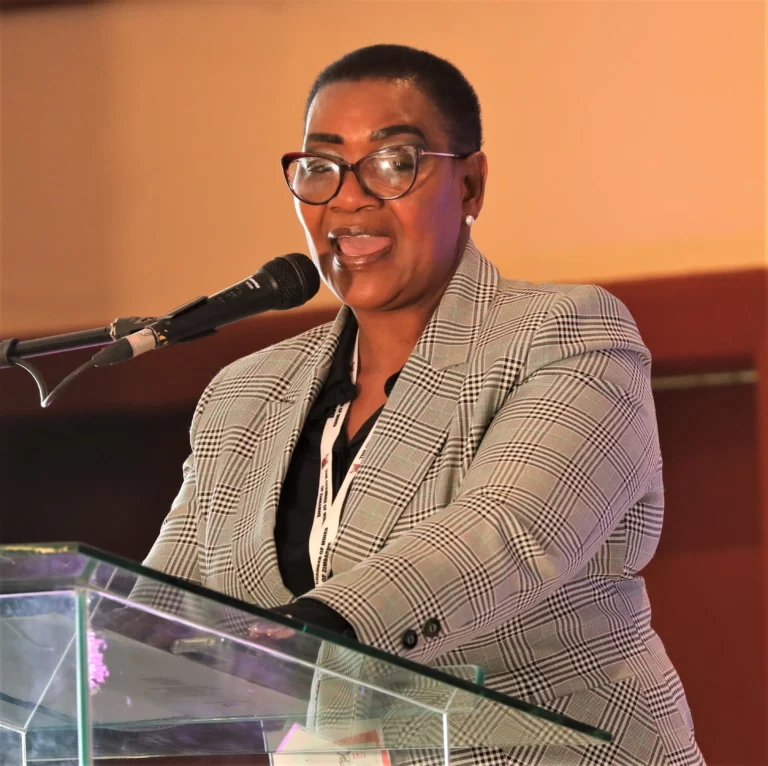
Speaking at the China-Africa Economic and Trade Expo (CAETE) in Changsha, Hunan Province, Zimbabwe Miners Federation (ZMF) President Ms. Henrietta Rushwaya extended an open invitation to Chinese exploration firms, battery manufacturers, and energy companies to partner with Zimbabwe in unlocking the full potential of its mineral wealth — with a particular emphasis on rare earth elements (REEs), lithium, and other battery metals.

“Zimbabwe is open for transformative partnerships,” said Rushwaya. “We are not just offering minerals — we are offering access to a future-facing mining ecosystem. We welcome Chinese expertise in geophysics, remote sensing, and modern exploration techniques to help uncover new world-class deposits.”

With over 60 commercially exploitable minerals, Zimbabwe is among Africa’s most mineral-rich countries. Yet, the past two decades have seen limited investment in new exploration, leaving vast greenfield opportunities untapped. Rushwaya emphasized that Chinese investors are strategically placed to benefit from this exploration frontier — especially as global demand for EV inputs continues to surge.

Zimbabwe’s lithium industry is already being redefined by Chinese-backed investments. Arcadia Lithium Mine (Huayou Cobalt), Bikita Minerals (Sinomine), Kamativi (Sichuan PD Technology Group, a subsidiary of Yahua Group), and Sabi Star (MaxMind) have positioned the country as Africa’s fastest-growing lithium hub. Arcadia alone is set to contribute over 60,000 tonnes of lithium concentrate annually to global battery supply chains.

“We invite Chinese companies not only to mine but to invest in value addition — battery manufacturing, refining, and even EV assembly in Zimbabwe,” Rushwaya said. “Through the African Continental Free Trade Area, Zimbabwe offers access to a market of over 1.3 billion people — a perfect springboard for green mobility solutions made in Africa, by Africa, for Africa.”

She further highlighted the potential in Zimbabwe’s rare earths, referencing Prospect Resources’ promising Chishanya REE Project. Neodymium, praseodymium, and other key inputs for high-performance magnets and electronics are present in commercially viable concentrations.

To support this vision, Zimbabwe’s government has rolled out pro-investor mechanisms such as the Zimbabwe Investment and Development Agency (ZIDA) and a fast-track Investor Grievance Response Mechanism, aimed at de-risking capital inflows and ensuring dispute resolution.

Rushwaya also pointed to the energy sector as a high-impact opportunity, calling on Chinese investors to partner in solar, hydro, and clean coal power generation to support beneficiation and industrialization. “Reliable power is the lifeblood of mining and processing. With Zimbabwe’s abundant coal reserves and strong solar irradiation, energy partnerships are vital.”

Chinese-led projects such as Dinson Iron and Steel Company (DISCO) in Manhize and Palm River Mining in ferrochrome production are already laying the foundation for vertically integrated, industrial-scale operations that transform raw minerals into finished products.

“Zimbabwe is not just a source of raw materials,” Rushwaya concluded. “We are ready to co-create value with our Chinese partners — from exploration to EVs, from critical minerals to modern industry.

Arcadia Lithium Achieves Record Q1 2025 Production

0

Prospect Lithium Zimbabwe (PLZ)’s Arcadia Lithium Mine has kicked off 2025 with a remarkable production surge, reporting 128,348.68 tonnes of spodumene concentrates in the first quarter—a clear indicator of its accelerating output and growing significance in Zimbabwe’s lithium sector.

By Rudairo Mapuranga

The mine’s spodumene production soared from 34,057 tonnes in January to 50,500 tonnes by March 2025, marking a 48.3% increase in just three months. February’s output of 43,791.68 tonnes further solidified the upward trend, reflecting optimized operations and robust demand for the battery mineral.

This performance builds on Arcadia’s record-breaking 2024, when lithium concentrate exports surged 41% year-on-year to nearly 400,000 tonnes, as reported by Zhejiang Huayou Cobalt, PLZ’s parent company. The mine’s rapid scaling underscores its pivotal role in Zimbabwe’s ambition to become a global lithium hub.

The production spike aligns with soaring global demand for lithium, a critical component in electric vehicle (EV) batteries and renewable energy storage. Arcadia’s resource base—58.3 million tonnes at 1.21% Li₂O grade—positions it as one of Africa’s largest and most strategic hard-rock lithium deposits, with a mine life exceeding nine years.

“Arcadia is no longer just a mine; it’s a cornerstone of Zimbabwe’s energy transition,” said an industry analyst. “Huayou Cobalt’s aggressive investment has transformed it into a model of efficiency and vertical integration.”

A key milestone in 2024 was the launch of construction for Arcadia’s 50,000-tonne-per-annum lithium sulfate plant, designed to process concentrates into higher-value lithium salts domestically. This move aligns with Zimbabwe’s push for local beneficiation, reducing reliance on raw mineral exports and capturing more value within the country.

“The sulfate plant will slash logistics costs and position Zimbabwe as a player in the midstream lithium market,” noted PLZ in its annual report.

Arcadia’s success has galvanised Zimbabwe’s lithium sector, contributing to the nation’s achievement of a US$0.5 billion lithium export milestone under its US$12 billion mining roadmap of 2023.
Competitors like Bikita Minerals and Zulu Lithium are also expanding, cementing Zimbabwe’s status as a top-tier lithium producer.

With Q1 2025 production already exceeding expectations and the sulfate plant nearing completion, Arcadia is poised to further elevate Zimbabwe’s role in the global battery supply chain. The mine is not just exporting lithium—it’s powering Zimbabwe’s industrial and green energy future.

RioZim Posts ZWG628 Million Loss as Gold Output Plunges and Diamond Unit Falters

0

Embattled diversified mining firm RioZim Limited saw its group loss widen dramatically in 2024, with the company reporting a ZWG628.4 million deficit—more than quadruple the ZWG107.7 million loss posted the previous year amid operational setbacks in both its gold and diamond segments.

By Ryan Chigoche

In its latest financial results, the company attributed the downturn to a 54% plunge in gold production, as well as a weaker performance from RZM Murowa, its diamond mining subsidiary.

Group revenue also fell sharply to ZWG475.5 million from ZWG795.7 million in 2023, reflecting falling volumes and weakening diamond prices.

While the diamond unit had previously provided a buffer for RioZim during the gold segment’s downturn, 2024 saw Murowa’s own output decline.

Carats produced dropped by 13% to 359,000, down from 414,000 the previous year.

The company blamed the diamond output decline on a 47% drop in plant throughput, which was caused by the poor availability of its ageing heavy mobile equipment.

“The Associate’s plant throughput went down by 47% during the year, compared to the prior year, mainly due to low processed tonnes as a result of low availability of the mine’s heavy mobile equipment. The current fleet has passed its economic life. The low plant performance resulted in the mine decommissioning all its heavy mobile equipment during the year, as it became unsustainable to run due to persistent breakdowns,” the company reported.

Following the decommissioning of its equipment, RZM Murowa turned to hired machinery for its material handling needs.

However, the operational disruption weighed heavily on performance, leading to a net loss at the mine. RioZim’s share of the loss from the associate surged to ZWG66 million, a sharp increase from ZWG95,000 in the prior period.

Despite the setback, RZM Murowa remains a key asset in RioZim’s diversified portfolio, especially as the company’s gold operations have come under intensified pressure from declining grades, high costs, and inconsistent power supply.

The group is hopeful that ongoing exploration activities at Murowa, which began in the first half of 2024 and continued through year-end, will support the resumption of full-scale mining and extend the life of the mine.

RioZim is also banking on an imminent capital injection to stabilise operations and return to profitability.

“With the conclusion of the capital injection into the company, which was imminent as at the date of approval of the financial statements, the future of the group looks set to bounce back to profitability and positive cash flows,” the group reported.

The group continues to refine its multi-commodity strategy. However, the outlook remains uncertain as global diamond demand softens and gold prices show volatility. Financial analysts have warned that RioZim must aggressively pursue operational efficiencies, cost reductions, and production stabilisation if it is to reverse its current trajectory.

Currently, RioZim holds a 44% stake in RZM Murowa, while Murowa Private Limited, linked to the late Harpal Randhawa, holds a 35% stake, giving Randhawa’s interests a combined controlling share of nearly 80%. Other shareholders include the RioZim Foundation (4.9%) and Mega Market (4%).

As both the gold and diamond segments experience headwinds, RioZim’s future will depend on its ability to navigate shifting commodity prices, fix operational inefficiencies, and fully implement its recapitalisation plan.

Gold buying prices per gram in Zimbabwe, 13 June 2025

Gold buying prices per gram in Zimbabwe today, 13 June 2025, from the official gold buyer and exporter Fidelity Gold Refinery (FGR).

SG 90% and ABOVE US$103.03/g.
SG ABOVE 89% BUT BELOW 90% US$101.94/g.
SG ABOVE 80% BUT BELOW 85% US$100.85/g.
SG ABOVE 75% BUT BELOW 80% US$99.76/g.
SAMPLE BELOW 10g BUT ABOVE 5g US$98.13/g.

Fire Assay CASH $103.58/g.

NB: Fire Assay cash price is for gold above 100g; no sample is deducted.
A sample of not more than 10g is deducted for the Fire Assay Transfer price.
A 2% royalty is charged on all deposits (Small-scale miners).
A 5% royalty is set for Primary Producers.

Railway Revival Could Be Chrome Sector’s Game Changer

0

Small-scale chrome miner and former Chrome Miners Association chairman, Shelton Lucas, has called for urgent investment in the country’s railway infrastructure, arguing that the lack of efficient rail transport is undermining the competitiveness of Zimbabwean chrome producers in global markets, Mining Zimbabwe can report.

By Rudairo Mapuranga

Lucas, speaking to Mining Zimbabwe, noted that while South Africa — Zimbabwe’s biggest competitor in chrome — is already supported by an extensive rail network with City Deep in Johannesburg as a key logistics hub, Zimbabwe continues to rely heavily on road transport, making its chrome exports significantly more expensive.

“From Mvurwi to Beira or Maputo by road, transport costs range between US$50 to US$60 per tonne. With proper rail investment, this could drop to between US$10 and US$20 per tonne,” Lucas said. “That difference is enough to transform our competitiveness and attract more buyers and investment in both chrome concentrates and ferrochrome.”

He added that Zimbabwe’s chrome sector is being priced out of key export markets due to high inland transport costs, which cut into producer margins and discourage beneficiation and value addition.

“When we talk about value addition in Zimbabwe, we must also talk about cost reduction through infrastructure. Railways are the artery of bulk mineral movement. Without rail, we can’t talk of serious growth,” he said.

Lucas said improved railway infrastructure could stimulate downstream investments in smelting and ferrochrome production, as investors would see Zimbabwe as a logistically viable destination.

His sentiments echo those of Dinson Iron and Steel Company (DISCO) CEO, Ben Xu, who recently told delegates at the Chamber of Mines Annual Conference in Victoria Falls that rail is not just an option, but a necessity if Zimbabwe is to become a global player in mineral exports and steel production.

“Zimbabwe is a landlocked country, but we want to make it trade-linked,” Xu said. “To link markets effectively, logistics are critical. Whether it’s steel, lithium, iron ore, or chrome, we need to ensure these products can move efficiently to ports and buyers.”

Xu warned that the country’s growing mineral output — particularly from iron ore, steel, lithium, and chrome operations — could soon overwhelm existing road-based logistics systems. He said DISCO has taken the lead in proposing the “Grand Railway Solution,” a special purpose vehicle (SPV) designed to partner with the National Railways of Zimbabwe (NRZ), government, and the private sector to modernise and expand rail infrastructure.

“Steel is not a light product. It’s not ideal for long-distance road haulage. To move large volumes efficiently, we must depend on the railway network,” Xu said. “DISCO is not a railway company, but we have initiated the Grand Railway Solution and are engaging with government to move the project forward quickly.”

The proposed solution would enable bulk cargo transport at a lower cost, making Zimbabwe’s exports more competitive in the region and beyond.

Lucas added that beyond cost savings, rehabilitating the railway system would decongest roads, reduce carbon emissions, and extend the life of road infrastructure, aligning with Zimbabwe’s environmental and climate objectives.

“We should look at this not just as a mining issue, but as a national economic strategy. From the farmer to the smelter, everyone wins when rail works,” Lucas said.

Currently, Zimbabwe’s mining companies pay a premium to haul minerals to ports in Beira, Maputo, or Durban, eroding profit margins and reducing incentives for beneficiation. Analysts estimate that a functioning railway system could save chrome and steel producers millions annually and make Zimbabwe a serious mineral export hub in Southern Africa.

As DISCO ramps up production at its US$1 billion steel plant in Manhize, targeting 600,000 tonnes annually, the urgency to fix rail becomes even clearer. Both Lucas and Xu agree: the time for talk is over, and the railway renaissance must begin now.

“If we don’t fix rail soon, we risk collapsing the entire vision for a value-added mining economy,” Lucas warned. “Zimbabwe’s future in chrome and steel depends on this.”

Caledonia Seeks Smart Funding for Bilboes Project Expansion

0

Multi-listed, gold-focused miner Caledonia Mining Corporation Plc is sharpening its focus on what could become Zimbabwe’s largest gold operation the Bilboes gold project, with the company exploring multiple funding routes to bring the $400 million capital-intensive vision to life, Mining Zimbabwe can report.

By Rudairo Mapuranga

Speaking to Mining Zimbabwe, Caledonia CEO Mark Learmonth described the Bilboes project as “transformational” not only for the company but also for Zimbabwe’s broader economic and mining landscape. The project is expected to produce approximately 1.5 million ounces of gold over an initial 10-year life-of-mine, positioning it as one of the most significant gold ventures in the country’s recent history.

“A project as big as Bilboes, if successful, would be transformational for Caledonia. It would also be transformational for Zimbabwe—not just in terms of economic contribution, but by forcing international investors to revisit and reconsider their misconceptions about Zimbabwe as a mining investment destination,” Learmonth said.

According to Learmonth, internal cash flows and external debt financing will be key pillars in advancing Bilboes, with the company deliberately seeking to minimise equity dilution for existing shareholders. He acknowledged that raising new equity funding is expensive, given that Caledonia’s share price currently does not reflect the true underlying value of the business.

“To fund this project, we are looking at maximising internally generated equity while exploring debt to avoid unnecessary dilution. Our disciplined approach is to build value, not just raise capital for the sake of it,” Learmonth emphasised.

The CEO noted that while Bilboes is a long-term flagship project, near-term revenue opportunities elsewhere in Caledonia’s portfolio are being actively considered to further strengthen the company’s equity base. This, he said, could lead to an even greater internal contribution toward the Bilboes’ development.

Adding to the upside is the potential expansion of the project through the incorporation of the neighbouring Motapa property, where Caledonia has just started exploration. The inclusion of Motapa could make the Bilboes footprint even larger, extending its life and boosting gold output beyond initial expectations.

“Bilboes is already a big project. But the integration of Motapa could scale it further, and that’s where the real transformational value lies—for us and for Zimbabwe,” Learmonth added.

Despite Zimbabwe’s historical challenges with perception in global capital markets, Caledonia believes that Bilboes could be the catalyst that reshapes narratives, especially if executed with transparency, discipline, and adherence to international standards.

“It is beholden on all participants in the Zimbabwe mining sector to actively work toward changing these misperceptions. If we get this right, it could open the door to more capital being available at lower costs to fund not just Bilboes, but other mining projects across the country,” said Learmonth.

The Preliminary Economic Assessment (PEA) for Bilboes, released last year, pegged the total capital requirement at over US$400 million. While this presents a financing challenge, Caledonia is confident in its methodical approach, prioritising value optimisation, capex efficiency, and smart financing.

As the company continues to engage both local and international partners, the success of Bilboes could usher in a new era for Zimbabwe’s gold sector—a future built on scale, confidence, and investment-grade performance.

Stronger together: Partnerships will transform Africa’s mining sector

0

The time is opportune for Africa’s mining sector to step up and realise its full potential. With its vast mineral reserves, the continent possesses the resources to power the next phase of development for the continent and the globe. Given robust debate around which minerals will be most important to fuel that development, there is renewed interest in Africa from across the world.

Unlocking this potential requires more than resource extraction — it demands a collective effort from governments, private-sector players, downstream buyers, communities and civil society.

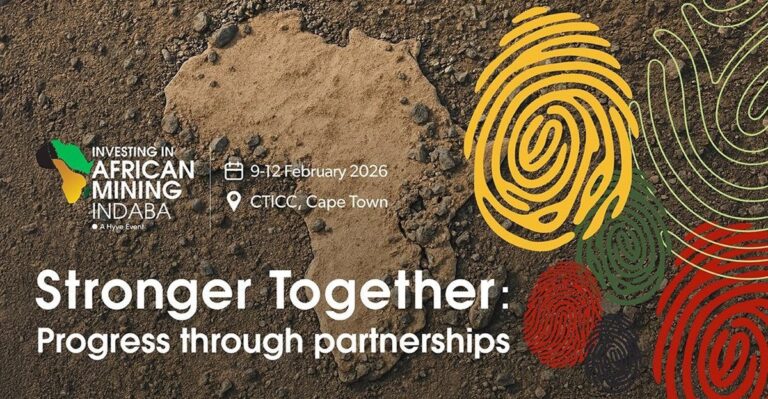
The 2026 Investing in African Mining Indaba (MI26) theme, “Stronger together: Progress through partnerships” highlights the transformative power of collaboration in addressing the sector’s challenges and opportunities.

MI26 is a pivotal event for mining professionals, investors, and industry leaders looking to capitalise on the vast opportunities in Africa’s mining sector. Mining Indaba 2026 comes at a crucial time for Africa, as it maps the role it will play in the global economy.

The conference theme is powerfully expressed in the visual identity for MI26, with a fingerprint motif representing the human component of the industry and underscoring the need for collaboration across the sector.

Frans Baleni, chairman of the Mining Indaba executive advisory board, explains that this year’s theme aligns with the South African philosophy of ubuntu – a belief in a shared, essential humanism.

“Ubuntu holds that unity is strength — that when we work together, we craft a better future. This is fundamentally true. By collaborating, we can shape outcomes for the betterment of all stakeholders – and the environment.”

This was echoed by Gwede Mantashe, South Africa’s Minister of Mineral and Petroleum Resources. “Our strength lies in building partnerships that recognise the mutual value of investment. We understand that investors seek returns, and rightly so, but we are equally committed to ensuring that the benefits of growth and development are shared with workers, communities, and the country at large. Progress is only meaningful when it lifts all stakeholders,” he said.

Community-centric mining: A new paradigm

One of the most significant shifts in Africa’s mining landscape has been the recognition of the need to involve indigenous and local communities. Historically not prioritised, these groups today have a seat at the table, as stakeholders, beneficiaries and equal partners. This shift is encouraging mining companies to adopt more sustainable and community-centric approaches.

Dr Marit Kitaw, economic affairs officer at the United Nations Economic Commission for Africa, calls for a reimagining of the way that the continent’s mineral bounty can be developed, so that it benefits a wider range of stakeholders.

“The theme ‘Stronger together: Progress through partnerships’ is a call to reimagine partnerships on Africa’s growth journey, to see minerals not as tools of convenience, but as instruments of collective empowerment,” she says. “Africa’s transformation through minerals can only be achieved when everyone, including women, youth, marginalised communities, artisanal miners, governments, industry, civil society, academia, and cooperating partners, sit at the table as equal partners. Stronger together, we rise!”

By fostering mutual respect, transparent dialogue, and inclusive decision-making, mining operations can ensure that local communities benefit from resource development while preserving cultural heritage and environmental integrity. From skills sharing and job creation to improving livelihoods and empowering indigenous voices, this new paradigm recognises that mining success must extend beyond production outputs to include shared prosperity and social equity.

Mzila Mthenjane, CEO of the Minerals Council South Africa, emphasises the role of collaboration in driving growth.

“The South African mining sector is positively impactful, but even more so in collaboration with government and other social partners,” he says. “The sector is poised for growth and will enable the investment and development of key infrastructure that supports livelihoods and economic growth.”

Defining critical minerals

A crucial global debate is underway around the idea of critical minerals – resources deemed strategically important for economic, technological, or developmental reasons.

Precisely which minerals are critical varies according to national interests. For Africa, its reserves of iron ore and gold see it well placed to power infrastructure and technology development as well as financial markets. According to the United Nations, the continent has 40% of the world’s gold and up to 90% of its chromium and platinum.

The continent also holds around 55% of global reserves of cobalt – a major input in batteries for electric vehicles, smartphones and laptops. DRC accounts for 70% of global production.

However, to maximise the benefits of these resources, Africa must move beyond exporting raw materials to developing local beneficiation and refining capabilities.

Tony Carroll, a member of the Mining Indaba Executive Advisory Board, advocates for a strategic pivot.

“We can no longer operate as before,” he says. “Neither bulk exports of unrefined ore nor export bans are durable solutions. The industry has to pivot toward practices that provide more value and technology transfer in African nations. This transition will be aided by the introduction of more nimble and economically viable refining technologies and the provision of supportive infrastructure via public-private partnerships.”

This shift will require governments, investors, and mining companies to work together to develop industrial hubs, reliable transport networks, and energy systems that support local processing and manufacturing. By prioritising infrastructure and industrialisation, Africa can position itself as a leader in the global energy transition while ensuring that its mineral wealth benefits its people.

Kwasi Ampofo, Head of Mining and Metals at BloombergNEF, highlights the significance of collaboration in this context.

“‘Stronger together: Progress through partnerships’ means uniting governments, private sector, communities, and civil society to transform mining, achieving a shared triumph for Africa’s future,” he says.

Technology and sustainability: The way forward 

Innovation is another cornerstone of the 2026 Mining Indaba. From AI-driven exploration to digital-twin technology, the mining sector is embracing disruptive technologies to enhance efficiency, safety, and sustainability.

Laura Nicholson, content and communities director for Mining Indaba, stresses the importance of innovation.

“Investing in African Mining Indaba is a platform where transformative ideas and collaborations come to life,” she says. “Our goal is to drive both investment and the kind of innovative technology partnerships that create shared prosperity.”

Disruptive technologies also offer an opportunity to engage Africa’s youth. By investing in skills training and education programmes around advanced mining technologies, the industry can create pathways for young people to lead the sector’s transformation, building a resilient, future-ready workforce.

Governance and policy harmonisation

Strong governance and harmonised policies are essential for a stable, attractive investment environment. When African governments unite, they unlock growth in mining and the broader economy. Harmonised regulations, better infrastructure and responsible investment create a stable foundation, while international partnerships bring technology, funding and expertise to fast-track success.

Mantashe underscores the importance of aligning investment goals to build mutual value.

“Investors seek returns, and rightly so, but at the Department of Mineral and Petroleum Resources, we are equally committed to ensuring that the benefits of growth and development are shared with workers, communities and the country at large. Progress is only meaningful when it lifts all stakeholders.”

Building Africa’s future together

As the 2026 Mining Indaba approaches, it is clear that the future of African mining lies in partnerships. Whether it’s governments harmonising regulations, companies investing in communities, or innovators pushing technological boundaries, collaboration is the key to unlocking Africa’s full potential.

By fostering mutual respect, transparent dialogue and inclusive decision-making, the mining sector can ensure that Africa’s mineral wealth becomes a catalyst for justice, prosperity and dignity for all.

Investing In African Mining Indaba 2026, with its theme enjoining the industry to be “Stronger Together”, offers participants a golden opportunity to partner with industry stakeholders to unlock possibilities and strengthen the sector.

  • Prospective delegates, exhibitors, sponsors and event partners can get involved in #MI26 and help to co-create the next phase of the sector’s evolution by visiting miningindaba.com.


 

Gold buying prices per gram in Zimbabwe, 12 June 2025

Gold buying prices per gram in Zimbabwe today, 12 June 2025, from the official gold buyer and exporter Fidelity Gold Refinery (FGR).

SG 90% and ABOVE US$101.16/g.
SG ABOVE 89% BUT BELOW 90% US$100.09/g.
SG ABOVE 80% BUT BELOW 85% US$99.02/g.
SG ABOVE 75% BUT BELOW 80% US$97.95/g.
SAMPLE BELOW 10g BUT ABOVE 5g US$96.34/g.

Fire Assay CASH $101.69/g.

NB: Fire Assay cash price is for gold above 100g; no sample is deducted.
A sample of not more than 10g is deducted for the Fire Assay Transfer price.
A 2% royalty is charged on all deposits (Small-scale miners).
A 5% royalty is set for Primary Producers.

Zimbabwe Eyes Ferrochrome Dominance as Palm River Ramps Up to 1 Million Tonne Output

0
  • With a design capacity of 1 million tonnes, Palm River is set to surpass all local output and establish Zimbabwe as a leader in ferrochrome production.

Zimbabwe’s ferrochrome industry is set for a seismic shift as the Palm River Project, located within the Palm River Energy Metallurgical Special Economic Zone, continues ramping up operations toward its design capacity of 1 million tonnes per annum—a production milestone that will position it as the country’s largest ferrochrome producer by far, Mining Zimbabwe can report.

By Rudairo Mapuranga

Commissioned in February 2025, the Palm River ferrochrome complex, driven by Xintai Energy and Metallurgical Company, has already begun contributing to the country’s beneficiation and value addition drive in chrome. The mega project is expected to dwarf existing operations, whose combined current output hovers around 270,000 tonnes per year.

Speaking at a post-Cabinet briefing on Tuesday, Minister of Information Hon. Jenfan Muswere said the Cabinet reaffirmed its ban on the export of chrome ores, stressing the urgent need to develop Zimbabwe’s ferrochrome industry locally rather than ship raw ores to offshore processors.

“With immediate ramping up to a design capacity of 1,000,000 tonnes of ferrochrome production, the Palm River Project will make Zimbabwe a key ferrochrome hub in Southern Africa. It is also a response to the Government’s thrust on value addition and beneficiation, aligned with Vision 2030,” said Minister Muswere.

Ferrochrome, a critical input in stainless steel manufacturing, remains one of the most volatile minerals in terms of pricing, subject to global economic and industrial cycles. Zimbabwe’s push to value-add and dominate regional ferrochrome supply comes at a time when the global market is seeking stable, high-volume suppliers of the mineral.

According to Minister of Mines and Mining Development Hon. Winston Chitando, there are currently about 10 ferrochrome producers in Zimbabwe, with capacity ranging from as low as 3,000 tonnes to 84,000 tonnes per annum. The combined national installed capacity is around 270,000 tonnes, making the 1-million-tonne Palm River vision a true outlier and game-changer.

To complement ferrochrome beneficiation, the government has suspended the issuance of chrome mining titles exceeding 100 hectares to maintain orderly development and focus efforts on value addition through smelting and processing.

Palm River’s Green Energy Advantage

What makes Palm River’s rise even more strategic is its self-sufficiency in power—an Achilles’ heel for most of Zimbabwe’s heavy industries. Xintai’s US$3.6 billion investment has received commendation for generating its own electricity by capturing gas emissions and converting them into clean energy for use in its smelting operations.

This model not only reduces pressure on the national grid but also puts Zimbabwe in line with global best practices on green metallurgy. Minister Chitando earlier commended Xintai’s move, describing it as “a breakthrough in sustainable mining and processing that other producers must emulate.”

What the Future Holds

As the Palm River facility continues to scale up, the ripple effects across Zimbabwe’s chrome and steel industry will be enormous:

  • Increased employment, especially for metallurgists, engineers, and technicians.
  • Local downstream industries such as stainless steel manufacturing will benefit from reliable ferrochrome supplies.
  • Export earnings are set to increase significantly as Zimbabwe moves from ore exporter to a regional ferrochrome powerhouse.

Yet challenges remain. Price volatility, infrastructure gaps, and capital access for smaller players still hinder broader industry growth. However, with a mega project like Palm River setting the pace and showcasing what’s possible with visionary investment, Zimbabwe’s long-standing ambitions for a value-driven mining industry are finally being realised.

As the country transitions from just being a source of chrome ore to a global ferrochrome player, the Palm River Project proves that Zimbabwe is not just mining—it’s building a world-class metallurgical industry.

ZIDA Launches Investor Grievance Response Mechanism, A Step Towards Mining Investment Security

0

In a move that may redefine investor confidence in Zimbabwe’s mining sector, the Zimbabwe Investment and Development Agency (ZIDA) has unveiled a new Investor Grievance Response Mechanism (IGRM) designed to protect existing investments from disruption due to sudden policy shifts, bureaucratic hurdles, or adverse actions by government institutions, Mining Zimbabwe can report.

By Rudairo Mapuranga

For Zimbabwe’s mining industry—arguably the bedrock of the economy—this development could not have come at a more critical time.

The IGRM seeks to address investor concerns swiftly and transparently before they escalate into disputes that may derail entire projects. With mining operations often requiring significant upfront capital, long-term commitment, and a delicate relationship with multiple government agencies, the existence of a formal channel for resolving grievances represents a significant boost to investment retention.

In recent years, miners—especially large-scale and foreign investors—have expressed concerns over abrupt regulatory changes, delays in approvals, and contractual uncertainties. These issues, while sometimes minor, often have a ripple effect on production timelines, supply contracts, and ultimately on export earnings.

By launching a dedicated grievance mechanism, ZIDA is not only acknowledging these realities but acting to correct them in a structured, investor-friendly manner.

The mechanism operates through a straightforward digital submission process. When a miner, for instance, is affected by a regulatory change from a Ministry, Department or Agency (MDA)—whether it involves delays in Environmental Impact Assessment approvals, changes to mining title policies, or forex payment challenges—they can submit a grievance directly via the ZIDA portal. The grievance is then reviewed and assessed for urgency and impact. ZIDA promises to act as a bridge, ensuring timely communication and accountability between the investor and the relevant authority, with a five-day deadline set for MDA responses.

If additional information is needed from the investor, they have up to thirty days to furnish details—ample time considering the operational demands within mining companies. ZIDA will then coordinate the dialogue, provide resolution, and, where necessary, facilitate meetings to bring all parties together.

The mining sector is among the most regulated in Zimbabwe, with touchpoints across Ministries including Mines, Finance, Environment, and Local Government. A mechanism such as this, which centralises grievance resolution, could dramatically cut down delays and restore investor faith in the administrative system. Most importantly, it sends a message that Zimbabwe is serious about safeguarding investments already on the ground.

ZIDA, established under the ZIDA Act (Chapter 14:38), has already made notable progress through its One Stop Investment Services Centre, which assists with business registration, licensing, tax facilitation and now, investor aftercare. With the addition of the IGRM, the Agency is adding a critical layer of support, particularly for mining investors navigating complex stakeholder environments.

The mining sector needs institutional certainty to thrive. Whether it’s a foreign lithium producer facing delays in plant commissioning or a local gold miner battling access to electricity due to unclear government priorities, the IGRM provides a structured recourse to ensure operations continue unhindered.

ZIDA’s Corporate Affairs Manager, Judith Mbetu, noted that the mechanism aligns with global best practice and is not just about resolving disputes, but fostering trust. It’s an approach that ensures grievances don’t escalate into legal battles that could jeopardise the mining operation or deter potential reinvestment.

As Zimbabwe works to attract and retain mining investment—be it in lithium, gold, coal, or PGMs—the introduction of this mechanism adds another layer of credibility to its investment promotion efforts. In a competitive African landscape where investor confidence is shaped by ease of doing business and dispute resolution frameworks, the IGRM stands as a clear signal: Zimbabwe is not only open for mining business—it is ready to listen, act, and protect those who dare to invest.