Home Blog Page 98

Mimosa Showcases Sustainability, Innovation and Community Commitment

0

Mimosa Mining Company continues to cement its status as one of Zimbabwe’s leading platinum producers through a model that merges environmental stewardship, sustainable mining, and socio-economic development, Mining Zimbabwe can report.

By Rudairo Mapuranga

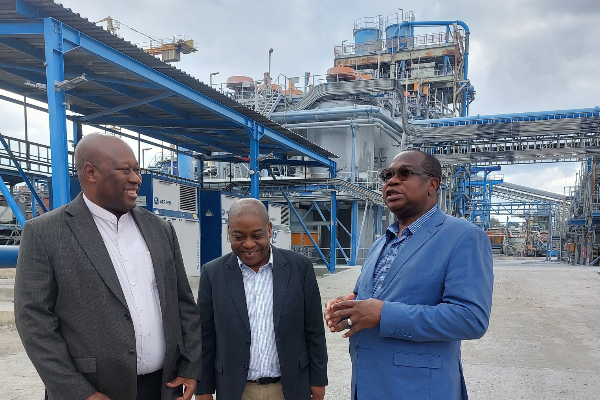
During a recent site visit by the Minister of Finance and Investment Promotion, Prof. Mthuli Ncube, the mine’s General Manager, Mr. Stephen Ndiyamba, outlined key initiatives and infrastructure that reflect Mimosa’s long-term vision.

From Waste to Wealth: The West Dam Model

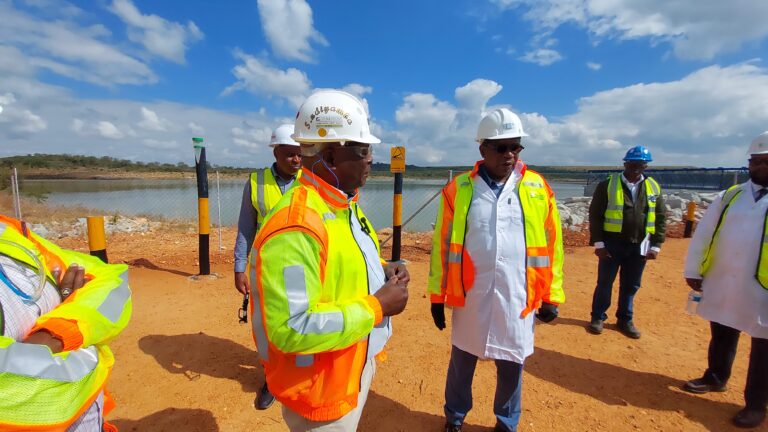
Mr. Ndiyamba revealed that 97% of the material processed at Mimosa ends up as tailings—waste material—which is deposited at the West Tailings Storage Facility (TSF). While tailings traditionally pose environmental challenges, Mimosa has turned this into an opportunity.

“We decided to make a bigger dam so we can introduce a bit of ecotourism,” said Ndiyamba, referring to the development around the TSF. Now a thriving ecosystem, the area features zebras, kudus, and aquatic life, including catfish and tilapia. The facility also provides recreation for both workers and the surrounding community.

Importantly, the dam is central to the mine’s water recycling system. Approximately 60% of the water used at the plant is recovered and reused from the dam, with only 40% being drawn from fresh sources. The company is working to raise this recycled ratio to 80% by investing in larger pumps.

“This model not only reduces our environmental footprint but ensures that when the mine eventually closes, the dam remains a sustainable community asset,” said Ndiyamba.

Fish Farming and Eco-Recreation Vision

Mimosa has already introduced fish fingerlings into the dam and envisions a time when visitors will be able to catch their own lunch.

“Next time when you come, you fish for your own lunch. You don’t catch, you don’t eat,” joked Ndiyamba, highlighting the company’s innovative and community-focused reuse of mine infrastructure.

Energy Independence and Renewable Power Integration

On energy, Ndiyamba confirmed that Mimosa is currently working on developing a solar power plant that will enable the mine to run on clean energy. The solar project, expected within 18 months, will not require battery storage. Instead, Mimosa will use a “power banking” model with ZESA, supplying surplus power to the national grid during the day and drawing it back at night.

Prof. Ncube expressed full government support for such initiatives, citing national energy policy provisions that favour captive power projects.

“We offer incentives for these projects through national project status and can give them liquid asset status, allowing pension funds to invest,” said the Minister. “This becomes a true public-private partnership.”

The Finance Minister reaffirmed that such renewable efforts are not just welcome, but a core part of Zimbabwe’s energy strategy, noting similar support for companies like PPC Cement and Zimplats.

Government Backs Mimosa’s Expansion Plans

Prof. Ncube toured land earmarked for Mimosa’s potential expansion and indicated the government’s willingness to provide necessary support. “They’ve got a solid design for the tailings facility, executed by a local contractor—a world-class job,” he said. “This has enabled the collection of water in a well-built dam, now transformed into a space for biodiversity and recreation.”

He also highlighted the mine’s socio-economic footprint. “Mimosa employs around 3,000 people. Most own homes, and the mine supports schools, transportation, and infrastructure accessed by local communities. It’s not just about shareholder returns—it’s a business embedded in national development.”

Empowering Local Enterprise and Supply Chain Inclusion

Mimosa’s commitment to sustainable business extends beyond the mine gates. Prof. Ncube commended the company for outsourcing non-core services to local entrepreneurs. “They’ve farmed out trucking and other support services to Local Economic Development (LED) partners, creating independent businesses and boosting entrepreneurship,” he said.

The model not only boosts local economic activity but supports skills development and value chain localisation—essential pillars of Zimbabwe’s Mining Vision 2030.


Gold buying prices per gram in Zimbabwe, 11 June 2025

Gold buying prices per gram in Zimbabwe today, 11 June 2025, from the official gold buyer and exporter Fidelity Gold Refinery (FGR).

SG 90% and ABOVE US$101.40/g.
SG ABOVE 89% BUT BELOW 90% US$100.33/g.
SG ABOVE 80% BUT BELOW 85% US$99.26/g.
SG ABOVE 75% BUT BELOW 80% US$98.18/g.
SAMPLE BELOW 10g BUT ABOVE 5g US$96.57/g.

Fire Assay CASH $101.94/g.

NB: Fire Assay cash price is for gold above 100g; no sample is deducted.
A sample of not more than 10g is deducted for the Fire Assay Transfer price.
A 2% royalty is charged on all deposits (Small-scale miners).
A 5% royalty is set for Primary Producers.

Wits Mining School Eyes Global Top 10 as New Head Charts Ambitious Future

0

The University of the Witwatersrand’s School of Mining Engineering — already one of the most influential mining education institutions in Africa — is setting its sights on becoming a global top-ten leader under the stewardship of its new head, Dr Paseka Leeuw, Mining Zimbabwe can report.

By Rudairo Mapuranga

Taking over from Zimbabwean-born Professor Cuthbert Musingwini earlier this year, Dr Leeuw brings over two decades of blended academic and operational mining experience, with a clear mandate: elevate the Johannesburg-based school beyond its current 11th spot in the QS World University Rankings for Mineral and Mining Engineering.

“Wits is already a global brand in mining education,” said Dr Leeuw. “Now, it’s about pushing the envelope further — we’re building on strong foundations laid by my predecessor and taking a bold step towards a top-ten global ranking.”

From the Pit to the Podium

Dr Leeuw is no stranger to the industry or academia. A Wits graduate himself (BSc Mining Engineering, 1994), he spent formative years managing operations at Kimberley Mines, later serving in roles such as section manager and technical services manager. His industry tenure in South Africa’s diamond sector earned him invaluable experience, which he carried back into academia in 2009.

He went on to obtain an MBA from De Montfort University in the UK and completed both his MSc and PhD at Wits — further solidifying his technical and strategic grounding.

With over 700 enrolled students and a staff complement of 23, the Wits School of Mining Engineering is among the largest globally. Dr Leeuw credits the School’s reputation not just to its numbers, but to its dynamic, tech-forward, and collaborative academic culture.

Championing Digital-First Mining Education

In 2018, under Prof. Musingwini’s leadership, Wits Mining embraced the Fourth Industrial Revolution (4IR), aligning its curriculum with emerging mining technologies and digital transformation.

That legacy continues. “Second-year students at Wits are now taught programming and exposed to automation and robotics in mining,” Dr Leeuw noted. “We are deliberately equipping our graduates with data analytics skills — because the future of mining is digital, data-driven, and smart.”

Through the Wits Mining Institute’s partnership with Sibanye-Stillwater, students have access to the cutting-edge DigiMine Laboratory — a one-of-a-kind digital mining research facility focused on safety and sustainability.

Adapting to a Changing Industry

Dr Leeuw reflects on how mining education has changed. In the past, students arrived with bursaries from major mining houses and could count on post-graduation job placements. Today, most learners fund themselves and may never have stepped foot on a mine.

“We’re bridging that gap with simulated underground environments on campus and forging deeper industry linkages to offer real-world exposure,” he said.

This shift has made industry-academic collaboration even more crucial. The School continues to work closely with mining giants like Anglo American, Harmony, Seriti Resources, African Rainbow Minerals, and Sibanye-Stillwater, while also building partnerships with junior mining outfits.

Global Outlook, African Roots

Dr Leeuw succeeds Prof. Musingwini, who made history as the first Zimbabwean-born academic to lead the Wits School of Mining Engineering. With over 30 years’ experience, including time in Zimbabwe’s gold mining sector and at the University of Zimbabwe, Musingwini’s tenure was marked by curriculum transformation, expanded research output, and international collaborations.

Today, Wits Mining maintains academic exchanges and staff development programmes with institutions in Nigeria, Namibia, Pakistan, and Mozambique — many facilitated through European and Dutch government-funded initiatives like Erasmus+ and NICHE.

There are also partnerships on the horizon with Sierra Leone’s Kono University of Science and Technology, and other mining departments across the globe.

The Road to the Top 10

As the mining sector across Africa transitions to more sustainable, tech-enabled operations, the demand for digitally skilled professionals is surging. Dr Leeuw believes Wits can play a transformative role in preparing the continent’s future mining leaders.

“Our mission is to support Africa’s economic growth through relevant, high-quality education that’s aligned with industry needs,” said Dr Leeuw. “We’ve consistently ranked among the top 20 globally since 2016 — now we’re ready to claim a seat at the top table.”

Gold buying prices per gram in Zimbabwe, 10 June 2025

Gold buying prices per gram in Zimbabwe today, 10 June 2025, from the official gold buyer and exporter Fidelity Gold Refinery (FGR).

SG 90% and ABOVE US$100.84/g.
SG ABOVE 89% BUT BELOW 90% US$99.78/g.
SG ABOVE 80% BUT BELOW 85% US$98.71/g.
SG ABOVE 75% BUT BELOW 80% US$97.64/g.
SAMPLE BELOW 10g BUT ABOVE 5g US$96.04/g.

Fire Assay CASH $101.38/g.

NB: Fire Assay cash price is for gold above 100g; no sample is deducted.
A sample of not more than 10g is deducted for the Fire Assay Transfer price.
A 2% royalty is charged on all deposits (Small-scale miners).
A 5% royalty is set for Primary Producers.

Thomas Gono reflects on tenure as Chamber of Mines President

As Zimbabwe’s mining sector continues to evolve amid shifting global dynamics and growing calls for sustainability, the leadership of the Chamber of Mines plays a pivotal role in guiding the industry.

In this exclusive interview, the outgoing President of the Chamber of Mines, Thomas Gono, reflects on his two-year tenure, highlighting key achievements such as record export earnings, strengthened stakeholder relations, and progress in environmental, social, and governance (ESG) compliance.

What would you consider your most significant achievements during your tenure as President of the Chamber of Mines?

During the past two years that I have served as the Chamber President, the mining industry has achieved some key milestones that are a direct outcome of the collaborative effort between the Government and the Chamber. The industry celebrated record export earnings of US$5.9 billion in 2024, despite a challenging commodity markets environment. We also managed to consolidate our improved relationship with key stakeholders, including Parliament, Government, and other key Government departments such as RBZ, ZESA, and ZIMRA. Our engagements with ZESA have seen the mining industry being prioritised in the allocation of scarce power.

On the industry labour front, there were enhanced engagements with the workers’ unions, resulting in labour relations harmony, with no industrial action having been undertaken. We managed to work closely with the Government, and on most occasions, we were consulted during policy and legislative formulation, and most importantly, our key submissions were considered. During the tenure, we also managed to set up the Chamber Centre of Excellence, which is set to improve the delivery model of the Chamber, with improved efficiency and a wider range of products for our members and stakeholders. I am happy to have contributed to these achievements during my tenure.

What were the biggest challenges you faced leading the Chamber, and how did you navigate them?

My tenure coincided with a marked downturn in key mineral markets that resulted in prices for commodities including PGMs and base metals taking a huge knock, resulting in revenue losses. This situation occurred at a time when operating costs were rising, driven by new taxes and increases in electricity tariffs. Consequently, the viability of mining projects during this period was severely compromised. As price takers, we had to engage the Government and other departments, including ZESA, to assist in reducing the cost of production.

Further worsening the situation was the widening disparity between the official and parallel market exchange rates, which also resulted in the loss of value on the surrender portion of export proceeds. Engaging the RBZ for adequate forex and fair compensation of the surrender portion was equally a significant task. However, we managed to achieve some positive outcomes, including the review of the special capital gains tax framework, while most tax heads were maintained despite the Government also facing significant revenue pressures during the period under review.

What role did the Chamber play in shaping discussions around responsible mining and environmental compliance during your term?

During my tenure, the Chamber adopted Environment, Social, and Governance (ESG) as one of our strategic priorities. In this regard, a scoping study for an ESG framework for the mining industry was undertaken, and an ESG Guidelines framework is being developed. The Chamber of Mines also undertook Safety, Health, and Environment audits that supported the continual improvement work of individual mines. These audits were conducted with the support of regulatory bodies such as EMA, SAZ, and the Ministry of Mines and Mining Development. The audited entities noted the value they received from participating in the audits.

How did the Chamber address concerns around mine worker safety, wages, and labour rights during your presidency?

The Chamber of Mines, through the SHE Committee, undertook several initiatives to support mines in improving their SHE performance. In addition, the Chamber engaged the Ministry of Mines and shared information on fatal accidents. First Aid and Mine Rescue competitions were conducted to enhance the capacity of mines to respond to emergencies. On several occasions, the Mine Rescue Association of Zimbabwe provided support to small mines in the rescue of miners trapped in underground operations.

What progress, if any, was made toward improving beneficiation and value addition in the sector during your tenure?

The Chamber of Mines fully supports the Government’s thrust of maximising the contribution of the mining sector to the economy through increased beneficiation of the country’s mineral resources. I am happy to report that the mining industry, specifically the PGMs sector, achieved key beneficiation milestones in the last year. The PGMs sector and the Government agreed on a beneficiation roadmap that will result in the country exporting a minimum of PGMs matte, with all concentrates being smelted in-country.

In line with this agreement, it is encouraging to report that the PGMs industry now has adequate smelting capacity, and all concentrates are now being processed locally. The lithium industry has also made significant progress. The Chamber successfully engaged the Government and agreed on a beneficiation roadmap for the lithium industry that will result in the production of lithium sulphate. Already, most lithium producers are investing in beneficiation facilities in line with the agreed timelines.

What advice would you give to your successor to ensure continued growth and sustainability in Zimbabwe’s mining industry?

The Chamber has developed a tradition of maintaining a close working relationship with our key stakeholders in improving the operating environment for the mining industry. Over the past years, this approach has significantly improved the operating environment, culminating in the growth of our mining sector. My advice to my successor is to work closely with the Chamber Secretariat and Committee Structures to consolidate and entrench this winning approach in achieving our strategic goals.

Looking back, is there anything you wish you had done differently or any unfinished business you hope the next leadership will take forward?

The Chamber operates with a clearly defined strategy and operational plans that have clear deadlines. My feeling is that we have been working according to our plans and could not have done the job differently from the agreed-upon plans.

Where to from here?

I remain part of the Chamber family and, as Immediate Past President, I am still part of the Chamber leadership. I will continue to work closely with the new Presidium and the Chamber Secretariat, sharing my experiences during my tenure to achieve our objectives.

Mining Zimbabwe Magazine Edition 80 cover
Thomas Gono was on the cover of Mining Zimbabwe’s 80th edition

This interview first appeared in the Mining Zimbabwe Magazine edition 80, which was first distributed at the 2025 Chamber of Mines annual mining conference and exhibition held in Victoria Falls.

Local Mining Sector Secures Data Protection Licenses in Key Compliance Step

0

In a move aimed at aligning the mining sector with national data protection laws, several leading mining companies in Zimbabwe have been officially granted data controller licenses by the Postal and Telecommunications Regulatory Authority of Zimbabwe (POTRAZ), Mining Zimbabwe can report.

By Ryan Chigoche

This was done at an official event in the country, graced by the Minister of Information Communication Technology, Postal and Courier Services in Zimbabwe, Tatenda Mavetera, in the capital recently.

Among those licensed at the inaugural Data Controller License Certificate Handover Ceremony were Blanket Mine and the Blanket Mine Employee Trust, Caledonia Mining Corporation, Freda Rebecca, Golden Valley Mine, Karo Platinum, Kuvimba Mining House, Mimosa Platinum, the Minerals Marketing Corporation of Zimbabwe (MMCZ), Pan African Mining, Zimplats, the Zimbabwe Consolidated Diamond Company (ZCDC), and the Mining Industry Pension Fund.

The licensing of these entities marks a significant step in Zimbabwe’s efforts to strengthen data protection and privacy standards across both public and private institutions.

Few countries globally, and only three in Africa—including Nigeria and Ghana—have implemented formal data controller licensing regimes.

Zimbabwe’s programme, therefore, positions the country as a continental leader in responsible data governance, cybersecurity, and privacy protection.

Spearheaded by POTRAZ, the data controller licensing framework is grounded in the Cyber and Data Protection Act and reflects a wider government agenda to promote accountability, safeguard personal information, and foster trust in the digital economy.

Since its launch, over 570 organisations have been licensed, and more than 560 data protection officers have been trained, including professionals from SADC member states such as Botswana, Eswatini, and Malawi.

Zimbabwe’s growing regional influence in this area is notable, particularly as President Emmerson Mnangagwa currently chairs the Southern African Development Community (SADC).

This cross-border impact is viewed as a demonstration of Zimbabwe’s readiness to share its experience and training expertise with other countries across the region.

Officials have emphasised the importance of setting high data protection standards that neighbouring states can adopt as benchmarks when developing their own compliance regimes.

The journey to this point has not been without challenges.

The introduction of Statutory Instrument 155 of 2024, which laid the legal foundation for the licensing process, was initially clouded by public confusion and misinformation.

However, sustained awareness campaigns, stakeholder engagement, and capacity building have helped turn early scepticism into growing support for the initiative.

For mining companies, obtaining a data controller license is not merely a regulatory formality.

It is increasingly seen as a strategic imperative that aligns operations with both national and international data governance standards.

The licenses signify a public commitment to transparency, ethical data handling, and the protection of personal information—principles that are essential in today’s digital economy.

While the certification marks a major milestone, authorities have underscored that compliance is not a one-time achievement but a continuous process.

Licensed entities are expected to conduct regular system audits, invest in staff training, and maintain readiness to respond to data breaches.

In this context, the licenses are viewed as tools that support sustainable growth, reduce operational risks, and build confidence among stakeholders.

As the mining sector embraces data protection compliance, Zimbabwe is further cementing its role as a digital policy leader in the region.

The licensing initiative not only advances national cybersecurity priorities but also contributes to shaping regional standards for responsible and secure digital transformation.

Gold buying prices per gram in Zimbabwe, 9 June 2025

Gold buying prices per gram in Zimbabwe today, 9 June 2025, from the official gold buyer and exporter Fidelity Gold Refinery (FGR).

SG 90% and ABOVE US$101.47/g.
SG ABOVE 89% BUT BELOW 90% US$100.40/g.
SG ABOVE 80% BUT BELOW 85% US$99.32/g.
SG ABOVE 75% BUT BELOW 80% US$98.25/g.
SAMPLE BELOW 10g BUT ABOVE 5g US$96.64/g.

Fire Assay CASH $102.01/g.

NB: Fire Assay cash price is for gold above 100g; no sample is deducted.
A sample of not more than 10g is deducted for the Fire Assay Transfer price.
A 2% royalty is charged on all deposits (Small-scale miners).
A 5% royalty is set for Primary Producers.

“We Must First Find Solutions Before We Completely Quit Mercury in ASGM,” Says Government

0

The Government of Zimbabwe, through the Ministry of Mines and Mining Development, has stressed the urgent need to find viable alternatives to mercury use before it can be completely phased out in the artisanal and small-scale mining (ASM) sector.

By Ryan Chigoche

This comes amid ongoing concerns that, despite Zimbabwe’s ratification of the Minamata Convention on Mercury and a formal ban on its use in mining in 2020, mercury remains widely used, especially among small-scale gold miners.

The Minamata Convention is a global treaty designed to protect human health and the environment from the harmful effects of mercury.

While the ban is a step in the right direction, challenges in enforcement and access to alternative methods continue to hinder full compliance.

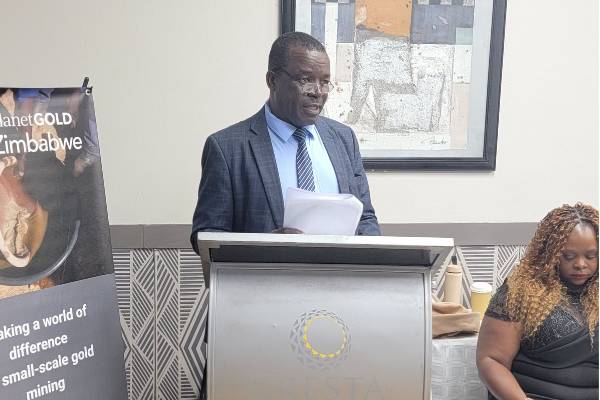
At a recent event in Harare, Chief Government Mining Engineer Eng. Michael Munodawafa acknowledged these challenges and outlined ongoing efforts to find sustainable solutions.

“We are also starting to do some research with other institutions on alternative methods which completely move away from the use of mercury. But we are still a long way. Because you can only ban something and say you don’t want to use mercury anymore, here is the solution. But before we get the solution, we can’t say we ban mercury completely. But once we get the solutions, we can come up with, like in the next two years, that no more mercury, no more importation of mercury. We end here. We only need to use the alternative methods. But at the moment, we are still working on that,” Munodawafa said.

Zimbabwe ratified the Minamata Convention in December 2020, becoming the 116th country to join the treaty. Adopted in 2013 and enforced globally since 2017, the Convention requires countries to eliminate mercury use in sectors such as small-scale gold mining, where it poses severe environmental and public health risks.

Mercury contamination can poison water sources and the food chain, affecting both miners and surrounding communities.

Although mercury-free gold extraction methods such as gravity concentration, sluicing, and cyanide use are available, adoption has been slow due to limited access to equipment, training, and financing, especially in remote mining areas.

To support the transition, Zimbabwe is part of the planetGOLD project, an initiative funded by the Global Environment Facility (GEF) and implemented by the UN Environment Programme (UNEP).

In partnership with the Zimbabwean government and the non-profit organisation IMPACT, the project aims to formalise ASM operations, introduce mercury-free technologies, provide access to finance, and raise awareness about the dangers of mercury.

The project targets 7,500 miners—both men and women—across 11 districts and is expected to prevent the release of up to 4.85 tonnes of mercury.

While progress is being made, authorities acknowledge that a full ban on mercury will only be realistic once safe, effective, and accessible alternatives are in place.

As the country works toward that goal, collaboration between government, miners, and development partners remains critical to ensure a just and sustainable transition.

Government Affirms Strong Support as Mimosa Eyes Life of Mine Extension Amid 40% Revenue Drop

0

The Government of Zimbabwe has reaffirmed its strong support for Mimosa Mining Company’s strategic vision to extend its life of mine by up to 15 years, even as the platinum miner grapples with a 40% decline in revenue due to depressed global metal prices, Mining Zimbabwe can report.

By Rudairo Mapuranga

In a significant show of confidence, key government officials, including the Ministers of Finance and Mines, visited the Zvishavane-based operation and pledged to create a conducive investment framework to sustain jobs, production, and long-term viability.

Mimosa’s current life of mine stands at eight years, but the company is actively pursuing the development of the North Hill ore body, which could add 12 to 15 more years of production. The mine, jointly owned by Impala Platinum and Sibanye-Stillwater, is facing headwinds from a prolonged slump in PGM prices, alongside challenges related to Zimbabwe’s foreign currency retention regime.

During the high-level tour, Minister of Finance and Investment Promotion, Professor Mthuli Ncube, emphasised the government’s readiness to assist Mimosa in navigating these challenges and unlocking new investment.

“We are very supportive of this business here in Mimosa because it is a very important company in the community, in the local economy in Zvishavane, and beyond,” said Minister Ncube. “Directly, the mine employs about 3,900 people, and indirectly, over 8,000 people rely on this operation. It is a national asset.”

He noted that the mine’s vision to develop the lower-grade North Hill resource will require significant capital, and the government is open to policy adjustments to support the initiative.

“The miners’ desire is to develop the North Hill ore body and blend it with the current South Hill ore body. They have asked for support from the government to raise adequate resources. Once we receive their formal proposal, we stand ready to support this investment,” said Ncube.

Minister of Mines and Mining Development, Winston Chitando, reinforced that discussions were already progressing and would be aligned with Zimbabwe’s drive to grow the mining sector to support Vision 2030.

“We are getting an update on Mimosa’s proposals to extend the life of mine and develop the North Hill ore body. Discussions will be ongoing so that the government can facilitate the investment needed to maintain employment and production,” he said.

Mimosa Managing Director, Fungai Makoni, confirmed that the company had suspended North Hill development due to the global downturn but remained committed to long-term sustainability. Talks with the government are focused on access to foreign currency and a support framework to revive the project.

“We are in discussions with both the Ministry of Finance and the Ministry of Mines around a support framework. The focus is on access to foreign currency and funding availability to enable the North Hill project,” Makoni said.

The company has already invested heavily in operational resilience, including the US$75 million Tailings Storage Facility 4 (TSF-4) and a US$40 million plant optimisation program initiated in 2021, designed to improve recovery, energy efficiency, and prepare for tailings retreatment in the future.

As the government shows strong political will to back its flagship mines, Mimosa’s story could be a blueprint for balancing survival, sustainability, and long-term growth in Zimbabwe’s PGM industry.

Illegal Gold Panning Lands Siakobvu Man in Jail as Zimbabwe Tightens Grip on Riverbed Mining

0

The National Prosecuting Authority (NPA) has confirmed the imprisonment of Kudakwashe Mapinda of Siakobvu, who was convicted of illegal gold panning and sentenced to two years in prison, Mining Zimbabwe can report.

By Rudairo Mapuranga

This comes as the Zimbabwean government intensifies its nationwide crackdown on illegal mining, particularly riverbed activities that are endangering ecosystems and depleting national water resources.

According to court proceedings at the Karoi Magistrates’ Court, Mapinda was apprehended on May 5, 2025, by game rangers while illegally prospecting for gold along the Karongwe River. He was caught red-handed after diverting water and shovelling mud into a wooden panning dish. Upon questioning, it was established that he had no mining license, prospecting order, or any official authority to conduct mining activities.

This high-profile sentencing follows the recent conviction of Simbarashe Chayambuka, a 38-year-old man from Mount Darwin, who was fined US$200 for illegal riverbed mining along the Fuse River. Chayambuka was caught by Ruia Mine security guards on March 4, 2025, using rudimentary tools to extract minerals. He was handed over to the Minerals, Flora and Fauna Unit (MFFU) and later appeared in court, where he pleaded guilty.

The mounting prosecutions highlight a broader government campaign against illegal mining activities. The Zimbabwean government last banned all riverbed mining and desiltation activities, citing irreversible environmental damage caused by such practices. The Cabinet emphasized that large-scale mechanical alluvial mining—ongoing since 2011—has devastated rivers like Nyagadzi, Mazowe, and Insiza, significantly affecting water supply and biodiversity.

Information Minister Hon. Jenfan Muswere stated, “The destruction of rivers through alluvial mining has resulted in severe environmental consequences, from water pollution to the disruption of ecosystems. The damage has far outweighed any potential benefits.”

Bulawayo’s Umzingwane Dam, which is sitting at a dangerously low 2% capacity, has further underscored the urgency of the government’s actions. Authorities now view illegal mining around water sources as a national threat, contributing to siltation and contamination of vital water supplies.

The Zimbabwe Miners Federation (ZMF) has backed the government’s move to outlaw riverbed mining. ZMF President Ms. Henrietta Rushwaya welcomed the ban, saying it aligns with the Federation’s goal of promoting sustainable and responsible mining practices.

“We are very pleased with this decision. Riverbed mining was hindering our efforts toward sustainable mining due to its adverse effects on the ecosystem,” Rushwaya told Mining Zimbabwe.

ZMF has recently developed a tailor-made Environmental, Social, and Governance (ESG) strategy for Zimbabwe’s Artisanal and Small-scale Mining (ASM) sector. This initiative seeks to align ASM activities with global environmental and human rights standards, emphasizing decarbonization, water stewardship, and responsible resource extraction.

“Although decarbonization is rarely linked to ASM operations, we believe incorporating solar energy into ASM practices will significantly contribute to the decarbonization agenda,” Rushwaya added.

The combined sentencing of Mapinda and Chayambuka sends a strong message to illegal miners and syndicates across Zimbabwe. The era of unchecked riverbed mining appears to be over as the government, judiciary, and mining authorities align to protect Zimbabwe’s natural resources.

The NPA’s firm stance, reflected in its news bulletin slogan “Combating Crime and Corruption,” reinforces the administration’s commitment to preserving natural ecosystems and combating the criminal elements that have long operated with impunity in the country’s informal mining sector.

As Zimbabwe continues to battle the effects of climate change and water scarcity, these enforcement actions are not just about legality—they are about ensuring national sustainability for future generations.