Home Blog Page 99

Zimbabwe’s Diamond Exports Soar 912% in April Despite Global Market Pressures

0

Zimbabwe’s diamond industry defied global market trends with an extraordinary 912% surge in exports in April 2025, rising from $3.66 million in March to $33.47 million, according to the latest trade data from Zimstat.

This sharp rise comes at a time when global diamond prices have plummeted—from $3,400 per carat in 2020 to just $900 by 2024, marking a 74% decrease.

Despite the uptick in exports, Zimbabwe’s diamond sector is navigating significant headwinds.

Key challenges include steep U.S. tariffs starting at 10% and potentially rising due to political uncertainty and the growing dominance of lab-grown diamonds (LGDs).

These synthetically produced stones, chemically identical to natural ones, are often sold at an 80% discount.

Their affordability has shifted market preferences, particularly in the U.S., where they now surpass mined diamonds in volume.

A turning point came in 2021 when Pandora, the world’s largest jewellery brand by volume, ceased selling mined diamonds. Since then, lab-grown diamonds have gained significant traction, especially in the U.S., which accounts for over half of global polished diamond demand.

Although the April 2025 export spike is impressive, it still falls short of Zimbabwe’s peak performance.

The country previously achieved highs of $115.86 million in July 2023, as well as $66.38 million in May 2023 and $57.89 million in March 2024.

Such fluctuations underscore the volatility in Zimbabwe’s diamond trade.

Zimbabwe remains the world’s seventh-largest diamond producer, earning $938.7 million in export revenue since 2021.

However, the government’s $1 billion target, set in 2022, remains unmet, highlighting underlying structural issues in the industry.

The country’s diamond production is largely driven by a few major players, primarily state-linked enterprises.

The Zimbabwe Consolidated Diamond Company (ZCDC), established in 2016 after the state ousted private firms from the Marange fields over corruption, is the largest producer. ZCDC yielded 4.5 million carats in 2022.

Anjin Investments, a partnership between China’s Anhui Foreign Economic Construction Group and the Zimbabwean military’s Matt Bronze, was reinstated in 2019 after being expelled in 2016 over financial mismanagement. Its return has boosted production.

Russian diamond giant ALROSA, the world’s top producer by volume, is also deepening its investment in Zimbabwe.

After initial exploration in 2013 and a temporary exit in 2016, ALROSA resumed operations in 2019 and has since secured 40 Special Grants and Exclusive Prospecting Orders.

RioZim, better known for gold, contributes through its Murowa mine, further solidifying Zimbabwe’s place among global producers.

Yet, the country’s production has seen dramatic shifts.

From a high of over 12 million carats annually in the early 2010s, output dropped due to depleted alluvial resources and underinvestment.

The recent rise suggests recovery, but long-term sustainability depends on reform.

According to industry experts, tax reform is critical.

Zimbabwe’s rigid 10% royalty, paired with additional taxes, burdens investors. In contrast, Botswana offers incentives for local processing, lowering the effective tax rate and encouraging reinvestment.

To remain competitive, Zimbabwe must revise its tax policies, encourage local value addition, and attract investment through efficiency, innovation, and partnerships.

Gold Deliveries Decline by 9.48% Month-on-Month, Rise 27.6% Year-on-Year in May 2025

0

Zimbabwe’s gold deliveries to Fidelity Gold Refinery (FGR) declined in May 2025 compared to April, falling by 9.48% to 3,488.0632 kilograms, down from 3,853.5812 kg the previous month. Despite the month-on-month (MoM) dip, the country recorded a 27.6% year-on-year (YoY) increase, with total deliveries significantly higher than the 2,734.1329 kg recorded in May 2024.

By Rudairo Mapuranga

Artisanal and small-scale gold miners (ASM) contributed 2,552.0986 kg in May 2025 — a 12.77% decrease from the 2,926.1086 kg recorded in April. However, this still represents a robust 52.06% increase from the 1,678.4475 kg delivered by small-scale miners in May 2024.

The ASM sector remains the backbone of Zimbabwe’s gold sector, and its May output, despite the dip, continues to outperform expectations and demonstrates the sector’s resilience in the face of increasing operational costs and unstable power supplies.

Large-scale miners recorded a slight 0.91% increase in May, delivering 935.9637 kg, up from 927.4726 kg in April 2025. However, this figure marks an 11.34% YoY decrease from the 1,055.6854 kg delivered in May 2024, underscoring persistent structural inefficiencies, high production costs, and capital access constraints in the formal sector.

The strong performance in April 2025 set a high watermark for gold output this year. According to Fidelity’s official statistics, total deliveries in April reached 3,853.5812 kg, reflecting a 31.89% MoM increase from 2,793.8132 kg in March 2025, and a remarkable 46.99% YoY increase from 2,386.9067 kg in April 2024.

ASM was the major growth driver, contributing 2,926.1086 kg in April — a 44.09% MoM increase and an 82.42% YoY increase compared to April 2024. In contrast, large-scale miners delivered 927.4726 kg, almost flat from March and down 20.65% from April 2024.

The trend reaffirms that Zimbabwe’s ASM sector is powering gold growth. In Q1 2025, gold deliveries stood at 8,496.4132 kg, a 40.49% increase from Q1 2024, with ASM contributing 5,770.8580 kg — a near 99% increase from the same period last year.

In 2024, ASM contributed over 65% of the national gold output, delivering 23,745.6423 kg out of 36,486.7526 kg, compared to 12,741.1103 kg from large-scale miners.

While May 2025 reflects a slight easing in deliveries compared to April, the year-on-year trend shows Zimbabwe’s gold sector is on an upward trajectory, driven primarily by small-scale miners.

As the government intensifies efforts around beneficiation, formalisation, and policy support, there is an urgent need to strike a balance between empowering ASM and revitalising large-scale operations. With adequate investment, reliable electricity, and stable forex policies, the sector could exceed historical gold output records and solidify its role in Zimbabwe’s economic transformation.

Gold buying prices per gram in Zimbabwe, 6 June 2025

Gold buying prices per gram in Zimbabwe today, 6 June 2025, from the official gold buyer and exporter Fidelity Gold Refinery (FGR).

SG 90% and ABOVE US$102.52/g.
SG ABOVE 89% BUT BELOW 90% US$101.44/g.
SG ABOVE 80% BUT BELOW 85% US$100.35/g.
SG ABOVE 75% BUT BELOW 80% US$99.27/g.
SAMPLE BELOW 10g BUT ABOVE 5g US$97.64/g.

Fire Assay CASH $103.07/g.

NB: Fire Assay cash price is for gold above 100g; no sample is deducted.
A sample of not more than 10g is deducted for the Fire Assay Transfer price.
A 2% royalty is charged on all deposits (Small-scale miners).
A 5% royalty is set for Primary Producers.

EMA Scales Up Support for ASGM Through Relaxed EIA Requirements, Awareness Drives, and Mercury Monitoring

0

The Environmental Management Agency (EMA) has reiterated its commitment to supporting Zimbabwe’s Artisanal and Small-Scale Gold Mining (ASGM) sector by adapting environmental compliance processes, offering targeted education, and tightening mercury monitoring and control systems, Mining Zimbabwe can report.

By Rudairo Mapuranga

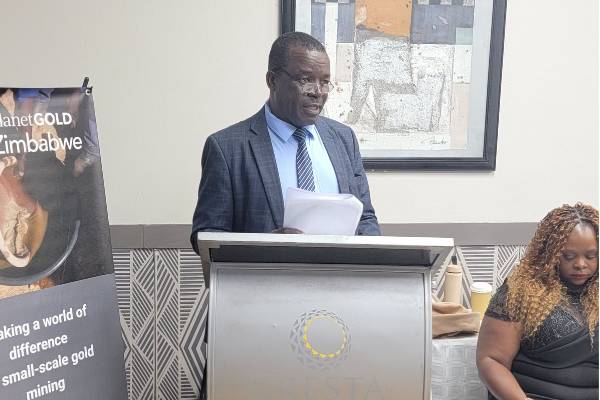
Speaking at the PlanetGold Zimbabwe ASGM Strategy Dialogue held in Harare on Wednesday, Alpha Chikurira from EMA highlighted several longstanding pain points and the agency’s evolving response to formalise and support small-scale miners.

Historically, EMA’s Environmental Impact Assessment (EIA) requirements were uniform across all mining operations—an approach that often failed to account for the capital limitations and business capacities of artisanal and small-scale miners.

Chikurira noted that previously, small-scale miners had to pay steep fees, including a 3% review fee based on initial capital costs, hire consultants, and undergo rigorous processes similar to those required of large-scale mining ventures.

To address this, EMA has since introduced a simplified Environmental and Social Management Plan (ESMP) process for miners with capitalisation below US$25,000. Instead of paying thousands, eligible miners now pay a flat US$250 review fee. This allows EMA to assess sites, provide environmental guidance, and support miners’ compliance journeys more affordably.

“This new process is less onerous and more inclusive. It recognises that most small-scale mining operations are family-run businesses with limited environmental management expertise,” Chikurira said.

The revised approach is also meant to help miners access financing, as banks increasingly scrutinise environmental compliance during loan assessments.

Chikurira also addressed the communication gap between EMA and the small-scale sector, noting that most miners do not have the time or resources to absorb information via traditional media. As a result, EMA has incorporated awareness campaigns into its mandatory quarterly inspections. During site visits, inspectors not only enforce regulations but also provide tailored environmental advice and issue Environmental Protection Orders—non-punitive directives aimed at correcting specific issues before they escalate.

As part of its broader strategy, EMA employs what Chikurira called “the carrot, the stick, and the trombone.” The “carrot” represents incentives and support; the “stick” refers to enforcement and fines; and the “trombone” is EMA’s method of highlighting model compliance cases to educate and inspire other miners.

To enhance regulatory impact, EMA, in partnership with the Zimbabwe Republic Police and Provincial Mining Directors (PPMs), has operationalised a dedicated law enforcement unit. This unit is empowered to process fines, prosecute environmental offences, and clamp down on illegal mining activities that contribute to land degradation, water pollution, and community hazards.

Mercury use—a critical issue in ASGM—was another focal point of Chikurira’s presentation. While the substance remains legal under certain guidelines, it poses a major threat to public health and the environment if not properly managed.

EMA has increased efforts to track mercury imports, monitor its presence in aquatic ecosystems, and enforce safer handling practices. “We monitor 36 key river points monthly and are expanding our surveillance to dams,” Chikurira said. “Our message remains clear: keep mercury away from fish, and keep it away from the mother.”

These strategies form part of EMA’s multi-pronged approach to promote sustainable and responsible mining in Zimbabwe, in line with national efforts to formalise the ASGM sector and reduce its environmental footprint.

Planet Gold Zimbabwe Leads the Charge for Safer, Mercury-Free Gold Mining and Higher Recovery Rates

0

Planet Gold Zimbabwe is rolling out pilot demonstration sites nationwide to introduce mercury-free gold processing technologies aimed at boosting gold recovery rates while making artisanal and small-scale gold mining cleaner and safer.

By Ryan Chigoche

The initiative, now six months into implementation, is part of a broader four-pillar strategy designed to address deeply rooted challenges within Zimbabwe’s ASGM sector. These include limited formalisation, poor access to finance, and low awareness of the environmental and health hazards associated with conventional gold processing methods.

In 2024, artisanal and small-scale miners (ASM) in Zimbabwe produced 36 tonnes of the yellow metal, accounting for around 65% of the official gold deliveries—an immense contribution that cannot be ignored.

This year, the sector is aiming to produce 40 tonnes, which is a significant increase in gold production for the ASM sector in Zimbabwe.

With such a vital role in the country’s gold output, the need for sustainable and safe mining practices is more urgent than ever. Planet Gold Zimbabwe’s approach seeks to revolutionise the sector by promoting innovative solutions that protect both miners’ health and the environment while maximising gold recovery.

Nyaradzo Mutonhori, Project Manager of Planet Gold Zimbabwe, explained that the third pillar of the program is focused on the introduction of mercury-free technologies, which aim to not only eliminate the use of mercury but also increase gold recovery rates.

“We are hoping to set up pilot mercury-free technology demonstration sites in the different provinces and really drive innovative technologies that are mercury-free, but also technologies that will improve the amount of gold recovered in the processing of the mineral,” Mutonhori said.

Mercury, a toxic substance widely used by small-scale miners in gold extraction, poses serious risks to personal health and the environment. Its continued use is tied to a range of systemic challenges, including limited access to cleaner technologies and a general lack of awareness about its dangers.

An Integrated Approach to a More Productive, Cleaner, Safer Small-Scale Gold Mining

Planet Gold Zimbabwe is tackling the challenges of artisanal and small-scale gold mining through a four-pronged strategy that goes beyond technology to address deeper structural issues in the sector. At the heart of this strategy is the belief that improving the ASGM sector requires interventions that are interconnected—from formalisation to finance, technology, and education.

The first pillar of the project focuses on optimising formalisation. Planet Gold Zimbabwe believes that improving the formalisation of the ASGM sector will help build a more sustainable and organised industry, one that can continue contributing meaningfully to the country’s economic development. Formalisation is seen as a gateway to stronger regulation, better safety standards, and increased accountability.

The second component of the project is centred on financial inclusion and responsible supply chains. Limited access to capital remains a key barrier preventing small-scale miners from adopting cleaner, more efficient technologies.

By improving their credit profiles and supporting the development of responsible supply chains, the project aims to open up new financing mechanisms tailored specifically to artisanal miners. The ultimate goal is to move miners beyond the “small-scale” label, helping them grow their operations into more resilient and profitable enterprises, according to the project manager.

The third pillar, which represents the core mandate of Planet Gold Zimbabwe, is the introduction of mercury-free technologies.

The project plans to establish pilot demonstration sites across different provinces, showcasing innovative processing technologies that eliminate the use of mercury while also improving gold recovery rates. This approach responds to both environmental concerns and the need to boost productivity in the sector.

Lastly, the fourth pillar addresses a critical but often overlooked issue: the lack of awareness. Planet Gold Zimbabwe is rolling out awareness campaigns aimed at educating miners about the dangers of mercury and the benefits of alternative methods.

These campaigns will involve the creation of knowledge tools and materials designed to encourage behavioural change and reduce the use of toxic chemicals in gold processing.

Together, these four components form a comprehensive and integrated response to the complex challenges facing Zimbabwe’s small-scale gold mining sector.

Government Backing and Sector Coordination

Planet Gold Zimbabwe is guided by a Project Steering Committee co-chaired by the Minister of Mines and Mining Development and the Minister of Environment, Climate and Wildlife. Other ministries involved include Finance and Home Affairs, underlining the multi-sectoral support for the initiative.

This week, stakeholders gathered to unpack Zimbabwe’s national ASGM strategy, reviewing how it can be strengthened and used to tackle the sector’s persistent problems.

Engineer Munodawafa emphasised the urgency of funding innovation and phasing out dangerous mining practices like mercury use, which continues to threaten ecosystems and human health.

“Then we also need to address how we can resource the research, and also new methods of mining… Mercury is damaging a lot of our environment and even our health,” he said.

He also challenged artisanal miners to aim higher and embrace the opportunity for growth.

“We want to grow. Everyone should be moving up the ladder, not going down the ladder… If you see yourself going down the ladder, something is very wrong. You need to correct that, like yesterday. Because we all need to move up.”

The remarks echo Planet Gold Zimbabwe’s goals of enabling miners to transition toward formal, safer, and more profitable practices.

“Today we are here as a solution for miners, for the challenges that we still face in this very critical sector that continues to play a key role in our economy and in community life,” Mutonhori added.

The planetGOLD project in Zimbabwe aims to reduce mercury use in artisanal and small-scale gold mining by promoting formalisation, improving access to finance, encouraging the adoption of mercury-free technologies, and raising awareness.

Funded by the Global Environment Facility (GEF) and implemented by the United Nations Environment Programme (UNEP), the project is executed by the international non-profit IMPACT, in close collaboration with the Zimbabwean government.

Zimbabwe is one of 25 countries participating in the global planetGOLD program. Locally, the project aims to benefit 7,500 miners across 11 districts, with the potential to prevent 4.85 tonnes of mercury emissions.

It is also a key part of Zimbabwe’s efforts to fulfil its obligations under the Minamata Convention on Mercury, which the country has ratified.

The convention is a global treaty that seeks to phase out mercury use across various sectors, including mining.

As Zimbabwe works toward a more sustainable and inclusive mining economy, the deployment of mercury-free technologies, combined with structural reforms and community engagement, represents a pivotal step forward.


Fidelity Leads National Push for Responsible ASM Gold Trade with Mobile Units, Traceability, and Community Empowerment

0

Fidelity Gold Refinery (FGR), Zimbabwe’s sole authorised gold buyer and exporter, is reshaping the country’s approach to artisanal and small-scale mining (ASM) through a multi-faceted strategy centred on responsible sourcing, formalisation, community empowerment, and logistical innovation, Mining Zimbabwe can report.

By Rudairo Mapuranga

Speaking at the PlanetGold Zimbabwe ASGM Strategy Dialogue in Harare on Wednesday, FGR ASM Manager Francis Maidza outlined how the organisation is redefining gold procurement by expanding buying infrastructure, improving traceability, and building stronger, more sustainable relationships with small-scale miners.

Maidza underscored that the ASM sector remains the backbone of Zimbabwe’s gold output, contributing nearly 60% of national deliveries. Recognising the sector’s importance, Fidelity is working to close the formalisation gap by introducing tributary agreements with local communities. Through these agreements, miners are given legal rights to operate, and Fidelity supports them with mining and drilling services, processing facilities, and on-site gold purchasing. This initiative ensures communities are not only legally compliant but also integrated into the broader mining economy.

“We want to empower local communities by giving them tools to mine safely and legally,” said Maidza. “Through these tributary agreements, we are doing more than just buying gold — we are supporting livelihoods and building structured mining ecosystems.”

Key to Fidelity’s responsible sourcing strategy is the implementation of a gold traceability system, designed to follow gold from mine to market.

“Globally, traceability is becoming critical to ensure gold is not sourced from conflicted or illicit areas,” Maidza said. “We are developing a robust framework that will meet international benchmarks, especially the OECD guidelines. This is vital for our accreditation with platforms like the Dubai Commodity Exchange.”

According to Maidza, Fidelity is about 60% toward meeting its 2025 traceability goals. Once fully implemented, the system will enhance Zimbabwe’s ability to trade clean, conflict-free gold on international markets, boosting trust and prices while curbing smuggling and illicit trade.

Maidza also announced the rollout of mobile gold-buying units across Zimbabwe, a groundbreaking initiative aimed at reducing the distance miners must travel to sell their gold.

“We now have two mobile units operating, and more are on the way. These units will bring our services directly to remote mining areas, improving convenience, transparency, and compliance,” he said.

In addition to the mobile units, Fidelity operates about 17 fixed gold-buying centres and has licensed more than 80 buying agents. This network is being rapidly expanded to meet rising demand and ensure miners have accessible, formal channels through which to sell their product.

“If there is gold, we want to be there,” Maidza stressed.

In a strong show of support for women in mining, Maidza highlighted Fidelity’s commitment to gender-inclusive development. The organisation has introduced a gold development-initiated fund, which provides loans for equipment purchases and start-up capital for women miners.

“We are there to support the girl child,” he declared, noting that start-up kits with basic mining tools are being provided to help women establish their operations.

FGR is also advocating for government collaboration to enhance the policy environment for ASM growth. Maidza urged stakeholders to take advantage of the recently gazetted statutory instrument scrapping VAT on gold sales to Fidelity.

“This policy change is an opportunity to improve liquidity and encourage more miners to sell through formal channels. It’s a win-win,” he said.

Despite ongoing challenges, such as power supply disruptions, water-related delivery fluctuations, and the need for a clear legal framework to manage violations, Fidelity remains committed to engaging regulators, miners, and civil society in a shared mission. This includes close cooperation with bodies such as the Minerals Marketing Corporation of Zimbabwe (MMCZ) and the Zimbabwe Electricity Transmission and Distribution Company (ZETDC).

“We can’t tackle these issues alone. Formalising the sector and ensuring responsible sourcing require collaboration at every level,” Maidza said.

As Zimbabwe aims to maximise its gold potential while safeguarding its communities and environment, Fidelity’s initiatives stand out as a model for ethical, inclusive, and forward-looking mineral governance. Through its investments in infrastructure, policy advocacy, traceability systems, and community empowerment, FGR is proving that the future of gold in Zimbabwe must be both profitable and principled.

Struggling RioZim Nears US$20 Million Capital Injection as Ownership Shift Looms

0

Struggling mining giant RioZim Limited is edging closer to a major financial lifeline, with a US$20 million capital injection and a change in majority ownership now at an advanced stage of negotiation.

By Ryan Chigoche

The development offers a potential turning point for the embattled miner, which has been grappling with a steep decline in gold production and deepening financial distress.

The company confirmed these developments in a statement revealing that discussions with a yet-to-be-named investor are at an advanced stage.

“The directors of RioZim Limited wish to advise its shareholders and the investing public that, further to the cautionary announcement dated March 4, 2025, the major shareholders are now at an advanced stage in negotiating with the potential investor, who will inject an initial amount of US$20,000,000 into the working capital of the company through an appropriate financial instrument while completing a purchase of the majority shares of the company,” the company said.

This announcement comes at a time of mounting pressure on the company from all sides.

Once a leading player in Zimbabwe’s gold sector, RioZim has experienced a dramatic fall from grace, with its gold output plunging by 54% in 2024.

The company produced just 428 kilograms of gold last year — less than half of the 940 kg recorded in 2023 — despite favourable global gold prices that helped competitors expand operations.

The production collapse has intensified RioZim’s financial challenges. Shrinking revenue, rising losses, and stalled operations have pushed the company to the edge, forcing it to suspend work at several key sites.

Even a multi-million-dollar investment in new processing technology at Cam & Motor Mine failed to reverse the downturn.

Meanwhile, aging infrastructure and equipment breakdowns have crippled operations at Renco and Empress Refinery.

The crisis has not gone unnoticed. Labour unions, citing months of unpaid wages and deteriorating conditions, have called for the company to be placed under corporate rescue.

Internally, the company has struggled to find strategic direction, particularly following the 2023 death of Harpal Randhawa, the billionaire investor behind RioZim’s majority shareholder, GEM RioZim.

His passing triggered leadership uncertainty at a time when capital-raising efforts were already facing internal resistance and governance disputes.

Now, with liquidity nearly exhausted and market confidence faltering, RioZim appears to be betting on external capital to avoid collapse.

While the company has not named the investor, sources close to the deal suggest Chinese investment groups are among those involved.

The agreement remains subject to due diligence, regulatory approvals, and finalisation of sale and purchase agreements.

Once concluded, the new investor will also be required to extend a mandatory offer to minority shareholders.

If successful, the transaction could help RioZim stabilise its operations, settle outstanding obligations, and regain a foothold in Zimbabwe’s mining sector. But after years of decline, the stakes are high, and the clock is ticking.

Gold buying prices per gram in Zimbabwe, 5 June 2025

Gold buying prices per gram in Zimbabwe today, 5 June 2025, from the official gold buyer and exporter Fidelity Gold Refinery (FGR).

SG 90% and ABOVE US$102.22/g.
SG ABOVE 89% BUT BELOW 90% US$101.14/g.
SG ABOVE 80% BUT BELOW 85% US$100.06/g.
SG ABOVE 75% BUT BELOW 80% US$98.97/g.
SAMPLE BELOW 10g BUT ABOVE 5g US$97.35/g.

Fire Assay CASH $102.76/g.

NB: Fire Assay cash price is for gold above 100g; no sample is deducted.
A sample of not more than 10g is deducted for the Fire Assay Transfer price.
A 2% royalty is charged on all deposits (Small-scale miners).
A 5% royalty is set for Primary Producers.

We Don’t Hate You, We Just Need You to Formalise to Access Funding – Govt Tells ASM

0

The Ministry of Mines and Mining Development has urged artisanal and small-scale miners (ASM) to formalise their operations to gain access to government support, including technical assistance and funding.

By Ryan Chigoche

This call was made by Chief Government Mining Engineer (CGME) Michael Munodawafa during the Artisanal and Small-Scale Gold Mining (ASGM) Draft Strategy Dialogue held recently in the capital.

He emphasised that formalisation is the key that unlocks opportunities for miners under various government schemes.

One of the primary pillars of Zimbabwe’s ASGM strategy is “Mobilising Finance for ASGM.”

To ease access to capital, the strategy proposes innovative financial models tailored to the sector.

These include using mining certificates as collateral, setting up mining-focused financial institutions, and exploring barter systems where minerals are exchanged for equipment.

In 2024, the Treasury allocated US$10 million to the already established Mining Industry Loan Fund to support small-scale miners in boosting gold production.

However, many miners are unable to access these facilities due to their informal status.

Speaking at a Planet Gold Zimbabwe ASGM Strategy Dialogue workshop held in Harare, Eng. Munodawafa reiterated the importance of registration and formalisation.

“As a ministry, at the moment we are providing some technical assistance and a bit of financial assistance, in the form of loans which are given to small-scale miners (through a fund that is called the Mining Industry Loan Fund, which is administered through the Department of Equipment and Mining).”

“We have got the equipment that we have developed for small-scale miners. But to do that, we encourage small-scale miners to formalise. That is the key. If you are not a formalised miner, we can’t help you. We are also trying to encourage all our miners to be registered. It’s like when you move in the street and you give someone a loan—you don’t know where they reside or where they’re coming from. That loan is gone. It has just gone down the drain,” he said.

Zimbabwe’s ASGM sector plays a critical role in the national economy, with more than a million people depending on it for their livelihoods. In 2024, the sector accounted for 65% of the country’s total gold production, contributing 36 tons to the national output.

Such a massive contribution highlights the importance of properly supporting and regulating the sector.

Yet, despite its value, the ASGM sector continues to face numerous challenges. These include informality, lack of geological data, unsafe mining practices leading to fatal accidents, limited access to financing and modern equipment, inefficient recovery methods, gender disparities, violence, lack of coordination among miners’ associations, and the use of hazardous chemicals like mercury.

The Africa Mining Vision describes the ASM sector as complex, and Zimbabwe’s experience affirms this. However, complexity should not be a barrier to progress.

The ASGM Strategy aims to transform the sector into a sustainable, formalised industry that not only improves safety and environmental standards but also promotes inclusivity—particularly for women and other special interest groups in mining.

Gold buying prices per gram in Zimbabwe, 4 June 2025

Gold buying prices per gram in Zimbabwe today, 4 June 2025, from the official gold buyer and exporter Fidelity Gold Refinery (FGR).

SG 90% and ABOVE US$101.31/g.
SG ABOVE 89% BUT BELOW 90% US$100.24/g.
SG ABOVE 80% BUT BELOW 85% US$99.17/g.
SG ABOVE 75% BUT BELOW 80% US$98.10/g.
SAMPLE BELOW 10g BUT ABOVE 5g US$96.49/g.

Fire Assay CASH $101.85/g.

NB: Fire Assay cash price is for gold above 100g; no sample is deducted.
A sample of not more than 10g is deducted for the Fire Assay Transfer price.
A 2% royalty is charged on all deposits (Small-scale miners).
A 5% royalty is set for Primary Producers.