



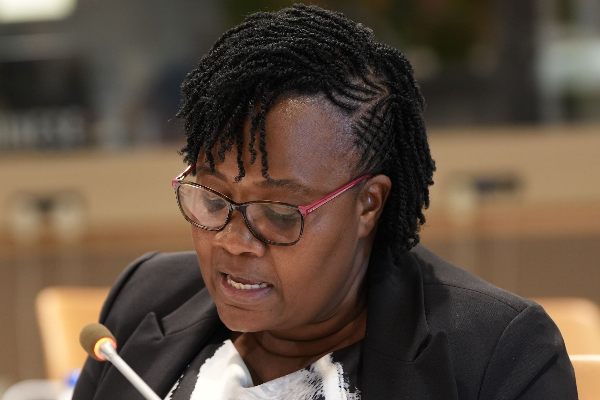

The Patron of the Zimbabwe Association of Women in Mining Associations (ZAWIMA) has called on young women to redefine their roles in the extractive sector—not merely as employees, but as the next generation of entrepreneurs, suppliers, and industrial leaders, Mining Zimbabwe can report.
by Rudairo Mapuranga
Speaking at a high-profile public lecture co-hosted by the Women’s University in Africa and the Zimbabwe School of Mines, Blessing Hungwe emphasised that the sector’s future depends on female-led innovation.
“Women must have opportunities to supply goods and services in the mining sector,” Hungwe told an audience of university students, School of Mines trainees, and pupils from Roosevelt High School. Drawing from her own success as a small-scale gold miner, she argued that Zimbabwe’s mining boom—which saw export earnings reach US$7.3 billion in 2025—must translate into tangible wealth for women.
A Constitutional and Moral Mandate
Hungwe framed her call to action through both a moral and legal lens:
The Moral Fabric: Using the “Parable of the Talents,” she positioned women as capable, responsible stewards of resources.
The Legal Backbone: She cited the Constitution of Zimbabwe, which mandates equitable benefit from natural resources and requires the state to ensure women have equal access to land and capital.
“It is not possible for us to agree on the direction if we do not all have a shared understanding of the map,” Hungwe remarked, highlighting the Constitution as the ultimate guide for women’s rights.
Quantifying the Opportunity
The scale of the industry provides a massive backdrop for potential female entrants:
Sector Growth: Export earnings hit $7.3 billion in 2025, nearly tripling the $2.7 billion recorded in 2017.
Gold Dominance: Gold alone contributed $4.4 billion, accounting for $75 of every $100 Zimbabwe earns from exports.
Hungwe challenged the students to ensure these figures include them. She noted a major policy win: ZAWIMA successfully lobbied Fidelity Gold Refinery (FGR) to lower the 5% gold trade incentive threshold from 20kg to just 0.5kg, making it accessible to small-scale women miners.
Navigating Risks and Barriers
While highlighting favourable policies—such as artisanal miners receiving 90% of payments in foreign currency—Hungwe was candid about the industry’s challenges:
Health Risks: She warned against the dangers of mercury use, which poses severe risks to women and pregnant mothers.
Structural Barriers: Women still face hurdles in securing industrial attachments, jobs, and breaking into male-dominated supply chains.
The ZAWIMA Legacy
As the unified voice for women in the sector, ZAWIMA is working to influence corporate and public policy to expand procurement opportunities for women.
“We seek to influence under the banner of ZAWIMA,” Hungwe concluded. “An organization driven by my passion to see all women speaking with one voice.”
For the students in attendance, the message was clear: the legal and policy “map” is already drawn; the next step is for young women to claim their territory.