


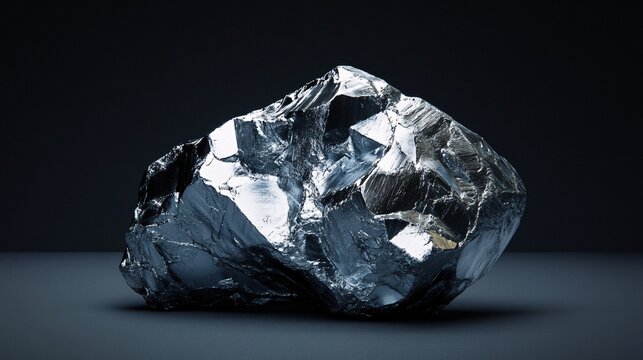

In 2025, Zimbabwe’s platinum group metal (PGM) producers shipped 37,194 tonnes of matte across the Limpopo River and into South African refineries. Those shipments earned the country US$1.5 billion, a 71% surge from the previous year.
By Rudairo Mapuranga
It was, on paper, a triumph for the mining sector. Platinum production is forecast to rebound another 3% to 518,000 ounces in 2026, with exports projected to hit US$2 billion. Mining already accounts for over 70% of export earnings and contributes 12-16% of GDP.
Yet beneath those headline figures lies a question that policymakers, economists, and industry watchers are increasingly asking: Why does Zimbabwe still export its PGM wealth in semi-processed form, while South Africa captures the final, most profitable margin?
Every tonne of matte shipped south contains platinum, palladium, rhodium, ruthenium, and iridium—metals whose value multiplies exponentially when refined to purity. But Zimbabwe does not refine them. South Africa does. And in doing so, South Africa employs the chemists, metallurgists, engineers, and technicians who should be working here.
The Lithium Precedent: A Study in Decisive Policy
The contrast with Zimbabwe’s lithium sector could not be starker.
In June 2025, the Cabinet announced a ban on lithium concentrate exports effective January 2027. Despite sustained industry lobbying for an extension, the government held firm. In February 2026, it went further, suspending all raw mineral exports with immediate effect. In May 2026, it formally classified 14 minerals, including PGMs, as “critical” and banned raw exports outright.
The result has been a processing revolution. Four major lithium sulphate plants are expected to be operational by late 2026. Prospect Lithium Zimbabwe commissioned a US$400 million plant and is already targeting crude lithium carbonate production by year-end. Industry has committed an estimated US$1.45 billion to local lithium beneficiation.
Finance Minister Mthuli Ncube has been clear: “We can’t expect everybody to come up with a lithium concentrator, it’s expensive… they should sign MoUs with PLZ and Bikita Minerals.” The message was unambiguous—collaborate or comply, but the ban stands.
For PGMs, no such ultimatum has been issued.
Infrastructure Is Rising- But the Final Step Remains Elusive
The argument that Zimbabwe lacks the capacity for a Precious Metal Refinery (PMR) is increasingly difficult to sustain.
Zimplats, the country’s largest PGM producer, has already spent US$36 million reviving its Base Metal Refinery (BMR) at Selous. The BMR is designed to process 5,200 tonnes of nickel and separate base metals from PGMs—a critical intermediate step. Smelting capacity has been tripled to 380,000 tonnes of concentrate per year. The company has allocated US$1.1 billion of a US$1.8 billion 10-year investment plan through 2031.
Most significantly, Zimplats has itself stated that “once the base metal refinery is fully operational, [it] plans to move towards a precious metal refinery.”
The bridge is being built. But the destination, a fully operational PMR, remains a plan, not a project with a deadline.
Enough Scale for One Shared Refinery
Zimbabwe’s PGM sector is no longer dominated by a single player. The producer landscape now includes:
- Zimplats – the largest, with smelting and BMR capabilities
- Unki Mine – a major producer with its own smelter
- Mimosa Mine – a significant producer that currently sends concentrate to Zimplats for toll processing
- Karo Platinum – set to process 2.5 million tonnes of ore annually, producing 190,000 ounces per year of six-element PGMs over a 17-year mine life
- Bravura Consortium, Mutapa Platinum Resources, – all at various stages of development
With seven producers either operating or coming online, the scale is sufficient to support a single, shared PMR, much as the lithium sector is being encouraged to use shared tolling arrangements.
The Jobs Crossing the Border
Every tonne of matte exported represents jobs that should be in Zimbabwe. Refining PGM concentrates to pure metal requires high-level skills, metallurgists, chemical engineers, laboratory technicians, and plant operators. These are not low-wage positions, they are the high-skilled, high-income jobs that build a middle class and retain talent.
Instead, South Africa’s refineries employ South Africans while Zimbabwean graduates migrate south in search of work. The country is effectively subsidising its competitor’s industrial base while exporting its own raw material.
A Third Consecutive Deficit and Rising Prices
Global market conditions only strengthen the case for local refining. The platinum market recorded a third consecutive annual deficit in 2025, widening to 1.08 million ounces. Platinum prices are projected to average US$2,450 per ounce in 2026. Demand is robust, supply is constrained, and the margins on refined metals are substantial.
In this environment, exporting matte is not just a missed opportunity—it is a structural weakness in Zimbabwe’s economic model.
The Government’s Tug-of-War
To its credit, the government has taken initial steps. The February 2026 ban on raw mineral exports and the classification of PGMs as “critical” signal that beneficiation is a national priority.
But on PGMs, the policy has stopped short of a lithium-style ultimatum. There is no January 2027 deadline for matte exports to cease. There is no mandatory directive for producers to enter toll-refining arrangements. There is only the BMR, rising slowly, and the promise of a PMR at some unspecified future date.
Industry insiders suggest the government is wary of frightening off the very investors it needs to expand production. The US$1.8 billion in announced investments is not insignificant, and authorities may be reluctant to impose additional capital demands.
Yet the lithium experience suggests that a firm deadline does not deter investment—it redirects it. PLZ, Bikita, Kamativi, and others have not fled; they have built. If US$1.45 billion can be mobilised for lithium in four years, a PMR for PGMs is not a fantasy. It is a question of political will.
The Ball Is in Whose Court?
As of June 30, 2026, Zimbabwe stands at a crossroads. The Great Dyke’s reserves remain vast. The producers are profitable. The infrastructure is half-built. The policy framework exists on paper.
But the matte continues to flow south. And with every shipment, Zimbabwe hands South Africa the final prize, refined metals, refined jobs, and refined value.
The government has proven with lithium that it can act decisively. The question now is whether it will apply the same logic to its second-largest export earner, or whether the Great Dyke’s great giveaway will continue for another decade.
“The era of shipping raw rock for marginal returns is over,” said Minister of Mines Polite Kambamura in February 2026.
For lithium, that era is ending. For PGMs, it has not yet begun.