



Zimbabwe is seeking to strengthen its appeal to international mining investors through infrastructure development, regional integration and a more accommodating regulatory environment, Deputy Minister of Mines and Mining Development Dr Celeb Makwiranzou (MP) has said.
By Rudairo Mapuranga
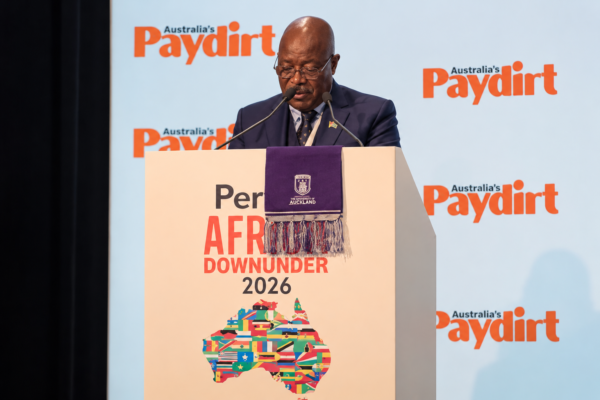
Speaking on the sidelines of the Africa Down Under (ADU) 2026 conference in Perth, Makwiranzou said the Government was positioning the country to take advantage of its strategic location within Southern Africa while addressing some of the infrastructure and administrative requirements of major mining investments.
Miners Open to Developing Their Own Power
Energy remains one of the most important considerations for mining investors, particularly as Zimbabwe pursues large-scale projects in energy-intensive commodities.
Makwiranzou said Zimbabwe’s position within the Southern African Development Community gives it access to regional electricity cooperation through the Southern African Power Pool.
“Luckily, we are at the centre of SADC, so we have what we call a power pool for SADC, so we are able to assist in that,” he said.
However, he acknowledged that some mining operations may require dedicated power solutions.
“In some cases, you will find that miners would like to have their own consumption power, so we are open to licensing them to create their own power source,” Makwiranzou said.
The remarks come as mining companies increasingly explore captive generation and other private energy arrangements to secure reliable electricity for large-scale operations.
Infrastructure and Regional Connectivity
Makwiranzou said Zimbabwe’s central location within Southern Africa gives it an advantage as a potential transport link between regional markets and export corridors.
“Being in the centre of SADC, we are like the crossroads of highways going to the various ports in Southern Africa, Eastern Africa, and we are developing those roads to be able to take up the exports out,” he said.
Zimbabwe is also pursuing major regional transport infrastructure projects, including the proposed Lion’s Den–Kafue railway corridor involving Zimbabwe and Zambia.
The project is expected to improve regional rail connectivity and strengthen access to transport routes serving ports and markets across Southern and Eastern Africa, although implementation will depend on financing and the successful execution of the planned infrastructure programme.
For the mining sector, improved rail and road infrastructure remains critical to reducing logistical bottlenecks and improving the movement of minerals, equipment and other mining inputs.
Government Pitches Easier Licensing
Makwiranzou also used the ADU platform to assure potential investors that the Government wants to make it easier for mining companies to establish and operate in Zimbabwe.
“Our licensing is very, very easy. We want people to come, so we don’t stand in their way,” he said.
“We sit with them when we talk with them and assist them wherever possible.”
The Government has been pursuing a number of reforms aimed at improving the administration of the mining sector, including changes to selected mining-related fees and the continued development of a computerised Mining Cadastre Registration System.
The cadastre system is expected to modernise the management of mining titles and help address longstanding challenges associated with overlapping claims and administrative processes.
Its introduction is seen as an important part of efforts to improve transparency and certainty around mineral rights — two issues closely watched by both local and international investors.
Regional Integration and Mineral Value Addition
Makwiranzou said Zimbabwe also sees regional cooperation as central to the future development of its mining industry.
Zimbabwe recently completed its tenure as chair of the Southern African Development Community, with South Africa taking over the chairmanship.
“What this does is it enlarges our market for various goods and services, so we are keen to be part of the regional system,” he said.
Regional integration is becoming increasingly important as African countries seek to move beyond the traditional export of raw minerals and develop processing, manufacturing and mineral-based industries closer to where resources are produced.
Zimbabwe, with significant deposits of lithium, platinum group metals and other strategic minerals, is among the countries expected to play an important role in Southern Africa’s emerging energy-transition mineral value chains.
A regional initiative involving several SADC countries is also seeking to promote environmentally and socially responsible mineral development, beneficiation and stronger regional value chains for minerals critical to the global energy transition.
Investment Message from Perth
Makwiranzou’s message at Africa Down Under was that Zimbabwe wants to combine its substantial mineral potential with improved infrastructure, a modernised mining administration system and deeper regional economic integration.
While infrastructure constraints and regulatory challenges remain important considerations for investors, the Deputy Minister said the Government’s approach is increasingly focused on facilitating investment rather than creating unnecessary barriers.
For Zimbabwe, which is seeking to attract capital into exploration, mining, beneficiation and downstream mineral processing, the challenge will be translating those policy commitments into projects, infrastructure and regulatory certainty on the ground.
At ADU 2026, Makwiranzou’s pitch to international investors was clear: Zimbabwe sees mining as a central pillar of its economic future and wants to position itself as an increasingly accessible destination for global mining capital.

