



The operators of the multi-million-dollar Arcadia Lithium Mine have issued a robust defence against a litany of serious labour practice allegations, arguing that their reliance on expatriate Chinese staff is an indispensable strategy for a pioneering project of national importance, Mining Zimbabwe can report.
By Rudairo Mapuranga
This comes after Mining Zimbabwe presented Arcadia Technology Zimbabwe (ATZ) and its parent company, Prospect Lithium Zimbabwe (PLZ), with detailed claims from former and current employees alleging unfair dismissal, systemic discrimination, and a failure to implement meaningful skills transfer for Zimbabwean professionals.
In a comprehensive response from its ESG department, the company refuted the allegations point by point. It framed the non-renewal of specific employee contracts as “normal personnel turnover” and described its dependence on Chinese technical expertise as a necessary “incubator” and “catalyst” phase. The company asserted an “unwavering commitment” to localisation but emphasised the unique challenges of building a “brand-new, technology-intensive, modern industrial system from the ground up” in a region with no prior lithium industry.
The allegations, however, paint a starkly different picture of the internal environment at one of Zimbabwe’s most strategically vital mining projects.
The most immediate grievances centre on a group of qualified engineers hired in August 2025 on three-month contracts as Ball Mill Operators. These individuals, in sworn testimonies, claimed they were never allowed to operate the sophisticated machinery they were hired for. Instead, they stated they were deployed as “general hands” performing unskilled manual labour, which they contend was a fundamental breach of their employment terms.
The situation came to a head when the employees collectively requested a salary review and roles that matched their technical qualifications. They allege that their contracts were not renewed immediately following this request, a move they interpret as a retaliatory dismissal for exercising their right to fair labour practices. They cited the Supreme Court of Zimbabwe’s stance that dismissals, including non-renewals under such circumstances, must be both substantively and procedurally fair, questioning whether mandatory steps under the Labour Act were followed.
In its defence, ATZ confirmed that three employees on Ball Mill Operator contracts were not renewed upon their expiration on October 31, 2025. The company categorically stated that this “constitutes normal personnel turnover within company operations and does not qualify as unfair dismissal.”
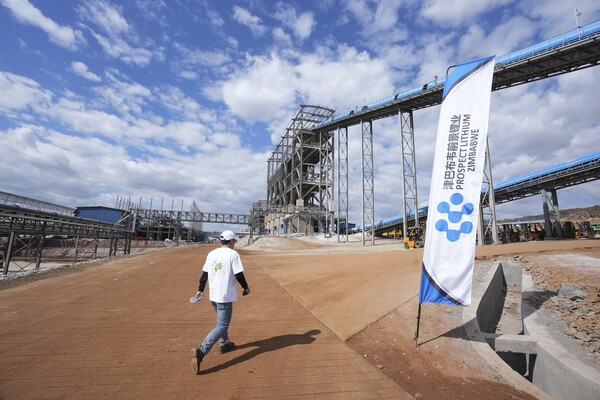
The company provided a technical justification for the assigned manual labour, explaining that the project is still in its “construction phase” and that critical equipment, including the ball mill, “has not yet been fully installed.” As a result, it said, “some operators have been assigned to perform preparatory and other auxiliary tasks on site,” characterising this as a pragmatic temporary measure.
On the issue of wages, ATZ stated it paid the employees above their contracted rate and significantly higher than the National Employment Council (NEC) standard for a general worker, suggesting they were compensated fairly for the work they performed.
Notably, the company’s response did not address the specific query regarding whether the procedural steps for a fair termination, as mandated by Section 12B(1) of the Labour Act—including a formal hearing—were followed.
A Two-Tier Workforce? Allegations of Systemic Discrimination
Beyond individual contracts, a broader allegation looms: that of a systemic two-tier employment structure. Employees testified that while roughly 200 Zimbabweans work at the plant, the vast majority are in general hand roles, with all senior technical, supervisory, and decision-making positions occupied by Chinese expatriates. This is compounded by claims that even non-specialist roles are filled by Chinese nationals, creating a “glass ceiling” for local professionals.
The company’s rebuttal to these claims is rooted in its self-image as an industrial pioneer. It stressed that it is the first and only lithium salts plant in Zimbabwe—“indeed in the whole of Africa”—and is therefore not entering a mature industrial ecosystem.
“We are not entering a mature industrial environment but are building a brand-new, technology-intensive, modern industrial system from the ground up,” the response stated, pointing to a “lack of industrial chains, skilled workers, and management experience” in the local area.
The initial deployment of a Chinese core team was described as a “necessary measure to ensure the project’s survival and success.” The company further argued that the high-tech nature of modern mining, which relies on automated equipment and intelligent control systems, demands extremely high professional requirements that are not immediately available locally.
Addressing the claim that even administrative roles are filled by expatriates, the company provided a nuanced explanation, arguing that in a complex industrial plant, roles like production scheduler or materials manager are “intrinsically linked to the core production process” and require a deep systemic understanding currently held by experienced Chinese staff.
While the company pointed to its recruitment efforts for local positions, such as forklift drivers and welders, it did not specifically justify why roles such as security guards would require expatriate staffing.
On the alleged “glass ceiling,” the company cited internal promotions, claiming 47 local employees have been promoted to Team Leader and 16 to Assistant Supervisor. However, it did not provide the organisational chart requested by Mining Zimbabwe that would clearly show the nationality and decision-making authority of all plant manager-level positions and above.
The Localisation Promise and National Compliance
A central pillar of the government’s National Development Strategy 1 (NDS1) is skills development and the meaningful participation of Zimbabweans in the economy. The allegations questioned the existence of a tangible skills transfer plan at Arcadia.
In response, PLZ outlined a “multi-tiered talent development strategy.” It highlighted an internal training centre, a “mentorship” programme, and a tripartite cooperation with Ningbo Polytechnic University in China and Harare Polytechnic College. It noted it has already recruited 11 Zimbabwean youths who studied in China.
“We wish to emphasize clearly that reliance on Chinese staff is an ‘incubator’ and ‘catalyst’ during the project’s initial phase and is by no means a long-term strategy. Our commitment to staff localisation is unwavering,” the company stated.
However, the company did not provide the requested formal, time-bound Skills Transfer and Localisation Plan—a document that would detail the number of Zimbabwean understudies for senior roles and specific timelines for them to assume these positions.
Regarding a July 2025 directive from the Office of the President, which warned Chinese investors against a “disregard for local laws,” the company stated it has “never received any allegations from the President’s Office” on the matter and has always “actively responded to Zimbabwe’s national calls and complied with local laws.” It bolstered its compliance credentials by noting it is the first lithium miner in Zimbabwe to obtain international ISO certifications for compliance and environmental management.
Addressing its parent company Huayou Cobalt’s “Business for Good” principles, PLZ framed its entire investment as a contribution to national prosperity and its talent cultivation as part of creating “ESG best practices.”
An Unfinished Narrative
The dispute at the Arcadia Lithium Mine encapsulates the complex challenges of high-stakes foreign investment in Zimbabwe’s critical minerals sector. The company has presented a top-down narrative of technological necessity and strategic, phased localisation essential for the project’s long-term viability.
The employees, however, offer a bottom-up narrative of daily frustration, perceived disempowerment, and scepticism about the pace of change.
While the company’s detailed response provides significant context for its operational decisions, the absence of a concrete localisation timeline, a transparent organisational chart, and clarity on specific dismissal procedures means that critical questions persist. The resolution of this dialogue will be closely watched, as it will not only determine the future of the Arcadia mine but also set a precedent for how the promise of local empowerment is reconciled with the demands of cutting-edge industrial development in Zimbabwe.