

Home Blog Page 104

Blanket Mine’s High-Grade Drilling Results Signal Resource Growth and Life Extension

0

One of the country’s leading gold producers, Caledonia Mining Corporation Plc, has reported further encouraging high-grade results from its ongoing resource expansion drilling programme at its 64%-owned Blanket Mine in Zimbabwe.

By Ryan Chigoche

The latest results are expected to significantly enhance the mine’s mineral resource base and potentially extend its operational life.

The drilling campaign, which commenced in January 2024, is aimed at evaluating the continuity of mineralised zones within three of Blanket Mine’s key orebodies: Blanket, Eroica, and Lima.

These efforts are focused on increasing confidence in existing resources and expanding the mineral resource estimate below the 34 level of the mine (1,110 metres).

This positive development at Blanket Mine comes at a time when gold prices are surging globally and are widely expected to continue rising. Driven by ongoing geopolitical conflicts and economic uncertainties, gold’s status as a safe-haven asset is strengthening investor demand. As a result, the potential increase in high-grade resources and extended mine life at Blanket positions Caledonia well to benefit from a favourable market environment, enhancing both production prospects and long-term value for shareholders.

Between January 2024 and the end of April 2025, Caledonia completed 6,976 metres of underground drilling, which confirmed that the Blanket and Eroica orebodies contain grades and widths that are generally better than previously expected.

Drilling also shows that the Lima orebody continues below the 22 level (750 metres). Additionally, a new potential orebody has been intersected in the Blanket orebody area, returning particularly strong early results.

Commenting on the development, Caledonia CEO Mark Learmonth said the company anticipates an increase in the mineral resource estimates thanks to the drilling results.

“Our ongoing drilling campaign continues to demonstrate encouraging results, further improving our confidence in the Blanket Mine mineral resource and pointing to additional future mineral resource growth. The grades and widths we are seeing from this drilling campaign are as good as, and in some cases considerably better than, results from previous drilling campaigns, which is highly encouraging. We anticipate that the positive grades and widths will result in an increased overall mineral resource estimate, which in due course should result in the extension of the existing life of mine. We have invested heavily in Blanket Mine over the last seven years to increase production capacity, resulting in a mine infrastructure that can sustain production beyond the current production horizon.”

The company said the increased density of drilling intersections is expected to upgrade existing inferred resources to the indicated category or higher, strengthening the foundation for long-term mine planning.

With deeper crosscuts developed to access the steeply dipping orebodies, Caledonia is now able to optimally drill and evaluate the mineralised zones at depth.

Current underground drilling is targeting the Blanket, ARM, and ARS orebodies down to the 38 level (1,230 metres below surface), representing a major push to identify deeper mineral potential.

At the same time, Caledonia has initiated a surface exploration programme within the Blanket Mine lease area, focused on a Banded Iron Formation (BIF) that runs in a north-westerly direction.

This BIF structure has historically supported gold production at nearby operations such as Vubachikwe and Sabiwa. Initial Induced Polarisation (IP) and Ground Magnetic (GM) surveys over a selected area delineated anomalies across a 600-metre strike. Follow-up mapping and shallow pitting confirmed the presence of quartz-filled shear zones within the BIF.

Grab samples from surface pits returned assay results ranging from 0.59 g/t to 32.12 g/t, based on analysis conducted at Blanket Mine’s onsite laboratory.

To further assess the potential of this surface target, Caledonia plans to undertake trenching at 50-metre spacing across the anomalous zone and initiate reverse circulation (RC) drilling to evaluate the presence of shallow oxide resources during 2025.

With both underground and surface exploration programmes delivering robust early-stage results, Caledonia is confident that Blanket Mine remains on a growth path, with additional high-grade discoveries enhancing the outlook for sustained production well into the future.

Oil Price Surge Threatens Zimbabwe’s Fragile Economy Amid Gulf Tensions

0

International oil prices have climbed to their highest levels in five months, with Brent crude briefly jumping 5.7% to US$81.40 a barrel before easing to US$78.39. Meanwhile, U.S. West Texas Intermediate rose 2.6% to US$75.76.

By Ryan Chigoche

The price spike follows U.S. airstrikes over the weekend targeting Iran’s nuclear sites at Fordow, Natanz, and Isfahan.

These strikes have intensified an already volatile situation in the Middle East, sparked two weeks ago by Israeli attacks on Iranian targets.

In response, Iran has threatened to shut down the Strait of Hormuz, a vital shipping lane that handles about 20% of global oil and 30% of liquefied natural gas.

The potential closure has sent global energy markets into disarray, raising fears of rising costs across fuel, freight, and consumer goods.

For Zimbabwe, which already endures the highest fuel prices in Africa, this global disruption is likely to lead to further local price hikes and economic stress.

The U.S. airstrikes, ordered by President Donald Trump, aimed to cripple Iran’s nuclear program and came shortly after Israel’s June 13 assault on Iranian military infrastructure. That Israeli offensive prompted a barrage of over 180 ballistic missiles from Iran in retaliation.

Amid this escalation, Iran’s parliament voted to consider shutting the 21-mile-wide Strait of Hormuz.

The waterway is a crucial route for oil exports from countries like Saudi Arabia, Iraq, Kuwait, and Iran itself, which pumps around 3.3 million barrels daily. A shutdown would pose a serious threat to global energy supplies.

The implications are particularly severe for Zimbabwe, which depends heavily on imported fuel sourced via South African ports and the Feruka pipeline from Mozambique’s Beira port.

As international oil prices surge, Zimbabwe’s import costs rise in tandem, adding pressure to an already strained economy that is battling persistent structural challenges and repeated external shocks.

The country’s fuel sector, already precarious, now faces a worsening outlook. In May 2025, petrol and diesel were priced at US$1.53 per litre—already among the highest in the Southern African Development Community (SADC) region—despite a prior drop in global oil prices earlier in the year.

The situation is further complicated by the role of the National Oil Company of Zimbabwe (NOCZIM), which oversees bulk fuel procurement.

The company has a troubled track record, with previous mismanagement contributing to erratic fuel supplies.

In past shortages, supply levels dropped to just 40% of demand, crippling both business operations and public transport.

With oil prices rising again, Zimbabwe could face a repeat of such supply disruptions, especially as the country continues to struggle with limited access to foreign currency, which is essential for importing fuel.

Zimbabwe’s multicurrency system—where the U.S. dollar dominates alongside the ZiG—adds another layer of complexity.

Fuel importers, already battling currency scarcity, now face soaring procurement costs that are likely to further deplete the country’s thin foreign reserves.

The economic impact will ripple across key sectors. Agriculture and mining, the two pillars of Zimbabwe’s economy, are highly vulnerable to fuel price volatility.

The 2024 El Niño-induced drought reduced agricultural output by 15%, leaving 7.7 million people food insecure.

For farmers reliant on diesel for irrigation and machinery, rising fuel costs will intensify production challenges, particularly as Zimbabwe’s fuel prices already exceed those in neighbouring countries such as Zambia and Botswana.

Higher shipping costs, driven by rising oil prices, also threaten to raise the price of maize imports—an essential staple for millions of households.

The industrial sector is equally exposed. Zimbabwe’s manufacturers are already grappling with chronic power cuts due to low water levels at Lake Kariba.

Blackouts lasting up to 12 hours a day have forced many factories to rely on diesel-powered generators. A jump in fuel prices will push operating costs even higher, undermining production and profitability.

Mining, one of Zimbabwe’s top export earners—especially through gold—may also take a hit. Increased transport and energy costs could squeeze margins, posing a setback to the government’s ambition of transforming the sector into a US$12 billion industry by 2030.

In the face of these converging pressures, Zimbabwe’s economy remains deeply exposed to global oil market shocks, especially when geopolitical instability in the Gulf region sends energy prices surging.

Gold buying prices per gram in Zimbabwe, 24 June 2025

Gold buying prices per gram in Zimbabwe today, 24 June 2025, from the official gold buyer and exporter Fidelity Gold Refinery (FGR).

  • SG 90% and ABOVE US$102.70/g.
  • SG ABOVE 89% BUT BELOW 90% US$101.62/g.
  • SG ABOVE 80% BUT BELOW 85% US$100.53/g.
  • SG ABOVE 75% BUT BELOW 80% US$99.44/g.
  • SAMPLE BELOW 10g BUT ABOVE 5g US$97.81/g.

Fire Assay CASH $103.25/g.

NB: Fire Assay cash price is for gold above 100g; no sample is deducted.

A sample of not more than 10g is deducted for the Fire Assay Transfer price.

A 2% royalty is charged on all deposits (Small-scale miners).

A 5% royalty is set for Primary Producers.

Zimbabwe’s 63 Minerals and their Uses

0

Zimbabwe is one of the world’s most richly endowed countries in terms of mineral wealth. With 63 officially listed minerals, the Southern African country boasts a diverse geological landscape that has the potential to drive industrialisation, export growth, and inclusive development.

From high-demand strategic resources like lithium and rare earths to traditional powerhouses such as gold and platinum, Zimbabwe’s mineral portfolio presents both economic opportunities and strategic leverage on the global commodities stage.

Here’s a comprehensive list of all 63 officially recognized minerals found in Zimbabwe and their uses.


💎 1–10: Precious & Gemstone Minerals

  1. Agate – Semiprecious stone for jewellery and décor; enhances artisanal mining income
  2. Amazonite – Green feldspar used in jewellery and ornamental crafts
  3. Amethyst – Purple quartz for jewellery and metaphysical markets
  4. Emerald – High-value gemstone, globally exported
  5. Sapphire – Precious corundum used in jewellery and fine watchmaking
  6. Citrine – Quartz gemstone used in jewellery
  7. Garnet – Abrasive and gemstone
  8. Jade – Ornamental stone for carvings and jewellery
  9. Topaz – Clear-to-colored gemstone, used in jewelry
  10. Aquamarine / Beryl – Gemstone & industrial beryl used in electronics

⚙️ 11–20: Industrial & Construction Minerals

  1. Clay (kaolin, fireclay, flint clay) – Ceramics, bricks, refractories
  2. Calcite – Cement, agriculture (lime), chemical filler
  3. Dolomite – Cement, steel flux, agricultural lime
  4. Limestone – Cement, construction, agriculture
  5. Gypsum – Plasterboard, cement retarder, soil conditioner
  6. Fluorite – Metallurgy, ceramics, hydrofluoric acid production
  7. Feldspar – Ceramics, glass, paints
  8. Silica (quartz) – Glass, foundries, electronics
  9. Barytes – Oil & gas drilling mud, paints, paper
  10. Vermiculite – Insulation, horticulture, lightweight concrete

⚙️ 21–30: Base & Heavy Metals

  1. Iron & Magnetite – Steel production, heavy industry
  2. Copper – Electrical wiring, electronics, construction
  3. Nickel – Stainless steel, batteries, alloys
  4. Cobalt – Rechargeable batteries, superalloys
  5. Chromium – Stainless steel and ferrochrome production
  6. Lead – Batteries, ammunition, radiation shielding
  7. Zinc – Galvanizing, battery production
  8. Manganese – Steel alloys, dry-cell batteries
  9. Molybdenum – Steel strengthening, lubricants
  10. Vanadium – High-strength steel, vanadium flow batteries

⚡ 31–40: Energy & Light Hydrocarbons

  1. Coal – Electricity generation, steel, cement
  2. Coal-bed Methane (CBM) – Clean energy fuel, power generation
  3. Uranium – Nuclear energy, power generation
  4. Peat – Fuel source, horticulture
  5. Salt – Industrial processes, food, water treatment

🔋 41–50: Precious & Strategic Metals

  1. Gold – Jewelry, investment, electronics
  2. Silver – Electronics, solar, photography
  3. Platinum – Catalytic converters, jewelry, medical devices
  4. Palladium – Catalysts, electronics, fuel cells
  5. Antimony – Flame retardants, alloys
  6. Bismuth – Pharmaceuticals, cosmetics, low-tox alloys
  7. Arsenic – Semiconductors, pesticides, wood preservatives
  8. Cesium – Atomic clocks, oil recovery, pharmaceuticals
  9. Mercury – Thermometers, batteries, industrial processes
  10. Tungsten – Cutting tools, wear-resistant materials

🔋 51–63: Rare Earths & Specialty Minerals

  1. Lithium – EV batteries, energy storage, ceramics
  2. Tantalum – Electronics capacitors, aerospace components
  3. Graphite – Batteries (anode material), lubricants
  4. Mica – Insulators in electronics, cosmetics
  5. Sillimanite – High‑temperature ceramics and refractories
  6. Cordierite – Ceramics, kiln furniture, thermal insulators
  7. Corundum – Industrial abrasives, high-speed bearings
  8. Kainite – Fertilizers, de‑icing agents
  9. Diatomite – Filtration, abrasives, absorbents
  10. Ochre – Pigments for paint, art, historical crafts
  11. Jadeite / Mtorolite – Rare ornamental stone
  12. Phosphate – Fertilizer for Agriculture
  13. Tin – Solder, plating, alloys
  14. Pyrite – Sulfuric acid, gold by-product
  15. Rutaimate – (Selenium) – Electronics, glass, pigments
  16. Silver – Listed already above under precious metals (duplicate)
  17. Feldspathoids / Sodalite group – Decorative stone, specialized ceramics
  18. Dimension Stones (granite, marble, quartzite) – Construction, countertops, export


Gold buying prices per gram in Zimbabwe, 23 June 2025

Gold buying prices per gram in Zimbabwe today, 23 June 2025, from the official gold buyer and exporter Fidelity Gold Refinery (FGR).

  • SG 90% and ABOVE US$102.33/g.
  • SG ABOVE 89% BUT BELOW 90% US$101.25/g.
  • SG ABOVE 80% BUT BELOW 85% US$100.16/g.
  • SG ABOVE 75% BUT BELOW 80% US$99.08/g.
  • SAMPLE BELOW 10g BUT ABOVE 5g US$97.46/g.

Fire Assay CASH $102.87/g.

NB: Fire Assay cash price is for gold above 100g; no sample is deducted.

A sample of not more than 10g is deducted for the Fire Assay Transfer price.

A 2% royalty is charged on all deposits (Small-scale miners).

A 5% royalty is set for Primary Producers.

AMSZ Technical Visit Underlines the Growing Impact of Technology in Mine Surveying

0

The Association of Mine Surveyors of Zimbabwe (AMSZ) says the mine surveying profession is undergoing a major shift, with data integrity, efficiency, and digital integration now at the centre of the surveyor’s evolving role.

By Ryan Chigoche

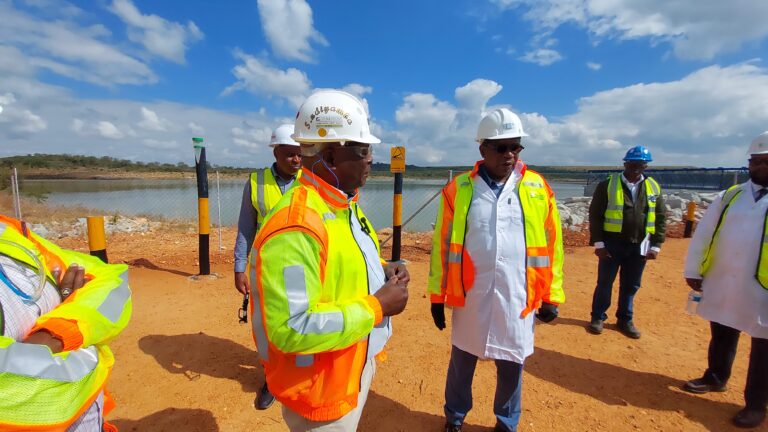
This message came through strongly during a recent technical visit to Blanket Mine, where AMSZ members explored how technology is being used to improve mining operations and strengthen the role of surveyors in delivering value.

Held at the Gwanda-based gold operation, the visit was part of AMSZ’s ongoing programme to expose its members to best-practice environments.

Speaking to Mining Zimbabwe, AMSZ Secretary General Takunda Mubaiwa emphasised that surveyors today are no longer just data collectors—they are key players in processing and translating information into financial and operational decisions.

“A surveyor is now much more needed in terms of the input of the data, the processing and the output of the data. Software manipulation is now key. You collect the data—yes—but what are you doing with the data? How is it being integrated to then add up to the financial result—dollars—that make sense to the industry, to the employer, to the service provider, whoever you are then linking up with? And Caledonia is really doing good in that regard, using the JSWIC that they are using. It’s really migrating all systems into one place, one pool, where you can just pool all resources. These guys from planning, these guys from mining—everyone can just feed into the same system without alterations to the integrity of that same data, but being done to the survey grades that we really need to achieve,” he said.

Blanket Mine demonstrated how its integrated software systems, including DESWIC and SynchroMine, are enabling this shift.

These tools support survey data accuracy, risk management, and real-time collaboration across departments.

AMSZ members took a close look at how these platforms are applied to planning, accountability, and audit processes within the operation.

AMSZ President Stewart Gumbi said the visit to Blanket Mine was part of a structured effort to identify learning opportunities across Zimbabwe’s mining sector. He said Blanket provided a strong case study on aligning data, efficiency, and profitability.

“We select these sites for a reason. We have a system of selecting which technical visits to conduct, which sites to visit. Because we want to look at gaps which our members can learn how to close. Blanket Mine has shown us, especially on their production, their profits, their data integrity, and their efficiencies. So, the next technical visit that we are going to do, we are going to try to even surpass this one, because we are also going to analyse the gaps. Some of them were discussed today,” said Gumbi.

He added that the goal is not only to observe these innovations but to help members adopt similar models in their own workplaces, raising standards across the profession.

The technical visit drew a record number of participants—a development AMSZ said reflects growing interest in its work and the critical role surveyors now play in modern mining. The strong engagement also came at a time when the association is making headway on key policy proposals.

AMSZ Vice President Jeremiah Gasiteni said the success of the event had reaffirmed the association’s strategic direction and energised its leadership to push further.

“So it tells you that as an association we are going in the right direction, and it encourages us as the association. It gives us the impetus to continue encouraging our members and ensure our members have got cutting-edge technology that will assist in executing our duties as surveyors,” he said.

AMSZ says it will continue organising technical visits as part of its broader mission to modernise the profession, support innovation, and position mine surveyors as key contributors to Zimbabwe’s mining growth.

Gold buying prices per gram in Zimbabwe, 21 June 2025

Gold buying prices per gram in Zimbabwe today, 21 June 2025, from the official gold buyer and exporter Fidelity Gold Refinery (FGR).

  • SG 90% and ABOVE US$102.33/g.
  • SG ABOVE 89% BUT BELOW 90% US$101.25/g.
  • SG ABOVE 80% BUT BELOW 85% US$100.16/g.
  • SG ABOVE 75% BUT BELOW 80% US$99.08/g.
  • SAMPLE BELOW 10g BUT ABOVE 5g US$97.46/g.

Fire Assay CASH $102.87/g.

NB: Fire Assay cash price is for gold above 100g; no sample is deducted.

A sample of not more than 10g is deducted for the Fire Assay Transfer price.

A 2% royalty is charged on all deposits (Small-scale miners).

A 5% royalty is set for Primary Producers.

Zimbabwe Moves to End Mining Boundary Disputes with Mandatory Survey-Grade Coordinates: Government Bans Handheld GPS Use

0

Zero disputes. One centimetre. That’s the future.

In a decisive move to bring order and precision to Zimbabwe’s mining sector, the Ministry of Mines and Mining Development has issued a landmark directive requiring all mining title holders to submit survey-grade coordinates for their claims, effective 1st July 2025, Mining Zimbabwe can report.

By Rudairo Mapuranga

The notice, issued from the Provincial Mining Director’s office in Gweru and signed by K. Mlangeni, clearly states that only registered mine surveyors using survey-grade instruments are now authorised to provide coordinate data for the country’s mining cadastre.

“As from the 1st of July 2025, all mining title holders will be required to submit surveyed coordinates for their mining titles done by a registered mine surveyor, who should use survey-grade instruments,” he said in the notice.

This directive, which comes amid widespread mining disputes and overlapping claims, is being hailed as a necessary shift towards professionalism, accuracy, and national mineral security.


The Problem: 5-Metre Errors Causing Chaos

For years, Zimbabwe’s mining title system has relied heavily on handheld GPS devices, which have an average horizontal accuracy error of 5 to 10 metres—sometimes even worse depending on terrain and satellite availability. While this margin may seem small, in the dense and competitive world of gold, lithium, chrome and platinum claims, a 5-metre error is enough to trigger serious disputes, encroachments, or even legal battles.

The Ministry’s Permanent Secretary, Mr. Pfungwa Kunaka, has since communicated to all Provincial Mining Directors (PMDs) stressing the need for coordinate accuracy at or below 1 centimetre—something only achievable through survey-grade equipment like Total Stations, GNSS base-rover systems (differential GPS), and Real-Time Kinematic (RTK) GPS setups operated by qualified surveyors.


A Professional Turn: Registered Mine Surveyors Step In

The decision effectively sidelines unverified data and repositions registered mine surveyors as critical actors in the mining value chain. Miners, many of whom had previously submitted coordinates taken from handheld devices, are now being encouraged to seek verification and re-surveying support from qualified professionals.

This is not a punitive measure, the Ministry says, but a corrective one aimed at:

  • Reducing boundary disputes between miners
  • Preventing double allocations of claims
  • Securing national mining data integrity
  • Preparing for full digitalisation under the upcoming electronic Mining Cadastre System

Support for the Decision: Clarity and Conflict Prevention

The move has already received strong support from within the sector.

“This is a long-overdue development,” said a Midlands-based mining consultant. “Too many disputes we mediate stem from GPS errors. You can’t build a billion-dollar sector on five-metre guesswork. A miner should know exactly where their claim begins and ends.”

Small-scale miners and cooperatives, often the most vulnerable to boundary-related disputes, also stand to benefit. Many have been victims of encroachment or misplacement due to incorrect coordinates, only to lose out during inspections or legal reviews.

By standardising accuracy through certified professionals, the government is not only protecting mineral rights—but also creating a basis for a sustainable, dispute-free, investor-friendly mining sector.


Populist Value: Building Trust in the System

At a time when many miners feel disempowered or vulnerable to shifting policy and unclear boundaries, the move to professionalise and centralise coordinate management is a step in the right direction.

It also paves the way for greater trust in the forthcoming electronic Mining Cadastre System—a digital platform the government is working to implement to manage mining rights, applications, payments, and dispute resolutions. A system is only as good as its data—and now, that data will be accurate.

“You can’t digitalise garbage,” a mine surveyor quipped. “If the base coordinates are wrong, everything that follows will be wrong. The Ministry has made the right call.”


What This Means for Miners

From 1 July 2025, all miners—whether small-scale or large—must:

  • Engage a registered mine surveyor
  • Ensure all submitted coordinates meet survey-grade accuracy
  • Re-survey existing claims if they were registered using handheld GPS
  • Submit these coordinates through the proper channels as required by the PMDs

Professionalism Is the Future

This policy move underscores a bigger truth in Zimbabwe’s mining future: professionalism and accuracy are no longer optional—they are national imperatives.

By enforcing the use of survey-grade instruments and qualified personnel, the Ministry of Mines is laying the foundation for a credible, modern, and investor-friendly mining sector. More importantly, it’s giving miners—small or large—a fighting chance to protect what they own and build with confidence.

The Great Dyke – A Geological Marvel of Zimbabwe

0

Zimbabwe is a country rich in natural wonders, but few can match the scale, importance, and mystique of its geological marvel “The Great Dyke”.

Stretching over 550 kilometres from the northeast to the southwest of the country, this colossal geological formation is not only breathtaking but also immensely valuable. It is a mineralogical powerhouse, a key pillar of Zimbabwe’s mining industry, and a true marvel of nature.

Here are 10 exciting facts and minerals that make the Great Dyke one of the country’s greatest geological assets:


1. It’s Billions of Years Old

The Great Dyke is among the world’s oldest geological formations, dating back to the Archean Eon. Its formation provides critical insight into the Earth’s early crustal development, making it a focus of global geological research.


2. Rich in Platinum Group Metals (PGMs)

The Great Dyke holds one of the largest known deposits of Platinum Group Metals (PGMs) in the world, including platinum, palladium, rhodium, iridium, osmium, and ruthenium. Zimbabwe is the third-largest global producer of platinum, thanks to this formation.

World-class mining companies like Zimplats, Mimosa Mining Company and Unki Mine (Valterra Platinum) are all active along the Great Dyke, bringing in billions in investment and positioning Zimbabwe on the global mining map.

Mining operations on the Great Dyke contribute significantly to national exports and employment, playing a central role in Zimbabwe’s economic strategy. Thousands of jobs depend on the mining and processing of its rich resources.


3. Home to Vast Chromite Deposits

The Dyke contains some of the highest-grade chromite ores globally. Chromite is a key ingredient in the production of ferrochrome, which is essential in manufacturing stainless steel.


4. A Treasure Trove of Nickel

Another valuable mineral found on the Great Dyke is nickel, which is crucial for making stainless steel and electric vehicle batteries. Zimbabwe’s nickel exports are largely tied to this geological feature.


5. Hosts High-Grade Gold

Several gold belts intersect the Great Dyke, and while gold is not as abundant as PGMs or chrome, there are pockets of high-grade deposits, especially near the southern end of the Dyke.


6. Contains Cobalt – A Critical Battery Metal

The Dyke also contains cobalt, a rare and essential metal used in battery production, particularly for electric vehicles and electronics.


7. Copper is Present in Trace but Valuable Amounts

While not in large quantities, copper is found within the Great Dyke’s mineral composition, often in association with nickel and PGMs, contributing to its multi-metallic potential.


8. Hosts Strategic Iron and Titanium Deposits

In addition to precious and base metals, the Great Dyke contains iron and titanium minerals, which hold potential for future extraction as demand grows in the construction and tech industries.


9. Divided into Four Mineral-Rich Complexes

Geologically, the Dyke is divided into four main complexes: Musengezi, Sebakwe, Selukwe (Shurugwi), and Wedza. Each has unique mineral compositions and hosts major mining operations like Zimplats, Unki, Mimosa, and the new Great Dyke Investments (GDI).


10. It’s a Global Investment Magnet

Because of its vast, untapped mineral wealth, the Great Dyke continues to attract substantial investment from countries such as Russia, China, and South Africa, particularly in PGMs, chrome, and beneficiation projects like smelters and refineries.


The Great Dyke of Zimbabwe is more than a line on a map—it’s a lifeline of economic opportunity, a geological marvel, and a symbol of Zimbabwe’s mineral wealth. From powering local economies to anchoring the country’s mining exports, it continues to shape Zimbabwe’s past, present, and future. Truly, the Great Dyke is a gift from the Earth—one that Zimbabwe must cherish, protect, and responsibly develop tichidyawo ipapo.