Home Blog Page 137

African Countries Urged to Adopt Global Standards to Tackle Illicit Flows in the Mining Sector

0

In an effort to curb the widespread issue of illicit financial flows plaguing Africa’s extractive sector, African nations have been urged to adopt global best practices and standards, a move seen as essential for addressing the continent’s persistent challenges in managing the economic value of its natural resources, Mining Zimbabwe reports.

By Ryan Chigoche

This call comes as African nations face an increasing challenge of fairness, with mineral-rich countries failing to collect tax revenues that reflect the true value of their resources.

According to United Nations Trade and Development (UNCTAD) data, Africa’s mining sector is estimated to lose around $40 billion annually through illicit financial flows, with the majority of these losses concentrated in the gold trade (77%), followed by diamonds (12%) and platinum (6%), representing a significant portion of the continent’s total illicit financial outflows.

The Global Financial Integrity also reported that Africa bears the most disproportionate burden of unrecorded cross-border financial outflows as a percentage of gross domestic product (GDP), representing approximately 8.6% of the continent’s GDP.

This shows that, over the years, cross-border illicit financial leakages have been draining away much-needed resources that would otherwise be available to finance development priorities across the continent.

Speaking to Mining Zimbabwe, Mineral Economist and Deputy Chairman at the Institute of Mining Research, Lyman Mlambo, acknowledged the prevalence of illicit financial flows in the continent’s extractive sector and called on Africa to adopt global best standards to combat the vice.

“Illicit flows in the sector are common throughout Africa because of a lack of effective transparency and accountability mechanisms. As a continent and as individual countries, Africa suffers from transfer mispricing, thin capitalization, and re-invoicing, which are all profit-shifting measures practiced by big multinational mining corporations whose headquarters are in other continents.”

“To combat illicit flows in the mining sector in Africa, all African countries need to adopt international best practices in transparency and accountability, such as the EITI and other standards consistent with responsible mining, sourcing, and traceability. This will definitely destroy the illicit networks across Africa and related networks outside the continent. This requires the collaboration of African countries,” Mlambo said.

The Extractive Industries Transparency Initiative (EITI) is a global standard that promotes transparency and accountability in the management of oil, gas, and mineral resources. It requires companies to disclose information about payments to governments and revenues to the public and promotes public understanding of natural resource management.

Common methods of illicit financial flows in the mining sector include trade misinvoicing, transfer pricing, and underreporting of mineral quantities. Trade misinvoicing involves misstating the value of exports or imports to evade taxes, while transfer pricing allows companies to manipulate prices within their subsidiaries to shift profits across borders and avoid paying proper taxes. Underreporting mineral quantities, on the other hand, enables firms to conceal actual production levels, further depriving governments of critical revenues. Together, these deceptive practices undermine economic stability and hinder national development by diverting vital funds away from public coffers.

Illicit financial flows are hidden by nature, making it difficult for tax authorities to detect and tax them. Illegal exploitation also creates space for the under-declaration of production, leading to under-taxation in the mining sector. With a large portion of the sector operating informally (ASMs), it is important that the informal sector be formalized so that African countries can account for all their minerals.

Other experts who spoke to this publication were of the view that good governance is key to mobilizing adequate domestic resources and plugging loopholes that facilitate illicit financial outflows. Good governance entails the ability to formulate and implement effective strategies, policies, laws, and regulations for mobilizing optimal revenues from the mineral sector.

Africa is home to over 30% of the world’s mineral reserves. The Democratic Republic of Congo (DRC) alone accounts for over 70% of global cobalt production, while countries like Zimbabwe, Mozambique, and South Africa hold significant shares of the world’s lithium, graphite, and platinum reserves.

However, despite this abundance, the continent is missing out on potential economic benefits due to illicit financial flows.


 

China Tightens Grip on Zimbabwe’s Lithium Resources, Securing Key Mineral for Global Energy Transition

0

China has increasingly cemented its hold on critical minerals essential for the global push toward net-zero emissions, with Zimbabwe emerging as a pivotal player in this strategy, Mining Zimbabwe can report.

By Rudairo Mapuranga

A new report from AidData, a research lab at the College of William & Mary in the United States, reveals how Chinese state-backed financial institutions have leveraged loans, joint ventures (JVs), and special purpose vehicles (SPVs) to dominate critical mineral supply chains worldwide, including Zimbabwe’s booming lithium sector.

Over the past two decades, China has extended nearly $57 billion in loans to 19 low- and middle-income countries, securing strategic stakes in key mineral deposits needed for the production of electric vehicle (EV) batteries, solar panels, and other renewable technologies. This dominance has been achieved through a complex web of financial mechanisms involving at least 26 state-backed institutions, including the Industrial and Commercial Bank of China, the Bank of China, and Citic.

Zimbabwe’s lithium sector, crucial for the global energy transition, has not been immune to this trend. All operational lithium mines in the country, including Bikita Minerals and Arcadia Lithium, are now controlled by Chinese firms. Sandawana Mine, which could potentially hold Zimbabwe’s largest lithium resource, is also being eyed by Chinese investors. Negotiations for the acquisition of part of the resource are reportedly in their final stages, further solidifying China’s control over the country’s lithium wealth.

The AidData report, titled Power Playbook: Beijing’s Bid to Secure Overseas Transition Minerals, highlights that over 75% of China’s investments in critical minerals are structured to ensure ownership stakes through JVs and SPVs, giving Chinese entities significant influence over both the extraction and processing of these resources. In the case of Zimbabwe, this has manifested in a series of Chinese takeovers of major mining projects, positioning China at the helm of Zimbabwe’s lithium industry, a mineral vital for the future of clean energy.

Unlike China’s Belt and Road Initiative (BRI), which focuses primarily on infrastructure, the report finds that mineral financing involves a much wider network of lenders and is characterized by long-term commitments through serial loans. These loans are often structured with guarantees, making them less risky for Chinese investors. Nearly 25% of loans in the mineral sector were backed by Chinese guarantors, a stark contrast to the typical 4% guarantee rate for BRI projects. This deeper, more strategic approach to mineral financing underscores China’s intent to secure upstream resources, particularly in lithium-rich nations like Zimbabwe.

In 2023 alone, Chinese companies invested roughly $16 billion in foreign mining projects, the highest figure in a decade. This surge in investment has raised concerns among resource-rich nations like Zimbabwe, where local ownership and financial returns from mineral extraction are increasingly diminished. In two-thirds of cases studied, JVs and SPVs excluded significant government ownership, effectively limiting these countries’ access to future revenue streams.

For Zimbabwe, the rise of Chinese dominance in the lithium sector brings both opportunities and challenges. On the one hand, Chinese investment has helped develop the country’s lithium mines, contributing to economic growth and job creation. On the other hand, concerns are mounting over the long-term implications of foreign control over such a critical resource. As the demand for lithium continues to rise globally, particularly for EV production, the question remains whether Zimbabwe will benefit from this boom or be left with limited control over its own resources.

The strategic acquisition of Zimbabwe’s lithium deposits by Chinese firms forms part of a broader geopolitical play by Beijing to secure access to critical minerals at a time when global competition for these resources is intensifying. As countries worldwide shift toward renewable energy and electric vehicles, the demand for lithium, cobalt, nickel, and other transition minerals is expected to soar. China’s head start in securing these minerals gives it a significant advantage in the global energy transition.

The AidData report highlights the growing importance of balancing foreign investment with national sovereignty over natural resources. For Zimbabwe, this means carefully managing its relationship with China to ensure that the benefits of lithium extraction flow to its people while also securing long-term financial returns from the sector. With the potential for Sandawana Mine to become one of the largest lithium resources in the country, Zimbabwe finds itself at the crossroads of a global scramble for critical minerals, with Chinese firms firmly in the driver’s seat.

As China continues to consolidate its hold on Zimbabwe’s lithium sector, the country must navigate the delicate balance between attracting foreign investment and retaining control over its most valuable resources. The outcome of these negotiations will not only shape Zimbabwe’s economic future but also have far-reaching implications for the global supply chain of critical minerals.


Gold Accounts for 42.2% of December 2024 Major Exports

0

The gold industry continues to dominate as the country’s biggest foreign currency earner, contributing significantly to the nation’s export earnings, Mining Zimbabwe can report.

By Rudairo Mapuranga

According to data from the Zimbabwe National Statistics Agency (ZIMSTAT), Zimbabwe’s mining sector remained a key driver of the country’s economy in December 2024, with total exports worth USD 692.4 million. Mining played a crucial role, led by gold, which accounted for 42.2% of total exports for the month.

The dominance of semi-manufactured gold in Zimbabwe’s export portfolio underscores its importance to the country’s economic stability. Gold exports alone contributed USD 292.4 million, reflecting the strong demand for the precious metal in global markets. Tobacco, another important export product for Zimbabwe, came second, accounting for 22.7% of total exports.

While gold was the top export, Zimbabwe’s diverse mining sector also made notable contributions. Nickel mattes, a vital component in battery manufacturing, contributed 8.8% of total exports, while nickel ores and concentrates accounted for 6.7%. The significance of nickel exports highlights Zimbabwe’s growing role in the supply of critical minerals for the global energy transition and electric vehicle production.

Ferro-chromium, which accounted for 3.6% of total exports, further solidified Zimbabwe’s position as a key player in the global stainless steel supply chain. The country is one of the world’s largest producers of chromium and ferrochrome, and these exports are vital for sustaining its industrial base. Chromium ores and concentrates contributed an additional 1.5% to total export value, reinforcing Zimbabwe’s prominence in this sector.

Other notable contributions from the mining sector included platinum, unwrought or in powder form, which made up 1.2% of total exports. Zimbabwe is home to the second-largest platinum group metals (PGMs) deposits globally and continues to be a leading supplier of these metals, which are essential for catalytic converters, jewelry, and the emerging green hydrogen industry.

Zimbabwe’s coal sector also contributed, with coke and semi-coke of coal representing 1.7% of total exports, highlighting the country’s potential as a key energy supplier in the region. Additionally, various other mineral substances accounted for 2.8%, reflecting the country’s mineral diversity and its potential for further value-added mineral processing.

The total export value of USD 692.4 million in December 2024 represented a decrease of 23.5% from USD 905.2 million in November 2024, highlighting the impact of global commodity price volatility. However, the sustained contribution from the mining sector remains a cornerstone of Zimbabwe’s economy, as the country seeks to leverage its vast mineral resources for long-term growth.

As Zimbabwe continues to develop its mining industry, the focus remains on diversifying into emerging minerals such as lithium, which is expected to play a significant role in the global energy transition. Zimbabwe’s abundant lithium reserves, alongside its established mining sectors in gold, nickel, platinum, and chromium, position the nation as a key supplier of critical minerals to global markets.

ZIMSTAT’s data for December 2024 reaffirms the crucial role of mining in driving Zimbabwe’s export growth and generating foreign currency. The country’s continued emphasis on its mineral wealth will be essential for securing economic stability and capitalizing on the global demand for minerals.

ZMF, Discovery Ambulances Partner to Boost Safety and Health in ASM

0

In a significant development aimed at improving health and safety within the artisanal and small-scale mining (ASM) sector, Discovery Ambulances is set to enter into a joint venture agreement with the Zimbabwe Miners Federation (ZMF), Mining Zimbabwe can report.

By Rudairo Mapuranga

The official signing ceremony for the partnership will take place at 10:00hrs, Friday 31 December 2025 at 17 Princess Drive, Newlands in Harare, marking the beginning of a new chapter in the collaboration between these two entities.

The partnership will focus on providing critical emergency services and medical care to miners, with the initial project launching in Mberengwa.

This move comes as a direct response to the need for improved health and safety standards in Zimbabwe’s mining industry, particularly among small-scale and artisanal miners who often work in environments with limited access to emergency healthcare services.

ZMF President Ms Henrietta Rushwaya confirmed the signing of the joint venture, emphasizing the importance of strengthening health and safety frameworks in mining operations. The joint venture is expected to ensure that miners in remote areas can quickly access emergency medical services, a key factor in reducing fatalities and severe injuries in the sector.

Commenting on the development of ZMF SPV, FS Mining, acting CEO Edmore Chitsungo said

“As part of our sustainable mining agenda, we need to ensure that our sector is able to : (1) Give basic assistance in the event of an accident at work. (2) Minimize the risk of death as a result of high blood pressure which usually goes unnoticed and unchecked. (3) Screen STI patients and provide them with medication to minimize further spread,” Chitsungo said.

The introduction of Discovery Ambulances will not only enhance emergency response capabilities but also promote the overall well-being of miners, ensuring they can work in safer environments with the reassurance of medical assistance in case of accidents or emergencies.

Key stakeholders from the mining sector, government officials, and representatives from both Discovery Ambulances and ZMF are expected to attend.

Gold buying prices per gram in Zimbabwe today 28 January 2025

These are the official gold buying prices per gram in Zimbabwe today 28 January 2025, from the official gold buyer and exporter Fidelity Gold Refinery (FGR).

SG 90% and ABOVE US$83.32/g
SG ABOVE 85% BUT BELOW 90% US$82.43g
SG ABOVE 80% BUT BELOW 85% US$81.55/g
SG ABOVE 75% BUT BELOW 80% US$80.67/g
SAMPLE BELOW 10g BUT ABOVE 5g US$79.35/g

Fire Assay CASH $83.76/g

NB: Fire Assay cash price is for gold above 100gs, no sample is deducted.
For the Fire Assay Transfer price, a sample of not more than 10g is deducted
A 2% royalty is charged on all deposits (Small-scale miners)
A 5% royalty is set for Primary Producers

Cash available. Fidelity Gold Refinery prices will be changing daily to match the world market.

Zimbabwe’s Mining Industry, Caledonia Honor Caxton Mangezi’s Remarkable Legacy

0

On Monday, Zimbabwe’s mining industry gathered to celebrate the illustrious career of Caxton Mangezi, a man whose contributions to Caledonia Mining Corporation and the broader mining sector have left an indelible mark, Mining Zimbabwe can report.

By Rudairo Mapuranga

After more than five decades of service, Mangezi’s retirement from his role as Vice President of Caledonia and General Manager of Blanket Mine marks the end of an era, and industry leaders paid tribute to his unwavering dedication, leadership, and resilience.

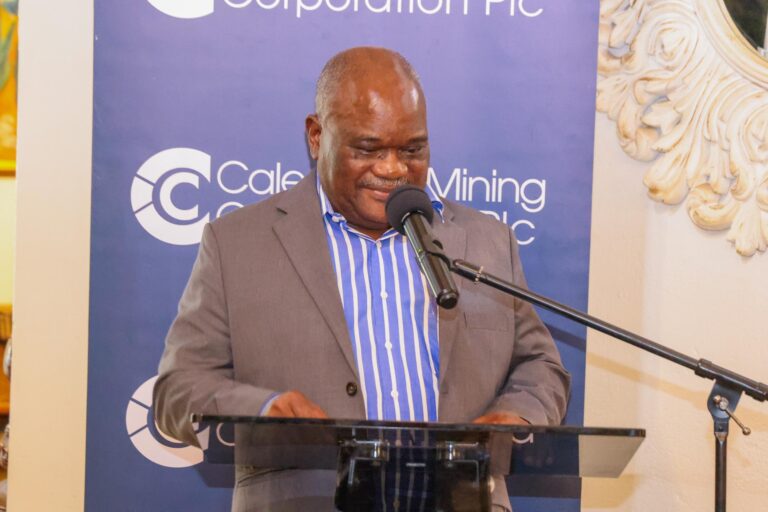
Hon. Winston Chitando, the Minister of Mines and Mining Development who was the guest of honour at the Mangezi farewell dinner which was held at Victoria 22 in Newlands commended Mangezi for his extraordinary achievements and influence on Zimbabwe’s mining sector.

“We gather here to celebrate a truly exceptional individual. Mr. Mangezi, your contributions have not only advanced Caledonia but have also made a huge contribution to the entire mining industry in Zimbabwe. You have set a standard of excellence that will inspire generations to come.” Chitando emphasized how the mining industry, a key pillar of Zimbabwe’s economy, has benefited from leaders like Mangezi, who have driven growth and set high standards.

Caledonia CEO Mark Learmonth also praised Mangezi’s leadership, highlighting his pivotal role in transforming Blanket Mine into one of Zimbabwe’s most successful mining operations.

“We are not merely celebrating a career, but a legacy. Over nearly 30 years, Caxton led Blanket through periods of growth and transformation, producing over a million ounces of gold and securing the mine’s future for decades,” he said.

Learmonth emphasized the importance of the Central Shaft Project, a milestone achievement that Mangezi spearheaded.

“Without Caxton’s leadership on the Central Shaft, Blanket Mine would have closed down in 2018. Instead, the project has extended Blanket’s life to at least 2041,” he added.

Mangezi himself reflected on his long journey with Blanket Mine, which began in 1969. “Mining has not just been a career; it has been my life,” he remarked.

Mangezi recounted how he had witnessed Blanket’s transformation from a small operation with only a few hundred employees to a large-scale producer employing over 2,000 people. He paid tribute to the employees who have supported the mine’s success.

“We were not just a workforce; we were a family. We went to work with a vision to achieve something great, and that is how we built Blanket into what it is today,” Mangezi said.

Mangezi’s commitment extended beyond mining operations. Under his leadership, Blanket Mine became a beacon of community development, providing healthcare, education, and nutrition programs to the surrounding communities. As Chitando noted, “Mangezi’s efforts ensured that the benefits of mining were shared with the local communities, leaving a legacy of shared prosperity.” This focus on corporate social responsibility is a hallmark of Mangezi’s approach, and it has cemented his place not only as a mining leader but also as a community champion.

In his farewell speech, Mangezi shared fond memories of his time at Blanket Mine, recounting both the challenges and triumphs. He expressed pride in the decisions made during difficult periods, particularly in 2008 when the mine was on the verge of closure. Mangezi’s decision to keep workers employed, despite economic hardships, allowed the mine to restart quickly once the situation improved. “That decision to keep everyone at work paid off,” Mangezi said. “When the economy turned around, we were ready to go, and Blanket was back in production”.

As Mangezi embarks on his well-deserved retirement, the mining industry reflects on his lasting contributions. His leadership has not only shaped the future of Caledonia but has also had a profound impact on Zimbabwe’s mining landscape. His legacy will inspire future generations of mining professionals, and as Chitando put it, “Caxton Mangezi has been a cornerstone of our industry, and we wish him good health and success in the next chapter of his life”.

Mangezi leaves behind a remarkable legacy, and as the mining industry in Zimbabwe continues to grow, his contributions will be remembered as a foundation upon which future successes are built.

Chinese Firm Deceived EMA, Engaged in Illegal Mining at Umzingwane River

0

A Chinese company, under the guise of an environmental partnership, has been caught misleading Zimbabwe’s Environmental Management Agency (EMA) while exploiting the Umzingwane River for illegal mining.

The company, known as Friends of the Environment, had initially promised to assist in closing pits left by artisanal miners, but instead, it was found conducting mining activities in the riverbed, damaging critical infrastructure and worsening water shortages in the region.

EMA has since terminated the partnership with Friends of the Environment, but questions remain as to whether any legal action has been taken against those responsible. The controversy came to light last week following a visit to Matabeleland South by Tafadzwa Muguti, secretary for presidential affairs and devolution. Muguti had toured major dam catchment areas, witnessing firsthand the environmental destruction caused by illegal mining.

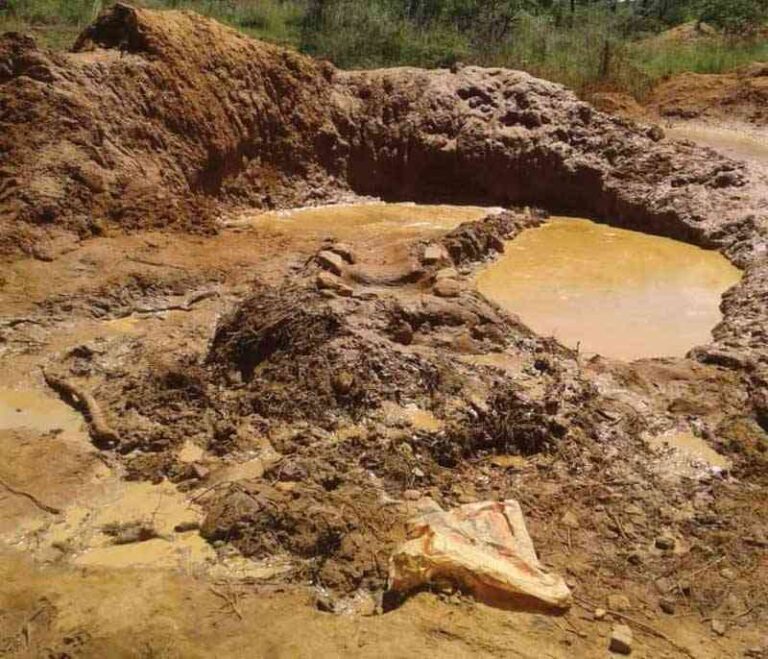
The company’s operations resulted in significant damage to a bridge at the confluence of the Umzingwane and Inyankuni rivers. Local officials say this destruction contributed to reduced water inflows into dams that supply the city of Bulawayo. Muguti described the situation: “We had a Chinese company here, Friends of the Environment, who partnered with EMA, but it turned out that by day they were closing pits, and by night they were illegally mining.”

The bridge, spanning 150 meters, was completely destroyed as the company sought gold, which, according to Muguti, halted water flow in the river and exacerbated the region’s water crisis. Despite recent rainfall, the dams have seen little improvement in water levels, as illegal mining continues to restrict the flow of water.

Muguti added that the government had issued a directive calling for intensified efforts against illegal alluvial mining across the country. “This is a disaster,” he said, referring to the bridge collapse, which has had a significant impact on water availability for Bulawayo.

While Zimbabwe has seen a surge of investments from Chinese mining companies, Muguti warned that not all investors are committed to the country’s long-term benefits. “Not everyone is coming here for the benefit of Zimbabwe,” he stated.

David Coltart, the mayor of Bulawayo, has also raised concerns about the ongoing issue of illegal mining, which is severely impacting the city’s water supply. At a recent community meeting in Nkulumane, Coltart recounted his own investigation into the matter, revealing the dire situation: “I rode my bicycle 40 kilometers towards Umzingwane Dam and was shocked to find not a single stream flowing despite the recent rains. The reason? Illegal gold panning.”

The environmental fallout from illegal mining activities continues to threaten both local ecosystems and essential resources, putting communities like Bulawayo at risk of severe water shortages.

Kuvimba Confidence in Lithium Project Amid Price Dip, Deal with Chinese Firms Near Completion

0

Kuvimba Mining House is set to finalize an agreement this month with two prominent Chinese companies, continuing its commitment to a $270 million lithium project despite recent price downturns, according to CEO Trevor Barnard.

The company remains optimistic that lithium prices will recover as electric vehicle (EV) demand in China remains strong, coupled with the closure of some lithium mines.

Lithium prices have plummeted by over 80% since their peak in November 2022, driven by an oversupply of the metal and slower-than-anticipated growth in EV sales. However, analysts predict a stabilization in prices this year, driven by robust EV sales and mine shutdowns, which should help bring balance to the market. Barnard remains hopeful that prices will rebound, though he cautioned that they are unlikely to return to the record highs seen in 2022, a period he describes as a “bubble” fueled by overblown demand projections.

Zimbabwe, currently Africa’s largest producer of lithium, has attracted significant investment in the sector, with over $1 billion flowing into lithium projects since 2021, much of it from Chinese battery metal companies. In 2024, it was reported that Zhejiang Huayou Cobalt and Tsingshan were poised to partner with Kuvimba to develop the Sandawana mine. Huayou had acquired Prospect Lithium in 2022, while Tsingshan is involved in the development of the Dinson steel plant and the Gwanda Lithium mine.

Barnard highlighted the project’s promise, stating that after a thorough review, Kuvimba determined Sandawana’s resource quality and scale were compelling enough to move forward with plans to establish a 600,000 metric ton per year lithium concentrator at the mine.

Chinese firms such as Zhejiang Huayou Cobalt, Sinomine Resource Group, Chengxin Lithium Group, Yahua Group, and Canmax have been particularly active in acquiring lithium assets in Zimbabwe, positioning the country to strengthen its role in the global battery metal supply chain.

AMSZ Moves AGM and Conference to August 2025

0

The Association of Mine Surveyors of Zimbabwe (AMSZ) will return its Annual General Meeting (AGM) and Conference to the traditional August timeframe in 2025, following several years of scheduling adjustments, Mining Zimbabwe can report.

By Ryan Chigoche

This change aims to align the association’s activities more closely with industry partners and reinforce its leadership role in shaping the future of mine surveying in Zimbabwe.

For the past few years, AMSZ held its AGM and Conference in November due to logistical challenges and scheduling conflicts. With these issues now resolved, the association will revert to its original August schedule.

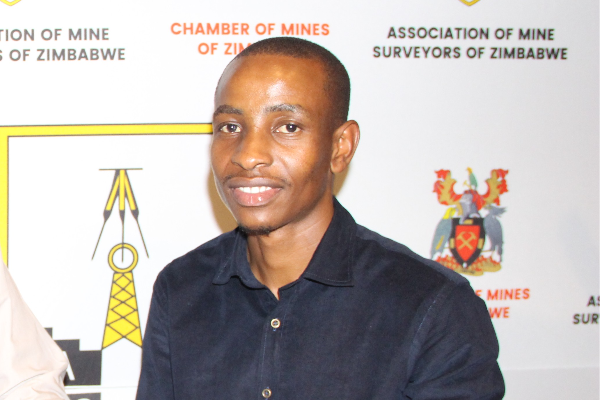
AMSZ Secretary General Takunda Mubaiwa explained the shift in a statement, highlighting how it will assist the association.

“Historically, the AMSZ held its AGM and Conference in August. The move to November was a temporary measure in response to factors that are no longer relevant today. Returning to our traditional schedule aligns our activities with those of our partners at the Chamber of Mines of Zimbabwe, fostering greater collaboration and synergy,” Mubaiwa said.

The date for the 2025 AGM and Conference will be announced soon. AMSZ encourages its members and stakeholders to mark their calendars, with additional details on the program, venue, and registration to follow.

AMSZ values the ongoing support of its members and anticipates a successful event that will help shape the future of mine surveying in Zimbabwe.

Last year’s 39th Annual General Meeting (AGM) of AMSZ, held in November, ran under the theme “From Survey to Strategy: Empowering Mine Surveyors as Leaders in the Mining Industry for Sustainable Growth.” The event explored how mine surveyors can transition from technical specialists to strategic leaders, driving safety, efficiency, and sustainability within the mining industry.

Founded in 1985, AMSZ is an affiliate of the Chamber of Mines of Zimbabwe and a non-profit organization representing the interests of the mine surveying profession. Its members come from local and international mining organizations, as well as technical fields related to mine surveying.

Through its diverse membership, AMSZ plays a critical role in shaping policy and supporting the sustainable growth of Zimbabwe’s mining sector.

Fidelity Urged to Invest in Exploration and Mining Essentials

0

Small-scale miners have called on Fidelity Gold Refinery (FGR) to expand its operations by investing in exploration and ensuring the availability of critical mining supplies such as explosives and chemicals, Mining Zimbabwe can report.

By Rudairo Mapuranga

Speaking to this publication on the sidelines of the Zimbabwe Miners Federation (ZMF) Strategic Meeting held at Cresta Lodge, ZMF Matabeleland South Chair Philemon Mokuele highlighted the difficulties miners faced in 2024 due to shortages in key inputs and a lack of geological data, which continue to hinder gold production and delivery.

Mokuele stressed that without a consistent supply of explosives and chemicals, gold output remains vulnerable to disruptions, adding that it is crucial for FGR to intervene by facilitating the availability of these resources.

“We are facing quite a number of challenges, especially last year. We were facing a challenge of explosives and chemicals… This is something Fidelity must look into,” Mokuele said.

He emphasized the importance of FGR playing a more significant role in ensuring a stable supply of key inputs for small-scale miners by investing in the production and distribution of explosives and chemicals, critical for mining operations.

In addition to addressing supply chain challenges, Mokuele underscored the need for FGR to invest in exploration activities. He pointed out that while miners are being given loans to boost production, a lack of comprehensive geological information often leads to failure in meeting loan obligations.

“We also expect the government through Fidelity to venture into exploration. As small-scale miners, we can have all these claims, and they can give us the loans. But as long as we don’t know where the resource is, we end up failing to pay this money. We advise the government through Fidelity to buy diamond drilling rigs—at least one diamond drilling rig per province—and do proper exploration so that they find a proper project where they know the resource. It won’t fail,” he said.

Mokuele believes that if FGR were to engage in proper exploration efforts, this would significantly increase gold production and enable small-scale miners to meet their loan repayments while contributing to the country’s gold bullion targets.

He also shed light on the social contributions of small-scale miners in their communities. Beyond mining, they are actively engaged in supporting youth sports and aiding vulnerable groups, such as orphans and disadvantaged children.

“As small-scale miners, we are helping our communities; we are doing a lot in our communities. We are sponsoring sports like soccer and basketball. We are also assisting in orphanages, buying groceries, donating, and supporting those who are less privileged,” he said.

Mokuele’s comments reflect the broader social responsibility initiatives that small-scale miners have undertaken, despite the challenges they face in the sector.