Home Blog Page 147

Budget Allocation to the Ministry of Mines Insignificant for Economic Growth

0

Mining has long been the cornerstone of Zimbabwe’s economy. It accounts for more than 60% of the country’s export earnings, contributes about 12% to GDP, and provides employment to thousands. The sector has an even greater role to play in driving the country’s economic transformation.

By Rudairo Mapuranga

However, despite the sector’s overwhelming importance, the Ministry of Mines and Mining Development continues to operate underfunded, hindering the sector’s ability to reach its full potential.

The government’s 2025 national budget has dealt a severe blow to the mining sector’s ambitions. Out of a total budget of ZiG$276.4 billion, only ZiG$664.8 million—0.30%—was allocated to the Ministry of Mines and Mining Development. This paltry sum stands in stark contrast to the sector’s contribution to the national economy, signalling a lack of understanding of the sector’s role as a driver of growth and development. Without sufficient funding, the Ministry of Mines cannot effectively regulate or oversee the sector, nor promote the kind of value addition and industrialization Zimbabwe needs to move forward.

The consequences of this underfunding are severe. Ministry officials, including inspectors responsible for enforcing safety and environmental standards, often lack the tools necessary to perform their jobs effectively. Many inspectors are forced to work without vehicles, making it nearly impossible to monitor mining sites, especially in remote areas. This undermines the safety of miners and the sustainability of mining practices. Without adequate oversight, the risks of accidents, environmental degradation, and illegal mining activities are significantly heightened.

Zimbabwe also lacks an internationally accredited metallurgical laboratory. Miners—both small-scale and corporate—are forced to send samples abroad for testing, a costly and time-consuming process. By failing to invest in a fully functional laboratory, Zimbabwe misses an opportunity to streamline mining processes and ensure accurate testing of mineral deposits.

Properly capacitating the Ministry of Mines’ laboratory would enable miners to test their minerals domestically, saving time and money while enhancing data collection on the country’s vast mineral wealth. A local testing framework would also allow the government to enforce regulations requiring all mining entities to test minerals within Zimbabwe, boosting local revenues and transparency.

While mining struggles with chronic underfunding, other ministries with less direct economic impact have been prioritized in the national budget. The Ministry of Home Affairs and Cultural Heritage received ZiG$16,183.4 million (7.41% of the budget), and the Ministry of Defense and War Veterans Affairs was allocated ZiG$18,051.6 million (8.29%).

These figures are disproportionately higher than the ZiG$664.8 million given to the Ministry of Mines, despite mining’s pivotal role in Zimbabwe’s economic revolution.

Zimbabwe’s exploration deficit further compounds these challenges. Countries like Canada and Australia lead in exploring critical minerals essential for the global energy transition, such as lithium, cobalt, and rare earth elements. Zimbabwe, with its vast deposits of these minerals, lags due to insufficient exploration funding.

The government must prioritize exploration activities, particularly in areas under state control through the Zimbabwe Mining Development Corporation (ZMDC) and Defold Mine, to unlock the country’s full mineral potential.

One alarming consequence of underfunding is the inability to promote value addition and beneficiation. Instead of exporting raw minerals, Zimbabwe could generate more revenue by processing them domestically. Countries like South Africa and Botswana have successfully implemented beneficiation policies, but Zimbabwe lags due to insufficient financing support. Construction of smelters, refineries, and other processing facilities should be a national priority. However, the Ministry of Mines lacks the resources to advance this agenda significantly.

Globally, the demand for critical minerals is surging, driven by the clean energy transition. Zimbabwe has significant reserves of these minerals but risks missing out on this opportunity due to underinvestment in the mining sector. Countries like China, Australia, and Canada are positioning themselves as leaders in the critical minerals market, while Zimbabwe is being left behind. Proper funding would enable the Ministry of Mines to attract foreign investment and position Zimbabwe as a key player in the global energy transition.

Mining can drive Zimbabwe’s industrialization and broader economic agenda. Minerals produced locally are essential inputs for industries like manufacturing and agriculture. Phosphates are critical for fertilizers, essential to improving agricultural yields and food security. Base metals like copper and nickel are vital for technological infrastructure, including Ai, with transformative potential for sectors such as healthcare, finance, and education. Without adequate funding for mining, Zimbabwe will struggle to build the infrastructure and industries necessary for sustainable development.

State-owned mining companies such as ZMDC represent another underutilized opportunity. With proper investment, these entities could become significant contributors to the national economy. Zimbabwean professionals already run world-class mining operations like Zimplats, Unki, and Mimosa. Leveraging this local expertise could help Zimbabwean-owned mining operations compete globally.

If the government wants to transform its economy, it must fully provide the Ministry with adequate resources to promote beneficiation, value addition, exploration and regulation.

The Ministry is instrumental in eliminating illegal mining potentially boosting state confers.

As it stands, the ZiG$664.8 million allocation to the Ministry of Mines is grossly inadequate for a sector contributing over 60% of export earnings. Zimbabwe cannot afford to neglect mining if it hopes to build a strong, diversified economy for the future.

Zimbabwe Mining in 2024 – a quick overview

0

The mining sector remains the backbone of Zimbabwe’s economy, contributing significantly to GDP and export revenues.

By Rudairo Mapuranga

In 2024, the Zimbabwe mining sector solidified its position as the most crucial industry, accounting for approximately 12% of GDP and nearly 70% of export earnings, according to the Reserve Bank of Zimbabwe (RBZ). With key minerals like gold, lithium, platinum group metals (PGMs), and diamonds fueling growth, Zimbabwe is on a promising path toward meeting—and potentially exceeding—its ambitious mining targets.

US$12 Billion Mining Roadmap: 2023 Target Review

Zimbabwe launched a roadmap to transform its mining industry into a US$12 billion revenue generator by 2023. Although the sector didn’t reach this target in 2023, groundwork in gold, lithium, PGMs, and diamonds has laid a strong foundation for growth. In 2024, the sector is expected to break revenue records with increased production, exploration, and technological innovations.

Gold: Zimbabwe’s Key Economic Driver

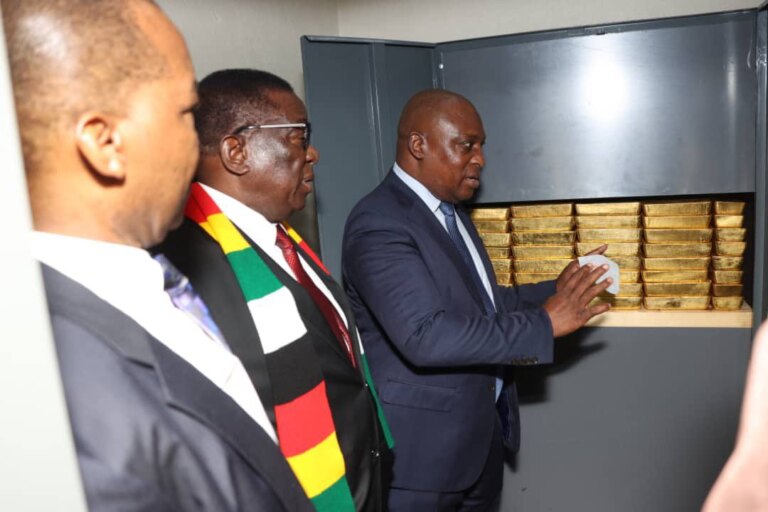
Gold remains central to the mining sector and foreign exchange earnings. The government had aimed to achieve US$4 billion in annual gold revenue as part of the US$12 billion mining plan by 2023. Although this goal remains unmet, Zimbabwe’s gold deliveries to the Fidelity Gold Refinery (FGR) increased by over 7% in the first ten months of 2024, indicating a positive trend for the year.

Freda Rebecca Gold Mine, Shamva, and Jena Mines, under Kuvimba Mining House, contribute around 10% of total gold deliveries to FGR. Kuvimba and other mining firms are prioritizing Environmental, Social, and Governance (ESG) standards, including a gold traceability system to align with global best practices. This approach enhances the credibility of Zimbabwe’s gold sector, attracting international investors.

In exploration, companies like Kavango Resources and Pambili Natural Resources are developing new gold projects, while Caledonia Mining Corporation is implementing technological upgrades at Blanket Mine. These advancements boost production and operational efficiency. Kuvimba Mining House is also expanding production at Shamva Gold Mine, aiming to double output over the next few years.

Indigenous player Scott Sakupanya continues to submit the highest amount of gold to Fidelity Gold Refinery (FGR). In 2023 his company Better Brands delivered 13 tonnes of gold to Fidelity Gold Refinery (FGR). Better Brands’s projections for the 2024 year, are to deliver 20 tonnes of gold.

Lithium: A Booming Industry Surpassing Expectations

Driven by global demand for electric vehicle (EV) batteries and energy storage, lithium has emerged as one of Zimbabwe’s most promising sectors. In 2023, annual lithium revenue exceeded the US$0.5 billion target, and further growth is expected.

Prospect Lithium Zimbabwe’s Arcadia Lithium Mine, owned by China’s Huayou Cobalt, is one of Zimbabwe’s largest lithium operations, producing over 200,000 tonnes of lithium concentrates between January and August 2024. With annual output expected to reach 450,000 tonnes and prices between US$800 and US$950 per tonne, the mine is well-positioned for profitability.

Other key players include Bikita Minerals and Sabi Star. Bikita has increased production to meet demand, while Kamativi Mining Company is studying the feasibility of building a lithium carbonate plant. Additionally, Bravura has begun constructing a lithium processing plant in Kamativi, with equipment now on-site.

Chrome: The Resurgence of ZimAlloys

Chrome production has also seen revitalisation, especially through the restoration of ZimAlloys’ high-carbon ferrochrome plants in Gweru. Resuming smelting operations, the company aims for annual ferrochrome production of 120,000 tonnes, advancing Zimbabwe’s goal to reclaim its position as a top chrome producer.

Coal: The Revival of HCCL Holdings

The coal sector, led by HCCL Holdings (formerly Hwange Colliery Company Limited), has made a significant recovery. After nearly collapsing, the 121-year-old company rebounded following government intervention and a restructuring of its operations. With over 4 million tonnes of coal produced annually and a profit of US$10.2 million in Q3 2023, HCCL will continue to be profitable in 2024.

Diamonds: A Rapidly Expanding Sector

The diamond sector, led by the Zimbabwe Consolidated Diamond Company (ZCDC), has seen notable growth, with annual production approaching 6 million carats—up from 1.8 million carats less than five years ago. ZCDC aims to reach 10 million carats annually by 2025. Additionally, Alrosa Zimbabwe’s promising exploration results are expected to further boost production. The sector is also emphasizing ESG standards to ensure ethical sourcing and sustainability.

Platinum Group Metals (PGMs): Resilience Amidst Commodity Price Softening

The PGM sector, which includes platinum, palladium, and rhodium, faced challenges in 2024 due to a decline in global prices. However, major players like Mimosa, Unki, and Zimplats have continued their development projects. Notably, Unki Mine achieved a rating of 75 from the Initiative for Responsible Mining Assurance (IRMA), highlighting its commitment to responsible practices. Zimplats is advancing its new smelter project and has announced a base metal refinery. However, both Zimplats and Mimosa have undertaken employee retrenchments as part of cost-cutting efforts. Karo Resources and Bravura are also advancing their PGM projects at Mhondoro-Ngezi and Selous, respectively.

ESG Commitments: A New Era of Responsible Mining

In 2024, adherence to ESG standards has become a defining feature of Zimbabwe’s mining sector. Companies like Kuvimba Mining House are introducing a gold traceability system to ensure ethical sourcing. Kamativi Mining Company and Freda Rebecca Gold Mine are also working towards standardized ESG reporting, setting benchmarks for other firms.

Conclusion: A Promising Future with Strong ESG Foundations

Zimbabwe’s mining sector in 2024 is characterized by steady growth, increased investment, and a commitment to ESG principles. Gold, lithium, diamonds, and PGMs are driving economic progress, while responsible practices are becoming standard across operations. With continued investment, exploration, and global compliance, Zimbabwe is well-positioned to become a major player in the international mining industry.


This article first appeared in the Mining Zimbabwe Magazine edition 76

Eng. Stella Chitakunye: A One-Year Reflection as the First Female Executive Council Member of AMMZ

0

Interview: Engineer Stella Chitakunye on a One-Year Reflection as the First Female Executive Council Member of the Association of Mine Managers of Zimbabwe (AMMZ).

How has the Association responded to having its first female Executive member?

It has been a great experience for me and, I believe, for the entire council. We have wonderful working relations, and I feel honoured to have served with some of the mining industry’s best Mine Managers.

Reflecting on your first year in this position, what has been the most rewarding aspect of serving as the first female member of the executive council?

Being part of the team responsible for planning Technical Visits has allowed me to network with Mine Managers and industry stakeholders all over Zimbabwe. I’ve made meaningful connections that will benefit my career.

I also found it fulfilling to know that, as Mine Managers, we are custodians of the Zimbabwean mining industry, and it’s our responsibility to drive it to excellence.

What unique perspectives do you feel women bring to Mine Management, and how have you applied these in your role?

Women are natural nurturers, which brings a valuable skill and perspective to the industry. Our diverse experiences and viewpoints help tackle complex challenges that have long plagued the mining industry.

Additionally, I believe women are strong in building relationships and facilitating open communication, fostering a positive work environment that promotes teamwork and enhances productivity.

What advice would you offer to other women aspiring to break barriers in traditionally male-dominated fields like mining?

Go for it! Set your goals and take accountability for every decision you make. You might ruffle a few feathers or mess up your makeup, but don’t give up!

How has your background and career path prepared you for this role, and are there any skills or lessons you’ve learned that you feel were particularly useful?

Being a mining engineer feels synonymous with the AMMZ. My training and technical expertise have helped me smoothly transition into this role.

Looking ahead, what are your key goals for the upcoming year as part of the council, particularly for advancing diversity and inclusion?

I believe there is an opportunity to partner with “Women in Mining” organizations to further diversity and inclusion in the industry. This partnership would also promote AMMZ’s commitment to these values.

Has there been an increased interest in joining the AMMZ from women since you joined the Executive?

Interest has certainly increased, and we look forward to welcoming more women to the AMMZ in 2025.


This article first appeared in the Mining Zimbabwe Magazine Edition 76

Lack of Inspection Vehicles, Contributing to Illegal Mining Surge in Zimbabwe

0

The Ministry of Mines and Mining Development is grappling with severe resource constraints, with a shortage of inspection vehicles hampering its ability to enforce mining regulations across Zimbabwe, Mining Zimbabwe can report.

By Rudairo Mapuranga

The issue of the lack of vehicles has been linked to the increase in illegal mining activities and mining accidents.

Speaking during a recent media briefing, Minister of Mines and Mining Development Hon. Winston Chitando acknowledged the problem, stating,

“In most provinces, vehicles for inspectors are few.” He added that the Ministry is working to address this challenge.

“There was a lot of effort to address the resources available to the provincial mining offices, and there are additional measures which will be announced next year to ensure that the provincial offices are capacitated to carry out inspections.”

The shortage of vehicles has left mining inspectors unable to monitor both legal and illegal mining activities regularly. This has led to a rise in unregulated operations, which are often hazardous. According to industry experts, the inability of inspectors to visit mining sites frequently has contributed to the increase in mining accidents, particularly in the small-scale and artisanal mining sectors.

Furthermore, the Ministry’s resource challenges extend beyond just a lack of vehicles. The Ministry of Mines received less than 0.4% of the total national budget for 2025, despite the mining sector contributing more than 70% of Zimbabwe’s foreign currency earnings. This discrepancy has limited the Ministry’s capacity to regulate the industry effectively, including conducting necessary safety inspections and enforcing environmental standards.

The lack of inspection vehicles is seen as one of the key reasons illegal mining continues to thrive. Without regular site visits, mining inspectors cannot ensure compliance with safety regulations, leaving many operations unmonitored. Illegal miners often operate in dangerous conditions, which frequently results in accidents. Over 100 fatalities were reported in 2023 alone due to unsafe mining practices.

This shortage of vehicles is also believed to contribute to the frequency of accidents in legal mining operations. Many registered mining companies are left unchecked, allowing unsafe practices to persist. The lack of oversight has resulted in several major accidents, including mine collapses and equipment malfunctions.

Despite these challenges, Chitando expressed optimism about future improvements.

“There is a need to increase the level of inspections, and the government is committed to ensuring that it happens,” he said.

With the budget currently under debate in Parliament, there is hope that increased funding will be allocated to provincial mining offices to enhance their inspection capabilities.

As Zimbabwe navigates through the rainy season, the risks of accidents in both legal and illegal mining operations are expected to rise. Mining experts stress that immediate action is required to provide inspectors with the resources they need to ensure safety and regulatory compliance across the industry.

Miners Urged to Prioritize Safety and Environmental Protection During Rainy Season

0

As Zimbabwe enters the rainy season, Minister of Mines and Mining Development Hon. Winston Chitando has called on mining companies to intensify safety measures and environmental protections, Mining Zimbabwe can report.

By Rudairo Mapuranga

Speaking at a media briefing on ensuring safety and sustainability in mining operations during the rainy season, the Minister highlighted the increased risks posed by adverse weather conditions and urged all mining operations to adopt a proactive approach to prevent accidents.

Chitando noted that over the past few years, the rainy season has seen a spike in mining-related accidents, with incidents ranging from landslides to flooding and equipment malfunction.

“We have observed an increase in the number of accidents during this period. It is essential that miners conduct thorough risk assessments and implement robust safety measures to protect workers,” Chitando said.

The Minister also emphasized the importance of adhering to environmental regulations, particularly during the rainy season when soil erosion and water contamination risks are heightened.

“Mining activities during heavy rains can lead to significant environmental impacts. All mining operations must revisit their Environmental Impact Assessments (EIAs) and ensure compliance with the highest standards of environmental stewardship,” he added.

Chitando outlined several key measures for mining companies to implement, including regular site inspections, the development of emergency preparedness plans, and employee training on safety protocols tailored to rainy conditions.

“Safety is not an event but a continuous process. Mining companies must ensure that their employees are constantly reviewing and retraining on safety procedures specific to the season,” Chitando stressed.

He also urged miners to adapt their operations in response to weather forecasts by adjusting work schedules, ensuring machinery is well-maintained for wet conditions, and collaborating closely with local authorities for timely updates on potential hazards.

“The rainy season brings unique challenges, but we can and should ensure that zero harm is possible. We must achieve our production targets without compromising the safety of workers or the environment,” Chitando said.

The mining sector, which accounts for over 70% of Zimbabwe’s foreign currency earnings, is critical to national development, and ensuring its safe and sustainable operation during the rainy season remains a top priority for the Ministry.


Gold buying prices per gram in Zimbabwe 19 December 2024

These are the official gold buying prices per gram in Zimbabwe today 19 December 2024, from the official gold buyer and exporter Fidelity Gold Refinery (FGR).

SG 90% and ABOVE US$80.07/g
SG ABOVE 85% BUT BELOW 90% US$79.23g
SG ABOVE 80% BUT BELOW 85% US$78.38/g
SG ABOVE 75% BUT BELOW 80% US$77.53/g
SAMPLE BELOW 10g BUT ABOVE 5g US$76.26/g

Fire Assay CASH $80.50/g

NB: Fire Assay cash price is for gold above 100gs, no sample is deducted.
For the Fire Assay Transfer price, a sample of not more than 10g is deducted
A 2% royalty is charged on all deposits (Small-scale miners)
A 5% royalty is set for Primary Producers

Cash available. Fidelity Gold Refinery prices will be changing daily to match world market prices.

Unlocking Zimbabwe’s Potential in the Critical Minerals Race

0

As the world grapples with the intensifying climate crisis, nations are urgently seeking solutions to curb global warming and meet the goals of the Paris Agreement. Among these solutions is the transition from fossil fuels to renewable energy, which hinges on the availability of critical minerals required for technologies like wind turbines, electric vehicle batteries, and solar panels. For Zimbabwe, this presents a significant opportunity to leverage its rich mineral resources to not only contribute to the global energy transition but also spur economic growth, Mining Zimbabwe can report.

By Rudairo Mapuranga

Speaking at a recent Strategic Dialogue on Mineral Governance, organized by the Zimbabwe Environmental Law Association (ZELA) and ActionAid Zimbabwe, ZELA’s Obert Bore delivered a compelling presentation on the crucial role Zimbabwe can play in this global shift. He began by addressing the pressing realities of the climate crisis. “The window to limit global temperature rise to 1.5°C above pre-industrial levels is closing fast,” Bore said, emphasizing that the year 2024 had already seen the three hottest days in recorded history.

According to Bore, as countries strive to achieve net-zero carbon emissions by 2050, the demand for critical energy transition minerals such as lithium, cobalt, nickel, and copper is projected to skyrocket.

Bore cited data from the International Energy Agency (IEA), which estimates that global demand for these minerals will triple by 2030 and quadruple by 2040. For resource-rich nations like Zimbabwe, this demand surge presents an unparalleled economic opportunity, particularly given the country’s vast reserves of lithium, a key component in electric vehicle batteries.

However, Bore was quick to point out that this transition also comes with significant challenges. These include social, environmental, and cultural impacts, which must be carefully managed to avoid negative consequences for local communities and ecosystems.

“Increased global demand for minerals has significant potential to advance social and economic progress. However, if not managed responsibly, it could trigger or exacerbate human rights violations, conflicts, and environmental degradation,” Bore warned.

According to Bore, a key focus of the strategic dialogue is ensuring that the transition to renewable energy is not only environmentally sustainable but also socially just.

Bore outlined the need for Zimbabwe to adopt a just and equitable transition framework, where local communities and nations that possess these minerals fully benefit from their exploitation. This involves promoting local value addition and ensuring that mineral wealth translates into tangible economic benefits for Zimbabwean citizens.

“Countries and local communities endowed with these minerals must fully benefit economically, including through local value addition, while safeguarding social and environmental protections for affected communities and ecosystems,” Bore said.

He called for the development of a set of common, voluntary principles that would guide this transition and ensure that the economic gains from critical minerals are equitably distributed.

One of the key objectives outlined in Bore’s presentation was fostering local value addition and economic diversification. He said by processing minerals locally and creating downstream industries, Zimbabwe could move away from simply exporting raw materials and instead build a robust industrial base that would create jobs, stimulate innovation, and generate long-term economic growth.

“Local mineral processing and value addition are critical to fostering economic development and reducing reliance on external markets,” Bore said.

The need to protect the environment and human rights throughout the mineral value chain was another prominent theme in Bore’s presentation. He emphasized that mineral extraction must be conducted responsibly, with strict adherence to environmental standards and human rights protections. This includes ensuring safe and healthy working conditions for miners, obtaining the free, prior, and informed consent of local communities, and upholding gender equity within the mining sector.

Bore also highlighted the risks that increased mineral demand could pose to biodiversity and ecosystems, particularly in regions that are rich in natural resources but vulnerable to environmental degradation.

“Pollution and waste in all its forms should be avoided, reduced, or remediated in accordance with the polluter-pays principle,” he stated.

He called for stronger regulatory frameworks to ensure that mining activities do not harm local ecosystems or exacerbate the effects of climate change.

As part of the global effort to manage the energy transition responsibly, Bore advocated for strengthened international cooperation and governance of mineral value chains. He noted that Zimbabwe’s engagement in multilateral platforms such as the United Nations Secretary-General Panel on Critical Energy Transition Minerals provides a valuable opportunity for the country to contribute to the development of international norms and standards for responsible mining.

Furthermore, Bore stressed the importance of transparent and accountable governance in the management of mineral resources.

“Access to information on environmental and social impacts, production data, and revenue streams is essential to ensure good governance and prevent corruption in the mining sector,” he said.

Transparency in tax systems and benefit-sharing mechanisms would ensure that mineral wealth is used for the public good and contributes to sustainable development.

In closing, Bore emphasized that Zimbabwe is at a critical juncture. The global shift to renewable energy presents both opportunities and challenges, but with the right policies and governance frameworks in place, Zimbabwe can position itself as a leader in the production and processing of critical minerals. By adopting responsible mining practices, promoting local value addition, and ensuring that communities benefit from the country’s vast mineral wealth, Zimbabwe can play a key role in the global energy transition while achieving sustainable development at home.

As the world moves towards a cleaner, more sustainable future, Zimbabwe stands to gain—if it can harness its resources responsibly and equitably.

“The urgency of the energy transition cannot justify irresponsible practices. It is vital that we balance economic opportunity with environmental and social responsibility to ensure a just transition for all,” Bore said.


Gold buying prices per gram in Zimbabwe 18 December 2024

These are the official gold buying prices per gram in Zimbabwe today 18 December 2024, from the official gold buyer and exporter Fidelity Gold Refinery (FGR).

SG 90% and ABOVE US$80.90/g
SG ABOVE 85% BUT BELOW 90% US$79.25g
SG ABOVE 80% BUT BELOW 85% US$78.40/g
SG ABOVE 75% BUT BELOW 80% US$75.55/g
SAMPLE BELOW 10g BUT ABOVE 5g US$76.28/g

Fire Assay CASH $80.52/g

NB: Fire Assay cash price is for gold above 100gs, no sample is deducted.
For the Fire Assay Transfer price, a sample of not more than 10g is deducted
A 2% royalty is charged on all deposits (Small-scale miners)
A 5% royalty is set for Primary Producers

Cash available. Fidelity Gold Refinery prices will be changing daily to match world market prices.

Trevor Barnard Promoted to Substantive Group CEO of Kuvimba

0

The country’s largest holder of mining assets, Kuvimba Mining House (KMH), has announced the promotion of Mr. Trevor Barnard to the role of substantive Chief Executive Officer, effective December 1, 2024. Barnard, who has been serving as the Group’s Acting CEO since May 2024, has now been officially appointed to lead the company.

With extensive experience in strategic leadership and management, Barnard’s promotion is viewed as a critical step in reinforcing KMH’s position as a leading player in Zimbabwe’s mining sector.

“We are pleased to confirm Mr. Barnard as our substantive Group CEO. His proven leadership and deep industry knowledge make him the perfect fit to guide KMH into the future,”
said J.H. Mupamhanga, Board Chairman of KMH.

KMH is a diversified mining company with operations in gold, platinum, nickel, and chrome. The company remains committed to sustainable mining practices and contributing to Zimbabwe’s economic growth.

Zim Engineers Pave the Way for Real-Time Ore Detection & Reef Identification

0

In 2018, while at the University of Zimbabwe, Winston Muzorori, Tinotenda Chimbwanda, and Touchwell Matanhire came up with an idea that fused Mining and Artificial Intelligence. These three engineers, leveraging their different complementary technical skills, developed an idea to use artificial intelligence in carrying out the following:

  1. Reef identification in blind reef mining operations.
  2. Ore grade determination in real-time.
  3. Determination of offsets during automated 3D face marking by autonomous drill rigs.

Having bootstrapped the minimum viable prototype successfully, the next phase of this project will see the transition from prototype development to mass industrial-scale production of the ore grade determination system as a commercial product. The grade determination system comes in two forms:

  • The web-based system and
  • The app-based system, which can be downloaded and used as a mobile app, making the technology portable and ideal for use in remote, confined areas.

Competition to the grade determination system comes from destructive and non-destructive mineral composition determination methods like fire assaying, X-ray fluorescence analysis (XRF), etc. The competitive advantage of the ore grade determination system over other methods is its efficiency and cost-effectiveness.

The grade determination system has the ability to process samples and determine the target mineral concentration in seconds. Technically, this puts the turnaround time of the ore grade determination system to under a minute. This advantage is most ideal for reef marking in blind reef mining operations, where the least turnaround is required for a face panel to have the reef marked so as to avoid creating a bottleneck that affects face drilling. By the touch of a smartphone button, this process is completed by the grade determination system in seconds.

Potential Applications

Areas where the grade determination system can be potentially deployed include:

  1. Reef and face panel marking by autonomous face drilling rigs.
  2. Processing plant feed grade determination (belt cutting).
  3. General orebody analysis (e.g., shape, extent, geometry, and quality).
  4. Mineral concentration analysis during space exploration.

Forging Strategic Partnerships

At this stage of the project, our goal is to forge partnerships with local mining companies and global mining equipment manufacturers. This will allow us to deploy the ore grade determination system for use on many minerals, such as:

  • PGMs
  • Gold
  • Chrome
  • Diamond-bearing kimberlites
  • Copper
  • Cobalt
  • Lithium
  • Other minerals with characteristics amenable to the grade determination system.

Inspiring Innovation and Entrepreneurship

Apart from the entrepreneurial urge to unlock value within Zimbabwe’s economy, part of the reason the ore grade determination system was created is to inspire entrepreneurship in graduates from Zimbabwean learning institutions. Ours is a tangible illustration of how the Zimbabwean dream can become a reality if we start being practical.

Regurgitating theoretical concepts without practically converting them into tangible innovations only leads to analysis paralysis and practical inaction. This is the demon we must exorcise for us to reclaim our place as the innovation powerhouse of Africa and the world at large.