Home Blog Page 156

Gold buying prices per gram in Zimbabwe 19 November 2024

0

These are the official gold buying prices per gram in Zimbabwe today 19 November 2024, from the official gold buyer and exporter Fidelity Gold Refinery (FGR).

SG 90% and ABOVE US$79.20/g
SG ABOVE 85% BUT BELOW 90% US$78.36g
SG ABOVE 80% BUT BELOW 85% US$77.52/g
SG ABOVE 75% BUT BELOW 80% US$76.68/g
SAMPLE BELOW 10g BUT ABOVE 5g US$75.43/g

Fire Assay CASH $79.62/g

NB: Fire Assay cash price is for gold above 100gs, no sample is deducted.
For the Fire Assay Transfer price, a sample of not more than 10g is deducted
A 2% royalty is charged on all deposits (Small-scale miners)
A 5% royalty is set for Primary Producers

Cash available. Fidelity Gold Refinery prices will be changing daily to match world market prices.

Tackling Challenges in Zimbabwe’s Mining Sector: How the AMSZ is Supporting Mine Surveyors

0

The 39th Annual General Meeting (AGM) of the Association of Mine Surveyors of Zimbabwe (AMSZ) is set to take place from November 20–22, 2024, in the serene resort town of Nyanga. This year’s event, themed “From Survey to Strategy: Empowering Mine Surveyors as Leaders in the Mining Industry for Sustainable Growth,” will focus on how Mine Surveyors can transcend their technical roles to become leaders driving safety, efficiency, and sustainability in the mining industry.

By Ryan Chigoche

Zimbabwe’s mining sector plays a crucial role in the country’s economy but faces significant challenges, including technological advancements, safety concerns, and illegal mining activities. The AMSZ is actively supporting Mine Surveyors as they navigate these issues. This year’s AGM will explore how Mine Surveyors can evolve from technical experts to leaders shaping the future of Zimbabwe’s mining sector.

Addressing Technological Advancements

One of the most significant challenges for Mine Surveyors is keeping pace with rapidly advancing technology. Tools like drones, 3D laser scanning, and artificial intelligence (AI) are revolutionizing surveying, offering improved speed and accuracy. However, these advancements require new skills and come with a steep learning curve.

The AMSZ is committed to ensuring its members stay updated. From hands-on workshops to specialized conferences, the association offers opportunities for members to gain knowledge and refine their skills. By collaborating with institutions like the Zimbabwe School of Mines, the AMSZ ensures future surveyors are equipped to meet the industry’s evolving demands.

AMSZ President Gabriel Mwale reiterated this commitment in an interview with Mining Zimbabwe:

“The AMSZ is dedicated to providing its members with tools and training to stay current with technological advancements. We work closely with the Ministry of Mines and Mining Development to shape safety standards, organize awareness campaigns, and ensure best practices are followed in maintaining a safe working environment. Additionally, we collaborate with government agencies, law enforcement, and industry stakeholders to combat illegal mining and advocate for stronger enforcement of regulations.”

Prioritizing Safety

Safety remains a top priority for the AMSZ. The association actively develops and updates safety standards in collaboration with the Ministry of Mines. Regular workshops focus on hazard mitigation and risk management, ensuring surveyors are well-versed in maintaining safety in challenging environments.

Combating Illegal Mining

Illegal mining is a pressing issue in Zimbabwe, endangering lives and undermining regulations. The AMSZ partners with law enforcement and other stakeholders to raise awareness about its dangers. Beyond awareness, the association promotes ethical surveying practices and supports formalizing artisanal and small-scale mining by providing training to help these miners operate safely and sustainably.

Managing Data Complexity

With advanced tools generating large volumes of data, surveyors face challenges in data accuracy, security, and integration. The AMSZ encourages standardized data formats and best practices. Through training programs, the association helps members enhance their data analysis and visualization skills, ensuring the data collected drives informed decisions and operational efficiency.

Professional Development and Recognition

Despite their vital role, Mine Surveyors often face limited recognition and career advancement opportunities. To address this, the AMSZ advocates for greater acknowledgement of surveying as a specialized profession. Key initiatives, such as the Mine Surveyor Certificate of Competency, serve as professional benchmarks and formal acknowledgements of expertise.

Preparing for the AGM

This year’s AGM will address these challenges and explore solutions. The conference will emphasize the evolving role of Mine Surveyors as leaders contributing to safer, more efficient, and sustainable mining practices.

The AMSZ hopes the AGM will equip its members with the knowledge and skills to take on broader leadership roles in the mining industry.

Shaping the Future

Looking ahead, the AMSZ’s efforts to improve training, safety standards, and professional recognition will continue shaping Zimbabwe’s mining sector. By helping members stay ahead of technological advances, tackle illegal mining, and improve data management practices, the AMSZ ensures Mine Surveyors remain central to the industry’s success and sustainability.

AMSZ Advocates for Policy Reform to Shape Zimbabwe’s Mining Future

0

The Association of Mine Surveyors of Zimbabwe (AMSZ) is intensifying its advocacy and lobbying efforts to ensure that Zimbabwe’s mining sector evolves in a manner that promotes safety, sustainability, and the adoption of modern technologies. As the industry strives to modernize while balancing economic, environmental, and social responsibilities, AMSZ is working to influence policies that will guide the sector toward long-term growth.

By Ryan Chigoche

A key focus of AMSZ’s advocacy is ensuring that the expertise of Mine Surveyors is fully integrated into policy discussions. Mine Surveyors play a critical role in ensuring safety, accuracy, and environmental stewardship in mining operations, yet their technical input is often underrepresented in policy development. AMSZ aims to highlight the importance of this expertise in shaping policies on safety standards, land-use planning, and environmental regulations.

Speaking to Mining Zimbabwe, AMSZ President Gabriel Mwale emphasized the association’s role in shaping Zimbabwe’s mining future.

“The AMSZ plays a vital role in shaping policies that will guide Zimbabwe’s mining sector toward sustainable growth. Through advocacy and lobbying, we ensure that the expertise of Mine Surveyors is recognized and integrated into policy discussions, especially on critical issues like safety standards, environmental regulations, and adopting modern technologies,” Mwale said.

“Our focus is on creating a mining industry that is not only profitable but also responsible, transparent, and aligned with global best practices. By actively engaging in these roles, AMSZ can significantly contribute to policies that ensure long-term growth, sustainability, and responsible development in Zimbabwe’s mining sector. This will benefit the industry, the broader economy, and future generations.”

Modernization Through Technology

AMSZ is advocating for adopting advanced technologies to enhance the efficiency and sustainability of mining operations. These include Geographic Information Systems (GIS), 3D modelling, and remote sensing technologies, which enable precise mapping, minimize environmental impact, and optimize resource management—essential components for sustainable mining.

Advocacy for Transparency and Accountability

AMSZ also prioritizes transparency and accountability in the mining sector. A core advocacy goal is increasing public access to mining-related data, including revenue generation, environmental impact assessments, and ownership structures.

According to AMSZ, transparency is crucial for equitable distribution of mining benefits, reducing corruption, and fostering public trust. By advocating for clearer reporting standards, AMSZ aims to create a more accountable sector that serves Zimbabwe’s citizens.

Capacity Building and Professional Development

Beyond policy influence, AMSZ is committed to capacity building and professional development within the mining sector. The association is designing training programs to equip Mine Surveyors and other stakeholders with the skills to implement evolving policies effectively.

By promoting continuous professional development, AMSZ ensures its members can meet the industry’s growing demands, particularly in adopting new technologies and complying with updated regulations.

Collaboration and Policy Evaluation

AMSZ is strengthening collaborations with government agencies, mining companies, civil society organizations, and academic institutions. These partnerships enable inclusive, evidence-based policies that reflect diverse stakeholder interests.

The association also monitors and evaluates the implementation of mining policies, providing feedback to improve regulations and ensure Zimbabwe’s mining sector remains competitive and sustainable.

A Future of Responsible Growth

Through continued engagement with policymakers and stakeholders, AMSZ envisions a future where Zimbabwe’s mining sector drives economic growth while exemplifying responsible resource extraction. Its commitment to modernization, sustainable practices, and inclusive governance aims to benefit future generations while preserving the country’s natural resources.

About AMSZ

Founded in 1985, AMSZ is an affiliate of the Chamber of Mines of Zimbabwe. As a professional, non-profit organization, it represents the interests of the Mine Surveying profession in Zimbabwe. Its membership includes surveyors from local and international mining organizations, as well as affiliate members from related technical fields.

Through its diverse expertise, AMSZ plays a pivotal role in shaping policies and contributing to Zimbabwe’s sustainable mining development.

Hwange Medical Company Acquires ICU Ambulance, Celebrates Nursing Graduates at 27th Graduation Ceremony

0

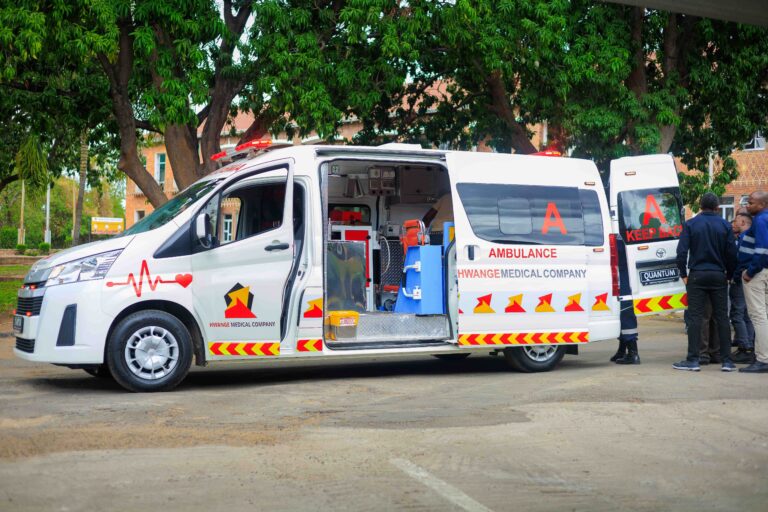
In a significant step toward enhancing healthcare services in the Hwange district, Hwange Colliery Company Limited (HCCL) subsidiary, Hwange Medical Company (HMC), has acquired a state-of-the-art ICU ambulance. This milestone comes just two weeks after celebrating the graduation of 31 nurses from the Hwange School of Nursing, Mining Zimbabwe reports.

By Rudairo Mapuranga

The newly acquired diesel-powered Toyota Quantum ambulance, equipped as a mobile Intensive Care Unit (ICU), underscores HCCL’s commitment to providing high-quality emergency healthcare for its employees and the surrounding community.

“The addition of this top-of-the-range ICU ambulance strengthens our medical response capabilities and aligns with our commitment to safety and service. As a coal mining operation, we prioritize diesel-powered vehicles for safety reasons. This is the first of two ambulances we expect this year, further improving our ability to serve the Hwange community and beyond,” the company stated.

This acquisition forms part of HCCL’s broader strategy to support national healthcare initiatives, particularly in underserved areas, by enhancing emergency medical services.

Hwange Medical Company, through its hospital and clinics, offers a wide range of healthcare services, from primary to secondary care, catering to the needs of the entire Hwange urban population. The ICU ambulance significantly enhances the existing emergency response framework, ensuring prompt care for critically ill patients and casualties, particularly during road traffic accidents along the Victoria Falls–Bulawayo highway.

“Our ambulance service has been crucial in Hwange, especially given the distance to specialized care facilities in Bulawayo. The new ICU ambulance boosts our ability to respond to severe emergencies and handle critical care referrals. This advanced medical transport allows us to provide continuous care to patients in transit, potentially saving lives,” the company added.

The new ambulance is expected to benefit both the urban population of Hwange and surrounding rural communities, further highlighting HCCL’s commitment to Corporate Social Responsibility (CSR) and community welfare.

While HCCL has a long history of providing ambulance services and acting as first responders in the region, this marks its first investment in a high-tier ICU ambulance. This milestone is viewed as a significant step toward transforming Hwange Colliery Hospital into a Center of Medical Excellence, a vision HCCL is pursuing through continuous upgrades to its healthcare infrastructure.

“Ambulances have always been integral to patient care in Hwange, particularly for evacuating casualties over long distances. This latest addition enhances the accessibility, affordability, and reliability of our ambulance services for the local community. It is another step toward achieving universal health coverage,” the company noted.

The introduction of the ICU ambulance aligns with HCCL’s broader strategy to establish Hwange Medical Company as a leading healthcare provider in the region. Future projects include an oncology centre, currently in the feasibility stage, reflecting the company’s goal to provide world-class medical services to employees and the community.

November 2024 has been a landmark month for Hwange Medical Company, marked by the acquisition of the ICU ambulance and the graduation of 31 nurses. A free medical outreach program to Chibhala Village, offering essential services such as dental and eye screenings, demonstrated HCCL’s holistic approach to healthcare. As part of its Environmental, Social, and Governance (ESG) initiatives, HCCL plans further investments, including the acquisition of a second ICU ambulance by year-end, solidifying HMC’s position as a regional leader in healthcare.

ZINIRE, Mine Ventilation Society and Geological Society to Attend AMMZ AGM

0

The Zimbabwe National Institute of Rock Engineering (ZINIRE), the Mine Ventilation Society of Zimbabwe (MVSZ), and the Geological Society of Zimbabwe (GSZ) are set to attend and participate in plenary discussions on the challenges of adopting smart mining practices in Zimbabwe. This will take place at the Association of Mine Managers of Zimbabwe (AMMZ) Annual General Meeting (AGM) 2024 in Bulawayo this month, Mining Zimbabwe reports.

By Rudairo Mapuranga

Speaking to Mining Zimbabwe, AMMZ President Abel Makura confirmed that the associations will present and contribute to a plenary discussion addressing barriers to adopting smart mining practices in the country.

“We will also have sister associations—the Mine Ventilation Society of Zimbabwe, the Geological Society of Zimbabwe, and ZINIRE—presenting. There will be a plenary discussion on the challenges in adopting smart mining practices in Zimbabwe,” Makura said.

The AGM, a key event for Zimbabwe’s mining sector, brings together industry professionals, government representatives, and stakeholders to discuss critical issues shaping the industry.

Under the theme “Smart Mining: Integrating Technology for Enhanced Safety, Productivity, and Sustainability,” the AGM will focus on topics such as mining safety, sustainability, and the role of technology in driving sector growth.

The event offers a platform for dialogue on challenges and opportunities within Zimbabwe’s mining industry. Participants will explore key issues, including environmental sustainability, regulatory changes, and technological innovation, with an emphasis on enhancing the sector’s contribution to Zimbabwe’s economic growth. The AGM also provides networking opportunities and a forum for sharing insights and best practices in mining operations.

Gold buying prices per gram in Zimbabwe 18 November 2024

0

These are the official gold buying prices per gram in Zimbabwe today 18 November 2024, from the official gold buyer and exporter Fidelity Gold Refinery (FGR).

SG 90% and ABOVE US$78.13/g
SG ABOVE 85% BUT BELOW 90% US$77.31g
SG ABOVE 80% BUT BELOW 85% US$76.48/g
SG ABOVE 75% BUT BELOW 80% US$75.65/g
SAMPLE BELOW 10g BUT ABOVE 5g US$74.41/g

Fire Assay CASH $78.55/g

NB: Fire Assay cash price is for gold above 100gs, no sample is deducted.
For the Fire Assay Transfer price, a sample of not more than 10g is deducted
A 2% royalty is charged on all deposits (Small-scale miners)
A 5% royalty is set for Primary Producers

Cash available. Fidelity Gold Refinery prices will be changing daily to match world market prices.

Blanket Mine Costs Rise to $950–$1,050 per Ounce

0

Victoria Falls Stock Exchange-listed, gold-focused miner Caledonia Mining Corporation’s Blanket Mine in Gwanda is grappling with rising costs. On-mine costs are now projected at $950–$1,050 per ounce of gold, according to the company’s results for the quarter and nine months ended September 30, 2024.

By Rudairo Mapuranga

According to Caledonia CEO Mark Learmonth, the increase in operational costs is driven primarily by higher labour and electricity expenses, marking a significant rise from the previous forecast of $870–$970 per ounce.

However, Learmonth stated that the company is taking steps to manage costs while maintaining production targets.

In the report, Learmonth acknowledged the impact of rising costs but emphasized the company’s commitment to finding solutions:

“We continue to explore ways to reduce on-mine costs at Blanket—particularly the cost of electricity and labor, where several initiatives are being implemented, and further measures are under consideration,” Learmonth said.

One of the major cost drivers at Blanket Mine is electricity. Zimbabwe’s unreliable power supply has led to increased reliance on alternative sources, often at a higher cost. To combat this, Caledonia has been integrating renewable energy into its operations.

In September, Caledonia signed a conditional agreement to sell the company that owns its 12.2MWac solar plant for $22.35 million. This sale, expected to close soon, will generate a profit on the plant’s $14.3 million construction cost while securing a long-term energy supply for Blanket Mine. The solar facility currently provides around 20% of the mine’s electricity needs, helping reduce the impact of rising power costs.

In addition to managing electricity costs, Caledonia is reviewing labor costs, which have also risen in the past year. The company is implementing efficiency measures across the workforce and exploring options to streamline operations.

Despite these cost challenges, Caledonia remains focused on meeting its 2024 gold production target of 74,000–78,000 ounces at Blanket Mine. The mine’s gold production for the quarter stood at 18,992 ounces, lower than the record 21,772 ounces produced in the same period last year. Nevertheless, gold output for the nine months reached 56,815 ounces, slightly higher than the 55,244 ounces produced in 2023.

To support operations and avoid disruptions, Caledonia increased its inventory levels by $2.3 million during the quarter. The company plans to invest an additional $2.7 million in inventory by the end of 2024 to bolster preventative maintenance initiatives and prevent potential production delays.

Despite the rising costs, Learmonth remains optimistic about Blanket Mine’s future, supported by the company’s exploration activities and cost-management strategies.

“Blanket remains a solid foundation for our growth profile in Zimbabwe. We continue to make encouraging progress towards identifying and implementing cost-saving measures,” Learmonth said.

Dallaglio Reports 22% Surge in Gold Sales for Q3 2024

0

Dallaglio Investments, the mining division of Padenga Holdings, has reported a remarkable 22% increase in gold sales for the third quarter of 2024. This strong performance is attributed to higher mill feed grades and improved recovery rates.

By Ryan Chigoche

During the period, Dallaglio sold 2,025 kilograms of gold, up from 1,665 kilograms in the same quarter last year—clearly indicating that the company’s operational improvements are delivering results. This surge in gold sales coincides with favourable global gold prices, enabling the company to capitalize on the current market conditions.

A key driver behind this growth was a 6% improvement in average mill feed grades, which rose from 1.42 grams per ton to 1.51 grams per ton. This improvement is largely credited to the Eureka Mine, where the open-pit resource has developed as expected, allowing for more efficient gold extraction. Essentially, higher grades translate to the processing of more gold-bearing ore, directly boosting production.

Dallaglio also recorded a significant increase in milled tonnage, supported by the addition of a new mill at the Pickstone Peerless Mine and enhancements at the Eureka Mine. These upgrades have positively impacted the company’s overall output. Furthermore, plant recovery rates improved by two percentage points, rising from 89% to 91%.

This improvement is linked to the company’s gradual transition to processing more underground ore at Pickstone Peerless Mine, a shift expected to be fully operational by the end of 2024. The move to underground mining is anticipated to enhance recovery rates and drive long-term profitability.

Optimism for the Future

Dallaglio remains optimistic about its future, buoyed by the continued strength of global gold prices, which are expected to remain robust through 2025. With strong growth in 2024, the company is well-positioned to leverage favourable market conditions.

A major focus in the coming months will be the ongoing underground development at Pickstone Peerless Mine, which is ahead of schedule. This transition will reduce operating costs, improve gold extraction, and further boost the company’s financial performance.

Additionally, Dallaglio is on track to complete a new Pre-Leach Thickener at Eureka Mine by the end of 2024. Once operational, this infrastructure will enhance gold recovery and play a pivotal role in supporting the company’s long-term production goals.

Overall, Dallaglio’s performance in Q3 2024 has positioned the company for continued success. With expansion at Pickstone Peerless Mine and its focus on increasing production and recovery rates, Dallaglio is on course to meet—and potentially exceed—its targets for the year. Management remains confident that by capitalizing on strong gold prices and improving operational efficiency, the company will continue to deliver value to its shareholders.

Diversification Strengthens Financial Health

While Dallaglio drives growth in its mining division, Padenga Holdings continues to balance its operations with its traditional crocodile farming business. Since diversifying into gold mining, this strategy has played a crucial role in strengthening the company’s overall financial health.

Gold mining has provided a steady revenue stream, stabilizing earnings during periods of fluctuating demand for crocodile products. This financial cushion has enabled Padenga to weather market challenges while continuing to invest in and enhance its crocodile business.

During the nine months under review, the crocodile business saw a 3% increase in skin harvest volumes, rising from 24,115 to 24,813. Skin quality and customer demand remained stable, with premium skin sales aligning with last year’s results and initial targets. However, total sales volume decreased by 30%, with 21,418 skins sold compared to 30,586 in the same period last year. This decline was primarily due to reduced orders from some customers as the crocodile skin market weakened compared to the previous year.

Despite these challenges, the synergies between Dallaglio’s gold mining operations and Padenga’s crocodile farming have proven invaluable. Gold mining revenue has helped offset fluctuations in the crocodile business, maintaining healthy balance sheets even during challenging times. Additionally, cash flow from gold mining has allowed Padenga to reinvest in its crocodile business, ensuring both sectors thrive within a complementary, long-term growth strategy.

Building Resilience for the Future

In summary, while the crocodile business faces market challenges, diversification into gold mining has provided Padenga with the financial stability to continue expanding and improving both areas of its operations. By leveraging the synergies between these distinct sectors, Padenga is building a more resilient and balanced growth strategy for the future.


Caledonia Stays on Track for Growth Despite Rising Costs & Currency Pressures

0

Caledonia Mining has delivered solid results for the third quarter of 2024, reporting revenues of $46.9 million for the quarter and $135.5 million for the first nine months of the year. Gross profit rose to $19.3 million, a significant increase from $14.1 million in the same period last year, driven by higher gold prices and improved performance from the Bilboes oxide mine. However, rising costs at the flagship Blanket Mine and challenges associated with Zimbabwean currency devaluation have impacted overall costs.

By Ryan Chigoche

Cost Pressures at Blanket Mine

During Q3 2024, the cost to produce an ounce of gold at Blanket Mine increased to $1,056, up from $928 in Q3 2023. This increase is attributed to lower ounces sold and higher production costs.

The company’s all-in-sustaining cost (AISC) also rose to $1,501 per ounce, compared to $1,268 last year. Factors contributing to the higher AISC include increased labour and electricity costs and higher share-based payment expenses due to the company’s rising share price.

Sustained Production Targets

Despite these challenges, Caledonia Mining remains on track to meet its 2024 full-year production target of 74,000–78,000 ounces of gold and aims for a similar target in 2025.

“We’re pleased with how the business is performing overall,” said Mark Learmonth, CEO of Caledonia Mining. “Higher gold prices and the solid contribution from Bilboes have helped offset some of the pressures on costs, particularly electricity and labour. We’re working hard to keep costs under control and are focused on long-term growth.”

Dividend Declaration

The company declared a dividend of 14 cents per share, payable to shareholders on December 6, 2024, reaffirming its commitment to delivering value. “We remain focused on maintaining a solid production profile and creating sustainable value for our investors,” Learmonth added.

Cash Flow and Investments

Net cash from operating activities for the quarter was $4.6 million, a decrease from $14.5 million in Q3 2023. This reduction reflects lower operating profits, the impact of Zimbabwean currency devaluation, and higher tax payments due to timing.

Additionally, the company accelerated its investment in inventory to support preventative maintenance at Blanket Mine, increasing working capital needs. However, operating cash flow before changes in working capital remained steady at $16.2 million, similar to last year’s $16.3 million.

Strategic Growth Initiatives

Caledonia continues to focus on its growth strategy, with ongoing exploration at both Blanket and Motapa mines. Progress on the Bilboes sulphide project is advancing, with a feasibility study scheduled for completion in Q1 2025. The company is also working to secure a funding structure for Bilboes that minimizes equity dilution while maximizing shareholder value.

One strategic move this quarter was the conditional sale of its 12.2 MWac solar plant for $22.35 million. The plant, which supplies renewable energy to Blanket Mine, will continue to meet approximately 20% of the mine’s daily electricity needs post-sale. “Selling the solar plant is an important step for us,” said Learmonth. “It gives us capital to reinvest in the business while ensuring Blanket continues to benefit from renewable energy.”

Optimistic Outlook

Despite the quarter’s challenges, Caledonia Mining remains confident about its future.

“We’re confident in our long-term strategy,” Learmonth emphasized. “We’re making smart investments now that will pay off as we grow the business. Blanket remains a strong foundation, and we’re excited about the opportunities at Motapa and Bilboes. Our focus remains on creating lasting value for our shareholders in the years ahead.”

Zimbabwe Needs to Think Beyond Extracting Critical Minerals — Bore

0

As the global transition toward a low-carbon economy accelerates, the demand for critical minerals such as lithium, cobalt, and rare earth elements is skyrocketing. Zimbabwe, with its abundant deposits of these minerals, has a unique opportunity not only to supply the world but also to move beyond mere extraction and focus on value addition within its borders, Mining Zimbabwe reports.

By Rudairo Mapuranga

Speaking at the recent Zimbabwe Alternative Mining Indaba (ZAMI) cocktail event at Rainbow Hotel in Bulawayo, Obert Bore, a representative of the Zimbabwe Environmental Law Association (ZELA), emphasized that exploiting these resources must be done holistically to maximize benefits while minimizing environmental and social impacts.

Bore underscored the importance of a comprehensive approach to critical minerals. “It’s crucial to consider the entire value chain, from exploration to processing and export. We need to ensure that Zimbabwe benefits at every stage,” he said.

Building Capacity and Expertise

One of the major challenges Zimbabwe faces is capacity building. Bore highlighted the need to develop the skills and expertise required to manage the country’s mineral resources effectively. This includes not only technical capabilities but also robust legal and regulatory frameworks to promote transparency and accountability.

In addition, Bore called for investments in research, innovation, and technology transfer to enhance Zimbabwe’s ability to refine and manufacture products from its critical minerals. By prioritizing these efforts, Zimbabwe could establish itself as a key player in the green economy, with opportunities to lead in areas such as battery production, electric vehicle components, and renewable energy technologies.

Engaging Local Communities

Bore stressed the vital role of local communities in the mining sector. “Communities should be active participants in the development process, and their rights and interests must be protected,” he said. He advocated for meaningful consultation and the establishment of benefit-sharing mechanisms to empower mining regions and ensure they gain from value addition initiatives.

Toward a Sustainable Future

As Zimbabwe seeks to capitalize on its mineral wealth, achieving a balance between economic growth, environmental sustainability, and social justice is critical. A holistic approach that prioritizes transparency, accountability, and community engagement will ensure that the country’s critical minerals contribute to a sustainable and prosperous future.

Bore concluded by urging Zimbabwe to develop a strategic plan to invest in infrastructure, processing facilities, and technologies that enhance value addition. With the right policies and investments, Zimbabwe could position itself at the forefront of the green energy revolution, serving as a model for other resource-rich nations.