Home Blog Page 158

How can miners reduce operational costs through adopting cheaper energy alternatives? 

0

We are currently face to face with a global energy crisis which requires every single one of us to play our part in attempting to mitigate the situation. The mining sector is no different. A large challenge the local mines are facing is the current energy costs. At present, the electricity costs are towering at US$0.14 per kWh, while thermal generating costs are ranging at about US$0.10 per kWh. Hydro electricity stands at US$0.02 per kWh. Miners are looking at US$0.07 per kWh.

By Kundiso Chimbima.

With the already high costs of production that the mines face, the energy costs are a significant contributing factor. This, coupled with the fluctuating metal prices, poses a large concern on how the significant goal of sustainable mining can be attained.

Mines can consider energy efficient alternatives that can, in the long run, lower the high cost of energy they are facing. These are as follows:

Investing in Renewable Energy Sources

A very common renewable energy source is that of Solar Energy. With an abundant supply of sunlight in Zimbabwe, investing in the required equipment for solar energy can, in the long run, allow the mines to move off the grid and rely on solar. This can be maximised by the procurement of heavy-duty equipment, including the best panels and energy storage solutions such as batteries, to maximise returns from this investment. An example of a mine that has adopted this approach is Caledonia’s Blanket Mine, which constructed a 12MW solar plant. This plant will improve the mine’s electricity supply, contribute to a greener and more sustainable form of mining, and reduce reliance on the national electric grid. Zimplats’ ongoing project of constructing a 185MW solar farm will make even larger strides in support of this, which will, in time, lead to maximising efficiency in the mine’s operations. Solar energy requires a very high initial capital investment, but in the long run, it will lower energy costs substantially.

The use of biomass and biogas are viable ways to reduce energy costs and enhance sustainability. Biomass can be utilized in cogeneration systems, where heat generated from biomass combustion is used to produce electricity. It can also be used as a fuel source through the conversion of mining operations waste into biomass fuel. Biogas production is done through anaerobic digestion of organic materials from mining operations. Through burning, it can be used for electricity production as well as reducing methane emissions.

Procurement of Energy Efficient Mining Equipment

To complement the measures that would be implemented in this plight, it is also important to review the current energy policies being used in the mines. Adapting to products that maximise energy efficiency would largely support this. Examples of these could be the change of electric motors used in the mines to premium or super-premium efficiency (IE3 or IE4). The Super Premium range presents 20% fewer losses compared to conventional motors, providing high-efficiency levels. Investing in replacing less efficient motors with Super Premium motors yields returns in a significantly shortened time frame, bringing in higher energy savings. The use of Variable Speed Drives, as well as adapting to LED lighting, are other contributing factors to be considered. The Tailings Storage Facilities management of each mine would require a synergy between water and energy consumption as well. This way, when the other measures are implemented, the mine goes a step further to be even more efficient.

In the previous years, Zimbabwe has introduced several mining policies that emphasize sustainable mining practices. One noteworthy policy is the Zimbabwe National Renewable Energy Policy 2019 (NERP). This policy was mainly focused on promoting renewable energy sources but at the same time supports the use of energy-efficient equipment by creating incentives for companies to shift towards greener and more efficient energy practices.

Improving Supplier Relations

The mining sector is the centre of an ecosystem of economic stakeholders. It is the duty of the suppliers and service providers of the mines to assist in providing alternative solutions to the challenges faced by the mines. In this particular case, reference is made to the suppliers of electrical products and service providers. This may be through extensive research and development into the current industry trends and searching for ways to improve them through innovation. This, coupled with the fifth revolution, can be a way for the mines to implement measures in their operations to minimise their procurement budget.

There are several well-known players in this industry that the mines can turn to in order to reach this goal. Local service providers include the likes of Electrosales, Polmore Electrical, Belmont Electrical, Cafca, Techold Engineering, and many others. Negotiations of rates and payment plans could assist in spreading out the energy costs over longer periods of time, presenting an opportunity for channelling cash flows further and maximising opportunity costs. This would then allow further investments into energy-efficient technology.

Engagements with the national supply authorities, such as ZPC and ZETDC, to improve on the rates allocated to mines may lead to revised rates being charged. This could result in a drop in the rates from the US$0.14 per kWh, for example. Selling back excess energy from the mines to the supply authorities could help with the level of power factor a mine can have. These collaborations could address the challenges faced by both sectors.

Virtual Power Plant (VPP)

This is a new concept currently being used in Australia in areas such as through the Australian Renewable Energy Agency (ARENA) and Tesla’s Virtual Power Plant in South Australia. The mines convert energy from a cost centre to a revenue generator through innovative energy management approaches. It consists of a network that integrates several distributed energy sources, including batteries and panels, enabling efficient catering to energy demands. Through the combination of renewable sources, the VPPs are enabled to leverage the increase in renewable sources and merge them with smaller scale generators, thus providing a reliable supply. The demand response systems become better structured by encouraging varied energy consumption by users between peak and off-peak periods.

The active participants in the VPP can enjoy financial incentives, such as lower energy bills or payments for providing energy back to the grid during peak times. The main benefits are the environmental impact, pushing sustainable mining practices, a grand reduction in energy costs, new revenue streams, and energy independence as most mines will rely less on the already existing sources.

Other factors to consider would be to further support the renewable energy source, such as solar, with wind farms as well as generators. This would ensure a more steady supply of energy. Using all of these opportunities would be at the discretion of the mines, depending on levels of required energy consumption at a time. Requesting assistance from the government, which may be able to support the local mines with incentives for mines opting for renewable energy sources, could ease the extremely high initial costs associated with this. It would also be a possibility to form collaborations amongst mines to support one another by sharing the costs and resources associated with renewable energy projects.

By considering and implementing the strategies indicated above, miners will be able to cut down on energy costs and achieve the goal of overall sustainable mining.

Kundiso Chimbima is a young entrepreneur and currently the Managing Director of Polmore Electrical. She writes in her personal capacity. For any inquiries, Kundiso can be contacted at [email protected].

James Beare Makes Significant Share Purchase in Padenga

0

Victoria Falls Stock Exchange-listed diversified company, Padenga Holdings Limited, has seen its Director and the CEO of its subsidiary, Dallaglio Investments, Mr. James Robert Beare, acquire 285,740 ordinary shares in Padenga, Mining Zimbabwe can report.

By Hazel Gara

According to Padenga, Mr. Beare purchased the shares at a price of US$0.19 per share, with the total value of the transaction amounting to US$52,290.

Following this purchase, Mr. Beare now holds a total of 830,305 shares in the company.

This transaction complies with the Victoria Falls Stock Exchange (VFEX) Limited Listings Requirements and has been disclosed to ensure transparency and adherence to regulatory standards.

Padenga Holdings Limited is a prominent player in the Zimbabwean economy, with a diverse portfolio of businesses. The company’s operations include crocodile farming, gold mining, and property development.

Mr. Beare’s recent share purchase signals confidence in the company’s future prospects and its ability to deliver value to shareholders.

Caledonia Issues US$0.14 Dividend

0

Multi-listed, gold-focused miner Caledonia Mining Corporation has approved a 14 United States cents dividend for the quarter ending September 30, 2024, Mining Zimbabwe can report.

By Hazel Gara

For a consecutive quarter since October 2021, the gold mining company will pay a dividend of US$0.14. However, the board has promised to review dividends based on the company’s performance and capital investment requirements.

According to Caledonia, all shareholders with a registered address in the UK will be paid in sterling.

The mining corporation’s strategy to maximize shareholder value includes a quarterly dividend policy, which was adopted by the board in 2014.

In a press statement released on November 11, 2024, the relevant dates related to the dividend are as follows:

Ex-dividend date VPEX: November 20, 2024

Ex-dividend date AIM: November 21, 2024

Ex-dividend date NYSE American: November 22, 2024

Record date: November 22, 2024

Payment date: December 6, 2024

Caledonia paid its initial dividend in February 2012 of 6 Canadian cents. On April 4, 2013, Caledonia announced an annual dividend in respect of the year ending December 31, 2012, also of 6 Canadian cents. On November 25, 2013, Caledonia announced that in 2014, it intended to pay an annual aggregate dividend of 6 Canadian cents per common share, payable on a quarterly basis. The first quarterly dividend of 1.5 Canadian cents per common share was paid at the end of January 2014, with further quarterly dividends paid at the end of April, July, and October each year.

In December 2015, Caledonia announced that, starting from the results for the year ending December 31, 2015 (which were released at the end of March 2016), it would report its financial results in United States Dollars instead of Canadian Dollars. Accordingly, all dividends would also be declared in United States Dollars. In January 2016, Caledonia announced that the dividend payable at the end of January 2016 would be 1.125 US cents, and the quarterly dividend policy was subsequently increased in Q3 of 2016 from 1.125 US cents per share to 1.375 US cents per share, an increase of 22%. In conjunction with the 1-for-5 share consolidation effective June 26, 2017, Caledonia announced on July 4, 2017, a commensurate adjustment to the dividend by increasing it fivefold.

On January 3, 2020, Caledonia announced an approximate 9% increase in the quarterly dividend to 7.5 US cents per share, starting with the dividend paid at the end of January 2020. On June 29, 2020, another increase of about 13% was announced, raising the dividend to 8.5 US cents per share, with the first payment at the end of July 2020. On October 1, 2020, a further increase to 10 US cents per share (an 18% rise) was announced. In 2021, dividends were increased every quarter in January, April, July, and October. The October dividend was raised by 8% to US$0.14 per share, where it has remained, marking a 104% increase from the October 2019 dividend.

In January 2022, the company announced a further dividend of US$0.14 per share. With Central Shaft now complete, the company’s strategy is focused on de-risking the business from being a single-asset producer.

Complexities of Ventilation Legislation in Mining: A Look at Safety Standards and Gaps in the Zimbabwean Case

0

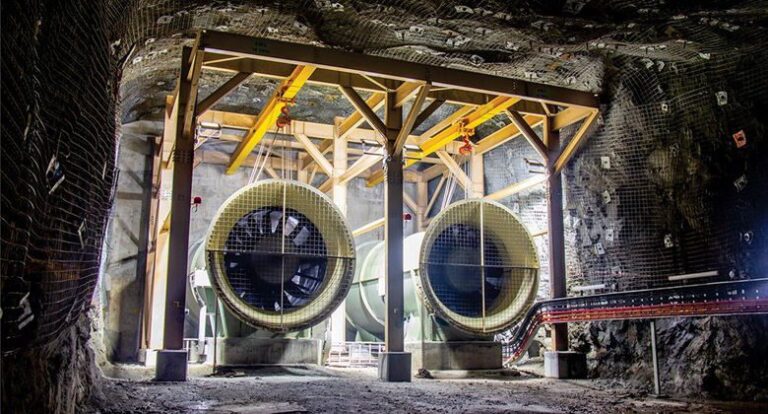
Ventilation in underground mines is crucial for the health and safety of workers, as it helps to remove harmful gases, dust, and other pollutants. However, the laws governing ventilation practices in Zimbabwe’s mining industry are often unclear and complicated, leading to gaps in accountability and enforcement.

By Ryan Chigoche

In this article, we explore the current legal framework for mine ventilation, examine some of its shortcomings, and compare it to systems in neighbouring countries like South Africa, where the issue has been addressed more effectively.

Understanding the Zimbabwean Legal Framework

Mining safety regulations are designed to protect workers’ health, especially in industries relying heavily on underground operations. In Zimbabwe, key legislative tools like the Mines and Minerals Act and Mining Management and Safety Regulations (Statutory Instrument 109 of 1990) lay the foundation for mining safety. However, these outdated regulations often fail to provide clear, practical guidance on ventilation management, leading to inconsistencies across different mining operations and threatening worker safety.

  1. Mines and Minerals Act: This law requires mine owners to ensure a safe working environment, which includes managing ventilation. However, it doesn’t specifically mandate appointing a “ventilation officer” or define clear responsibilities for ventilation management, leaving the decision to mine owners and managers. Consequently, practices vary widely between mines, lacking uniformity.
  2. Mining Management and Safety Regulations (Statutory Instrument 109 of 1990): These regulations allow mine managers to appoint competent individuals for safety oversight, including ventilation duties. However, they don’t provide enough detail on who should manage ventilation or how air quality controls should be implemented. While they emphasize removing harmful elements like dust, smoke, and toxic gases, ambiguity persists around the roles and maintenance of ventilation systems.
  3. Ventilation and Pollutants: The regulations specify that air entering mines should be free from pollutants like dust and smoke but don’t set clear technical standards for airflow or ventilation requirements. For instance, permissible limits for gases, dust, and fibres like asbestos haven’t been updated since the regulations were established in 1990, a problem given advancements in mining technology and increased airborne pollutants.

At a recent conference hosted by the Mine Ventilation Society of Zimbabwe, ventilation and occupational hygiene specialist Rusiano Tsoka emphasized the urgent need for updated regulations to ensure a safer working environment. He pointed out that Zimbabwe’s mining industry depends on its ventilation professionals to advocate for stronger legislation reflecting the evolving needs of the sector.

Tsoka stated, “There is an urgent need to modernize safety standards, ensuring they reflect the demands of today’s mining environment. Zimbabwean ventilation experts need to push for stronger legislation governing ventilation systems and occupational hygiene, making safety a non-negotiable priority. We also need to collaborate with international experts to raise local standards and knowledge. Zimbabwe must take the lead in developing national standards for ventilation and hygiene to protect workers and enhance industry competitiveness globally.”

Gaps and Challenges in Enforcement

The lack of clear, enforceable regulations on ventilation creates significant challenges for maintaining safe working conditions in mines. While the regulations emphasize air quality, vagueness around roles and responsibilities complicates enforcement, especially in smaller, less-resourced mines that may lack the infrastructure or expertise for proper ventilation management.

Another challenge is that existing regulations rely on outdated permissible pollutant limits. As mining practices evolve, newer technologies and equipment—such as larger machinery and more intensive production methods—produce higher levels of dust and gases. This makes the old standards inadequate for managing risks in modern mining. For example, permissible limits for harmful substances like silica haven’t been updated in light of recent health research, exposing workers to potentially hazardous conditions.

A Comparison with South Africa’s Ventilation Standards

South Africa offers a model of how more proactive and comprehensive ventilation regulations can enhance mine safety. South Africa regularly updates its permissible air quality limits, incorporating the latest research and technological advancements. For instance, the country has set strict guidelines for pollutants like crystalline silica, limiting exposure to 0.1 milligrams per cubic meter. In contrast, other regions continue to rely on outdated measurements, such as fibres per millimetre, which are less reliable for ensuring worker safety.

South Africa also has robust enforcement mechanisms and ongoing monitoring processes to ensure compliance with ventilation standards. Air quality data is publicly available, promoting transparency and accountability across mining operations. Regular monitoring and updates create a regulatory environment that better protects miners’ health.

Legal Responsibilities for Ventilation Engineers in South Africa (MHSA)

Under South Africa’s Mine Health and Safety Act (MHSA), ventilation engineers have defined legal responsibilities:

  1. Regulation 9.2: Control of Dust, Gases, and Heat
    • Mine operators must ensure ventilation systems control dust, gases (such as methane), and heat to provide a safe working environment. This includes reducing dust concentrations, removing toxic or explosive gases, and managing temperature to prevent heat stress. Ventilation engineers are responsible for designing and maintaining systems that manage these hazards and meet air quality standards.
  2. Regulation 9.2.2: Competent Person for Ventilation Systems
    • Mines must appoint a qualified person to oversee ventilation systems. This individual must have expertise in ventilation system design, operation, and maintenance. Engineers play a key role, ensuring systems are managed by qualified personnel capable of addressing performance, troubleshooting, and air quality monitoring.
  3. Regulation 9.3: Monitor Occupational Hygiene Risks
    • Mines must monitor occupational hygiene risks, including air quality, to protect workers from harmful exposure. This includes regular assessments of dust, gases, and other airborne contaminants. Engineers are responsible for setting up continuous air quality monitoring systems and taking corrective actions if standards fall below the required levels.

Mine Fires and Explosions: Additional Responsibilities

  1. Gas Detection
    • Effective gas detection systems are essential for monitoring hazardous gases like methane. Regular monitoring and ventilation adjustments are necessary to keep workers safe. Engineers ensure these systems are installed, maintained, and calibrated to prevent dangerous gas buildup and provide early warnings.
  2. Fire Risk Mitigation
    • Ventilation systems must help minimize fire risks, especially where combustible gases or dust are present. Engineers design systems that control airflow and temperature to reduce fire hazards and prevent dust and gas accumulation.
  3. Emergency Preparedness
    • Mines need emergency plans to handle fires, explosions, or other disasters. The ventilation system is vital for safe evacuation and clean air during emergencies. Engineers design systems that support these procedures, ensuring worker safety in a crisis.

The Need for Reform and Greater Focus on Safety

While mining safety regulations related to ventilation exist, significant gaps in enforcement, clarity, and up-to-date standards remain. Zimbabwe’s mining safety laws must be modernized to keep pace with advances in mining technology and health research, ensuring ventilation systems are properly managed and workers are protected from harmful air conditions.

The Mine Ventilation Society of Zimbabwe (MVSZ) has recognized the need for reform and aims to align national ventilation regulations with South African standards in the coming year. This would modernize the regulatory framework, bringing Zimbabwe’s mining sector closer to regional best practices and global standards. By implementing these updates, MVSZ seeks to make Zimbabwe’s mining practices safer, healthier, and more competitive on the global stage.

Learning from countries like South Africa, which have adopted modern and comprehensive ventilation standards, can help Zimbabwe and other mining regions implement reforms that ensure better health and safety for underground workers. Adopting clearer, more specific ventilation standards will protect workers and contribute to a more sustainable and responsible mining industry.

Gold buying prices per gram in Zimbabwe 14 November 2024

0

These are the official gold buying prices per gram in Zimbabwe today 14 November 2024, from the official gold buyer and exporter Fidelity Gold Refinery (FGR).

SG 90% and ABOVE US$78.95/g
SG ABOVE 85% BUT BELOW 90% US$78.12g
SG ABOVE 80% BUT BELOW 85% US$77.28/g
SG ABOVE 75% BUT BELOW 80% US$76.44/g
SAMPLE BELOW 10g BUT ABOVE 5g US$75.19/g

Fire Assay CASH $79.37/g

NB: Fire Assay cash price is for gold above 100gs, no sample is deducted.
For the Fire Assay Transfer price, a sample of not more than 10g is deducted
A 2% royalty is charged on all deposits (Small-scale miners)
A 5% royalty is set for Primary Producers

Cash available. Fidelity Gold Refinery prices will be changing daily to match world market prices.

Global Mining Trends

0

As the global mining industry advances, several key trends and forecasts are shaping its direction, especially around critical minerals, Platinum Group Metals (PGMs), and gold.

By Rudairo Mapuranga

These shifts are driven by the rise of renewable energy technologies, geopolitical factors, and the evolving energy storage landscape. One of the most debated topics is the future of hydrogen as an energy solution and its impact on platinum demand, alongside the enduring role of gold in the global market.

Hydrogen Batteries and Platinum Demand

The potential use of hydrogen for energy storage has sparked intense debate. While hydrogen has various applications, energy storage remains controversial due to its inefficiency. Despite political enthusiasm and significant investments in hydrogen infrastructure, the fundamental physics of hydrogen as an energy storage medium reveals significant limitations.

Hydrogen’s low energy density and inefficiencies in production, storage, and conversion have cast doubt on its viability as a large-scale battery solution. Consequently, the projected demand for platinum, used in hydrogen fuel cells, is expected to remain subdued. Platinum demand may largely be met through recycling from internal combustion engine (ICE) vehicles being scrapped over the next several decades, suggesting that the rush for new platinum supply may be overstated.

Platinum Prices

Given the limited demand for hydrogen fuel cells in energy storage, platinum prices are expected to remain suppressed in the near term. Some experts even predict a significant drop in platinum prices by the end of this decade. This forecast mirrors recent trends in other battery materials, such as lithium, nickel, cobalt, and manganese, which have experienced price corrections as markets adjust to oversupply and reduced demand growth projections.

The West vs. China

A major force reshaping the mining landscape is China’s growing dominance and its strategic partnerships with Russia and other BRICS+ countries. China’s control over critical mineral processing, particularly for lithium, cobalt, and rare earth elements, has granted it a considerable advantage in global manufacturing. This influence allows China to keep commodity prices low, further consolidating its position in key industries like electronics, automotive, and renewable energy.

China’s expanding influence in Africa over the next decade is expected to fuel infrastructure development across the continent. Many African nations are gravitating toward China, recognizing that partnerships with Eastern powers often yield more immediate benefits than those with the West, which historically imposed burdensome debt and retained control over local economies. However, concerns from African governments are rising over irresponsible practices by some Chinese companies, particularly regarding environmental degradation and illicit financial flows.

In response, the Chinese government has introduced measures to ensure its investors operate responsibly abroad. For instance, in the Democratic Republic of Congo (DRC), Chinese companies are now held accountable for complying with environmental standards and local labour laws. These efforts aim to curb illicit financial flows and mitigate the growing backlash against irresponsible mining practices in African countries.

Resource Nationalism and Geopolitical Risks

Rising geopolitical tensions and resource nationalism are impacting global mining operations. Countries rich in mineral resources increasingly seek to extract more value from their natural resources by imposing stricter regulations, higher taxes, or encouraging local beneficiation. While these measures aim to boost local economies, they can lead to supply disruptions and increased operational costs for mining companies.

Several African nations, including Zambia, the Democratic Republic of Congo (DRC), and Zimbabwe, are pushing for greater local ownership and beneficiation in their mining sectors. For example, Zambia has raised royalty taxes on copper production, and Zimbabwe’s government has announced plans to increase taxes.

Governments in Chile and Peru, major copper producers, are considering reforms that may increase taxes and royalties on mining companies to fund social programs.

Critical Minerals

The energy transition continues to drive demand for critical minerals, especially those essential for batteries and renewable technologies. However, the challenge lies not only in extracting these minerals but in processing them cost-effectively to meet high-purity standards. High-grade resources hold promise, but without efficient refining technologies, these resources risk becoming economically unviable.

This reality is reflected in current market conditions, where an oversupply of some critical minerals has driven prices down. Lithium, once the cornerstone of the EV revolution, has seen prices fall by over 88 percent, with lithium carbonate and lithium hydroxide dropping below $11,000 per metric ton due to high operational costs and reduced demand growth forecasts. Similar trends are observed in other battery materials, like cobalt and nickel.

Gold Prices

Unlike critical minerals, gold operates in a unique market where its value is less tied to industrial use and more influenced by macroeconomic and geopolitical factors. As a safe-haven asset, gold typically performs well during times of uncertainty, economic downturns, or political instability. In 2024, gold has retained its appeal due to ongoing geopolitical tensions and global inflation concerns, particularly surrounding US foreign policy and the fragility of international markets. Gold futures hit a new all-time high on October 30, briefly surpassing $2,800 per ounce as investors turned to the metal amid uncertainty around the U.S. presidential election and simmering geopolitical tensions.

With central banks, especially in emerging economies, increasing their gold reserves as a hedge against economic instability, gold prices are expected to remain resilient. Any potential conflict or further escalation in geopolitical tensions could drive prices higher as investors seek refuge in the asset. However, given that gold’s industrial use is limited, its price will continue to be largely driven by investor sentiment rather than supply-demand fundamentals from mining.

Sustainability and ESG

As we progress through the 2020s, mining companies must excel at navigating a landscape where easy profits are no longer guaranteed. While there is growing demand for materials essential to the energy transition, such as copper and lithium, oversupply and high operational costs will continue to suppress prices, leaving only small profit margins.

Simultaneously, governments and investors are pushing for more sustainable and responsible mining practices, with ESG (Environmental, Social, and Governance) considerations becoming central to mining operations. Companies that fail to meet these expectations may find it increasingly difficult to access capital and secure long-term growth opportunities.

A Competitive and Complex Future

The global mining sector is evolving rapidly, with critical minerals playing a pivotal role in shaping the future of energy and technology. However, challenges related to processing, geopolitical control, and market volatility continue to present obstacles. Platinum’s role in hydrogen fuel cells may not be as significant as once thought, and critical mineral prices, including those for lithium and nickel, could face further declines.

Meanwhile, gold’s resilience as a safe-haven asset provides a counterbalance to the volatility seen in other commodities, though its price remains vulnerable to shifts in global political and economic sentiment. Mining companies must remain agile, focusing on efficient resource extraction, sustainable practices, and strategic partnerships to thrive in the competitive global marketplace. The ongoing geopolitical reshuffling, with China’s dominant role in critical minerals, will continue to shape the industry in the years to come.

High Court Orders Renco Workers to Return to Work

0

The High Court has ordered workers at Renco Mine to return to work, ruling that their industrial action was unlawful. The decision followed a court case initiated by Rio Zim, the mine’s parent company, over the workers’ strike, which stemmed from unresolved salary disputes.

By Ryan Chigoche

More than 1,200 workers at Renco Mine have been on strike since October 9, demanding payment of outstanding salaries that have not been settled since July. The workers had previously dissolved their internal Workers Council, citing its ineffectiveness in addressing their grievances.

The workers had insisted that all overdue salaries from July onwards be paid in full before they returned to work. However, the High Court’s ruling, reached by consent of both parties, ordered an end to the “unlawful” job action and stipulated that the company must pay all outstanding salaries by December 10, 2024.

  1. Termination of Unlawful Action
    The court ordered an immediate end to the unlawful collective job action by the workers.
  2. Payment of Salary Arrears
    Rio Zim was directed to pay the workers’ outstanding salaries (both in Zimbabwean dollars and USD) according to the following schedule:

    • US$50.00 to each worker on November 1, 2024
    • US$50.00 to each worker on November 8, 2024
    • The remaining arrears to be paid in full by December 10, 2024.
  3. Return to Work
    The workers were ordered to resume work no later than Saturday, November 2, 2024.
  4. No Disciplinary Action
    The company was prohibited from taking any disciplinary action against the workers in connection with the unlawful industrial action.
  5. Legal Costs
    Each party was ordered to bear its own legal costs.

The court’s decision came after Rio Zim applied to the Ministry of Labour for a Show Cause order, arguing that the sit-in was unlawful. The company claimed that the workers had failed to follow proper procedures, including notifying key union bodies such as the Associated Mine Workers of Zimbabwe and the Zimbabwe Diamond and Allied Minerals Workers Union.

In response, the workers argued that Rio Zim had ignored their legitimate concerns and failed in its legal, moral, and economic obligations to pay them on time and in full. They also contended that Rio Zim’s application was flawed, as it failed to identify individual workers by name, instead referring to them collectively as “Renco Mine Workers.”

During the strike, Rio Zim claims it lost 13 days of production, resulting in daily gold losses of approximately 1.01 kg, totalling over US$1,051,000 in lost revenue. The company attributed its failure to pay wages on time to these production losses, further complicating the ongoing labour dispute.

Since April 1, 2021, workers have staged annual strikes over salary disputes. In 2022, Rio Zim received a $19 billion capital injection from shareholders to stabilize operations, but workers continue to face irregular salary payments and ongoing financial hardships.

The wage dispute underscores persistent financial challenges within Rio Zim’s operations, despite attempts to revitalize the company.

Govt to continue with 5% Tax on Unrefined Platinum Exports in 2025

0

In a setback for Platinum Group Metals (PGM) miners, the Zimbabwean government has announced that it will move forward with the implementation of a 5% tax on unrefined platinum exports starting in January 2025, despite the absence of an agreement on new beneficiation timelines timelines that were initially seen as key for the tax’s rollout. The miners had requested that the beneficiation tax on concentrates be aligned with the agreed PGM beneficiation roadmap, but with no consensus reached, the government is pressing ahead with its plans.

By Ryan Chigoche

Zimbabwe has long sought to push its PGM miners to refine platinum within the country rather than exporting raw concentrates. The government has made it clear that it wants to see value added in Zimbabwe, arguing that beneficiation would create jobs, boost the local economy, and increase the overall value of the country’s platinum reserves. However, miners have consistently raised concerns, citing Zimbabwe’s inadequate electricity supply and infrastructure, and the high cost of establishing refineries as major barriers.


The failure of PGM miners to meet the March 2024 deadline for submitting beneficiation plans has left both parties at a standstill. This impasse is further complicated by the recent slump in platinum prices, which has led many mining companies to scale back expansion plans while awaiting a price recovery.


As part of earlier agreements with the government, mining executives had committed to utilizing existing facilities with excess capacity for refining. However, soft market conditions have added to the challenges, as miners argue that Zimbabwe’s electricity supply and mineral resources are insufficient to justify the cost of building new refineries.


The export tax, first introduced a decade ago, was initially set at 15%, then reduced to 5%, and has since been postponed multiple times to allow miners more time to set up refining facilities. However, the government has now confirmed that the tax will be enforced in January 2025, with no further delays.


Earier this week the Ministry of Finance announced there will be further postponemnets, despite the challenges that the PGMs industry migh be facing at the moment.


“Government has already introduced a 5% beneficiation tax on the export of unbeneficiated platinum, with a view to compel mining houses to invest in the requisite plants. In addition, Government removed customs duties on the importation of the equipment required for setting up beneficiation plants, along with a VAT deferment on the import tax payable.Significant milestones have already been achieved in the PGMs sector, with substantial investment in beneficiation plants on track to commission a Base Metal Refinery. With effect from 1 January 2025, Government will not grant any further reprieve from the tax, in order to compel mining houses to expedite the completion of beneficiation plants.” the Ministry said.


Currently, platinum producers in Zimbabwe process platinum into concentrates and mattes, which are exported to South African refineries where some of their parent companies already own refineries. However, the government is determined to have these producers refine the metal into its final product within Zimbabwe’s borders.


In response, Zimplats, the country’s largest platinum producer, has earmarked US$190 million to build a base metal refinery, which would also process mattes from other miners. However, the company has only spent US$29 million so far on the project, which has faced delays due to the slump in platinum prices. Despite this, the government is pressing for the refinery’s completion.


Zimbabwe’s three main platinum producers Zimplats, Mimosa, and Unki are at different stages of beneficiation. Zimplats and Unki currently operate smelters that process platinum into mattes, with Zimplats having recently commissioned a new smelter and invested US$412 million in its expansion. Mimosa, however, is still at the early stages, focusing on flotation concentration. Both Unki and Zimplats have reached the second stage of beneficiation, processing converter matte at their smelting and converting plants. The third and final stage, which the government is pushing for, is the development of a base metals refinery.


The statement by the government follows the recent State of the Mining Industry Survey Report where mining executives expressed concerns about Zimbabwe’s fiscal framework.


They cited multiple taxes, high royalty rates, beneficiation taxes, retrospective capital gains taxes, and high mining fees as factors hurting the industry. With 2025 on the horizon, many executives expect these pressures to intensify, as there is growing scrutiny on the mining sector’s contribution to the economy.

Zimbabwe’s Gold Earnings Set to Decline Amid Falling Prices From anticipated Trump Pro Business Policies

0

With Donald Trump securing another term in office, analysts predict that Zimbabwe will face a significant decline in gold earnings as global economic dynamics shift due to Trump’s business-oriented policies. These changes are expected to impact demand for gold, traditionally viewed as a safe haven asset.

By Ryan Chigoche

Trump’s policies are anticipated to prioritize strengthening the US dollar and reducing global tensions, particularly in regions like the Middle East and Eastern Europe. As a result, the demand for gold, which often rises during geopolitical instability, is likely to decrease.

Over the past few years, gold prices have surged, reaching record highs, particularly due to geopolitical crises such as the Russia-Ukraine conflict. However, gold prices have recently experienced a downturn.

However this week, prices dipped to a one-month low, with investors cautious ahead of upcoming US economic data and potential Federal Reserve commentary on inflation. As of November 12, gold was trading near $2,646.83, having fallen from higher levels earlier in the month. If prices breach this crucial support level, further declines could follow, with the next target around $2,604.39.

Financial analyst and Head of Research at Morgan and Co, Tafara Mtutu, highlighted that Zimbabwe must prepare for reduced gold earnings in 2025 due to the anticipated strengthening of the US dollar and the de-escalation of global tensions under Trump’s leadership.

“So with Trump winning the election, the sentiment is that Trump is more business-oriented than he’s focused on politics, so he’s going to push for a stronger US dollar compared to other currencies. He’s going to try and de-escalate global tensions in Israel, Iran, and also in Russia and Ukraine,” Mtutu explained.

He continued, “With the sole purpose of global economic stability and also lowering the price of oil, we should see benefits for businesses in the US and globally. But, the removal of these geopolitical risks, which had kept gold prices elevated due to crises like COVID-19, the Russia-Ukraine conflict, and tensions in Israel and Iran, will likely push down gold prices.”

“Once these risks are de-escalated, we are likely to see a fall in gold prices. This will have a negative impact on Zimbabwe’s gold sector, leading to a decline in revenue and earnings from 2025 onward.”

Despite the challenges, Mtutu pointed out a potential upside: lower oil prices. As global tensions ease, fuel prices are expected to fall, which would reduce the cost of alternative energy sources, such as generators, that Zimbabwe’s mining sector heavily relies on.

“The positive side will be lower oil prices, which will translate to reduced fuel costs. Given that Zimbabwe is a country that depends heavily on alternative energy sources for mining, this will act as a cushion to offset the negative impact of lower gold prices,” Mtutu added.

For Zimbabwe’s gold sector, which is a major contributor to export revenues, the timing of this price slump is especially problematic. Fidelity Printers and Refiners (FPR), the country’s central gold buyer, has played a critical role in stabilizing the sector by offering competitive prices to small-scale miners. However, the ongoing global price decline threatens to undermine FPR’s ability to maintain these rates, potentially leading to a reduction in gold deliveries from miners.

The anticipated decline in gold export earnings will have significant implications for Zimbabwe’s GDP growth. The mining sector, including gold, platinum, and other minerals, is a major driver of the country’s economy, contributing over 12% to GDP. Any downturn in mineral prices will likely impact GDP growth, which has already been affected by high inflation rates and limited access to foreign currency.

Smart Mining to Take Center Stage at AMMZ AGM

0

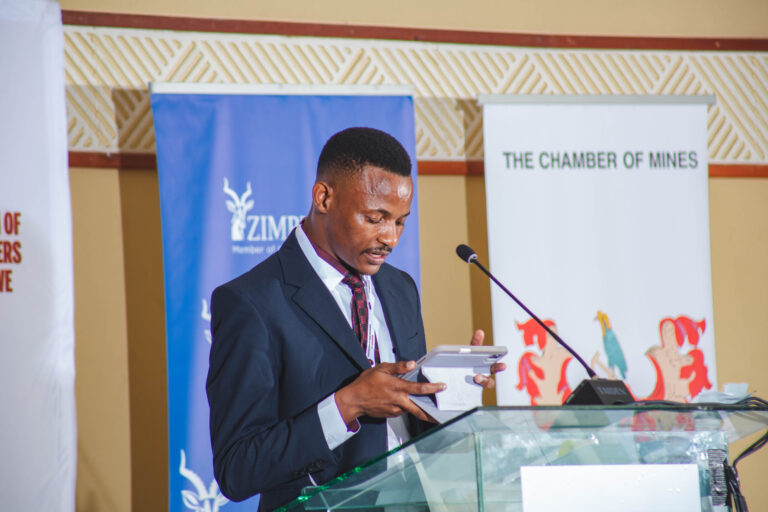
The Association of Mine Managers of Zimbabwe (AMMZ) has placed “Smart Mining” at the forefront of discussions during its Annual General Meeting (AGM), highlighting the vital role of technological innovation in transforming the country’s mining sector, Mining Zimbabwe can report.

By Rudairo Mapuranga.

Speaking to Mining Zimbabwe AMMZ President Abel Makura said smart mining, which involves the integration of advanced technologies such as autonomous systems, real-time data analytics, and sustainable mining practices, is the future of Zimbabwe’s mining industry.

He said the innovations are designed to enhance efficiency, reduce operational costs, and improve safety, creating a more productive and sustainable sector.

Makura emphasized the critical importance of these advancements stating that smart mining is no longer a concept but a reality.

“Smart mining is no longer just a concept but a reality we must embrace to remain competitive. Technologies such as autonomous mining, ventilation on demand, and proximity detection systems are already proving their value in increasing productivity and reducing workplace injuries,” he said.

Makura also pointed to the future potential of other technologies still to be widely adopted in Zimbabwe, including waterless mining and bulk ore sorting.

“There’s tremendous promise in innovations like ultra-fine recovery and waterless mining. These are the next steps in creating a more efficient and sustainable mining sector,” he added.

With Zimbabwe’s mining landscape facing increasing pressure to modernize and remain globally competitive, the AGM underscored the importance of adopting smart mining solutions to drive the industry forward. By embracing cutting-edge technologies, the mining sector can unlock new potential for growth and sustainability, ensuring that Zimbabwe remains a leader in the African mining space.