

Home Blog Page 16

Gold buying prices in Zimbabwe per gram/ ounce, 21 January 2026

Gold buying prices in Zimbabwe per gram/ ounce, 21 January 2026, from the official gold buyer and exporter Fidelity Gold Refinery (FGR).

1 oz = 31.1035 g

CategoryPrice ($/g)Price ($/oz)
SG 90% and above144.244,486.41
SG 85% and above but below 90%142.724,438.75
SG 80% and above but below 85%141.194,391.15
SG 75% and above but below 80%139.674,343.61
Sample 5g and above but below 10g137.384,272.38
Fire Assay CASH145.014,510.22


Note: The Fire Assay cash price applies to gold above 100g, with no sample deduction.

A sample of not more than 10g is deducted for the Fire Assay Transfer price.

ZMF Issues New, Urgent Warning as Nationwide Flooding Creates Mining Crisis

0

With severe flooding now paralysing communities across Zimbabwe, Zimbabwe Miners Federation (ZMF) President Ms Henrietta Rushwaya has issued a new and critical warning, stating that the saturated conditions present an immediate, nationwide threat to mining safety, Mining Zimbabwe can report.

By Rudairo Mapuranga

Her urgent call reframes the ongoing rainy season as an active disaster, underscored by the tragic mine collapse in Filabusi that trapped three people.

“The genius required now is in recognizing that we have moved past forecasts and into a full-blown emergency,” Ms Rushwaya stated. “Our rivers are overflowing, our soils are waterlogged from Beitbridge to Chimanimani, and every mining shaft in a low-lying area is in imminent danger. This is no longer about seasonal caution; this is about urgent, life-saving action. Water is actively seeking out and undermining workings across the country.”

The scale of the current flooding is severe, turning rainfall into a widespread hazard. Major waterways have burst their banks, and consistent downpours have created uniquely dangerous conditions for mining:

  • Active Shaft Flooding: Water is flowing into underground excavations at an alarming rate, driven by high water tables and surface runoff.

  • Critical Ground Instability: The integrity of mine walls and tunnels has been compromised nationally, raising the risk of sudden collapses.

  • Hampered Emergency Response: Flooded access roads are isolating mining sites, delaying rescue operations and aid, as seen in Filabusi.

Echoing the urgency, a member of the Parliamentary Portfolio Committee on Mines and Mining Development, Hon. Jonah Nyevera, issued a direct warning to the Artisanal and Small-Scale Mining (ASM) sector, which is particularly vulnerable.

“This is a direct instruction. If you are an artisanal miner, you must try to cease operations immediately,” Hon. Nyevera asserted. “The flooding Ms Rushwaya describes is real and present. The tragedy in Filabusi, where a life above ground was also lost, proves the danger is unconfined. Do not approach flooded shafts, avoid all riverine claims, and prioritize your life over ore. Wait for official clearance that the conditions have safely passed.”

The accident at Hebenia Mine on 17 January serves as a devastating example of the current risks. A shaft approximately 11 metres deep collapsed, trapping two miners. In a heartbreaking turn, the wife of one miner was also engulfed when she rushed toward the shaft as the ground failed. This incident highlights the compounded dangers of operating in saturated ground and the rapid, unpredictable nature of these failures.

The Ministry of Mines and Mining Development has long emphasised rainy season safety. However, the current extreme flooding necessitates a shift from standard precaution to emergency response.

Moving forward, the crisis underscores the need for:

  1. Immediate Safety Moratoriums: Enforced stoppages in all high-risk and flooded areas.

  2. Enhanced Emergency Coordination: Ensuring rescue teams can access isolated communities and mining sites.

  3. Community Risk Communication: Direct and clear dissemination of warnings to mining communities about the specific, elevated dangers.

As rains continue, the urgent warnings from Ms Rushwaya and Hon. Nyevera frame a critical choice for the mining sector: to recognise the unprecedented scale of the flood danger and act decisively to protect life above all else. The nation’s focus remains on the rescue efforts in Filabusi and the safety of all miners during this perilous time.

This Is How to Get International Partners for Your Local Business

0

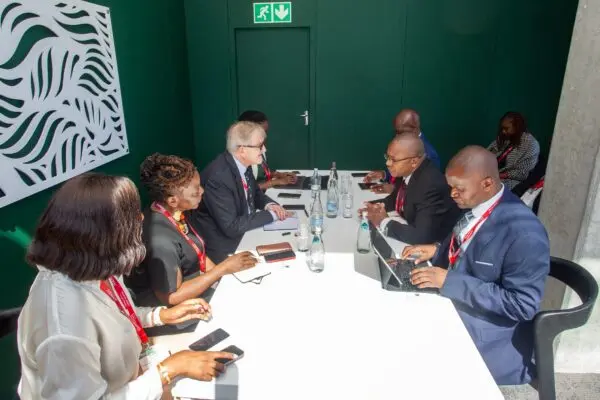
For many local businesses in mining economies, securing international partners can be the difference between remaining small-scale and unlocking sustainable growth. From exploration to export, global partnerships bring capital, technology, market access, and credibility. One of the most effective platforms for building these relationships in Africa is Mining Indaba, where investors, miners, financiers, service providers, and governments converge around the entire mining value chain.

Whilst advertising in Trade publications like Mining Zimbabwe gives you exposure, more needs to be done to convince potential partners of your Investability.

This article outlines practical, end-to-end strategies for attracting international partners across every stage of the mining value chain, using Mining Indaba as a central reference point.


1. Start With Credibility: Fix the Fundamentals at Home

Before approaching international partners, your local business must be structurally credible. Global players conduct rapid but rigorous screening.

Key foundations include:

  • Legal compliance (valid licences, permits, and registrations)
  • Transparent ownership and governance
  • Audited or well-documented financials
  • Clear operational focus (what you do and where you fit in the value chain)

At Mining Indaba, most serious discussions begin with one question: “Are you compliant and investable?”

If the answer is unclear, conversations end quickly.


2. Understand Where You Fit in the Mining Value Chain

International partners do not invest in “mining” broadly—they invest in specific value-chain segments. Knowing exactly where your business fits allows you to target the right partners.

Full Mining Value Chain Overview

  1. Exploration
  2. Project Development
  3. Mine Construction
  4. Mining Operations
  5. Processing & Beneficiation
  6. Logistics & Transport
  7. Trading & Offtake
  8. Financing & Insurance
  9. Technology & Digital Solutions
  10. Environmental, Social & Governance (ESG) Services
  11. Mine Closure & Rehabilitation

At Mining Indaba, each of these segments attracts different international players, from junior explorers and EPC firms to global traders, OEMs, banks, and ESG funds.


3. Exploration & Resource Development: Partnering for Risk Capital

Local exploration companies often lack funding for drilling, resource definition, and studies.

What international partners look for:

  • Geological data (even early-stage)
  • Valid exploration titles
  • Clear target commodities
  • Jurisdictional understanding

Who to engage at Mining Indaba:

  • Junior mining companies
  • Private equity funds
  • Geological consultancies
  • Strategic investors from Canada, Australia, and Europe

How to attract them:

  • Prepare a concise technical summary
  • Be realistic about valuation
  • Be open to joint ventures rather than outright funding

4. Mine Development & Construction: Attracting EPC and Strategic Investors

As projects move toward development, international partners become more operational.

Potential partners include:

  • EPC and EPCM contractors
  • Equipment manufacturers (OEMs)
  • Strategic mine developers
  • Development finance institutions (DFIs)

At Mining Indaba, these players actively seek:

  • Bankable feasibility studies
  • Clear permitting timelines
  • Government support or stability assurances

Local companies that position themselves as on-the-ground execution partners often secure long-term roles even without owning the mine.


5. Mining Operations: Operations, Contract Mining & Services

International operators often prefer local partners for:

  • Contract mining
  • Labour supply
  • Maintenance
  • Security
  • Camp management

To attract partners:

  • Demonstrate operational experience
  • Show safety and compliance systems
  • Highlight cost advantages and local knowledge

Mining Indaba is particularly valuable for service providers looking to become preferred local partners to global miners entering African markets.


6. Processing, Beneficiation & Value Addition

With Africa pushing for in-country beneficiation, international technology providers are actively seeking local partners.

Opportunities include:

  • Processing plant construction
  • Modular plants
  • Smelting and refining
  • Battery minerals beneficiation

International partners look for:

  • Feedstock security
  • Power solutions
  • Policy alignment

Local businesses that can aggregate ore or provide infrastructure access are especially attractive.


7. Logistics, Transport & Export Infrastructure

Mining does not work without logistics.

Global partners seek:

  • Reliable haulage firms
  • Rail and port access facilitators
  • Warehousing and bonded storage operators

At Mining Indaba, logistics companies frequently partner with:

  • Traders
  • Large miners
  • Export credit agencies

Local logistics firms that demonstrate compliance, scale, and cross-border capability gain strong interest.


8. Trading, Offtake & Global Markets

One of the fastest ways to secure international partners is through offtake agreements.

International traders want:

  • Consistent supply
  • Traceability
  • ESG compliance
  • Transparent pricing mechanisms

Mining Indaba hosts:

  • Global metal traders
  • Battery manufacturers
  • Refineries and smelters

For local miners, even small-scale producers, these relationships can unlock pre-financing, price stability, and guaranteed markets.


9. Financing, Insurance & Risk Mitigation

International capital is risk-sensitive.

Partners include:

  • Commercial banks
  • Development banks
  • Export credit agencies
  • Political risk insurers
  • Commodity streaming companies

To engage successfully:

  • Present realistic funding needs
  • Show risk mitigation strategies
  • Align with ESG expectations

Mining Indaba is one of the few platforms where finance, mining, and government sit in the same room, enabling faster deal structuring.


10. Technology, Digitalisation & Innovation

Mining is increasingly tech-driven.

Opportunities for partnerships include:

  • Mine automation
  • Data analytics
  • Exploration software
  • ESG monitoring tools
  • Safety and productivity systems

Local tech firms that attend Mining Indaba often secure pilots, distribution agreements, or regional partnerships with global providers seeking African market entry.


11. ESG, Community Development & Sustainability

International partners now prioritise ESG as much as geology.

They look for local partners in:

  • Environmental monitoring
  • Community engagement
  • Rehabilitation
  • Carbon management
  • Social impact programmes

Mining Indaba places strong emphasis on sustainable mining, making it a key gateway for ESG-focused partnerships.


12. Mine Closure, Rehabilitation & Post-Mining Economies

Even at the end of the value chain, opportunities exist.

International firms seek local partners for:

  • Rehabilitation projects
  • Environmental restoration
  • Post-mining land use
  • Renewable energy repurposing

Local businesses with environmental and agricultural expertise are increasingly relevant.


13. How to Use Mining Indaba Strategically

To convert Mining Indaba into real partnerships:

  • Book meetings in advance
  • Have clear value propositions
  • Avoid vague pitches
  • Follow up aggressively after the event
  • Position yourself as a long-term partner, not just a vendor

Mining Indaba is not about signing deals on the spot—it is about starting relationships that mature into partnerships.


In Conclusion: Think Value Chain, Not Just Mining

International partners do not come looking for “miners” alone—they look for ecosystems.

Local businesses that understand their role in the full mining value chain, present themselves professionally, and engage platforms like Mining Indaba with strategy and clarity, dramatically improve their chances of attracting global partners.

In today’s mining economy, success is no longer just about what is in the ground—it is about who you partner with, how you position yourself, and where you show up.

Gold Sets New Record as Trade Risks and Geopolitical Tensions Mount

0

Gold prices climbed to a new all-time high on January 19, 2026, as investors increased their exposure to safe-haven assets amid escalating geopolitical risks and renewed trade tensions, Mining Zimbabwe can report.

By Ryan Chigoche

Spot gold rose to a record US$4,667.83 per ounce, gaining about 1.6% on the day, supported by growing speculative interest and heightened uncertainty across global markets.

The rally follows U.S. President Donald Trump’s announcement of a 10% tariff on goods from eight European Union countries, linked to a dispute over Greenland.

Trump has warned that the tariffs could be raised to 25% by June if negotiations fail, a move that has intensified fears of a wider trade confrontation.

These concerns come on top of ongoing geopolitical pressures in the Middle East, particularly involving Iran, reinforcing gold’s appeal as a store of value during periods of instability.

However, analysis cited by the World Gold Council suggests that while the broader trend remains positive, the pace of the rally may be slowing in the short term.

Although prices have reached new highs, momentum indicators have not yet fully confirmed the strength of the move. In simple terms, gold has risen very quickly and is now trading well above its long-term average price, a level that historically signals the market may need to pause or cool off before pushing significantly higher.

Even so, the underlying upward trend remains intact for now.

As long as gold holds above around US$4,540 per ounce, the market is seen as remaining in an upward trajectory.

If prices remain supported at these levels, gold could test resistance near US$4,700 per ounce, with a further barrier just below US$4,800 per ounce, an area where prices previously struggled to break through late last year.

At the same time, analysts caution that external factors could begin to weigh on prices.

The U.S. dollar has shown signs of stabilising, while U.S. government bond yields appear close to finding a floor.

Both developments can reduce gold’s appeal, as a stronger dollar and higher yields typically make non-interest-bearing assets like gold less attractive.

A sustained move below US$4,540 per ounce would therefore suggest a period of profit-taking, with prices potentially easing towards the US$4,300–US$4,400 range.

Beyond short-term market movements, the broader backdrop continues to support gold.

Prices are up by about 72% compared with a year ago, rising from roughly US$2,700 per ounce in January 2025.

The gains have been driven by steady central bank purchases, persistent inflation concerns, and a growing desire among investors to diversify away from traditional currencies.

Since the start of 2026 alone, gold has gained just over 8%, underlining strong early-year momentum.

Market flows also show investors rotating out of U.S. equities, particularly large technology stocks, and into commodities and materials.

Central banks, especially in Asia, remain active buyers, while exchange-traded fund holdings have increased as investors seek protection from equity market volatility and currency risks.

Looking ahead, major financial institutions remain broadly constructive on gold’s outlook.

Goldman Sachs expects prices to approach US$4,900 per ounce, while HSBC and JPMorgan see gold trading above US$5,000 later in 2026.

These forecasts are underpinned by expectations of U.S. interest rate cuts, continued central bank demand, and the risk that trade tensions could escalate further.

Average prices for the year are widely projected to range between US$4,500 and US$5,000, with more optimistic scenarios pointing to even higher levels if fiscal pressures and geopolitical strains persist.

Back in Zimbabwe, the global gold rally is already translating into tangible gains for the local mining sector.

High prices have encouraged increased deliveries, particularly from artisanal and small-scale miners, who continue to account for the bulk of national output.

Fidelity Gold Refinery, the country’s sole official buyer, reported record gold production of 46.7 tonnes in 2025, representing a 17% increase from 36.48 tonnes in 2024.

Small-scale miners contributed 34.9 tonnes, while large-scale producers delivered 11.8 tonnes, reflecting the combined impact of strong international prices, improved incentives, and supportive policy measures.

As global uncertainty remains elevated, Zimbabwe’s gold sector appears well positioned to continue benefiting from sustained investor demand for the metal.

Gold buying prices in Zimbabwe per gram/ ounce, 20 January 2026

Gold buying prices in Zimbabwe per gram/ ounce, 20 January 2026, from the official gold buyer and exporter Fidelity Gold Refinery (FGR).

1 oz = 31.1035 g

CategoryPrice ($/g)Price ($/oz)
SG 90% and above141.794,410.17
SG 85% and above but below 90%140.284,363.20
SG 80% and above but below 85%138.784,316.54
SG 75% and above but below 80%137.284,269.89
Sample 5g and above but below 10g135.034,199.91
Fire Assay CASH142.544,433.49


Note: The Fire Assay cash price applies to gold above 100g, with no sample deduction.

A sample of not more than 10g is deducted for the Fire Assay Transfer price.

How Strategic Missteps Derailed a Lithium Project and a National Ambition

0

In 2019, Zimbabwe’s government announced a national objective to build a US$12 billion annual mining economy by the end of 2023, identifying lithium as one of the key minerals expected to contribute to that target. Premier African Minerals’ Zulu Lithium and Tantalum Project was subsequently referenced in public discourse as one of the projects aligned with this broader ambition, Mining Zimbabwe can report.

By Rudairo Mapuranga

As of 2026, the national target has not been achieved. The development path of the Zulu project—characterised by multiple processing plant configurations, extended commissioning and testing periods, and the absence of sustained commercial production to date—offers an illustrative example of the operational and strategic challenges that can arise during mine development, even where geological potential exists.

A review of Premier African Minerals’ publicly available disclosures indicates prolonged periods of operational review, testing, and reassessment at the project level. These disclosures reflect challenges that extended beyond typical start-up delays and instead required repeated technical evaluation and strategic adjustment, raising broader questions around project execution, sequencing, and decision-making frameworks rather than attributing fault to specific individuals.

One of the most visible features of the project’s evolution has been the use of two separate processing plant solutions over time, resulting in additional capital expenditure and extended development timelines.

The Initial Processing Plant

For more than two years, the company reported ongoing testing, optimisation, and modification of the original flotation plant. Public announcements referred to:

  • Extended optimisation programmes and laboratory and pilot-scale testing

  • Engagements with original equipment manufacturers regarding operational parameters such as reagent dosing, flow rates, and residence times

  • Engineering reviews and incremental process adjustments

Despite these measures, the company later disclosed that the plant had not achieved consistent commercial performance. The length of the optimisation phase, without a definitive production outcome, suggests that the technical challenges proved more complex than initially anticipated, or that the scale and configuration of the plant required reassessment over time.

Introduction of a Second Plant

In October 2025, Premier African Minerals announced the acquisition of a new 15–20 tonne-per-hour flotation plant from a different supplier. This decision represented a material change in processing strategy and followed several years of reported commissioning challenges.

By the time this adjustment was announced, company filings indicated that:

  • Financial obligations had increased, including creditor-related matters
  • Shareholders had experienced dilution through successive capital raises
  • Competitive dynamics within Zimbabwe’s lithium sector had evolved

While the new plant may represent an appropriate technical response, its timing underscores the financial and strategic trade-offs associated with late-stage project modifications and raises legitimate questions about whether earlier intervention or alternative sequencing could have altered outcomes. These questions arise from observable timelines rather than assertions of negligence or intent.

Operational Progress and Outcomes

Throughout the project’s development, the company regularly communicated progress in the form of test work, optimisation initiatives, and engineering reviews. However, these activities did not translate into sustained commercial production within the expected timeframe.

The recurring technical issues disclosed—particularly around flotation performance, reagent regimes, and mass balance stability—are commonly encountered in complex metallurgical projects. Their persistence at Zulu suggests that the challenges were operational in nature rather than geological, and that their resolution required extended technical input and reassessment.

Public information does not indicate significant changes to operational leadership or technical advisory structures until later stages of the commissioning process. This observation is drawn solely from disclosures and does not infer causation, responsibility, or professional inadequacy.

Financial Implications

The operational delays had identifiable financial consequences, as reflected in the company’s public statements:

  • Creditor actions, including the JR Goddard Contracting matter resolved through a structured settlement in late 2025
  • Additional equity raisings that diluted existing shareholders
  • Opportunity costs associated with delayed market entry during a period of heightened lithium sector activity

These outcomes reflect the interconnected nature of operational performance, financing structures, and market timing in capital-intensive mining projects.

Governance Adjustments

In late 2025 and early 2026, the company announced changes to its leadership and management structure, including appointments with a stronger operational focus. These changes were presented as part of an effort to strengthen execution as the project moved into its next phase.

Such adjustments are not uncommon in long-cycle mining developments and may be interpreted as a response to evolving project requirements rather than as an admission of prior failure.

Broader Context

The Zulu project underscores a well-established principle in the mining industry: geological endowment alone does not guarantee commercial success. Project outcomes are shaped by execution capability, technical alignment, capital availability, and timing. Public disclosures suggest that while the resource base and infrastructure remain in place, the project’s development trajectory has been more complex and protracted than initially anticipated.

For Zimbabwe’s wider mining ambitions, the experience highlights the importance of aligning national policy objectives with project-level execution realities. The success of resource-led economic strategies ultimately depends on the ability of individual projects to transition efficiently from development to production within evolving market and technical conditions.


This article is based exclusively on information available in the public domain, including corporate announcements, regulatory filings, and published reports. It analyses observable events and disclosed outcomes and does not speculate on the intentions, competence, or motivations of any individuals or entities involved.

Copper Rally May Be Nearing Its Peak Amid Supply and Demand Risks: Analysts Warn

0

Copper prices have surged roughly 50% over the past year, topping US$13,000 per metric tonne on the London Metal Exchange, well above the US$11,000 level typically needed to justify new mine development, Mining Zimbabwe reports.

By Ryan Chigoche

But analysts caution that the rally may be losing momentum. Goldman Sachs’ base metals team predicts an 18% correction by the end of 2026, pointing to a growing supply surplus. According to the bank, much of the rally has been driven by speculative inflows, with over US$30 billion invested in base metals markets last year, more than half of it in copper.

Temporary factors, such as traders stockpiling ahead of potential U.S. tariffs and production disruptions at major mines like Rio Tinto and Freeport-McMoRan, have also pushed prices higher.

Yet higher margins encourage increased recycling, and any rollback of tariff threats could trigger a rapid price drop.

Demand trends add further uncertainty. China still consumes roughly half of global copper, but the mix of usage is shifting. Clean energy and electric vehicles are projected to account for 12% and 9% of global demand by 2030, respectively, while traditional sectors like construction slow down.

These emerging markets remain sensitive to policy changes, meaning any shift in government priorities could dampen demand.

Meanwhile, global data centres are expected to account for only about 1% of copper demand by 2030, according to Wood Mackenzie.

Goldman Sachs also raised its 2026 copper surplus forecast from 160,000 metric tonnes to 300,000, noting that high prices have curbed demand while boosting scrap supply. U.S. stockpiling in 2025, driven by tariff concerns, created a COMEX premium that is expected to fade as tariffs are eased.

What This Means for Zimbabwe

Zimbabwe’s exposure to copper price swings is currently limited. Unlike major copper-producing nations, the country has little large-scale primary copper mining in operation.

Most production comes as a by-product of platinum, gold, and nickel operations, while standalone copper mines, such as Mhangura and Shackleton, have been inactive for decades due to low prices and resource depletion.

Efforts to revive production, including processing tailings at defunct sites, are underway but remain small in scale.

As a result, any global price correction is unlikely to have a major immediate impact on Zimbabwe’s mining revenues.

However, high and stable copper prices could encourage renewed exploration and investment in the country’s estimated 70-plus copper deposits.

If Zimbabwe can address infrastructure and operational challenges, it could eventually position itself as a supplier to the growing clean energy and electric vehicle markets.

Rushwaya Outlines Strategic Blueprint to Formalise and Empower Nation’s Artisanal Miners

0

In a sweeping vision for transformation, Zimbabwe Miners Federation (ZMF) President Henrietta Rushwaya has unveiled a comprehensive strategic roadmap designed to formalise, professionalise, and significantly grow the country’s artisanal and small-scale mining (ASM) sector, which is responsible for the majority of Zimbabwe’s gold output, Mining Zimbabwe can report.

By Rudairo Mapuranga

Addressing the ZMF 2026 strategic meeting on Thursday, Ms Henrietta Rushwaya declared that the federation’s core mission is to transition miners “from informal survival to professional, profitable and safe businesses.” The blueprint rests on several interconnected pillars aimed at aligning the sector with national development goals and global standards.

Formalisation Through Digital Innovation

Central to the strategy is the aggressive rollout of the digital Gold Card system. This biometric ID will serve as a miner’s official passport into the formal economy, digitally logging identity details, location, and production data. Rushwaya positioned this as the “foundational formalisation tool” critical for creating a verifiable national database, simplifying compliance, and enabling traceability.

“The future of our sector actually lies in responsible sourcing,” Rushwaya stated, linking the Gold Card directly to global ESG (Environmental, Social and Governance) demands. She explained that a traceable, digital chain of custody from mine to refinery is the essential “ticket to the formal global market,” promising access to premium, ethical buyers.

Institutional Development and Strategic Partnerships

Rushwaya emphasised building ZMF into a “professional, data-driven and financially sustainable institution.” This involves enhancing internal capacity, staff training, and clear governance structures to better serve members. A key focus is forging strategic alliances with government ministries, private investors such as the Al Sharif Group, and development partners to leverage capital and expertise.

“We are moving beyond volume to efficiency and value,” she said, outlining plans to boost output through better recovery rates, aggregation models, and the introduction of appropriate technology. This includes establishing ZMF-supervised gold centres for bulk purchasing, certified weighing, and direct sales to formal channels such as Fidelity Printers and Refiners.

Inclusion and Empowerment

The strategy explicitly prioritises inclusion, with dedicated programmes for women, youth, people with disabilities, and the underprivileged. This includes tailored support for childcare at mining sites and initiatives to empower these groups as mine owners, managers, and service providers.

Furthermore, the plan involves sector-wide empowerment through facilitated access to affordable financing and leasing models for machinery, coupled with mandatory certification programmes in modern mining techniques, safety, and business skills.

A Call to Action for Provincial Leaders

President Rushwaya tasked provincial executives with mobilising grassroots campaigns to register every miner onto the Gold Card system. She instructed them to leave the meeting with clear, measurable quarterly targets for registration, card issuance, and production volumes, ensuring accountability in the roadmap’s implementation.

The speech framed a stable and growing ASM sector as “non-negotiable for national macroeconomic stability,” noting that it produces 60–70% of the nation’s gold. By formalising this dominant force, Rushwaya’s blueprint seeks not only to empower individual miners but also to directly bolster Zimbabwe’s foreign currency earnings, support the local currency, and fuel broader economic transformation.

Premier Reaches Settlement With J.R. Goddard, Halting Asset Seizure at Zulu Lithium

0

London Stock Exchange-listed Premier African Minerals Limited has reached a settlement agreement with J.R. Goddard Contracting (Private) Limited, bringing temporary relief to its Zulu Lithium and Tantalum Project in Fort Rixon after weeks of escalating legal and creditor pressure, Mining Zimbabwe can report.

By Rudairo Mapuranga

The agreement halts enforcement action under a Writ of Execution for Movable Property at the Zimbabwean operation, which had threatened the attachment of critical plant and equipment following a High Court judgment.

Under the terms of the settlement, Premier and its Zimbabwean subsidiary, Zulu Lithium Private Limited, have agreed to settle JRG’s claim for an aggregate US$2.4 million, inclusive of interest accruing at the applicable judgment rate on a reducing balance.

The payment structure requires an initial US$400,000 payment by 30 January 2026, followed by monthly instalments running through to November 2026. Provided Premier remains fully compliant with the agreed schedule, JRG has agreed to stay all enforcement action, effectively removing the immediate threat of asset attachment at Zulu.

However, Premier cautioned that the agreement is a forbearance arrangement, not a waiver of JRG’s rights, meaning the contractor retains full legal recourse should the company default at any stage.

Chairman Godfrey Manhambara described the settlement as a “highly positive outcome,” noting that it provides short-term certainty and allows the company to refocus on funding and operational initiatives at Zulu Lithium.

The settlement comes at a sensitive time for Premier, which is working to stabilise operations at Zulu through the planned installation of a 15–20 tonne-per-hour Xinhai flotation plant, while also navigating ongoing discussions with offtake partner Canmax Technologies over prepayment restructuring and long-stop date extensions.

While the agreement removes an immediate legal threat, market watchers note that the settlement adds another structured financial obligation to a balance sheet already under pressure. The company’s ability to honour the repayment schedule will depend heavily on securing interim funding and achieving consistent production at Zulu.

Failure to meet the instalment terms would allow JRG to reactivate enforcement proceedings, potentially reviving the risk of asset seizure.

Premier also used the update to acknowledge the need for stronger governance as it enters what it describes as the next phase of development at Zulu Lithium.

Following a recent board change announced on 5 January, the company confirmed it is actively progressing the appointment of additional, technically focused directors with relevant market and operational experience. The board said this process is being treated as a priority, with further updates expected.

The settlement with JRG represents a temporary stabilisation rather than a final resolution of Premier’s challenges. With creditor repayments scheduled, funding negotiations ongoing, and operational improvements still to be delivered, the coming months will be pivotal in determining whether Zulu Lithium can transition from crisis management to sustainable production.

For shareholders, the deal offers relief but also reinforces how little margin for error remains.

Zvikomborero Sithole to Illuminate the Hidden Costs of Underinvestment at Mining Indaba

0

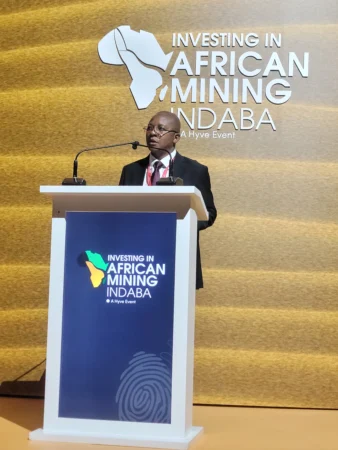
The country’s second-biggest platinum group metals (PGM) producer, Mimosa Mining Company Exploration and Database Geologist Zvikomborero Calvin Sithole, will take to the global stage, transitioning from the focused world of resource modelling to a keynote address at this year’s Investing in African Mining Indaba in Cape Town, Mining Zimbabwe can report.

By Rudairo Mapuranga

His selection to speak at the world’s premier mining investment forum marks a significant milestone in a career dedicated to translating subsurface data into economic opportunity. At the conference, he will deliver a vital presentation titled “The Hidden Costs of Underinvesting in Mineral Exploration,” a topic that sits at the critical junction of geological science, economic policy, and sustainable development for resource-rich nations across the continent.

Calvin’s professional path, beginning with the prestigious Mimosa Graduate Trainership Programme and evolving into a specialist role managing complex databases and resource estimates, has provided him with a unique lens.

Calvin understands that exploration is not merely a technical prelude to mining, but the fundamental foundation upon which entire national mining ecosystems are built or compromised. His expertise, honed over five years in PGM and base metal exploration, allows him to see the profound ripple effects that investment decisions made today will have on the industry’s tomorrow.

Central to his forthcoming address is the principle of strategic translation. Calvin articulates that the true power of geological data is unlocked only when it is woven into a compelling narrative for investment. He emphasises moving beyond raw numbers and technical jargon to focus on “the story behind the data” and, most importantly, on “translating technical details into dollar value, the universal language of investment.” This process of building a clear, credible bridge from the drill core to the boardroom is what transforms potential into progress, attracting the capital essential for converting mineral wealth into tangible national wealth.

The presentation will delve deeply into the severe and cascading consequences that arise when exploration is starved of necessary funding. Calvin warns that the most apparent cost, a missed discovery, is only the surface layer of a much deeper problem. A more insidious consequence is the silent erosion of national capability. Consistent underinvestment stifles the opportunity to “develop local talent and build expertise,” creating a dangerous cycle of dependency that weakens the domestic industry’s foundation and deprives a nation of the sovereign skill sets needed to steward its own resources.

Furthermore, he will illuminate the strategic jeopardy of compromised project viability. Insufficient investment in thorough, early-stage exploration can lead directly to “premature project closures, resulting in stranded assets and lost revenue for governments and communities.” This outcome represents a double failure: it forfeits immediate economic benefits and poisons the landscape for future investment as uncertainty and perceived risk grow. This cycle strategically undermines the long-term potential for mining to serve as a stable pillar for economic growth and community development.

Looking beyond the immediate challenges, Calvin’s vision for the future is anchored in the empowerment of Africa’s next generation of geoscientists. He positions them as the essential agents for transforming the continent’s unparalleled mineral endowment—nearly 30% of global reserves—into a future of broad-based prosperity. His perspective champions a mining sector driven by innovation, true partnership, and an unwavering commitment to inclusive growth. The theme of Mining Indaba 2026, “Stronger Together: Progress through Partnerships,” perfectly aligns with his conviction that uniting investors, communities, and innovators is the only way to build the “solid foundation for the next generation of African geologists to flourish.” His own presence at the podium is a powerful testament to what that foundation can yield.

Presentation Details at Mining Indaba 2026:

Topic: The Hidden Costs of Underinvesting in Mineral Exploration
Date & Time: Thursday, 12 February 2026, 11:15–12:00
Location: Nubian Pyramids Stage, CTICC, Cape Town

This session is positioned to be a standout moment of strategic clarity at the conference. It moves the conversation on exploration from a line-item cost to a strategic imperative. For mining executives, financiers, and policymakers dedicated to fostering a resilient, ethical, and prosperous African mining industry, Zvikomborero Calvin Sithole’s insights from the front lines of geology and data will provide an indispensable perspective. His journey from Mimosa to Mining Indaba underscores a central message: the sustainable wealth of nations begins with the wisdom to invest in understanding what lies beneath.