Home Blog Page 168

Gold buying prices per gram in Zimbabwe 21 October 2024

These are the official gold buying prices per gram in Zimbabwe today 21 October 2024, from the official gold buyer and exporter Fidelity Gold Refinery (FGR).

SG 90% and ABOVE US$82.41/g
SG ABOVE 85% BUT BELOW 90% US$81.54g
SG ABOVE 80% BUT BELOW 85% US$80.66/g
SG ABOVE 75% BUT BELOW 80% US$79.79/g
SAMPLE BELOW 10g BUT ABOVE 5g US$78.48/g

Fire Assay CASH $82.84/g

NB: Fire Assay cash price is for gold above 100gs, no sample is deducted.
For the Fire Assay Transfer price, a sample of not more than 10g is deducted
A 2% royalty is charged on all deposits (Small-scale miners)
A 5% royalty is set for Primary Producers

Cash available. Fidelity Gold Refinery prices will be changing daily to match world market prices.

RioZim’s Financial Performance Suffers 20% Revenue Drop

0

RioZim Limited’s financial performance took a significant hit in the first half of 2024, with revenue declining by 20%, from ZWG 352.4 million during the same period in 2023 to ZWG 282.5 million, Mining Zimbabwe can report.

By Rudairo Mapuranga

According to RioZim’s reviewed interim financial results for the half year ended June 30, 2024, the drop is attributed to a combination of economic challenges, operational inefficiencies, and rising costs, all exacerbated by a volatile operating environment.

The Group’s financial results for the first six months highlight the primary causes behind this downturn, focusing on decreased gold production and increased expenses.

RioZim identified Zimbabwe’s economic instability as a major factor in its declining performance. The country has faced inflationary pressures, foreign currency shortages, and inconsistent power supplies, all of which have created a challenging operating environment for businesses, particularly in the mining sector.

In an effort to stabilize the economy, the Zimbabwean government introduced the ZiG currency (ZWG), backed by gold reserves, in April 2024.

This move, according to RioZim, has brought some price stability, but the company continues to struggle with foreign currency shortages and fluctuating exchange rates.

“In April 2024, the Government discontinued the use of the Zimbabwean Dollar (ZW$) and introduced the ZiG currency, which is backed by gold and cash reserves, as a mitigation measure against the continued depreciation of the Zimbabwean Dollar (ZW$),” the Group explained.

Despite this being a positive development, challenges around foreign currency availability persist, limiting RioZim’s ability to source necessary inputs and equipment.

One of RioZim’s most pressing operational challenges has been a 27% drop in gold production, with the Group producing only 306 kg of gold in the first half of 2024, compared to 417 kg during the same period in 2023.

The company stated that this decline has severely impacted its ability to generate revenue, despite favorable global gold prices, which averaged US$2,165 per ounce, a 13% increase compared to US$1,910 per ounce in the previous year.

RioZim noted that the lower production was mainly driven by suboptimal performance at the Cam & Motor and Renco mines. At Renco Mine, gold production decreased by 9%, falling from 194 kg to 176 kg due to persistent equipment breakdowns and inefficiencies in plant throughput.

The mine has implemented alternative power arrangements to counter inconsistent electricity supply, which has slightly improved operations. However, the Group acknowledged, “The mine will continue to focus on plant stabilization to ensure consistent throughput, which will support the ‘high volume, low grade’ strategy necessary for Renco to produce optimally.”

The situation at Cam & Motor Mine has been even more severe, with gold production dropping by a staggering 42%, from 223 kg to 130 kg. The mine’s inability to access certain areas of the pit due to lagging pit development has hampered ore supply to the plant, resulting in poor ore quality and low recovery rates. As a corrective measure, RioZim shifted from owner mining to contract mining after the reporting period, in an effort to accelerate pit development and stabilize production.

“This initiative is expected to improve ore supply within a shorter time, which will bring stability to production,” the Group highlighted.

The economic headwinds have also been compounded by rising operational costs. The Group’s cost of sales amounted to ZWG 278.6 million, down from ZWG 338.3 million in the same period in 2023. While this reduction aligns with lower production levels, it still underscores the high cost of inputs required to sustain operations.

Administrative expenses remained a burden, standing at ZWG 175 million, only marginally down from ZWG 179 million in the previous period.

The Group also recorded an operating loss of ZWG 159.4 million, an increase from ZWG 124.3 million in HY23, largely due to the lower gold production and high production costs. Additionally, RioZim incurred finance costs of ZWG 15.4 million, further impacting profitability.

RioZim is actively pursuing strategies to improve operational efficiency, reduce costs, and enhance financial performance. In its outlook, the Group emphasized that the focus for the remainder of the year will be on stabilizing production at its key mines and improving throughput, particularly through accelerated pit development at Cam & Motor.

“The improvement in pit accessibility will avail better quality ore to the plant, which will positively impact gold recoveries,” the Group stated.

In addition to optimizing gold production, RioZim is exploring opportunities to diversify its revenue streams and reduce its reliance on gold. The Group is currently involved in the chrome and diamond sectors and has energy projects in the pipeline, including the 178 MW Solar Project and the Sengwa Project, which are now at the funding stage. The company continues to engage stakeholders in an effort to secure the necessary financing to move these projects forward.

However, the economic environment remains unpredictable. While the introduction of the ZiG currency has brought some stability, challenges around foreign currency availability, inflation, and rising costs persist. As the Group navigates these complex dynamics, it must carefully implement its strategic initiatives to ensure long-term sustainability.


Murowa Diamond Production Up Slightly, but Challenges Remain

0
RioZim’s diamond associate, RZM Murowa, recorded a slight increase in diamond production during the first half of 2024, although profitability remained under pressure due to a downturn in global diamond prices, Mining Zimbabwe reports.

By Rudairo Mapuranga

According to RioZim’s interim financial results for the period ended 30 June 2024, diamond production at Murowa rose by 2%, with the mine producing 216,000 carats compared to 212,000 carats during the same period in 2023.

Despite this modest increase, the mine’s revenue and overall profitability suffered significantly due to challenges facing the global diamond market.

“Production for the period at the company’s associate RZM Murowa (Private) Limited marginally increased by 2% to 216,000 carats compared to 212,000 carats recorded in the comparative period in 2023,” the Group stated.

According to RioZim, the improvement in production was largely due to processing higher-grade stockpiles, which provided a short-term boost. However, “despite an increase in diamond production, Murowa recorded a decline in revenue and profitability due to a continued decline in diamond prices,” the report highlighted.

The global diamond market has been grappling with persistent challenges, including economic uncertainties, geopolitical tensions, and shifts in consumer preferences, contributing to weaker demand for diamonds. As a result, even though Murowa increased its production slightly, the overall value of its output declined by 15% due to lower prices in international markets.

“The share of profit from the associate declined to ZWG 5.6 million from ZWG 12.8 million recorded in the comparative period,” the company noted, reflecting the severity of the price slump.

While Murowa remains a crucial part of RioZim’s portfolio, its profitability is closely tied to global diamond prices. RioZim will need to navigate these market headwinds carefully to safeguard Murowa’s financial performance. The company is now exploring ways to improve operational efficiency and reduce costs to mitigate the impact of falling diamond prices.

To secure its future in an increasingly competitive market, Murowa is focusing on extending the life of its pits. Extensive exploration activities are underway to identify new diamond-bearing zones that could sustain operations in the long term.

“The mine is currently engaged in extensive exploration activities aimed at extending the life of its pits, which will pave the way for the resumption of mining activities in the pits,” RioZim noted. This exploration is critical for ensuring Murowa’s long-term viability, particularly as mining from the pits has been suspended, and the mine is currently relying on processing stockpiles to maintain production.

The success of these exploration efforts will determine whether Murowa can resume full-scale mining operations in the future. Until then, the mine continues to rely on tailings and stockpile processing, which, while sustaining operations in the short term, limits its potential for significant growth.

In addition to exploration, Murowa is also exploring avenues to enhance production efficiency and reduce operational costs. Given the current state of the diamond market, improving efficiency is essential for maintaining profitability. The company’s management is focused on cost-cutting measures and optimizing the use of existing resources while ensuring the mine remains compliant with regulatory and environmental standards.

RioZim’s involvement in the diamond sector is part of its broader strategy to diversify its mining operations and reduce its reliance on gold production. With the gold segment experiencing challenges due to operational inefficiencies and fluctuating production levels, Murowa has become an increasingly important component of the company’s portfolio. Despite the current market challenges, RioZim remains committed to its diamond operations, recognizing the long-term value Murowa can bring once market conditions improve.

However, RioZim’s management acknowledges that Murowa’s profitability will remain vulnerable to global market conditions in the short term. The company stressed the need to closely monitor diamond prices while continuing to pursue efficiency improvements to ensure the mine’s sustainability. “The exploration program at the Murowa pits, which was in motion as of the period end, continued into the second half of the year in an effort to bring back mining activities and extend the life of the mine,” the Group confirmed.

Lithium Producers in Talks with Govt on Reasonable Beneficiation Timelines

0

Lithium producers in Zimbabwe are collaborating with the Ministry of Mines and Mining Development to establish realistic timelines for beneficiation, amid declining prices in the lithium industry.

By Ryan Chigoche

To curb the export of low-value ores, the government initially set a deadline of March 31, 2024, for the submission of lithium beneficiation plans. However, this deadline was extended following requests from miners who needed more time to consult with their international headquarters. These miners emphasized the need for additional time to develop annual budgets that incorporate beneficiation strategies.

Since then, the lithium industry has seen significant changes. In 2022, lithium carbonate prices soared above $70,000 per ton, driven by tight supply and strong market demand. However, by 2023, prices began to decline sharply as new lithium supply came online and demand growth slowed. By mid-2023, lithium carbonate prices had dropped to around $20,000 to $25,000 per ton, reaching a low of $13,798 per ton this year. This decline has made it increasingly challenging for lithium producers to formulate effective beneficiation plans.

Faced with these challenges, all lithium producers are now in talks with the government to discuss reasonable beneficiation timelines, according to the State of the Mining Industry Survey Report.

“All current lithium producers indicated that they are exporting lithium concentrates in line with the current government policy. Respondents in the lithium sector indicated that they agreed with the government on the establishment of beneficiation facilities that would result in the production of lithium sulfate. The lithium producers further highlighted that they are currently working with the Ministry of Mines to develop a lithium beneficiation roadmap that will see the construction of beneficiation facilities within reasonable timelines, in line with best-practice beneficiation project life cycles,” the report read.

In 2023, the government warned that it would soon ban the export of lithium concentrates to compel companies to process carbonates, which are a crucial step in the lithium value-addition process. This regulatory shift aims to enhance local processing capabilities and maximize the economic benefits of lithium extraction within the country.

Before the implementation of the beneficiation directive, lithium miners primarily focused on producing lithium concentrate. The government seeks to capitalize on the significant mineral revenue potential from producing battery-grade lithium, in response to the rising demand for this essential clean energy mineral.

Currently, the lithium value chain begins with lithium ores, and the government has prohibited the export of these ores, as the country now has sufficient capacity to process them into lithium concentrate for export.

Zimbabwe’s significant hard-rock lithium reserves have attracted over US$1 billion in investment from Chinese mining companies, including Sinomine Resource Group, Zhejiang Huayou Cobalt, Chengxin Lithium Group, Yahua Group, and Canmax Technologies.

Additionally, Zimbabwe is encouraging platinum group metal (PGM) miners to refine locally. These miners often ship concentrates to South African refineries, citing insufficient local electricity and mineral resources to justify the substantial investment required for building refineries.

According to the survey data, platinum producers indicated that two of the currently active producers are exporting PGM matte, while one producer is exporting PGM concentrates. As agreed with the government, Zimplats is progressing in constructing additional smelters and refurbishing existing facilities.

Meanwhile, PGM miners have also been given an extension on the beneficiation tax on PGM concentrates. Executives in the PGM sector reported that the government deferred this tax to January 1, 2025. They stated that, in agreement with the government, they signed commitment letters to utilize existing facilities from those with excess capacity. They, therefore, recommended that the beneficiation tax on concentrates be aligned with the agreed PGM beneficiation roadmap and timelines.

Regarding lithium, respondent executives also reported that the beneficiation tax on lithium was deferred pending engagements with the government to agree on a beneficiation roadmap for the lithium industry.

Gold buying prices per gram in Zimbabwe 18 October 2024

These are the official gold buying prices per gram in Zimbabwe today 18 October 2024, from the official gold buyer and exporter Fidelity Gold Refinery (FGR).

SG 90% and ABOVE US$81.69/g
SG ABOVE 85% BUT BELOW 90% US$80.82g
SG ABOVE 80% BUT BELOW 85% US$79.96/g
SG ABOVE 75% BUT BELOW 80% US$79.10/g
SAMPLE BELOW 10g BUT ABOVE 5g US$77.80/g

Fire Assay CASH $82.12/g

NB: Fire Assay cash price is for gold above 100gs, no sample is deducted.
For the Fire Assay Transfer price, a sample of not more than 10g is deducted
A 2% royalty is charged on all deposits (Small-scale miners)
A 5% royalty is set for Primary Producers

Cash available. Fidelity Gold Refinery prices will be changing daily to match world market prices.

RBZ FIU Urges Small-Scale Miners to Comply with Anti-Money Laundering Regulations

0

The Reserve Bank of Zimbabwe’s Financial Intelligence Unit (FIU) has urged Small-scale miners in Zimbabwe to prioritize compliance with anti-money laundering regulations to safeguard the industry’s future and avoid the greylisting of the country’s Refineries.

By Ryan Chigoche

The RBZ emphasized that non-compliance could result in the country being placed on a grey list—a designation that would complicate financial transactions, hinder foreign investment, and negatively impact the vital mining sector. This warning comes at a crucial time when the mining industry is increasingly scrutinized for its vulnerability to illicit financial activities.

The small-scale mining sector plays a significant role in Zimbabwe’s economy, contributing to employment and export revenues. However, its informal nature and lack of regulation make it susceptible to practices that can undermine its legitimacy and stability. As global standards for financial transparency tighten, the pressure on these miners to comply with anti-money laundering measures has intensified.

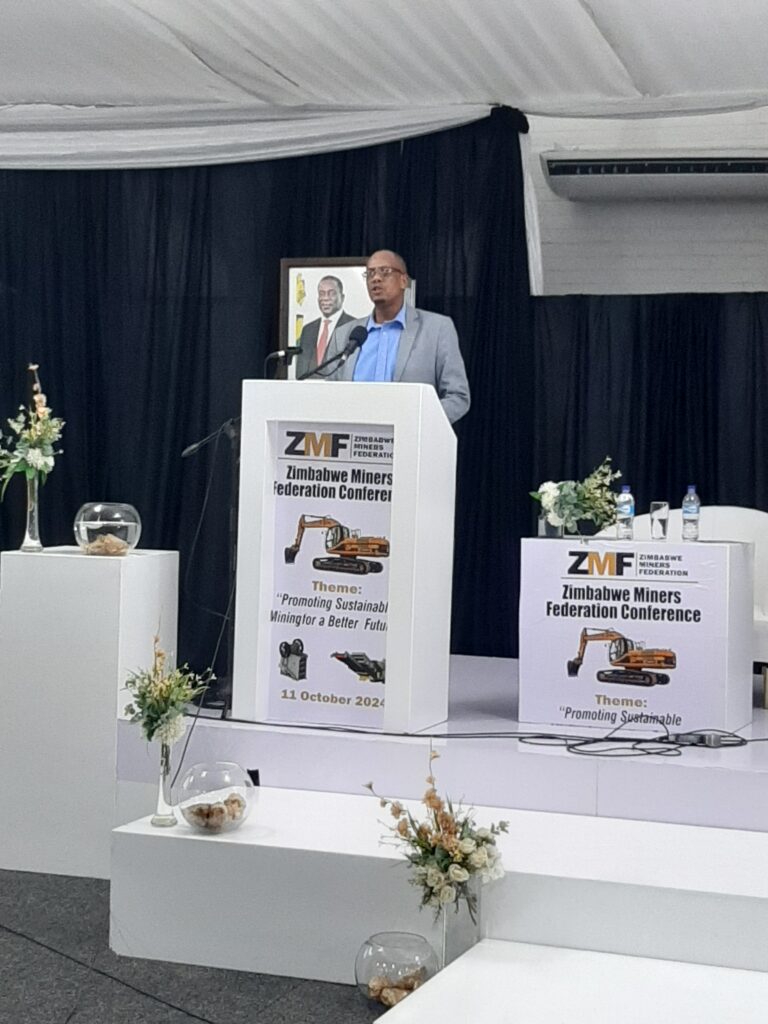
Speaking at the Zimbabwe Miners Federation (ZMF) small-scale miners conference, held on the sidelines of Mine Entra 2024, RBZ FIU official Nkosilathi Mpofu addressed these concerns, highlighting the urgency of the situation:

“We are encouraging you, as the dealers, to work closely with the auditors when they come to request certain measures or information. You must cooperate with them. The failure of Fidelity Gold Refinery, the exporters of metals, to meet specific obligations laid out in anti-money laundering regulations may lead to greylisting. Being greylisted presents many challenges and disadvantages,” Mpofu said.

Mpofu’s statement underscores the importance of compliance with anti-money laundering regulations for small-scale miners in Zimbabwe. He warned that failure to comply could result in the country being placed on a grey list, with negative consequences for the mining sector.

Money laundering is a pervasive issue in many industries worldwide, and the small-scale mining sector in Zimbabwe is no exception. The Financial Action Task Force (FATF) has long recognized the vulnerabilities in various sectors that facilitate the movement of illicit funds. In Zimbabwe, the small-scale mining industry presents unique challenges and opportunities for money laundering, which can have serious implications for both the economy and governance.

In the small-scale mining sector, money laundering typically involves concealing the origins of illegally obtained funds through a series of transactions that make them appear legitimate. Miners often manipulate sales figures to create discrepancies that obscure the true nature of their financial activities. For instance, they may exaggerate sales to justify large deposits in banking systems or under-report earnings to evade taxes, creating an environment ripe for illicit financial flows.

Another common tactic involves establishing shell companies, which allow individuals to disguise the source of their funds by generating fake invoices and documentation to create the illusion of legitimate transactions. Cash transactions are prevalent in small-scale mining, as they facilitate anonymity and complicate tracing efforts. Large volumes of cash exchanged can easily evade detection, further complicating regulatory oversight.

Additionally, miners sometimes engage in inflated pricing for equipment purchased from related entities, using this practice to launder money by creating legitimate business expenses that mask the true origins of funds. Layering transactions through multiple accounts or jurisdictions is another method employed to obscure the money trail. Informal banking systems and cryptocurrencies are often used in this process, making it increasingly difficult for authorities to trace illicit funds.

Investment in local community projects is another way miners present themselves as legitimate operators. By engaging in community development initiatives, they can further obscure the sources of their funds, creating a façade of legitimacy. Corruption exacerbates these challenges, as collusion between miners and government officials can facilitate illicit activities without consequence, undermining enforcement efforts.

The FATF, an intergovernmental organization focused on combating money laundering and terrorist financing, provides a framework for countries to implement effective measures against these activities. Central to the FATF’s approach is the promotion of a risk-based methodology, which emphasizes identifying high-risk areas within the small-scale mining sector. By focusing on these areas, authorities can implement targeted measures to mitigate risks.

Moreover, the FATF stresses the need for robust due diligence procedures to verify the legitimacy of business operations. This requirement is particularly relevant in Zimbabwe’s small-scale mining context, where ensuring that miners are not operating as fronts for money laundering is crucial. Effective collaboration between the mining sector and law enforcement agencies is also essential. The FATF advocates for increased information sharing and cooperation to detect and prevent money laundering activities.

For the small-scale mining sector to thrive and comply with FATF regulations, it is critical that miners adhere to established guidelines. Compliance not only protects individual operations but also safeguards the reputation of key buyers like Fidelity Gold Refinery, the sole buyer of gold in Zimbabwe. If the small-scale mining sector is perceived as high-risk due to rampant money laundering, there is a risk that Fidelity could be greylisted, which would severely hinder operations, limit engagement in international markets, and attract scrutiny from regulatory bodies.

To strengthen its anti-money laundering framework, experts argue that Zimbabwe must develop and enforce regulations that align with FATF standards. Establishing clear guidelines for financial transactions within the mining sector can significantly reduce opportunities for money laundering. Additionally, raising awareness and providing training for miners and financial institutions regarding the risks and consequences of money laundering will foster a culture of compliance with anti-money laundering regulations.

Currently, Zimbabwe is one of the most compliant nations in the region, with a rating of 36 out of 40 FATF recommendations, and it aims to achieve a perfect score of 40 out of 40 by next year.

Mimosa’s Local Development & Supplier Support Programs Boost Local Industry

0

Mimosa Mining Company’s (MMC) Local Enterprise Development (LED) and Supplier Support Program (SSP) are yielding positive results, as the PGM miner has so far capacitated five of its suppliers, some of whom are already exporting to the region, Mining Zimbabwe can report.

By Ryan Chigoche

Recently, there has been a notable relocation of primary industries from the SADC region to other global areas, primarily due to power supply and raw material issues, resulting in longer lead times. These challenges have put the sustainability of many companies at risk, prompting a reevaluation of the supply chain’s role in developing “survival strategies” focused on cost management and ensuring the smooth delivery of production materials to add value for stakeholders.

This has made sourcing supplies locally paramount, however, local industry suppliers face their own set of challenges that hinder them from meeting industry requirements. With loans to the mining industry currently making up just 11%, suppliers have struggled to obtain long-term finance for retooling and working capital. A few years ago, Mimosa signed a Memorandum of Understanding (MOU) with CBZ for a US$15 million facility meant to support suppliers through its LED program.

Mimosa currently runs two programs to support local suppliers: the LED program and the Supplier Support Program.

The LED program is limited to 10 participants, with a funding limit of US$2 million per participant and a repayment period of up to five years. The program has a US$5 million internal revolving fund and bank facilities of US$15 million.

The Supplier Support Program aims to provide suppliers with bridging finance to cover short-term cash flow gaps. Funding comes from partner financial institutions, with a funding limit of US$1 million per participant and a repayment period limited to 12 months.

To date, Mimosa has supported five suppliers, advancing a total of US$6.3 million. Here’s how the programs have revived and transformed each supplier’s operations:

  1. Original Technology: Value – USD 3 million Assisted in expanding production capacity by 300% through the setup of an automated resin bolt manufacturing plant, capable of producing 60,000 bolts per month. This enables them to meet local demand and supply the regional export market (Botswana, Zambia, Mozambique, and DRC). The plant was commissioned in April 2023, and their product profile has expanded to include spiral bolts.
  2. Rytecraft: Value – USD 2 million
    Assisted in establishing a transportation company, now transporting 1,700 tonnes of concentrates to South Africa per month. They were funded in local currency and supported by a local financial institution to secure foreign currency for purchasing trucks. Operations commenced in July 2023.
  3. Byword Motors: Value – USD 2 million (funded through CBZ)
    Assisted with working capital and capital expenditure under the Supplier Support Program. They have constructed an additional vehicle service centre in Harare, now operating two centres (the other in Masvingo).
  4. Boltrec: Value – USD 0.9 million
    Assisted in setting up an automated conveyor roller manufacturing plant, producing 8,800 rollers per month. Roller production began in May 2023, and the company is currently undergoing reorganization.
  5. Palawani: Value – USD 0.1 million
    Assisted in establishing a conferencing and team-building facility at Palawani Dam. Numerous team-building sessions and conferences have been held at the facility this year. Additionally, they were supported in growing their agricultural business, now involved in fish farming, horticulture, and apiculture (honey farming).

To qualify for Mimosa’s Local Enterprise Development Programs and Supplier Support Development Program, applicants must be registered companies with all necessary statutory documentation, including a detailed company profile and registration with ZIMRA, NSSA, NEC, and VAT. The application process involves thorough due diligence, including site visits. Certain products also require quality certification, such as those from SAZ.

A clear value proposition and favourable commercial terms are essential for consideration. Additionally, applicants must demonstrate growth potential. The programs particularly prioritize disadvantaged groups to promote economic empowerment.

Despite the success of these programs, local suppliers still fall short in meeting the mining industry’s requirements. Issues such as limited manufacturing capacity, outdated technology, power outages, and raw material shortages persist. Additionally, quality challenges, uncompetitive pricing, extended lead times, and unfavourable trade terms further complicate matters.

CBZ Holdings is concluding talks with more mining companies to establish financing arrangements similar to that with Mimosa, in efforts to strengthen the sector’s supply chain. The financial services provider is set to make available a US$200 million financing facility through its Enterprise Supply Chain Development (ESD) program for this purpose.

Zimbabwe’s Mining Sector Stalls as Power Crisis Deepens

0

Zimbabwe’s mining industry, a cornerstone of the economy, is facing severe setbacks due to crippling power shortages. This crisis, exacerbated by declining water levels at the unreliable Kariba hydroelectric power station and ageing infrastructure, has forced mines to curtail operations, jeopardizing production targets and revenue, according to the State of the Mining Industry survey report.

By Rudairo Mapuranga

The intermittent power supply significantly affects mining companies, which rely heavily on consistent electricity to operate machinery.

“We’re essentially forced to halt production for hours on end,” lamented a mining executive cited in the survey report, adding, “This is a major blow to our operations and profitability.”

The power crisis not only disrupts production but also drives up costs. Many mines rely on diesel generators as a temporary solution; however, high fuel prices and increased maintenance expenses add to their financial burdens.

The mining sector, vital for Zimbabwe’s export earnings, plays a key role in the government’s vision of achieving upper-middle-income status by 2030. However, ongoing power shortages threaten to derail these goals. “Without a reliable power supply, meeting these targets is virtually impossible,” warned a senior industry official quoted in the report.

According to the report, some mining companies are exploring renewable energy options, such as solar power, to mitigate the effects of the power crisis. Yet, regulatory hurdles and high upfront costs pose significant challenges.

“If the government created a more conducive environment for renewable energy investments, we would be more inclined to adopt these solutions,” stated a mine manager.

Government officials and industry stakeholders are currently discussing solutions to the power crisis, considering proposals like privatization and incentives for alternative energy. However, the immediate impact on the mining sector remains a serious concern.

Mining executives have expressed alarm, warning that the crisis could deter foreign investors and lead to job losses.

“Mining is the lifeblood of our economy,” said a veteran miner. “We need to find a sustainable solution to this crisis before it’s too late.”

Critics have cautioned reliance on Kariba which for years hasn’t been generating substantial power because it’s ultimately controlled by weather and precipitation trends.

Gold buying prices per gram in Zimbabwe 17 October 2024

These are the official gold buying prices per gram in Zimbabwe today 17 October 2024, from the official gold buyer and exporter Fidelity Gold Refinery (FGR).

SG 90% and ABOVE US$81.28/g
SG ABOVE 85% BUT BELOW 90% US$80.42g
SG ABOVE 80% BUT BELOW 85% US$79.56/g
SG ABOVE 75% BUT BELOW 80% US$78.70/g
SAMPLE BELOW 10g BUT ABOVE 5g US$77.41/g

Fire Assay CASH $81.71/g

NB: Fire Assay cash price is for gold above 100gs, no sample is deducted.
For the Fire Assay Transfer price, a sample of not more than 10g is deducted
A 2% royalty is charged on all deposits (Small-scale miners)
A 5% royalty is set for Primary Producers

Cash available. Fidelity Gold Refinery prices will be changing daily to match world market prices.

Mlambo Crowned Top Outstanding Manager of 2024 at Prestigious Leadership Awards

0

Renowned mineral economics expert and University of Zimbabwe lecturer, Lyman Mlambo, has been crowned the Top Outstanding Manager of 2024 (Gold) by the Zimbabwe CEO’s Network, Mining Zimbabwe reports.

By Patricia Rwafa

This prestigious award recognizes Mlambo’s exceptional contributions to mining research, education, and industry advancement.

The accolade was bestowed upon Mlambo at a glittering ceremony held on Friday, October 11, at Cresta Lodge in Msasa, Harare. The event celebrated the achievements of leaders and innovators shaping Zimbabwe’s mining sector.

Mlambo’s unwavering dedication to his field has earned him widespread respect and admiration. As a mentor to aspiring mining professionals and a trusted advisor to industry stakeholders, he has played a pivotal role in driving the sector’s growth and sustainability. His research has provided invaluable insights into Zimbabwe’s mineral economics, informing policy decisions and fostering sustainable development.

In a statement, the Zimbabwe CEO’s Network praised Mlambo for his consistent delivery of exceptional professional standards. The organization highlighted the importance of the Mining Fraternity Kingpins of Repute Awards in fostering networking, collaboration, and recognition of industry excellence.

Mlambo expressed gratitude for the recognition, emphasizing the transformative power of research and education in advancing the mining industry. His work continues to bridge the gap between academic theory and industry practice, offering practical solutions to challenges faced by the sector.

As Zimbabwe strives to harness its mineral resources for economic development, Mlambo’s leadership and expertise are more vital than ever. His award serves as a testament to his unwavering commitment to excellence and his invaluable contributions to the nation’s mining industry.