Home Blog Page 189

ZIMSHEC to Conduct ASM Mining SHE Toolkit in Bulawayo

0

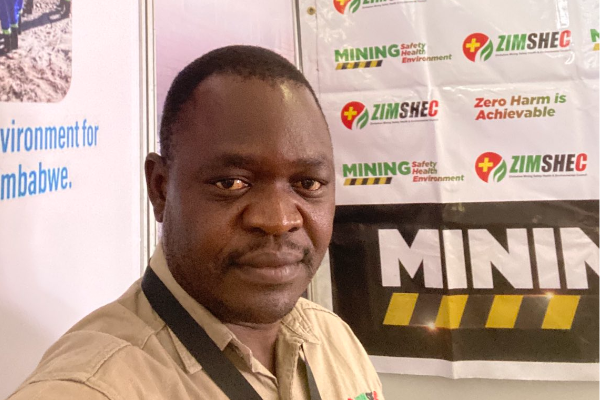
The Zimbabwe Mining Safety Health and Environment Council (ZIMSHEC) will conduct an artisanal and small-scale mining (ASM) Safety, Health, and Environment (SHE) training program, dubbed the Mining SHE Toolkit, in Bulawayo in mid-August this year, ZIMSHEC Director Mr. Makumba Nyenje announced.

By Rudairo Mapuranga

According to Nyenje, the Mining SHE Toolkit focuses on responsible mining and sourcing in the ASM industry. The goal is to ensure that the country’s mining sector is not tainted by unknown practices within ASM, thereby elevating the industry to world-class standards.

“Mining SHE Toolkit focuses on responsible mining. It includes the engineering setup, adherence to provided statutory instruments (SIs), recruitment drive, and social and economic justice. There are quite a lot of aspects involved. It will be held in August and is aimed at training artisanal and small-scale miners to improve their SHE practices,” Nyenje said.

Nyenje added that ZIMSHEC has called upon officers from the Zimbabwe School of Mines, the Midlands State University, and the Ministry of Mines and Mining Development to provide training to the artisanal miners.

“We have invited the Zimbabwe School of Mines, the Mining Division at Midlands State University, and officials from the Ministry of Mines’ engineering department. Additionally, our officers from ZIMSHEC will conduct the training sessions,” Nyenje said.

This training initiative will be crucial for the government’s ongoing research of a responsible mining audit. By improving the SHE practices of artisanal and small-scale miners, the training will support the audit’s goals of ensuring that all mining activities in the country meet high standards of safety, health, and environmental responsibility.

Zimbabwe gold buying prices per gram 29 July 2024

Fidelity Gold Refinery (FGR) official gold buying prices/ gram. See the Zimbabwe gold buying prices per gram today 29 July 2024.

SG 90% and ABOVE US$72.49/g
SG ABOVE 85% BUT BELOW 90% US$71.72g
SG ABOVE 80% BUT BELOW 85% US$70.96/g
SG ABOVE 75% BUT BELOW 80% US$70.19/g
SAMPLE BELOW 10g BUT ABOVE 5g US$69.04g

Fire Assay CASH $72.87/g

NB: Fire Assay cash price is for gold above 100gs, no sample is deducted.
For the Fire Assay Transfer price, a sample of not more than 10g is deducted
A 2% royalty is charged on all deposits (Small-scale miners)
A 5% royalty is set for Primary Producers

Cash available. Fidelity Gold Refinery prices will be changing daily to match world market prices.

Mining Growth Projections Reduced to 5.2% Due to Expected Lower Gold Production

0

The government of Zimbabwe has revised its mining growth projections for 2024, reducing the expected growth from the initial 7.6 percent projected at the beginning of the year to 5.2 percent as of June. This adjustment is attributed to lower-than-expected gold production output.

By Rudairo Mapuranga

Speaking to the Parliament of Zimbabwe during the 2024 Midterm Budget and Economic Review, held under the theme “Consolidating Economic Transformation,” Minister of Finance and Investment Promotion Prof. Mthuli Ncube highlighted the revised expectations for gold output.

“In 2024, mining sector growth is now projected at 5.2%, down from the 7.6% projected during the 2024 Budget. The downward revision is on account of expected lower gold output than initially projected,” Prof. Ncube stated.

Despite the reduction in gold output projections, Prof. Ncube noted that the mining sector has shown resilience due to improved production of lithium, platinum group metals (PGMs), nickel, and chrome. These increases in production have helped offset the impact of softening commodity prices.

“The resilience of the sector is underpinned by new minerals, particularly lithium, along with anticipated higher output for PGMs, nickel, and chrome, which are expected to compensate for international price decreases,” he said.

The state of mining in Zimbabwe faces significant challenges, including frequent electricity outages and high electricity costs. The current electricity tariff of US$0.14 per kWh is double the US$0.07 per kWh rate desired by the industry, resulting in high operational costs. Additionally, a 15 percent VAT, considered high by industry standards, has contributed to reduced production.

However, there is a silver lining with the recent removal of VAT on all gold sales, which could potentially boost production as miners benefit from more favorable pricing.

The mining sector’s growth and resilience amid these challenges underscore the importance of strategic adjustments and policy support to ensure sustainable development and investment in Zimbabwe’s mineral wealth.

Breaking: Caxton Mangezi Retires as Caledonia Vice President

0

Caledonia Mining Corporation has announced that Mr Caxton Mangezi will be retiring from his position as Vice President of Zimbabwe operations. The company expressed gratitude and thanked the legendary miner for over 55 years of outstanding service at its flagship gold operation, Blanket Mine.

By Rudairo Mapuranga

In a statement, Caledonia Mining Corporation noted that during his tenure as General Manager at Blanket from 1993 to 2021, Mangezi oversaw the production of nearly 33 tonnes of gold, marking an outstanding contribution to the gold mining operation.

“Mr. Mangezi has worked at Blanket since 1969, between 1993 and 2021 he held full responsibility for the day-to-day operations in his role as General Manager.

During the period of his stewardship:

– Blanket produced over 1 million ounces of gold (nearly 33 tonnes), which represents an outstanding contribution to all stakeholders.
– Blanket emerged as one of Zimbabwe’s largest and most reliable large-scale gold producers, which now employs over 2,000 people.
– Blanket increased its production from 20,000 ounces (567 kg) in 1993 to over 80,000 ounces in 2022 (approx. 2.5 tonnes),” the company said.

Caledonia also stated that during his time as General Manager, Mangezi successfully implemented the Central Shaft project which increased the life of Blanket Mine to the year 2041.

“A major milestone during this time was the successful implementation of the Central Shaft project, completed in 2021, which involved sinking a new shaft from the surface to 1,204 meters. This project was accomplished under Mr. Mangezi’s direction, using internal financial and technical resources, and completed and commissioned without any fatality. Following the commissioning of this shaft, Blanket’s mine life has increased to 2041 with scope for further extensions depending on exploration success,” the company said.

Commenting on Mangezi’s retirement, Mark Learmonth, Chief Executive Officer of Caledonia, said:

“On behalf of Caledonia, I thank Caxton for his outstanding contribution to the success of Blanket Mine over many decades. It has been an enormous privilege to work with him. I am very pleased he has agreed to remain a consultant to the company, where we can continue to benefit from his experience and insight. In addition to his role at Blanket, I would also like to recognize his important position in the Zimbabwe mining industry in which he commands deep and wide respect for his achievements over a long and distinguished career. Along with my colleagues – past and current – I wish him a long and happy retirement.”

Nick Ncube, Chairman of Blanket Mine, commented: “Blanket Mine was a very different place when Caxton started 55 years ago and, over this time, he has made many contributions to its success. Under his leadership, Blanket has increased production to around 75,000 ounces today. A key component of this growth was the completion of the Central Shaft project which has established a solid foundation for the business. Achievements such as this require strong leadership and we are all extremely grateful to Caxton, whose strength, skills, and experience proved invaluable over this period. I wish him a happy retirement.”

Mangezi said he was honoured to have served at Blanket Mine and wished the company the best.

“It has been an honour to serve Blanket Mine over my career, during which time I have witnessed the transformation of the business. I wish the company the very best for the future,” commented Mangezi.

Shamva Mine Production Increases by Over 30%

0

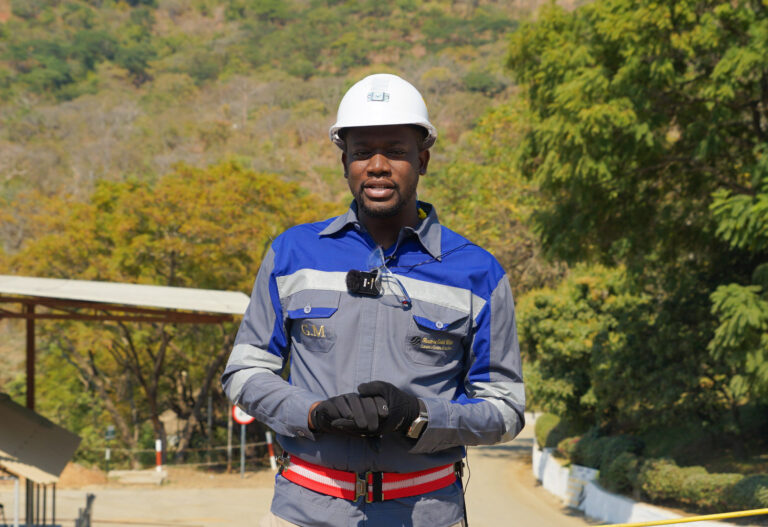
Production at the Kuvimba Mining House (KMH) owned Shamva Mine has increased by 30.9% on a month-to-month basis in 2024 compared to 2023, the Mine’s General Manager, Eng. Gift Mapakame has said.

By Rudairo Mapuranga

Speaking to Mining Zimbabwe, Eng. Mapakame said production at Shamva has been on a recovery streak since January, increasing production from 42,000 tonnes per month, which was the average last year and at the beginning of this year, to around 55,000 tonnes per month that the mine is now mining and processing.

Eng. Mapakame said that the Shamva-based gold mine had been struggling with excessive power cuts at the beginning of the year but has since invested in backup power capacity to sustain vital infrastructure, equipment, and production operations during power outages.

“As a mine, we’ve also been addressing issues related to our performance parameters, namely grade. Our grade was not performing as expected in the underground sections, and our efforts have been focused on unlocking flexibility in the underground section. We’ve also taken the opportunity to optimize our big project in the pipeline, which is the Shamva Hill open pit project, by starting the starter pits that were designated in the optimization. These have already begun contributing to our production.

“Our tactical approach is twofold, we are unlocking flexibility in the underground section and scaling up our starter pits on the surface. As a result, we have managed to increase our production from 42,000 tonnes per month, which was our average last year and at the beginning of this year, to around 55,000 tonnes per month that we are now mining and processing. This results in a production of upwards of 60 kg of gold or over 2,100 ounces per month. The combination of this strategy is well-timed, as we are also benefiting from a favorable commodity price in the market,” he said.

This increase in production has allowed Shamva Mine to realize a net increase in revenue, with some of these revenues being utilized to fund capital expenditure projects internally.

The mine has faced challenges with financial institutions and fundraising markets. The management believes that the company’s growth, in terms of staying business capital and development capital, can only be organic. With the current performance, the mine is channelling a significant portion of its retained cash towards staying business capital and development capital.

For staying business capital, the focus is on the replacement and refurbishment of equipment and machinery. For development capital, the mine is investing in exploration, including infill drilling on the surface resource and exploration drilling in the underground section.

In pursuit of unlocking flexibility, this exploration is essential for developing the mineral resource.

Breaking: Shamva Achieves Over 1.1 Million Fatality-Free Shifts, 365 Days Without Lost Time Injuries

0

Kuvimba Mining House (KMH)-owned Shamva Mining Company, in its endeavour to achieve zero harm and demonstrate that such a standard is possible in the mining sector, has accomplished 1,167,000 fatality-free shifts.

By Rudairo Mapuranga

The gold mine has also achieved 365 days without a lost time injury, with zero workdays lost due to injuries, a clear indication of Shamva’s focus on the safety and well-being of its employees. Notably, the mine achieved 1 million fatality-free shifts on December 5, 2023.

According to Shamva Mining Company General Manager, Gift Mapakame, the achievement of this milestone is due to the collective commitment to safety and maintaining a hazard-free work environment.

“I am thrilled to announce that we have reached a significant milestone: 365 days without a lost time injury. This achievement is a testament to our collective commitment to safety and our dedication to maintaining a hazard-free work environment,” Mapakame said.

This milestone is crucial not only for Shamva Mining Company but also for the entire mining industry in Zimbabwe. It sets a benchmark for safety standards and demonstrates that operating without fatalities or significant injuries is possible.

For the mining industry, which is often associated with hazardous working conditions, achieving such a milestone signifies a paradigm shift towards prioritizing worker safety. This success story can inspire other mining operations to enhance their safety protocols, thus contributing to the overall improvement of the industry.

Several mines in Zimbabwe and globally have set similar benchmarks. For instance, Mimosa Mining Company achieved over 3 million fatality-free shifts, showcasing its dedication to worker safety. Similarly, Caledonia Mining Corporation’s Blanket Mine has been lauded for its stringent safety measures, significantly reducing lost time injuries.

Shamva’s achievement contributes to this growing safety culture and demonstrates the feasibility of zero harm in mining operations. It underscores the importance of continuous training, adherence to safety protocols, and fostering a culture where safety is ingrained in every aspect of the operation.

By achieving this milestone, Shamva Mining Company not only enhances its reputation but also contributes positively to the perception of the mining industry in Zimbabwe as a safe and responsible sector. This can attract more investments, improve worker morale, and set new safety standards for others to follow.

Zimbabwe gold buying prices per gram 26 July 2024

Fidelity Gold Refinery (FGR) official gold buying prices/ gram. See the Zimbabwe gold buying prices per gram today 26 July 2024.

SG 90% and ABOVE US$71.83/g
SG ABOVE 85% BUT BELOW 90% US$71.06g
SG ABOVE 80% BUT BELOW 85% US$70.30/g
SG ABOVE 75% BUT BELOW 80% US$69.54/g
SAMPLE BELOW 10g BUT ABOVE 5g US$38.40g

Fire Assay CASH $72.21/g

NB: Fire Assay cash price is for gold above 100gs, no sample is deducted.
For the Fire Assay Transfer price, a sample of not more than 10g is deducted
A 2% royalty is charged on all deposits (Small-scale miners)
A 5% royalty is set for Primary Producers

Cash available. Fidelity Gold Refinery prices will be changing daily to match world market prices.

Prospect Shifts Focus to Copper with Mumbezhi Project Acquisition

0

Australia Stock Exchange-listed mining and exploration company Prospect Resources has announced a strategic shift towards copper exploration and development, highlighted by the acquisition of the Mumbezhi Copper Project in Zambia. The company also reported promising results from its lithium projects.

By Patricia Rwafa

The acquisition of an 85% interest in the Mumbezhi Copper Project, located in the highly prospective Zambian Copperbelt, marks a significant step forward for Prospect as it expands its focus on copper project development in Sub-Saharan Africa.

Validation of historical drilling data at the project has yielded impressive copper intercepts, fueling optimism about the project’s potential. Significant intersections from the validated data included:

– 38.0m @ 0.87% Cu from 101.0m and 32.0m @ 0.68% Cu from 159.0m (NYDD058)
– 32.0m @ 0.87% Cu from 353.0m and 28.1m @ 0.79% Cu from 103.0m (NYDD062)
– 20.0m @ 1.08% Cu from 27.0m (NYDD054)
– 17.0m @ 1.03% Cu from 29.0m (NYDD055)

Prospect Resources has commenced a maiden drilling program comprising approximately 30 holes of reverse circulation (RC) and diamond drilling for a total of about 7,000m, targeting mineral resource definition and extensional growth at the Nyungu Central deposit.

The company has also initiated an Environmental and Social Impact Assessment (ESIA) of the project for submission to the Zambia Environmental Management Agency (ZEMA) in late 2024, which will support an application for a mining lease in early 2025. They aim to declare a maiden JORC-reportable copper mineral resource and associated scoping study for Mumbezhi (Nyungu deposits) within the first half of 2025.

Prospect also owns the Step Aside Lithium Project in Zimbabwe which is located 35km from Harare (and approximately 8km north of the Arcadia Lithium Mine Project). It comprises approximately 100 hectares of claim within the Harare Greenstone Belt.

20 Years of Delay in Amending Mining Laws Exacerbates Conflict Challenges – Mudenda

0

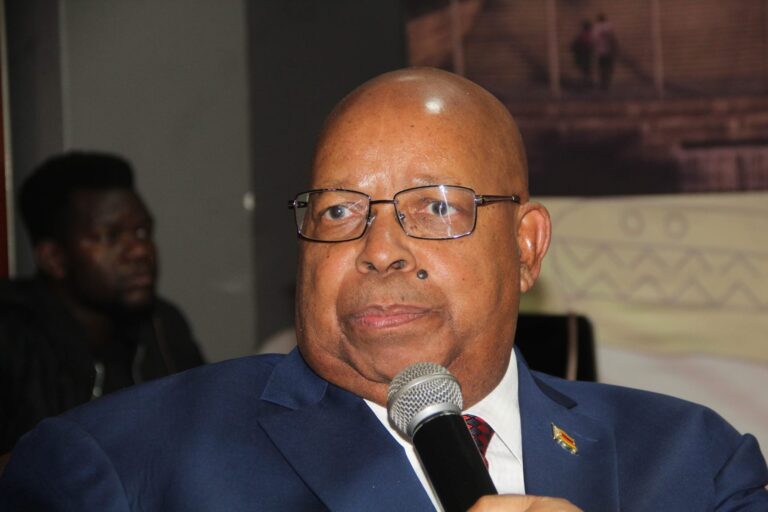
The Speaker of the Parliament of Zimbabwe, Hon. Jacob Mudenda, has asserted that the two-decade delay in amending the Mines and Minerals Act has intensified the conflict challenges experienced by stakeholders in the industry.

By Rudairo Mapuranga

Hon. Mudenda stated that the delay in updating mining laws has led to increased conflict, particularly where small-scale miners are not recognized despite their significant contribution to the country’s GDP.

“The 20 years of delay in reviewing the mining law has exacerbated the conflict challenges being experienced by the stakeholders in the mining sector, such as the non-recognition of small-scale miners as an integral part of the mining sector,” Hon. Mudenda said.

The Speaker of Parliament also highlighted that the prolonged delay has contributed to challenges related to disputes over boundaries, balancing rights between miners and other land users, and the inclusion of key stakeholders.

“Delays in resolving disputes over mine boundaries and ownership, balancing rights between miners and other land surface users such as farmers, environmentalists, and wildlife conservancies; inclusion of key stakeholders in the Mining Affairs Board, particularly those affected by mining operations such as coterminous communities; and sustainable environmental mining practices which should guarantee the safety and health of miners as well as the conservation of the environment,” Mudenda elaborated.

He further noted that the delay in amending the Mines and Minerals Act has hindered the implementation of the cadastre system.

“The non-use of a computerized cadastre system in the registration of mining titles, and curbing of illicit financial flows from the mining sector,” he added.

According to Hon. Mudenda, he hopes to ensure that the mining laws will be aligned with African and international standards on responsible mining.

“Consequently, it is my hope that the Mines and Minerals Amendment Bill will be aligned to regional and international agreements such as the Environmental, Social and Governance (ESG) framework, the Africa Mining Vision, and the SADC Protocol on Mining. In the same vein, I urge the Ministry of Mines and Mining Development to also assiduously finalize the long-overdue Minerals Development Policy which should underpin the architecture of future mining legislation,” he concluded.