Home Blog Page 197

How Mine, Redwing, and Mazowe Announce Agreement with HCVI

0

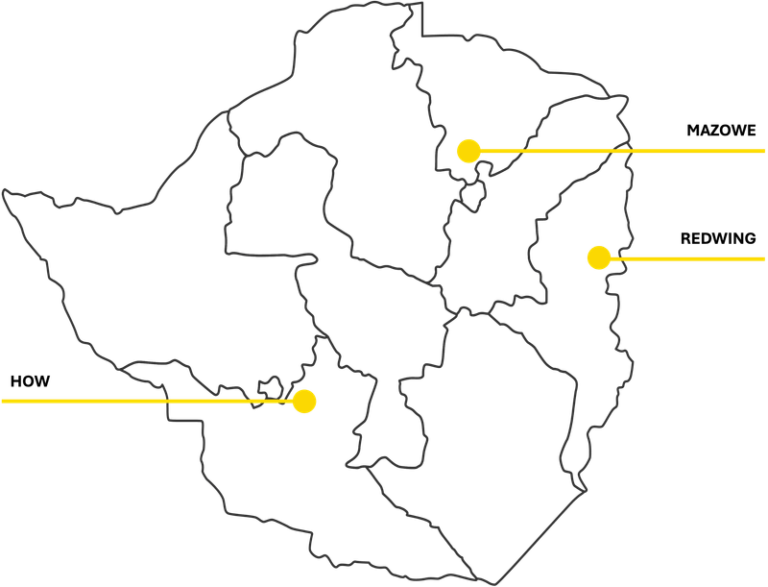
How Mine, Redwing Mine, and Mazowe Mine have announced that they have entered into a business agreement with Hennessy Capital Investment Corporation (HCVI).

Hennessy CapitalIn a Press Release, the shareholders said the transaction strongly positions Redwing and Mazowe, to resume operations, while scaling up production at How Mine.

“In the first quarter of the year 2024, the shareholders of How Mine, Redwing Mine, and Mazowe Mine announced a strategic plan to restore sustainable mining at Redwing and Mazowe, and increasing production at How Mine.

We are pleased to provide the following update;

As previously communicated, the shareholders of How, Mazowe and Redwing mines have been diligently exploring various investment options to propel these operations into a new phase of growth.

Today, we are pleased to announce a transaction by way of a business combination with Hennessy Capital Investment Corporation (“HCVI”), a reputable company listed on the Nasdaq Global Market (NASDAQ: HCVI)

The transaction strongly positions the two mines, Redwing and Mazowe, to resume operations, while scaling up production at How Mine. The transaction further demonstrates the attractiveness of Zimbabwe’s mining sector to international capital markets, thereby offering more economic opportunities for the country,” the press release read in part.

The deal is expected to be concluded by the end of the year subject to regulatory approvals.

More on the deal HERE

About Hennessy Capital Group

Hennessy Capital Group (HCG) is an alternative investment manager, serving as a strategic capital and growth partner for innovative technology companies focused on four categories: industrial, infrastructure, real estate, and climate.

HCG partners with all stakeholders, including founders, management, employees, directors, and shareholders to catalyze growth to help build enduring businesses that make positive and meaningful contributions to the world. HCG employs a partner-centric model and strictly adheres to its core values of stewardship, transparency, integrity, and accountability.

HCG invests through two core strategies: Public Equity (SPACs) and Private Equity (Growth).

  • Public Equity (SPACs): Since inception, HCG has raised or acquired 16 SPACs, totaling ~$4 billion of IPO equity volume, and closed on 10 SPAC business combinations, which were valued in aggregate of ~$8 billion of enterprise value. In connection to the successful SPAC business combinations, HCG has raised ~$1 billion in total PIPE capital.
  • Private Equity (Growth): HCG also maintains an active private growth equity strategy supporting visionary founders and capable management teams in their efforts to rapidly scale, build iconic brands, and deliver long-term value to shareholders.

BREAKING: Namib Minerals to revive Mazowe and Redwing Mines

0

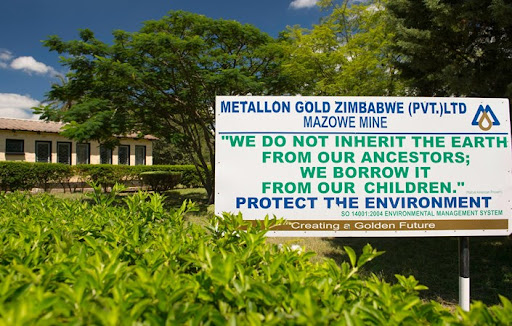
Namib Minerals, an established gold producer in Africa, is set to expand its operations significantly with the planned revival of Mazowe Mine also known as Jumbo and Redwing, in Zimbabwe. This strategic move is part of Namib’s broader vision to enhance its aggregate gold mining capacity and solidify its presence as a multi-asset producer in the region.

The restart of the two historically productive gold mines is a central focus of Namib’s growth plan, supported by the proceeds from a proposed business combination with Hennessy Capital Investment Corp. VI (HCVI). This transaction, valued at a pre-money enterprise value of $500 million, includes up to an additional 30 million contingent ordinary shares tied to the completion of operational milestones, such as the commercial production of the Mazowe and Redwing mines.

Strategic Business Combination with HCVI

Namib Minerals and HCVI entered into a definitive business combination agreement, expected to close in the fourth quarter of 2024. The combined public company, to be named “Namib Minerals,” will list its common stock and warrants on Nasdaq under the ticker symbols “NAMM” and “NAMMW,” respectively.

The business combination is expected to deliver net proceeds of approximately $91 million to Namib, along with an additional $60 million in funding from financing agreements. These funds will support Namib’s growth initiatives, including the restart of the Mazowe and Redwing mines and the development of prospective battery metals assets in the Democratic Republic of the Congo (DRC).

Ibrahima Tall, CEO of Namib Minerals, expressed enthusiasm about the business combination with HCVI, highlighting the potential to realize the full value of Namib’s mining assets. Tall emphasized Namib’s commitment to sustainable and profitable mining operations that support local communities.

“Today represents a significant day and an exciting milestone for Namib. This business combination with HCVI will enable us to continue growing our business while helping us to realize the full potential of our mining asset portfolio. Namib is committed to creating an environment of safe, sustainable and profitable mining operations that supports the local communities we serve. This transaction provides us a partner in HCVI that shares our focus on sustainable growth and our goal to return as a multi-asset producer in Africa. We believe our established management team is well-positioned to unlock significant value for our shareholders, and we look forward to working closely with the HCVI team to make these aspirations a reality,” Tall said.

Daniel Hennessy, Chairman and CEO of HCVI, echoed this sentiment, noting Namib’s compelling position in the sub-Saharan mining industry and its potential for future expansion. The collaboration aims to leverage the strengths of both organizations to drive growth and create shareholder value.

“We are extremely pleased to announce our business combination with Namib, an established gold-mining company in the sub-Saharan mining industry. HCVI was formed with the objective of merging with an established and competitive company operating in the industrial or energy-transition sector. Namib stood out as a compelling partner due to its history of underground mining in precious metals, opportunities for future expansion and its mission to create safe, sustainable and profitable operations in the communities it serves. We look forward to collaborating with Ibrahima and his team of veterans in the mining industry, as Namib continues to grow and create shareholder value,”Hennessy said.

How Mine

At the core of Namib’s current operations is How Mine, a high-grade underground gold mine near Bulawayo. How Mine has a well-established track record of consistent production, generating strong cash flow and operating with one of the lowest cost profiles among its peers. The mine’s reliable performance and additional identified underground resources provide a solid foundation for Namib’s growth plans.

How Mine is situated on the Bulawayo greenstone belt and exploits several individual mineralised pods situated within a sigmoidal structure which dips at 70̊ to 80̊ west. The pods are broadly cigar-shaped bodies comprising zones of enhanced hydrothermal alteration and gold mineralisation that plunge steeply. Mineralisation within the orebodies consists predominately of pyrite (>90%) with minor chalcopyrite and pyrrhotite and is associated with silification and carbonation. Gold is found in contact with sulphides, often in fractures, although there is also some free gold. Some silver occurs with the gold, increasing from 4% to 8% of gold as mining progresses down-dip.

Namib Minerals’ administrative office is registered in New York.

Zimbabwe gold buying prices per gram 27 June 2024

Fidelity Gold Refinery (FGR) official gold buying prices/ gram. See the Zimbabwe gold buying prices per gram today 27 June 2024.

SG 90% AND ABOVE US$69.86/g
SG ABOVE 85% BUT BELOW 90% US$69.12g
SG ABOVE 80% BUT BELOW 85% US$68.39/g
SG ABOVE 75% BUT BELOW 80% US$67.65/g
SAMPLE BELOW 10g BUT ABOVE 5g US$66.54g

Fire Assay CASH $70.23/g

NB: Fire Assay cash price is for gold above 100gs, no sample is deducted.
For the Fire Assay Transfer price, a sample of not more than 10g is deducted
A 2% royalty is charged on all deposits (Small-scale miners)
A 5% royalty is set for Primary Producers

Cash available. Fidelity Gold Refinery prices will be changing daily to match world market prices.

Gvt committed to ensuring miners comply with regulations

0

The Ministry of Mines and Mining Development, through the Mashonaland West Province Mining Director, Mr Shingirai Makumbe, has reiterated that the government is committed to ensuring miners comply with regulations through education and providing ample support.

By Rudairo Mapuranga

Speaking at an artisanal and small-scale mining (ASM) stakeholders’ engagement meeting held at Rainbow Hotel in Kadoma on Thursday, the Mashonaland West PMD emphasized that the government and its parastatals are not only there to enforce compliance but also to assist in the growth and development of the mining industry.

“As government entities, we are not only there to ensure compliance,” said Makumbe. “Most government agencies have been highlighting that. We are also there to assist and ensure the development and growth of this sector.”

Makumbe acknowledged the proliferation of artisanal and small-scale miners (ASM) and stated that the government is committed to doing everything possible to ensure the sector grows into a world-class industry.

“There are more small-scale miners than large-scale miners because more and more of our people are entering the mining sector as a business,” he said.

“The first thing we need to understand is that mining is a business and should be treated as such. Once one enters mining, they are entering the business stage.”

Miners have been complaining that the government has not been doing enough to educate miners or provide a ground for compliance, leading many to mine unprofessionally.

Speaking during the same stakeholders’ meeting, Zimbabwe Miners Federation (ZMF) Mashonaland West Province Treasurer Johane Sithole said the small-scale mining industry is in need of field officers who should be able to teach and educate miners on responsible mining and sourcing.

“We also need mining field officers. Similar to agriculture, the growth of a sector or industry requires a collective effort between the government and stakeholders. Artisanal miners will not grow without government or Ministry of Mines personnel to help them with best mining practices, promoting sustainable mining. We appeal to the government and the Ministry to routinely monitor small-scale mining activities to educate miners on best practices, rather than only appearing during accidents or gold mobilization,” Sithole added.

Legislation for Mineral Value Addition: A Call to Action for Zimbabwe’s Youth

0

There is a pressing need for Zimbabwe to create a legislative framework that promotes the value addition of its abundant mineral resources, Chegutu Central Legislator Shakemore Timburwa said.

By Rudairo Mapuranga

Speaking to Mining Zimbabwe on the sidelines of the Africa Investment Leaders Forum and Awards 2024 on Wednesday in Harare, Hon. Shakemore Timburwa emphasized the critical role of legislative support in transforming Zimbabwe’s mineral wealth into sustainable economic growth.

“Heading with our policy framework is whereby we create a provision in our legislature that promotes the value addition of our minerals in Zimbabwe. For example, products like lithium, cobalt, uranium, and graphite are minerals that will be in high demand in the future because of electric vehicles, electrical gadgets, IT gadgets, and the technology sector. These industries will consume these particular minerals extensively,” Timburwa said.

Timburwa said he advocates for the development of a bill that mandates value addition and processing of these minerals within Zimbabwe, rather than allowing their extraction and export in raw form.

“From a legislative point of view, we should advocate for and develop a bill that prohibits the extraction of these minerals without value addition. The value addition and processing must be done in Zimbabwe. This is critical because it creates employment and provides significant tax breaks. We offer tax breaks to those who will undertake value addition in the country, making it an attractive environment for investors. Specifically, minerals such as lithium, cobalt, graphite, and uranium are the future,” Timburwa said.

He urged young people and mining professionals to persist in their efforts to enter the industry, particularly in value addition. He highlighted the importance of formalizing their companies and seeking partnerships with international firms to access financial support and essential processing equipment.

“Young people and mining professionals trying to break into the industry in terms of value addition should not give up. They should formalize their companies to establish partnerships with international firms, which can provide financial aid and necessary processing equipment. My advice to young Zimbabweans in the mining sector is that success is not about how much money you have, but how innovative and refined your idea is. This can attract larger players to partner with you through Zidera, leading to investments and the establishment of a bankable enterprise capable of value addition and employing many young Zimbabweans,” Timburwa said.

ZETDC No Longer Estimating Energy Use for Miners

0

In an endeavour to protect miners from inflated bills due to estimated billing, the Zimbabwe Electricity Transmission and Distribution Company (ZETDC) has introduced smart metering to accurately bill mining clients.

By Rudairo Mapuranga

Speaking at a mining stakeholders engagement meeting held at Rainbow Hotel in Kadoma, Eng. George Tsvakwi, ZETDC Kadoma District Manager, said his company had been falling short on personnel to do meter reading verifications, thereby resorting to estimated readings. However, they have now introduced smart metering to accurately bill mining clients, who have been complaining of overcharges.

“I’m sure all the mining clients we have that are 200 kVA and above now have what we call smart metering. Unlike conventional metering that required on-site readings, the smart meter allows us to read the meter from our office. We can even disconnect the service from our office, though I’m not saying we are doing that—just highlighting the capability that comes with this technology,” Tsvakwi stated.

The advantage to the client is that there are no longer estimated bills, which have been a point of contention for most mining clients. “We do not have the resources to physically visit and read all the meters, so now we are reading them from the office. This ensures accurate readings, and clients are billed directly for what they use, rather than receiving estimated bills,” Tsvakwi explained.

The introduction of smart metering offers several benefits to the mining sector:

1. Accuracy: Smart meters provide precise readings, eliminating the discrepancies caused by estimated billing. This ensures that mining companies are billed only for the energy they actually use.

2. Convenience: With remote reading capabilities, the need for physical meter inspections is greatly reduced, saving time and resources for both ZETDC and mining clients.

3. Transparency: Mining companies can access real-time data on their energy consumption, allowing for better monitoring and management of their energy use.

4. Cost Efficiency: Accurate billing helps mining companies to better plan and manage their energy budgets, reducing the risk of unexpected high charges.

5. Enhanced Control: The ability to remotely disconnect services if needed (although not a common practice) provides ZETDC with greater control over energy distribution and management.

AMSZ Symposium Highlighted Tech Adaptation in Mine Surveying

0

The Association of Mine Surveyors of Zimbabwe (AMSZ)‘s one-day symposium held in Bulawayo recently successfully highlighted the importance of adapting to technological changes, updating educational curricula, and ensuring that legislative frameworks adequately reflect the evolving needs of the mining industry.

By addressing these key areas, the symposium set a clear path for the future development of the mine surveying profession in Zimbabwe.

The Role of ZSM

The one-day symposium organized by the AMSZ featured significant discussions on the pivotal role played by the Zimbabwe School of Mines (ZSM) in the mining industry. Linton Mapasure, Acting Training Operations Manager and Head of Service presented a comprehensive overview of ZSM’s evolving curriculum and its alignment with industry demands.

“By 2004, the department had improved its curriculum and equipment without altering the core competencies of its graduates. In 2014, the curriculum was revamped to include advanced mathematics and survey methods, aligning with the Mine Survey Certificate of Competence,” Mapasure explained.

Mapasure highlighted that the ZSM’s curriculum now spans 20 subjects, equipping graduates to ensure regulatory compliance, obtain permits, and analyze data for operational efficiency. He also emphasized the incorporation of modern technologies like RTK GPS, the Mavic 2 Pro drone, and various 3D survey software to enhance students’ skills.

Looking ahead, ZSM plans to include virtual and augmented reality, robotics, and drone surveys in its curriculum. Mapasure assured the symposium participants of ZSM’s preparedness for new candidates, though additional resources for specific survey papers were still needed. He concluded by advocating for exemptions for ZSM diploma holders based on the merit of their curriculum when obtaining a Certificate of Competence.

Examiners Meeting Brief

Mr. C. Dick provided a brief yet insightful discussion from the perspective of the Association of Mine Surveyors on the Ministry of Mines Examination Board. He addressed recent resolutions concerning the Certificate of Competence examinations and highlighted several key observations.

“Reviewing the recent examinations from November, we noted some information shared on social media within our group can lead to miscommunications,” Dick stated.

He stressed the importance of adhering to the revised syllabus from 2016 and discussed the proposal for allowing trial surveys post-written exams, which requires statutory amendments.

Dick also mentioned the necessity for candidates to pass all eight subjects to obtain the certificate, indicating that some subjects have become outdated. He emphasized the need for a balanced approach between academic and professional qualifications, underscoring the practical skills essential for mine surveyors.

The examination board’s discussions also touched on international recognition, urging for amendments to regulations and active involvement in professional development to enhance the professional standing of mine surveyors in Zimbabwe.

Status of Mine Surveyors’ Certificate of Competence

Mr. Sherpard Mpinyuri delivered an in-depth presentation on the development and current status of the Government Mine Surveyor’s Certificate of Competence. He traced the evolution of the certificate from its inception to its current form, highlighting significant milestones and technological advancements.

“The first examinations for the Government Mine Surveyor Certificate of Competence were set in June 1947. Since then, up to 2024, the Office of the Chief Government Mine Engineer has issued 171 certificates, averaging about two per year,” Mpinyuri noted, expressing concern over the low qualification rate.

Mpinyuri emphasized the need for a syllabus review due to technological advancements and changing industry needs. He called for updates similar to those made in 1997 when Mine Planning Management Principles were introduced to shift the focus from mine valuation to mine economics.

He also stressed the importance of effectively utilizing mine surveyors in the industry, noting their critical role in optimizing and enhancing the profitability of mining operations. Mpinyuri concluded by advocating for higher qualifications and modern standards to ensure the continued relevance and respect of the survey profession.

Mining Bill Submissions

AMSZ President Gabriel Mwale highlighted the symposium’s significance in addressing the pressing issues facing mine surveyors, particularly in the context of the Mining Bill. In an interview following the symposium, Mwale praised the collaborative efforts and the progress made in aligning the interests of various stakeholders.

“This symposium was very, very beneficial, especially to us in the Executive Committee of the Mine Surveyors,” Mwale stated. He emphasized the integration of new members with diverse educational backgrounds, leading to the formation of a Curriculum Development Committee to harmonize the different qualifications.

Mwale also underscored the importance of defining and regulating mine surveying within the Mining Bill. “These statutory instruments, the regulations are going to be revised, but they are going to find their footing from the bill. What we want to try and do now is to make sure that the survey is also defined in the bill,” he explained.

The symposium served as a platform for AMSZ to provide submissions to the bill and address regulatory issues, ensuring that the profession’s interests are well-represented in the legislative framework.

Current Industry Needs, Trends, and Analysis

The symposium also delved into the current needs, trends, and analysis of the mining industry. Discussions highlighted the ongoing technological advancements and the critical role of continuous professional development in keeping pace with industry demands.

Linton Mapasure emphasized the need for ZSM to stay ahead of industry trends by incorporating advanced technologies into their curriculum. “We are currently training our staff and students in these technologies to stay ahead of industry needs,” Mapasure stated, referring to the use of RTK GPS, drones, and 3D survey software.

The need for modernized training was echoed by other speakers, who pointed out that traditional methods of mine surveying are being rapidly replaced by more efficient and precise technological solutions. This shift necessitates a comprehensive review and update of the current syllabus to ensure that new graduates are well-equipped to handle the latest industry challenges.

Future Prospects

The symposium concluded on an optimistic note, with AMSZ President Gabriel Mwale outlining the future prospects for mine surveyors in Zimbabwe. He mentioned the possibility of organizing another symposium soon to discuss other critical issues affecting the profession.

“This symposium has been the best. We want also to be organizing another one very soon, so that we can talk about other things affecting the mine survey,” Mwale concluded.


This article first appeared in the 73rd Edition of the Mining Zimbabwe Magazine

Zimbabwe gold buying prices per gram 26 June 2024

Fidelity Gold Refinery (FGR) official gold buying prices/ gram. See the Zimbabwe gold buying prices per gram today 26 June 2024.

SG 90% AND ABOVE US$70.64/g
SG ABOVE 85% BUT BELOW 90% US$69.89g
SG ABOVE 80% BUT BELOW 85% US$69.14/g
SG ABOVE 75% BUT BELOW 80% US$68.39/g
SAMPLE BELOW 10g BUT ABOVE 5g US$67.27g

Fire Assay CASH $71.01/g

NB: Fire Assay cash price is for gold above 100gs, no sample is deducted.
For the Fire Assay Transfer price, a sample of not more than 10g is deducted
A 2% royalty is charged on all deposits (Small-scale miners)
A 5% royalty is set for Primary Producers

Cash available. Fidelity Gold Refinery prices will be changing daily to match world market prices.

SA conducting operations to thwart illegal mining

0

The SAPS Airwing, Tactical Response Team (TRT), Local Criminal Record Centre (LCRC), Crime Intelligence, Detective Services, South African National Defence Force (SANDF), and Department of Home Affairs’ joint venture continue to deal harshly with illegal mining, trespassing in the mining environment, and illegal immigration in Welkom, Thabong and also at the Kopanong mine in Vierfontein.

The arrested illegal immigrants are from Lesotho, Mozambique and Zimbabwe, and eight men were arrested for illegal mining, trespassing, conspiracy to commit crime, possession of suspected gold-bearing material, possession of suspected stolen properties, and illegal immigration.

A concerned Thabong resident gave information about a general worker who stole tuberculosis (TB) tablets at a clinic in Thabong. “The information was operationalised on 21 June and a 36-year-old employee was arrested for theft of medication,” says Capt. Stephen Thakeng, media liaison officer for the Lejweleputswa police.

Between 20 and 23 June, there were 14 vehicle check points, 62 stop-and-search operations (during which 127 people and 46 vehicles were searched), 11 bush foot patrols, 13 mines and two power stations patrolled, and 13 malls visited seven times. They also patrolled six automatic teller machines (ATMs) during these extensive operations.

The Airwing conducted two drone flights in a field on the Hennenman road.

The arrested suspects appeared in court in Viljoenskroon and Welkom on Monday, 24 June.

ZDAMWU Second Congress on the Cards

0

The Zimbabwe Diamond and Allied Minerals Workers Union (ZDAMWU) will host its second congress at the Khumalo Hotel in Bulawayo at the end of August, according to the organization’s General Secretary, Justice Chinhema.

Chinhema stated that the congress, which will take place from August 29th to 31st, will run under the theme “PROMOTING INCLUSIVE BUILDING UNION POWER TOWARDS UNLOCKING JOB SECURITY & TRANSFORMATION.”

In a press release, Chinhema outlined the agenda and procedures for the congress:

“It is hereby notified that the 2nd Congress for the Zimbabwe Diamond and Allied Minerals Workers Union shall be held from August 29-31, 2024, in Bulawayo at Khumalo Hotel under the theme: ‘PROMOTING INCLUSIVE BUILDING UNION POWER TOWARDS UNLOCKING JOB SECURITY & TRANSFORMATION.’ The business of the congress shall be as follows:

– To receive reports from the General Secretary.
– To receive reports from the President.
– To receive financial reports and special reports from structures, namely women, youth, and regions.
– Review and direct the work of the National Executive Committee.
– Formulate, adopt, and ratify the policies of the union, including any amendments to the constitution of the union.
– Ratify and adopt the Union’s 5-year Action and Strategic Plan (2024-2029).
– Plan future tasks of the union.
– Ratify fees, subscriptions, levies, and penalty fees.
– Ratify the appointment of internal auditors and legal advisors.
– Confirm the election of the National Women and Youth Executive Committees.
– Elect members of the National Executive Committee.

Delegates to the congress shall include members from each branch of the union in good standing, National Executive Committee members, National Women Committee members, and National Youth Committee members. Local and international invited guests, corporate partners, the Ministry of Labor, and other stakeholders will also be present.

The following procedures shall be followed:

1. Each branch shall be required to submit names of their delegates to the congress on or before July 1, 2024, in a form that shall be provided by the General Secretary.
2. Nomination papers for contesting members shall be circulated by July 31, 2024, and contesting members will be announced before the opening of the congress on August 29, 2024, to allow them time to campaign.
3. It should be noted that this is our internal process as a union, and electioneering and speeches that divide members will not be tolerated.
4. Branches are to submit congress discussion documents that should be ready by July 31, 2024.

The discussion document should focus on the following:

– An analysis paying attention to the current challenges faced by workers at the mine level and emerging demands by workers that address bread and butter issues.
– An analysis of members’/workers’ expectations when joining the union, areas of improvement, and ways of attracting new members.
– How to deal with emerging unions, and measures to distinguish ZDAMWU from other unions in the industry.
– Skills gap and proposals on areas of interest when conducting training.
– A class analysis on the nature of the Mining Industry CBA, Code of Conduct, and the MIPF Act, with proposed areas the union needs to push for amendments, repeal, and other comments.
– Clarity on how the union can invest in women and young workers for growth, propose the immediate task of the youth and women structures in raising the class consciousness of young and female mine workers in our sector.
– Proposals on how the union can work in solidarity with local, regional, and international organizations, including civil society organizations, in building a grassroots movement towards control of the mining industry.”

The congress promises to be a significant event for ZDAMWU, setting the stage for the union’s strategic direction over the next five years.