

Home Blog Page 211

Zimplats’ Matte Production Surges by 12%

0

Australia Stock Exchange-listed platinum group metals (PGM) producer Zimplats, Zimbabwe’s leading PGM producer, has reported a remarkable 12 per cent increase in matte production.

By Rudairo Mapuranga

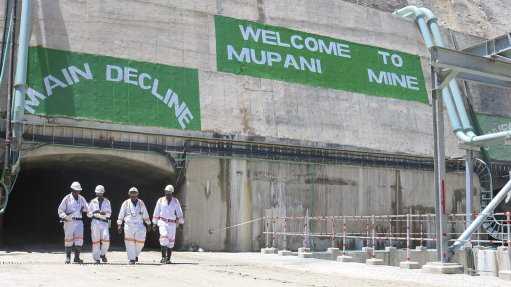
According to Impala Platinum Holdings Limited (Implats), Zimplats’ parent company, the impressive surge in production was driven by key contributions from Rukodzi Mine and Mupani Mine, underscoring the significance of efficient mining practices and operational optimization.

Implats reported that in the quarter ended 31 March 2024, Zimplats demonstrated strong performance, recording a notable 7 per cent increase in milled throughput, reaching 2.01 million tonnes. This growth was attributed to pillar reclamation activities at Rukodzi Mine, as well as a production volume ramp-up at Mupani Mine. Additionally, the deferral of a scheduled mill reline to the fourth quarter of the Financial Year 2024 further supported production volumes. Higher grade and improved process recoveries also contributed to the positive results, culminating in a 12 per cent increase in matte production to 166,000 6E ounces.

“Zimplats delivered a 7% increase in milled throughput to 2.01 million tonnes, benefiting from pillar reclamation activities at Rukodzi Mine, a production volume ramp-up at Mupani Mine, and the deferral of a scheduled mill reline to Q4 FY2024. Volumes also benefited from higher grade and improved process recoveries, and matte production increased by 12% to 166,000 6E ounces,” Implats said.

According to Implats, over the nine months ending 31 March 2024, Zimplats continued its upward trajectory, with mill throughput increasing by 6% to 5.92 million tonnes. The stability in grade, coupled with improved recoveries and processing stability at the expanded concentrator complex, further bolstered production. Positive inventory moves in the furnace also played a significant role in the overall performance. As a result, Zimplats achieved a commendable 10 per cent increase in matte production, totalling 493,000 6E ounces.

“Mill throughput increased by 6% to 5.92 million tonnes and, together with stable grade, improved recoveries, and processing stability at the expanded concentrator complex and positive inventory moves in the furnace, resulted in a 10% increase in matte production of 493,000 6E ounces,” the group said.

Zimplats’ success can be attributed to its relentless focus on operational efficiency, technological innovation, and strategic investments in key mining assets. By leveraging the synergies between its various operations, such as the pillar reclamation initiatives at Rukodzi Mine and production ramp-up at Mupani Mine, Zimplats has been able to optimize its production processes and maximize output even in challenging operating environments.

Mimosa in 13% production Increase despite Power Challenges

0

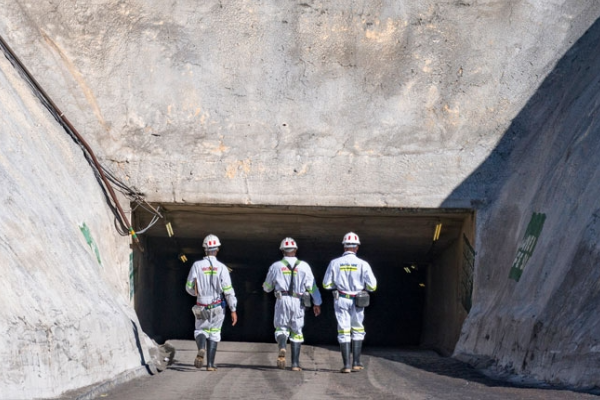
Despite facing intermittent power disruptions and challenging ground conditions, the country’s second-biggest platinum group metals (PGM) producer, Mimosa Mining Company, has demonstrated remarkable resilience with a notable 13% increase in production.

by Rudairo Mapuranga

According to Impala Platinum Holdings Limited (Implats), which holds a 50% stake in Mimosa, the company’s strategic processing approach has been instrumental in navigating through these adversities, allowing it to maintain stability and even thrive in a demanding operating environment.

In its production report for the period ended 31 March 2024, Implats noted that during the quarter, Mimosa encountered sporadic regional power disruptions and difficult ground conditions. However, the integration and commissioning of the optimized plant project in the prior comparable quarter proved to be a game-changer. Despite a 5% decline in milled 6E head grade to 3.59g/t, Mimosa achieved a significant 13% increase in concentrate production to 63,000 6E ounces. This impressive result was attributed to improved process recoveries, highlighting the efficiency of Mimosa’s processing strategy.

“Mimosa navigated sporadic regional power disruptions and difficult ground conditions in the period but benefited from processing stability following the integration and commissioning of the optimized plant project in the prior comparable quarter. Milled volumes of 715,000 tonnes increased by 10% and, despite a 5% deterioration in milled 6E head grade to 3.59g/t, production in concentrate increased by 13% to 63,000 6E ounces, benefiting from improved process recoveries,” Implats said.

According to Implats, over the nine months ending 31 March 2024, Mimosa continued to deliver strong performance despite the challenges posed by poor ground conditions. The company’s mining operations remained robust, supported by improved plant stability and recoveries. Despite a 4% decline in 6E head grade to 3.61g/t, Mimosa recorded a 5% increase in 6E concentrate production, reaching 189,000 ounces. This achievement underscores Mimosa’s ability to optimize its operations and mitigate the impact of external factors on its production output.

“Mimosa benefited from strong mining performance and improved plant stability and recoveries in the period, which countered the grade impact of poor ground conditions. Milled throughput increased by 5% to 2.14 million tonnes and, while 6E head grade declined by 4% to 3.61g/t, 6E concentrate production of 189,000 was 5% higher than the prior comparable period,” the group said.

Mimosa’s success amidst adversity can be attributed to its proactive approach to operational efficiency and strategic planning. By investing in optimization projects and prioritizing stability in its processing operations, Mimosa has been able to maintain consistent production levels and even achieve growth in challenging times. Moreover, the company’s commitment to innovation and continuous improvement positions it strongly for future success in the dynamic PGM market.

Chamber proposes the creation of Mine Closure Rehabilitation Fund

0

In an endeavour to ensure all mining areas are rehabilitated after the depletion of resources or when extraction is no longer viable, the Chamber of Mines of Zimbabwe (CoMZ) has proposed the establishment of a mine closure rehabilitation fund.

Rudairo Mapuranga

Speaking at the National Launch of The Action Aid’s Zimbabwe Accountability and Citizen Engagement Management (ZIMACE) Programme to promote sustainable environmental management in the mining sector held at Rainbow Towers Hotel in Harare recently, Chamber of Mines Mining Affairs Manager David Matyanga said the chamber proposed having a mine closure rehabilitation fund, which was supposed to be factored into the Mines and Minerals Amendment bill. However, the proposal was not included in the bill.

“As the Chamber, we have proposed to have a mine closure rehabilitation fund, which can be collective or voluntary. We have made this proposal to the Ministry of Mines as part of the Mines and Minerals Amendment Bill. We are concerned that this has not found its way into the bill. And we believe that such a fund, if properly managed, can deal with the legacy issues and ensure that those mines currently operating provide sufficient resources to address the environmental liabilities post-closure,” Matyanga said.

Closed or abandoned mines are very unsafe if left unrehabilitated. This is why we have mine rehabilitation, which is a sustainable response to the man-made destruction of lands through activities such as mining and drilling. Many companies, through mine rehabilitation, have successfully restored heavily polluted or toxic mining sites to a safe and functioning ecosystem.

After mining, the used land must be rehabilitated to prevent disastrous effects. If mined landscapes aren’t rehabilitated, they can negatively affect the surrounding air, water, and local agriculture severely.

Mine rehabilitation minimizes the environmental effects of mining and keeps surrounding land healthy by ensuring the stability and sustainability of the land, soil, and water of the site. It also seeks to partially or fully repair the ecosystem and prevent the pollution of surrounding environments.

Meanwhile, the Chamber of Mines will be holding its annual general meeting at Elephant Hills Resort in Victoria Falls from the 28th to the 30th of May 2024. Mining Executives, decision-makers and the Crème de la crème of the large-scale mining industry will be in attendance at the Premier event. This is an annual event that provides a platform for industry leaders, government, investors and financiers opportunity to interact and discuss key matters relevant to the development of the mining industry.

Zimbabwe gold buying prices per gram 6 May 2024

Fidelity Gold Refinery (FGR) official gold buying prices/ gram. See the Zimbabwe gold buying prices/ gram today 6 May 2024.

SG 90% AND ABOVE US$69.71/g
SG ABOVE 85% BUT BELOW 90% US$68.97g
SG ABOVE 80% BUT BELOW 85% US$68.23/g
SG ABOVE 75% BUT BELOW 80% US$67.49/g
SAMPLE BELOW 10g BUT ABOVE 5g US$66.36/g

Fire Assay CASH $70.07/g

NB: Fire Assay cash price is for gold above 100gs, no sample is deducted.
For the Fire Assay Transfer price, a sample of not more than 10g is deducted
A 2% royalty is charged on all deposits (Small-scale miners)
A 5% royalty is set for Primary Producers

Cash available. Fidelity Gold Refinery prices will be changing daily to match world market prices.

Zimbabwe gold buying prices/ gram 4 May 2024

Fidelity Gold Refinery (FGR) official gold buying prices/ gram. See the Zimbabwe gold buying prices/ gram today 4 May 2024.

SG 90% AND ABOVE US$69.71/g
SG ABOVE 85% BUT BELOW 90% US$68.97g
SG ABOVE 80% BUT BELOW 85% US$68.23/g
SG ABOVE 75% BUT BELOW 80% US$67.49/g
SAMPLE BELOW 10g BUT ABOVE 5g US$66.36/g

Fire Assay CASH $70.07/g

NB: Fire Assay cash price is for gold above 100gs, no sample is deducted.
For the Fire Assay Transfer price, a sample of not more than 10g is deducted
A 2% royalty is charged on all deposits (Small-scale miners)
A 5% royalty is set for Primary Producers

Cash available. Fidelity Gold Refinery prices will be changing daily to match world market prices.

Gold deliveries increase 31%+, ASM dominate submissions

0

Gold deliveries to the country’s sole gold buyer, Fidelity Gold Refinery (FGR), surged by approximately 31.4 percent in April 2024 compared to the previous month, driven by increased contributions from artisanal and small-scale miners (ASM), according to figures obtained by Mining Zimbabwe.

April’s gold deliveries reached 2,386.9067 kilograms, marking a significant increase from the 1,816.5413 kilograms delivered in March 2024.

ASM deliveries soared by approximately 58 percent to 1,218.2045 kilograms in April, compared to 770.9838 kilograms in March, while deliveries by large-scale gold miners also rose by about 11.78 percent to 1,168.7022 kilograms from 1,045.5575 kilograms in March. For the first time in two months, ASM deliveries surpassed those of large-scale miners, accounting for approximately 51 percent of the total deliveries in April.

The first quarter of 2024 closed with total deliveries of 6,044 kilograms, slightly lower than the 6,194 kilograms recorded in the first quarter of 2023 and significantly below the 7,694 kilograms delivered in the first quarter of 2022, which was a record-breaking year. Large-scale miners delivered 51.995 percent (3,143.0683 kilograms) of the total deliveries in the first quarter of 2024, surpassing ASM who delivered 48.004 percent (2,901.8006 kilograms). Historically, ASM has been the country’s primary gold deliverer to FGR, accounting for over 61 percent of total gold deliveries.

Comparing to the record year of 2022, deliveries during the same quarter decreased by 24 percent to 7,694 kilograms. Additionally, deliveries in March 2024 dropped by 27 percent compared to March 2022, from 2,403 kilograms to 1,816 kilograms.

Zimbabwe’s gold deliveries declined by 15 percent in 2023 due to rising costs, power shortages, and government currency policies. Deliveries to Fidelity totaled 30.1 tonnes in 2023, down from 35.6 tonnes in 2022, which was a record year fueled by new mining projects and improved payments to small-scale miners, who make up the majority of Zimbabwe’s gold deliveries. However, sales slowed in 2023.

Gold output remained stagnant for large producers at 11.4 tonnes in 2023, showing little growth from the 11.2 tonnes delivered in 2022 and 2021. Small-scale producers experienced a sharp drop, delivering just 18.6 tonnes in 2023, a 23 percent decrease from the 24.1 tonnes sold in 2022, bringing deliveries back to 2021 levels.

Kavango Propelling Zimbabwe towards Australian-Styled Open Pit Gold Mining Success

0

London Stock Exchange-listed mining and exploration junior, Kavango Resources, is spearheading advancements at its Hillside gold project in Matabeleland, marking significant strides toward establishing Western Australia-style open pit gold mines in Zimbabwe.

by Rudairo Mapuranga

The transition to open pit mining carries promising implications for Zimbabwe’s gold industry, mirroring the success seen in Australia’s gold production.

According to Kavango CEO Ben Turney, the recent drill assays and IP survey results from the Hillside project are advancing Kavango towards its objective of developing Western Australia-style open pit gold mines in Zimbabwe.

Turney said the exploration and drilling program initiated by Kavango at its Hillside project has yielded remarkable results, surpassing initial expectations. Recent drill assays from Hillside Prospects 2 and 4 unveiled substantial gold findings at shallow depths, underscoring the project’s open pit mining potential. Induced Polarization (IP) surveying further revealed promising shear zones, indicative of potential large mineralized ore bodies suitable for open pit mining.

CEO Ben Turney also emphasizes the alignment of Zimbabwe’s geology with Western Australia’s, highlighting the vast economic opportunities awaiting exploration and development.

“Open pit mining has become the dominant style of mining in Western Australia and has been the primary driver behind Australia’s emergence as the world’s leading gold producer in recent decades.

“Zimbabwe’s geology mirrors that of Western Australia, and the country has a rich history of high-grade gold mining across its greenstone belts. However, Zimbabwe’s potential to host a multitude of large-scale, bulk mineable gold deposits remains largely undeveloped. This presents the nation with immense economic opportunity.

“Kavango has identified a strong pipeline of claim packages covering historic high-grade gold mines. We are now applying modern exploration and drilling techniques across three of these to assess their open pit potential and develop bulk mining operations,” he said.

According to the CEO, as Kavango continues to execute its exploration plans with precision and diligence, the company remains poised to unlock significant value and contribute to Zimbabwe’s ambition of becoming an upper-middle-income economy by 2030.

“In doing so, our objective is to contribute to the 2030 Vision of turning Zimbabwe into an upper-middle-income economy,” Ben Turney said.

Kavango has been in the market to raise about £3.08 million (US$3.86 million) by issuing 257.11 million new ordinary shares at a price per share of 1.2 pence through an underwritten accelerated book build. The capital raise is meant to fund its Zimbabwe and Botswana projects.

Turney said Kavango’s next steps at Hillside will be to test the gold-bearing potential of the shears it has interpreted at Prospects 2 and 3 with a series of drill holes. This strategic move aims to validate the potential for a bulk mineable gold deposit across the entire shear zone at both prospects. The Company eagerly anticipates assay results from Hillside Prospects 1 and 4, which will provide further insights into the project’s viability.

Meanwhile, drilling is also underway at its Nara project to explore a 200m wide by 5km long strike corridor within the property, interpreted as a potential shear zone. These proactive measures underscore Kavango’s commitment to thorough exploration and the identification of promising mineralization zones.

The company has rapidly begun to make strong progress in its goal of developing open pit mines in Zimbabwe. The most advanced endeavours are evident at Hillside prospects 2 and 4, where promising results have fueled optimism for future development. However, the remaining prospects, including Nara and Leopard, also hold significant potential, contributing to a diversified portfolio of opportunities for Kavango.

Implats Reports Mixed Results Amid Challenging PGM Market

0

Zimplats’ parent company, Implats, a leading platinum group metals (PGM) producer, has reported a mixed bag of results, with strong production and demand offset by lacklustre PGM prices, underscoring the need for the company to stay focused on cost management and operational efficiency to navigate the challenging market conditions.

Patricia Rwafa

Implats announced increased production on Tuesday, April 30th.

This comes despite weak prices for PGMs, although demand remains strong.

In the nine months that ended on March 31, the Johannesburg Stock Exchange-listed company recorded a 16% increase in total six-element (6E) group production volumes to 2.73 million ounces, with a 25% gain in managed volumes to 2.17 million ounces, a 4% increase in joint venture (JV) production to 410,000 oz, and a 31% decrease in third-party receipts to 149,000 oz.

Gross 6E refined and saleable production increased by 15% to 2.47 million ounces in the nine months, and 6E sales volumes increased by 11% to 2.52 million ounces.

According to CEO Nico Muller:

“Despite continued macroeconomic and geopolitical uncertainty, demand from our contractual customers remains robust, with elevated additional volumes requested via spot sales during the third quarter.

“PGM pricing remains lacklustre, however, with notable volatility in both platinum and palladium reflecting the continued influence of investor activity.

“Margins remain compressed, and we are pursuing a set of actions to ensure that each of our operations is set up to more robustly deliver sustainable free cash flow through the PGM cycle.

“It’s imperative that each of our assets operates within the appropriate volume, cost, and capital parameters relative to the current pricing environment and the broader operating context.”

“We delivered a commendable operational performance while navigating several challenges in the period under review. Investigations into the 27 November tragedy at 11 Shaft progressed, and the production ramp-up at the operation remains on track.

“The rebuild of Impala Rustenburg’s Number 5 furnace was completed, and the first matte has now been tapped. Notable operational performances were delivered by Zimplats and Mimosa, and at Impala Canada, where mining and milling were rebased,” he said.

In late April, Implats embarked on Section 189 (3) consultation process at its South African operations, which could affect 3,900 positions, equating to a 9% reduction in labour across the group’s Impala Rustenburg, Impala Bafokeng, and Marula operations, as well as at the corporate office, which is targeting a 30% reduction in head office costs.

Implats remains on track to deliver within the guided group parameters for the full 2024 financial year.

MARCH QUARTER

In the three months to March 31, gross group 6E production increased by 13% to 827,000 oz. Tonnes milled at managed operations increased by 16% to 6.48 million tonnes during the quarter. The maiden inclusion of Impala Bafokeng and higher milled volumes at Zimplats offset lower throughput at Impala Rustenburg, Marula, and Impala Canada.

The 6E milled grade of 3.64 g/t was stable, and 6E production at managed operations increased by 17% to 657,000 oz. The 6E production from the JVs at Mimosa and Two Rivers increased by 7% to 134,000 oz.

At Impala Refining Services, third-party 6E receipts of 37,000 oz were 23% lower than the prior comparable quarter as two contracts concluded in the financial year 2023. There were negligible production losses owing to load curtailment in South Africa in the quarter, although regional electricity generation and distribution challenges did pose headwinds to operating momentum in Zimbabwe.

Refined 6E production, which includes saleable ounces from Impala Canada and Impala Bafokeng, increased by 8% to 717,000 oz.

Implats finished the period with 410,000 6E ounces of excess inventory and 6E sales volumes of 824,000 oz, including saleable production from Impala Canada and Impala Bafokeng, which increased by 10% and were 3% lower on a like-for-like basis from those in the prior comparable quarter, with some destocking of refined inventory to offset the impact of the planned furnace maintenance.

Prospect Resources Expands Portfolio

0

Prospect Resources has made significant strides in expanding its portfolio, acquiring a controlling stake in the highly prospective Mumbezhi Copper-Cobalt Project in Zambia and reported encouraging drilling results from its lithium projects in Zimbabwe and Namibia.

Patricia Rwafa

As announced on April 30, 2024, Prospect Resources acquired an 85% interest in the Mumbezhi Copper-Cobalt Project in Zambia. The project has significant exploration potential and is located in the highly prospective Zambian Copperbelt. Phase 4 drilling commenced at the Step Aside Lithium Project in Zimbabwe, targeting extensions and high-grade intersections.

Final results from Phase 3 drilling at Step Aside confirmed significant lithium mineralization and extensions to the WinBin deposit. Phase 2 drilling commenced at the Omaruru Lithium Project in Namibia, targeting prospective geochemical anomalies.

Prospect Resources holds $19.2 million in cash and zero debt as of March 31, 2024.

– 63.1m @ 1.17% Li2O from 74.9m, including 41.0m @ 1.49% Li2O from 97.0m.
– 17.0m @ 1.54% Li2O from 52.0m, including 9.0m @ 2.13% Li2O from 56.0m.
– 9.0m @ 1.12% Li2O from 90.0m.
– 1.5m @ 1.38% Li2O from 17.6m.

Prospect achieved a 100% ownership stake in Omaruru, following the successful execution of an agreement with Osino Resources to acquire the residual 60% interest for US$75,000 in cash.

According to Prospect’s Managing Director and CEO, Sam Hosack:

“The successful culmination of our transactional strategy for the world-class Mumbezhi Copper-Cobalt Project was an excellent way to round out a productive Q1 and lead into an exciting June quarter. This large-scale asset, hosted in the Zambian Copperbelt, significantly expands and diversifies our battery and electrification metals portfolio.

Pending targeted future exploration success, it has the strong potential to advance into a low-cost, open-pit mine development in the long term. We are excited to see where initial exploration and resource drilling takes us with this well-positioned, large-scale critical mineral project.”

“At Step Aside, final results from our Phase 3 program have produced further intercepts of robust lithium mineralization, highlighting additional extensions to WinBin at depth and along strike, while also remaining open to the south.

We now know that the broader mineralization zone continues further northwest, through the conjoined WinBin/Pegmatite C extension. We are extremely pleased with the results to date from Step Aside, and with Phase 4 underway, we will continue our exploration agenda targeting further extensions to the current mineralized zone and further delineation of the footprint of this high-grade lithium deposit.”

AMSZ to Host One-Day Symposium in Bulawayo

0

In an effort to ensure that survey policies remain in line with current technological advancements, the Association of Mine Surveyors of Zimbabwe (AMSZ) is set to host a one-day symposium in Bulawayo to gather input from its members, announced AMSZ President Gabriel Mwale.

This event will be hosted at the Zimbabwe School of Mines on Friday, May 17th, 2024.

Mwale explained that the objective is to compile a list of submissions for the proposed amendments to SI 109 of 1990 (5), titled Mining Management and Safety Regulations.

Additionally, Mwale stated that the meeting will address submissions concerning amendments to the Mines and Minerals Act.

“The Association of Mine Surveyors will convene a one-day symposium in Bulawayo to solicit input from its members regarding the statutory regulations governing the practice and standards of mine surveying in the mines. The aim is to compile a list of submissions for the proposed updates to SI 109 of 1990 (5), Mining Management and Safety Regulations.

“The meeting will also address submissions on the Mining Bill and other crucial matters such as revising the syllabus of the Mine Surveyors’ Certificate of Competency,” Mwale elaborated.