Home Blog Page 217

Tharisa Repurchases General Shares for US$5 Million

0

Tharisa held its annual general meeting on February 21, 2024, where shareholders approved a special resolution authorising the Company to undertake a general repurchase of ordinary shares, up to 10% of the 302,596,743 ordinary shares in issue at the date of the AGM.

In a report released on March 26 by Paphos Cyprus, Tharisa was dual-listed on the Johannesburg and London stock exchanges. The Board believes that the Company’s shares are trading at a significant discount, having been negatively impacted by the PGM commodity price environment, while not reflecting the strong co-product contribution from its chrome sales.

The Company has appointed Peel Hunt LLP (‘Peel Hunt’) to manage and carry out on-market purchases of ordinary shares as principal on both the Johannesburg and London stock exchanges, up to a maximum amount of US$5 million (the “Repurchase Programme”) (excluding associated expenses). Tharisa is committed to capital discipline and believes that a share repurchase at its current valuation supports this.

According to Michael Jones, CFO of Tharisa, “We have maintained our strict capital discipline throughout the commodity cycles and believe it is opportune to allocate capital to a share repurchase program for the benefit of our shareholders. This reflects our firm belief in the prospects for our company. While the PGM commodity pricing environment is challenging, chrome prices have remained firm, reinforcing the strength of our co-product business model. The Karo Platinum Project is a multi-generational resource, and while maintaining capital discipline, we continue on the road to delivering the necessary third-party financing to bring the first phase into production.”

William Gambiza Appointed Hwange’s Acting Managing Director

0

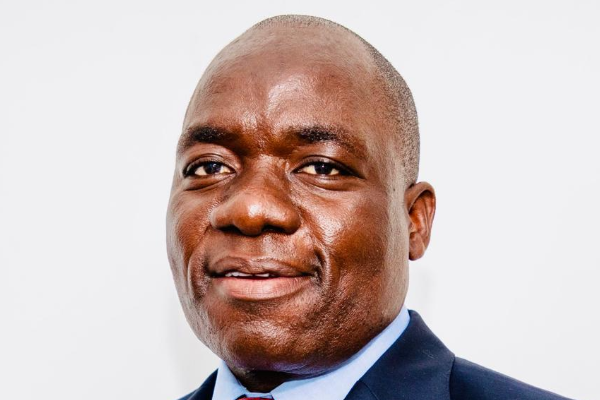
Mining investment expert Engineer William Gambiza has been appointed Acting Managing Director of Hwange Colliery Company Limited (HCCL). This was effective from February of this year.

Rudairo Mapuranga

HCCL is currently undergoing reconstruction for the second time in two years and aims to utilize the vast experience of Eng Gambiza to transform the coal miner.

Eng Gambiza is an accomplished mining investment expert with 18 years of experience in mineral asset management and investment banking. He has held several senior positions in the mining industry and mining finance sectors.

Drawing on his experience as a mining analyst, Eng William Gambiza has developed competencies in mining-related business planning, management, valuations, modelling, economics, strategy, and transaction experience, including a unique and comprehensive understanding of the mining industry and a disciplined approach to investing based on fundamental analysis.

He joined Hwange Colliery Company Limited (“HCCL”) in November 2023 as a Consultant in business Restructuring and Development and was later appointed Acting Managing Director in February 2024. Prior to joining HCCL, he was the Chief Investments Officer – Metal & Mining for Unchartered Group. He also worked as the fund manager for Fidelity Gold Refiners (FGR). William started his career as a mining engineer with HCCL, after which he worked for other mining companies including Zambezi Gas where he served as a projects mining engineer and Marange Resources as the mining manager before migrating into mining private equity and venture capital space. He also serves on company boards, including Harare Quarry where he sits as the Vice Chairman.

Originally trained as a Mining Engineer, William holds a BSc Honours Degree in Mining Engineering, an MSc (Eng.) in Valuation of Mineral Assets, an MSc in Strategic Management, an Investment Banking Analyst (IBA) Program, and a Certified Business Valuation Analyst (CVA). He is currently studying for a PhD in Mineral Economics at the University of Zambia.

President to Commission Two Major Mining Projects Next Week

0

President Emmerson Mnangagwa will next week officially commission the Pickstone Peerless Mine’s underground operations and Kamativi Mining Company (KMC) phase 1 processing plant.

Rudairo Mapuranga

The projects are projected to contribute significantly towards achieving the vision for the country to attain an upper middle-income economy by 2030.

President Mnangagwa will commission the Pickstone Peerless Underground project on Wednesday, 10 April 2024, and then move to commission the KMC phase processing plant on Friday, 12 April 2024.

Pickstone Project

To increase its gold output, Dallaglio Investment-owned mine, Pickstone Peerless Mine has transitioned from open-pit mining to underground mining where there are improved grades.

Pickstone Peerless indicative underground grades range between 3 to 5 grams per tonne, while the open-pit grades stand at an average of 1.8 grams per tonne. This will be an improvement in grades.

Due to the opening of the underground project, production at the mine has increased significantly with the mine together with Eureka Mine in Guruve producing a combined 210 kgs per month with a focus to increase to 230 kgs per month next year and eventually 250 kgs in 2025.

The mine, which currently averages 70 per cent gold recoveries, is looking to manage that through building three big CIL tanks to get maximum gold.

Pickstone will run as a hybrid mine up to June of 2024 and is building a new tailing facility to avoid a hazard on the current one, which is now about 25 meters. The expansion of the tailing facility has been approved by the Environmental Management Agency (EMA).

KMC Phase 1 Processing Plant

KMC has completed its first-phase processing plant and is constructing a second-phase processing plant. The first-phase processing plant will handle 300,000 tonnes and produce 50,000 tonnes of concentrate, with the second phase expected to handle 2.3 tonnes and produce 300,000 tonnes per annum. The company is looking to produce 350,000 tonnes of lithium concentrate next year.

More Gold-buying Centers boosting Deliveries

0

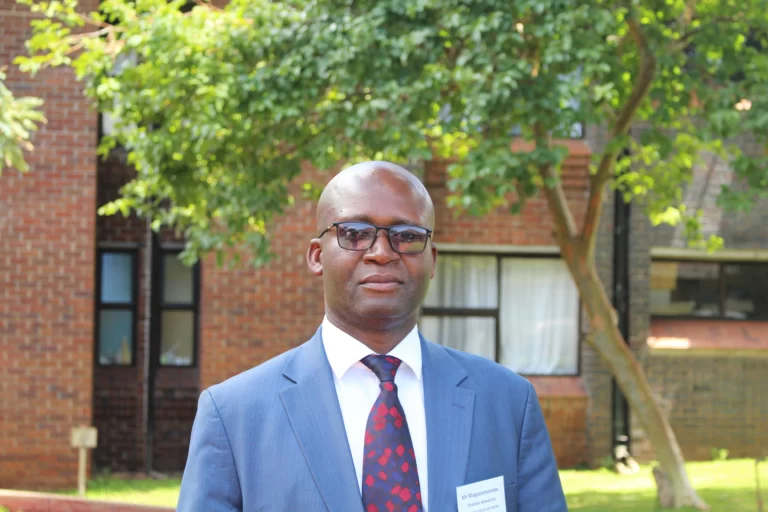
The move by Zimbabwe’s sole gold buyer and exporter, Fidelity Gold Refinery (FGR), to add gold-buying centres in the country is making a positive impact towards achieving set targets, FGR General Manager Peter Magaramombe has said.

Rudairo Mapuranga

According to Magaramombe, the establishment of new centres in the last five years has led to an increase in deliveries.

In 2022, under Magaramombe’s leadership, FGR established two gold centres, leading to the achievement of the country’s gold production target of 35 tonnes, with FGR buying 35.6 tonnes during the year. However, deliveries decreased by 25 per cent in 2023 to 30.1 tonnes attributed to excessive rainfall in the first quarter of the year.

“We have a total of 17 gold buying centres now, we added five in the last five years, from 12. The new centres are contributing very close to set targets,” Magaramombe said.

The FGR General Manager said FGR has implemented the Gold Development Initiatives Fund (GDIF) and mobile buying units to enhance the delivery of gold.

“We are paying top prices benchmarked to the London Bullion Market Association. We also have the Gold Development Initiatives Fund to assist the artisanal and small-scale miners to increase their gold output as well as increasing the number of gold buying centres, mobile gold buying units to cover gold rushes, elution plant monitoring to plug gold leakages, and gold buying agents to cover areas where FGR does not have reach,” Magaramombe said.

Hwange in Over US$10 Million in Profit

0

Coal producer Hwange Colliery Company recorded a US$10.2 million profit before tax during the quarter ended 30 September 2023, as stated by the company’s Administrator, Eng Munashe Shava, in a trading update for the quarter.

Rudairo Mapuranga

Hwange Colliery, in 2022, was placed under reconstruction for the second time in two years to revive the miner who has been plagued by financial losses.

According to Shava, despite coal sales dropping, the company still managed to achieve profits during the quarter ended 30 September 2023. This was due to efficient machinery acquired during the first quarter of 2023.

“The sales prices for coal dropped slightly for the quarter ended 30 September 2023. The input costs remained relatively constant, thereby affecting the company’s profits. However, the company performed fairly well during this quarter, with unaudited profit before tax amounting to US$10.2 million, better than the previous year’s.

“The company’s performance during this quarter was significantly better, with both production of 989,503 tonnes and sales of 911,245 tonnes almost doubling from last year’s performance, mainly due to efficient and effective machinery acquired during the first quarter of 2023,” Shava said.

The company realized 911,245 tonnes in sales in the third quarter, with Hwange Power Station coal (“HPS”) accounting for 48%, raw coal 39%, Hwange Coking Coal (“HCC”) 1%, and Hwange Industrial Coal (“HIC”) 12% of the total sales. During the same period last year, the company sold 388,487 tonnes comprising HPS 7%, raw coal 55%, HCC 6%, and HIC 32%. Contaminated coal sales accounted for 8,143 tonnes (2022: 25,309 tonnes) in the same period.

For the nine months to 30 September 2023, the company realized 2,795,303 tonnes (2022: 1,060,976 tonnes) in sales, with HPS accounting for 43%, raw coal 39%, HIC 17%, HCC 1% (2022: HPS 9%, Raw coal 48%, HCC 8%, and HIC 35% of 1,060,976 tonnes). Contaminated coal also amounted to 30,229 tonnes (2022: 71,933 tonnes). Sales improved from 1,060,976 tonnes for the same period last year to 2,795,303 tonnes, achieving a positive change of 163%. The positive change is attributed to a doubling of production as well as an increase in marketing efforts to sell off the mined coal.

The company aims to stop underground mine production for the next six months to prevent the loss of mined coal through spontaneous combustion, as production exceeds sales. The quantity of mined coal is deemed sufficient to meet the operating needs of the company.

Unlocking Potential: ZMF to Empower Miners with Equipment

0

The Zimbabwe Miners Federation (ZMF) is gearing up to revolutionise the artisanal and small-scale mining sector with its upcoming Mining Mechanization and Symposium launch in Midlands Province on the 22nd of April 2024 at Pote Hotel in Midlands.

Scheduled to take place in the heart of Zimbabwe’s mining region, the event promises to be a game-changer for small-scale miners who often face barriers to accessing modern equipment and machinery to increase their output.

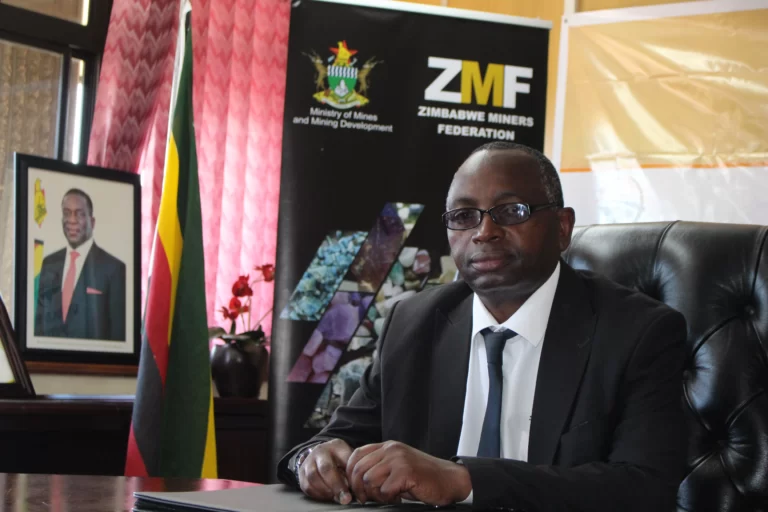
Speaking to Mining Zimbabwe, ZMF Chief Executive Officer Mr Wellington Takavarasha said the mining body will distribute essential equipment to its members who struggle to get support from financial institutions.

“At the forefront of the initiative is the distribution of essential mining equipment aimed at empowering our artisanal and small-scale miners members. We plan to distribute a range of machinery including compressors, dewatering pumps and electronic vehicles. We will also be introducing a credit facility option to facilitate access to this equipment, particularly for our members who struggle to secure loans from traditional financial institutions such as banks,” Takavarasha said.

The introduction of mechanization in the small-scale mining sector is poised to bring about several significant benefits to the organisation’s members.

Firstly, it will enhance operational efficiency, allowing miners to increase productivity and output. With access to modern equipment, miners can streamline their operations and optimise resource utilisation, ultimately leading to improved profitability.

Furthermore, the availability of essential machinery through a credit facility option addresses a longstanding challenge faced by many artisanal and small-scale miners – limited access to financing.

According to the ZMF Midlands Chairman Mr Makumba Nyenje, stringent expectations from financial institutions have for years hindered the growth of the ASM sector and the mining body is playing its part to level the playing field.

“Traditional financial institutions often impose stringent requirements that small-scale miners struggle to meet, hindering their ability to invest in modern equipment. Most banks and financial institutions require home title deeds to issue out loans, which may be out of range for most miners. By offering a credit facility, the ZMF is levelling the playing field and empowering miners to access the tools they need to boost production,” Nyenje said.

As Zimbabwe’s mining industry continues to evolve, initiatives like these play a crucial role in driving progress and unlocking the full potential of artisanal and small-scale mining operations.

ZMF’s commitment to empowering miners and promoting sustainable development underscores the importance of collaboration and innovation in shaping the future of the mining sector.

Zimbabwe gold buying prices/ gram 2 April 2024

Fidelity Gold Refinery (FGR) official gold buying prices/ gram. See the Zimbabwe gold buying prices/ gram today 2 April 2024.

SG 90% AND ABOVE US$67.27/g
SG ABOVE 85% BUT BELOW 90% US$66.56g
SG ABOVE 80% BUT BELOW 85% US$65.85/g
SG ABOVE 75% BUT BELOW 80% US$65.14/g
SAMPLE BELOW 10g BUT ABOVE 5g US$64.07/g

Fire Assay CASH $67.63/g

NB: Fire Assay cash price is for gold above 100gs, no sample is deducted.
For the Fire Assay Transfer price, a sample of not more than 10g is deducted
A 2% royalty is charged on all deposits (Small-scale miners)
A 5% royalty is set for Primary Producers

Cash available. Fidelity Gold Refinery prices will be changing daily to match world market prices.

Emilia Chisango Appointed as Independent Non-Executive Director of Zimplats

0

Zimbabwe’s biggest miner, Zimplats has announced the appointment of Mrs. Emilia Chisango as an independent non-executive director of the Company, effective from 1st April 2024.

In a statement, the company said Mrs. Chisango brings with her a wealth of experience and expertise in the fields of finance, accounting, and corporate governance.

A Chartered Accountant (Zimbabwe) by profession, Mrs. Chisango holds a Bachelor of Accountancy Honours degree, along with a Certificate of Theory in Accounting. Her illustrious career spans over two decades, notably at KPMG, where she served for 21 years and rose to the position of partner in 2001. During her tenure at KPMG, she held the esteemed position of head of Internal Audit, Risk, and Compliance Services, showcasing her proficiency in navigating complex financial landscapes and ensuring regulatory compliance.

In 2015, Mrs. Chisango embarked on a new chapter of her career by joining Econet Wireless Zimbabwe Limited as the Group Chief Finance Officer. Her strategic financial acumen and leadership capabilities were instrumental in steering the company through various financial challenges and opportunities. In November 2018, she assumed the role of Group Finance Director at Cassava Smartech Zimbabwe Limited, where she continued to demonstrate her exceptional financial stewardship until February 2021.

Mrs. Chisango’s dedication to excellence extends beyond her executive roles, as she currently serves as a non-executive director of NMB Bank Limited and Econet Lesotho Limited. Her commitment to fostering financial transparency, accountability, and sustainable growth underscores her reputation as a trusted leader in the corporate arena.

Gold Hits Record High

0

Gold miners will be smiling all the way to the bank as gold prices surged to unprecedented levels, due to a combination of factors that underscored the metal’s status as a safe-haven asset.

This is good news for primary producers and over 500 000 Artisanal and small-scale miners that contribute an annual average of 60% of the total gold deliveries to Fidelity Gold Refinery (FGR) the country’s sole gold buyer.

The catalyst for this surge was a softer-than-expected U.S. inflation reading, which solidified market expectations of an imminent interest rate cut by the Federal Reserve of America.

At 0529 GMT, spot gold was trading at $2,258.12 per ounce, marking a significant 1.2% increase from previous levels. During the session, it reached an all-time high of $2,265.49, underlining the strong investor appetite for the precious metal. Con-currently, U.S. gold futures rose by 1.8% to $2,279.10, reflecting similar bullish sentiment in the futures market.

The surge in gold prices can be attributed to the growing anticipation that the Federal Reserve will implement its first interest rate cut of the year in June. This sentiment gained traction following the release of U.S. inflation data that fell below market expectations. Lower inflation typically signals a dovish stance by central banks, as they seek to stimulate economic growth by reducing borrowing costs. Consequently, investors turned to gold as a hedge against potential economic uncertainty and currency depreciation.

The record-breaking rally in gold also reflects broader market concerns regarding geopolitical tensions and trade disputes. Amidst these uncertainties, investors traditionally seek refuge in assets perceived as safe havens, with gold being the foremost choice due to its historical resilience during times of crisis.

Currently commodity prices are soften leading to job cuts and in some instances mine closures. For the first time in more than a decade, in 2023 gold generated more foreign currency than platinum in Zimbabwe.

Zim Geomatallurgist discovers R450 billion “Invisible gold”

0

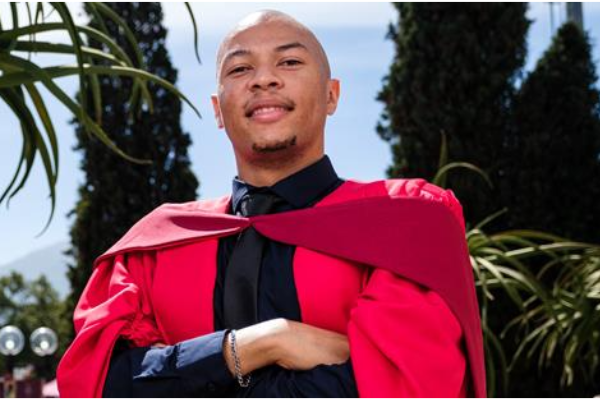
Obtaining a PhD at 26 is already a massive achievement, but what makes Dr Steve Chingwaru‘s graduation from Stellenbosch University (SU) even more remarkable is his groundbreaking Geomatallurgy research that has garnered interest from mining companies around the globe.

Chingwaru has uncovered what is potentially the world’s largest invisible gold resource.

Originally from Zimbabwe and growing up in Johannesburg with his aunt, the gifted Geometallurgist has mining in his blood. Chingwaru is the grandson of the legendary prospector George Nolan who discovered lithium in Zimbabwe and even wrote a book, Road to Lithium Lodge, about his adventures looking for precious metals in the wilderness of what was then southern Rhodesia.

Although his grandfather lost most of his fortune, Chingwaru’s future looks bright. His findings could help unlock gold to the value of R450 billion that is hiding in plain sight within the unsightly mine dumps around Johannesburg.

Uncovering a hidden gold mine

Historical mine waste from the Witwatersrand called tailings, contains over six billion tonnes of material with significant gold content, Chingwaru explains. The research for his Master’s degree, which was upgraded to a PhD along the way, aimed to calculate and characterise these gold reserves. He also explored ways to extract the gold efficiently while addressing environmental concerns related to the tailings, such as the release of acid mine drainage due to pyrite oxidation.

“Invisible gold” – minuscule particles locked inside other minerals – is nothing new. But Chingwaru is the first scholar to calculate that the six billion tons of tailings around Johannesburg’s mines contain up to 460 tons of gold.

“Historically, the low concentration of gold inside tailings was considered too low grade to be of value. But now that extensive mining has depleted most of the high-grade concentration of gold, it’s becoming unfeasible to mine – some shafts are already reaching 4 km underground. Looking for gold in low-concentration sources is becoming more viable,” Chingwaru notes.

Some big mining companies have started to process the tailings to extract the leftover gold, but the traditional way of extraction through cyanide is not very effective and also damaging to the environment, Chingwaru points out. “Typically, they manage to extract just 30% of the gold through this process. So, in my PhD research, I asked where the remaining 70% is and how it can be safely removed from the pyrite.”

As a child growing up in Alberton, Chingwaru thought the mine dumps were just a natural feature of Joburg. “When it was windy in August, the dust would turn everything in our house orange,” he remembers. Having now analysed samples from tailing dumps in Carletonville, Central Rand, Evander and Klerksdorp Goldfields, Chingwaru knows the nuisance he experienced in his youth is extremely dangerous for the environment and humans.

“When sulphides become oxidised, they produce sulphuric acid, and when that goes into the groundwater, it increases the mobility of several toxic elements. It’s a big problem in some parts of Johannesburg where they’re scared that their groundwater is becoming polluted by tailings-related acid mine drainage. That’s why I’m passionate about highlighting the economic potential, as well as the environmental benefits of reprocessing tailings dumps efficiently.

“If you process the pyrite, you are taking out the key cause of acid mine drainage, plus you’re getting economic value from it. The process has the potential to recover additional valuable byproducts such as copper, cobalt and nickel, and reduce or even eliminate the heavy metal pollution and acid mine drainage associated with tailings dumping,” Chingwaru says.

Academic acclaim

In his short scholarly career, Chingwaru has become somewhat of a celebrity academic. His research has been published in top industry journals such as Mineral Processing and Extractive Metallurgy Review and Minerals Engineering and he’s been featured in news media and radio shows. At the end of last year, he was invited to a meeting hosted by the Public Protector in Johannesburg to discuss the environmental impact of illegal mining.

When Chingwaru presented his work at a conference of the Prospectors and Developers Association of Canada, his research was voted the third best at the world’s largest international conference on minerals exploration and investment.

Chingwaru credits his supervisors, Dr Bjorn von der Heyden from the Department of Earth Sciences, and Dr Margreth Tadie from the Department of Process Engineering, for inspiring and guiding him to greater heights. “I’m extremely grateful that they pushed and encouraged me to think big. They gave me free rein to follow my instincts.” They are co-authors of his recent article “An underexploited invisible gold resource in the Archean sulphides of the Witwatersrand tailings dumps”, published in the prestigious journal Nature Scientific Reports.

During his time at SU, the Department of Earth Sciences became his second home, Chingwaru says. “My lecturers and fellow students are the most welcoming people I’ve ever encountered. They became like family. I made friends for life in Stellenbosch.”

Future plans

With his PhD in the bag, Chingwaru is considering different employment options, but his first choice would be to join Prof Anita Parbhakar-Fox at the Institute of Sustainable Minerals in Australia. Alternatively, he would consider going to Germany to join the Helmholtz Institute Freiberg for Resource Technology where there are excellent facilities to study mining waste.

With his sister and mom still living in Zimbabwe, Chingwaru says he never wants to lose touch with his roots. “I’m very proudly African, I love this continent to bits and I’m always encouraging people to come here. There are brilliant scientists in Africa, we’re just not bringing out the full potential of our brightest minds. It’s high time that Africans make discoveries that benefit us all.”

Talking about his difficult childhood, Chingwaru says his early struggles taught him to be goal-orientated and resilient. “When I stayed with my auntie, life was very, very hard. My dad had died before I was born and my mom struggled to raise three kids. From an early age, I knew I had to set goals and have a plan to overcome poverty. As I got older and more interested in science, I realised material things are nice, but it’s more worthwhile to strive for discovery. That’s what motivates me – the adventure of scientific discovery.”

When he was in matric, Chingwaru decided to retrace his grandfather’s footsteps to visit Lithium Lodge in Zimbabwe. “My grandfather was a very colourful character. Going back in his footsteps to where he discovered the Bikita pegmatites, one of the biggest deposits of lithium in Africa, was a journey of self-discovery. The area was bombed during the Civil War, so there is very little left of the original infrastructure. The house is overgrown, all you can see is the ruins. People there were very amused to meet the grandson of the famous prospector. I think that piqued my curiosity to go into earth science.”

Source: sun.ac.za