


Home Blog Page 242

Premier suspends pilot plant operations at Zulu

0

London Stock Exchange-listed mining and exploration junior Premier African Minerals has partially suspended pilot plant operations at the Zulu Lithium and Tantalum project to allow preparation for the installation of a 55 tons per hour ball mill.

Rudairo Mapuranga

While mining operations are going to continue the company intends to test for the spodumene concentrates currently on the ground and decision regarding possible reprocessing of the concentrates that carry excessive contamination from country rock.

“Premier confirms that current plant operations have been partially suspended to allow for civil construction to commence in preparation for the installation of the 55 tons per hour ball mill and other associated structures. Those aspects of the plant that will continue to run include the X-ray transmission (“XRT”) and Ultraviolet (“UV”) sorters (collectively the “Ore Sorters”) that have not been fully commissioned and optimised at this time.

“At the same time, the plant will be prepared to recommence production at the original design capacity and compromises needed for the lower tonnages fed to date will be removed. All instrumentation will be inspected and repaired as needed during this temporary shutdown period of the plant.

“Mining operations will continue, intended to enlarge the pit envelope and allow for better selective mining and the avoidance of waste rock contaminating the ore feed to the plant.

“Tests will be conducted, and a decision will be taken regarding possible reprocessing of concentrates produced that carry excessive contamination from country rock and gangue material that should have been eliminated to a far greater extent than has occurred.

“Premier continues to see grades of spodumene produced in its onsite laboratory from Run of Mine (“ROM”) ore when the contaminants not associated with pegmatite material are removed that meet the Offtake and Prepayment Partner requirements. Optimisation of the Ore Sorters and the pit development both noted above, should largely eliminate this problem when plant operations are recommissioned.

“Premier continues to update its Offtake and Prepayment Partner and sincerely appreciates the support it continues to receive,” the Company said.
Three Miners struck by lightning

0

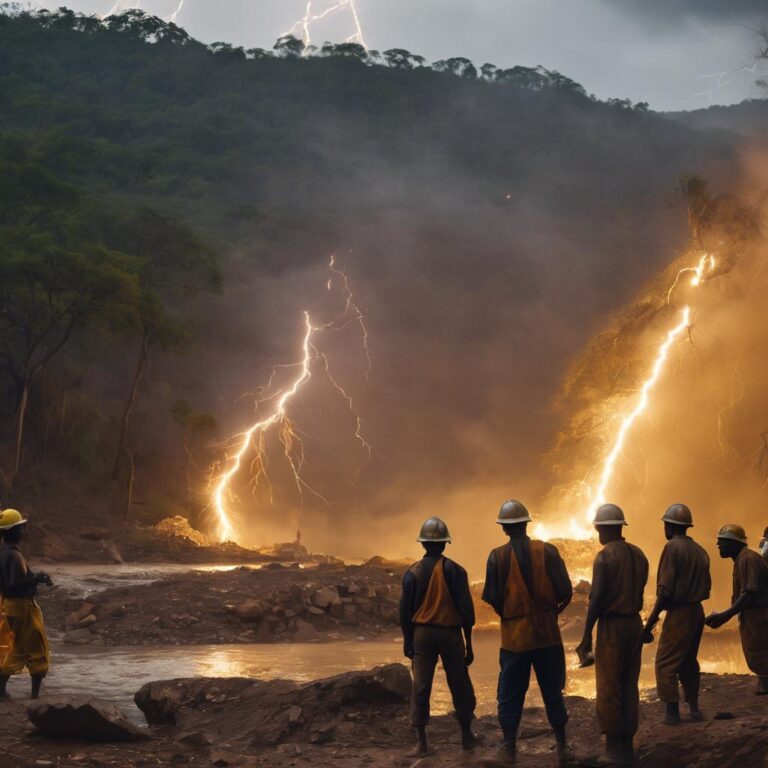
Yesterday, a tragic incident unfolded at the Tix Gold Mine, in Pingo, where three individuals fell victim to a lightning strike.

The details are still emerging, but it has been reported that a group of 15 Makorokozas located at a gold processing base near the Muzvezve River, heading towards the west side, when the unfortunate incident occurred.

Although the severity scale of the lightning strike is still unknown, three individuals were struck and subsequently hospitalized.

“Three were struck by lightning and hospitalised. We will revert with more information,” ZMF chairman for Mashonaland West  Mr Timothy Chizuzu told Mining Zimbabwe.

This is a developing story…

ZIMASCO shuts down operations

0

Zimbabwe Mining and Smelting Company (ZIMASCO), the country’s biggest producer of ferrochrome, has shut down operations as a result of excessive electricity bills and the decline in prices on the international market, a local publication revealed.

In an interview with Business Times yesterday, Namatai Mapfumo, the company’s chief operations officer, confirmed the development and said that the company had been forced to take drastic measures due to the decline in global market prices and high electricity bills.

He said ZIMASCO is currently in negotiations with ZESA.

“Current market dynamics, where global ferrochrome markets have taken a downturn, coupled with the recent increased cost of power,  means it makes sense for us to temporarily halt production from our older less efficient furnaces and take the opportunity to carry out essential maintenance on them while negotiations continue towards a more favourable   power tariff,” Mapfumo told Business Times.

He added: “In the meantime we are running our two upgraded furnaces that came online earlier this year, which are more power efficient and environmentally friendly in line with our continued thrust to move towards our ESG goals,” he said.

In addition, Mapfumo said the company will continue with the expansion project of constructing two modern fully closed furnaces.

“Furthermore, and in line with our long term strategy of continued responsible value addition, our expansion project of the construction of two modern fully closed 19.8MVA furnaces remains on course with the first new furnace expected to be completed at the end of next month, while the second furnace should be completed at the end of January 2024,” he said.

According to Mapfumo, the completion of the ongoing power tariff negotiations and the state of the global market will determine when these furnaces are commissioned and turned on.

“However, given the current power cost, coupled with a depressed global market, the switching on and commissioning of these furnaces is subject to finalisation of the ongoing power tariff negotiations,” he said.

The majority of businesses  across the country have been struggling with the rise in power tariffs because they are unable to continue operating at such exorbitant prices.

Business Times

New platinum group metals demand may be on way in energy generation and storage

0

New demand for platinum group metals (PGMs) may be created in the energy generation and storage field, Toronto- and New York-listed Platinum Group Metals (PTM) stated on Wednesday.

The unique properties of PGMs as powerful catalysts are being applied to various technologies as possible solutions for more efficient energy generation and storage, PTM, headed by CEO Frank Hallam, stated in a release to Mining Weekly.

Highlighted in the 2023 annual results document was PTM’s battery technology initiative, which has reached an advanced stage in partnership with the Johannesburg Stock Exchange-listed Anglo American Platinum (Amplats).

Lion Battery Technologies has engaged the Battery Innovation Center in the US to help drive commercialisation of its next generation platinum- and palladium-based battery chemistries.

Lion is advancing both proprietary lithium-sulphur and enhanced lithium-ion, or NMC, technology using the catalytic properties of platinum and palladium.

The Lion battery technology initiative with partner Amplats involves a potential entry of PGMs into the high-profile lithium battery research and innovation field.

Lion’s target is to develop batteries with specific energies that are 20% to 100% higher than current technologies while meeting or exceeding their present cycle lives.

The investment in Lion creates a potential vertical integration with a broader industrial market development strategy to bring new technologies to market which use palladium and platinum.

Research and development efforts by Florida International University on behalf of Lion are ongoing. Technical results from Lion’s research may have application to most lithium-ion battery chemistries and the scope of Lion’s research work is being expanded.

Independent small- and large-scale trials to validate Lion’s proprietary platinum- and palladium-based electrode composition, slurry, and films in both lithium-sulphur and lithium-ion coin and pouch cells are being conducted.

WATERBERG PROJECT

PTM is focussed on advancing the Waterberg project, located on the northern limb of South Africa’s Bushveld Complex.

The near-term objectives of the Waterberg project, planned as a mechanised, shallow, decline access palladium, platinum, gold and rhodium mine, are to take a development and construction decision, along with construction financing and concentrate offtake agreements.

As of November 21, the directors, and shareholders of Waterberg JV Resources have been in the process of approving a Stage 3 budget of $1.62-million for continued work on the Waterberg project.

The Stage 3 budget – from September 1, 2023, to February 29, 2024 – is a subcomponent of the $21-million work programme approved in principle last year.

PTM has reported the closing of a non-brokered private placement of common shares at a price of $1.18 a share. An aggregate of 2 118 645 common shares were issued to existing major beneficial shareholder, South Africa’s Hosken Consolidated Investments, through its subsidiary Deepkloof Limited, resulting in gross proceeds to the company of $2.5-million.

Closing of the private placement allowed Hosken, headed by CEO Johnny Copelyn, to return to a near 27% interest in PTM.

Japan Organisation for Metals and Energy Security, known as Jogmec, and Hanwa have established a special purpose company to hold and fund their future equity interests in the Waterberg project.

The combined interests of Jogmec (12.195%) and Hanwa (9.755%) were consolidated into a 21.95% interest going forward.

Many exploration boreholes sunk have intercepted PGMs mineralisation consistent as part of the Waterberg project, which is being jointly developed with the Johannesburg Stock Exchange-listed Impala Platinum together with Mnombo, Jogmec and Hanwa.


ZSE & VFEX Mandatory Sustainability Reporting and Minimum Disclosure Requirements: Applications to the Mining Sector

0

Companies listed on the Zimbabwe Stock Exchange (ZSE) and the Victoria Falls Stock Exchange (VFEX) will, starting January 2024, be required to report on sustainability issues as part of their financial disclosures.

Alexandra Mliswa

This move by the regulator, titled Practice Note 16, is a welcome one that I have been advocating for since 2020. In doing so my main drive has been mandatory sustainability reporting across the mining sector for both listed and unlisted companies due to the inherently destructive nature of mining operations.

However, this does not take away from the work that has been done by the regulator and gives us a good start as we have about four mining companies listed on the ZSE and VFEX jointly.

The question we need to grapple with is whether the minimum disclosure requirements effectively cover ESG topics relevant to the mining sector and secondly, if they push listed mining companies to develop ESG strategies that they deliver on. My brief comments on those issues are as follows:

Globally recognized sustainability reporting standards

Firstly, the regulator did a good job by not reinventing the wheel and opting to use the existing globally recognized sustainability reporting standards, namely, GRI (Global Reporting Initiative) and IFRS (International Financial Reporting Standards) albeit that most, if not all, of the standards reference GRI while only some refer to IFRS- which I mention merely as an observation and not to point out a fault or objection.

Practice Note 16 goes further to categorize the disclosure metrics into Economical, Environmental, Social and Governance which will make reporting easier for the listed companies but I will focus on the latter three which comprise ESG.

Social

On Social: Sustainable Community development through CSR and CSI  has been a longstanding heated issue when it comes to mining companies and I am pleased to see local community listed as a metric that requires companies to disclose their contributions towards communities as well as the  SDG goals contribution. The SDG element is particularly clever because it forces companies to re-evaluate their CSR/CSI strategies to reflect real issues outlined in SDG goals such as water and sanitation or healthcare for instance. We know of many reports of companies donating t-shirts to soccer teams or money to a church and calling it CSR. While these are not bad things, they are not the standard of activities that contribute to sustainable community development or truly bettering the lives of local communities beyond the lifespan of a mine.

The Gender diversity metric can promote the hiring of more female employees and of course, contributes to SGD goal 5 as well as our NDS1 strategy which looks at women empowerment. On a practical level, mining is largely a male-dominated industry and having more female employees can ease the pressures of the workplace that many women in mining currently face.

Lastly, on Social,  the Occupational Health and Safety metric is a big one here due to the hazardous nature of mining and may push companies to take HIRA and other HSE issues seriously by developing or implementing policies and ISO standards.

Governance

On Governance, the Board composition metric also pushes the women empowerment agenda as companies may appoint more females on the board as key decision makers.

On the Environmental side, I’ve identified 3 metrics that have the potential to influence some change. Firstly, material metrics can help the supply side of the economy by showing what materials are used and possibly boosting the local availability of those materials/chemicals used in mining. As well as highlight the more harmful materials that have been outlawed or could be substituted for less hazardous materials.

Second, the Waste metric can assist EMA to cross-reference the waste reported and waste management as well as provide an opportunity for waste reduction, recycling and ultimately zero-waste operations which may contribute to technological advances around waste management.

Lastly, Emissions metrics help us to monitor our NDCs ( Nationally Determined Contributions), as well as provide the opportunity to adopt mitigation and adaptation strategies such as renewable energy.

While this is a move in the right direction, it’s no secret that some mining companies already greenwash and misrepresent issues in their annual reports. SECZ is the responsible regulator for listed companies and penalties for greenwashing or misrepresentation of sustainability reports are still unclear an issue that needs to be rectified if any of this is to be taken seriously and for the integrity of the disclosures to be kept intact.

Finally, this new development is a bold move in the right direction and highlights once again how important ESG is and cannot be ignored. Mandatory ESG disclosures must be adopted across the mining sector not only due to the destructive and disruptive nature of the activity but also as a catalyst to drive for sustainable community development and contribute to SDG goals.  To this end, ESG matters as well as issues around greenwashing should be incorporated into the Mines and Minerals Act and given criminal offences for noncompliance.


Alexandra Mliswa is a lawyer by profession who has been working in the mining space. She is an ESG enthusiast and has GRI certification in sustainability reporting which her consultancy Alteri Consultants (https://www.alteri.co.zw/ ) offers as well as services in developing and implementing ESG and CSR strategies.

Nearly four thousand miners lost employment in Q2

0

Nearly 4000 people employed in the mining industry lost employment during the second quarter of 2023, statistics by Zimbabwe National Statistics Agency (ZimStat) show.

Rudairo Mapuranga

According to ZimStat, overall during the period, 68 296 people lost employment in all the sectors of the economy with the mining industry accounting for 5.6 per cent of the total which is 3 825.

Zimstat shows that of the 3,239,965 people formally employed in the country, 6.2 per cent translating to 200 878 were employed by the mining industry during the second quarter of 2023. The statistics show that 8,017 people reported work-related illness or injury in the mining industry.

According to Zimstat 138 925 in the mining industry are informally employed meaning they work mostly in the artisanal sector where workers work without registers or any documentation.

The mining industry of Zimbabwe is highly diversified, with 63 different minerals. The predominant minerals mined by the industry include platinum, chrome, gold, coal, and diamonds. The country boasts the second-largest platinum deposit and high-grade chromium ores in the world, with approximately 2.8 billion tons of platinum group metals and 10 billion tons of chromium ore. The sector accounts for about 12 per cent of the country’s gross domestic product (GDP).

Ariana Starts Drilling for Gold in Zimbabwe’s Promising Dokwe Project

0

Ariana Resources PLC (AIM:AAU) said it has begun an exploratory due diligence drilling programme on the Dokwe gold project in Tsholotsho, Zimbabwe, where it has a 1.3% interest.

The AIM-listed explorer’s stake in the venture, which is majority owned by Rockover Holdings Ltd, was acquired through the Asgard Metals Fund, as announced last week.

With Dokwe boasting roughly 1.3 million ounces in JORC measured, indicated and inferred resources, Ariana said it has started a 1,500-metre (m) diamond drilling program focusing on two primary zones: Dokwe North and Dokwe Central.

These areas have previously yielded significant gold intercepts, it noted, with Dokwe North revealing an 8m strike at 197.22 grams per tonne (g/t) gold (Au), including a remarkable 1m intercept of 1,568 g/t Au. Dokwe Central, on the other hand, has reported a 49m strike at 4.42g/t Au.

Ariana’s exploration technology and specialist teams are currently conducting a historical data review alongside the diamond drilling, to validate historical data and better understand the structural geology before advancing discussions with Rockover, said Ariana’s managing director Kerim Sener.

“Building on the operational base we have established in Turkiye with strong and experienced local partners, we are making strides to expand our portfolio,” Sener added.

He said Dokwe represents “a potential bulk-tonnage mining opportunity upon which a positive pre-feasibility study has been delivered and which could be advanced to feasibility in the near term. At this stage, we see potential at Dokwe to identify further resources in the vicinity and to develop a multi-decade mining opportunity in Zimbabwe.”

About Dokwe Pan

Dokwe Pan is in Tsholotsho, Matabeleland North Province. Pan is a near-level shallow, natural depression or basin, usually containing an intermittent lake, pond, or pool.

Private gold buyers buying gold at higher prices – Shamva MP

0

The Zimbabwean government is facing calls to enforce its gold pricing policy after allegations emerged that private players are purchasing the yellow metal at higher prices than the State-set rate.

The allegations were raised by Shamva South Member of Parliament (MP) Joseph Mapiki, during a Question and Answer session on Wednesday.

Mapiki asked the Ministry of Mines and Mining Development to explain why private buyers are willing to pay more for gold than the government.

“The Minister stated clearly that he is issuing licences to private players. I want the Hon. Minister to explain why they buy at a higher price than Fidelity Printers. I want to understand where they sell their gold,” said Mapiki.

The Deputy Minister of Mines and Mining Development, Polite Kambamura, responded by saying that the government sets gold prices based on international market prices daily and that any buyer purchasing at a higher price would be required to explain.

“If there is any buyer purchasing at a higher price, please show us that buyer because as Government, we have set prices depending on the international market prices on a daily basis just like when bread is priced at a dollar.

“If we find you buying bread at $10.00, we would need an explanation as to why you are buying at such a price when Bakers Inn is selling at $1,” said Kambamura.

The allegations of private buyers purchasing gold at higher prices than the government-set rate raise concerns about the transparency and fairness of the country’s gold market.

Zimbabwe on the 1st of November 2023 re-introduced the once abolished 75% us$ payments and 25% local currency payment system for Small-scale miners. This did not sit well the miners on Mining Zimbabwe’s facebook page after we asked how the new 75/25% payment system is. 99% of the miners who responded said it was a wrong move lamenting that all consumables, equipment, accessories are sold in US dollars.

KMH aims for 200M tonnes JORC certified resource size

0

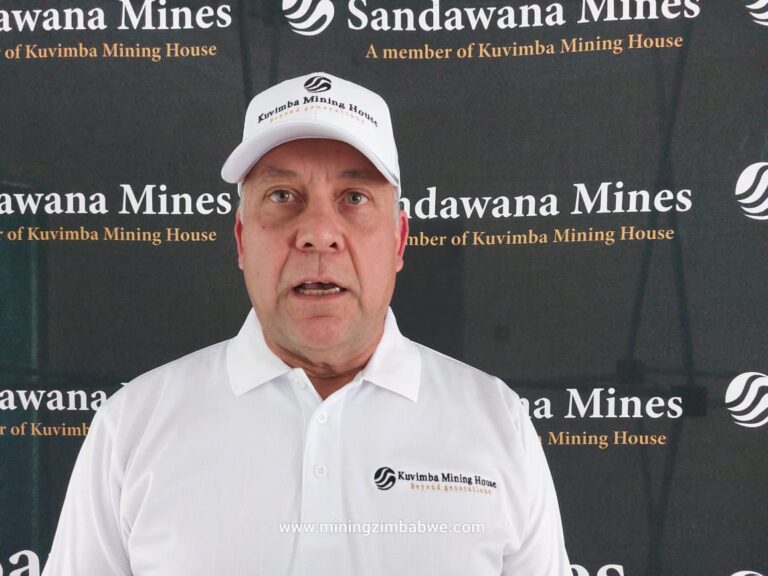
The country’s biggest mining company Kuvimba Mining House (KMH) is expecting to have a JORC-certified resource size of around 200 million tonnes in totality following the completion of phase 3 and 4 exploration, KHM director of energy cluster Trevor Barnard has hinted.

Rudairo Mapuranga

Addressing journalists at KMH Headquarters in Harare on Wednesday, Barnard said KMH has completed phase 1 exploration at the Sandawana Lithium project and has embarked on phase 2 which is expected to be complete by the end of the first quarter next year with the mine targeting 100 million tonnes at the end of the campaign. The results of the exploration will be reported following precisely the Australasian Code for Reporting of Exploration Results, Mineral Resources and Ore Reserves (‘the JORC Code’).

The main principles governing the operation and application of the JORC Code are transparency, materiality and competence.

According to Barnard, chemical analysis and assaying work will be done and is expected to be complete in the next two weeks and from the initial exploration results, the resource is estimated to be around 50 million tonnes at a grade of about 1,6 per cent.

He said Phase 2 of the exploration programme at Sandawana is already in progress and expected to be complete by the first quarter of next year with the company targeting to double the resource from the 50 million tonnes of phase 1 to 100 tonnes for both phases.

“We estimate that we’ll double the size of the resource by that time. If you put that in context Sandawana Mines with that high grade and with that level of resource size would be a very significant resource in international terms.

“We decided to develop a three million tonnes per annum mine and processing plant at Sandawana Mines in the short term,” Barnard said.

Barnard said that at the end of phase 4 exploration, the Sandawana Lithium project will be one of the biggest lithium mines in the world totalling 200 million tonnes with phases 3 and 4 expected to produce results of 100 million tonnes.

“We are also doing further phases of exploration, phases 3 and 4 and the overall expectation is that we would end up at the resource size of around 100 million tonnes in totality, that can’t be confirmed at this stage but that is from our initial exploration expectations and evidence that we found on site.

“From that perspective, this would be really one of the biggest in the world. The next step is the development of the mine and the project,” said Barnard.

What is JORC certification?

The JORC certification is an Australasian Code for Reporting of Exploration Results, Mineral Resources and Ore Reserves (‘the JORC Code’) is a professional code of practice that sets minimum standards for Public Reporting of minerals Exploration Results, Mineral Resources and Ore Reserves.

Sandawana Mines

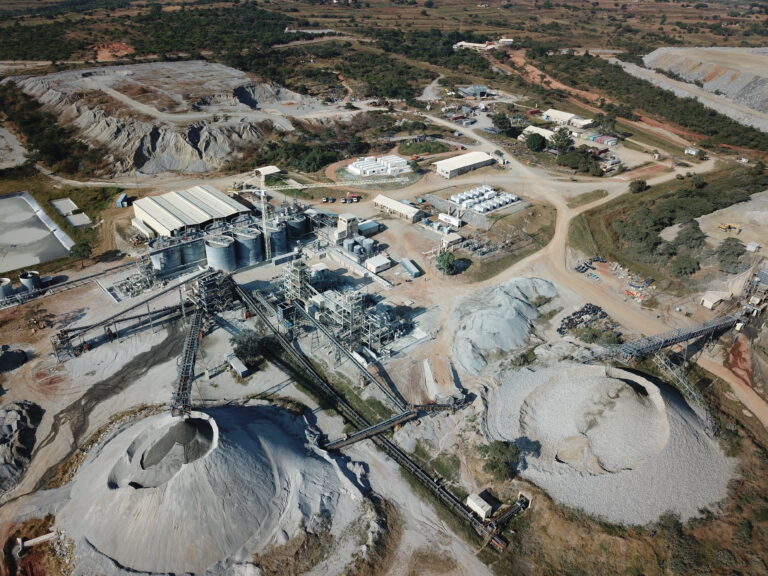
Sandawana Mines ( formerly Sandawana) Resuscitated in 2023. The Mine is currently drilling as well as conducting feasibility studies. The Mine will also do floatation and finally producing lithium grade carbonate at more than 99%.

Padenga gold production increases 12 percent

0

Gold production by diversified Victoria Falls Stock Exchange listed company Padenga Holdings Limited, increased by 12 per cent during the nine months to 30 September 2023 compared to the same period last year due to an increase in tonnes milled and mill feed grade, the company announced through a trading update for the third quarter (FY2023).

Padenga recently acquired 100 per cent ownership in gold-focused mining company Dallaglio Holdings which owns Pickstone Peerless Mine and Eureka Gold Mine which is one of the largest and most technologically advanced mines in Zimbabwe.

According to Padenga Holdings Limited’s trade update for the third quarter (FY2023), gold production during the period 1 January to 30 September 2023 stood at over 1.6 tonnes compared to under 1.5 tonnes produced during the same period last year.

The trading update stated that tonnes milled increased by 5 per cent during the nine months due to positive plant throughput at Eureka Mine and a new mill at Pickstone Peerless Mine. The mill feed grade also increased by 6 per cent due to the coming in of the Pickstone underground project.

“Gold sales in the nine months to 30 September rose by 12% in comparison to the same period last year (1 664.8 kgs vs 1 480 kgs). This was achieved on the back of an increase in tonnes milled and mill feed grade. The tonnes milled increased by 5% to 1 332 973 Mt from 1 267 421 mt recorded for the nine months to 30 September 2022. This was due to positive in plant throughput at Eureka Mine, achieved through optimization as well as the addition of a new mill at Pickstone Peerless Mine. Mill feed grade also registered a 6% increase (1.42g/Mt vs 1.34/mt).

“The Picksone underground project was completed at the end of August 2023, with commercial hoisting of ore commencing in September 2023,” the trade update reads in part.

According to the trading update, underground operations at Pickstone will increase gold output for the group.

“Production out of the Pickstone underground operation is set to increase gold output for the group. Management’s priority is to ensure a smooth ramp-up of underground operations by the end of the financial year. The gold Outlook appears firm for the remainder of the year with prices having recovered after the reporting date,” the trade update reads.