Home Blog Page 252

BayHorse Mine accident update: 13 escaped, 8 rescued, 4 bodies retrieved, 14 feared dead

0

Twenty-one people survived the BayHorse Mine collapse in Chegutu where over 30 people were trapped due to a fall of ground at the 150m deep mine shaft, Zimbabwe Miners Federation (ZMF) Mashonaland West Chairperson Timothy Chizuzu told Mining Zimbabwe.

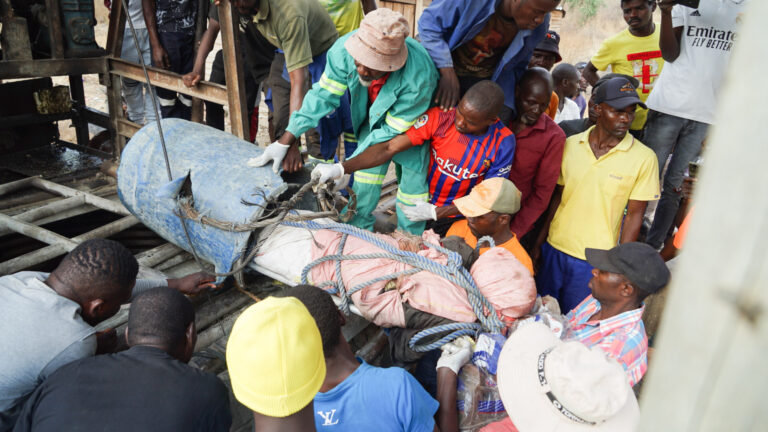
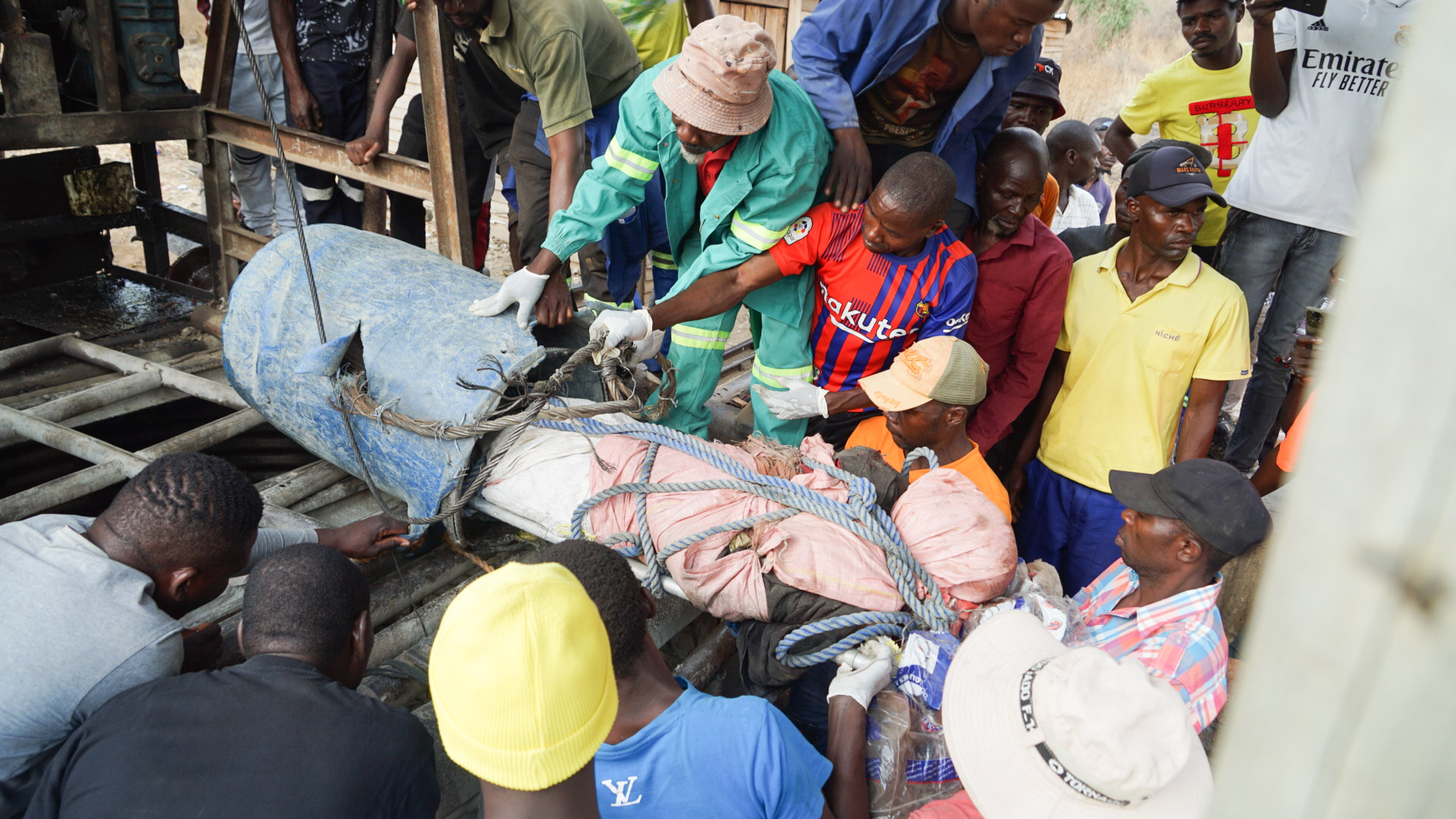
Currently, 13 people have escaped from the disaster with 8 others rescued while 4 were retrieved dead with the remaining 14 people feared dead.

According to Chizuzu, the number of people who are trapped at BayHorse Mine is increasing as information comes due to some who were illegally mining underground through a Syndicate run by Mine security.

Chizuzu who is also working with the rescue team to retrieve the bodies of the miners said four people were retrieved dead while others who are still trapped are believed to be dead.

“The current update is that from the people who are supposed to be in the shaft, the numbers are fluctuating. At first, they were saying it was 32 now they are saying 39. Currently, 13 escaped alive, 8 were rescued 4 were retrieved dead. The team is working on retrieving other bodies that are blocked by a stone boulder which is 4m×2m. Rescuers are looking at ways to remove that boulder. They are planning on how best they can pull out the stone. There is also an issue of water levels that are rising and currently, we are working on pumping out the water to try to move the stone border. From the information we got, the size of the collapse was 60m by 50m underground so it was a huge collapse. The exact number of people trapped is currently not known because they were other miners who were going underground to mine illegally through a Syndicate run by the mine security,” Chizuzu said.

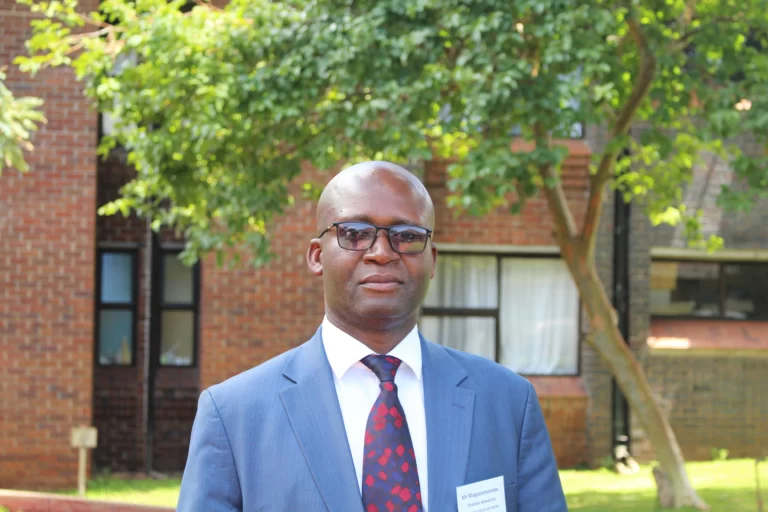
Meanwhile, Fidelity Gold Refinery (FGR) General Manager Mr Peter Magaramombe has expressed condolences and heartfelt sympathies to the grieving families affected by the tragic mine accident.

In a statement, Magaramombe also conveyed sincere hopes for a swift recovery to those who have sustained injuries.

“On behalf of Fidelity Gold Refinery (FGR) and on my own behalf, I would like to express our deepest condolences and heartfelt sympathies to all bereaved families affected by the recent mine accident at Beyhorse Mine in Chegutu. Our thoughts and prayers go out to the families of the deceased, and we extend our sincere wishes for a speedy recovery to those who have been injured.

“This Mine accident has undoubtedly caused immense pain and sorrow within the Zimbabwe mining community. As Fidelity, we stand in solidarity with you.

“We also want to acknowledge the spirited efforts of the rescue teams who are tirelessly working to rescue those who are still stuck underground,” Magaramombe said.

Fidelity Gold Refinery (FGR) extends condolences and support to families affected by Bayhorse mine accident

0

Fidelity Gold Refinery (FGR) General Manager Mr Peter Magaramombe has expressed condolences and heartfelt sympathies to the grieving families affected by the recent tragic mine accident at Bay Horse Mine in Chegutu.

Bay Horse Mine ChegutuIn a statement, Magaramombe also conveyed sincere hopes for a swift recovery to those who have sustained injuries.

“On behalf of Fidelity Gold Refinery (FGR) and on my own behalf, I would like to express our deepest condolences and heartfelt sympathies to all bereaved families affected by the recent mine accident at Beyhorse Mine in Chegutu. Our thoughts and prayers go out to the families of the deceased, and we extend our sincere wishes for a speedy recovery to those who have been injured.

“This mine accident has undoubtedly caused immense pain and sorrow within the Zimbabwe mining community. As Fidelity, we stand in solidarity with you.

“We also want to acknowledge the spirited efforts of the rescue teams who are tirelessly working to rescue those who are still stuck underground,” Magaramombe said.

Thirty people were trapped underground at Beyhorse Mine in Chegutu after the 150m deep Mineshaft collapsed on Friday last week.

According to Deputy Minister of Mines and Mining Development Eng Polite Kambamura, 13 miners have been rescued so far and 21 others remain trapped underground. Rescue efforts are currently underway and it has been highlighted that the mission to comb the debris for bodies and survivors was hampered by the unstable ground, which continued to cave in.


13 rescued, 21 remain trapped underground in Chegutu

0
13 miners have so far been rescued and 21 others remain trapped underground at Berhose mine in Chegutu, Deputy Minister of Mines and Mining Development Eng Polite Kambamura has advised.
Six bodies have since been recovered, with rescue efforts focused on trying to rescue the remaining 15 people.
More to follow…

BREAKING: 30 feared dead after shaft collapse in Chegutu

0

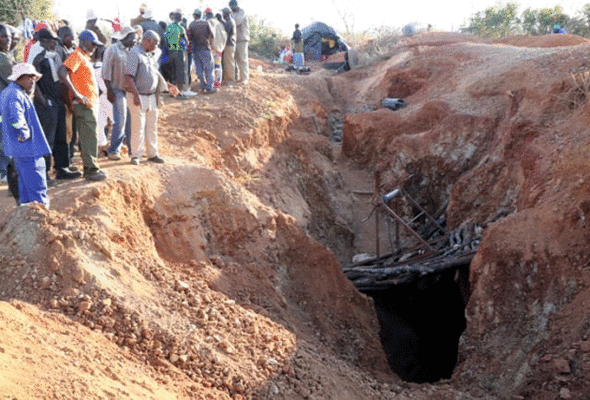
Thirty people are feared dead at Bayhorse Mine in Chegutu (Chakari) after the 150m deep Mine collapsed, Chegutu Miners Association Chairperson Innocent Nicks told Mining Zimbabwe.

Rudairo Mapuranga

According to Nicks, the Mine management has already fled the mine fearing attacks from stakeholders concerned with how the mine has been operating.

He said of the 30 people believed to be trapped underground, only 3 people were heard crying for help.

“It is alleged that 30 people are feared dead as the mine collapsed at around 150 meters underground. The mine management has just fled the scene fearing attack from emotional people. It is said one person managed to get out of the mine shaft and the person fears many have died. Only 3 people can be heard crying for help.

“Chegutu East Constituency coordinator, under Hon Webster Shamu is on the ground and is requesting help from the community, companies and all relevant departments to come and assist in retrieving bodies from the mine,” Nicks said.

Mining Zimbabwe has also notified the Mine Rescue Association of this tragedy.

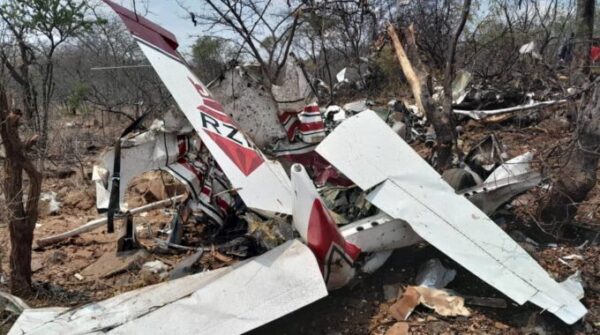
Meanwhile, six people died after an RZM Murowa plane crashed in Mashava this morning.

Murowa diamonds plane crash claims 6 lives

0

Six people were killed when a Murowa Diamonds plane crashed in the Zvamahande area near Mashava, Masvingo province.

The cause of the crash which happened at around 7 AM is yet to be established as investigations are currently underway.

There are allegations that in the plane were also members of the Management team although sources declined to name the two.

Murowa Plane Accident history

In February of 2023 a light plane owned by Murowa (Private) Limited, force-landed near Beatrice. The plane was carrying a parcel of diamonds which were being transported under armed guard by police and private security officials.

The Piper 31 Navajo aircraft landed on a field about 16km from Beatrice and had five people on board.

Police reported that no one was killed in the crash, but five people on board were injured and taken to hospital for treatment.


Bikita Minerals exports over 90 000 tonnes of Petalite

0

Zimbabwe’s biggest lithium producer Bikita Minerals during the period January to August 2023 exported 90 421 tonnes of lithium petalite making the company the biggest producer of lithium in Africa.

Rudairo Mapuranga

The lithium miner exported its first lithium spodumene concentrates consignment to Europe and China this month, and is targeting to ship 70 000mt of spodumene by the end of the year.

The average product grade for the lithium spodumene that Bikita will be exporting is speculatively between 5% to 5.5% Li20.

China’s Sinomine Resource Group, the owners of Bikita Minerals who early last year acquired the project, invested US$200 million to build a spodumene concentrates plant to expand its mining operations.

Bikita Minerals has taken heed of Zimbabwe’s call to prioritize value addition and beneficiation before exporting Minerals.

President Mnangagwa hinted that the company has the potential to emerge as a key player in the rise and popularity of the battery manufacturing industry. However, he also expressed his concern that the company should not benefit alone from global achievement but the community in which it is located should also be a beneficiary.

He said that his government has implored the company, to prioritize the Bikita community as it digs in its soil and urged the company to care for its workers and environment.

“We have told them that under the Second Republic, we would want to see that lithium is essential to the growth and development of Zimbabwe’s economy. They told us that after two years the company will be generating US$500 MILLION per annum.

“Companies are challenged to listen to their host communities and address their concerns. Communities must equally appreciate that investors are indispensable partners in the realisation of sustainable development and a higher quality of life for all.

“Mining companies must be good corporate responsible citizens, with Corporate Social, Environmental Social, and Governance aspects being critical components of their entities. Tangible socio-economic advantages and benefits should accrue to societies in which they operate. In undertaking their ventures, companies are challenged to listen to their host communities and address their concerns. Communities must, on the other hand, equally appreciate that investors are indispensable partners to the realisation of sustainable development and a higher quality of life,

“For greater harmony and unity of purpose, mechanisms should be developed to improve transparency and accountability so that aspects of the project are understood, while grievances are heard and addressed. “The safety and treatment of employees is also a key component. Mining companies must strive to be model employers by treating and remunerating their workers appropriately,” the President said.

Bikita Lithium Mine is Zimbabwe’s biggest lithium producer and is the home to the world’s largest-known deposit of the metal at around 11 million tonnes.

Bikita Minerals has been an active mining site for around 100 years.

For over 50 years, the mining and extraction of lithium minerals have been at the centre of Bikita Minerals’ activities. Today, Bikita Minerals is the World’s foremost supplier of the lithium mineral Petalite.

ZELA, ZCC, ZIMCODD to host Hurungwe Mining Indaba

0

In an endeavour to create a platform for communities in Hurungwe district to share experiences in fighting inequalities and exclusionary mining policies and practices within their community, the Zimbabwe Environment Law Association (ZELA), the Zimbabwe Council of Churches (ZCC) and the Zimbabwe Coalition on Debt and Development (ZIMCODD) will on Friday host Hurungwe District Alternative Mining Indaba.

Rudairo Mapuranga

The District Alternative Mining Indaba (DAMI) platforms have promoted legal and policy developments at the national level that promote community benefit from natural resources. The platforms have proven to be effective for citizens to engage duty bearers and Mining companies to lobby for Responsible Mining anchored on transparency and accountability.

The DAMI was organised to Provide communities and non-state actors with a safe space for meaningful dialogue, critique, and analysis of their relationship with extractives and locating pathways to improved lives and livelihoods; Provides the opportunity for capacity building, knowledge and information sharing between communities and non-state actors on key concepts and issues in the extractive industries; and To co-create recommendations and solutions to challenges and gaps, translating mineral wealth and potential to people-centred development that is environmentally sustainable.

The DAMI will be a one-day activity targeting 30 participants (10 males, 20 females inclusive of youths and PWDs). The activity will be conducted at Hurungwe Council Boardroom whereas mobilisation of participants will be done in a non-discriminatory manner and Inclusivity of gender, age, geographical location and institution will be considered. Participants will include ZCC local structures, representatives from ZELA and ZIMCODD while stakeholders will be drawn from the Hurungwe Rural District Council, Ministry of Mines, District Development Coordinator’s office and representatives from Community-Based Organisations dealing with mining in the area. Sessions will include natural resources governance, reading of the context, panel discussions, keynote presentations, plenary sessions and discussions that will culminate in the development of action plans by participants.

Background

Zimbabwe is endowed with a wide variety of valuable natural resources which when managed well has the potential to unlock sustainable socio-economic development. Nevertheless, the mining sector’s potential to turn around the economic fortunes of an impoverished nation is undermined by poor governance characterised by corruption, irresponsible mining and mineral resource leakages in general. Mining is infamously recorded in Zimbabwe as leading to displacements and destruction of communities’ natural environment, livelihoods, and economic, social and cultural bases. The extractive model in Zimbabwe has continuously caused a number of challenges to the community. Environmentally, mining activities have led to biodiversity loss (wildlife, agro-diversity), desertification/drought, food insecurity (crop damage), genetic contamination, loss of landscape, noise pollution, soil contamination, waste overflow and loss of vegetation.

Mining plays a key role in Zimbabwe’s economy, contributing 5% and 23% to the country’s gross domestic (GDP) and total exports, respectively. It also generates foreign currency and supplies raw materials to some industries. In February 2023, projected gold deliveries to reach 40 tonnes in 2023 mainly due to new gold mining projects coming into production, a significant rise from 2022’s totals of 35 tonnes1. Hurungwe District is known for its abundant natural resources, including gold in several Artisanal-Small Scale mining.

However, the exploitation of these resources has resulted in environmental degradation, social conflicts, and human rights abuses. The lack of a clearly defined legal framework has plunged gemstone mining in Zimbabwe, specifically the Hurungwe District. Mining operations in Zimbabwe are governed by the Mines and Minerals Act (CAP 21:05) of 1996. The Act dates to the colonial Act of 1961 which has been revised numerous times. 2 The continued delays in passing and review of the Act to meet the standards required for regulating the mining industry have exacerbated many challenges including the issue of illicit financial flows and gold smuggling. The Aljazeera 3 documentary of 2023 exposed ills in the industry and further illuminated the fears over how gold is being exploited without the beneficiation of the host communities especially where big mining companies are operating. Artisanal Small-Scale Mining (ASM) is also at the centre of problems with gold mining in Zimbabwe including corruption, sexual exploitation, gangsterism, violence, health hazards and environmental degradation to mention but a few. Small-scale mines control up to 65 per cent of active gemstones and gold deposits in the country, according to the Zimbabwe Miners Federation (ZMF). An estimated 1 million people earn a direct livelihood in the artisanal, small-scale mining industry. 4 In Hurungwe, many artisanal miners have been pushed into mining by poverty and the loss of their agricultural land to mining. Many find themselves vulnerable to dangerous conditions, violence, and extortion because of their illegal status. 5 Unsafe mining practices done by ASM have made the area an environmental eye-sore as visibly abandoned mining pits are seen everywhere even on roads, posing a danger not only to people but also to their livestock that are often trapped into these gullies. The inverse relationship between development and exploitation in Hurungwe raises a lot of questions on whether mining has changed the lives of the people in the mining area. The adoption of the Devolution Framework in 2020 sought to address the issue of devolving powers as well as resource distribution in Zimbabwe.

However, Hurungwe District still lacks the basic infrastructure for a community host to vast deposits of minerals. Russian and Chinese small-scale companies operate in the district, but community beneficiation has been the least of the concerns of the companies as well as the government where the investment deals are made a secret violating the principles of transparency and accountability. It is therefore against this background that the ZCC, ZELA and ZIMCODD organise indabas annually to discuss and co-create solutions together with the government, private sector, and local communities and form collaborations and networks with CSOs towards the 12 billion Mining Economy by 2023.

Gold buying prices 28 September 2023

0

Fidelity Gold Refinery (FGR) official gold buying prices. See the Zimbabwe gold buying prices today 28 September 2023.

SG 90% AND ABOVE US$57.34/g
SG ABOVE 85% BUT BELOW 90% US$56.73g
SG ABOVE 80% BUT BELOW 85% US$56.12/g
SG ABOVE 75% BUT BELOW 80% US$55.52/g
SAMPLE BELOW 10g BUT ABOVE 5g US$54.61/g
FIRE ASSAY CASH US$57.64/g

NB: Fire Assay cash price is for gold above 100gs, no sample is deducted.
For the Fire Assay Transfer price, a sample of not more than 10g is deducted
A 2% royalty is charged on all deposits (small-scale miners)
A 5% royalty is set for Primary Producers

Cash available. Fidelity Gold Refinery prices will be changing daily to match world market prices.

Steel, cement, & lithium important for Zim’s industrial revolution

0

Steel together with cement plus the popularity of lithium in the green revolution anchors the industrial development agenda for Zimbabwe, United Nations Industrial Development Organisation (UNIDO) country representative for Zimbabwe Mr Tichaona Mushayavanhu said.

Rudairo Mapuranga

Speaking to Mining Zimbabwe on the sidelines of the Stakeholder Validation Workshop On the Draft Zimbabwe National Industrial Development Policy (2024-2030) in Harare on Tuesday, Mushayavanhu said Steel and cement manufacturing are major catalysts for economic development. He also said that lithium which is now popular now is very key in terms of driving the economy from a green energy perspective.

“Steel and cement manufacturing are major catalysts for economic development. We have seen that the country is developing the steel industry. Steel anchors the industrial revolution agenda, Steel and cement manufacturing indicators go in parallel to the industrial to the industrial development agenda. Lithium which is popular now is very key in terms of driving the economy from a green energy perspective. Value Addition and Beneficiation of lithium will lead to economic development,” Mushayavanhu said.

Mushayavanhu also said there is a need for Zimbabwe’s industry in terms of Steel manufacturing, cement manufacturing and battery manufacturing to attract long-term capital for the industrial revolution to be complete.

He said the industrial development policy should therefore not be limited only to industrial manufacturing but the whole industrial spectrum like mining and agriculture value addition and beneficiation, education for industrial growth and transport among other industries.

“Zimbabwe requires what we call industrial capital for mineral value addition and beneficiation to be a long-term growing industry. If the country attracts long-term capital it will be posed to an unstoppable growth. The industrial policy of the country should also be broad and not limited to industrial manufacturing alone. It should touch on education, mining, agriculture, and health Ministry among others,” he said.

Presenting at the event the Secretary for Industry and Commerce Dr Mavis Sibanda said going forward the industrial development policy will aim at structural transformation to build a strong industry with linkages with agriculture and mining sectors.

“Going forward the draft Zimbabwe National Industrial Development Policy (2024-2030) is aiming to drive structural transformation and build a strong industry, with linkages with the agriculture and mining sectors. In addition, services which include tourism, transport, construction, finance and among others will also spur the growth of the sector,” Dr Sibanda said.

School of Mines warns stakeholders of scammers

0

The Zimbabwe School of Mines (ZSM) has warned prospective applicants of scammers masquerading as ZSM officials soliciting bribes to “facilitate” a place for a study for the 2024 academic year stating that the School does not take any money outside tuition fees and does not have agents.

A public notice issued by the ZSM Principal Mr Edwin Gwaze, warned of a certain Oscar Mpofu who has been taking US$100 bribe from unsuspecting prospective students.

“It has come to the attention of Zimbabwe School of Mines that there is an Oscar Mpofu ID Number 73-127786X23 contactable on 00263783040121 masquerading as Zimbabwe School of Mines Official demanding US$100 from applicants to facilitate a place of study for the 2024 academic year.

“The school advises that it does not have an agent and does not charge any money outside the stipulated tuition fees to secure a place of study.

“Anyone who has been contacted by Oscar Mpofu or any other persons soliciting for bribes or purporting to be representing Zimbabwe School of Mines should contact the School on +263782788815 or the Principal on +263775939620”.

According to its website, the Zimbabwe School of Mines is a bold, ambitious leader, and centre of excellence in mining. It is highly regarded by the Mining industry for producing talented mine engineers, and professionals with strong work ethics. Students will learn from some of the best lecturers in the field and experience hands-on learning opportunities that prepare them to step easily into their first mining job.