Home Blog Page 259

Zimbabwe gold buying prices 22 August 2023

Fidelity Gold Refinery (FGR) official gold buying prices Tuesday 22 August 2023. See the Zimbabwe gold buying prices today.

SG 90% AND ABOVE US$57.41/g
SG ABOVE 85% BUT BELOW 90% US$56.81/g
SG ABOVE 80% BUT BELOW 85% US$56.20/g
SG ABOVE 75% BUT BELOW 80% US$55.59/g
SAMPLE BELOW 10g BUT ABOVE 5g US$54.68/g
FIRE ASSAY CASH US$57.72/g

NB: Fire Assay cash price is for gold above 100gs, no sample is deducted.
For the Fire Assay Transfer price, a sample of not more than 10g is deducted
A 2% royalty is charged on all deposits (small-scale miners)
A 5% royalty is set for Primary Producers

Cash available. Fidelity Gold Refinery prices will be changing daily to match world market prices.

Galileo Discovers Promising Lithium Potential

0

Galileo Resources PLC, an international mineral exploration company, has announced significant progress in its drilling operations at the Kamativi Lithium Project (KLP) in Zimbabwe. The company reported that six holes have been drilled to date, covering a total distance of over 700 meters of diamond drilling.

During the drilling process, the company made a discovery, as the holes intersected approximately 111 meters of pegmatites. These pegmatites exhibited an “appropriately low” potassium/rubidium ratio, indicating a high likelihood of hosting lithium mineralization – a key component in the production of batteries for electric vehicles and renewable energy storage.

This breakthrough offers promising prospects for the company and the Kamativi lithium project, prompting Galileo to plan further follow-up work in the northeastern part of the license area. The upcoming tests will focus on assessing the rare earth element content of the pegmatites in more detail, thus providing crucial information for future resource estimation and potential mining processes.

The unexpected success in drilling operations revealed “significantly” more pegmatite than initially anticipated, thereby shining a spotlight on previously overlooked regions of the license area. These areas were previously considered less prospective, but these latest developments have changed the outlook entirely.

Galileo Resources PLC’s Managing Director expressed his enthusiasm, stating, “The discovery of extensive lithium-potential pegmatites in the license area is a game-changer for us. This unexpected finding unlocks new possibilities and reinforces our belief in the untapped mineral resources in Zimbabwe.”

The company’s endeavour to explore the Kamativi license area aligns with a growing global demand for lithium, driven mainly by the booming electric vehicle sector and increasing focus on renewable energy storage solutions. This fortuitous discovery places Galileo Resources PLC in a strategically advantageous position, considering the rising demand for lithium in future industries.

Identify ASM projects to fund – Gvt told

0

The government of Zimbabwe in its quest to formalise and regularize the Artisanal and Small Scale Mining (ASM) sector for mining growth and development has been advised to identify a few small-scale mining projects in the ASM sector to fund in order to set a clear revolution plan.

Rudairo Mapuranga

Critical minerals are used to manufacture advanced technologies including mobile phones, computers, fibre-optic cables, semiconductors, banknotes, and defence, aerospace and medical applications. Many are used in low-emission technologies such as electric vehicles, wind turbines, solar panels, and rechargeable batteries. Some are also crucial for common products such as stainless steel and electronics these include lithium, tantalite, graphite, nickel, copper, and rare earth elements among others.

Currently, the ASM industry has not been attracting enough capital inflow as most miners are using only their savings to fund projects in this capital-intensive sector resulting in low and stagnant growth.

Stakeholders in the mining industry have been advocating for measures and models to be structured and implemented for the country to witness groundbreaking growth in the ASM industry as this will have positive effects on the country’s economic development.

Speaking to Mining Zimbabwe mineral economic expert Lyman Mlambo said identifying these projects would create a database that will be important for planning and identifying potential funders.

“Identifying these projects and documenting their status is an important exercise on its own, as it creates a database for ASM in critical minerals. This database is important for planning the effective participation of ASMs in the green transition, including gender balance as most woman miners are in the ASM sector. Of course, such a database would be useful to financial institutions seeking to support green transition among ASMs.

“Talking of capital flowing into the ASM, financial institutions work with formalized entities – there is a need to ensure that those ASMs working on critical minerals get their papers in order. There are various conventional (well-known) ways of supporting small businesses financially, and these ways can be applied here. The government can create a loan guarantee scheme (guaranteeing loans to be advanced by financial institutions) specifically focused on supporting ASMs mining critical minerals. Government can facilitate the acquisition of investment and operating capital flows into the ASM sector by negotiating and guaranteeing the following: hire purchase agreements; equipment lease agreements; advance payments by buyers of critical minerals which money is used to produce the critical minerals for uptake by the creditors (some kind of a consumer credit); cash advance by mine suppliers to ASMs at nominal or zero interest rates, for purchase of the former’s equipment and consumables and later repayment (suppliers credit); joint ventures; carried interest and free interest (where title holder meet their financial obligations in a joint venture through future profits or conversion of title into capital contribution); angel investors (individual investors into small firms); venture capital finance (limited partnerships specializing in investing in the equity of young firms); etc. Note that all these efforts can be executed without government facilitation or guarantee – these are well-documented or well-known ways of financing small firms. A very important factor to be underscored here is the formalization of the ASMs involved,” Mlambo said.

Lithium miner Shelton Lucas said identifying critical projects can set an example for financial institutions to be attracted by the ASM industry. This will lead to a proliferation in value addition and beneficiation investment overally making the ASM attractive.

“It is a good idea that the government or financial institutions should identify critical mineral projects (lithium, graphite, copper, antimony and nickel) to find them as to encourage capital to flow into the sector.

The major capital funding should be prioritised on beneficiation by concentration of the aforementioned minerals so that they reach the required threshold which is above the rejection grade by so doing also cutting down on logistics and warehousing losses and also hedging the miners. However, this also comes with a lot of challenges whereby if any venture becomes lucrative some of the miners will be disenfranchised by some of the big wigs and subsequent punitive measures will follow the likes of carpeting all probable mining sites with EPOs, statutory instruments against pegging of some of the minerals. The horizontal forward integrations will now encourage private financial institutions to fund or get involved in the financial process.

“The ASM can attract the so much needed capital by forming associations that are miners oriented and have a collective approach in advocating for beneficiation plants because the government is laden with a lot of projects it will take time for them to attend to this plight,” said Lucas.

According to Parliamentary Portfolio Committee on Mines and Mining Development Chairperson Hon Edmond Mkaratigwa, “There is a need for funding and the market is the best source of business financing as it proves the viability of the business while it equally motivates the business owner to deliver.

“The aspect of identifying special minerals is good but it always has to remain a business case except where the benefits will still be strategically derived in the longer term. In that respect, I am saying, we need to continue to look at all feasible resource mobilisation mechanisms available, while at the same time, capacitating our miners so that they are made ready to grow into bigger miners. Capacitation can assist in building the right mindset for business, among those to be funded.”

Midlands Chiefs Endorse Kuvimba’s, Sandawana Mine

0

Midlands Chiefs Council through its Chairperson Chief Ngungumbane-born Zama Mkhwananzi have endorsed the Kuvimba Mining House (KHM) Sandawana lithium project and commended the mining house for working hand in glove with the Mberengwa community for it to benefit significantly from it’s lithium resources.

Chief Reporter

On Friday KMH’s Sandawana Mines through its General Manager Mr Godwin Gambiza met the 15 chiefs of the Midlands Province for a community engagement to ensure Sandawana Mines’s Corporate Social Responsibility (CSR) initiative serves the community.

According to Gambidza the engagement event with Chiefs was successful with 15 out of 16 Chiefs attending the event. Kuvimba believes that Chiefs are the custodian of culture and therefore responsible for community growth and development. He said Sandawana Mines will engage stakeholders like the council to ensure communities benefit from the resources mined in their area.

“This is our first major engagement with stakeholders here in Mberengwa. We had another small gathering with Chiefs within the Jurisdiction of the Sandawana area, but we then said look we want a more inclusive approach where we not only focus on chiefs within the Jurisdiction of Mberengwa but all the chiefs within the Midlands Province. This is a resounding success that 15 chiefs were able to attend, the only absentee is because he’s not feeling well. Chiefs are the owners of the land that we are mining so it is important that they give us their blessings. This is just the beginning, other than meeting the chiefs on a quarterly basis, we will also be engaging other government stakeholders like the council to ensure the community really benefits from the mining sector,” Gambidza said.

Chief Ngungumbane said Sandawana Mines should adopt the local Enterprises development (LEDS) to ensure companies operating within the Mberengwa District benefit from the lithium resource mined in Sandawana.

“On behalf of the people of Mberengwa, we expect Kuvimba to engage the District because lithium and its Associated minerals are found in this District.

“We want to compliment Kuvimba for employing locals as they have said 80 per cent of the people are coming from this District. We would want to challenge Kuvimba that we have our sons and daughters of this District that provide services to first consider and empower the people of this District,” he said in part

The Chief also said that KMH was supposed to develop Mberengwa to ensure that the people benefit from the lithium resources mined in their area.

“We expect them to develop this area, this area looks very remote and it does not befit the status of Sandawana Mines and that of Kuvimba. We want them to establish essential services here. We expect that Kuvimba should develop this area.

“We expect Kuvimba to improve the source of livelihood, we want in the medium and short term for the mining company to provide water to the people.

“We expect them to tar our major roads,” The Chief said.

Zimbabwe gold buying prices 21 August 2023

Fidelity Gold Refinery (FGR) official gold buying prices Monday 21 August 2023. See the Zimbabwe gold buying prices today.

SG 90% AND ABOVE US$57.53/g
SG ABOVE 85% BUT BELOW 90% US$56.92/g
SG ABOVE 80% BUT BELOW 85% US$56.31/g
SG ABOVE 75% BUT BELOW 80% US$55.70/g
SAMPLE BELOW 10g BUT ABOVE 5g US$54.79/g
FIRE ASSAY CASH US$57.83/g

NB: Fire Assay cash price is for gold above 100gs, no sample is deducted.
For the Fire Assay Transfer price, a sample of not more than 10g is deducted
A 2% royalty is charged on all deposits (small-scale miners)
A 5% royalty is set for Primary Producers

Cash available. Fidelity Gold Refinery prices will be changing daily to match world market prices.

Red Rock engages Chinese agents for the sale of Lithium Ore

0

TOP miner, Red Rock Resources Plc has engaged agents in China in a bid to discuss the modalities to sell lithium ores.

In a recent update, the Africa, South America and Australia-focused natural resource exploration and Development Company said discussions had begun with sales agents in China for sale of lithium ores.

The mining firm, through its subsidiary African Lithium Resources (Pvt) Ltd (ALR), in Zimbabwe, said a potential contract miner sent an experienced South African consultant geologist who from 10th to 14th August with ALR personnel conducted due diligence at ALR’s locations in Zimbabwe.

Accordingly, Dirk Benade, a geologist with 50 years experience of exploration, management, assaying and open pit and underground mining, largely in Zimbabwe, was engaged as Owner’s Representative and a director of ALR.

His professional profile shows that he has worked for, among others, Utah Development Company (now BHP-Utah) Anglo American, Messina Transvaal Development and Falcon Mines.

 Dirk was Managing Director of AIM-listed African Gold Plc, and Senior Geologist of African Consolidated Resources Plc from the time of its AIM listing in 2006 up to 2008.

He has more recently been involved in private company ventures and consulting work.

Red Rock chairman Andrew Bell said the latest developments are poised to strategically focus the group’s sales.

“Regulatory changes over recent months mean that we are focussed on sales to the export market, which realise higher prices but require some combination of selective mining and beneficiation.

“Dirk comes to us highly recommended and his depth of experience and knowledge and international business background makes him a good complement to our enthusiastic local team,” he said.

NewZimbabwe

Miners urged to exercise peace during Polls

0

The Zimbabwe Miners Federation (ZMF) President Ms Henrietta Rushwaya has called upon artisanal and small-scale miners (ASM) to remain peaceful and ensure that mining premises continue to be safe and secure against any possible attacks from political malcontents to ensure that mining business continues to thrive after 23 August national polls.

Rudairo Mapuranga

In a press release, the ZMF President also urged the Miners to report incidents of political violence to the Police. She urged the Miners to celebrate with those that will have won after the official announcement by the Zimbabwe Electoral Commission (ZEC).

“With the 2023 Harmonised Elections in the next 72 hours, we call upon our miners to ensure that they observe peace before, during and after the 23rd of August. Let us ensure that our mining premises continue to be safe and secure against any possible attacks from political malcontents. Kindly report all incidents to the nearest police station.

“Let us celebrate the success of those that will have won after the official announcement by ZEC and this should be done peacefully and let us avoid confrontation and use of hate speech,” Rushwaya said.

“As the ASM sector, we shall continue to support the Government of the day and work towards the attainment of the $12 billion mining economy,” she said.

On August 23, Zimbabweans head to the polls to choose the country’s next President with eleven candidates vying for the top position.

RBZ Forecasts 5% Economic Growth, Due to Lithium Investments

0

Despite recent monetary challenges experienced in the country, the Reserve Bank of Zimbabwe (RBZ) through its midterm monetary policy statement has projected robust economic growth at over 5 per cent in 2023 up from the initial forecast of 3.8 per cent on account of ongoing investments in lithium production.

Rudairo Mapuranga

The growth is also attributed to a better performance by agriculture, mining in general, ICT and tourism as supported by expected improvements in electricity generation in the second half of the year.

According to the statement, the mining industry continues to support economic growth and development with a visible investment in the lithium industry due to a rise in global demand. The growth forecast has also been necessitated by the improvements in gold deliveries to the country’s sole gold buyer and exporter, Fidelity Gold Refinery (FGR).

“The mining sector also continues to support growth, benefiting largely from ongoing investments in lithium production, following a rise in global demand for the manufacture of batteries for electrical vehicles.

“Gold deliveries that had been affected by incessant rains, particularly for small-scale and artisanal miners, during the beginning of the year have shown significant improvement. Cumulative gold deliveries stood at 14 181 kg by June 2023,” reads the statement in part.

Zimbabwe’s mining sector is highly diversified, with close to 40 different minerals. The predominant minerals include platinum group metals (PGM), chrome, gold, coal, and diamonds. The country boasts the second-largest platinum deposit and high-grade chromium ores in the world, with approximately 2.8 billion tons of PGM and 10 billion tons of chromium ore. The sector accounts for about 12 per cent of the country’s gross domestic product (GDP), and the minister of mines claims the sector has the potential to generate US$12 billion annually by 2023.

Mimosa production declined by 2.9 percent

0

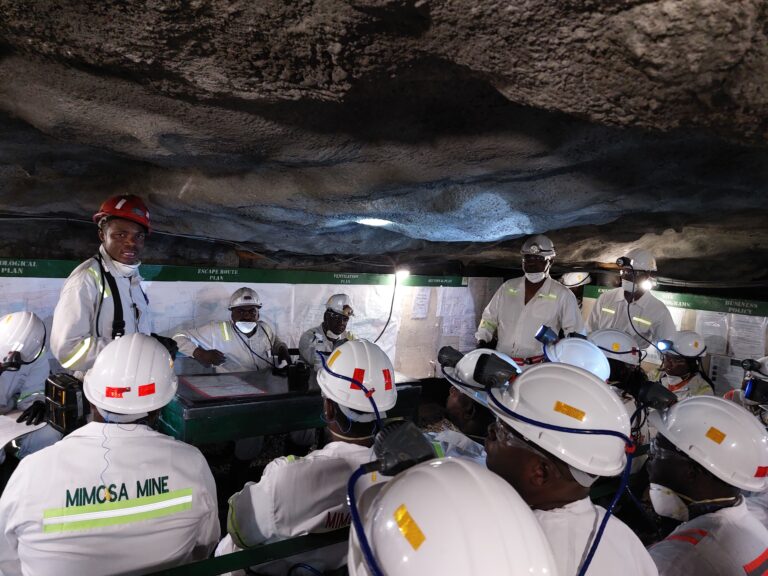
Impala Platinum Holdings Limited (Implats) and Sibanye Stillwater 50/50 owned Platinum group metals (PGM) producer Mimosa Mining Company during the Financial year ended 30 June 2023 recorded a 2.9 per cent decrease in tonnes milled compared to the previous year ended 30 June 2022 due to severe load-shedding.

Rudairo Mapuranga

According to Implats through its production update and initial trading statement for the year ended 30 June 2023, tonnes milled at Mimosa declined by 2.9 per cent to 2 735 000 from 2 816 000 during the previous year due to severe power cuts in the country.

“In addition to load curtailment at South African managed and JV operations during the period, severe load-shedding was experienced across the Zimbabwean national grid in March 2023, while operations at Mimosa were impacted by further intermittent power outages in May and June,” Implats said.

According to the trading update, Mimosa’s 6E Grade also declined by 1.4 per cent to 3.77g/t during the year ended 30 June 2023 from 3.82 g/t the previous year.

The group further stated that 6E in concentrate declined by 0.5 per cent to 245 000 ounces from 246 000 ounces the previous year due to power interruptions, changes in reagent supply and poor water quality.

“At Mimosa, 6E in concentrate volumes declined to 245000 ounces. Processing and plant stability was impacted by the commissioning and optimising of the concentrator project, power interruptions, changes in reagent supply and poor water quality,” Implats said.

How to ensure you are buying real Gold

0

Gold has been cherished and sought after for centuries due to its lustrous beauty and inherent value. Whether you are buying gold from the famous Makorokoza (ASM) across Zimbabwe or selling gold, or simply wanting to verify the authenticity of your gold investment, it is essential to know how to test for gold authenticity.

Many have lost funds trying to get into the fastest-rising industry in the country getting “Brasso” instead of gold. Some unscrupulous individuals who dupe unsuspecting buyers will add bicycle size “Steel balls” and coat them with real gold to increase the weight of their product. While professional jewellers and gold dealers have access to accurate and sophisticated tests, there are several methods that individuals can employ to evaluate the authenticity of gold.

Visual Inspection

The first step in testing gold authenticity is to visually examine the item. Authentic gold will have a consistent colour and shine. It should not appear overly dull, tarnished, or discoloured. While some variations in colour may exist due to different karat levels, be cautious of gold that appears too light or too dark, as it could be an indicator of counterfeit or impure gold.

Magnet Test

Gold is not magnetic, so using a magnet is a simple yet effective test for gold authenticity. Hold a strong magnet close to the gold item and observe whether there is any attraction. If the item is attracted to the magnet, it is likely not made of authentic gold.

Density Test

Gold is a dense metal, and its purity can be tested by comparing its density with a known authentic gold sample. To perform this test, sign up for a gold density testing kit, which typically includes a beaker, precise measurements of distilled water, and a specific procedure to follow. By accurately measuring the displacement of water when gold is submerged, one can determine its density and purity level.

Acid Testing

Acid testing is a widely-used method to verify gold authenticity. However, it is important to exercise caution and perform this test only with appropriate safety measures as it involves working with corrosive acids. An acid testing kit can be purchased, which generally includes different acid solutions to test various karat levels of gold. A sample is scratched or rubbed against a test stone, and acid is then applied to the streak mark. The reaction observed will help determine the gold’s purity.

XRF Analysis

For more accurate and advanced testing, X-ray fluorescence (XRF) analysis is the go-to method. XRF analyzers can be expensive and require professional expertise; hence, it is typically employed by professionals such as jewellers, pawnshops, and gold refineries. These machines use X-rays to determine the elemental composition and purity of the gold accurately.

The float test

Just drop the piece into a container of water. Gold is dense. If it doesn’t float at all or hover over the bottom of the container, you could possibly have real gold.

A ceramic scratch test

Take an unglazed ceramic plate or piece of tile and scrape a piece of gold across its surface. Real gold will leave a gold mark or trail. Other metals will leave a black trail.

The density test

This is done by calculation. You need

  • A scale (to weigh the jewellery)
  • A container of water and
  • A way to measure the level in millimetres (to measure the water levels before and after the jewellery goes into the water)

Now do the calculation: subtract the “before” measurement from the “after” measurement. Then divide the weight of the jewellery by the difference in the water levels.

This gives you the density.

The standard density of real gold is 19.3 grams per milliliter (also written 19.3g/mL). Not a lot of other metals come very close to it. If your calculation gives this figure or something very close to it, you probably have real gold.

When you use density to distinguish gold’s authenticity, you also need to keep in mind that there can be differences in density between different types of gold.

For example, the purer the gold, the heavier it will be–and white gold is heavier than yellow. Therefore, the density of gold between 14k and 22k will be anywhere between around 12.9 and 17.7 for yellow gold and anywhere between around 14 and 17.8g/mL for white gold.

Vinegar test

This test simply requires that a few drops of vinegar be applied to the metal, hopefully in an inconspicuous place.

If the metal is real gold there will be no change. If the metal is fake gold it will change color.

Fire Assaying

Fire assay is considered the most reliable method for accurately determining the content of gold, silver, and platinum-group metals (except osmium and ruthenium) in ores or concentrates. This process involves melting a gold-bearing sample in a clay crucible with a mixture of fluxes (such as silica and borax), lead oxide (called litharge), and a reducing agent (frequently flour). The fluxes lower the melting point of the oxidic materials, allowing them to fuse, and the molten litharge is reduced by the flour to extremely fine drops of lead dispersed throughout the charge. The drops of lead dissolve the gold, silver, and platinum-group metals, then coalesce and gradually descend through the sample to form a metallic layer at the bottom of the crucible. After cooling, the lead “button” is separated from the slag layer and heated under oxidizing conditions to oxidize and eliminate the lead. The shiny metallic bead that is left contains precious metals. The bead is boiled in nitric acid to dissolve the silver (a process called parting), and the gold residue is weighed. If platinum metals are present, they will alter the appearance of the bead and their concentration can sometimes be determined by the use of an arc spectrograph.

While these testing methods can provide helpful insights into gold authenticity, it is crucial to note that some counterfeiters are becoming more sophisticated in replicating authentic gold. Therefore, it is wise to seek professional assistance from a reputable jeweller or gold dealer if you are uncertain about the authenticity of your gold.

In conclusion, testing gold authenticity requires a combination of visual inspection and various tests, including magnet, density, acid, and XRF analysis. Familiarizing yourself with these techniques will help you make more informed decisions when buying or selling gold, ensuring that you possess genuine pieces that hold their inherent value.