Home Blog Page 265

Iron ore profits to drop by a third

0

Rio Tinto, the world’s biggest iron ore producer, is set to report its lowest half-year earnings and dividend in three years this week. The company is attributing the decline to a 15% fall in received iron ore prices over the period, as supply chains begin to normalize after the Covid-19 pandemic.

Iron ore accounts for approximately 70% of Rio Tinto’s earnings, making it highly susceptible to fluctuations in the iron ore market. The company is expected to log profits of $5.85 billion and dividends of 185 US cents, a 32% decrease compared to last year’s figures.

However, there is some optimism in the market as iron ore prices have rebounded this quarter to reach their highest point in four months. This is largely due to hopes of targeted stimulus for China’s property sector, as the country’s top leaders have pledged to step up policy support for the economy. This could potentially boost domestic demand and lead to further stimulus measures.

Analysts, however, are less optimistic, suggesting that the “China reopening trade” may be coming to an end and that there may not be substantial stimulus measures in the future. Kaan Peker, an analyst at RBC in Sydney, stated, “We don’t think there is going to be large stimulus.”

In addition to Rio Tinto, other major iron ore producers are also expected to report lower earnings. BHP Group, the world’s largest listed miner, is set to report a 35% fall in underlying profit for the half. Fortescue will release its quarterly production results on Friday and its financial results on August 27. Vale, the world’s second-biggest iron ore miner, will report its financial results on July 27.

The decline in earnings from these iron ore majors reflects the broader market trends and the challenges faced by the global iron ore industry. As supply chains continue to adjust to the new normal, attention is turning to how suppliers to China’s steelmaking industry perceive customer demand. These earnings reports will provide valuable insights into the state of the industry and its future prospects.

Zimbabwe progresses on the Mining Cadastre, submit your information

0

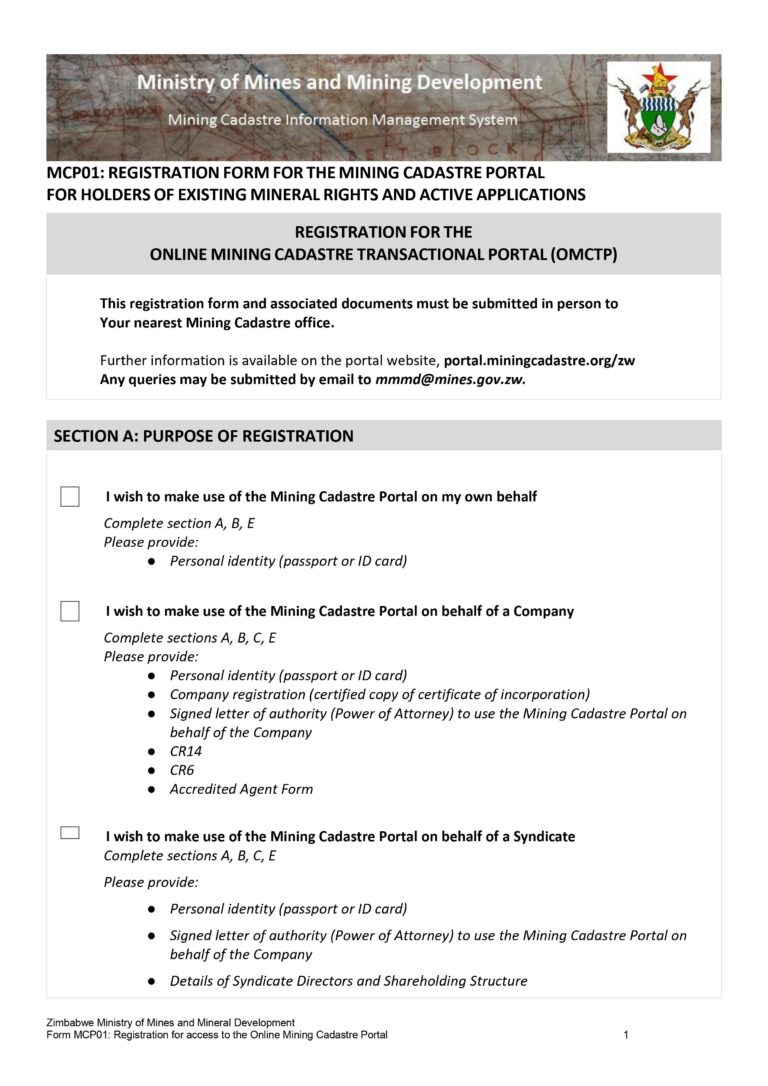
Zimbabwe is a country well known for its vast mineral resources numbering over 60.  The country has faced numerous challenges in harnessing the potential held within its mining sector. With widespread reports of corruption, illegal mining activities, and a lack of transparency, it is clear that the motherland urgently needs a robust mining cadastre system to manage and regulate its valuable mineral wealth.

A mining cadastre is a digital platform that records and manages mining licenses, concessions, and other legal instruments related to mining operations. It provides a transparent and accessible database for all stakeholders, such as government officials, investors, and communities, to track and monitor mining activities in the country.

Currently, the Ministry of Mines and Mining Development is Compiling data for the Cadastre system however progress has been slow, and it is crucial for the government to prioritize this initiative and allocate adequate resources to its timely development and implementation.

The Ministry of Mines is currently undergoing a data capture and cleaning process and therefore all data is provisional and subject to verification. The Ministry will, at a later date, declare a date when all data will be considered verified.

According to the Portal if one wishes to Submit a Form and currently hold licences the following has to be done:-

  1. Applications for existing licences and applications to register for access to the Mining Cadastre Portal must be presented in person by the individual who wishes to use the portal. The application must consist of:
    • A completed registration form MCP01
    • Proof of identity
    • If an employee or agent, an original Letter of Authority is signed by a company director authorising the individual to act on behalf of the company, syndicate or person.
  2. Once the Ministry of Mining has processed the application, a user profile will be created in the Mining Cadastre Portal and an email sent to the user’s registered email address with a link to set a password for the first time.
  3. The application must be accompanied by the following documents, in digital form, which will be uploaded on the self-registration page:
    1. Proof of identity
    2. If an employee or agent, a Letter of Authority signed by a company director authorising the individual to act on behalf of the company, syndicate or person.
  4. A user profile will be automatically created in the Mining Cadastre Portal and an email sent to the user’s registered email address with a link to set a password for the first time.
  5. The Ministry of Mining will then verify the submitted documents and application, and if no problems are detected, an email will be sent to the applicant confirming their successful registration.

It is commendable that Zimbabwe is moving towards the betterment of the Mining Industry however the pace of doing so simply needs to be improved.

Here are the advantages that the Mining Cadastre System will bring to the Mining industry of Zimbabwe.

Elimination of corruption

One of the most significant advantages of a mining cadastre is the elimination of corruption and the promotion of good governance. By digitizing the process, it becomes more challenging for corrupt officials to manipulate licenses and engage in illicit activities. Many in the ASM sector claim to have lost their mines when dodgy characters show up and produce backdated mining titles after a mine produces yields.  All transactions and approvals are recorded, allowing for a clear trail of accountability and reducing opportunities for widespread corruption.

Attracting foreign direct investment (FDI)

Transparency is crucial in attracting foreign direct investment (FDI) into the mining sector. International investors often prioritize countries with strong legal frameworks and reliable systems in place. A robust mining cadastre would give investors the confidence to invest in Zimbabwe, knowing that their rights and licenses are properly registered and protected.

Reducing bureaucratic hurdles

An iron-clad mining cadastre can help streamline administrative processes and reduce bureaucratic hurdles. Currently, obtaining mining licenses and conducting due diligence in Zimbabwe are time-consuming and cumbersome. A digital platform would simplify procedures, reducing red tape and enhancing efficiency. It would also facilitate communication and collaboration among different government agencies involved in the mining sector, enabling effective coordination and decision-making. Currently, it is taking an average of 5 years to get a Mining title in the highly mineralised zone like the Midlands, Mashonalandwest, Mashonald Central and all of Matabeleland.

Local communities

Another critical aspect of a mining cadastre system is the inclusion of local communities. Mining operations impact nearby communities and their livelihoods. Through the mining cadastre, communities can access information regarding mining activities in their areas, ensuring that they have a say and are consulted in decision-making processes. This fosters dialogue, minimizes conflicts, and promotes sustainable development in mining-affected regions.

Evidence-based policy-making

The mining cadastre would enhance data collection and analysis, providing valuable insights for evidence-based policy-making. Accurate and up-to-date information on mining licenses, production volumes, revenues, and environmental impacts can empower lawmakers, regulators, and researchers to make informed decisions to maximize the benefits of mining while minimizing its negative impacts.

Zimbabwe has taken some steps towards implementing a mining cadastre system. In 2017, the government announced plans to establish a digital mining cadastre to address the sector’s challenges. However, progress has been slow, and it is crucial for the government to prioritize this initiative and allocate adequate resources to its development and implementation.

It is high time for Zimbabwe to prioritize the establishment of a mining cadastre and pave the way for a responsible and prosperous mining industry.

REGISTER FOR PORTAL ACCESS OF THE CADASTRE SYSTEM HERE
Armed Robbers Strike Gold Mine, Escape with 6 X 25kg gold carbons

0

Kwekwe, Zimbabwe – A daring robbery took place at a mine in Sherwood 2, Kwekwe in the early hours of 23/07/23, when US$140-00 cash, 3 Itel cellphones, a water pump, 6 X 25kg gold carbons and belongings, including cash and valuable equipment, stolen the Police said in a statement.

In a report on their Twitter page, the Zimbabwe Republic Police (ZRP), eight unidentified suspects, armed with axes, entered the mine premises around 2:00 am while the victims were asleep in their cabin.

The suspects loaded the loot in a white Nissan Caravan vehicle with an unknown vehicle registration number.

“Police in Kwekwe are investigating a case of robbery which occurred at a mine in Sherwood 2, Kwekwe on 23/07/23 around 0200 hours in which 8 suspects who were armed with axes attacked 3 victims who were asleep in their cabin before stealing US$140-00 cash, 3 Itel cellphones, a water pump and 6 X 25kg gold carbons. The suspects loaded the loot in a white Nissan Caravan vehicle with an unknown vehicle registration number,” the Police statement reads.

Authorities are urging anyone with relevant information to come forward and assist in identifying the perpetrators. They are advised to visit or report the information to the nearest police station, where the investigation into the case is being carried out.

“Anyone with information to report at any nearest Police Station,” the statement concluded.

Anjin Named the Lowest Paying Diamond Producer in Zimbabwe

0

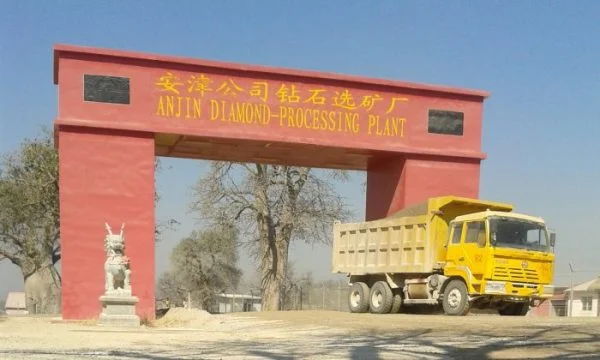
Chinese diamond producer, Anjin Investments is the lowest paying entity among diamond producers in the country, the Centre for Natural Resource Governance (CNRG) and Zimbabwe Diamond and Allied Mineral Workers Union (ZDAMWU) revealed through a joint press statement.

Rudairo Mapuranga

According to the statement, Anjin has the lowest wages among diamond producers paying US$355 (65% USD and 35% RTGS), while the Zimbabwe Consolidated Diamond Company (ZCDC) is offering the highest remuneration with the lowest earning around US$400.

“Diamond mineworkers earn wages that are below the poverty threshold. Until the recent strike, the lowest-paid Anjin Investment employee was earning USD180.00. Now Anjin has the lowest remuneration among the diamond mining companies, with the lowest-paid employee earning USD355.00 (65% USD and 35% ZWL). This is despite the fact that diamonds are sold hundred per cent in United States Dollars.

“Among the three diamond mining companies – Anjin, Murowa Diamonds and ZCDC, it is ZCDCwhich is offering the highest remuneration with the lowest earning around USD400. The National Employment Council (NEC) threshold for mine workers is USD350 per month. Diamond mining companies have resorted to paying NEC minimum salaries, and any attempts to demand a review are being resisted. This is regardless of the high value of diamonds and the role workers contribute to the high profits the companies are earning. Due to the low wages and short-term contracts, employee contributions to Mining Industry Pension Funds are insignificant.

“The slave wages being paid to diamond mine workers in Zimbabwe creates serious challenges for those concerned with responsible sourcing. Such extreme exploitation of labour is one of the key reasons why stakeholders are pushing the Kimberley Process to review the definition of Conflict Diamonds so as to include diamonds mined under inhuman and unfair labour conditions,” reads the statement in part.

The statement also indicated that the Chinese-owned diamond producer was bringing in a semi-skilled workforce from China thereby taking over jobs that can be done by local people in the communities where diamonds are being extracted.

“The majority of mining companies overlook local communities when recruiting employees. In Marange, companies are highly sceptical of locals whom they accuse of stealing diamonds if employed. Across the country, workers complain that Chinese-owned companies are bringing semi-skilled workers from China to take jobs which locals can do. A growing number of Chinese employees do not have legal requirements such as employment permits. They use corruption to regularize their employment whilst already working. This disadvantages Zimbabwe which has a highly skilled mining labour force and extremely high unemployment levels. At Murowa they are even hiring manpower from Namibia to take up jobs that can be done by our local people. What is disturbing is, local workers, have been terminated to create jobs for the Namibians,” part of the statement reads.

Zimbabwe gold buying prices 24 July 2023

Fidelity Gold Refinery (FGR) official gold buying prices Monday 24 July 2023. See the Zimbabwe gold buying prices today.

SG 90% AND ABOVE US$59.56/g
SG ABOVE 85% BUT BELOW 90% US$58.93/g
SG ABOVE 80% BUT BELOW 85% US$58.30/g
SG ABOVE 75% BUT BELOW 80% US$57.67/g
SAMPLE BELOW 10g BUT ABOVE 5g US$56.73/g
FIRE ASSAY CASH US$59.88/g

NB: Fire Assay cash price is for gold above 100gs, no sample is deducted.
For the Fire Assay Transfer price, a sample of not more than 10g is deducted
A 2% royalty is charged on all deposits (small-scale miners)
A 5% royalty is set for Primary Producers

Cash available. Fidelity Gold Refinery prices will be changing daily about world market prices.

Premier gets a £1,7m loan from its CEO

0

Premier African Minerals has secured a £1.7 million (us$2187305.00 from today’s exchange rate) loan facility from its Chief Executive Officer (CEO), George Roach.

The funds will be utilized for various operational expenses at Premier’s Zulu lithium and tantalum project. The loan agreement allows Premier to request two separate drawdowns, with the first being for £1 million and the second for the remaining balance. Each drawdown will be repaid six months later.

In order to repay the loan, Roach will sell an equivalent amount of Premier ordinary shares on the market until the requested funds have been realized. He will then notify the company of the average selling price, including any broker fees incurred during the sale. The loan will be repaid in the form of new shares issued by Premier. The company will issue shares equal to the amount due on the repayment date, divided by the floor price of the sale shares used to fund the loan.

However, if Premier is unable to issue the settlement shares, repayment of the loan may be made in cash, along with compounded accrued interest at a rate of 8% per year starting from the date of the drawdown request.

This loan facility agreement allows Premier Minerals to access much-needed funding to continue its operations at the Zulu lithium and tantalum project. With the disposal of shares and the option of cash repayment, the company has flexibility in meeting its loan obligations. This news demonstrates the CEO’s confidence in the project and his commitment to its success. Investors will be closely monitoring Premier’s progress and the repayment of the loan in the coming months.

About Premier African Minerals Limited

Premier African Minerals Limited (AIM: PREM) is a multi-commodity mining and natural resource development company focused on Southern Africa with its RHA Tungsten and Zulu Lithium projects in Zimbabwe.

The Company has a diverse portfolio of projects, which include tungsten, rare earth elements, lithium and tantalum in Zimbabwe and lithium and gold in Mozambique, encompassing brownfield projects with near-term production potential to grass-roots exploration. The Company has accepted a share offer by Vortex Limited (“Vortex”) for the exchange of Premier’s entire 4.8% interest in Circum Minerals Limited (“Circum”), the owners of the Danakil Potash Project in Ethiopia, for a 13.1% interest in the enlarged share capital of Vortex. Vortex has an interest of 36.7% in Circum.

In addition, the Company holds a 19% interest in MN Holdings Limited, the operator of the Otjozondu Manganese Mining Project in Namibia.

IETO to invest $100M in Zimbabwe’s ASM industry

0

The Indian Economic Trade Organisation (IETO) which is currently working with the Zimbabwe Miners Federation (ZMF) for mining investment opportunities in Zimbabwe is planning to sink an investment of US$ 100 million in the small-scale and artisanal mining (ASM) industry for its growth and development.

Rudairo Mapuranga

In 2021 the IETO visited Zimbabwe where it signed a Memorandum of Understanding (MOU) with ZMF aimed at technological collaboration and access to market indicators for certain minerals. It also looked at expert and technical advice on geology, and reliable supply of equipment and parts among other mining-related business opinions.

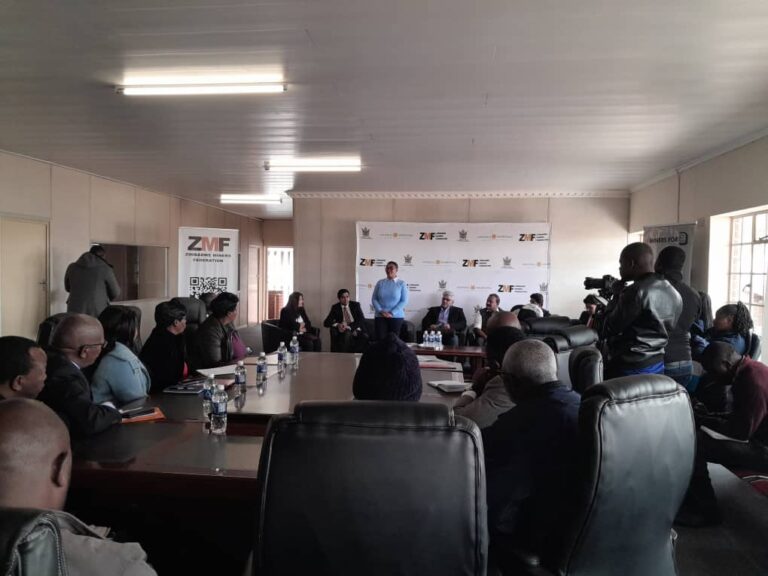
On Friday at an interface meeting with miners under the ZMF banner, IETO President Dr Asif Iqbal said his organization was looking forward to an ongoing business Association with ZMF to ensure that promises from the 2021 MOU are followed.

Dr Iqbal said IETO would establish an office for ZMF in India as part of its established mandate to promote investment between India and Zimbabwe. He said his organisation was going to invest up to US$100 million before the end of the year for growth and development in the artisanal and small-scale mining sector in Zimbabwe.

“We would want our relationship with ZMF to grow so we are going to establish an office for ZMF in India so that we will be able to work closely together. We are also going to engage ZMF in training for the new technologies in mining and see this sector working closely with the people of India for mutual benefit.

“We are looking forward to seeing an investment close to US$100 million before the end of the year. We will be working with ZMF in that regard ensuring Indian Investors and small-scale miners in Zimbabwe are benefiting from the relationship we established,” Dr Iqbal.

Speaking to the media on the sidelines of the interface, ZMF President Ms Henrietta Rushwaya said her organisation has become attractive to investors through its impressive production records, especially in the gold mining sector.

“As small-scale miners, we have become so liberal to the extent that we can even compete favourably with medium-scale and large-scale miners especially as far as gold mining is concerned,” Rushwaya said.

Zimbabwe gold buying prices 21 July 2023

Fidelity Gold Refinery (FGR) official gold buying prices Friday 21 July 2023. See the Zimbabwe gold buying prices today.

SG 90% AND ABOVE US$60.03/g
SG ABOVE 85% BUT BELOW 90% US$59.40/g
SG ABOVE 80% BUT BELOW 85% US$58.76/g
SG ABOVE 75% BUT BELOW 80% US$58.13/g
SAMPLE BELOW 10g BUT ABOVE 5g US$57.17/g
FIRE ASSAY CASH US$60.35/g

NB: Fire Assay cash price is for gold above 100gs, no sample is deducted.
For the Fire Assay Transfer price, a sample of not more than 10g is deducted
A 2% royalty is charged on all deposits (small-scale miners)
A 5% royalty is set for Primary Producers

Cash available. Fidelity Gold Refinery prices will be changing daily about world market prices.

The Export Ban on Lithium: Resource Nationalism or Africa’s Bargaining Chip?

0

The Inaugural London Indaba which took place towards the end of June, saw Zimbabwe and Namibia’s decision to ban raw lithium exports as a hot topic of discussion.

By Alexandra Mliswa

Some experts went as far as to comment that the countries were ‘playing with fire’. The basis for this is that the export bans are allegedly against the WTO (World Trade Organization) regulations. This prompted this piece on whether Africa or Zimbabwe in particular, is finally in a position to leverage its mineral resources to Its people’s benefit.

First, it’s important to set the scene by providing some context as to why Zimbabwe’s decision to ban raw or unprocessed lithium has caused such panic. As we are hearing more and more, Lithium is a ‘future-facing’ commodity. This is because lithium is a key component in hybrid and electric vehicle batteries, electronic devices, and battery storage power stations that will help reduce carbon emissions and mitigate the effects of climate change, in what has come to be known as global decarbonization.

Global decarbonization refers to a global move to reduce carbon dioxide emissions by moving away from global dependence on fossil fuels and towards what has been called ‘green’ or renewable energies (solar, wind, biomass, geothermal, et cetera).

It should be clear at this point that Zimbabwe’s ban on raw lithium exports (as part of its beneficiation policy) is perceived as a threat to the global supply in that it would affect the development and supply of “environmental technologies” needed in the fight against climate change.

This sort of thinking leads one to surmise that it is being framed as a ‘threat’ because it provides Zimbabwe and other resource-rich African countries with an opportunity to leverage their natural resources for economic growth and development, which were once simply just taken during the imperialist era.

Simply calling the lithium export ban ‘resource nationalism’ is reductionist and ignores firstly, the reason behind the ban, and secondly, the many possible and much-needed benefits to Zimbabwe as well as other African Nations.

Let us begin with the former. Zimbabwe, home to one of the top 5 largest lithium reserves in the world, banned the export of raw or un-beneficiated lithium late last year (SI 213/2022) in response to trade leaks and deficits of up to €1 billion. While some may argue that there are alternatives to export bans, Zimbabwe’s fragile economy may not have the luxury of experimenting with them.

Secondly, this beneficiation policy may have far-reaching impacts with the potential to revive the Zimbabwean economy. Some of these much-needed benefits include job creation, accelerated industrialization, an increase in government revenue, and the acquisition of technical know-how.

While the African Union has not necessarily supported export bans on minerals per se, it has recognized the value of mineral beneficiation in the AMV (African Mining Vision) -a road map designed to guide African governments in their natural resource management. According to Eunomix, The AMV has identified mineral beneficiation as a way in which African governments can catalyse economic growth and industrialisation. It is at this point that it should be stressed that there is no outright ban on lithium in Zimbabwe, just un-beneficiated or unprocessed lithium and the ban is a means to the end of beneficiation.

The effects of the beneficiation policy remain to be seen but it can be said that if the people of Zimbabwe are to truly benefit government needs to take certain issues very seriously, firstly, ensuring that labour is being sourced locally and that the labour conditions are fair and humane, as well as ensuring there is a real transfer of technical know-how, secondly industrialization must be monitored to ensure that that the buildings and equipment have structural integrity and are future-facing or ‘green’ in line with global decarbonization. Thirdly, the increased revenue must be transparent and accounted for and lastly, responsible and sustainable mining practices need to be adhered to that protect the natural environment and the communities that inhabit them.

AI at the centre of ZISCO resuscitation strategy

0

The use of Artificial Intelligence is at the centre of Zimbabwe Iron and Steel Company (ZISCO)’s resuscitation as the company is posed to use modern technologies to produce high-grade steel, the company body Chairman Engineer Martin Manuhwa told Mining Zimbabwe.

Rudairo Mapuranga

Kuvimba Mining House (KMH) will see through the resuscitation of ZiscoSteel. KMH has previously revived several companies and mines that include Jena Gold Mine, and Shamva Gold Mine among others, it is expected to play a key role in the resuscitation of the giant steel company which used to employ over 5 000 workers during its peak.

According to Engineer Martin Manuhwa KMH is going to invest up to US$300 million to ensure part of the money is invested into research for the adoption of modern technologies.

Engineer Manuhwa said KMH is bringing in new technology that would make Zisco one of the best producers of decarbonised steel in Southern Africa.

“Kuvimba will go into the mining business as a primary phase to finance the steel business which requires up to 300 million. The steel business requires a lot of research in line with the current technologies,” he said.

Engineer Manuhwa said ZISCO was going to use all the sweat of the fourth industrial revolution in its plan for Zisco resuscitation. He said one of the leading Artificial intelligence companies in steel making industry in the whole world. SMS group has been contracted to see through the adoption of modern technologies by Zisco. All over the world, SMS group stands for future-oriented technology and outstanding service in plant construction and mechanical engineering for the metals industry.

The ZISCO chairman also said that the Company was going to team up with tertiary institutions for expertise in metallurgy, industrial processes, and digitalization to create new perspectives for the industry through continuous innovation.

“We are going to use all the sweat of 4th industrial revolution technologies, things like big data analytics, things like virtual reality, augmented reality, Artificial intelligence and all those things in the new equipment that we use are now embedded into new technology so there is nowhere to run away from them. I think we would need to keep abreast of technology this is why SMS of Germany who are the leading steel manufacturers has been contracted to advise on that. We are also going to team up our training school with tertiary institutions, CUT, HIT has expressed interest NUST is already working with us,” Engineer Manuhwa said.

KMH is now on the ground following the completion of feasibility studies and the signing of the necessary contracts that should see the injection of US$300 million in new capital to kick-start the rebuilding of the steelworks.