


Home Blog Page 273

Stakeholders ready to grace ZMF AGM

0

Stakeholders in the mining industry are ready to attend Zimbabwe Miners Federation (ZMF) annual general meeting (AGM) with a number expressing their excitement to join one of the biggest mining gatherings in the country.

Rudairo Mapuranga

The AGM which aims to discuss the policies affecting ASM operations and assess the implications on the growth of mining is running under the theme, “Responsible mining: A catalyst for sustainable development.”

Speaking to Mining Zimbabwe Credsure Business Development Manager Health and Safety Paymore Mwale said his company was ready to support the growth and development of the artisanal and small-scale mining industry by providing financial solutions that will see the industry becoming a cash cow for the country.

“We have a partnership with ZMF, we have an MOU, the main reason is to improve the health and Safety of the small-scale miners. We are looking forward to the AGM and hoping it will address the issues we want to offer a solution to. We are here to improve the livelihoods of small-scale miners, we want them to employ financial models that will sustain them even after the life of mine,” Mwale said.

According to ZMF CEO Wellington Takavarasha Speakers at the AGM are going to address the concerns of the ASM industry, “Speakers are industry leaders and experts that will provide new perspectives on issues and concerns of artisanal and small scale mining sector and share cutting edge content and insight on the mining landscape.”

Speaking to this publication Antimony Miners Association of Zimbabwe (AMAZ) Executive Director Munyaradzi Marwizi said his organization was eagerly and opportunistic that the conference is going to address issues to do with sustainable extraction and value addition and beneficiation of Critical minerals such as Antimony, Graphite, to mention a few.

“We hope for a firm commitment from the conference to develop a critical minerals strategy that will map a way forward for the sustainable extraction and beneficiation of niche mineral commodities such as antimony, tungsten and tantalite. It is our belief that if adequately supported these minor metals essential for the energy transition would significantly contribute to the attainment of the 12 billion mining economy goal by the end of 2023,” Munyaradzi Marwizi said.

Mining Research consultant Mr Lyman Mlambo said the AGM should address issues that have not been solved for a while.

“There are a lot of issues that need to be addressed for example the issue of Formalisation has been there for too long, EPOs and participation of small-scale miners in other sectors such as diamonds. The implications of statutory instruments that seem not to consider small-scale miners among other issues. We would want the AGM to address those issues,” Mlambo said.
3 appear in court for illegal gold mining

0

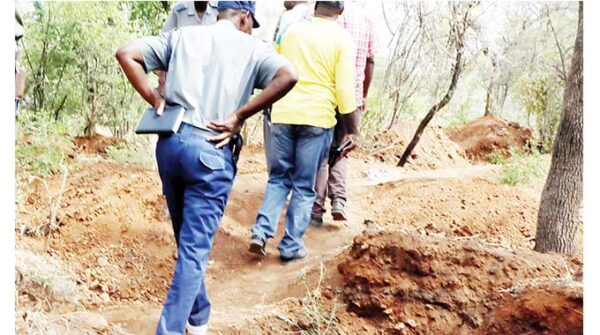
Three illegal gold miners appeared at Concession magistrates courts on Saturday on charges of prospecting for gold without a license at Manzou farm in Mazowe.

The three, Artwell  Chaitezwi  (30), Jeremiah Mdlalambi (33) and Clive Gosha (24)  appeared before Magistrate Joshua Nembaware

They were remanded in custody to Monday.

The state alleged on June 16 information was received at ZRP  Mazowe to the effect that they were accused persons carrying out illegal mining activities at the Manzou area near Mazowe Dam.

“ZRP Mazowe details reacted to the information where upon arrival at the scene, accused number one and two were seen in pits at about 3 metres in depth digging gold ore using chisels whereas accused three was loading the extracted gold ore in sacks,” read the court documents.

The state was represented by Ms Precious Khanye.

Byo24

Zimbabwe gold buying prices 16 June 2023

Fidelity Gold Refinery (FGR) official gold buying prices Friday 16 June 2023. See the Zimbabwe gold buying prices for today.

SG 90% AND ABOVE US$59.63/g
SG ABOVE 85% BUT BELOW 90% US$58.68/g
SG ABOVE 80% BUT BELOW 85% US$58.06/g
SG ABOVE 75% BUT BELOW 80% US$57.43/g
SAMPLE BELOW 10g BUT ABOVE 5g US$56.49/g
FIRE ASSAY CASH US$59.63/g

NB: Fire Assay cash price is for gold above 100gs and no sample is deducted.
For the Fire Assay Transfer price, a sample of not more than 10g is deducted
A 2% royalty is charged on all deposits (small-scale miners)
A 5% royalty is charged to Primary Producers

Cash available. Fidelity Gold Refinery prices will be changing daily in relation to world market prices.

Implats now owns 56.1% of RBPlat

0

ZIMPLATS parent company, Impala Platinum (Implats) has announced that it has acquired an additional 0.08% of the share capital of Royal Bafokeng Platinum (RBPlat). With this acquisition, Implats now owns 56.1% of RBPlat’s shares in issue.

The platinum giant has been gradually increasing its shareholding in RBPlat since the end of 2021. The company’s recent acquisition of the Public Investment Corporation’s 9.2% shareholding in RBPlat is also part of its efforts to own RBPlat.

Interestingly, Northam Platinum had previously expressed interest in acquiring all of RBPlat’s shares. As it stands, Northam Platinum currently holds 35.4% of RBPlat’s shares in issue.

Implats has reportedly been eyeing RBPlat for several years and is said to view the acquisition of the company’s shares as a strategic move to expand its operations and increase its mining portfolio. RBPlat is one of the leading platinum producers in South Africa and owns several mining assets in the country.

The acquisition of RBPlat’s shares by Implats is expected to strengthen the company’s position in the platinum market, especially in South Africa where the majority of the world’s platinum is produced. In addition, it is hoped that the acquisition will lead to greater efficiency and productivity in the companies’ mining operations.

Implats has stated that it will continue to explore opportunities to increase its shareholding in RBPlat and expand its presence in the South African mining sector.

Galileo charges ahead with Kamativi lithium project

0

Galileo Resources has started preparations for a drill programme over the Kamativi lithium/tin target, in Zimbabwe, where the company announced the discovery of a previously unknown lithium anomaly in soils and streams in March.

A contract has been signed by the company for a diamond drilling programme following on the discovery of a substantial lithium anomaly in soils on the Kamativi licence EPO 1782 adjoining the historic Kamativi tin/tantalum mine (in which Galileo does not have an interest) which contains a significant lithium tailings resource.

Galileo’s Kamativi soil anomaly, which peaks at 1 000 ppm lithium, extends over a strike length of almost 3 km, comparable to the footprint of the Arcadia lithium project, near Harare, which is considered to be one of the world’s biggest hard rock lithium resources.

A swarm of coincident pegmatite dykes has been mapped within the anomaly area which will be targeted in the first phase of drilling, with about 1 000 m of drilling planned in at least ten holes.

Other anomalies will be evaluated and drill-tested in due course. This will include one area particularly anomalous in rare earth elements.

“We have quickly moved from the discovery of a widespread lithium soil anomaly to the commencement of a drill programme at Kamativi. The anomaly is substantial, and we believe it is highly significant that the target is comparable in size to other large lithium deposits including the 42.3-million-tonne Arcadia deposit also located in Zimbabwe.

“We will quickly evaluate the target with an initial drill programme to test the stacked lithium-bearing pegmatites and results will determine the extent of follow-up drilling. The programme will also assess tin prospectivity as the recent soil and rock chip programmes also identified areas anomalous in tin,” comments CEO and chairperson Colin Bird.

The Kamativi licence EPO 1782 covers an area of 520 km2 in western Zimbabwe. Galileo has the option to earn an 80% interest through spending a combined total of $ 1.5 million on exploration and evaluation in the project area and over the Bulawayo gold/nickel property by July 21, 2024.

Mining Weekly

ZMF Conference to Spur Sustainable Economic Development in ASM

0

The Zimbabwe Miners Federation (ZMF) has announced that it will be hosting its Annual Mining Conference on the 6th – 7th of July 2023 at the Gweru Business Convention Centre.

This year’s event is designed to gather artisanal and small-scale miners, large-scale miners, stakeholders, service providers, investors, and policymakers to holistically align the artisanal and small-scale miners in the mainstream economy in the most sustainable and rational manner.

Running under the theme “Responsible Mining: A Catalyst for Sustainable Economic Development.” the event aims to discuss the policy measures affecting ASM operations and assess the implications on the growth of the mining industry.

Zimbabwe Miners Federation(ZMF) cordially invites the mining industry players and stakeholders to contribute, attend and participate at this year’s ZMF Annual Mining Conference and Exhibitions that will take place from 6th – 7th of July 2023 at Gweru Business Convention Centre. The core business of this event is designed to strategically gather together the artisanal, small-scale miners, large-scale miners and key stakeholders to meet and connect with investors, service providers, stakeholders and policymakers and holistically align the artisanal and small-scale miners in the mainstream economy in a most sustainable and rational manner,” ZMF Chief Executive Officer Mr Wellington Takavarasha said in a statement.

Policymakers, Government bodies, suppliers, manufacturers, mining houses, Chamber of Mines members, law enforcement agencies, research institutes, training institutions, farmers, NGOs, and financial institutions are expected to be in attendance.

There will be breakout sessions into mineral sector groupings such as Gold, Chrome and base minerals, Semi-precious and industrial minerals, Youth in Mining, Women in Mining and Gender Issues, Mining suppliers and service providers, Legislative and Policy Issues, and Investment opportunities in the ASM sector.

According to Takavarasha, Industry leaders and experts will provide new perspectives on key issues and concerns of the artisanal and small-scale mining sector and share cutting-edge content and insights on the mining landscape.

He also said the Federation this year invited President Mnangagwa as Guest Speaker.

“Speakers are industry leaders and experts that will provide new perspectives on key issues and concerns of the artisanal and small-scale mining sector and share cutting-edge content and insights on the mining landscape. The invited Guest Speaker is His Excellency The President of the 2nd Republic of Zimbabwe Cde E. D Mnangagwa,” Takavarasha said.

The exhibition will feature the latest technology, equipment, solutions, and innovations for ASM buyers. Exhibitors will generate new leads, enhance their visibility, open doors for new markets, showcase their products and thought leadership through panel discussions and other networking platforms, and face the competition to adapt to changes in product design.

This year’s ZMF Annual Mining Conference is Zimbabwe’s only premium artisanal and small-scale mining investment forum and platform. With the full participation of over 100 ZMF affiliate associations, individual artisanal and small-scale miners, financiers/investors, service providers, stakeholders, and policymakers, this event will foster a sustainable and responsible mining sector for Zimbabwe’s economic development.

Zimplats to complete 35 MW SMC solar plant next month

0

Zimbabwe’s biggest platinum producer Zimplats is confident that the implementation of the 35MW solar plant at Selous Metallurgical Complex (SMC) which is Phase 1 of the company’s US$201 million 185MW solar project will be completed end of July 2023.

Rudairo Mapuranga

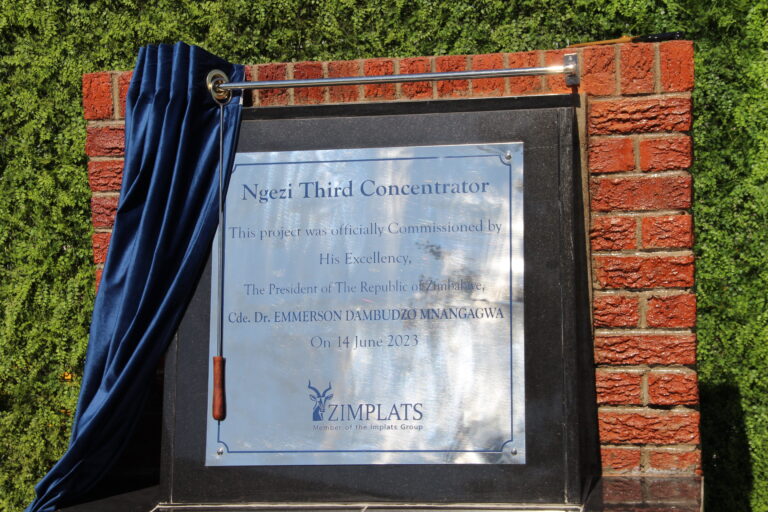
This was revealed during the official commissioning of the US$104 million third concentrator plant for Zimplats mine in Ngezi recently. The third concentrator plant is part of the 3rd phase of expansion programmes with an investment tag of a potential US$1.8 billion. The programme began following the signing of the Memorandum of Understanding (MOU) between Zimplats and the Government in 2021.

According to Implats (Zimplats owners) Chairperson Thandi Orleyn, the third concentrator whose construction began in January 2021 and ended in August last year is expected to help production by 13 per cent.

“Your Excellency investment of US$104 million was outplayed in the development of the 3rd Concentrator project that was completed in a record time of 20 months. During the development phase, the project employed a peak of 700 people creating so much-needed jobs in the local communities and the country in general. Nearly 6000 jobs will be created in the execution of the potential US$1,8 billion project generating incomes at household levels for several families in the country and substantial revenue flows to fiscus,” Orleyn said.

The ongoing US$1.8 billion expansion programme, of which US$1.4 billion has already been approved by the Zimplats board and shareholders began last quarter of calendar year 2021.

With the new investment, Zimplats will add 180,000 ounces to production per year. In 2022, Zimplats produced 583,000 ounces.

Projects under the US$1.8 billion investment include:

  • The development of a new mine, Mupani, and the upgrade of the Bimha Mine. So far, Zimplats has spent US$295 million out of a budget of US$468 million for this.
  • A US$521 million expansion of smelter capacity. So far, Zimplats has spent US$66.6 million.
  • A base metal refinery that will meet part of the country’s ambitions for local value addition.
  • A 185MW solar plant for US$201 million. The first phase of 35MW will be completed in July.

Emulate Zimplats, Invest in value addition!

0

The Minister of Mines and Mining Development Hon Winston Chitando has urged Mining companies to emulate Zimplats’ initiative to invest in value addition and beneficiation to enable the country to benefit wholly from the proceeds of the mining sector.

Rudairo Mapuranga

Speaking at the Zimplats Expansion project commissioning ceremony in Ngezi on Wednesday, Minister Chitando commended Zimplats for establishing a value-addition plant at the same time encouraging other mining companies to follow suit.

He said companies should invest in new technologies and research for the sector to remain competitive.

“I urge other companies to follow in your footsteps and invest in value addition and beneficiation. Together, we can build a strong and prosperous economy that benefits all our people. As we move forward, we must continue to prioritize beneficiation and value addition in the mining industry. We must invest in new technologies, research, and development to ensure that we remain competitive and continue to add value to our mineral resources,” Minister Chitando said.

Speaking at the same event, the Permanent Secretary in the Ministry of Mines and Mining Development Mr Pfungwa Kunaka also said mining firms should prioritize value addition and beneficiation.

“As we celebrate the commissioning of this plant, let us remember that this is just the beginning. We must continue to prioritize beneficiation and value addition in the mining industry, and we must work together to invest in new technologies, research, and  development to ensure that we remain competitive and continue to add value to our mineral resources.”

“This plant represents a significant milestone in our country’s efforts to add value to our mineral resources and promote sustainable development in the mining industry,” Kunaka said.

The establishment of the plant is a testament to Zimbabwe’s commitment to value addition and beneficiation, which is critical for the growth and development of the country’s economy.

ZIMPLATS in one of its projects, intends to construct a Base Metal Refinery (BMR). This is another giant step forward in local mineral beneficiation and value addition, as the country moves towards full beneficiation of platinum in the country.

The sulphuric acid plant that the company intends to install will produce 100 kilotonnes per annum of sulphuric acid. The sulphuric acid will be used in the manufacturing of fertilizers in the country, thereby reducing acid imports.

ZIMPLATS also intends to develop a 110 MW solar power plant, with sufficient capacity to satisfy the needs of the company, including related mining and mineral beneficiation facilities.

Chibafa reflects on his tenure as Chamber of Mines President

0

The Chamber of Mines Zimbabwe (CoMZ) is a reputable organization that represents the mining industry in Zimbabwe. The Chamber’s President, who is at the forefront of the organization, plays a pivotal role in championing the sector’s interests and advocating for policies that support its growth. As Collin Chibafa’s tenure came to an end Mining Zimbabwe, spoke to the former President to find out more about his time in office.

Q: How has been your experience as the Chamber of Mines over the past two years?

A: I took over from Ms E Nerwande and have built on the cordial relationships she helped cultivate between the Chamber and its key stakeholder, the government. Our relationship with the government has been built on mutual trust and this has enabled us to be successful in fulfilling our purpose of promoting, encouraging, protecting and fostering the growth of the mining industry. The various arms of government have generally introduced supportive policy interventions and this has allowed us to unlock some of the hindrances that have tended to retard the growth of the sector. We have also been able to have constructive conversations in those instances where we have disagreed with proposed policy changes.

Therefore, on reflection, my tenure as the President of the Chamber has been both rewarding and challenging. My assumption of office as the President of the Chamber of Mines was at the height of the Covid-19 pandemic when activities in most sectors of the economy were on lockdown. The mining sector was not spared from these challenges and marginally grew by 3.4% in 2021, a sluggish growth from a Covid-19-induced contraction of -9% in 2020. Apart from Covid-19 challenges, other sector-specific challenges that dodged the mining sector include inadequate foreign exchange retention, fragile power supply, payment delays for gold and coal deliveries, as well as loss of value on the surrender portion of export earnings. With the support of our Executive Committee and Chamber Members, we have had continuous engagement with the government on these matters and experienced a level of success in addressing some of these challenges. This resulted in the improvement in the operating environment for the mining industry with the sector recovering to record a growth of 10% in 2022. This positive outturn also coincided with the boom in commodity prices which propelled mineral exports to a record US$5.6 billion in 2022, constituting almost 80% of national exports. I pass the baton on to my successor knowing that those challenges that remain are not insurmountable.

How has the Chamber of Mines evolved during your time as President?

During my tenure, I believe that the Chamber has restored its prime position as the leading voice with a key mandate to drive the development and growth of the mining industry as enshrined in its constitution. We have been able to improve our dialogue with the government regarding various policy and legislative matters including proposed changes to the Mines and Minerals Act, the proposed Minerals Development Policy as well as electricity, foreign exchange and fiscal matters. We also partnered in government’s efforts to combat the Covid-19 pandemic through donations at national and provincial levels. These public-private partnerships demonstrated our commitment to supporting the government in dealing with challenges facing the country. Our members also supported ZESA settle some of its debts to regional power utilities to ensure that they imported power to supplement the domestic supply.

How have advancements in technology impacted mining operations in recent years?

The mining industry has made robust efforts to adapt to technological advancements that enhance operational efficiency, safety and viability. We have seen the mechanization in some operations that have engineered out hazardous processes resulting in the removal of humans from hazards. We have also seen the automation of some processes, particularly in mineral processing, and the ability to monitor and control various aspects of the plant from remote locations. However, there is some way to go particularly for small to medium-scale operations. The shortage of capital is a major stumbling block to the adaption of technology in mining as some of the requirements are capital-intensive.

What steps do you think the industry should take to ensure responsible and sustainable mining practices?

Being a sustainable industry is something the Chamber of Mines takes seriously to ensure that mining survives and thrives into the future as an industry that is safer, more sustainable and efficient, and better harmonised with the needs of society. The mining sector has a responsibility to mine the mineral resources entrusted to it by government in a way that maximises the benefits to stakeholders and minimizes the impact on the environment and host communities where our mines are located.

Looking back, is there anything you would have done differently during your time as president?

I view what some people term failure as a learning opportunity that helps develop me to be a better individual. I have had the privilege of receiving strong support from the Council, Executive Committee and Secretariat of the Chamber in executing the decisions of the Chamber. Looking back, therefore, I am grateful for the various learning opportunities I have been able to grow from. So, I leave my role with a heart full of gratitude for the opportunity I have had to lead efforts to foster the growth of the country’s mining sector.

What do you see as the biggest opportunity for growth for the mining industry in the coming years?

Government and business need to continue on their journey of working together to address those remaining challenges that hinder the growth of the mining sector. Mining investments by nature is generally a long-term in nature. Therefore, government needs to continue improving the operating environment by balancing the short-term needs of the country and the long-term benefits that mining can deliver for the country. Zimbabwe is well endowed with a wide array of mineral resources and the country has certain distinct comparative advantages, such as an educated, productive, non-militant labour force and shallow ore bodies. However, our regulatory and fiscal environment could be better. By addressing this, government could unlock further growth of the mining sector. Capital tends to be tentative where there is unpredictability.

Finally, what legacy do you hope to leave behind for the mining Industry?

I hope to have left behind a legacy that reinforces the old adage that two are better than one, that government and business can work together to achieve a better outcome than either alone. The mining sector’s export earnings are at a record high. I pray that this record is broken next year as the sector continues to grow for the benefit of all Zimbabweans.

KMC Leads the way in benefiting the Local Community

0

Kamativi Mining Company (KMC) is making positive strides in benefiting the local community it is operating from.

The company has already generated a positive impact on the local community before commencing production which is set for October 2023.

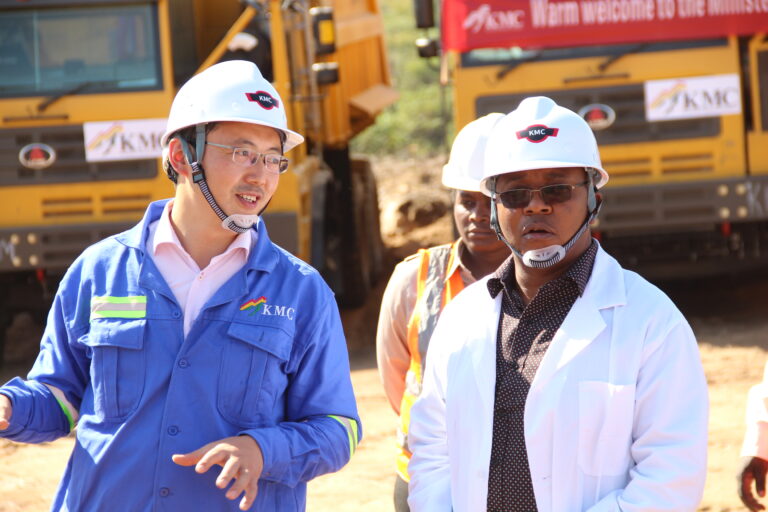
Speaking at the tour of the Lithium mine recently, Mines and Mining Development Deputy Minister Polite Kambamura said KMC is an excellent example of a company that cares about the community it is operating from.

“I want to thank you for working closely with the community. You have told me that you drilled eight boreholes of which five were dry holes, and three are currently providing water to the community. I saw some donations that you made to the local clinic. Keep on doing good. You are part of the community, so keep working with the community,” Kambamura said.

Kambamura said KMC’s approach is what the government is pushing for, and this is not only benefiting the community but also the economy as a whole. The company has employed a significant number of people from the local community.

This has a ripple effect on the local economy and will help reduce poverty in the area which has been having adverse challenges since the closure of the former tin mine in 1994.

“Currently, KMC is employing over 250 employees, with a bigger chunk of employees coming from the local community. One impressive thing is that the company has not waited to start production to work with the community. So we are looking forward to the company finishing the first and second phases, which will see the company employing 1500 locals,” Kambamura said.

KMC’s initiative is a good example of empowering local communities by providing them with accessible water sources, quality healthcare, and employment opportunities.

Speaking at the tour KMC Chairman said on full production KMC is expected to employ 1500 locals.

“We will be mining and processing 2 million tons of ore per year. So after the products are produced, they will be 1,500 jobs for the Zimbabweans.

He said the KMC is committed to restoring Kamativi to its former glory days.

“The development of industry, culture and other aspects will re-enact the glory of the whole community and make the community a place of prosperity and hope.  In addition to the development of the project, we are also committed to developing the community, including the culture and the commerce of the community, and also the education and the health care of the community, and to restore the glory of the community, make a great contribution to the Zimbabwean community and also contribute to Zimbabwe’s economic development and the realization of Vision 2030.” KMC Chairman said.

Kamativi Residents Association Secretary General Mathius Sibanda commended KMC for bringing employment to the mining town saying it is a step in the right direction. He said, once the lithium mining company reaches full production, with over 1500 people to be employed, the town’s GDP will also increase.

“Our children are already getting employed despite the mine not yet being in production. They have also expect to employ 1500 people from within this community and for that we are grateful. We had serious water challenges which exposed the community to water bone diseases that have now been eradicated with the introduction of boreholes and on behalf of the residents I would like to say we are proud to have KMC in our community,” Sibanda said.

With its commitment to value-added mineral exports, KMC is poised to be a significant player in the mining sector in the coming years. Investors will keep a keen eye on its progress, hoping to replicate its success when investing in other communities.