Home Blog Page 280

Power cuts a threat to the growth of the mining industry

0

Electricity cuts have been a persistent issue in Zimbabwe for a long time now, and they continue to pose a significant threat to the nation’s mining industry.

The country’s mining sector is a crucial contributor to its economy, accounting for more than 12% of the country’s gross domestic product. However, power cuts have become a significant hindrance to the growth of the mining industry, which is projected to be worth $12 billion by the end of 2023.

Statistics show that Zimbabwe has one of the lowest electricity generation rates in the region, with current power slightly improved from outages lasting for up to 18 hours per day. The country’s installed capacity is approximately 2300 MW, with its demand estimated to be close to 2000 MW.

According to the latest statistics on the Zimbabwe Power Company website Zimbabwe is currently producing 1345MW which has resulted in a significant mismatch between power demand and supply.

Electricity is a fundamental input in the mining sector, used for a wide range of activities, including drilling, blasting, pumping, and ventilation. Without a reliable power supply, the mining sector is at risk of severe disruptions, which can negatively impact the economy.

The mining industry has been particularly hard hit by power cuts, with mining companies experiencing significant losses due to production stoppages. According to a report by the Chamber of Mines, the mining sector lost over 200,000 ounces of gold due to power cuts in 2019, translating to a loss of over $200 million in revenue.

According to the Chamber of Mines, “the mining industry in Zimbabwe consumes about 16% of the total electricity demand. With anticipated investments in mining under the US$12 billion vision, electricity demand from the mining industry is expected to grow to over 4 000 MWh per year from the current levels of 2 756 MWh. With most mines operating 24 hours per day/ 7 days a week electricity is a critical input in mineral production. Some mining organisations have vertically integrated operations with processing and smelting facilities making electricity supply a critical requirement,”.

Aside from gold, Zimbabwe’s mining industry also produces platinum, diamonds, chrome, nickel, and coal, among other minerals. Power cuts affect these mineral productions in different ways, but the overall impact is a significant decrease in output, revenue and economic activity.

Furthermore, the mining industry is a key employer in Zimbabwe with over a million dependent on the sector. Power cuts have led to job losses, with companies forced to lay off workers due to the failure to meet production targets.

In conclusion, electricity cuts pose a significant threat to Zimbabwe’s mining industry, which contributes significantly to the country’s economy. The country needs to invest heavily in the power sector to ensure a reliable power supply to the mining industry. Failure to do so will lead to further losses in revenue, employment and hinder the country’s set target of us$12 billion mining industry by the end of 2023.

Phase 2 diamond drilling at Step Aside Project now complete

0

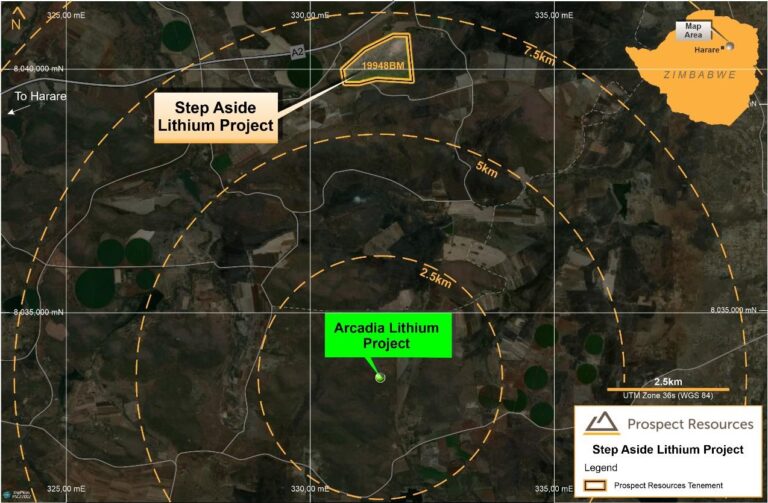
Prospect Resources Limited (ASX:PSC) is pleased to announce that the Phase 2 diamond drilling program at its Step Aside Lithium Project in Zimbabwe has now been completed.

The Phase 2 program has built on the success of the Phase 1 campaign by delivering step-out drilling targeted at strike and dip extensions of the key identified pegmatite bodies at Step Aside, the so-called “Colga A”, “B”, “C” “D”, ”E” and “F” pegmatites. The largest pegmatite, D, is interpreted to strike over at least 120m at the surface and is open to the south and down dip.

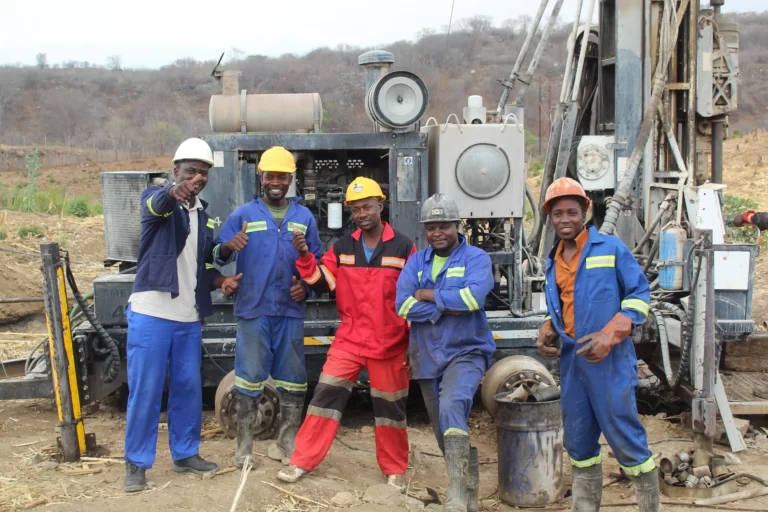
The Phase 2 program comprised 20 diamond core drill holes for 2,221.5 metres of drilling, and was delivered on time and to budget.

All assays are expected to be returned and updated geological interpretations completed, during Q2 2023.

Zimbabwe gold buying prices 03 April 2023

Fidelity Gold Refinery (FGR) official gold buying prices Wednesday 03 April 2023. See the Zimbabwe gold buying prices for today.

SG 90% AND ABOVE US$60.94/g
SG ABOVE 85% BUT BELOW 90% US$59.98/g
SG ABOVE 80% BUT BELOW 85% US$59.34/g
SG ABOVE 75% BUT BELOW 80% US$58.70/g
SAMPLE BELOW 10g BUT ABOVE 5g US$57.73/g
FIRE ASSAY CASH US$60.94/g

NB: Fire Assay cash price is for gold above 100gs and no sample is deducted.
For the Fire Assay Transfer price, a sample of not more than 10g is deducted
A 2% royalty is charged on all deposits (small-scale miners)
A 5% royalty is charged to Primary Producers

Cash available. Fidelity Gold Refinery prices will be changing daily in relation to world market prices.

Security of Mining Rights in Zimbabwe: The Mining Lease and the Special Grants

0

Security of Mining Rights in Zimbabwe: The Mining Lease and the Special Grants.

By James Tsabora PhD and Tawanda Parawira LLM Candidate, (UZ).

Introduction

The security of mining rights of any country’s mineral law framework is critical for investment in that sector. An insecure legal regime for mining rights drives off investment increases the costs of investment and deprives the mining sector of any investment appeal. Investors need to know the kind of rights in any sector, whether such rights are comprehensive in their entitlements; whether they are fenced by a host of legal safeguards and remedies, and whether investors have access to protest mechanisms, especially against the host state and governments. Governments need to guarantee the security of property rights, the transferability of such rights and ensure the utility of such rights in the financial and commercial sectors. Fundamentally, mineral rights security for developing states such as Zimbabwe is crucial where the economy seeks to depart from its age-old agricultural-sector pivot.

Mining leases and special grants are two key mining rights in the Zimbabwean mining law framework. Several controversies and misconceptions about the security of these rights have been raised previously. Few analyses have analysed the law to examine whether it gives security to mining rights. This article attempts to interrogate such laws in order to bust such myths and clear such controversies. This task is important as Zimbabwe moves to replace the current law with a new law altogether.

The Extraction/ Mining Phase

The extraction or exploitation of minerals in Zimbabwe occurs through various licenses. These are Certificate of Registration of Claims, Mining Lease, Special Mining Lease, Special Grant and another type of Special Grant under part XX of the Act. The discussion on the security of the mining rights conferred by the above licenses centers around the conditions under which these mining rights may be revoked, the right to transfer/cede the mining rights, the right to securitize these mining rights, the duration or length of time of these rights and lastly the administrative discretion given to the offices that regulate the mining rights. These licenses are discussed below in light of the criteria stated hereinabove.

Certificate of Registration of Claims

A certificate of registration of claims authorizes the holder of a prospecting license to start mining following the discovery of minerals.  Following the discovery of the minerals, the holder of a prospecting license appoints a pegger who physically pegs the area by marking it with a Discovery Peg[1]. Thereafter he or she must post a registration notice on the ground[2] following which he or she will then make an application to the Provincial Mining Director for the certificate of registration[3]. This certificate of registration will then allow the holder to start mining operations subject to meeting other obligations such as an Environment prospectus. This certificate of registration of claims may be cancelled by the Provincial Mining Director if he or she is satisfied that provisions of the Mines and Minerals Act relating to the method of pegging were not substantially complied with. However, before such cancellation, the Provincial Mining Director is expected to give notice of at least 30 days of his intention to cancel such certificate and inform him of his right to appeal against such cancellation to the Minister. The requirement for the holder to be notified of an intention to cancel the certificate and to be allowed to make representations against such cancellation is a step forward in enhancing the security of such mining right.

Further, the holder of the certificate of registration of claims is expected to comply with provisions of Part XI of the Mines and Minerals Act relating to the Preservation of Mining Rights[4]. These provisions relate to applying and obtaining Inspection Certificates. The Inspection Certificate referred hereto protects the claims or block of claims from forfeiture in terms of section 260 of the Mines and Minerals Act[5]. The mining rights conferred to the holder of a certificate of registration of claims may be preserved by declaring continuous work (work done), production, capital expenditure or by payment (base metals only[6] The current Mines and Minerals Act adopts a “pay it or lose it” principle even though it provides for amount of work required to be done to obtain an inspection certificate[7]. The status quo appears to be favourable to large mining conglomerates who hold vast tracks of claims all over the country for speculative purposes as they have the financial muscle to pay for the inspection certificates. Generally, it appears that the conditions on which the mining rights conferred to a holder of a certificate of registration of claims may be revoked or cancelled are reasonable. For instance, the amount of work required to obtain an inspection certificate block of precious metal claims pegged under an ordinary or special prospecting license is ten metres and in the case of capital expenditure, two hundred and fifty dollars. With regards to duration of the license, it is valid for as long as the holder complies with part XI of the Act-

Preservation of mining rights.

Further, cognizance should be given to the provisions of section 399 of the Act which also relates to cancellation of mining rights in instances where the PMD has reason to believe that the holder of a registered mining location is using wasteful mining methods. It is important to note that before cancellation of the mining rights, the PMD inspects the registered mining location and allows the holder of the mining location to make representations on why his certificate of registered mining location should not be cancelled for using wasteful mining methods. Suffice to mention is also the fact that the holder of the mining location is given a chance to remedy the situation failing which the mining rights may only now then be cancelled. It would appear that this provision is quite just and fair as it conforms to the audi alteram parterm rule.

More so, there is also section 400 of the Act which relates to cancellation of mining rights in circumstances where the Minister has reason to believe that a miner has failed within a reasonable period after commencing mining operations, to declare any output from his or her mining location or has knowingly rendered a false return or declaration regarding the output from his mining location. As with the above provisions, an investigation is carried out and the holder of the mining location is called upon to make representations on why his certificate of registered mining location should not be cancelled. This provision is also quite fair conforms to the audi alteram parterm rule.

Unfortunately, the rights conferred on the holder of a certificate of registration of claims cannot be ceded or transferred without the permission from the ministry and this is not in line with the broad concept of security of mining rights as mentioned earlier on.

Mining Leases

In addition to the certificate of registration of mining claims above, mining rights can also be acquired through a mining lease in Part VIII of the Act[8]. A mining lease, put simply, means converting several contagious blocks and any other open ground adjacent to these blocks into one mining title. The application for a mining lease is made to the Provincial Mining Director who then submits the application together with his report on the application to the Mining Affairs Board for consideration. The holder of a mining lease possesses an exclusive right of mining any ore or deposit of any mineral which occurs within the vertical limits of the area covered by his or her lease[9]. In considering, the application for a mining lease, the Board looks at whether the applicant’s financial status is such that he or she will be able to meet any payment which may become due and he or she is likely to conduct mining operations on a substantial scale and for a considerable period among other things[10].

With regards to duration of the mining lease, it would appear that the mining lease is valid for as long as the holder preserves it by complying with the requirements of part XI of the Act which relates to preservation of mining rights. The mining lease will be cancelled where the holder fails to comply with the terms and conditions of the mining lease[11]. The holder of a mining lease must obtain annual Inspection certificates. The Act also stipulates the amount of development work and fees payable to obtain inspection certificates for mining leases which is quite reasonable[12]. For instance, if the principal mineral being mined is a precious metal the development work should 10 metres. In the case of capital expenditure, US$ 1000.00 for precious metals. More importantly, the Act also tasks the PMD with notifying the holder of a mining lease whenever he or she fails to obtain an inspection certificate to rectify the failure before forfeiture of the mining lease. In addition to the above, the Act also provides for Retention Licenses for instances where the holder of a mining lease fails or has reason to believe that he or she is likely to fail to develop or work the mining lease by the time an inspection certificate falls due[13]. On payment of a prescribed fee, equipped with Retention License, this holder of a mining lease will then be able to obtain the inspection certificate and thus preserve his mining right. The current Mines and Minerals Act appears to be revenue oriented and this is a positive thing to large mining conglomerates as they are able to secure their mineral tenure, this is the aforementioned “pay it or lose it” principle.

When it comes to transferring of the mining lease, approval from the Mining Affairs Board is required[14]. The Board considers the financial states of the transferee[15]. This restriction on freely transferring mining rights diminishes the security of mining rights in Zimbabwe hence it must be done away with.

Special Mining leases

Special mining leases are provided for in terms of Part IX of the Mines and Minerals Act. They are available to a holder of one or more contiguous mining locations who intends to establish or develop a mine thereon and invest in the mine wholly or mainly in foreign currency and such investment exceeding US$100 million in value, and the mine’s output is mainly intended primarily for export[16]. The application for a special mining lease is made by a holder of one or more contiguous mining locations to the PMD who submits it to the Mining Affairs Board. Having received the application the Mining Affairs Board forwards it to the Minister together with their recommendations.  The Minister then submits them to the President together with his own recommendation for the President’s approval. Upon the President’s approval, the Minister is then authorised to issue the special mining lease.

In terms of the Mines and Minerals Act, a special mining lease shall not be issued for a period exceeding twenty-five years, but provision may be made for its renewal by the Minister with the President’s approval for periods not exceeding ten years, having regard to the life of the mine concerned and the circumstances then prevailing[17]. This is a reasonable duration for such a license and this enhances the security of the mining right. A special mining lease is more superior to the ordinary mining lease as the holder of a special mining lease’s corporate income is taxed at a special rate of 15% instead of the general tax rate of 25%. It is more of a contract between the holder and the ministry or the government and the applicant of the mining lease and each party negotiates with their best interest at heart. For instance after consultation with the Minister responsible for the administration of the Mines and Minerals Act, the Minister of Finance may declare the holder of a Special Mining Lease exempt to the following taxes:

  • Non-Residents shareholders tax[18]
  • Non-Residents tax on Fees[19]
  • Non-Residents tax on Remittances[20]
  • Non-Residents tax on Royalties [21]

More so, expenditure incurred in respect of royalties paid to the Government on minerals won is deductible when it comes to a special mining lease[22].

Section 168 of the Mines and Minerals Act provides that provisions of the Act relating to mining leases and the rights and obligations thereof apply, mutatis mutandis in relation to special mining leases. Therefore, this means that the provisions relating to preservation of mining leases, cancellation of mining leases and restriction of transfer of mining leases apply to special mining leases as dealt with above.

Special Grants in terms of Part XIX of the Act

A special Grant gives the holder the right to carry out prospecting operations or mining operations in a defined area situated within an area which has been reserved against prospecting or pegging[23]. A special grant is issued by the President upon recommendations by the minister. The period of the special grant, amendment and cancellation of the special grant is usually specified within the terms and conditions of the special grant as may be approved by the Minister[24]. These terms and conditions differ from case by case basis. Therefore the security of the mining rights granted thereof also differ on a case to case basis.

Special Grants in terms of part XX of the Act    

Mining title to mine coal, mineral oils, natural gas or nuclear energy may be acquired in accordance with a special form of Special Grant provided for in part XX of the Act[25]. The mining rights are issued by the President upon recommendations by the Minister.  As with a special grant under part XIX of the Act, the duration of a special grant under part XX of the Act is specified within the terms and conditions of the special grant as deemed fit by the Minister. The restriction on the transfer, cession or assignment also applies to the special grant under part XX of the Act, and as if that’s not enough, it is the authority of the President that is needed before the rights can be ceded or transferred.

How secure are mining rights conferred by a certificate of registration of claims, mining lease, special mining lease and special grants against expropriation for public purposes Zimbabwe?

This interrogation cannot be made without referring to the most notorious provision in the Mines and Minerals Act, that is, section 398 of the Act. This provision relates to acquisition by a location for public purposes. In terms of this provision, the President may at any time for the utilization of any mining location for a purpose to the public generally acquire either the whole or any portion of such mining location. In exercising his powers under this provision, the President is also equipped with the provisions of the Land Acquisition Act[26]. For purposes of ascertaining the amount of compensation payable to the holder of the acquired mining location, an investigation is carried out. It is regrettable to note that mining rights conferred to a miner by a certificate of registration of claims, mining lease, special mining lease and a special grant are all susceptible compulsory acquisition by the President of Zimbabwe generally in terms of Section 398(1) of the Mines Act as read with section 7 (1) of the Land Acquisition Act. This particular provision in the Mines and Minerals Act has in the past been a catalyst for controversies involving large mining conglomerates as will be discussed in later papers on mining law.

The Mines and Minerals Bill has not changed much in respect of protection and cancellation of these mining rights. Provisions of the Bill on the security of these rights shall be discussed in later papers. This is based on the reality that the proposed changes are still undergoing debate, and may change with time as the law-making process kicks in.

The authors are consulting legal experts in mining law, property rights and governance. They can be reached at the following emails: [email protected] (+263783371045) and [email protected] (+263778912289) and write in their personal capacity.

[1] Section 42 of the Mines and Minerals Act

[2] Section 44 of the Mines and Minerals Act

[3] Section 45 of the Mines and Minerals Act- with respect to a block of claims.

[4]Section 197 to 221 C of the Mines and Minerals Act

[5]Section 260 relates to forfeiture for failure to obtain an inspection certificate for a block.

[6] Section 212 of the Mines and Minerals Act

[7] Section 205 of the Mines and Minerals Act

[8] Section 135 to 157 of the Mines and Minerals Act

[9] Section 150 (a) and (b) of the Mines and Minerals Act

[10] Section 142 of the Mines and Minerals Act

[11] Section 157 of the Mines and Minerals Act

[12] Section 221A of the Mines and Minerals Act

[14] Section 149 of the Mines and Minerals Act

[15] Section 149 (2) of the Mines and Minerals Act

[16] Section 159 (1) (a), (b) of the Mines and Minerals Act.

[17] Section 164 (4) of the Mines and Minerals Act

[18] Section 26 of the Income Tax Act as read with the 9th Schedule Income Tax Act

[19] Section 30 of the Income Tax Act as read with the 17th Schedule Income Tax Act

[20] Section 31 of the Income Tax Act as read with the 18th Schedule of the Income Tax Act

[21] Section 32 of the Income Tax Act as read with the 19th Schedule to the Income Tax Act

[22] 22nd Schedule, paragraph 4(1)(c) of the Income Tax Act.

[23] Section 290 of the Mines and Minerals Act

[24] Section 292 (1) (b) of the Mines and Minerals Act

[25] Section 298 of the Mines and Minerals Act

[26] Section 7 (1) of the Land Acquisition Act
ACF’s $40 million aluminothermic factory to open within 60days

0

The first of its kind in southern Africa, African Chrome Fields (ACF) has announced that its new, ground-breaking aluminothermic smelting factory in Zimbabwe will open its doors within the next two months – the result of an approximate $40 million investment for the factory alone.

By ACF

The plant is equipped with proprietary state-of-the-art technology which doesn’t make use of any power for the reduction of chrome ore to ferrochrome. The plant will support the company’s mineral beneficiation activities for the benefit of its South African and international clientele, who utilise its high-quality ferrochrome products to produce stainless steel.

African Chrome Fields, a privately-owned mining company, is one of the biggest chrome miners in the country, with extensive mining operations along the Great Dyke in the Midlands province. Having invested some $250 million in the country since launching operations in 2014, its new plant represents just the latest milestone in its expansion strategy.

“Our proprietary aluminothermic processes produce ultra-low carbon, high-grade ferrochrome in just a fraction of the time required by traditional methods. It takes approximately two minutes to achieve a process that usually takes in excess of seven hours with zero power in the actual process itself. Combined with the quality of our chrome ore, we will soon be producing a superior product than can be found nearly anywhere else in the world,” notes African Chrome Fields’ Managing Director, Zunaid Moti.

“The aluminothermic process is also substantially more environmentally friendly than other mining methods which draw on chemical reductants or fluxes. Put simply, this process instead makes use of aluminium and heat to produce metal concentrates – a process which is not only less electro power-intensive than conventional methods, but also avoids introducing impurities such as phosphorous and sulphur.

“This process also reduces the time needed to refine chrome to minutes rather than hours and will help to accelerate land rehabilitation times while minimising our carbon footprint.”

Moti further explains that in order to safeguard the project’s intellectual property, the group refrained from publishing information on the project which may reveal any trade secrets, preventing the group from establishing a copyright, patent, or proprietary protection.

The product’s six-year development involved a significant research, investment of time and funding, and involved additional investment from South African partners. In order to protect the intellectual property of the project, we specifically did not disclose the actual processes with a view of establishing a copyright, patent or any proprietary protection to avoid others from unfairly considering the information and potentially try to replicate it,” Moti notes.

An opportunity for chrome expansion in Zimbabwe

Zimbabwe is home of the world’s second-largest chrome deposits after South Africa, with a major 12% share of global reserves. This chrome is not only of a higher grade than that of international counterparts but African Chrome Fields’ reserves are also mined from an easily accessible alluvial deposit along the land’s surface.

Over the past few years, African Chrome Fields has rapidly expanded its operations to include seven chrome processing plants, as well as 19 modular wash plants – each with a capacity of approximately 50 tonnes per hour each, and a total template capacity of approximately 1,000 tonnes per hour.  The company has also invested some R200 million in mineral exploration over the past six years.

Construction for the aluminothermic plant commenced as early as 2016, but experienced severe delays in the wake of the pandemic and many other challenges in the region and market. The new facility will only produce limited tonnage but the price of these low and ultra-low chromium products are substantial.

“The challenge is to ensure that all outputs are closely supervised and impurities well regulated during production since users of these products are often exceptionally particular about the specifications of the final product.

“There is one notable factory in Germany, Elektrowerk Weisweiler (EWW), which is considered the world leader in these products. Additionally, there is a factory in Russia that effectively controls the global market for now. Zimbabwe and African Chrome Fields now have the opportunity to compete with these major players,” says Moti.

Made from a blend of iron and chrome, ferrochrome is a key ingredient in the production of stainless steel – a metal experiencing increasing demand given its longer lifespan and greater resistance to oxidisation than mild steel. While it will operate the plant at 40% of its capacity at its inception, African Chrome Fields hopes to gradually increase its production to meet the rising demand for stainless steel.

“Given the country’s abundance of mineral reserves and natural resources, mining is essential to the future of Zimbabwe as a major economic contributor. By localising value-added and beneficiation activities, we hope to ensure that surrounding communities benefit from value-added activities rather than seeing these opportunities and profits funnelled overseas.

Considering that a South African company will hold a minority stake, subject to the usual South African compliances, and that this investment is Zimbabwean-based, it further establishes the project as an African innovation.

“As an African business, we are proud to be expanding our operations in Zimbabwe as proof of our commitment to playing a role in supporting its economy and developing supply chains that add value to the region,” concludes Moti.

Mine Workers call for government to address their challenges

0

In observance of Workers Day, Justice Chinhema, the Secretary General of the Zimbabwe Diamond and Allied Mineral Workers Union (ZDAMWU), has requested the government to address the issues which are troubling the mine workers, such as inadequate compensation, hazardous living and working situations.

“The mining industry has for years been the backbone of our economy and a major provider of employment in Zimbabwe, but the benefits of these contributions to development have always been overshadowed by the industry’s poor health and safety records as well as the living standards of workers. Today, some mine workers continue to endure harsh working conditions, including, crowded living in dilapidated old houses, inhabitant houses made of corrugated sheets, plastics, timber, timber, and separation from their family members to live in barracks =. Even this sector’s commitment to the development of communities where mining is taking place or affected by mining is questionable.

“As ZDAMWU we acknowledge and believe that the development of acceptable and sustainable housing and living conditions for mineworkers can be realized if mining companies’ takes serious steps to invest in workers housing loans through partnering with councils,” he said.

Chinhema declared that workers in the mining industry hold significant importance as a stakeholder in the global mineral resource extraction, and are an indispensable aspect in propelling the economy of Zimbabwe forward.

“This therefore means mine workers’ welfare should always be a priority. Today mine workers are earning slave wages, below a living wage and below the value of production and minerals mined. This means we have nothing to celebrate but to start organising ourselves towards real transformation.

“As key economic drivers of economic growth we need to tell the government and employers in the sector that real development will only be achieved through empowerment of mine workers. Real community development or economic development is when mine workers are empowered and when mine workers start to earn a living wage commensurate with the value of minerals mined.

Chinhema added on saying, “It is with this in mind that today on this May Day, we make a bold and strong demand of seven deliverables which are profit sharing for transformation of living standards, share ownership schemes for community development, value addition of minerals and beneficiation for job creation and security, an end to the casualisation of labour and labour broking, an end to all forms of harassment on female workers, decent accommodation for employees, safe working environment. This is the only way mine workers can be recognised as key economic drivers and this is when we shall see real economic development and transformation of communities where mining is taking place. Engagement will soon be starting in the spirit of win-win principles,” he concluded.

Interview: Patricia Marufu resource geologist, Freda Rebecca

0

Who is Patricia Marufu?

Patricia Marufu is a geologist with over 16 years of work experience, mainly in the gold mining industry. I hold a BSC degree in Geology and Physics from the University of Zimbabwe which I completed in 2005. Apart from being a career woman, I am studying for an MSC in Mineral Resources Management with a South African University. Another very important role I play is being a family person, I am a wife and a mother to 3 beautiful children ages 6, 12 and 14.

Describe your work as a senior Resource Geologist.

My role at Freda Rebecca in summary is estimation and evaluation of the mineral resources. I spend most of the time analyzing geological data gathered from mapping, drilling and various sampling methods to interpret it and coming up with various geological models. My main output is the delineation of the orebody and the estimation of the quality and quantity of the mineral resources.

What do you enjoy most as a Geologist?

I enjoy the fact that it allows one to think deeply and make use of their analytical skills. It is challenging at times but I like the fact that it is interesting and there is always a great feeling of satisfaction whenever you succeed.

What do you emphasize when evaluating geological data?

I must say the most important aspect is ensuring that any geological data you are making use of is valid and of high integrity. As the saying goes, garbage in, garbage out, I always make sure that I dedicate a lot of time to verifying data and assessing the quality of data available before inputting it into my ore body interpretation

Some say Mining is men’s work, as a person who has been in the business for years what would you say to such a statement?

That statement is wrong. While some jobs can be physically taxing for women, there are a lot of other tasks that women can carry out in a mine environment. When I started my career 16 years ago, there were indeed a few women and most of these would work in administration offices and as secretaries. Nowadays the percentage of women in mines has increased and we now have more engineers, geologists and technicians who are equally good at their work in comparison to their male counterparts.

As an experienced person in the Mining Industry would you recommend your children to take mining as a profession in future?

I would encourage any person interested to join the mining industry. It does have challenges but it’s just like any other industry. Those determined to succeed can definitely flourish in the industry.

Who is one inspirational woman you look up to in the mining industry?

My fellow geologist and workmate Kudzai Takaindisa who is head of the Geology section. She is tough and fearless and no doubt is a good manager.

What is your process for identifying and describing a new mineral?

In geology you need to have an eye for the physical characteristics of any mineral such as colour, form, associated minerals etc. but scientific methods such as lab tests and assays are always best to confirm what mineral it is.

Do you think there is enough representation of women in geology?

Very much so. It seems women have understood that geology is not a man’s territory. In fact of the 7 geologists and geo-technicians in my workplace, 5 of us happen to be women.

Describe your process for analyzing rock samples.

I look at physical attributes such as colour, rock type, associated minerals, any alteration of minerals etc

How do you manage risk when conducting fieldwork?

A thorough risk assessment is always crucial before any work commences so that the hazards can be eliminated or mitigated to a reasonable level.

Do you think a woman-only mine is possible?

Very much so.

Any words to all women in the mining industry?

Although the mining industry is male-dominated, I have seen that women are equally capable of producing good results comparable to their male counterparts. I have seen quite a good number of women who are good managers in the workplace. So I encourage women not to fear or feel intimidated to target challenging roles or managerial roles.

Any words parting words to young women out there who would like to venture into geology?

You go girl, you are well-able!

President Mnangagwa mourns Tongai Muzenda

0

President Mnangagwa expressed his deep sense of shock, horror and grief at the untimely death of the General Manager of the Minerals Marketing Corporation of Zimbabwe (MMCZ) Tongai Muzenda.

President Mnangagwa said Muzenda was a promising and trustworthy young executive who provided excellent leadership in charge of the MMCZ. President Mnangagwa went on to highlight the Muzenda’s various roles in serving the country, as well as his contributions to shaping Zimbabwe’s mining sector.

He offered his heartfelt condolences to the Muzenda Family and expresses his hope that they find solace in the legacy of service the late departed has left behind.

“I learnt with a deep sense of shock, horror and grief of the death last night (Wednesday) in a car crash of Cde Tongai Muzenda, son of our late Vice President, Dr Simon Vengai Muzenda.

A promising and trustworthy young executive, the late Cde Tongai Muzenda had been put in charge of our strategic arm, the Minerals Marketing Corporation of Zimbabwe, MMCZ, at which he provided excellent leadership. Today the MMCZ is all the poorer without him.

The late departed served our country in various capacities, including that of a Deputy Minister of Government under the First Republic, and as a Member of Parliament for Gutu West Constituency.

Before his political career, soon after his University studies, the late Cde Tongai joined the corporate world as a young executive.

He acquitted himself remarkably well in all these roles, thus upholding the Family tradition of enterprise, public spiritedness and great service to our Nation.

In that sense, he was a true chip off the old block, and we deeply mourn his untimely demise in such violent circumstances.

Alongside his peers, the late Cde Muzenda helped shape our mining sector, including playing the key role of policy sounding board at a time when we seek to refashion this sector so it keeps pace with expectations of our Nation, and with emerging global mining trends and standards. He will be sorely missed by all of us in Government, especially by those operating at the level of initiating mining policy.

On behalf of the Party, Zanu PF, Government, our Nation, my Family and on my behalf, I wish to express my deepest, heartfelt condolences to the Muzenda Family, and to the surviving spouse and children on this, their saddest loss.

May they find solace in the outstanding service the late departed rendered to his People and Nation during his short lifetime. We shall always remember his contributions to our Nation.

May his dear soul rest in eternal peace,” President Mnangagwa said in a press release.

ZIMPLATS records a single fatality in Q1

0

Tragedy struck at ZIMPLATS’ Mupani Mine on 8th February 2023 when Mr Henry Raki, a worker at the mine, lost his life in a rock fall accident the company said in its Q1 report ENDED 31 MARCH 2023.

Mupani also experienced a second lost-time injury at the company’s smelter expansion and SO2 abatement project

Raki and his assistant were exposing lifters in preparation for charging a roadway when a rock wedge dislodged from the left edge of the face and struck Mr. Raki, causing fatal injuries. The incident was fully investigated, and the board of directors and management team expressed their condolences to Mr Raki’s loved ones and colleagues.

“A rock wedge dislodged from the left edge of the face at a height of 2.4m and struck and fatally injured Mr Raki. The board of directors and management team have extended their sincere condolences to the family, friends and colleagues of Mr Raki,” ZIMPLATS said in a statement.

The Management team at the Mupani Mine said it is committed to achieving a zero-harm working environment for all employees and contractors. As part of this goal, they have implemented remedial action plans in response to the two accidents at the mine. In addition, they are taking a proactive approach to address critical and emerging risks. By doing so, they hope to restore and maintain a safe working environment for everyone at the mine.

“The two accidents were fully investigated, and remedial action plans are being implemented. The board and management team remain committed to achieving a zero-harm working environment for all employees and contractors,” said the company.

This commitment to safety is essential in the mining industry, where workers face numerous hazards every day.

While nothing can bring Mr Raki back, his death serves as a reminder of the daily risks that mine workers face. It is up to the industry to take proactive steps to minimize those risks and ensure that everyone who works in a mine can do so safely. The Mupani Mine is taking those steps, and its commitment to achieving a zero-harm environment is an example that other mines should follow.

Tongai Muzenda dies

0

Minerals Marketing Corporation of Zimbabwe (MMCZ) General Manager Tongai Muzenda has died.

Reliable sources confirmed the devastating news and said Muzenda was involved in a car accident in Borrowdale yesterday evening.

Tongai Matthew Muzenda joined MMCZ in February 2019. He held a Masters of Business Leadership degree from the University of South Africa and BSc Honours in Economics from the University of Zimbabwe. Having over 30 years of experience Tongai was a seasoned business and marketing leader who gained knowledge across several sectors including Mining, Agriculture and Public Sector Services.

Muzenda worked for Anglo American Corporation Services Limited in different managerial capacities as well as Marketing and Commercial Director and Chief Executive Officer of Zimbabwe Alloys Limited, a company involved in the production of low and high-carbon ferrochrome and ferrosilicon chrome.

Muzenda was also a Member of Parliament for Gutu West, Masvingo for five years and served as a Deputy Minister of Public Service, Labour and Social Welfare for two years. He held various directorships in Government entities and private organisations.

MORE ON TONGAI MUZENDA