

Home Blog Page 281

The Chamber of Mines emphasises the need to promote local suppliers

0

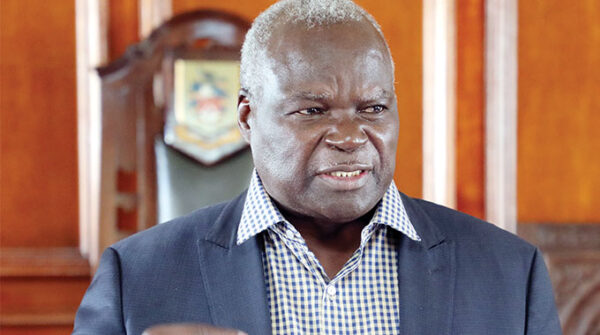
Despite local equipment and consumable suppliers facing several challenges which have hindered them from meeting the demand of the mining sector in Zimbabwe, there is a need to encourage local procurement in the mining industry to enable the growth and development of the country’s economy, Chamber of Mines President Mr Thomas Gono said.

Rudairo Mapuranga

Speaking at the Chamber of Mines 2023 Mining Industry Suppliers Forum running under the theme “Addressing Challenges Affecting Suppliers of the Mining Industry”, Gono said the Chamber of Mines recognises the importance of suppliers in the mining value chain and continues to take the lead in the use of local factors of production.

“The need to encourage local procurement will remain our industry’s long-term goal. This is specifically one of the key tenets of our local mining industry where we know if we buy locally, we also enhance the economic activities of other sectors. The chamber of mines recognizes the importance of suppliers in the mining value chain and continues to take the lead in the use of local factors of production. Demonstrating this, our JSP committee which spearheads the strengthening of linkages between the supplier sector and the mining sector has achieved key milestones and its recommendations are being implemented by the mining houses through local enterprise development, and supply development programs.

“The key products covered under this theme include the manufacture of bolts, steel forges, manufacture of steel, engineering maintenance protective clothing, and work wear, welding and civil works, mining of silica, and brick manufacturing industries. The mining sector interventions include offtake agreements and procurement chain support, capitalization support, training support, safety and compliance audits improvements in lines of business. Such success stories have already been recorded with a growing number of manufacturing companies having benefitted from these initiatives.

“However, our suppliers are facing several challenges, chief among them foreign currency constraints, high-cost structure and competition from imports. This situation has limited the capacity of local suppliers to meet mining companies’ demands to enhance the local content in the mining industry, suppliers should continue to strive to improve on quality of products as well as cost to tap into this opportunity. We need to be competitive, especially on pricing, quality and delivery time,” Gono said.

Speaking at the same event Chamber of Mines CEO Isaac Kwesu said equipment and consumable suppliers are important for the growth and development of the mining industry with their challenges able to affect the performance of the sector.

“Our suppliers remain our lifeline and their challenges negatively affect on the performance of the mining industry,” Kwesu said.

Henrietta Rushwaya convicted for gold smuggling

0

Zimbabwe Miners Federation (ZMF) President Ms Henrietta Rushwaya has been convicted of trying to smuggle 6kgs of gold three years ago.

Rushwaya has been remanded in custody to the 10th of November for sentencing.

This is a developing story…


Guano Mining: The Green Gold of Agriculture

0

There seems to be limited research on geological exploration and mining of Guano islands or caverns within the cratons of Africa. The reasons remain unknown, probably it is due to the fact that they are not of economic interest, or it might be the fear of contracting cave disease and inaccessibility.

By Nomsa Ngono

This article seeks to dive deeper into both geological exploration and mining of bat guano.

Geological exploration was conducted on various Guano mining caverns surrounding Zimbabwe. Some of these were Mabura Caverns, which stretch for more than 60 km from Zhombe East to the Copper Queen area in Gokwe, passing underneath the Ngondoma River.[1] Another deposit was Bashungwi in Hurungwe, located in Magweto Village, which has massive deposits with a 15-20 year life span. More listings on discovery were Chingwena deposits in Kadoma, Mburangwe deposits in Makonde and Odzi Deposits in Mutare.[2]

Bat Guano

Bat Guano produces phosphorus, which is used to manufacture fertiliser. The major source of phosphate used for fertiliser production is mined from Mesozoic deposits at Dorowa Minerals.[3] There is a lack of competition and alternatives to the production of phosphates, which compromises fertiliser production prices, which are always prone to abuse. The article will further explore the genesis of the Anthropocene, a revolution between soil phosphorus and human productivity. This will be done through assessing the enormous impact of hydrocarbons from rock phosphates on climate change, which might necessitate geoscientists to consider Guano Mining either as an alternative or a competitor in minerals mined for agriculture.

The geological exploration of phosphate resources was carried out by the Geological Survey of Zimbabwe in 1991. The geological exploration conducted was for both rock carbonatite deposits and bat guano deposits from various caverns. Rocks associated with carbonites and cave accumulation of bat guano are the only two potential commercial occurrences of phosphates in Zimbabwe.[4] However, major attention and highlights shall be on bat guano phosphates. Mineral deposits of bat guano formed over a million years ago by the accumulation of excreta and bat remains. This occurred within caverns in Precambrian Proterozoic dolomarbles of the greenstone assigned to the Mucheka formation of the Lomagundi group. [5]In almost every instance, the caverns occur in limestone formations dissolved by acidic rain. Bat phosphate then composes in dump caves where bacterial action would have taken place, and possibly the deposit would have been subjected to leaching, leading to the formation of phosphorus.

Though studies were carried out on the geology of bat caverns, the Ministry of Mines and Mining Development has not reached a point of considering bat guano as a mineral under the Mines and Minerals Act. Therefore, Guano Mines cannot be pegged under a prospecting license as the title of ownership is restored with the landowner.[6]Almost all guano mines in Zimbabwe are under the jurisdiction of the respective Rural District Councils. The question remains: how do we then classify guano? As mineral deposits or agricultural chemicals? Nevertheless, since 1800 to date, other countries across the globe have considered guano as a mineral deposit. Guano mining and guano trade contributed to industrialisation and urbanisation in parts of Europe and Latin America. Zimbabwe’s lack of participation in guano mining hinders the global mineral resource supply chain. A considerable review of the Mines and Minerals Act to declare guano as an Agricultural mineral resource is worth a milestone in revitalising both agriculture and mining, which are the springboard of the Zimbabwean economy. The benefit of the project is for the poverty-stricken communities lying within the vicinity of the guano caverns. Guano mining projects usher in elements of employment creation, industrialisation and urbanisation within the respective Rural District Councils.

Like any other mining activity, mining guano is labour-intensive. Historically, companies relied on slavery, indentured servants, prisoners and migrant labour.[7]Mining was highly manual, using picks, brooms and shovels to loosen guano. The use of excavators was and is still prohibited because it is not only impractical due to the terrain, but it could frighten and disturb birdlife in the caverns. Caverns are often altered by explosives and drilling to facilitate guano extraction. The unabridged extraction process alters the microclimate within the caverns. Of great importance when mining guano is considering bats’ sensitivity to microclimate, which may prompt bats to abandon the caves as roosts. Like any other mining shaft, caverns are dark hence, mining procedures may introduce artificial light into the caves.[8] Considering the methods used in the process of extracting bat guano, mainly explosives and drilling machines, guano is indeed an agricultural mineral deposit of great value, worth classifying under the Mines and Minerals Act. The Ministry of Mines and Mining Development is compelled to assess the viability, feasibility and sustainability of Guano Mining projects in different parts of Zimbabwe and whether they are able to sustain the fertiliser industry in the long run.

However, Guano as a raw material is a poorly balanced manure which needs the support of other chemicals or substances to manufacture a suitable fertiliser. For example, the addition of sulphate potash to guano phosphates could make a great fertiliser. Nitrogenous guano with wood ashes proves a suitable fertiliser for maize and tobacco. Bat Guano in many caverns around Zimbabwe is of considerable value when made up of an approved formula with approved ingredients. More so, into the bargain, if guano phosphate fertiliser is sold at a cheaper price than imported or other fertilisers it could be in great demand. [9]Henceforth, the revival of guano mining in Zimbabwe under the wings of the Ministry of Mines and Mining Development could yield great economic prospects by introducing a new variant which will go a long way in expanding fertiliser-producing companies which heavily depend on phosphorus resources derived from the rocks.

As much as two-thirds of the world’s known phosphate resources are composed of carbonate-rich phosphate rock; exploitation of phosphate deposits provides a potential contamination of the ozone layer, areas surrounding the mines and areas where phosphates are used by increasing heavy metal levels.[10] Rock phosphates contain heavy and radioactive elements considered to be toxic to both humans and animals. The carbonates and phosphates have been identified as potential pollutant host minerals. High-grade quality rock phosphate deposits are being depleted worldwide due to increased agricultural activities, so more and more mining companies are turning to lower-quality sources of phosphates.[11] These lower-quality phosphates could be attained from bat guano phosphates. Considering the life span of Dorowa Mine, which is 60 years of marginal exploitation since its establishment in 1965, the phosphate resource is on the verge of depleting; therefore, there is a need for supplementary sources of phosphates from bat guano to sustain the fertiliser industry and boost international agricultural trade and domestic consumption.

Whilst deliberating on climate change, Agricultural scientists are mulling a shift to green farming by reducing the impact of hydrocarbons on planet Earth. Geologists on the other hand, are pestering on a green revolution between soil phosphorus and human productivity, termed as Anthropocene. Their main objective is to replace the nutrients extracted from the soil by crops. Humans have added all sorts of nutrients to the soil with hopes of enriching it, somehow to no avail. Although the list of traditional fertilisers is exhausting and bizarre, none has a strong history as guano, which was once the agricultural equivalent of gold, best described as the “white gold of agriculture.” Historically, the marketing of Guano in Zimbabwe was controlled by the Fertiliser Act of 1932 and the Farm Feeds and Remedies Amendment Act of 1976. This states that no fertiliser shall be sold under the name or description of Bat Guano. Under such conditions, fertiliser shall contain 2.5% of nitrogen or 8% nitrogen and phosphorus taken together, and much of guano does not meet this criterion[12] On the contrary, the stated criterion can be met when bat guano is mixed with other organic compounds or ingredients to come up with a proper formula for fertilisers.

Finally, until the danger of cave disease is fully assessed, geological exploration of the caverns should be carried out by men who either have a positive Histoplasma skin test or have previously explored the caverns with impunity, because one attack of cave disease gives immunity to further attacks.[13] Other than that, explorers, geologists and miners are required to wear fully geared PPE along with respirators and oxygen supply to be able to contain chemicals that affect the chest. Thereafter, the Ministry of Mines and Mining Development will be in a position to consider declaring bat guano as mineral deposits under the Mines and Minerals Act. Back in 1800 Guano mining industry proved lucrative, it was a catalyst for industrialisation and urbanisation in parts of Europe and Latin America. With the 21st-century geoscientists advocating for green revolutions in the agricultural sector, a boom and bust of Guano Mining is optimistic. Shifting to organic energy is the only way to save planet Earth. A  reduced use of carbonate phosphates from rocks reduces land degradation and mitigates the destruction of biodiversity, and water, land and air pollution. Organic energy, therefore, reduces the cost of climate change mitigation in line with the Paris Agreement. However, a lack of research and compliance by some key mining fraternities and responsible ministries hinders Zimbabwe’s participation in the global mineral resources-based supply chains. It only takes enough investment in guano mining to sustain meaningful levels of economic growth.


Nomsa Ngono is a Phd History candidate studying with the University of Zambia. She is a holder of a Master of Arts in African History degree, a Bachelor of Arts in International Studies, ISO 9001 Quality Management System internal audit certificate. Her research interests are mining, peace, national healing and reconciliation, exhumations and reburials.

You can get in touch with Nomsa on: [email protected]

[2] Flack.E.V, “Bat Guano Deposits of Rhodesia,” Sabinet African Journals,1920

[3] I.kwesu etal,” Mining Sector Policy Study,” ZEPARU,2012

[4] B.Barber, Phosphate Resources of Carbonites in Zimbabwe, Kluwer Academic Publishers, Netherlands,1991,p 19

[5] Ibid

[6] B.Barber, Phosphate Resources of Carbonites in Zimbabwe, Kluwer Academic Publishers, Netherlands,1991,p

[7] B.Boyce, The Guano Trade,2022

[8] Guano, Encyclopedia, Science News and Research Reviews.

[9] Flack.E.V, “Bat Guano Deposits of Rhodesia,” Sabinet African Journals,1920

[10] Meck.M.L etal, ‘Minerals that Host Metals at Dorowa Rock Phosphate Mine Zimbabwe,’ The Open Mineralogy Journal, Volume 5 ,2011

[11] ibid

[12] B.Barber, Phosphate Resources of Carbonites in Zimbabwe, Kluwer Academic Publishers, Netherlands,1991,p23

[13] G.Dean, “Cave Disease,” The Central African Journal of Medicine, Volume 3, Number 2, March 1957,p81


Zimplats’ Impala Platinum to cut spending after metal price decline

0

Zimplats parent company, South Africa’s Impala Platinum will reduce planned spending across its business to reflect current low metal prices, the company said on Tuesday.

The prices of platinum group metals (PGM), which are used by automakers for catalysts that help curb toxic emissions, have fallen steeply this year, squeezing miners still facing high operational costs.

Platinum prices are down about 15% so far in 2023 amid concerns over global economic growth, while palladium is currently trading around $1,127 an ounce after peaking above $3,000 in March 2022 after top producer Russia invaded Ukraine.

The price of rhodium, a scarce, corrosion-resistant PGM, peaked at nearly $30,000 an ounce in 2021 but is currently trading around $4,500.

Impala, the world’s second largest PGM producer after South African rival Anglo American Platinum, last year announced a 50 billion rand ($2.66 billion) five-year capital investment program across its mining and processing assets.

Much of the investment was earmarked for mine development and upgrades as well as processing facilities and solar power generation at Impala’s 87% owned Zimplats Ltd in Zimbabwe.

“Planned elevated levels of spend across the portfolio will be adjusted to reflect the prevailing current reality of compressed industry margins,” Impala CEO Nico Muller said in a quarterly production update.

An Impala spokesperson said that while “near term strategic imperatives like the mining, concentrator and furnace projects have low risk of adjustment”, longer term projects like sulphur abatement and renewable energy projects could be deferred or face spending adjustments.

He added the company was working on a range of responses to the depressed prices, which would be disclosed next February and was likely to include adjusting the full-year capital expenditure guidance range of 12.5-13.5 billion rand “materially downward”.

Impala’s refined PGM production volumes increased by 25% to 885,000 ounces during the September quarter after integrating the newly acquired Royal Bafokeng Platinum.

Reuters

Muchesu coal project receives acquisition offer

0

A coking coal project that started production in Zimbabwe this year could be sold to a larger investor, reflecting strong demand for the coal used by steel manufacturers.

Contango, listed in London, says it has opened talks for a potential acquisition of the Muchesu project, which began production in May and exported its first coking coal in August. Contango has, separately, entered into a deal with “a leading steel producer” to supply 1,000 tonnes of washed coking coal for a formal industrial trial in November.

“Muchesu is fully commissioned and ready to expand operations and we are primed to deliver washed coking coal to the market,” Contango CEO Carl Esprey says.

“In addition, we have now received a credible approach with respect to our assets. Whilst there is no guarantee a firm offer will be made, we expect this process to move fast and will update shareholders on the details of the proposals as appropriate.

The potential coking coal buyer plans to buy an initial 80,000 tonnes per annum of washed coking coal from Muchesu, which would be 6,700 tonnes per month. This would give Contango revenue of over US$100 000, paid in advance.

While Contango does not name the potential coal offtaker, a likely buyer is ArcelorMittal, which already buys the bulk of Zimbabwe’s coking coal – including from Hwange Colliery. Its executives, who visited Zimbabwe a year ago, said the company plans to increase its purchases from Zimbabwe.

Contango recently sent the first consignment of 20,000 tonnes of coal being sold to UAE commodity company TransOre. Contango is waiting for fresh orders.

Zimbabwe last year exported US$166.4 million worth of coking coal, up from US$39 million in 2020, according to government figures. Government hopes the likes of Contango can deliver more.


Newzwire

Mine Entra Exhibition 2023: One Day to Go

0

The highly anticipated Mine Entra Exhibition 2023 is just one day away, and industry professionals and enthusiasts are eagerly preparing for this prestigious event. Set to take place at the Zimbabwe International Trade Fair (ZITF) from the 1st to the 3rd of November 2023, Mine Entra is renowned as one of the largest mining, engineering, and transport expos in the region.

With a rich history spanning over two decades, Mine Entra has consistently provided a platform for local and international companies to showcase their latest innovations, technologies, and services to the Zimbabwe mining sector. This year’s exhibition promises to be no different, with an impressive lineup of exhibitors and a diverse range of products and solutions on display.

The exhibition serves as a hub for networking and knowledge sharing, attracting local and global industry leaders, government officials, investors, and mining professionals. It offers a unique opportunity for attendees to engage in meaningful discussions, explore potential partnerships, and stay updated on the latest trends and developments in the mining industry.

In addition to various conference programs, attendees can look forward to live demonstrations, interactive workshops, and new product launches by service providers in the mining sector. From state-of-the-art mining equipment to cutting-edge technologies, Mine Entra Exhibition 2023 promises to showcase the best that the industry has to offer.

As the countdown begins for Mine Entra Exhibition 2023, anticipation and excitement fill the air, with the majority of those attending already in the City of Kings. The event serves as a testament to the resilience and innovation of the mining industry, and attendees can expect to witness groundbreaking advancements that will shape the future of mining.

For more information and registration details email the Exhibition Coordinator, Mr Capson Dobola [email protected], or visit https://zitf.co.zw/exhibitions/mine-entra/

About Mine Entra

Mine Entra Exhibition is an annual mining, engineering, and transport expo held at the ZITF. With a history spanning over two decades, it has become a premier platform for industry professionals to showcase their products, exchange knowledge, and foster collaborations. The exhibition attracts a diverse range of participants, including mining companies, equipment manufacturers, government officials, and investors.

185 die at the mines, ZMF encouraged to establish rescue teams

0

Zimbabwe recorded a total of 185 fatalities last year from 170 recorded mine accidents with an average of 83 per cent of the accidents occurring at small-scale and artisanal (ASM) run mines, a government official said.

Rudairo Mapuranga

Official figures show that, in 2019, 116 accidents occurred resulting in 182 fatalities, in 2020, 158 accidents occurred resulting in 161 fatalities, in 2021, 121 accidents occurred resulting in 139 fatalities, and in 2022, 170 accidents occurred resulting in 185 fatalities.

Speaking at the Mine Rescue Association of Zimbabwe (MRAZ), Ministry of Mines and Mining Development Principal Inspector Mines and Explosives Shepherd Dhliwayo at Mimosa Mine on Thursday said one miner dies every week on average over the past 5 years with 83 per cent occurring in the non-Chamber of mines category.

He said it was of utmost importance for the Zimbabwe Miners Federation (ZMF) to establish and enlist provincial rescue teams that can participate in the MRAZ national competitions and regional exercises to ensure that the ASM understands the importance of safety.

“Our statistics are showing that one miner dies every week on an average over the past five years, 185 killed over the last year of 2022 indicates a persistent trend. These statistics indicate that the majority of these accidents (83%) occur in the non-chamber affiliated mines category, that is to say mostly in the artisanal and small-scale mining sector. This can be attributed to, amongst other factors, the lack of a platform such as this one which enhances mine rescue emergency preparedness. In the same vein let us all encourage the participation of these artisanal and small-scale miners in these mine rescue competitions to cultivate a culture of safety within their mining operations. I take this opportunity to lobby the ZMF to establish and enlist provincial rescue teams in the competition going forward. It is through such coordinated and cohesive efforts we can achieve our shared vision of zero accidents potential for all mines in Zimbabwe.

“My office has been running around the country conducting an awareness campaign with small-scale miners and believe the message has sunk into their hearts. They have started undertaking first aid training with the assistance of the School of Mines, in Matabeleland, and Midlands they have a pilot project for that,” Dhliwayo said.

Dhliwayo said the accidents happening in the mining industry are unexpected as safety should be treated as a top priority by the entire workforce.

“These figures are unacceptable with expecting of a vision of establishing a zero accident potential for all miners of Zimbabwe. Mine Safety must be treated as a top priority by the entire workforce.

“The Chief Mining Engineer’s office and other relevant stakeholders have successfully lobbied for S.I 14 of 2023 criminal law codification, a very deterrent penalty system to make compliance a better option. We must not allow a situation where occurrences of mine accidents take one life and cause loss of millions of dollars,” Dhliwayo said.

Recently a Chegutu mine made international headlines after a shaft collapsed trapping 41 miners underground. Government ordered the rescue mission to be aborted after fears that rescuers lives were at risk due to unsafe mining which was being conducted at the site.

Mimosa, Blanket shine at National Rescue competitions

0

Mimosa Mining Company and Caledonia’s Blanket Mine dominated this year’s Mine Rescue Association of Zimbabwe (MRAZ) national competitions with the teams scooping the best team of the tournament for Proto teams and Freshair teams respectively.

Rudairo Mapuranga

In the FreshAir team category, Blanket Mine was number one ahead of Kuvimba Mining House (KMH) owned Shamva Gold Mine and Jena Mines who took second and third places respectively.

Blanket Mine took the best FreshAir team captain and Mfowetu Nkala of Blanket also took the best individual initial training (workload test).

Others FreshAir results

The best individual initial training (theory results ) was Tashinga Chimonyo of Jena Mines. Workload’s Best individual male was taken by Spencer Makuwaza of SMC Zimplats, while the Best individual female workload was Promise Musingamiri of Jena Mines. Workload best team was SMC Zimplats.

In the proto-team category,  

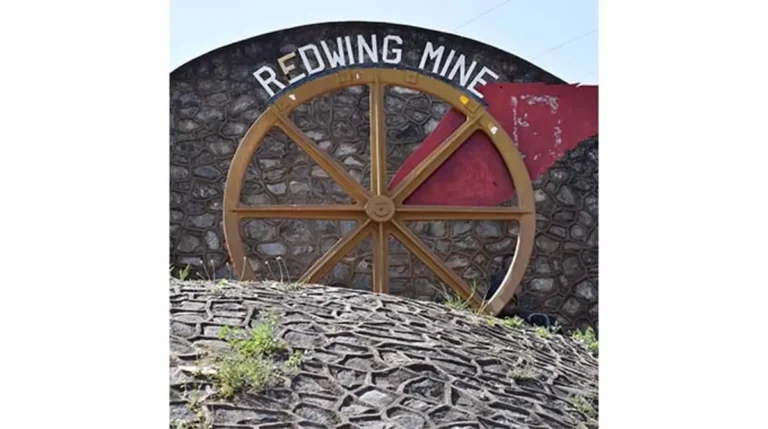
Mimosa took the first position with 1217 points, while Blanket Mine which was on 1183 points took second. The previous winners for proto team How Mine, were third with 1169 points. Unki Mine was in position fourth with 1137 points while Kuvimba’s Freda Rebecca took fifth with 1108 points and Redwing was last with 730 points.

For Prototeams, the Best individual training (workload test) was Brain Mlambo of HowMine. In contrast, the Best individual initial training (theory results ) was Takudzwa Diniel Mawere of Mimosa Mine with Workload Best individual male taken by Knowledge Makitosi of Mimosa Mine.

 Workload best individual female was taken by Rumbidzai Makurira of Unki Mines while Workload’s best team and best team captain went to Mimosa Mine.

The Mine Rescue National Competitions work instructions were as follows 

An electrical transformer was reportedly blown up early this morning around 0200hrs along the 8-level South conveyor drive. A 15-member team was doing housekeeping along the conveyor belt during the incident. Three employees managed to escape to the surface and twelve employees are yet to be accounted for. The missing employees are suspected to be trapped along 8 level South 6 Level South link road.

The explosion is also suspected to have caused structural damages to the 6-level South water dam.

Your team is required to

1) Assess the conditions in 8LS and determine if there is water ingress from the damaged dam

2) Prepare for the electrical maintenance crew by lashing our ore accumulations in the 8-level South travelling way.

3) Search for and rescue the missing employees.

Softening mineral prices affect export receipts by 9%

0

The decline in global mineral commodity prices has resulted in a 9% decrease in export receipts during the first nine months of 2023 compared to the same period in 2022.

Rudairo Mapuranga

According to the Reserve Bank of Zimbabwe (RBZ) through a press statement released on Tuesday titled “Resolutions of the Monetary Policy Committee (MPC) Meeting Held on 23 October  2023” prices of minerals such as platinum, lithium and nickel have been declining negatively affecting export receipts in the economy.

The Reserve Bank said the country’s foreign currency generation thereby fell by 9 per cent over the nine months to September 2023, from US$4.5 billion during the comparable period in 2022 to US$3.6 billion.

“Due to the negative developments in the global economy, prices for most mineral commodities including platinum, nickel and lithium have been declining, negatively affecting export receipts in the economy. As a result, export receipts, which are the main source of foreign currency for both the wholesale and retail foreign exchange auctions and for servicing the country’s foreign commitments, fell by 9% over the nine months to September 2023, from US$4.5 billion during the comparable period in 2022 to US$3.6 billion.

“Considering. the emerging global risks and the need to keep the exchange rate and inflation expectations anchored to support economic growth, the MPC made the following resolutions:

Interest rates

With immediate effect, the Bank Policy rate has been reduced from 150% to 130% per annum and the medium-term Bank Accommodation (MBA) interest rate for the productive sectors including individuals and MSMEs will be maintained at 75% per annum.

Foreign Currency Retentions

With effect from 1 November, foreign currency retentions on exports shall be standardised at the level of 75% across all sectors of the economy and all special dispensations granted to some sectors of the economy shall be removed. The net effect of this measure is to increase foreign exchange resources available to the Bank and Government to  meet foreign exchange requirements for the settlement of national and international obligations.

 Promotion of No-Frills (Low-Cost) bank accounts

Financial institutions are encouraged to scale up financial inclusion through the opening of Moreno-frills (low-cost) accounts. This measure will promote more usage of banking services and financial products, including increased use of bank cards, digital financial services and other cash-lite means of payments in the economy. In order to complement efforts to formalise the economy and to give more impetus to the use of non-cash-based means of payment in the economy, it is recommended that Government considers removing Intermediated Money Transfer Tax(IMTT) on transactions that are intermediated through plastic bank cards and other digital platforms.

Trading Margins

In order to support the continuous fine-tuning and further liberalisation of the foreign exchange market, with a view to guaranteeing and safe guarding exchange rate stability, it is recommended that the limit of 10% trading margin above the interbank rate be removed.

Zimbabwe Gold (ZiG)

Since its introduction as a medium of exchange on 5 October 2023, the use of ZiG has been embraced widely in the economy and its continued dual use as a value preserving instrument and a medium of exchange in the economy will go a long way in supporting digitisation, financial inclusion and the overall stability of local currency.

The MPC will remain alert to attend to any emerging risks, emanating from both the domestic and international fronts, in its commitment to ensuring stability in the exchange rate and general price levels.

Unki production increases by 3 percent

0

Anglo-American Platinum (AMPLATS) platinum group metals (PGM) producer Unki Mine in Shurugwi recorded a 3 per cent increase in production during the quarter ended 30 September 2023 compared to the previous quarter ended 30 June 2023.

Rudairo Mapuranga

Unki PGM production during the third quarter of 2023 increased by 3 per cent to 60 500 ounces compared to 59 000 ounces produced during the second quarter of 2023. Unki also recorded a 1 per cent increase during the quarter compared to the third quarter of 2022 in which the mine accounted for 59 900 ounces.

Despite mining through higher internal waste areas, Unki Mine PGM production increased by 2 per cent during the first half year compared to the same period last year.

The mine’s total PGM production during the half year of 2023 was at 121 500 ounces compared to 119 600 ounces produced during the period 1 January to 30 June of 2022.

However, Unki PGM production decreased by 11 per cent to 59,000 ounces against 66,300 ounces produced during the comparable period of 2022. The decreased production was a result of mining through planned higher internal waste areas.

The PGM also took a 6 percent decrease during the second quarter of 2023 compared to the first quarter of 2023 where production was at 62 500 ounces.

Amplats total PGM production in Q3 2023 decreased by 2 per cent against the prior period (Q3 2022) to 1,029,600 ounces, with platinum production decreasing by 1 per cent to 475,900 ounces, and palladium production decreasing by 3 per cent to 314,800 ounces.

PGM production from own-managed mines

Total PGM production from own-managed mines decreased by 3 percent to 568,200 ounces primarily due to lower production from Mogalakwena and Amandelbult.

PGM production at Mogalakwena decreased by 5 per cent to 246,800 ounces. In line with guidance, we continued to mine lower grades at Mogalakwena which resulted in a 3 per cent reduction in 4E built-up head grade to 2.75g/t from 2.84g/t in Q3 2022.

PGM production from Amandelbult achieved a 25 per cent improvement against Q2 2023 which equates to a 4 per cent decrease to 184,900 ounces against the prior period which was driven primarily by continued lower available ore reserves as a result of poor ground conditions at Amandelbult’s Dishaba Mine. Improving ore reserve availability at Dishaba Lower remains a priority.

Unki and Mototolo PGM production increased by 1 per cent against the prior period.

PGM production from Joint Operations (50% own-mined production and 50% purchase of concentrate)

Total PGM production from Joint Operations increased by 2 per cent to 195,000 ounces.

Total Modikwa PGM production increased by 5 per cent against the prior quarter to 79,200 ounces due to increased grades and recoveries.

Total Kroondal PGM production decreased by 1 percent to 115,800 ounces.

Purchases of PGM concentrate from third parties

Purchases of PGM concentrate (POC) from third parties of 266,300 ounces are in line with the prior period.