Home Blog Page 287

London listed company’s wash plant in Zimbabwe now complete

0

Contango Holdings, a London-listed mining company, has completed the construction of the wash plant at its Lubu coking coal project in Zimbabwe.

The company reported that the refurbishment of the screen used to sort the coking coal prior to it being fed through the wash plant, is nearing completion and is expected to be delivered to the site in early April. Power to the wash plant and processing facilities is expected to be connected by mid-April. The concrete-lined recirculation and settlement ponds, along with the tailings control dam, are currently being lined with concrete prior to use.

Contango aims to undertake grade control drilling for eight days in early April to ensure optimal extraction and processing of the coking coal. Following this, the Wirtgen surface miner will restart operations and the extraction of coal.

Commenting on the developments, Contango CEO Carl Esprey stated: “We have continued to make…progress at site as we prepare for imminent first coking coal production and sales. Next month, we intend to activate our wash plant and commence the processing of coal ahead of subsequent sales under our existing offtake agreements”.

The Lubu coking coal project in Zimbabwe has resources of up to 680 million tonnes of coal of varying qualities, with high-quality coking coal representing the majority of the resource. Zimbabwe contributes less than 1% of global coking coal supplies, despite more than 33% of the world’s known coking coal reserves being located in the country. This recent development in the Lubu project reflects the company’s ongoing progress towards achieving its first coking coal production and sales, which would be significant for Zimbabwe’s mining industry, particularly in increasing the country’s position in the global coking coal supply.

Contango’s primary value driver is its 70% interest in the Lubu Coal Project in Zimbabwe – a high-value coking coal project due to deliver its first coking coal sales in Q2 2023.

Gold buying prices Tuesday 28 March 2023

Fidelity Gold Refinery (FGR) official gold buying prices Tuesday 28 March 2023.

SG 90% AND ABOVE US$59.44/g
SG ABOVE 85% BUT BELOW 90% US$58.50/g
SG ABOVE 80% BUT BELOW 85% US$57.88/g
SG ABOVE 75% BUT BELOW 80% US$57.25/g
SAMPLE BELOW 10g BUT ABOVE 5g US$56.31/g
FIRE ASSAY CASH US$59.44/g

NB: Fire Assay cash price is for gold above 100gs and no sample is deducted.
For the Fire Assay Transfer price, a sample of not more than 10g is deducted
A 2% royalty is charged on all deposits (small-scale miners)
A 5% royalty is charged to Primary Producers

Cash available. Fidelity Gold Refinery prices will be changing daily in relation to world market prices.

Chief Gvt Mining Engineer speaks on the Kwekwe classroom collapse

0

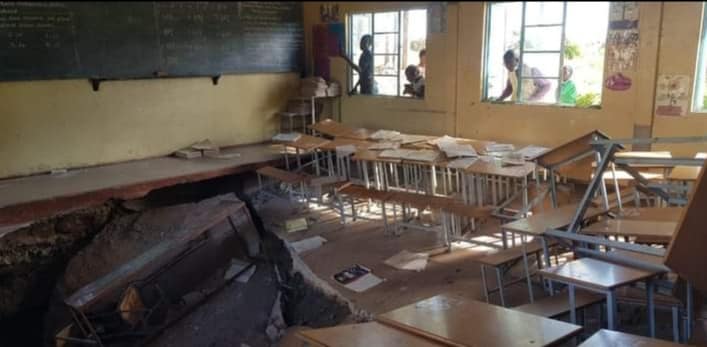
On the morning of the incident, 41 schoolchildren were about to start lessons in their primary school classroom when the floor suddenly gave way due to ground subsidence caused by illegal small-scale mining activities in the area.

Fortunately, the desks and chairs in the classroom went in first and prevented further injury by closing the gaping hole.

14 children were injured in the collapse, while 4 more were injured when they panicked and jumped out through the windows of adjacent classrooms. All the children were taken to the hospital but thank-fully discharged by the end of the day.

Speaking at the Mine Rescue Association of Zimbabwe, Chief Government Mining Engineer (CGME) Michael Munodawafa emphasized that it is essential to provide mine rescue teams with suitable gear to enable them to respond efficiently to emergencies.

“…we urge your association to get equipped with the appropriate equipment that will enable you to attend effectively to emergencies and rescue operations involving, among other hazards, inundated mine environments.

The incident highlights the need for closer cooperation and collaboration between the Mines inspectorate and mine rescue associations in planning and attending to mine emergencies and rescue operations. It also underscores the need for equipping mine rescue teams with appropriate equipment for effective response to emergencies and rescue operations involving hazards such as inundated mine environments.

China Energy proposes $1bn floating solar farm in Kariba

0

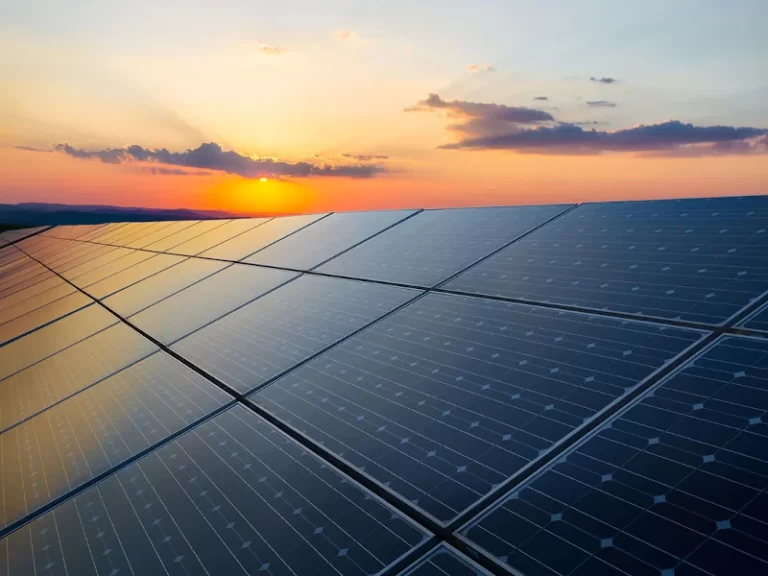
China Energy Engineering Group proposed building a 1 000 MW floating solar farm for Zimbabwe, a nearly $1-billion project, on the world’s largest man-made lake.

More than 1.8 million photovoltaic panels installed over 146 modular floating units would be used for the project on Lake Kariba if it went ahead, according to an official report that was prepared for the state’s power utility and potential private equity funders by the company and seen by Bloomberg. The civil engineering works would cost $ 186 million and the installation $ 801 million, according to China Energy.

Zimbabwe is facing acute electricity shortages that have resulted in blackouts lasting about 12 hours a day because low water levels have stifled generation from a hydropower plant on Lake Kariba. The problem has been exacerbated by frequent breakdowns at the Hwange thermal power station.

China Energy has installed floating panels on China’s Dingzhuang River and in Thailand, it said in the presentation. Interest in such installations, which avoid competition for land and have the potential to reduce evaporation from reservoirs, has increased in recent years, according to the International Energy Agency.

The Kariba report was prepared for Zimbabwe Power, CDF Trust, Energy China, and the Intensive Energy Users Group, which comprises mining companies and other big electricity consumers. It envisions mining operations eventually tapping power from the project, which would help the country reduce its carbon emissions.

Mining Weekly

CGME Eng Munodawafa speaks on the significance of mine rescue

0

The Mine Rescue Association of Zimbabwe recently held its Annual General Meeting, and speakers at the event emphasized the need for continual personal development in mine rescue management.

In his speech, the Chief Government Mining Engineer (CGME) Engineer Michael Munodawafa said it was essential for rescuers to continue improving their knowledge and skills to handle emergencies.

“As basketball coach Pat Riley once said, “If you’re not getting better, you’re getting worse.” It is essential that miners, emergency responders, and other industry leaders continually improve their knowledge and skills to ensure that they are equipped to handle emergencies,” Eng Munodawafa said.

He applauded the Mine Rescue Association for swiftly attending to an emergency at Globe and Phoenix Mine in
Kwekwe when a classroom collapsed resulting in the injury of 18 schoolchildren. Collaboration between the Mines Inspectorate, Mine Rescue Association, and other emergency services played a crucial role in ensuring that all children were quickly and safely transported to the hospital.

“Allow me to express our sincere gratitude to COMZ and Mine Rescue Association for swiftly reacting to our call to attend to an emergency at Globe and Phoenix Mine in Kwekwe. This was after some ground subsidence caused by illegal small-scale mining activities affected a primary school resulting in the injury of 18 schoolchildren. About 41 kids were geared to start lessons around 0730hrs when suddenly half of the floor of their classroom gave in following the ground subsidence. 14 kids went down with the collapse but luckily the desks and chairs went in first and closed the gaping floor and that saved the kids. During the collapse, other kids from adjacent classes panicked and jumped out through the windows resulting in four more children being injured. Fortunately, all the children were taken to the hospital and were all discharged by the end of the day,” the CGME said.

The late arrival of emergency services during mining accidents has often been blamed for the high number of fatalities, with an average of three miners dying every week over the past five years. The establishment of a formalized and institutionalized mine rescue and emergency response management system in the small to medium mines sub-sector could have prevented many of these fatalities.

The Mine Rescue Association, in collaboration with the Ministry of Mines and Mining Development, has been called upon to spearhead and assist in the establishment of mine rescue services in this sub-sector.

“For the past five years, thus, from 2019 to 2022, an average of three (3) miners were killed every week with 17% of these fatalities attributed to COMZ-affiliated mines and 83% to non-COMZ small to medium-scale mining operations. The number of fatal accidents increased from 116 in 2019 to a repugnant figure of 170 during yesteryear.

“Suffice to say, barring other factors, more lives could have been saved in the latter had mine rescue and emergencies response services been formalized and institutionalized in the small to medium mines sub-sector. It is with this realization in mind, that we plead with your association to spearhead and assist, in collaboration with the Ministry of Mines and Mining Development, in the establishment of mine rescue services in this sub-sector. Along the same vein, I encourage you to accommodate the participation of these small-scale miners in your mine rescue competitions. It is through such coordinated and cohesive efforts that we can achieve our shared vision of an effective mine rescue and emergency response management system in our mining sector,” Eng Munodawafa said

In addition to formalizing rescue services, the participation of small-scale miners in mine rescue competitions could contribute to building cohesive and coordinated emergency response teams. It is through such efforts that the mining industry can achieve its shared vision of an effective mine rescue and emergency response management system.

The Mine Rescue Association’s Annual General Meeting served as a reminder of the importance of mine rescue and emergency services in the mining industry. Continuous personal development, the collaboration between emergency services, and the formalization of rescue services are necessary for achieving the goal of a safer mining sector.

Karo raises us$130million loan by offtake

0

Tharisa, the chrome and platinum group metals (PGM) miner, raised $130m in a debt facility secured by offtake of its minerals.

This follows the listing in December of just over $30m in three-year bonds on Zimbabwe’s Victoria Falls Stock Exchange. The funds will be critical in enabling Tharisa to finance the proposed $391m Karo Platinum project in Zimbabwe.

The facility announced today comprises a term loan of $80m and a revolving $50m facility, secured by commodity offtake agreements. It was arranged with Société Générale and Absa Bank, the company said.

“The Société Générale and Absa senior debt facilities, as well as the significant free cash flow generated from the Tharisa Mine, provide significant flexibility to Tharisa’s capital allocation policy,” said Michael Jones, CFO of Tharisa.

Karo Platinum had been expanded to 194,000 ounces annually in PGMs compared to a previous production estimate of 150,000 oz/year. Once built, in about two years from the start of construction, the project will make Tharisa a near-400,000 oz/year PGM producer.

Tharisa CEO Phoevos Pouroulis said last year that the project represented the making of the company with combined PGM production for 17 years ahead of anticipated sustained deficits for the metals.

According to Tharisa assumptions of an average PGM 6E price of $2,140/oz and cast cost of $1,096 per PGM oz, Karo would generate a return on capital invested of 30.1% and an internal rate of return of 26.1%. “We have a tier one project that is robust with world-class economics,” said Pouroulis.

Tharisa is targeting full-year production of between 175,000 oz and 185,000 oz of PGMs and chrome concentrate production of 1.75 million tons (Mt) and 1.85Mt. It produced 179,000 oz in PGMs and 1.58Mt of chrome in its 2022 financial year ended September.

Mining MX

Gold fire assaying

0

Fire assaying is an analytical technique used in the determination of the quality and purity of gold. This method dates back to ancient times but has been refined and improved upon over the years. It involves the use of heat to melt a sample of gold and separate it into its purest components.

The process of fire assaying begins with a sample of gold being mixed with a flux, a material that helps to purify the metal. The flux contains borax, soda ash, and silica, and is heated in a crucible to a high temperature. The gold sample is then added to the mixture and heated until it melts. As the gold melts, other impurities such as base metals and other non-gold materials are oxidized and react with the flux to form a slag.

The molten gold is then poured into a mould to cool and solidify. The resulting metal bar is usually inspected for quality and characteristics such as colour, density, and texture. The smelting and refining process may need to be repeated a few times to ensure that the gold is pure.

Once the gold has been purified, it is weighed to determine its mass. The mass of the gold is then calculated based on the weight of the entire sample. This process is called the cupellation stage. This allows for a more accurate determination of the gold concentration in the original sample.

Fire assay is a reliable and accurate method of determining the purity of gold. It is widely used in the jewellery industry to ensure that the gold used is of high quality and not mixed with other metals. It is also used in the mining industry to measure the amount of gold in ore samples.

Fire assay is a time-consuming process and requires a skilled technician to perform it correctly. The process can take up to several hours to complete and involves several steps. However, the results are very accurate and reliable.

In Zimbabwe, Fidelity Gold Refinery (FGR) has the capacity to refine gold to purities of 99.5% and above using these refining techniques:

  • Miller chlorination process
  • Electrolytic refining process
  • Aqua regia refining process

In conclusion, fire assaying in gold is a method used for the determination of the quality and purity of gold. It involves heating a sample of gold with a flux to melt it and separate it into its purest components. The molten gold is then poured into a mold and allowed to cool and solidify. The metal bar is inspected for quality before being weighed and its purity is determined. Fire assay is a reliable and accurate method used in the jewellery and mining industries to ensure the quality and purity of gold.

Gold buying prices Monday 27 March 2023

Fidelity Gold Refinery (FGR) official gold buying prices Monday 27 March 2023.

SG 90% AND ABOVE US$60.89/g
SG ABOVE 85% BUT BELOW 90% US$59.93/g
SG ABOVE 80% BUT BELOW 85% US$59.29/g
SG ABOVE 75% BUT BELOW 80% US$58.65/g
SAMPLE BELOW 10g BUT ABOVE 5g US$57.69/g
FIRE ASSAY CASH US$60.89/g

NB: Fire Assay cash price is for gold above 100gs and no sample is deducted.
For the Fire Assay Transfer price, a sample of not more than 10g is deducted
A 2% royalty is charged on all deposits (small-scale miners)
A 5% royalty is charged to Primary Producers

Cash available. Fidelity Gold Refinery prices will be changing daily in relation to world market prices.

China’s rise to lithium supremacy in Zimbabwe

0

As the demand for electric vehicles continues to soar, China has turned its attention to Africa in search of the lithium needed for the production of EV batteries. However, as China’s presence in African mines grows, is it possible for the continent to fully seize this momentous opportunity?

While this influx of Chinese investment could bring much-needed capital and jobs to African nations, it also raises concerns about the continent’s ability to control its own mineral resources. However, some African countries are taking steps to protect their resources, with Zimbabwe passing the Base Mineral Export Control Act in December to ban the export of raw lithium (though Chinese firms already invested in mines or processing plants in the country are exempt from this ban).

Companies like Zhejiang Huayou Cobalt, Sinomine Resource Group, and Chengxin Lithium Group have already invested $678 million into lithium projects in Zimbabwe, and have acquired controlling shareholdings in Zimbabwean lithium mines over the past few months. China’s reach extends beyond Zimbabwe too, with Chinese companies gaining control of a sizeable share of the Democratic Republic of Congo’s mining sector, including key cobalt and lithium resources.

Just as investing in Africa’s lithium sector is beneficial to China, African countries stand to benefit from Chinese investment through job creation, taxes, the transfer of technology, and significant funding, which all help to develop Africa’s mining industry. However, there are several potential disadvantages of China monopolising African resources, some of which include:

Exploitation of resources

There is a risk that China’s dominance in African resource markets could lead to exploitation of these resources, without consideration for the environmental and social impacts on the local population.

Unequal trade relationships

China’s large-scale investments in Africa have raised concerns about unequal trade relationships, where African countries may be left with little bargaining power and be at the mercy of Chinese economic policies and practices.

Limited access for other countries

China’s dominance in African resources could also limit access to these resources for other countries, potentially leading to geopolitical tensions and economic imbalances.

Impact on local industries

China’s large-scale investment in African industries could also impact local industries and businesses, as they may not be able to compete with the low-cost products and services offered by Chinese firms.

As the EV market continues to grow, it’s essential for African nations to ensure they are maximising the opportunities presented by their mineral resources while also protecting their interests. By working to build their own mining and processing capabilities, partnering with responsible companies, and investing in education and research, Zimbabwe can take an active role in shaping the global supply chains for these critical resources.

Mining Review Africa

Caledonia raises us$13 million for gold projects

0

Gold miner Caledonia Mining Corporation is raising about $ 13 million, or about £10.5-million, to strengthen its balance sheet and provide it with working capital flexibility to accelerate planned work at its three new gold projects – Bilboes, Motapa and Maligreen – in Zimbabwe.

Caledonia, which operates the Blanket mine, in Zimbabwe, set out to raise about $ 10 million, or about £ 8.1 million, through an accelerated book-building process being conducted in the UK and South Africa. At close, the book build raised $ 10.6 million, or about £ 8.7 million.

Further, IH Securities is undertaking a placing of Zimbabwe depositary receipts, in Zimbabwe, on behalf of Caledonia, to raise about $ 3 million, or about £ 2.4 million.

Caledonia acquired the Bilboes project for about $ 65.7 million in January. The project has National Instrument (NI) 43-101-compliant proven and probable mineral reserves of 1.96-million ounces of gold in 26.64-million tonnes at a grade of 2.29 g/t, measured and indicated mineral resources of 2.56-million ounces of gold in 35.18-million tonnes at a grade of 2.26 g/t and inferred mineral resources of 577 000 oz of gold in 9.48-million tonnes at a grade of 1.89 g/t.

Bilboes has produced about 288 000 oz of gold since 1989. The first gold from Bilboes under Caledonia’s ownership is due to be produced at the end of March.

Caledonia expects to use about $2-million of the net proceeds of its fundraise to fund a new feasibility study to investigate commercialisation of Bilboes, possibly through a phased development approach.

If successful, this would reduce the initial capital investment and also reduce the need for third-party funding, the gold miner says.

A further $2-million of the funds raised is expected to be used for the procurement of a management facility at Bulawayo, which will be used to provide shared services for the Blanket mine, as well as the Bilboes and Motapa projects.

Caledonia acquired the Motapa gold exploration project in Southern Zimbabwe in November 2022 for $8.25-million in cash and loan notes.

Motapa is a large exploration property, which is contiguous to the Bilboes gold project and about 75 km north of Bulawayo. The company believes the proximity to Bilboes will allow prospects of synergies in the evaluation of the geological potential for Motapa and, in due course, gold processing operations in the mining areas.

The mining lease for Motapa covers about 2 200 ha. About $6-million of the funds raised will be used for further exploration at Motapa.

Lastly, Caledonia acquired the Maligreen project for $4-million in November 2021.

The property contains NI 43-101-compliant measured and indicated mineral resources of 442 000 oz of gold in 8.03-million tonnes at 1.71 g/t and inferred mineral resources of 420 000 oz of gold in 6.17-million tonnes at 2.12 g/t.

Caledonia plans to use about $2-million of the funds raised for drilling and exploration at Maligreen.

RESULTS AND 2023 OUTLOOK

Meanwhile, Caledonia has posted earnings before interest, taxes, depreciation and amortisation (Ebitda) of $50.4-million for the financial year ended December 31, 2022, compared with an Ebitda of $46.4-million in the 2021 financial year.

Gross revenue increased to $142-million for the 2022 financial year, compared with $121-million in the prior year.

Adjusted earnings a share, however, decreased to $2.20, from $2.26 in the prior year.

On-mine costs decreased to $735/oz, compared with $742/oz in 2021, while all-in sustaining costs increased to $878/oz, compared with $856/oz in 2021.

Caledonia paid a dividend of $0.56 a share for 2022, compared with the dividend of $0.50 a share the year before.

The Blanket mine produced 80 775 oz of gold in the year under review, compared with the 67 476 oz produced in 2021.

“Operationally, the last 12 months have marked a turning point for the business, and I am delighted that we hit our long-term target of just over 80 000 oz.

“The last couple of years has seen a tremendous amount of change in the company as we pivot the direction of the business towards becoming a multi-asset gold producer in Zimbabwe. We have always seen huge geological potential in the country and are very excited about the portfolio of attractive new assets that we have acquired,” comments CEO Mark Learmonth.

Another highlight at Blanket has been the installation of a 12.2 MW solar plant.

“In November 2022, the company’s . . . solar plant was connected to the Blanket grid and the mine has since been receiving 27% of its energy from solar. The solar power will displace power from the grid and from the diesel generators and is expected to reduce Caledonia’s consolidated cost per ounce of gold produced by about $37.

“This completion happily coincides with an improvement in the supply of power from the Zimbabwe grid which has substantially reduced the amount of diesel consumed. We are confident that we will continue to see an ongoing meaningful reduction to our diesel use month on month, fully justifying our investment in solar power and delivering on our environmental social governance strategy,” says Learmonth.

Looking ahead, Caledonia expects the Blanket mine to produce 75 000 oz to 80 000 oz of gold this year.

The Bilboes oxide operation is expected to deliver a further 12 500 oz to 17 000 oz of gold this year.

Mining Weekly