Home Blog Page 293

Women Miners encouraged to contribute to the Mines bill

0

Popular Miner and business-woman Sophia Takuva has urged women Miners across the country to attend, hear and also contribute to the bill as it affects their mining operations.

In a statement, she published on African Women In Mining Empowerment Trust (AWOME Trust) Takuva said it will affect the women if they do not participate and give recommendations.

“May I take this opportunity to advise you all that the mines and mining bill is under consultation with stakeholders, would like to urge miners in various parts of the country to attend, hear and also contribute to this bill, as it affects or helps in the mining operations for the coming years. It will affect us if we do not participate and give recommendations. Remember this bill has been moving back and forth with certain areas where, especially small-scale miners have failed to do business and collective approach for those doing alluvial VS reef mining, illegal and legal miners. The Parliamentary Portfolio committee will be going around the country collecting information about challenges and areas where the bill must be looked at.

The Parliamentary Portfolio Committee on Mines and Mining Development from next week will be conducting public hearings on the Mines and Minerals bill H.B 10 2022. The bill seeks to replace the current Mines and Minerals Act which was enacted in the 1960s.

In an interview with Mining Zimbabwe, chairman of the Portfolio Committee on Mines and Mining Development Hon Edmond Mkaratigwa said everyone interested or affected in any way by Mining is welcome to attend.

“We hope by this pronouncement we are going to see a lot of stakeholders attending, and we have no limitations. Everyone who is interested or has views they want to contribute or are affected by mining in one way or another is welcome to attend,” Mkaratigwa said.

Below are the dates and places the Committee will be visiting from the 27th of February 2023.

DATEPROVINCEVENUE
Monday, 27 February 2023HarareHarare
Tuesday, 28 February 2023Mashonaland CentralBindura
Wednesday, 1 March 2023Mashonaland EastMakaha
Thursday, 2 March 2023ManicalandPenhalonga
Friday, 3 March 2023Masvingo MidlandsMashava Mberengwa
Monday, 6 March 2023Mashonaland WestKadoma
Tuesday, 7 March 2023BulawayoBulawayo
Wednesday, 8 March 2023Matebeleland SouthEsigodini
Thursday, 9 March 2023Matebeleland NorthHwange
Friday, 10 March 2023Matebeleland NorthKamativi

Ministry of Mines calls for a temporary halt to low-lying mining

0

The Chief Government Mining Engineer Michael Munodawafa has emphasized the importance of preserving life and called on artisanal and small-scale miners who are mining in low-lying areas to temporarily stop operations as Zimbabwe braces for Tropical Cyclone Freddy.

In a statement, Eng Munodawafa said heavy rains and flooding will lead to ground instability in the ground due to oversaturation of water potentially leading to ground collapse risking the lives of miners working underground.

My fellow Zimbabweans especially our small-scale miners and relatives I’m sure we have all heard about the Cyclone coming to Zimbabwe in the next few days. The cyclone will come with a lot of heavy rains which will cause flooding. We are therefore encouraging all miners, especially small-scale miners who are mining in waterways or low-lying areas to temporarily stop their operations until when the floods have gone. The heavy rains and flooding will also result in the introduction of instability in the ground due to oversaturation of water will result in ground collapse and bury our miners alive,” Eng Munodawafa said.

Eng Munodawafa advised miners to take the warning seriously as the country did not want to lose any lives because of the floods.

“Let’s all take this advice seriously as we do not want to lose any miners during this cyclone Freddy. Let’s value our lives more than the gold or any other mineral we are mining. A single loss of life is a loss to the family, the village, the country and all of us. Please let’s retreat briefly until the cyclone has gone and contribute meaningfully to Zimbabwe,” Munodawafa concluded.

Intense Tropical Cyclone Freddy, a particularly powerful and compact tropical system, is forecasted to make landfall in Madagascar on February 21, 2023.

Cyclone Freddy is projected to emerge in the Mozambique Channel and re-strengthen before landing in Mozambique and potentially reaching Zimbabwe, particularly in Chimanimani and Chipinge in the Eastern Highlands of Zimbabwe.

Freddy represents a significant flood risk for Madagascar as soils are already saturated in central parts of the island from the impact of Cyclone Cheneso, which stalled off the west coast of the island and brought torrential rains in late January that affected over 90,000 people with 33 people killed and 20 people still missing.

Unki 47 percent production increase

0

The country’s second-largest platinum group metals (PGM) producer Anglo American Platinum-owned Unki Mine in Shurungwi has recorded a 47 per cent production increase in 2022 compared to the previous year.

Rudairo Mapuranga

During the year, Unki Mine produced 232 000 ounces of PGM compared to 205 000 ounces the previous year.

The PGM producer however recorded a 17 per cent production decrease during the last quarter of 2022 compared to the same period in 2021.

Unki Mine also recorded a production increase of 41 per cent during the quarter that ended 30 September 2022 compared to the same quarter of 2021.

The Anglo-American Platinum-owned PGM producer recorded 59 900 tonnes during the quarter compared to 42 600 tonnes produced during the comparable quarter of 2021. However, there was a 10 per cent decrease compared to the previous quarter which ended on 30 June 2022 when the mine recorded 66 300 tonnes of production.

Compared to the first quarter of 2022, the PGM producer recorded an increase from 53 300 tonnes while during the fourth quarter of 2021, the mine produced 63 200 tonnes.

During the first three quarters of 2022, the PGM producer recorded a 27 per cent increase to 179 500 tonnes from 141 400 tonnes produced during the first three quarters of the previous year.

Zimbabwe is envisioning a US$12 billion mining industry by 2023. Of the US$12 billion, platinum will contribute US$3 billion.

Mines Bill prioritises indigenous Zimbabweans – Dias

0

The Mines and Minerals Amendment Bill will bring sanity and empower indigenous Zimbabweans to benefit fully from their God-given mineral resource, Deputy Attorney General Nelson Manuel Dias has reviewed.

Rudairo Mapuranga

Responding to a question from Mr Hyde Chatyokwa which suggested that the current bill is segregating native Zimbabweans in favour of foreigners at the Mines and Minerals Amendment Bill all stakeholders conference held at Rainbow Hotel, Harare this past Monday, Dias said the Bill was prioritizing Zimbabweans and ensuring that communities benefit significantly.

“The Bill prioritizes indigenous Zimbabweans, it does not in anywhere prefer foreigners. The Bill wants to protect communities, want to empower small-scale miners and it has clearly spelt that.

“Foreign companies are subjected to a lot of requirements for them to start mining whilst, for indigenous Zimbabweans, it is very easy,” Dias said.

Speaking at the same event Parliamentary Portfolio Committee on Mines and Mining Development Chairperson Hon Edmond Mkaratigwa said that his Portfolio was ready to bring out a law that supports indigenous people.

“We want to make the bill the best and acceptable by all citizens in Zimbabwe,” Hon Mkaratigwa said.

Through the Parliamentary Portfolio Committee on Mines and Mining Development capacity building workshop held in Bulawayo last week, members raised several issues among them issues of the Formalisation of the ASM, strategic minerals, and constitution of the Mining Affairs Board among others.

According to Hon Mkaratigwa the recognition of Artisanal and Small-Scale miners, The farmer-miner disputes; Environmental, Health and Safety Issues; Transparency in the licensing regime of mining titles; Recognition of Provincial Mining Directors; Devolution of the Mining Sector administration royalty; Equality and equity of mining fees across provinces and local authorities; Corporate Social Responsibility and the need for social and environmental protection and; Installation and operationalization of Computerized Cadastre System among others are critical issues in the bill.

On the formalisation of artisanal miners, Dias said the Bill has recognised artisanal and small-scale miners and has given them a chance to formalise their operations.

It was highlighted that there may be a need to also add Gold and Platinum Group Minerals under strategic minerals considering their huge contribution to the mineral revenue as well as the social fabric. Dias however said that it was putting gold and PGMs as strategic minerals that might be detrimental to small-scale miners. He, however, said that through the bill, the Minister is empowered to declare any mineral as strategic.

It was also highlighted that on the Constitution of the Mining Affairs Board (MAB) Section 8 should explicitly mention small-scale miners being represented by the Zimbabwe Miners Federation (ZMF). Dias however, said that the board will not have specific organizations except for the Chamber of Mines which has an act governing it.

It was highlighted that section 23 on qualifications required for one to be registered as a staking agent should be specific on what kind of qualifications. Dias however said that it was the duty of the Minister to specify the requirements for the stacking agents.

It was raised that, on the issuance of Exclusive Exploration Licence- too many offices are involved which does not promote the ease of doing business. The Deputy Attorney General, however, said EEL is a bridge to special leases so it was difficult for the government to ease the process because it requires so much scrutiny to safeguard the country’s resources for Zimbabweans.

It was proposed that the best way to deal with CSR Certification may be through the creation of Community Based Organisations through Local Authorities in a bid to empower the communities around mining areas themselves to certify the level of compliance by a miner on his or its social responsibility obligations. Dias however said it was important for the process to be managed by experts as communities have proven to be vulnerable for many a time. He said usually communities Act in the judgement of poverty and end up getting duped.


Use of a hammermill without commissioning is illegal

0

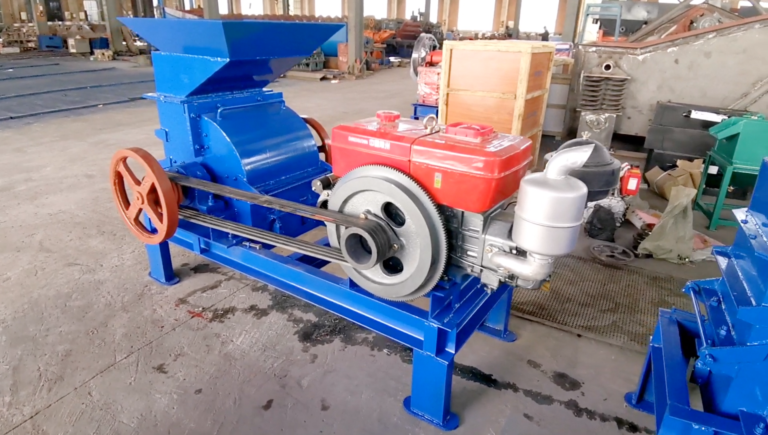
A Hammermill can only be used after commissioning, a Ministry of Mines and Mining Development official has said.

Responding to a question from the Portfolio Committee on Mines and Mining Development Legislators on why ASMs were being harassed by the Police for their hammermills, Bulawayo Provincial Mining Director Mr Farayi Ngulube said the portability of Hammermills has had miners breaching an SI that requires that processing plant should be commissioned before use.

“The only problem with a Hammermill is its quite handy, its portable, it can be installed and uninstalled in a short space of time even in a confined area. So it is in breach of a statutory instrument that requires that a processing plant should be commissioned before use. So that’s the only problem… The law says it should only be used after commissioning in accordance with the site of works plan. So those procedures are not being followed because the hammermill can be moved at a whim so that’s the complication. But the covers hammermills like any other processing equipment,” Ngulube articulated.

The Portfolio Committee on Mines and Mining Development is currently holding Capacity Building Workshop on the Mines and Minerals Amendment Bill for the Portfolio Committee on Mines and Mining Development and has announced dates for public consultations that commence next week.

The Edmond Mkaratigwa-led committee will embark on two-week working visits across mining areas as the country looks to make history furthermore enact a new bill that will fully represent the needs of the mining community.

In an interview with Mining Zimbabwe, Hon Mkaratigwa said there were no limitations to any interested parties.

“We hope by this pronouncement we are going to see a lot of stakeholders attending, and we have no limitations. Everyone who is interested or have views they want to contribute or are affected by mining in one way or another is welcome to attend,” Mkaratigwa said.

Gold buying prices Monday 20 February 2023

0

Fidelity Gold Refinery (FGR) official gold buying prices Monday 20 February 2023.

SG 90% AND ABOVE US$56.01/g
SG ABOVE 85% BUT BELOW 90% US$55.13/g
SG ABOVE 80% BUT BELOW 85% US$54.54/g
SG ABOVE 75% BUT BELOW 80% US$53.95/g
SAMPLE BELOW 10g BUT ABOVE 5g US$53.06/g
FIRE ASSAY CASH US$56.01/g

NB: Fire Assay cash price is for gold above 100gs and no sample is deducted.
For the Fire Assay Transfer price, a sample of not more than 10g is deducted
A 2% royalty is charged on all deposits (small-scale miners)
A 5% royalty is charged to Primary Producers

Cash available. Fidelity Gold Refinery prices will be changing daily in relation to world market prices.

PVOs, Royalties highlighted Capacity Building Workshop on Mines Bill

0

The issues to do with Private Voluntary Organizations (PVOs), Royalties and disputes highlighted early discussions of the Capacity Building Workshop on the Mines and Minerals Amendment Bill for the Portfolio Committee on Mines and Mining Development which was held in Bulawayo last week.

The Workshop which was meant to equip members of Parliament to have an insight into the Mines and Minerals Amendment Bill before all stakeholders conferences brought with it some interesting debates to be factored into the Amendment bill.

Speaking at the Event Mbizo MP Hon Settlement Chikwinya asked whether factoring PVOs as a standard for miners to have a Corporate Social Responsibility (CSR) certificate necessary. He also asked, “Where there is a dispute between two prospective miners, operations are suspended. What provision of the Act is the PMD relying on? And I hear that you’re trying to bring about compensation post-resolution of the dispute in the event that the dispute was unreasonable. How are you going to be compensating?” Hon Chikwinya asked.

Answering some of the questions, Legal expert Dr Tsaburi said PVOs should be part of the Mines and Minerals Amendment Bill but the Bill should include community share ownership Trusts to ensure that communities are wholly involved in the development and Extraction of their land.

When it comes to dispute resolution, Dr Tsaburi said an Interim judgement should be installed to ensure that the person operating can still continue working whilst the matter is being deliberated.

“My issue is that PVOs are non-governmental organizations and we want them to drive to communities paid on donor funding. Why can’t we seek the creation of community-based organizations so that the mining companies will go directly to that community organization instead of seeking PVOs whose agenda cannot be driven by the community but by their funders?

“If you are a lawyer, we would want to give an Interim order. We should have that kind of provision to ensure that minerals are not exhausted whilst the matter is before the courts,” said Tsaburi.

Mberengwa North MP Hon Tafanana Zhou said, “There is a requirement for pre-inspection, does that pre-inspection provide one with security? I want to understand the animal called pre-inspection. The second issue, I would have expected the mining lease to have stronger tenure, to have 20 years, 15 years or so. To then say that you then forfeit your claim after 1 year when the lease is supposed to be stronger and longer, I don’t understand the reason behind that provision if we could get some explanation.

He also asked about the use it or lose it principle where he said the word capital expenditure seems to be out of context when it comes to title renewal.

Chamber of Mines legal representative commenting on some of the issues raised said, “…Part C then said work includes capital expenditure and gives exclusion to what doesn’t count as capital expenditure, but already there when we make reference to capital expenditure. Given what I’ve said at the beginning of my comments, we are saying, we are no longer looking at a situation where you are paying any sort of amount to preserve your mining right. That reference to capital expenditure in my mind is out of place because already for our defining work has included capital expenditure. The use it or use the principle is not necessarily being intercalated as we would want it to be because there is still an element of using capital itself.

“If you go to page 168, this is now essentially what factors are then considered by the PMD when you now are applying for an inspection certificate because remember the inspection certificate is what need for you to be able to continue to mine. And it then says that one of the considerations that the PMD is going to make is an application in writing to the PMD for an inspection certificate in respect of work executed on a block or mining lease. So in other words, he has to consider the work that is executed on a block or a mining lease. But if we use the word work as it has been defined and as I articulated, It means that the PMD has the discretion to then look at Capital expenditure. So as much as we have spoken about that we no longer are going to preserve the mining rights using capital expenditure the actual letter of that section is inconsistent from what you are saying. So one would then need to make sure that when we are drafting this section that reference to capital expenditure is consistent and clearly defined.”

The Ministry of Mines and Mining Development legal ADVISOR Jacqueline Munyonga said “We have basically moved from the preservation of mining title by simply paying but we might need to strike out capital expenditure on the bill. Why we had put PVOs is simply because now for a miner to acquire an inspection certificate is that we want miners to adhere to their CSR obligations before any inspection and it means one will not renew their certificates without adhering to CSR”

The Chairman of the Parliamentary Portfolio Committee on Mines and Mining Development Hon Edmond Mkaratigwa said the issue of capital expenditure was too narrow and should be included in the work plans.

“I think capital expenditure here must be part of the development of work. It’s too narrow, it must be included in the submissions,” Mkaratigwa said.

Hon Zhou also asked why they did not ride on community share ownership trusts that are already in place?”

Answering the question, Munyonga said “When drafting we will be giving a proposal for the public to then deliberate on it. Other miners were complying and others were not so we had to put the issue of CSR in the bill to force everyone to comply.”

Commenting on the issue Hon Raidza, said that communities have an important role to play.

“I think our communities still have an important role to play. Let us think along the lines of devolution. If we allow people from the communities to monitor miners CSR obligations will make a lot of sense than allowing someone to come from somewhere else,” Hon Raidza said.

He also asked about the practicality of the Ministry to issue CSR certificates when it has been difficult for them to issue only mining certificates

“What is the practicality of getting a CSR certificate when getting mining certificates has been an issue? If I have been making a loss the whole year how can I then be able to adhere to my CSR obligations?”

Zimbabwe Miners Federation (ZMF) CEO Wellington Takavarasha said levies were not consistent and Dr Tsaburi also commented saying that there should be a balance between CSR and royalties.

“RDCs are using discretion, there should be a standard of paying development levies,” Takavarasha said.

Hon Mkaratigwa commenting on the issue said,

“We need to correct this going forward. The responsibility for royalties is not in the hands of the Mines Ministry. We need the Ministry of Finance. We also needed local authorities here so that we make sense of the Bill. Are the local authorities competent enough to determine Development levies? We would want as the Parliament to give a proposal to the Mines Ministry to determine local authority levies.

Parliament announces public hearing dates on the New Mines & Minerals Bill

0

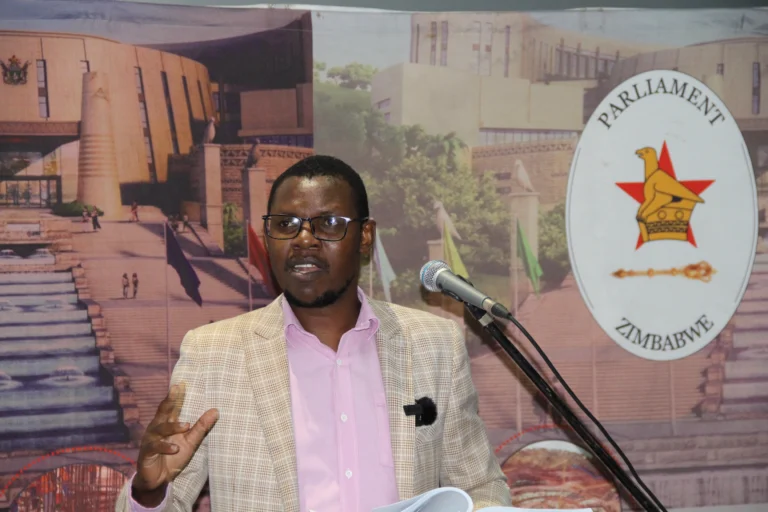
The Portfolio Committee on Mines and Mining Development has announced dates on which they will visit various mining areas to get public input on the new Mines and Minerals bill [H.B. 10. 2022].

The Edmond Mkaratigwa-led committee will embark on a two-week working visit across mining areas as the country looks to make history and enact a new bill that will fully represent the needs of the mining community.

In an interview with Mining Zimbabwe, Hon Mkaratigwa said everyone interested or affected in any way by Mining is welcome to attend.

“We hope by this pronouncement we are going to see a lot of stakeholders attending, and we have no limitations. Everyone who is interested or have views they want to contribute or are affected by mining in one way or another is welcome to attend,” Mkaratigwa said.

Below are the dates and places the Mines Committee will be visiting from the 27th of February 2023.

DATEPROVINCEVENUE
Monday, 27 February 2023HarareHarare
Tuesday, 28 February 2023Mashonaland CentralBindura
Wednesday, 1 March 2023Mashonaland EastMakaha
Thursday, 2 March 2023ManicalandPenhalonga
Friday, 3 March 2023Masvingo MidlandsMashava Mberengwa
Monday, 6 March 2023Mashonaland WestKadoma
Tuesday, 7 March 2023BulawayoBulawayo
Wednesday, 8 March 2023Matebeleland SouthEsigodini
Thursday, 9 March 2023Matebeleland NorthHwange
Friday, 10 March 2023Matebeleland NorthKamativi


Blanket Mine records a fatality

0

Victoria Falls Stock Exchange listed gold focused miner Caledonia Mining Corporation‘s Blanket Gold Mine has recorded a fatality in which an employee succumbed to a secondary blasting related accident.

Rudairo Mapuranga

In a statement released by the company, details related to the accident will be released in due course.

“It is with regret that Caledonia Mining Corporation Plc (“Caledonia”) reports that an accident took place in the afternoon of February 16, 2023 at the Blanket Mine in Zimbabwe, as a result of which one Blanket Mine employee was killed. The accident related to secondary blasting.

“Further details cannot be released pending the out-come of an enquiry into this accident by the relevant authorities.

“Caledonia expresses its condolences to the family and colleagues of the deceased,” Caledonia said in a statement.

In 2022, Blanket Mine achieved more than 2,4 million fatality free shifts since 2018 proving the mine’s commitment towards safety and health of its workers.

“Safety is our first priority at Caledonia, and we are committed to continual improvement in safety performance and achieving a zero-harm working environment for all our employees and contractors. We work hard to create a strong safety culture at our Blanket mine, which is underpinned by our policies and systems and reinforced by regular training and safety-awareness courses. To demonstrate our commitment to this priority, safety targets are set as a qualifier for our employee bonus scheme.” the company said.

Mine accidents in Zimbabwe have been on the rise with the country recording 125 accidents and 139 fatalities during the first 3 quarters of 2022.

In 2019 Zimbabwe recorded a total of 116 accidents with these resulting in 182 fatalities, recording an increase in accidents in 2020 recording 158 accidents however with a visible decrease in fatalities recording 169 fatalities. In 2021, the country recorded a decrease in both accidents and fatalities as compared to the previous year with 121 accidents and 139 fatalities. As at 30 September 2022, the country has recorded 125 accidents and 139 fatalities.

Zimbabwe has been plagued with mine disasters over the last few months, often resulting in death of scores of miners. Most of the mine accidents have occurred at illegally run disused mines, with a few happening at legally-run small scale mines.

All set for ZMF Base Minerals Workshop

0

The Zimbabwe Miners Federation (ZMF) is inviting stakeholders in the base mineral value chain for a workshop aimed at capacitating stakeholders in making use of opportunities presented by the government in the subsector.

Rudairo Mapuranga

The workshop will run from 09:00hrs on the 22nd of February 2023.

The workshop which will run under the theme “Unlocking The Base Mineral Value Chain” will see the Minister of Mines and Mining Development Hon Winston Chitando, the Minerals Marketing Corporation of Zimbabwe (MMCZ) General Manager Mr Tongai Muzenda and the ZMF President Ms Henrietta Rushwaya unpacking and presenting stakeholders with the endless opportunities that have been created by the government in the industry.

Through the Base Minerals Export Control (unBeneficiated Base Mineral Ores) Order, 2023, contained in Statutory Instrument 5 of 2023 and signed by the Minister of Mines and Mining Development Hon Winston Chitando, the government of Zimbabwe has unveiled opportunities for investors to venture into value addition and beneficiation of minerals through restricting the export of all ores and under-processed minerals.

The objectives of the bans under all Acts of any ore are designed to encourage the maximum possible processing within Zimbabwe, adding value, with this processing added value in many cases worth a lot more than the ore being processed. This maximises the value of the export, creates processing jobs in Zimbabwe, and builds up the industrial investment and skills base.

President Emmerson Dambudzo Mnangagwa has on many occasions praised the decision to restrict the export of unprocessed minerals saying that it will encourage the creation of higher-value downstream processing jobs in the domestic market.

Export restrictions of raw materials are also used to meet other objectives for example, to generate revenue for the government, to control the export of illegally mined products, to enhance environmental protection, or to offset exchange rate impacts caused by exports of several commodities.

According to the Minerals Marketing Corporation of Zimbabwe (MMCZ) General Manager Mr Tongai Muzenda the government is open for business to companies that want to establish value addition and beneficiation facilities as this will be of great significance towards the achievement of the 2030 vision where the country expects to achieve an upper middle-income economy.

“MMCZ ‘s role in value addition is in encouraging producers to value add their products. The MMCZ is there to maximize value, we are therefore calling for local and foreign companies to consider investing in value addition and beneficiation as it is one of the pillars for the achievement of the President’s 2030 vision.

“It’s a very lucrative opportunity for companies that appreciate minerals coming from Zimbabwe, for example, we have the best chrome ore in the world. This is the time for the companies to come and probably enjoy our high-grade minerals,” Muzenda said.