Home Blog Page 297

Zimplats records three lost-time injuries (including one fatality)

0

Despite making strides in achieving zero harm during the previous quarter, Zimbabwe’s biggest platinum group metal (PGM) producer ZIMPLATS, recorded three lost time injuries (including a fatality) during the quarter that ended 31 December 2022.

Rudairo Mapuranga

Zimplats is subscribed to zero harm and has been working to ensure that its workers’ safety is the number one priority. The company recorded over 5 million fatality-free shifts previously and was considered exemplary in Safety, Health and Environment (SHE) issues.

The group during the previous quarter ended 30 September 2022 recorded no lost time injury, however, it recorded three during the period ending 31 December 2022.

According to Zimplats, the group remains committed to ensuring a safe working environment for all its employees and contractors.

“Zimplats reports a disheartening retracement in safety in the period under review, versus the lost time injury-free prior quarter

On 20 December 2022, Lydia Gore and three other employees were exposing lifters at Bimha Mine in the presence of their Team Leader.

“A wedge measuring 0.6m x 0.4m x 0.35m and weighing approximately 80kg dislodged from the face striking Ms Goreon the leg. She fell, sustaining fractures to her leg and forearm. Regrettably, while admitted in the hospital, Ms Gore’s medical condition deteriorated, and she succumbed to injury-induced complications in Harare on 25 December 2022. Our hearts and prayers are with Ms Gore’s family, friends, and colleagues during this difficult time.

“Two further lost-time injuries were recorded during the quarter. Zimplats board and management remain committed to ensuring a safe working environment for all employees and contractors. To this end, all three accidents were fully investigated, and remedial action plans were developed and are being implemented.

“Aligned to its values of respect and care, Zimplats carried out a survey on gender-based violence both within and outside the workplace. While the results of the survey are well within global trends, there were opportunities for improvement that were identified. The company shall be pursuing these as part of ongoing efforts to ensure a workplace culture that embraces diversity and all aspects of safety, including psychological safety for all employees,” Zimplats said.

Zimplats commits US$4.7 million for exploration

0

The country’s biggest platinum producer Zimplats has committed over US$4 million for exploration projects for the first quarter of 2023.

Rudairo Mapuranga

While the company spent US$1.4 on exploration projects during the period ending 31 December 2022 it had committed to spending US$1.1 Million, this shows that the Company is determined to see mining growth and development in the country.

A total of US$0.4 million was spent on exploration projects during the quarter that ended 30 September 2022.

According to the company quarterly report for the period ending 31 December 2022, the company is committed to spending US$4.7 million on exploration projects.

“US$1.4 million was spent on exploration projects, with a further US$4.7 million committed as at 31 December 2022.

“Exploration activities included mineral resource evaluation, comprising approximately 7 968 metres of surface diamond drilling on mining ease ML 36,” Zimplats said.

During the quarter that ended 31 December 2022, several major projects have been carried out by the platinum miner.

“Development of Mupani Mine and the upgrade of Bimha Mine (to replace Rukodzi which was depleted in FY2022, Ngwarati, and Mupfuti mines, which will be depleted in FY2025 and FY2028 respectively), progressed well during the quarter.

“A total of US$274.6 million has been spent on the project to date. US$719 million has been committed against a project budget of US$468 million.

“The Ngezi third concentrator plant, which will increase milling capacity by 0.9 million tonnes per year (equivalent to circa 80000 6E ounces) was commissioned in September 2022.

“Cumulative project expenditure as at the end of the quarter amounted to US$971 million, with US$58 million committed against a project budget of US$1041 million. The plant ramped up production to nameplate capacity during the quarter.

“Implementation of the US$521 million smelter expansion and the SO2 abatement plant project remains on track, with US$49.8 million spent and US$242.9 million committed at quarter end.

“Execution of the 35MWsolar pant project which is Phase 1 of Zimpats’ 185 MW solar project progressed during the quarter with a total of US$08 million spent and US$ 0.4 million committed against a budget of US$37 million. The engineering, procurement and construction contract was awarded during the quarter. The solar plant is being constructed at Selous Metallurgical Complex and is targeted for completion in FY2024. Overall, the project has four implementation phases with the last phase scheduled for completion in FY2027 at a total estimated project cost of US$201 million.

“During the quarter, the board approved the refurbishment of the mothballed base metal refinery (BMR) at Seous Metallurgical Complex. The BMR is designed to process an equivalent of 5200 tonnes of nickel and associated base metals contained in converter matte. The project is in the initial stage of implementation. A total of US$0.3m has been committed with no expenditure recorded to date against a budget of US$1899 million,” said Zimplats.

Fidelity Gold Refinery changes its web address

0

Fidelity Gold Refinery (FGR) has changed its web address from www.fpr.co.zw to www.fgr.co.zw.

Speaking to Mining Zimbabwe FGR General Manager Mr Peter Magaramombe said the change was in line with the rebranding of the sole gold buyer to Fidelity Gold Refinery.

Fidelity Gold Refinery’s (FGR) core business currently encompasses the following: Security and commercial printing operations, Gold buying and gold refining operations, and Disbursement of the Gold Development Initiative Fund (GDIF).

Fidelity Gold Refinery (Pvt) Ltd is licensed to buy gold from large-scale producers, small-scale producers and holders of gold buying permits. The customer has the option to select the assay method for a particular deposit or the specific gravity method. If the customer opts for the fire assay method, payment will be made after the analysis which is carried out at the Head Office in Harare. Samples obtained after melting are accurately analysed using the internationally recognised fire assay technique. Results obtained are in the region of 1 part per thousand tolerances. However, for the specific gravity method, payment is actioned on the spot. The specific gravity method is used particularly in areas outside Harare.

The refinery has the capacity to refine gold to purities of 99.5% and above using the Miller chlorination process, Electrolytic refining process and the Aqua regia refining process technique.

FGR has decentralised its buying activities from Harare to cover the entire country, thereby significantly reducing the security risks associated with transporting gold for the small-scale sector. The customer has the option to select the assay method for a particular deposit or the specific gravity method. Gold delivered to the centres is paid for on the spot after carrying out a specific gravity determination of the gold content. However, if the miner opts for the fire assay method, payment will then be made after the analysis which is carried out at the Head Office in Harare.

Fidelity opens a buying office at Agribank Maphisa

0

Fidelity Gold Refinery (FGR) has opened a buying office at Maphisa to bring convenience to gold miners in the area.

In a statement on its Facebook page, the sole gold buyer announced it had opened a branch for miners’ convenience.

“For your convenience Maphisa and Kezi Miners, we have opened a buying office at Agribank Maphisa. Deliver your gold and get instant cash,” the statement reads.

FGR recently rebranded and ultimately shifted its URL to https://www.fgr.co.zw from the usual www.fpr.co.zw.

Fidelity Gold Refinery (Pvt) Ltd is licensed to buy gold from large-scale producers, small-scale producers and holders of gold buying permits. The customer has an option to select the assay method for a particular deposit or the specific gravity method. If the customer opts for the fire assay method, payment will be made after the analysis which is carried out at the Head Office in Harare. Samples obtained after melting are accurately analysed using the internationally recognised fire assay technique. Results obtained are in the region of 1 part per thousand tolerances. However, for the specific gravity method, payment is actioned on the spot. The specific gravity method is used particularly in areas outside Harare.

Redwing Mine to resume operations in April

0

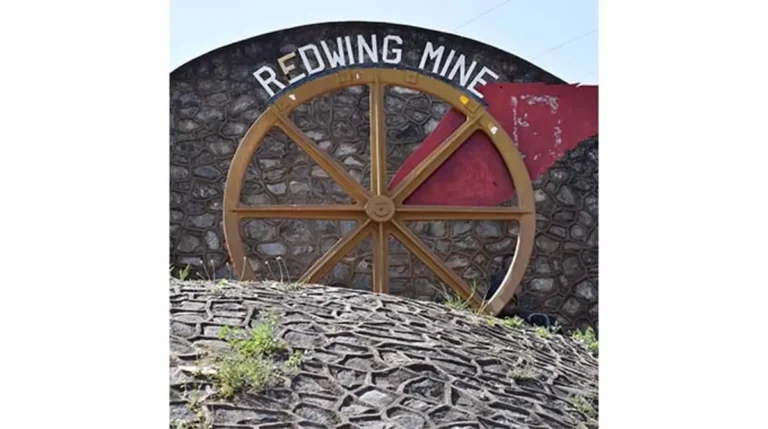
Better Brands Mining is expected to resume mining operations in April as the company seeks to carry out all the recommendations laid out by the Environmental Management Agency (EMA) to restore solid Safety, Health and Environment (SHE) at the mine.

Rudairo Mapuranga

The mine recorded a record of fatalities of 21 deaths from January 2022 to January 2023 leading to the Environmental Authority ordering the mine to be closed so that it come up with a strategy to create a solid SHE policy.

Better Brands together with a number of small-scale miners popularly known as sponsors have been operating at what used to be one of the country’s biggest gold mines at a small-scale level leading to many deaths. Most of the deaths came from shafts that were operated by unregistered miners.

Better Brands Mining is therefore seeking to commercialize the operations at the Mine through mining at a larger scale and do away with small-scale like operations.

The company’s General Manager Cuthbert Chitima said that Better Brands seeks to expand operations from surface mining which was largely artisanal with a lot of safety challenges.

“By April we will start dewatering of the mine and hopefully go underground.

“As Better Brands Mining, we are there to serve the country and as such we are moving to expand our operations at Redwing by transitioning from surface mining which was largely artisanal with a lot of safety challenges, hence we are pouring in resources to upgrade it into commercial mining which improves on safety and foremost productivity, where we are aiming to surpass our 19 tonnes which we delivered last year,” said Chitima.

Mines and Mining Development Deputy Minister, Honourable Polite Kambamura welcomed Better Brands’ move saying it will shape the country’s mineral production towards the attainment of the all-encompassing Vision 2030.

“As a ministry, we have taken heed of Better Brands’ wishes to ramp up production through commercialisation of their Redwing Mine and we will work with them to see that this comes to fruition in a very good working environment,” Dr Kambamura said.

Zulu lithium project drilling results impressive

0

London Stock Exchange listed mining and exploration junior Premier African Minerals’ Zulu lithium project located in the Fort Rixon Greenstone Belt on Monday received impressive assay results indicating that the project has the potential to become one of the country’s leading mining projects.

Rudairo Mapuranga

Recently according to Premier African Miners CEO George Roach, the Zulu Lithium and Tantalum project is close to becoming a World Class Mine which investors will be talking about having missed the chance to buy in early.

Recently Roach and Pei Zhenhua, the chairman of Suzhou TA&A Ultra Clean Technology Company visited the project to have firsthand information on the project’s growth strategy. Last year, Premier secured US$35 million in pre-funding from Suzhou TA&A Ultra Clean Technology Company to enable the construction and commissioning of a large-scale pilot plant. The project is developing at a rapid pace.

Commenting on the results received Roach said: “The assay results reported on today continue to demonstrate good lithium values over significant widths that are all supportive of the quality of the mineralised pegmatites we intend to mine in the first phases of the pilot plant operations.

“We are into the home stretch with pilot plant construction and site activity is frenetic with multiple work streams all targeting the same near-term completion date. Pre-strip has commenced in the initial pit area to be developed. Activity in the pilot plant assembly areas is now on a 24/7 basis. In the absence of any unforeseen issues, I expect that the first shipments of SC6 will commence in Q1 as projected.

“We still have a significant backlog of assay results and continue to develop a mining model for the pilot plant that is expected to deliver a run of mine material from pegmatites that are dominated by spodumene. Whilst I am not in a position to provide direct guidance yet, it should be noted that the design capacity on the floatation circuit anticipates a mass pull of up to 30% at a design feed rate of 40 tons per hour of milled material. This represents a potential 12 tons per hour of spodumene-rich concentrate. Until the plant operates, it is not possible to accurately predict either the feed grade of spodumene-rich material reaching the floatation circuit, nor to predict the final concentrate grade or final tonnage production rate. That is the nature of a pilot plant. I will provide further updates over the coming weeks.

“I would like to take this opportunity to thank the Chairman of Suzhou TA&A, Mr Pei Zenzhue, for visiting Zulu in January 2023 and expressing his satisfaction with the progress we are making. We look forward to an exciting year”.

Lithium export restrictions create downstream opportunities

0

The decision by the government of Zimbabwe to ban the export of unprocessed Lithium ore has opened up opportunities for both foreign and local investors as a whole industrial business scope will be opened as a direct result of the ban.

Rudairo Mapuranga

The country has been losing millions of dollars through raw lithium exports with President Emmerson Mnangagwa dissatisfied with the way the lithium sector has been operating.

This led to the government imposing a ban on the export of raw lithium through section 3 (1) (a) of the Base Minerals Export Control Act [Chapter 21:05] to ensure that the vision of the President to see the country becoming an upper-middle income economy has been realized.

The President said if the country was to achieve its vision to become an upper-middle-income economy by 2030, greater effort was supposed to be made to ensure that the export of raw minerals and concentrates has been banned.

“In line with Vision 2030, greater efforts should be made towards value addition and beneficiation of minerals. We cannot as a country continue to export primary products including concentrates and ores. Recently in Mberengwa, we discovered that there was a mountain with nothing but lithium and our people were collecting this lithium ore and being paid something like US$100 when that same quantity will fetch more than a thousand to US$2000 and then exporting it unprocessed so Zimbabwe loses,” HE Mnangagwa said at the time.

According to Mineral Economic Expert Lyman Mlambo, the ban will produce downstream opportunities for citizens and foreign investors. He said those who have not been partaking in the mining industry will help the country achieve the US$12 billion annual revenue by end of this year.

“There are downstream business (investment) opportunities opened up for both local and foreign investors. There is money (profits) to be made downstream, given the large reserves of lithium we have will ensure adequate feed going into the future. Firstly, beneficiation itself to produce petalite concentrate and lithium carbonate is a business that could be undertaken separately from mining or together with mining (including toll processing as we have in the Chrome sector, where we have at least 22 smelters). Then we have purely industrial processes to produce the various lithium components that go into the lithium batteries (lithium electrodes and electrolytes) as well as the manufacturing of the lithium-based EV batteries themselves. This is a whole industrial business scope opened up. Lithium miners that decide to venture into these opportunities will find their business portfolio immediately diversified and strengthened through vertical integration forward. Non-miners who, in the first instance venture into beneficiation and manufacturing business may find it more profitable to vertically integrate backwards by procuring mines of their own to guarantee a less costly supply of feed,” Mlambo said.

However, Zimbabwe Institute of Foundries (ZIF) President Itai Zaba said while the ban will come with so many opportunities, it should be accompanied by a deliberate policy of retooling the foundry sector.

He said a straightforward ban can frustrate the growth and development of the mining industry.

“The banning of raw minerals must be accompanied by a deliberate policy of retooling and capitalisation of the foundries, for the ban to be a viable intervention. Foundries and smelting entities will be able to beneficiate these minerals if there is a facility that avails capital for the modernisation of their plants as well as backward integration connecting with the mining value chain. A straightforward ban without such development provisions will take a long time to have spillover effects in the foundry industry. On its own, it will be an invitation to foreign investors to come and set base in Zimbabwe in our stead. Then the long-term indirect benefits will be the in the form of inputs, such as ferroalloys, for the foundries which be availed from the beneficiation of the minerals by the newcomers, quite an indirect benefit,” Zaba said.

Ten advantages of government getting royalties in the form of minerals

0

The Government of Zimbabwe has recently gazetted that half of the mineral royalties for gold, diamonds, platinum group metals (PGMs) and lithium will be paid in the commodities themselves and the remaining half paid in cash split between 40% Zimbabwe Dollars and 10% foreign currency.

by Lyman Mlambo, Private Consultant (Mineral Economics & Policy)

Royalty payments for the rest of the minerals will be split 50:50 between Zimbabwe Dollars and foreign currency.  This article highlights ten advantages of the Government receiving royalties in the form of the products themselves:

  1. Stable royalty receipts: The move, which essentially introduces a partial unit-based royalty model, ensures that the Government receives stable and certain value from mineral production, as argued by a 2006 World Bank Report on Mining Royalties (A Global Study of Their Impact on Investors, Government, and Civil Society)” co-authored by Otto, J and others, and published in Directions in Development (Energy and Mining) Journal. This is because production-based royalties are not affected directly by international mineral commodity price fluctuations.


2. Development of the local jewellery industry: If the Government has significant reserves of gold, PGMs and diamonds it can craft a clear strategy to develop the country’s jewellery industry as all three minerals are used in this industry. This would be in sync with the beneficiation and value-addition thrust of the country. The jewellery industry is a highly lucrative industry, with 70% of gold produced globally going into this industry as reported by this author in a 2012 article on the price dynamics of the world gold market published by the Chinese Business Review-Journal.

3. Green energy transition and industrialization: Building reserves of lithium, especially for a country that is so greatly endowed with the mineral, is foundational to the development and strengthening of the local lithium value chain including the production of petalite concentrate, lithium carbonate, lithium-ion batteries and eventually the electric vehicles (EVs) themselves. This will aid the green transition thrust in the country. The strengthening of local value chains for the other minerals specified will also spur industrialization as these minerals, besides their application in jewellery industry, have many industrial applications in automotive, computing, electronics, dentistry, chemical industry catalysts and heavy underground works (such as drilling).

4. Gold as an investment asset: Gold is the main competitor to hard currency, especially the USD, as a store of value as indicated in the 2012 report alluded to above. With Zimbabwe using USD as a currency, the country is exposed to the risks associated with US economic (especially exchange rate) and political volatilities, and having a big reserve of a safe haven such as gold is a big buffer for such risks. Gold is also a better store of value than purely monetary assets because its value is not fiduciary, but intrinsic (since it is useful as a commodity in itself) as compared to say, bonds, securities, equities and legal tender (paper money).

5. Gold coins and macroeconomic stabilization: Closely related to, albeit subtly different from, the above point, is the fact that Zimbabwe has embarked on the use of gold coins as a store of wealth for individuals and companies in the country. Getting royalties in the form of gold itself automatically supplies the Government with the raw materials it needs to produce the gold coins in greater numbers than it is currently doing. Thus, it will be possible to broaden the benefits of this policy to a greater percentage of the population when the Government receives raw gold from a source where there is no direct competition with the export market. Gold coins have become an important macroeconomic stabilization tool as they mop up excess liquidity in the economy and exerts downward pressure on inflation.

6. Broadening of gold trading options for Government: With the Government as an independent holder and exporter of gold given that the Fidelity Gold Refinery is a partially privatized entity, it can choose various appropriate ways of trading its gold without the pressure of private shareholders. It will have the liberty to engage in spot trading, forwards contracts, futures contracts, options, or hedging (against unfavourable price movements).

7. Reduced transaction costs: This policy avoids the cost which would be associated with the sale of the four mineral commodities (the half that now constitutes royalty) and the various processes involved in the payment and collection of royalties in monetary form. Basically, it reduces transaction costs both for government and mining companies associated with the processing of royalty payments, which, if gross value-based would include exporting the minerals first.

8. International loan repayments: The International Monetary Fund indicates on its website that it may accept gold in loan repayments by member countries, though it will be evaluated at prevailing prices in the market (“Gold and IMF”, https://www.imf.org/…, retrieved on 10 November 2022). This to some extent could simplify the repayment process for Zimbabwe if the country manages to build a big reserve of gold from product royalties as it avoids many transaction costs related to money-based royalties.

9. Education and training: These mineral reserves can be used as samples in the promotion of minerals-related education and training, which is a component of one of the eight principles underpinning the Zimbabwe Artisanal and Small-Scale Gold Mining Strategy 2022-2025 as indicated in the October 2021 draft.

10. Production Sharing Model: Receiving royalties in minerals already sets the stage for the implementation of Production Sharing Agreements (PSA) in the oil and gas sectors which could be considered as a viable option in those sectors in future, as is the case in many other oil and gas producing countries.

Zim women hailed for successful mining operations

0

Women in Mining in Zimbabwe have been hailed for successfully operating and managing big mining projects contributing to the success of the mining industry in Zimbabwe.

Rudairo Mapuranga

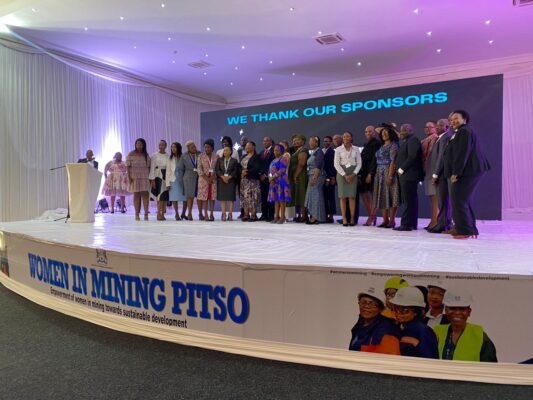
Speaking at the Women Mining Pitso in Botswana which ran under the theme, “Empowerment of women in mining towards sustainable development” Zimbabwe Association of Women in Mining Associations (ZAWIMA) Secretary General Sophia Takuva said women in mining in Zimbabwe have grabbed opportunities in the mining sector and running operations successfully.

She said in the artisanal and small-scale mining sectors, women in Zimbabwe have created two successful projects which are now being operated at an excellent level.

Women in Mining PITSO“In Zimbabwe women have shown their capabilities by successfully operating and managing big mining projects. We have 2 successful projects for women in small-scale mining supported by the ministry of women’s affairs. The first project Mthandazo Women Miners Association was established in 2014 in the Matabeleland south province of Zimbabwe with support from UNDP. A total of 80 women miners from Matabeleland south benefitted from the project and it has been running for 9 years. The project gave birth to many women from Matabeleland venturing into the mining value chain. We now have more than 2000 ASM miners, chemical suppliers and young experts in the mining industry who come to be because of this project.

“A total of 200 women were supported with US$500 000 from the African Development Bank for the construction of a Gold Milling Centre in Guruve. The centre is an effective women empowerment initiative that will provide gold milling services to small-scale miners in Guruve. The project is part of the Government’s thrust towards an organised informal sector and its formalisation. Increase in foreign currency generation, employment creation and promotion of rural industrialization are some of the benefits of this program,” Takuva said in part.

“Zimbabwe has inclusive policies, laws and governance structures which give women opportunities to lead and venture into the mining industry. We have women in decision-making positions in the mining industry, the ministry of mines, women in managerial positions in mining companies, and also women who own small-scale mines. All these women have successfully built a legacy, a path that has helped other women to venture into the mining sector and to pursue mining career education/paths,” Takuva concluded.

Gold buying prices Friday 27 January 2023

Fidelity Gold Refinery (FGR) official gold buying prices Friday 27 January 2023.

SG 90% AND ABOVE US$59.02/g
SG ABOVE 85% BUT BELOW 90% US$58.09/g
SG ABOVE 80% BUT BELOW 85% US$57.46/g
SG ABOVE 75% BUT BELOW 80% US$56.84/g
SAMPLE BELOW 10g BUT ABOVE 5g US$55.91/g
FIRE ASSAY CASH US$59.02/g

NB: Fire Assay cash price is for gold above 100gs and no sample is deducted.
For the Fire Assay Transfer price, a sample of not more than 10g is deducted
A 2% royalty is charged on all deposits (Small-scale Miners)
A 5% royalty is charged to Primary Producers

Cash available. Fidelity Gold Refinery prices will be changing daily in relation to world market prices.