

Home Blog Page 296

Cartographer shortage hits MashonalandWest

0

THE lack of a full complement of cartographers at Mashonaland West’s Ministry of Mines and Mining Development office is hindering the pace of mine registration, which has at times triggered ownership disputes.

The shortage of cartographers, whose work involves drawing or producing maps, has caused a huge backlog of applications for registration of mining titles.

A cartographer is the entry point in the mining verification and registration process with their major role being to produce cartography diagrams.

The Mashonaland West Mines ministry office is currently operating with a single cartographer, a development that has delayed the formalisation of artisanal and small-scale miners’ operations.

Speaking during the ministry’s consultation programme on Mineral Development Policy, Value Addition and Beneficiation, and Artisanal and Small Scale Gold Mining (ASGM) strategies this week, stakeholders lamented the cumbersome process under which miners go through before being awarded licences.

Pikirayi Chinoramba-Chimurenga of Norton highlighted the bureaucratic bottlenecks at the mines office, amid consensus from participants to decentralise operations to districts in the true spirit of the government’s devolution agenda.

Stakeholders decried the slow pace at which applications for mine title registration are processed, which the authorities defended pointing to a shortage of cartographers who are integral in the process, in addition to a lack of field vehicles and fuel.

Responding to the concerns raised during the meeting, Mashonaland West provincial mining director, Sibongubuhle Mpindiwa confirmed the shortage of cartographers that is hampering the ministry’s field operations, coupled with resource constraints facing the only cartographer available.

“Mashonaland West is a busy mining province and there has been a significant rise in the interest in mining as everyone dares to try their luck in small-scale mining. The ground verification process and the interest of plenty of people have resulted in a mining title registration backlog.

“Ground verification process needs resources and there was a moment some four to five years back when we were struggling as a ministry although it is now improving.

“We sometimes go for months without processing these papers due to limited resources to do the ground verification process. The smooth flow of the process is then held up by a shortage of cartographers as the Mashonaland West office currently operates with one,” Mpindiwa said.

“However, efforts are being made through our permanent secretary to ensure that we are capacitated,” she added.

Mpindiwa reiterated her office’s commitment to clear the mounting backlog of mine title registration.

The ministry’s senior minerals development officer, Taurai Dhliwayo, said through the Mineral Development Policy, the government was working to introduce a computerised cadastral system known for effective service delivery to the mining industry.

The cadastral system collects data relating to official and legal documentation concerning the quantity, dimensions, location, value, tenure, and ownership of individual parcels of land, thereby curtailing disputes over mining claims.

ZMF invites council members to its AGM

0

The Zimbabwe Miners Federation (ZMF) has extended invitations to its council members for its Annual General Meeting (AGM) scheduled for March 22, 2024.

Patricia Rwafa

The event will take place at the prestigious Hippodrome in Braeside, Harare.

In a statement, ZMF Secretary General Morgan Mugawu, emphasized the importance of this gathering, citing section 20.3 of the mining body’s constitution. According to Mugawu, the AGM is a critical platform for stakeholders to convene, deliberate, and chart the course for the mining industry’s future.

The ZMF centres its AGM on discussions focusing on pertinent issues facing the mining sector, as well as strategic planning for sustainable growth and development. Council members are urged to mark their calendars for March 22, 2024, with the meeting scheduled to commence at 10:00 AM.

The Federation meets as Zimbabwe is currently grappling with mine accidents which are befalling the Artisanal and Small-scale miners, a sector ZMF represents.

Zimbabwe Miners Federation’s birth was marked to represent and contribute to the development, growth, and empowerment of the artisanal and small-scale (ASM) miners in Zimbabwe. Established in 2003, the ZMF seeks to bring ASM into the mainstream economy through lobbying and support of ASM operations.

Part of the ZMF objectives is lobbying for the formalization and regularisation of artisanal miners and small-scale miners. ZMF ensures that legislation in the country is conducive for ASM mining operations and at the same time developing a good rapport with the government.

ZMF links on a day-to-day basis, with its partners who are stakeholders which include but not limited to government, investors, mining service providers, suppliers, and tertiary training institutions who complete the mineral value chain. ZMF has a total of 60 affiliate associations at the district and provincial levels. The total number of miners being represented is currently at 1,500,000.

De Beers’ 2024 Q2 Sales Spark Surge in Diamond Revenue

0

Anglo American‘s diamond subsidiary, De Beers, has reported a significant increase in diamond revenues despite the rough sales for its latest sales cycle.

De Beers last year announced that the seventh sales cycle of 2023, which took place between 14 and 29 August, generated only $370 million in sales. This is a drop from the previous cycle’s $411 million and $456 million, and a significant decline from the seventh cycle of 2022, which generated $638 million.

According to De Beers CEO, Al Cook, the decline in revenues can be attributed to the current macroeconomic environment, which has led to the reduction in diamond jewellery in key consumer markets. The retail recovery in China remains slow, voluntary import moratorium on rough diamonds into India will see extended Diwali holidays and factory closures in the world’s largest diamond-cutting centre. In recognition of these conditions, De Beers continued with reduced rough diamond availability in the ninth sales cycle of 2023.

De Beers maintained support for its Sightholders with full purchase flexibility as the midstream re-establishes an equilibrium between wholesale supply and demand.

The diamond company De Beers sold $430 million of rough diamonds in the second sales cycle of this year.

Sales were higher than the $374 million of rough diamonds sold in the first quarter of this year but lower than the $497 million in rough diamonds sold in the second sales cycle of 2023.

“I’m pleased to see a further increase in demand for De Beers’ rough diamonds during the second sales cycle of 2024. However, ongoing economic uncertainty in the US has led to retailers restocking conservatively after the 2023 holiday season.

“Consumer demand for diamond jewellery is growing in India but remains sluggish in China. Overall, we expect that the ongoing recovery in rough diamond demand will be gradual as we move through the year,” he said.

President Mnangagwa slams G7 for diamond restrictions

0

The President Emmerson Mnangagwa, has voiced opposition to decisions seemingly made by G7 countries to propose restrictions on the trade of diamonds without consulting African players or the Kimberley Process Certification Scheme (KPCS).

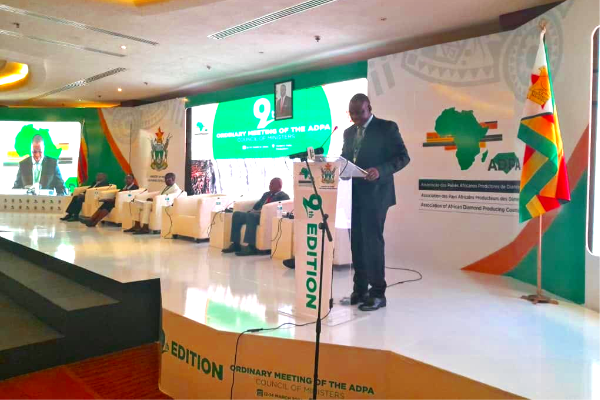
In his official opening remarks at the 9th General Meeting of the African Diamond Producers Association (ADPA) Council of Ministers on Thursday, the President said ADPA should assert the African position on matters of diamond production, trade, and pricing.

He stated that western countries should respect Africa’s decisions and not propose restrictions on the trade of natural diamonds without consulting Africa.

“I challenge you, as representatives of our countries, to assert the African position on matters of diamond production, trade, and pricing. We are an independent continent, and those from overseas must talk to us as equals and respect us. The proposed restrictions on the trade of natural diamonds being imposed by some market players are unacceptable. The benefits and interests of our people should be respected. We are the guide and key when it comes to the exploitation of our abundant natural resource elements. It is commendable that key decisions have been made at this forum,” Dr. Mnangagwa said.

Moses Engadu, Secretary-General of the Africa Minerals Strategy Group, said the G7 countries should leave trade restrictions to the Kimberley Process and not bring confusion into the matrix.

He said the G7 is not supposed to issue restrictions without engaging the KP, as this will undermine the authority of the KP in diamond trading.

He further stated that the restrictions undermine sovereign African governments’ ability to send their gemstones directly to their chosen market. It also undermines legitimate local industry beneficiation and could encourage smuggling, which the WFDB says would be counterproductive.

“In December, the G7 nations of Canada, France, Germany, Italy, Japan, the U.K., and the U.S. declared an outright ban on Russian diamonds, effective from Jan. 1. That is to be followed by the gradual implementation of restrictions on indirectly imported Russian diamonds starting from March 1. By September, a new system for verifying the origins of these gems is expected to be in place, although details regarding the verification process and its location remain uncertain.”

Some diamond producers are calling for more explicit guidance and a more global, collaborative approach to ensure transparency and ethical sourcing without disproportionately impacting the broader industry. They stress the need for solutions that do not centralize trade to a single point (such as Antwerp) and request the adoption of technology that could support the ethical tracking of diamonds across all regions, including support for artisanal and small-scale miners.

Bravura’s Kamativi tailings dump processing is 95% complete

0

Pan African mining company, Bravura, is upbeat about becoming one of the major lithium producers in Zimbabwe in the next 3 years with its state-of-the-art processing plant now 95 percent complete.

Rudairo Mapuranga.

The company, which has the rights to process tailings left by the Kamativi tin mine to extract lithium spodumene, is in the process of creating an AI-instructed plant manufactured in South Africa, which will be installed in Zimbabwe in about 3 months.

Speaking to Mining Zimbabwe on the sidelines of a Ministerial visit by the Minister of Mines and Mining Development, Hon Zhemu Soda, the head of the project, Dr. Tafadzwa Murinzi, said the 30-tonne-per-hour processing plant will take about 7 months to be commissioned.

“Our plant is being manufactured by a contractor in South Africa. It’s about 95% complete and ready for translocation to Zimbabwe. Here on site, we have started the civil works in preparation for the plant’s receipt. So, what we have to do is create the plant foundations. And then, once the plant arrives, it will be installed and commissioned.

“We expect that once we get the necessary permits, the plant should be in Zimbabwe within the next two to three months. It’s a modular plant, so it will come in different modules. And once the components are all on-site, we expect it will take us about four months for the installation and commissioning. So, we’re looking at roughly seven to eight months,” she said.

Dr. Murinzi said the tailings dump spans about 8 years with an estimated 25 million tonnes of dump to be processed by the mining company.

She said in full operation, the mine will employ 500 people, but initially will start with 25 percent.

“Our plant is a 300-tonne-per-hour plant, which translates to about 1.1 million tonnes of tailings being processed, and this translates to about 30,000 tonnes of spodumene concentrate per annum, which is about 25 million tonnes, and it is a spodumene grade of approximately 5%, which translates to lithium of about 0.6%. We’re expecting that with our plant capacity, we can mine it over 8 to 10 years. We will employ about 400 to 500 people, but obviously, we’ll begin in the initial phase, employing about 25% of that, and then we’ll only ramp up to about 400 to 500 people when the plant is now operating at a steady state,” Dr. Murinzi said.

The Minister of Mines, Hon Zhemu Soda, speaking at the tour, said the coming in of Bravura to process the dump is of importance towards the realization of the 2030 vision.

“This is a major contribution, given that we are looking forward to the mining industry being a significant contributor towards the realization of our vision 2030. You might also have noticed that this dump was waste and they are salvaging what used to be waste, and now a mineral. And I recall the conversation that we held earlier on. You know, as technology continues to advance and new uses of minerals are discovered, it’s not surprising that even after 100 years, we’ll be coming back. We’re coming here again to scavenge or salvage from the dump that will be produced as waste from the spodumene that they are now working towards. So, we continue to be upbeat about the efforts by Bravura that they can make a contribution towards the realization of our vision. They also intend to employ some people, and obviously that fits into the mantra by His Excellency of leaving no one and no place behind. Once there is some work here, obviously the local people will start to benefit through employment and also through CSR projects,” Hon Soda said.

Government impressed by progress at Kamativi

0

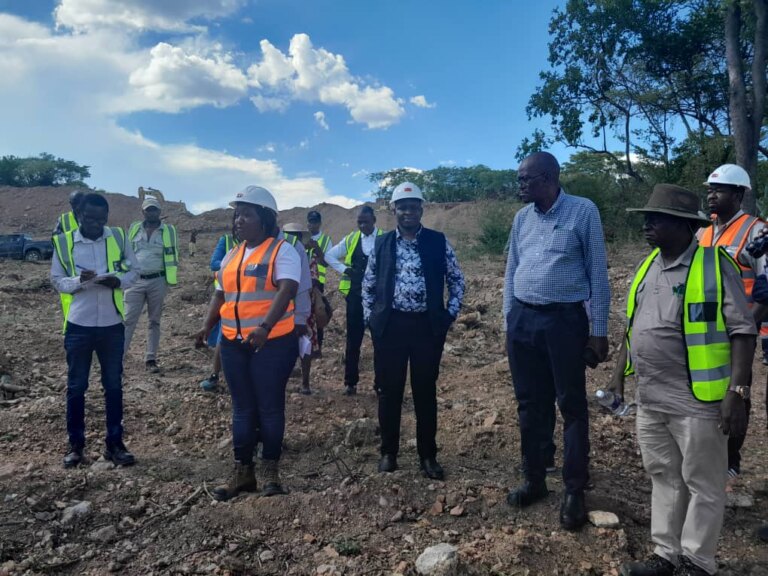
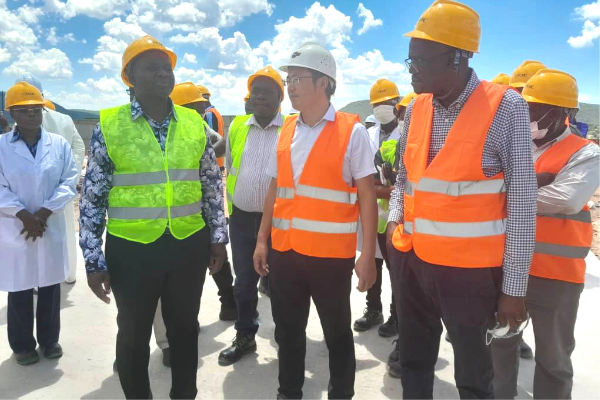
The Minister of Mines and Mining Development, Hon. Zhemu Soda, was impressed by Kamativi Mining Company’s (KMC) investment strategy, which will see the company’s lithium spodumene processing plant commissioned by President HE Emmerson Mnangagwa next month.

Rudairo Mapuranga

The Minister of Mines and Mining Development visited KMC as part of his program outside the ongoing African Diamond Producers Association (ADPA) ordinary session of Ministers taking place in Victoria Falls to assess the readiness of the mine for official commissioning by President Emmerson Mnangagwa.

KMC has completed its first-phase processing plant and is constructing the second phase processing plant. The first-phase processing plant will process 300,000 tonnes and produce 50,000 tonnes of concentrate, with the second phase expected to process 2.3 million tonnes and produce 300,000 tonnes per annum. The company aims to produce 350,000 tonnes of lithium concentrate next year.

Minister Soda said he was impressed by the investment, which has breathed life back into the small town. KMC has already invested US$100 million in the first phase plant and committed US$149 million towards the second phase.

According to Minister Soda, while the first-phase processing plant is up and running, the company will complete the second phase in June.

“We are pleased with the continuous appetite for investment in Zimbabwe, which Kamativi has shown by embarking on their second phase. They have just completed their first phase, which is now up and running, but they moved on to construct their second plant, which will be their second phase, and they are saying this plant is six times bigger in terms of production capacity than the first phase. So we are impressed by that appetite and the amount of investment they are bringing into the country.

“This phase will be completed and up and running in June. So we are just very grateful, and as they expand, it means they will also expand job provisions. Jobs will be created for the people, and the livelihoods of the community surrounding this place will improve. So we are very much happy and grateful for the developments happening in Zimbabwe. We are also very happy about the development happening here at Kamativi Mining Company,” Minister Soda said.

Speaking at the tour, KMC Non-Executive Director Munashe Shava said KMC intends to see the processing plant up and running in July.

Shava said the second phase is an upgrade of the first, which was done to validate the processing design and flow sheet.

“The second phase is an upgrade of phase one. Remember, phase one, what we are doing is in terms of planned throughput, we are processing 300,000 tons and producing 50,000 tons of concentrate. Phase two, we are going up to 2.3 million tons and producing 300,000 tons of concentrate. So it’s a replica of phase one but at a bigger scale. The reason why we did phase one was also to validate our design, our process flow sheet, to ensure that what we intended to achieve was a success. So we are doing a lot of work. This has been very successful, as you saw, and that’s why now I am embarking on phase two.

“Already in Phase 1, we have invested around USD100 million, so Phase 2 is about USD149 million. Phase 2, as you can see, almost all the equipment that we require for Phase 2 is already on-site. Our target for the project is to have the project up and running by July 2024. So by June, we should be done with all the construction work currently happening,” Shava said.

Zimbabwe dedicated to maximize value from diamonds – Minister Soda

0

Zimbabwe is dedicated to maximizing the value derived from its diamond resources by promoting local beneficiation and value-addition initiatives, Minister of Mines and Mining Development Hon. Zhemu Soda has said.

Delivering a keynote address at the 9th General Meeting of the African Diamond Producers Association (ADPA) of the Council of Ministers, Minister Soda mentioned that Zimbabwe has set a 10% quota policy for local diamond-cutting and polishing companies, which has worked incredibly in creating jobs and growth in the diamond chain in Zimbabwe.

“We are dedicated to maximizing the value derived from our diamond resources by promoting local beneficiation and value-addition initiatives. Zimbabwe has set a 10% quota policy for local diamond-cutting and polishing companies. This initiative has created jobs and fostered economic diversification,” Hon. Soda said.

Minister Soda also applauded ADPA for organizing the Council of Ministers meeting, an opportunity for knowledge sharing on best practices in the diamond sector.

He said Africa should take a leading role in promoting value addition and beneficiation of diamonds.

“As diamond producers, we should be the leaders in the value addition of our mineral resources. It is time that we take a leading role not as producers of rough diamonds but as suppliers of cut and polished diamonds,” he said.

Speaking at the same event, ADPA Executive Director Ella Muchemwa said the conference should come up with actionable takeaways.

“The key takeaway is to have a list of actionable recommendations,” she said.

Zimbabwe recognizes the critical importance of a robust regulatory framework to ensure sustainable development and equitable distribution of benefits in the diamond sector.

The Zimbabwe Diamond Policy embodies the country’s commitment to transparency, accountability, and responsible diamond sourcing. The policy is premised on the following key pillars:

Transparency and Accountability: Zimbabwe believes in transparent governance mechanisms to ensure that diamond revenues are accounted for and benefit all stakeholders, including local communities. The government has managed to do this by having all diamond exports done through its parastatal Minerals Marketing Corporation of Zimbabwe (MMCZ).

Sustainable Development: Zimbabwe’s policy prioritizes sustainable diamond mining practices that minimize environmental impact and promote long-term socio-economic development in diamond-producing regions.

Beneficiation and Value Addition: The country is dedicated to maximizing the value derived from its diamond resources by promoting local beneficiation and value-addition initiatives. Zimbabwe has set a 10% quota policy for local diamond-cutting and polishing companies. This initiative has created jobs and fostered economic diversification.

Community Participation: Zimbabwe recognizes the importance of community engagement. Our policy mandates the inclusion of local communities in decision-making processes and ensures that they receive a fair share of diamond benefits through the Community Share Ownership Trust and through encouraging diamond mining companies to conduct Corporate Social Responsibility Projects.

International Best Practices: Zimbabwe is committed to adhering to international best practices in diamond mining, including compliance with the Kimberley Process Certification Scheme and other relevant regulations aimed at preventing the trade of conflict diamonds. The government is committed to the Kimberley Process and has seen Zimbabwe chairing the KP in 2023, which was a responsibility we gladly accepted.

Rough Diamond Value Addition and Beneficiation highlighting ADPA’s 9th General Meeting

0

The value addition and beneficiation of diamonds highlighted the proceedings at the 9th General Meeting of the African Diamond Producers Association (ADPA) by the Council of Ministers, with the Deputy Minister of Mines and Minerals Resources of the Republic of Sierra Leone, Hon. Umaru Karom, and the Minister of Mines and Mining Development, Hon. Zhemu Soda, emphasizing the importance of beneficiation.

Rudairo Mapuranga

Delivering opening remarks, Hon. Karom from Sierra Leone said ADPA conversations will revolve around the current state of beneficiation and value addition, with a particular focus on existing government initiatives that promote this important process.

“It is of utmost importance that beneficiation and value-addition processes within the diamond value chain take place within the respective countries to maximize their economic contribution. The outdated practice of dig and ship should be left behind in the past, especially for many African countries,” he said.

Delivering a keynote address, Zimbabwe’s Minister of Mines and Mining Development Hon. Zhemu Soda, said Zimbabwe is dedicated to maximizing value from diamonds. Minister Soda stated that Zimbabwe is dedicated to maximising the value derived from its diamond resources by promoting local beneficiation and value-addition initiatives.

“We are dedicated to maximizing the value derived from our diamond resources by promoting local beneficiation and value-addition initiatives. Zimbabwe has set a 10% quota policy for local diamond-cutting and polishing companies. This initiative has created jobs and fostered economic diversification,” Hon. Soda said.

Minister Soda also applauded ADPA for organizing the Council of Ministers meeting, which is an opportunity for knowledge sharing on best practices in the diamond sector.

He said Africa should take a leading role in promoting value addition and beneficiation of diamonds.

“As diamond producers, we should be the leaders in the value addition of our mineral resources. It is time that we take a leading role not as producers of rough diamonds but as suppliers of cut and polished diamonds,” he said.

Speaking at the same event, ADPA Executive Director Ella Muchemwa said the conference should come up with actionable takeaways.

“The key takeaway is to have a list of actionable recommendations,” she said.

African Diamonds Producers Association (ADPA)’s

  • Cooperation between member countries in policies and strategies concerning prospecting, mining, production, cutting and polishing, as well as the development of human resources and acquisition of technologies in the diamondiferous sector.
  • Adoption of harmonized legal solutions and the exchange of information between member countries in areas related to mining and commercialization in which individual states have acquired valuable experience.
  • Promotion of mutual technical assistance in the coordination of policies and strategies of development of the diamondiferous sector.
  • Transformation of conflict diamonds into diamonds of peace and sustainable development.

Zimbabwe is Committed to Maximizing Diamond Value, Minister Zhemu Soda Affirms

0

Zimbabwe is dedicated to ensuring it maximizes the value derived from its diamond resources by promoting local beneficiation and value-addition initiatives, as stated by the Minister of Mines and Mining Development, Hon Zhemu Soda.

Delivering a keynote address at the 9th General Meeting of the African Diamond Producers Association (ADPA) Council of Ministers, Minister Soda mentioned that the Zimbabwe has set a 10% quota policy for local diamond-cutting and polishing companies, proving successful in creating jobs and fostering growth in the diamond chain in Zimbabwe.

“We are dedicated to maximizing the value derived from our diamond resources by promoting local beneficiation and value-addition initiatives. Zimbabwe has set a 10% quota policy for local diamond-cutting and polishing companies. This initiative has created jobs and fostered economic diversification,” Hon Soda said.

Minister Soda also applauded ADPA for organizing the Council of Ministers meeting, providing an opportunity for knowledge sharing on best practices in the diamond sector.

He emphasized that Africa should take a leading role in promoting value addition and beneficiation of diamonds, stating, “As diamond producers, we should be the leaders in the value addition of our mineral resources. It is time that we take a leading role not as producers of rough diamonds but suppliers of cut and polished diamonds.”

Speaking at the same event, ADPA Executive Director Ella Muchemwa said the conference should come up with actionable takeaways. “The key takeaway is to have a list of actionable recommendations,” she said.

Zimbabwe recognizes the critical importance of a robust regulatory framework to ensure sustainable development and equitable distribution of benefits in the diamond sector.

The Zimbabwe Diamond Policy embodies the country’s commitment to transparency, accountability, and responsible diamond sourcing, with key pillars including transparency and accountability, sustainable development, beneficiation and value addition, community participation, and adherence to international best practices.

Zimbabwe remains committed to adhering to the best practices in the diamond sector and is open to learning and adapting to the requirements of this dynamic industry.

Afrochine ordered to pay 3 million for under-declaring

0

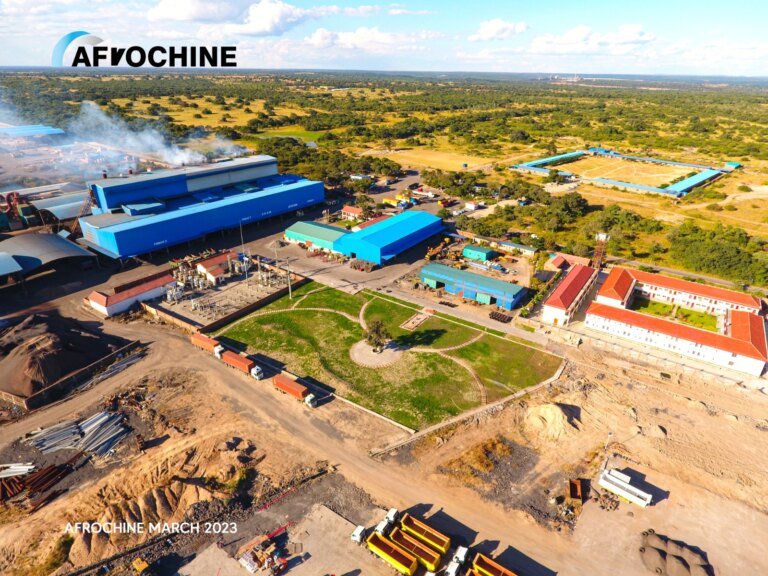
AFROCHINE Smelting Private Limited has been ordered to pay nearly US$3 million in royalties for under-declaring its earnings. Afrochine Smelting is a company that produces and exports ferrochrome, an alloy of chromium, iron and carbon that is used in steelmaking.

The company had cited Zimbabwe Revenue Authority (Zimra) in its application challenging invoices of US$2 872 897,89 and ZWL$97 682 345 from the tax authority.

The company approached the High Court seeking a declaratory order against Zimra’s calculations to penalise the firm on a 200% scale.

They also sought a declaratory order for the exclusion of the cost of freight.

The firm also sought the court to declare that it is not liable for the penalty for mining royalties amounting to US$2 872 897,89 and ZWL$97 682 345.

Afrochine Smelting further asked the court to set aside the 200% penalty in favour of 100% if they are liable to pay.

In her ruling, Justice Emilia Muchawa said it was the Mines and Minerals Act which obligated registered mines to pay royalties.

She said the method of computation was clearly spelt under certain sections of the Act as read with the schedules of the Finance Act.

The judge said it was the intention of the legislature to levy on a standard benchmark and not ex -works as this would result in different levels for different miners.

“It cannot be held that such a way of levying royalties is interference with the miner’s business decision,” Muchawa ruled.

“It is my finding, therefore, that the applicant (Afrochine) erred in declaring royalties on the face value of the invoice based as it was on the ex-works price of 10 cents less than the fast markets ferro alloys price.

“The justification is that the applicant never received the cost of freight as part of the purchase price and then deducted the freight charge before paying royalties.

“It declared royalties on the face value of the invoice.”

The judge said Afrochine Smelting had erred by excluding the cost of freight from the invoice value.

“It is the State’s intention to recoup royalties from the gross fair market value in order to realise the maximum possible and ensure uniformity on royalties levied across different mining institutions for similar products,” she said.

“This was clearly stated by the minister in his budget statement.”

The judge said the court was urged not to be influenced by the economic challenges which may befall the applicant and simply focus on whether the application falls within the provisions of the taxing law.

“Accordingly, the urgent court application is dismissed with costs,” Justice Muchawa ruled.

According to the background of the matter on June 16, 2023, Zimra delivered a letter to Afrochine Smelting in which it presented its tax review findings for the period 2019 to 2021.

“The company should have paid royalties on minerals based on the gross sale value as shown in the sales schedule from 2019 according to section 37(9) of the Finance Act [Chapter 23:04],” Zimra wrote.

“This resulted in some periods having under-declared royalties on minerals, the difference between the declared royalties and the calculated royalties either resulted in overstated or under declared amounts.”

In response, Afrochine rejected the findings by Zimra and appealed to Zimra CommissionerGeneral.

There was some engagement between the parties which did not yield any results.

Zimra then sent a reminder to Afrochine to settle the outstanding tax debt before October 23, 2023, failing which the tax authority would institute recovery measures without further correspondence.

Newsday