Home Blog Page 30

Muriel Mine’s Dump Retreatment Drives Output 425% as Exploration Extends Life of Mine

0

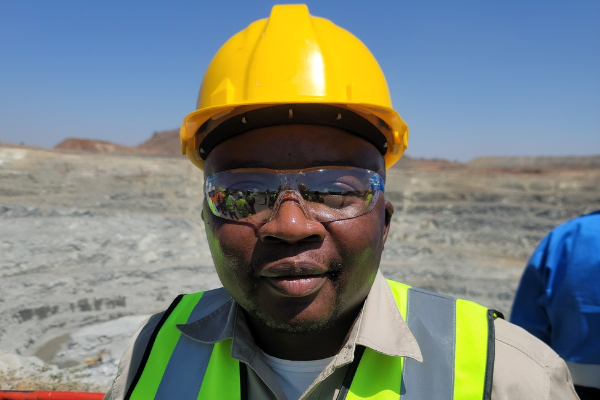
Pan African’s Muriel Mine has more than quadrupled gold production over two years through an intensive dump retreatment operation, while a sustained exploration campaign has extended the underground life of mine to five years, according to figures presented during a technical visit by the Association of Mine Managers of Zimbabwe (AMMZ).

By Rudairo Mapuranga

Production climbed from 3,600 ounces (approximately 120 kilograms) in 2023 to 15,000 ounces (425 kilograms) in 2024, reaching 20,000 ounces (630 kilograms) in 2025, management reported to visiting industry peers. The surge was driven entirely by hydrosluicing of historical tailings—a distinction mine officials emphasised during the AMMZ tour. Underground ore from newly delineated resources is not yet being processed; a crusher is currently under construction to handle the harder primary material once the dump is exhausted.

Cash costs per ounce held steady at roughly US$1,000 in 2023, US$1,021 in 2024, and US$1,004 in 2025, demonstrating operational efficiency despite inflationary pressures across Zimbabwe’s mining sector.

The production turnaround follows a sustained exploration campaign that has extended Muriel’s underground mine life to approximately five years, according to figures presented at the technical visit. This contrasts sharply with the operation’s historical struggles: a 2015 assessment showed Muriel required ore grades of 4 to 5 grams per tonne to remain viable but was mining at around 2.5 grams per tonne in the absence of new exploration and development.

However, the underground resources that provide this extended life are not yet being mined. The operation is currently focused on processing the remaining tailings dump, which now has only five months of material left. Revenue from dump retreatment is helping to fund underground development and the construction of a crushing circuit for the harder primary ore.

“When you stop exploring, you’re actually getting closer to expiry,” a geologist told the delegation. “Muriel Mine is an example where exploration has been very much key to the livelihood of the mine.”

Separate 30-Year Resource at Aysha

The presentation also highlighted a separate resource—identified as Aysha Mine—which holds an estimated 30 years of material. The Aysha deposit contains approximately 1.3 million ounces of resources, further strengthening Pan African’s long-term position in Zimbabwe.

Hydrosluicing: A Technical Showcase

During the technical visit, Senior Plant Metallurgist Webster Chemhuru led delegates through the hydrosluicing operation. High-pressure water jets at 1,500 to 1,800 kilopascals break down the consolidated dump material, forming a slurry that is pumped to a carbon-in-leach plant. Water is sourced 60% from Chawara Dam and 40% recycled from the tailings storage facility.

The processing plant includes four 8-by-16-foot mills, a 35,000-cubic-metre thickener, and a 10-tank CIL circuit providing 36 hours of residence time. Elution is handled by two Zadra vessels with a combined capacity of 4.5 tonnes of carbon per day.

Metallurgical challenges include copper levels of up to 0.5% in some zones and preg-robbing carbonaceous material, which have contributed to a decline in recovery from 80% in 2023 to approximately 70–75% currently. The operation manages these issues through selective mining and blending.

AMMZ President Gift Mapakame praised the operation’s approach, noting that retreating materials with efficient technologies offers an opportunity for greener mining. “There is no mobile equipment—just pumping and processing, and then tailings storage,” he said.

Vice President George Wayeni of RZM Murowa added that revenues from the dump retreatment project are funding exploration for the future, with the construction of the front end of the plant now underway. “Lots of other operations can take a leaf from this initiative,” he said.

The shift from exclusive dump processing to a future blend of underground mining represents a strategic pivot for an operation that struggled with declining grades a decade ago. The workforce was rationalised during the transition period, with Muriel’s staff complement falling from 368 to approximately 200 employees following a restructuring exercise in late 2015, though some workers were absorbed at the company’s nearby Ayrshire operation.

For Zimbabwe’s gold sector, Muriel’s turnaround offers a case study in using surface retreatment to fund exploration and underground development. The mine now operates with a five-year underground life secured by exploration, while the Aysha deposit provides a further 30-year resource in the pipeline.

BREAKING: Zimbabwe Sets Strict New Terms for Lifting Lithium Export Ban

0

Zimbabwe’s government has announced strict conditions that lithium producers must meet before the current ban on lithium concentrate exports can be lifted. The new requirements emphasise local beneficiation, financial transparency, and worker welfare, reflecting the government’s broader goal of maximising value from the country’s lithium resources.

In a letter seen by Mining Zimbabwe, addressed to the Chamber of Mines and copied to all Lithium companies, Minister of Mines and Mining Development Polite Kambamura outlined the prerequisites for lifting the ban.

HERE IS THE LETTER IN FULL

CONDITIONS FOR LIFTING LITHIUM CONCENTRATE BAN

I refer to your submissions and representations over the current Government ban on the export of lithium concentrates. I wish to advise that after wide consultations at the highest level, we came up with the following as pre-requisite conditions for lifting the lithium concentrate export ban.

  1. Written commitment to building beneficiation facilities for local separation of all economic minerals before export.

  2. Mandatory Declaration [for tax compliance] of all other minerals contained in the export consignment and full acquittal of export proceeds.

  3. Written commitment to publish company annual financial statements for the period commencing 31st December 2025, onwards.

  4. Written commitment on dedicated timelines to set up lithium sulphate plants. Lithium sulphates plants to be of standard approved by the Minister, and to be set up by 01 January 2027.

  5. Written commitment to set up two internationally accredited laboratories in the country, to cater for the entire mining industry.

  6. 10% beneficiation tax (export tax) to be effected on all lithium concentrates exports.

  7. Firm written commitment to build decent accommodation facilities for local employees and adjust salaries as per minimum National Employment Council (NEC) for the Mining Industry.

  8. Approved lithium concentrate export quotas will be communicated to each producer.

  9. Written commitment to give monthly progress reports through a committee to be set up by the Minister.

  10. Written commitment to set up Assay Laboratories at each producing mine within the next 3 months from date of this letter.

  11. To set up Safety, Health and Environment (SHE) departments at each mine to address work-related accidents and environmental issues occurring at mines.

Please note that new/future investments in the lithium sector will have the conditions applied on a case-by-case basis.

Caledonia Mining Strengthens Blanket Mine Outlook with Deep Drilling Success

0

Caledonia Mining Corporation has strengthened the production outlook for its Blanket Mine following strong results from its deep-level drilling programme. The latest findings confirm that the mine’s main orebodies continue at depth and point to potential expansions in the resource base, giving the company confidence in sustaining and increasing gold output in the years ahead, Mining Zimbabwe reports.

By Ryan Chigoche

The results are expected to underpin future production at Blanket Mine, which delivered 76,213 ounces of gold in 2025, in line with the company’s revised guidance.

The programme, which saw 10,311.9 metres drilled between March and December 2025, showed that the Blanket and Eroica orebodies remain robust at depth, delivering grades and widths in line with—or even surpassing—expectations.

Drilling also confirmed that the Lima orebody extends to 34 Level, while the newly identified Blanket 7 (BLK7) orebody returned multiple wide, high-grade intersections. The increased density of drill intersections could allow some inferred resources to be upgraded to the indicated category, giving the mine a stronger resource base and better support for long-term planning.

Commenting on the results, Chief Executive Mark Learmonth said the findings give confidence and support the company’s long-term goals, given the investments they have made.

“The latest results from our deep drilling programme reinforce the geological strength of Blanket Mine and demonstrate the continuity of mineralisation at depth across multiple orebodies. The consistency of grades and widths we are seeing, together with confirmation of the Lima orebody to 34 Level, provides growing confidence in the scale and quality of the mineral resource below the current lowest levels of the mine,” he said.

“These outcomes support our longer-term planning efforts and highlight the value of the investments we have made, as we continue to improve mineral resource confidence and build a stronger foundation for the future of the mine and value creation for the business,” Learmonth added.

The programme’s denser drilling is already paying off. It could allow inferred resources to move into the indicated category, giving planners a firmer base for life-of-mine strategies.

Confidence in the mine’s potential is further boosted by the performance of BLK7, first reported in June, which continues to deliver strong grades across multiple horizons. Caledonia is now turning its attention to previously untested sections of the mine, where the mineralised shear zone exists but has yet to be explored.

Meanwhile, at Lima, drilling confirmed mineralisation to 34 Level across up to six separate zones. Additional infill drilling is planned to map their orientation and continuity more clearly. The results will feed into an updated mineral resource and reserve statement expected in 2026.

Looking ahead, Blanket’s ongoing success, coupled with progress on Caledonia’s Bilboes project, is set to boost the company’s position in Zimbabwe’s gold sector. Bilboes, where Caledonia holds full ownership, is projected to produce around 1.55 million ounces over its 10.8-year life, with first production expected in late 2028. Once Bilboes comes online, the company’s annual output could rise sharply, potentially making Caledonia one of the country’s top gold producers.

Gold buying prices in Zimbabwe per gram/ ounce, 7 April 2026

Gold buying prices in Zimbabwe per gram/ ounce, 7 April 2026, from the official gold buyer and exporter Fidelity Gold Refinery (FGR).

1 oz = 31.1035 g

CategoryPrice ($/g)Price ($/oz)
SG 90% and above138.834,318.70
SG 85%–90%137.364,273.80
SG 80%–85%135.894,224.00
SG 75%–80%134.424,178.90
Sample 5–10g132.214,110.50
Fire Assay CASH139.564,343.20


Note: The Fire Assay cash price applies to gold above 100g, with no sample deduction.

A sample of not more than 10g is deducted for the Fire Assay Transfer price.

Namib Minerals’ Gold Production Drops to 25,000 Ounces in 2025 as How Mine Faces Lower Grades

0

Namib Minerals saw its gold production fall to about 25,000 ounces in 2025, as lower grades at How Mine in Zimbabwe limited output. The decline has increased reliance on the How Mine expansion and the planned Redwing Mine restart to boost future production, Mining Zimbabwe reports.

The Nasdaq-listed miner posted US$82.6 million in revenue for the year, down from US$85.9 million in 2024, as lower output offset gains from higher gold prices.

Despite weaker production, Namib managed costs effectively. Total production costs fell 4% to US$37 million, supported by lower labour, power, and consumables costs. However, reduced volumes pushed cash costs (C1 costs) higher to US$1,653 per ounce, up from US$1,150 in 2024.

To reverse the trend, Namib is expanding milling capacity at How Mine to 55,000 tonnes per month from 40,500 tonnes, with the upgraded plant expected to come online in the second half of 2026. The company is also refining grade control, mine planning, and underground discipline to stabilise ore quality and improve production consistency.

Redwing Mine is also set for a restart. Dewatering began on January 29, 2026, and is expected to take eight months. Namib is evaluating non-dilutive funding options to support the restart.

If both projects stay on track, How Mine production is expected to reach 28,000–31,500 ounces in 2026, with all-in sustaining costs projected at US$2,400–2,700 per ounce and adjusted EBITDA between US$50 million and US$62 million, based on a gold price of US$4,500 per ounce.

Chief Executive Officer Tulani Sikwila, appointed in March, said:
“We continue to make disciplined progress against our strategic roadmap to expand production.” Sikwila is leading Namib’s effort to build a multi-asset mining business in Zimbabwe, positioning the company for growth in the premium gold market.

Zimbabwe Diamonds Take Dubai by Storm as 500,000 Carats Draw Global Buyers

0

Zimbabwe’s diamond sector is surging back into the global spotlight after a massive 500,000-carat showcase in Dubai triggered strong international demand, drawing top buyers and signalling a powerful comeback for the country’s high-value gemstone industry.

The endorsement signals Zimbabwe’s growing influence in the global diamond trade, as the country strengthens international partnerships and shifts focus toward high-value production.

ZCDC, operating under the Mutapa Investment Fund, recently appointed Dubai-based Trans Atlantic Gem Sales (TAGS) as its second international tender house. The company now markets its diamonds through TAGS and Taurum Group, while reserving 10% of output for local beneficiation in line with Zimbabwean law.

DMCC Executive Chairman Sultan Ahmed Bin Sulayem praised the development, highlighting strong global demand for Zimbabwean stones.

“As one of the most active participants in the Dubai Diamond Exchange, TAGS remains a cornerstone of our ecosystem, delivering the scale, transparency, and professionalism global markets expect,” he said.

He added that recent tenders featuring Zimbabwean diamonds recorded strong attendance and competitive pricing, underscoring sustained demand for high-quality rough stones.

Dubai Strengthens Its Grip as Global Diamond Hub

Dubai has rapidly cemented itself as the world’s leading rough diamond trading hub, with more than 1.06 billion carats traded over the past five years. Its rise continues to reshape global trade flows, offering Zimbabwe direct access to key markets in Asia, particularly India and China.

For Zimbabwe, this partnership delivers clear advantages: efficient market access, a transparent trading environment, and stronger positioning in premium segments.

Strong Demand for High-Quality Stones

Recent tenders have confirmed robust demand for Zimbabwean diamonds, particularly larger stones above 10 carats and those in the 5–10 carat range. These categories continue to attract premium prices, reinforcing confidence in ZCDC’s production quality.

The company’s strategic pivot toward kimberlite exploration is already yielding results, targeting higher-value stones that face less competition from synthetic alternatives.

While laboratory-grown diamonds are gaining ground in lower-end markets, natural diamonds—especially premium stones—continue to command strong global demand due to their rarity and authenticity.

Positioning for a Premium Market Future

Zimbabwe is increasingly focusing on quality over volume, aligning with global consumer trends that prioritise traceability, ethical sourcing, and origin.

As a participant in the Kimberley Process Certification Scheme, Zimbabwe ensures its diamonds are conflict-free and fully traceable—an essential requirement for access to major markets such as the United States and the European Union.

ZCDC is also exploring innovative models to include local communities in ownership structures, a move aimed at promoting inclusive growth while maintaining compliance and transparency.

Industry Outlook Remains Positive

The global diamond market is entering a phase of rebalancing. Supply is tightening as major mines near depletion, while demand for high-quality natural diamonds remains steady.

This dynamic is expected to support prices in the medium to long term, placing Zimbabwe in a strong position to benefit—particularly as it focuses on premium production.

ZCDC’s ongoing investments, including the Area 3 Diamonds Processing Plant Expansion scheduled for completion in 2026, further signal confidence in the sector’s future. The expansion is expected to boost recovery rates, increase foreign currency earnings, and create jobs.

A Strategic Shift Paying Off

Zimbabwe’s deepening ties with Dubai reflect a broader strategic shift toward high-value markets and modern trading platforms.

With strong international backing, rising demand for premium stones, and a clear focus on quality and transparency, Zimbabwe’s diamond sector is positioning itself as a key player in the evolving global market.

Shepherd Manamike elected the Mine Rescue Association of Zimbabwe (MRAZ) President

0

GWERU, ZIMBABWE – Shepherd Manamike has been elected President of the Mine Rescue Association of Zimbabwe (MRAZ) at the association’s elective Annual General Meeting held in Gweru, marking a key leadership transition in the country’s mining safety sector.

Manamike takes over from Professor Alfred Chinyere, who has led the association during a period of increased focus on mine safety, emergency preparedness, and coordinated rescue efforts across Zimbabwe’s mining industry.

New Leadership for a Growing Mining Sector

Manamike will lead the MRAZ Working Party for the 2026–2028 term, supported by a team of experienced industry professionals drawn from leading mining institutions.

The newly elected working committee is as follows:

  • President: Shepard Manamike (Mimosa Mine)
  • Secretariat: D. D. Matyanga (Chamber of Mines)
  • National Coordinator: Patrick Hill (Blanket Mine)
  • Non-Donning Teams National Coordinator: Charles Ganduri (Zimplats Selous Metallurgical Complex)
  • South Zone Coordinator – Donning Teams: Shastry Mandoreba (Valterra Unki Mine)
  • West Zone Coordinator – Donning Teams: Shiringinyai Munotengwa (HCCL)
  • North Zone Coordinator – Donning Teams: Jonathan Mukono (Zimplats Ngezi Mining Division)
  • National Publicity Coordinator: Timothy Mapinde (Mutapa Gold Resources – Jena Mines)
  • National Trainer: Michael Ruzvidzo (AA Mines)

A Critical Transition in Mine Rescue Leadership

The election attracted key stakeholders from across Zimbabwe’s mining sector and comes at a time when the need for strong mine rescue systems, safety compliance, and emergency response readiness is becoming increasingly important.

MRAZ plays a central role in coordinating rescue operations, training mine rescue teams, and promoting best practices in handling underground emergencies such as fires, collapses, and hazardous gas incidents.

From Zone Coordinator to President

Manamike’s elevation to the presidency follows his previous role as South Zone Coordinator for Donning Teams in the outgoing 2024–2026 working party. His progression reflects continuity in leadership and deep operational experience within mine rescue structures.

Outgoing Leadership

The outgoing working party (2024–2026) was led by:

  • President: Prof. Alfred Chinyere (MGR – Freda Rebecca Mine)
  • Secretariat: D. D. Matyanga (Chamber of Mines)
  • National Coordinator: Ronald Bhunu (Zimplats Ngezi Mining Division)
  • Non-Donning Teams National Coordinator: Charles Ganduri (Zimplats Selous Metallurgical Complex)
  • South Zone Coordinator – Donning Teams: Shepard Manamike (Mimosa Mine)
  • West Zone Coordinator – Donning Teams: Patrick Hill (Blanket Mine)
  • North Zone Coordinator – Donning Teams: Anselm Mapako (MGR – Freda Rebecca)
  • National Publicity Coordinator: Emmanuel Chigwa (MGR – Mining Contracts and Projects)
  • National Trainer: Michael Ruzvidzo (AA Mines)

Outlook: Raising the Bar on Mine Safety

With Zimbabwe’s mining sector expanding rapidly—particularly in gold, lithium, and platinum—the role of MRAZ is becoming increasingly critical.

As mining activity intensifies, the new leadership is expected to play a pivotal role in ensuring that safety systems evolve in line with industry growth.

Chinese Lithium Investors Deny Smuggling, Blame Small Operators as Zimbabwe Tightens Export Controls

0

Chinese lithium mining companies operating in Zimbabwe have dismissed allegations of smuggling, insisting they have no incentive to engage in illicit trade and are fully committed to supporting government efforts to curb mineral leakages.

By Rudairo Mapuranga

A senior official at the Embassy of the People’s Republic of China in Zimbabwe says legitimate investors are not responsible for the country’s lithium smuggling challenges, instead pointing to small, unqualified operators as the main culprits.

Speaking to Mining Zimbabwe, Second Secretary and Economic and Commercial Counsellor, Liu Yang, addressed concerns following the government’s recent ban on raw lithium exports.

“Legitimate enterprises have no need to engage in smuggling. Instead, small, unqualified enterprises exploit the documents of legitimate companies to conduct smuggling,” Liu said.

Formal Investors Focused on Long-Term Stability

Liu explained that established lithium mining companies operate with proper export documentation and are focused on protecting long-term investments rather than risking heavy penalties through illegal activities.

“During my investigation, large enterprises indicated they have proper export documents, no motive to smuggle, and cannot afford the penalties associated with being caught. They are more focused on safeguarding the investments they have already made,” he added.

Government Urged to Strengthen Enforcement

Liu emphasised that authorities have multiple opportunities to intervene and curb smuggling across different stages of the export chain.

He noted that formal mining companies are willing to cooperate with the government to eliminate illegal mineral flows, reinforcing the view that the problem lies with smaller, unregulated operators.

Zimbabwe Bans Raw Lithium Exports

On 25 February 2026, the government announced the immediate suspension of all raw mineral and lithium concentrate exports, citing widespread leakages, licence abuse, and failure to declare valuable by-products.

Ministry of Mines Permanent Secretary Pfungwa Kunaka told Parliament that investigations revealed significant losses of rare earth minerals, tantalum, and niobium, which were being exported without proper declaration.

$2 Billion Investments at Stake

Chinese investors, who dominate Zimbabwe’s lithium sector with investments exceeding US$2 billion over the past three years, are positioning themselves as partners in enforcement efforts rather than targets.

Liu’s remarks highlight a growing distinction between large, compliant mining companies and smaller operators accused of abusing temporary export permits. Government findings indicate that some licences were used multiple times by different players, facilitating leakages.

Outlook: Tightening Controls in a High-Stakes Sector

As Zimbabwe moves to tighten control over its lithium exports, the focus is shifting toward strengthening compliance, closing regulatory loopholes, and ensuring that mineral wealth is fully accounted for.

The developments come at a time when global demand for lithium continues to surge, placing Zimbabwe at the centre of the energy transition supply chain.

Dallaglio Profit Soars 147% to US$104m, Driving Padenga’s Strongest Year Since Acquisition

0

Dallaglio Investments has delivered a record-breaking performance, with profit surging 147% to nearly US$104 million, as rising gold prices turned the mining unit into the main driver of Padenga Holdings’ strongest financial year since entering the sector.

By Ryan Chigoche

Dallaglio’s explosive growth highlights the increasing dominance of gold mining within Padenga Holdings, following the group’s strategic shift away from crocodile farming.

Gold Prices Fuel Massive Profit Growth

For the financial year ending December 2025, Dallaglio’s pretax profit jumped 147% to $103.99 million, up from $42.18 million the previous year, according to Padenga’s annual results.

Revenue from the mining division climbed 30% to $251.06 million, contributing a massive 94% of the group’s total sales.

At group level, Padenga’s revenue rose 26% to $265.82 million, while profit before tax from continuing operations increased 114% to $93.88 million.

The strong performance was largely driven by a sharp rise in gold prices, with Dallaglio achieving an average price of $3,448 per ounce, compared to $2,386 in 2024.

From Crocodiles to Gold: A Strategic Shift Paying Off

Padenga Holdings initially acquired a controlling 50.1% stake in Dallaglio in August 2019 as part of its diversification strategy. In 2025, the group completed the acquisition of the remaining 49.9%, making Dallaglio a wholly owned subsidiary.

The latest results confirm that mining has now become Padenga’s core business.

Strong Cash Flow and Debt Reduction

Dallaglio generated $70.75 million in operating cash flow during the year, a 68% increase from $42.08 million in 2024. This enabled the company to fully fund its capital expenditure internally while significantly reducing debt.

Borrowings at the mining unit dropped 45% to $19.22 million by year-end, while group net interest costs declined 55% to $4.07 million.

Expansion Projects to Drive Future Growth

Padenga is leveraging its stronger balance sheet to expand operations across its key mining assets.

At Pickstone Peerless Mine, the third phase of an underground expansion project was commissioned in December. The upgrade enables access to deeper ore bodies and opens new exploration drilling zones.

The company also expects to begin generating power from a 4.9-megawatt solar plant at Pickstone in the first quarter, following delays related to contracting and logistics.

At Eureka Mine, a gravity circuit upgrade is scheduled for commissioning in the second quarter. In addition, a separate 5-megawatt solar project is expected to start supplying power in the first quarter.

Outlook: Gold Driving Zimbabwe’s Mining Momentum

With gold prices remaining strong and operational efficiencies improving, Dallaglio is now firmly positioned as the growth engine of Padenga Holdings.

The results underscore a broader trend in Zimbabwe’s mining sector, where gold continues to dominate as a key driver of revenue, investment, and economic growth.

Gold buying prices in Zimbabwe per gram/ ounce, 2 April 2026

Gold buying prices in Zimbabwe per gram/ ounce, 2 April 2026, from the official gold buyer and exporter Fidelity Gold Refinery (FGR).

1 oz = 31.1035 g

CategoryPrice ($/g)Price ($/oz)
SG 90% and above137.694,282.64
SG 85% and above but below 90%136.234,237.23
SG 80% and above but below 85%134.774,191.83
SG 75% and above but below 80%133.324,146.72
Sample 5g and above but below 10g131.134,078.60
Fire Assay CASH138.424,305.34


Note: The Fire Assay cash price applies to gold above 100g, with no sample deduction.

A sample of not more than 10g is deducted for the Fire Assay Transfer price.