

Home Blog Page 302

Caledonia completes the acquisition of Bilboes, announces Gapare Executive Director

0

Caledonia Mining Corporation PLC said it has completed the acquisition of Bilboes Gold Limited, the parent company which owns, through a subsidiary, the Bilboes gold project in Zimbabwe.

Kelvin Sungiso

In a statement, Mark Learmonth, the company’s chief executive officer, said: “Completion of the Transaction is the cornerstone in Caledonia’s strategy to create a mid-tier, multi-asset gold producer focussed on Zimbabwe.

“Bilboes is a large, high-grade sulphide deposit which is amenable to low-cost, open-pit operations.  A feasibility study on the Bilboes project which has been prepared by the Bilboes vendors envisages the production of approximately 168,000 ounces of gold per annum over a 10-year life.

“Now that the Transaction has been completed, Caledonia will commission its own feasibility study to identify the most appropriate way to commercialise this asset having regard to the availability of funding with the objective of maximising Caledonia’s net present value per share.  I anticipate the feasibility study will take 12 to 14 months to complete.”

He added: “In the short term, I expect ore production from the Bilboes oxides will commence in early February and we anticipate beginning to recover gold from the heap leach from March.

“The acquisition of Bilboes should be seen in the context of the successful implementation of the Central Shaft project at Blanket Mine, which is now producing at its target production rate of 80,000 ounces per annum, and the acquisitions of the exploration projects at Maligeen and Motapa. We recently announced an upgrade to the existing mineral resource base at Maligreen. Motapa is at a much earlier stage but, given its large size, its attractive geological prospectivity and its contiguity with Bilboes we believe it is a highly attractive addition to our portfolio.”

The total consideration payable for the Bilboes acquisition is, subject to adjustment, 5,123,044 shares representing approximately 28.5% of Caledonia’s fully diluted share capital and a 1% net smelter royalty (NSR) on the project’s revenues.  Based on the last trading day’s closing price for Caledonia shares on the NYSE American exchange of US$12.82 per share, the value of the maximum number of new shares that could be issued as consideration if there is no adjustment is currently US$65,677,424.

Bilboes is a large, high-grade gold deposit located approximately 75 kilometres north of Bulawayo, and, historically, it has been subject to a limited amount of open-pit mining.

The project has NI43-101-compliant proven and probable mineral reserves of 1.96 million ounces of gold in 26.64 million tonnes at a grade of 2.29 grams per ton (g/t) and measured and indicated mineral resources of 2.56 million ounces of gold in 35.18 million tonnes at a grade of 2.26 g/t and inferred mineral resources of 577,000 ounces of gold in 9.48 million tonnes at a grade of 1.89 g/t. The project has produced approximately 288,000 ounces of gold since 1989.

A feasibility study prepared by the vendors indicates the potential for an open-pit gold mine producing an average of 168,000 ounces per year over a 10-year life of mine. Caledonia said it will conduct its own feasibility study to identify the most judicious way to commercialise the project to optimize shareholder returns. One approach that will be considered is a phased development which would minimise the initial capital investment and reduce the need for third-party funding.

Under the terms of the transaction, Victor Gapare, who is affiliated with Toziyana, has been appointed as an executive director of Caledonia with effect from today. Gapare was previously the operations director for the gold and pyrites business of Anglo American Corporation Zimbabwe Limited when Bilboes was part of its portfolio and is a former president of the Chamber of Mines Zimbabwe.  He has been the CEO of Bilboes Holdings since the management buyout of Bilboes from Anglo American Corporation Zimbabwe Limited in 2003.

Caledonia’s chairman, Leigh Wilson, commented: “I am very pleased the acquisition of Bilboes has been completed. I extend my appreciation to the Bilboes vendors and their advisors for their active assistance in closing what has been a complex deal, and in particular to Victor Gapare who has been closely involved with Caledonia management in satisfying a number of key conditions to the Transaction.

“It is my pleasure to welcome Victor to the Caledonia Board.  His extensive knowledge of both the Project itself and, more broadly, of mining in Zimbabwe is an invaluable addition to the Board.”
Africa can produce 50Mt/y of green hydrogen by 2035

0

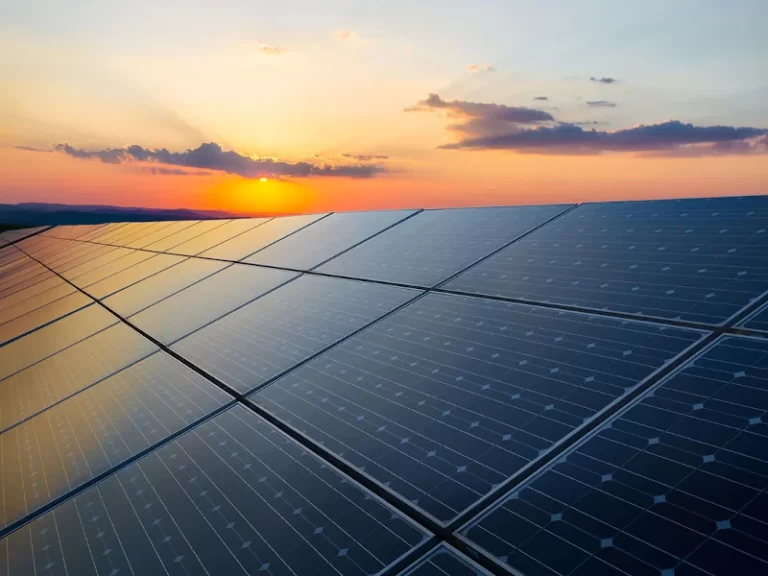
If Africa is able to exploit its solar potential and produce 50 million tonnes of green hydrogen a year by 2035, the continent will be able to create jobs, decarbonise heavy industry, enhance global competitiveness and transform access to clean water and sustainable energy, a new report shows.

The ‘Africa’s Extraordinary Green Hydrogen Potential’ report, formally handed over to partners on December 20, was commissioned by the European Investment Bank (EIB), the International Solar Alliance and the African Union, with the support of the government of Mauritania, HyDeal and UCLG Africa.

The report combines analysis of investment opportunities focusing on three hubs – Mauritania to Morocco, Southern Africa and Egypt, with a roadmap of technical, economic, environmental and financial solutions to unlock commercial development.

The comprehensive analysis, carried out in recent weeks by international consultancy CVA, suggests that large-scale green hydrogen investment can accelerate decarbonisation by enabling large-scale African energy users, such as fertiliser and steel producers, to use green hydrogen.

The study highlights that green hydrogen is economically viable and can be produced at less than €2/kg – cheaper than traditional fossil fuel energy – and cater both for local energy demand and enable green hydrogen to be exported to global markets. This is equivalent to energy costs of $60/bl of oil.

The research suggests three requirements to enable 50-million tons of green hydrogen to be produced in Africa by 2035, including national planning, regulation and incentive schemes need to mobilise private sector investment; as well as pilot projects to show successful green hydrogen generation, storage, distribution and use at both demonstration and commercial scale.

Market-based partnerships are needed to enable mass-scale domestic and international offtake and demand for green hydrogen, and increase cooperation to design, finance, build and operate green hydrogen production, storage and distribution infrastructure.

The report suggests that €1-trillion green hydrogen investment can deliver the equivalent of more than one-third of Africa’s current energy consumption.

The study also outlines how production and transmission of green hydrogen can yield 7 EJ of energy (Africa consumed 19.9 EJ in 2021) and a correlative significant increase in gross domestic product, creating hundreds of thousands of permanent and skilled jobs across Africa.

Large-scale green hydrogen investment, according to the report, will transform supply of clean water in areas regularly impacted by drought and chronic water shortages and will help empower communities.

As for decarbonising Africa’s heavy industry, the report estimates that green hydrogen investment could reduce carbon emissions in Africa by 40%, replacing 500-million tonnes of carbon dioxide a year.

According to the study, large-scale green hydrogen generation will enable Africa to supply 25-million tonnes of green hydrogen to global energy markets, equivalent to 15% of current gas use in the European Union.

Mauritania Energy Minister Abdessalam Ould Mohamed Salah says the EIB is working with partners across Africa and around the world to harness its renewable energy potential to produce low-cost green hydrogen at scale. The . . . report shows concrete opportunities to transform access to green energy and clean water across the continent and beyond,” he adds.

EIB VP Ambroise Fayolle says that unlocking Africa’s green hydrogen potential will require close cooperation between public, private and financial partners.

International Solar Alliance DG Dr Ajay Mathur adds that, owing to low-cost solar electricity and decreasing electrolyser costs, green hydrogen will provide access to a clean fuel that cheaper than all the current fossil fuels. “It will enable us to decarbonise the power sector and most hard-to-abate sectors – fertilisers, steel manufacturing and refineries.”

HyDeal president Thierry Lepercq says that, as the global energy and climate crises unfold, mass-scale competitive green hydrogen is ready to provide energy security, affordability and decarbonisation.

“Integrated hydrogen hubs bringing together upstream, midstream and upstream players on the basis of long-term off-take contracts are building powerful business models.

“Pioneering African countries such as Mauritania are showing the way, proving that Africa can help the world with green hydrogen – ensuring for itself a future of industrial development, fast and clean growth for all,” he says.

The study was previewed at the Mauritania Pavilion at the twenty-seventh Conference of the Parties, in Sharm el Sheikh, Egypt by Ould Mohamed Salah, Fayolle, Mathur, Lepercq, United Cities and Local Government Africa secretary general Jean-Pierre Elong Mbassi and former Morocco Environment Minister Hakima el Haité.

Government leaders, ministers, international finance representatives, business partners and civil society from across Africa also attended the unveiling event.

Mining Weekly

Zimbabwe Mining fees in USD

0

Zimbabwe Mining fees in Zimbabwe in USD.

These fees were gazetted by the Mines and Mining Development Ministry in 2021.

Explanatory Note: The fees pegged in USD in the Schedule above shall be payable in ZiG dollars at the prevailing official inter-bank rate.

NATURE OF FEEUSD
1. APPLICATIONS
Section 272(3)(b)
Application for revocation of forfeiture750,00
Section 87
Application for an EPO (Non-refundable)1 500,00
Section 135
Application for a mining lease (Non-refundable)1 500,00
Section 159
Application for a special mining lease3 750,00
Section 217
Application for protection against forfeiture75,00
Section 299
Application for a special grant to mine Part XX (non-refundable)1 500,00
2. PROSPECTING LICENCES
Section 20(1)
Special prospecting licence563,00
Section 20(1)
NATURE OF FEEUSD
Ordinary prospecting licence75,00
Section 22(3)
Duplicate Prospecting Licence75,00
3. REGISTRATIONS
Section 15(1)(c)
Registration as an approved prospector valid for 5 years3 000,00
Section 45
Registration fee for base minerals (Special block)563,00
Registration for Toll Elution Plants750,00
Registration for Special Grant –Part XIX750,00
Section 45
Registration fee for base minerals (Ordinary

Block)

300,00
Registration to deal in Precious Stones (Valid for 5 years)15 000,00
Section 59
Duplicate Certificate of Registration113,00
Section 135
Registration of a mining lease3 750,00
Section 159
Registration of a special mining lease7 500,00
Section 45
Application for registration of Precious Metal Block 

150,00

Section 48
Registration fee for a Site38,00
NATURE OF FEEUSD
4. ANNUAL INSPECTIONS
Section 197 (1)
1st Inspection block of claims (Base minerals, Precious Metals) and Mining Lease75,00 per 5 ha
Section 218
Annual fee for block of claims, special grants and mining leases of Precious Stones169,00 per 5 ha
Section 198/199
2nd and subsequent Inspection for block of claims (Base minerals, Precious Metals) and Mining

Lease.


150,00 per 5 ha

Section 212
Inspection by payment ( Base minerals)15,00/ha/year
Section 198
Special Mining Lease Inspection15,00/ha/year
Section 303(2)
Mining Special Grant XX Annual Fee8,00/ha/year
Mining Special Grant Part XIX Annual Fee8,00/ha/year
Section 303
Prospecting Special Grant Part XX8c/ha/year
Prospecting Special Grant Part XX Renewal 2nd Year11c/ha/year
Special Grant Part XX Renewal 3rd Year15c/ha/year
Section 395
Site Rental Fee8/ha/year
Exclusive Prospecting Order
Rental for EPO-First year8c/ha
Rental for EPO-Second year11c/ha
NATURE OF FEEUSD
Rental for EPO-Third year15c/ha
5. RENEWALS
Section 293
Renewal for Mining Special Grant under Part XIX750,00
Section 299
Application for Extension for Mining special Grant Part XX7 500,00
Section 16
Renewal for a Certificate of Registration as Ap- proved Prospector (CRAP)375,00
6. TRANSFERS
Section 275(7)
Certificate of Registration after transfer per min-

ing block

375,00
Section 275
Transfer of donated block of mining claims750.00
Transfer of a Mining Lease1 500.00
7. MISCELLANEOUS FEES
Conversion of block150,00
Search Fee 50,00 Trading on a8,00
Trading on a Mining Location38,00
NATURE OF FEEUSD
OTHER FEES
Export Permit for Coal products7 500,00/3 months
Export Permit for Coke2 800,00/3 months
Registration of mobile processing plants1 000,00
Annual Inspection fee for a registered mobile processing plant500,00
Penalty for failure to register mobile processing plant2 500,00
Diamond cutting and polishing licence15 000,00/5 years
General Application Fee500,00
Dump Inspection Fee150,00/5 ha/yr
Fee for acquiring various log books50,00/book
Registration of a Standard Tribute Agreement2 000,00
Registration of a Non -standard Tribute Agreement 

5 000,00

Permit to transport ore (3 months)15,00
Application for Special Grant Part XIX75,00
EPO Extension Fee1 500,00
Printing of claims plan Maps
– Quarter Map4,00
-Half Map8,00
– Full map11,00
PART II
OTHER FEES
EXPORT PERMIT FEES
Platinum Group Metals Concentrate (3 Months)9 375,00
White Matte7 500,00
Base Metal Concentrate7 500,00
NATURE OF FEEUSD
13 CD set of all scanned color geological maps350,00
CD of Zimbabwe Geological Survey bulletins 1-10150.00
CD of short reports 1-48, 52 7 MRS50,00
Large geological map scanned image + EPO map JPEG (image file)50,00
Medium scanned geological map20,00
Small scanned geological map15,00
Reprint large bulletins40,00
Reprint medium bulletins15,00
Reprint small bulletins15,00
Large bulletins tiff (scanned image)20,00
Medium bulletins tiff (scanned image)15,00
Small bulletins tiff (scanned image)15,00
EPO map with geology (.jpeg)50,00
EPO map without geology (.jpeg)40,00
EPO schedules20,00
FEES FOR GEOPHYSICAL DATA

AND MAPS

Radiometric data80,00
3 CD set containing the CIDA aeromagnetic data180,00
1 CD set containing CIDA aeromagnetic data60,00
1 CD GRD files60,00
12,647 gravity stations (xyz) raw data60,00
Bulletin No.103 with 1:000 000 map40,00
1:1 000 000 IGRF corrected aeromagnetic map print60,00
1:1 000 000 IGRF corrected aeromagnetic digital map with geology60,00
1:1 000 000 scale IGRF corrected aeromagnetic map without geology60,00
1: 500 000 aeromagnetic map25,00
1:250 000 aeromagnetic map20,00
Phase I aeromagnetic maps set  1983150,00
Phase II aeromagnetic maps set 1988200,00
Phase III aeromagnetic maps set 1990250,00
NATURE OF FEEUSD
Ferro Alloy75,00/3 months
Refined Base Metals2 813,00
Processed Industrial Minerals including Processed

Dimension Stone)

375,00
Unprocessed Industrial Minerals (Excluding Dimension Stone)-750,00
Dimension Stone Blocks5 625,00
Steel Products1 500,00
Steel Products (Small Consignment up to 30 tonnes)281,00
Cut and Polished diamond (per shipment)38,00
Rough/Uncut Diamonds (per shipment)7 500,00
Rough/ Uncut Emeralds (per shipment)188,00
Cut and Polished Emeralds (per shipment)38,00
Semi-precious stones (per shipment)38,00
Foundry/Industrial Scrap1 500,00
Samples for test work75,00
Samples above 100kg75,00
Samples below 100kg38,00
Gold Jewellery Permit5 000,00
Other Licences
Export of Raw Chrome ore/Concentrate (per 3

months)

1,875.00
Gold Jewellery Permit5 000,00/5 years
Custom Milling Licence3 750,00/year
Toll Elution Plant750,00/year
Carbon Movement Permit375,00/year
Retention Certificate (s.221B Finance Act No. 1 of 2014 amendment of s.199(3) Mines and Minerals Act [Chapter 21:05] 

1 500,00/5ha/year

Charges for Services in the Department of the Chief Government Mining Engineer
Exemptions/Permissions
Processing and granting of exemptions750,00
NATURE OF FEEUSD
Commissioning of plant, boilers and pressure vessels750,00
Registration fee as a testing authority2 250,00
Conducting Examinations
Full Blasting License (FBL) and replacement225,00
Mine Blasting Licence (MBL) endorsements and replacement150,00
Restricted Blasting Licence (RBL) and replacement38,00
Full Blasting License (FBL) with endorsement for

fiery Mines/Surface and replacement

225,00
Statutory Examinations
MSCC/ZGMD/MMCC/MED and MECC per subject38,00
Registration fee for examination38,00
Setting of examinations per subject75,00
Marking of examinations per script19,00
Explosives Permits and Licences
Storage Licence (approved container)75,00/year
Storage Licence (portable magazine)375,00/year
Storage Licence (immovable magazine)7 500,00 /5 years
Permit to acquire and possess explosives375,00 /year
Explosives import and export licence per consignment750,00
Licence to manufacture explosives at factory7 500,00 /5 years
Licence to manufacture explosives at mine750,00 /year
Provision of technical Service
Gyro per set up188,00
Surveying and Sampling150,00
Search fee (plans)4,00
Approval of Plans38,00
Siting of Works Plan38,00
NATURE OF FEEUSD
Permits to Export Exploration Samples
All Samples per consignment1 875,00
Penalties
Operating without a Custom Milling Licence3 750,00
Operating without a Toll Elution Plant Permit1 500,00
Breach of Operation Suspension Order375,00
Resumption of operations after suspension of operation order375,00
Failure to maintain Beacons (For the 1st Month

– not exceeding Level 3, Level 1- Monthly there- after. Section 375 as amended by the Criminal Penalties Act 2002)

Transporting or Processing Carbon without Carbon movement permit7 500,00
Transporting Ore without an Ore movement permit375,00
PART III
CHARGES FOR GEOLOGICALBULLETINS

AND MAPS

Large bulletins with folded map inserted50,00
Medium bulletins with folded map inserted30,00
Small bulletins with folded map inserted20,00
Short reports with folded map inserted20,00
Geological map of Zimbabwe 1:000 00020,00
Gold deposits maps 1:000 00020,00
Tectonic maps 1:000 00020,00
Base metals and industrial mineral maps 1:000 00020,00
Exclusive Prospecting Order map with geology (print)40,00
Miscellaneous maps reprint (color)40,00
Geological map to accompany reports 1:100 00015,00
FEES FOR DIGITAL PRODUCTS
Vectorised geological map of Zimbabwe100,00


Illegal miners ejected from Sandawana

0

One of the country’s biggest mining group, Kuvimba Mining House has driven away illegal lithium miners from its Sandawana claims to pave way for exploration as the company seek to quantify its resource for large-scale operations.

Rudairo Mapuranga

While Kuvimba gave the Zimbabwe Miners Federation (ZMF) a portion of its claims as a tribute which thousands of youth from Mberengwa are now working on, the other claims were reserved for the former who is expected to work on exploration.

Illegal Miners invaded the lands rendering it difficult for Kuvimba to carry out exploration leading to the partly-owned government company seeking assistance to chase away the miners.

Speaking to this publication the ZMF President Ms Henrietta Rushwaya welcomed the development by Kuvimba to bring sanity to the area as the activities of illegal miners were putting the name of the Federation to disrepute as authorities were unable to distinguish between the Federation’s miners and illegal miners.

“The people that were now mining are illegal miners who allocated themselves non-designated areas to mine. Kuvimba is doing its exploration and we are yet to be deployed on areas that they deem fit after exploration. If people invade an area without permission, they must be removed. This is in accordance with the Zimbabwe Mining Laws. We cannot support disorderly mining and this should be dismissed with the contempt it deserves. Property rights must be respected at all times. Those with ZMF registration cards will soon be deployed in the designated areas.

It was also reported that illegal miners were posing Safety, Health and Environment risks as well as enabling the smuggling of the “white gold” by selling to unscrupulous buyers.

“It came to our realization that those who were now digging haphazardly were unauthorized and were not people from Mberengwa and they were selling the lithium to illegal buyers whose trucks were now a common phenomenon in Mberengwa. Health issues were now a big challenge and the wear and tear of the roads and the small bridges. The locals were now adversely affected considering that no taxes were paid and the Rural District Council was prejudiced in the process. There was more disorder than anything and as ZMF, we requested that order be restored. The Area has been peaceful in the last three days and we thank the Acting President and the Police for ensuring that sanity prevails in Mberengwa. Once normalcy returns, and exploration is done officially registered groupings will be allowed to Kuvimba designated mining areas meant for small-scale miners. Let’s also bear in mind that SI 213 of 2022 Section 4 b 1 and 2 makes illegal mining an offence that can result in a jail sentence. I would like to appeal to the sector to exercise patience and tolerance when it comes to mining issues. Above all, the place belongs to Kuvimba and let’s allow them the opportunity to show us designated areas to mine from and not the other way round,” Ms Rushwaya said.

Illegal miners have been causing havoc across the country with the Zimbabwe Republic Police (ZRP) carrying out an operation called “Chikorokoza Chapera” to clamp down on illegal miners who often end up engaging in violence and land degradation among other ills. The decade-old operation by October 2021 had 50 000 illegal miners arrested.

Surge in early commitments ahead of investing in African Mining Indaba

0
Key government leaders and policymakers across the globe are signing up in their numbers ahead of the world’s largest mining investment event, Investing in African Mining Indaba. Indaba is returning to Cape Town in February 2023 with an impressive speaker line-up comprising thought leaders and decision-makers from across the mining industry.

“We saw a record-breaking Indaba in May 2022 that really set the tone for the industry and for post-pandemic events as we lead up to February 2023. We are seeing a lot of early commitment and we are encouraged by the interest we have already received. This really reaffirms the importance of the Indaba, that it is given the upmost attention and support by state officials and is really driving positive policy change across the continent.” said Simon Ford, Portfolio Director, Investing in African Mining Indaba.

Leading the charge of government leaders that will be in attendance are South African Minister of Mineral Resources and Energy, Gwede Mantashe and Minister of Trade and Industry, Ebrahim Patel.

Government leaders from mining-producing countries in Africa include the Nigerian Minister of State for Mines and Steel Development, Gbemisola Ruqayyah Saraki; Ghanaian Minister of Land and Natural Resources, Samuel Jinapor and the Ghanaian Deputy Minister for Lands and Natural Resources, George Mireku Duker; as well as the Zambian Minister of Mines and Minerals Development, Paul Kabuswe.

Investing in African Mining Indaba continues to garner significant support across the continent, with government officials from Chad, Ethiopia, Botswana, Central African Republic, Mali, Mauritania, Namibia, Somalia and South Sudan having also made early commitments.

On the global front, the United States of America Under Secretary of State for Economic Growth, Energy and the Environment, Jose W. Fernandez, will attend. He will be joined by Special Presidential Coordinator Amos Hochstein. Fernandez last visited South Africa in August 2022 where he participated in the US-South Africa Strategic Dialogue and co-chaired sessions that explored ways to deepen bilateral cooperation on climate and energy issues, as well as strengthen economic ties between the two countries.

The theme for 2023 is ‘Unlocking African Mining Investment: Stability, Security, and Supply’ and will feature speakers who will consider the challenges and opportunities facing the continent’s mining industry as it seeks ways to bolster its economic power amid the global rush to secure supply for greener energy transition.

Attendees will hear from global mining leadership including Anglo-American Chief Executive, Duncan Wanblad; Rio Tinto’s Chief Executive – Minerals, Sinead Kaufman; CEO of Exxaro Resources, Dr Nombasa Tsengwa; Minerals Council South Africa CEO, Roger Baxter; Gécamines SA Chairman Alphonse Kaputo Kalubi, and CEO of ICMM, Rohitesh Dhawan.

3 Trucks smuggling lithium detained at Beitbridge border

0

Beitbridge Border Post officials yesterday intercepted a consignment of lithium ore on three haulage trucks belonging to one Bernard Tafadzwa Mnangagwa.

The ore was being smuggled to South Africa and was declared as manganese, it is alleged.

Last week, the government banned exports of raw lithium with immediate effect in an effort to value-add its minerals and support local production and employment creation.

The ban was effected through Statutory Instrument (SI) 213 of 2022 titled Base Mineral Export Control (Unbeneficiated Lithium Bearing Ores) Order, 2022.

Officer commanding Beitbridge police district, Chief Superintendent Tichaona Nyongo referred all questions to Police General Headquarters.

Efforts to get a comment from national police spokesperson Assistant Commissioner Paul Nyathi were fruitless.

But yesterday morning, Mines and Mining Development Ministry officials arrived at the border post to attend to the trucks, now under police and Zimbabwe National Army guard.

It is understood that the raw mineral was extracted from places near Sandawana in Mberengwa, and transported to Bulawayo, where it was kept near Khami Cafe close to Bulawayo’s Vehicle Inspection Department.

The mineral was reportedly stored there to facilitate smuggling.

Lithium, a vital resource that is becoming increasingly important as the world shifts towards clean energy systems, has attracted significant attention from Zimbabwe as it seeks to maximise the value of this mineral.

The country has abundant deposits of lithium and, with rising global demand and firmer prices, it has become an attractive destination for investment in this resource.

Export bans have also been viewed as a way to create an industrial renaissance in Africa through value addition. In an effort to establish a vibrant lithium value chain in the country, the government recently announced a ban on raw lithium exports.

Newsday

Lithium prices to fall in 2023 – Wang Pingwei

0

Lithium is going to get less expensive in 2023, according to a Chinese supplier of the battery metal, potentially offering some relief to electric-vehicle makers squeezed by soaring costs.

Prices have already softened after a spectacular two-year rally labelled “insane” by Elon Musk and “unreasonable” by China’s BYD. The cool-off is poised to continue as more supply emerges to trim abnormally high margins for lithium producers, Wang Pingwei, chairman of Sinomine Resource Group said in an interview.

“We believe the gradual, downward trend for lithium will continue next year,” Wang said, predicting a fall of around a quarter from current levels that will still leave the company with “good” profits. Prices will not fall off a cliff as the market remains tight, said Wang, whose company operates mines in Zimbabwe and Canada.

Lithium’s relentless rise since 2020 has hurt buyers and contributed to the first annual increase in battery costs since BloombergNEF started tracking them nearly a decade ago. Benchmark prices in China are still about twice as high as the start of 2022 – despite declining this month – as demand from the fast-expanding EV sector outstrips supply.

Sinomine’s Wang said he sees lithium carbonate prices drifting to about 400,000 yuan a ton in 2023. That compares with 527,500 yuan at present and a record of nearly 600,000 yuan in mid-November, according to data from Asian Metal. The lower level would still offer good margins for Sinomine, he said.

Wang’s comments echo some other forecasts. More mine supply will push the market into a surplus next year and help soften prices, BYD’s Executive Vice-President Stella Li said earlier this month. China’s withdrawal of EV credits, as well as uncertainties over the pandemic and global economy, are also weighing on the outlook.

“Over the next 6 months, demand softness is likely to dominate the lithium price discussions as demand in China is challenged by zeroing subsidies and surging Covid-19 cases,” Alice Yu, senior analyst at S&P Global Market Intelligence said by email. “Consumers in the West face growing affordability issues.”

Sinomine wants to expand output worldwide, just as geopolitical tensions are growing with the US, Canada and others moving to restrict China’s role in the EV supply chain.

Wang’s firm was one of three Chinese companies ordered by Canada to divest stakes in Canadian-listed firms under tougher rules for foreign investment. Separately, it still owns the Tanco mine in Canada, as well as the Bikita lithium site in Zimbabwe.

“Our confidence to invest in more mines in North America is relatively low at present,” Wang said.

The company is currently in talks for potential projects in South America, and will continue to look for opportunities in Africa, where developing mines is easier than other jurisdictions, he said. Central Asia is another prospect – including Afghanistan once the security situation improves there, he said.

Sinomine currently has 25,000 tons of annual production capacity for battery-grade lithium hydroxide and carbonate. The company expects that to increase to 60,000 tons next year, and targets 100,000 tons capacity by 2025, Wang said.

SCMP

Kwekwe miner Chanakira Masuku faces gold ore theft charges

0

A Kwekwe gold dealer has been reported to police on charges of having stolen gold ore and other mining accessories from a mine at the centre of a boundary dispute.

According to a police report case number 5393592, Chanakira Masuku is accused of stealing about 1.5kg of gold, tonnes of gold ore worth over US$30 000, two drums of cyanide and caustic soda from Somerset 16 mine in Sosombe, Kwekwe.

Masuku is also accused of vandalising a perimeter fence of Somerset 16 mine owned by Mistopher Khan under registration number 24107. The mine was registered on September 10, 2002.

Records show that Masuku is the registered owner of Somerset 792 and 791 under registration number 32929 and 32928 respectively.

However, Masuku has been accused of encroaching into Khan’s Somerset 16 to loot gold ore and other mining accessories.

He was reported to Police on Monday.

Masuku when contacted for comment said the matter was in court.

“As far as I know, the case is in court and have no further comments to make,” Masuku said.

Newsday established that the theft case is not in court.

A few months ago, Masuku was reported to the Mines and Mining Development ministry on charges of encroaching into Somerset 16 and the neighbouring Old Crick mine 5 and Old Crick 11 owned by Ashraft Khan.

According to minutes of a dispute resolution meeting held on July 14, 2022, it was established that Masuku’s Somerset 792 was illegally pegged by some corrupt mining officials.

“Somerset 16 enjoys the priority of mining rights and no beacons from subsequent pegger should interfere with any of its established beacons,” the minutes read in part.

“Old Crick 5 does not share a boundary with Somerset 16. This should be maintained on the ground. Somerset 791 should adjust its location in line with section 177 (3) of the Mines and Mining Act by giving priority to Somerset 16 and Old Crick 5.

“Somerset 792 falls completely within Old Crick 11 and is recommended for cancellation. It was pegged in breach of section 31 of the Act”.

Source: Zim Independent

Zimbabwe blocks Diamond, Copper, Lithium, Nickel & REM applications

0

Zimbabwe has blocked Diamond, Copper, Lithium, Nickel & Rare Earth Mineral applications citing dishonesty by miners in declaring the discovery of different minerals from the ones they are registered for also, the five have been deemed strategic in the upcoming Mines and Minerals Amendment Bill.

In a letter addressed to the ten provincial Mining Directors, the secretary for Mines and Mining Development Mr Pfungwa Kunaka said the non-declaration has led to prejudice to the growth of the mining sector economy as in some instances high-value minerals are involved.

“This non-declaration has led to prejudice to the growth of the mining sector economy as in some instances high-value minerals are involved.

“Accordingly, you are hereby directed to ensure that on applications for inspection certificates, the applicants submit a declaration of the amount of work carried out as well as a declaration of minerals contained in the ore body being mined. This should be backed by an assay certificate issued by an approved laboratory.

Further, we have of late seen a flooding of applications for mining titles for minerals which have been deemed strategic in the upcoming Mines and Minerals Amendment Bill. It has thus become necessary that in the national interest, we temporarily stop acceptance and processing of applications for mining titles for the following minerals until further notice: diamonds, copper, lithium, nickel (and) rare earth minerals,” Kunaka said in a statement.

Zimbabwe seems to be on a path to block artisanal and small-scale miners from participating in certain sectors of mining.

While experts agree it goes a long way in the promotion of responsible mining it is more and more likely smaller players will resort to illegal mining which the government is struggling to contain with the country losing US$100 million each month, according to Home Affairs Minister Kazembe Kazembe. Experts have estimated the loss of revenue to be much higher.

The small-scale sector should not be left behind in the lithium revolution

0

Yesterday government gazetted Statutory Instrument (SI) 213 of 2022 which stated that no lithium-bearing ores, or un-beneficiated lithium whatsoever, shall be exported from Zimbabwe to another country except under written permission of the Minister.

The ban however excludes the export of lithium concentrates, which all the major lithium miners in the country are set to produce.

The SI has created uncertainty with some small-scale miners feeling that they may be sidelined by the announcement.

As the small-scale miners have for years carried the gold, chrome and semi-precious industries, they can also shine in lithium claims that may not be attractive to large-scale producers.

A typical example is the current gold production in Zimbabwe where the small-scale miners outperform primary producers. The small-scale miners trounced primary producers by a staggering 7311.61kg in submissions in 2021, and 2022 stats indicate that ASM miners submitted 22947.31kg with primary producers submitting 10361.67kg which is twice more gold than their counterparts.

As at November 30, 2022, the Henrietta Rushwaya-led miners delivered 22947.3158kg versus 10361.6738kg from Primary producers!

The government must find a long-lasting solution, mutually integrate and support small-scale lithium miners as the group has the potential to pull another shocker and lead in lithium submissions as more and more lithium discoveries continue across the country.

The government needs to create an efficient Lithium buying facility as they did with Fidelity Gold Refiners (FPR) and ensure small-scale producers are “TIMELY PAID” fair value of their minerals worth.

It is also imperative that the mistakes made on chrome buying are avoided as this has exposed miners to predatory buyers. Government should publish buying prices as they do with Fidelity Gold Refiners (FGR) to guide the local market ensuring our people are protected.

President Mnangagwa is well-known for popularising the statement “Leaving no one and no place behind” the small-scale sector should not be left behind in the lithium revolution. They have proved to be an asset in other sectors of the mining industry they can prove their worth in lithium with proper guidance and mechanisms in place.

Lithium deposits in Zimbabwe

Zimbabwe holds the largest reserves of Lithium in Africa. Areas of verified deposits in Zimbabwe include Goromonzi, Mudzi, Buhera, Bikita, Chegutu, Hwange, Harare, Insiza, Rushinga, Mutoko, Mutare and Hwange. However, Lithium has been discovered in areas such as Mberengwa, Kadoma and Bindura cementing the statement by veteran Geologist Mr Kennedy Mtetwa that “Zimbabwe is hamstrung by lack of exploration”.