

Home Blog Page 304

Two die, five trapped in shaft collapse

0

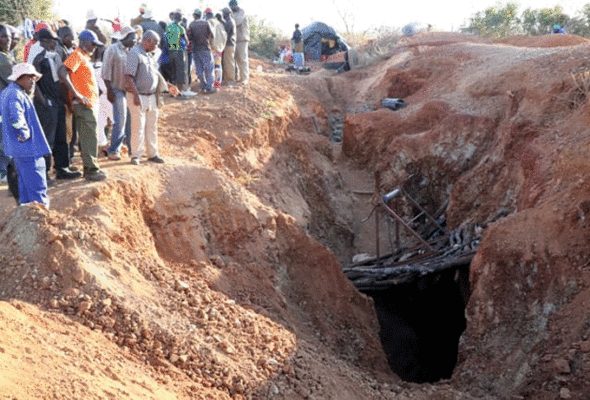
Two illegal gold miners died while five others are feared dead after they were trapped underground when a shaft collapsed.

The accident occurred in the early hours of Saturday at Interfah Mine also known as Success Mine in Matobo District, Matabeleland South Province.

Illegal miners invaded the area after news broke that rich gold deposits had been discovered.

When the a local publication, The Chronicle arrived at the scene yesterday, a sombre atmosphere engulfed the area with scores of gold miners from other surrounding mines gathered at Interfah Mine as they watched an excavator digging for the bodies.

By last night, two bodies had been retrieved from the shaft as rescue teams continued with their frantic efforts to reach and rescue those still trapped in the pit.

Contrary to the rowdy and rivalry behaviour synonymous with gold panners, the exhumation of the two bodies presented a spirit of brotherhood as they volunteered to carry the bodies of their departed colleagues.

“These are our brothers, we might not know them, but by virtue of them being gold panners it means they are our brothers,” said one panner.

The mine is reportedly owned by a syndicate of three men.

A director of the mine Mr Philani Ncube said the trapped gold miners illegally entered the mine. The legal owners had not started operations as they were still in the registration stage.

“This is our mine and we had not commenced operations as we are in the process of registering. We got reports that there were people coming to illegally mine here after discovering gold deposits using detectors,” he said.

“We then engaged the police from Matopo and they deployed the riot police from their Support Unit who came and dispersed them.”

“The gold panners who were trapped in the mine shaft came at night to illegally mine and unfortunately the pit collapsed on them.”

At the time of going to press, police were still conducting investigations. Police officers who attended the scene took the two bodies to a mortuary in Bulawayo. While the number of the miners suspected to have been working inside the pit could not be confirmed, reports say five could be still trapped inside the pit.

In October, a man died and four others survived when a mine shaft collapsed at an illegal mine in New Parklands suburb in Bulawayo. Several shafts and tunnels at other mines have collapsed, trapping miners with authorities warning people against illegal mining activities during the rainy season

The district development co-ordinator for Matobo, who is also the head of the district civil protection unit, Mr Obey Chaputsira, said they had since been informed by the police about the tragedy.

Mr Chaputsira said miners should exercise caution considering that the country is in the rainy season when more mining shafts collapse.

“Due to the rains that we are receiving, the land becomes unstable hence we encourage those in the mining sector to follow precautionary measures as directed by the Ministry of Mines and Mining Development. There can be gold rushes and so forth, but miners have to adhere to safety measures. We can’t continue losing people due to unsafe mining procedures.”

Mr Chapuritsa extended his condolences to the families of the deceased miners.

In May, seven miners at Bucks Mine in Colleen Bawn plunged to their death after hoisting ropes to a skip bringing them up a 240-metre-deep shaft snapped 15 metres from the surface.

The skip cage they were in, dragged the miners to the bottom of the shaft with first responders to the scene reportedly seeing splatters of blood on the walls of the shaft going down. Rescue workers spent over 72 hours trying to pump out water from the underground mine in order to retrieve the bodies of the miners who were trapped underwater.

Some of the retrieved bodies had been badly injured with skin peeling off due to prolonged exposure to water.

Chronicle


Speculative EPOs, mine grabbing highlighted MashWest Miners for ED launch

0

The issues of speculative Exclusive Prospecting Orders (EPOs) and the rise of mine-grabbing cartels highlighted proceedings at the launch of the Miners for Economic Development (Miners for ED) Mashonaland West Chapter on Friday.

Rudairo Mapuranga

While EPOs are very important for Zimbabwe to quantify its mineral resources’ worth due since the country is hamstrung by a lack of exploration, EPOs have been abused by unscrupulous individuals who are now using the titles for other reasons, not exploration.

Speaking at the launch of the miners for ED Mashonaland West Province Chapter at Golden valley mine in Kadoma, Zimbabwe Miners Federation (ZMF) President Ms Henrietta Rushwaya urged the government to look into issues affecting miners, especially the issue of EPOs where land has been closed for pegging but with nothing being done by in terms of exploration.

“Our greatest plea that made us gather here is the issue of EPOs. Deputy Minister Hon Dr Polite Kambamura may you please pass our concerns to the government. EPO number 56 of 18 in Chakari, EPO 21 of 18 Golden Valley, EPO number 18 of 18 in Sanyati and EPO number 20 of 18 in Venice should be looked into,” Rushwaya said.

The Deputy Minister of Mines and Mining Development Hon Polite Kambamura who was the guest of honour at the event said the government was already cancelling some EPOs that we found to be held for speculative purposes.

“The issue of EPO has reached the hears of the President HE Emmerson Dambudzo Mnangagwa and we were ordered to look into the matter. We have discovered that people with EPOs are not really doing anything but holding the areas for selfish reasons. We have started cancelling some EPOs and we are going to cancel more speculative EPOs. In future we are going to cancel EPOs if they go for 6 months without providing any exploration reports,” Dr Kambamura said.

ZMF Mashonaland West Provincial Chairperson Mr Timothy Chizuzu on issues of mine grabbing said his organization was working closely with the police to ensure that miners are protected from a cartel that robs miners of their mining claims.

“We are trying to encourage small-scale miners to acquire Environmental Impact Assessment (EIA). We have also been working closely with the police to ensure that miners are not robbed of their claims and we have been assisting our miners with court proceedings to save them from the cartels,” Chizuzu said.

Recently Mining Zimbabwe published an article of a sophisticated, dangerous and skimming mine-grabbing cartel which has invaded the City of Gold (Kadoma) and the surrounding areas where the cartel has been grabbing mines owned by unsuspecting individuals and mining syndicates.

The skimmers of the cartel (mainly gold buyers) will identify and investigate a small-scale gold mine that is consistently producing high grades. They then identify loopholes that they can use to create a dispute so that mining operations can be suspended by the court.

After creating disputes and taking the matters through the courts of law, the cartel makes sure that the case will never come out of court whilst operations are suspended as a way of making the miner desperate. (The miner will be accumulating debts from unpaid employees, lawyers and other costs related to the suspension of the operations thereby making him/her desperate to seek an outside court settlement.) READ MORE HERE

US climate law potentially sideline Africa miners

0

Mining companies and governments in Africa are calling for stronger trade ties with the United States after a new climate law set out incentives for U.S. carmakers sourcing battery materials from trade partners.

The $430 billion Inflation Reduction Act (IRA) has been criticised by the European Union and South Korea, who say it could hurt their car industries.

It could also negatively impact African nations that produce battery materials.

The United States has a Free Trade Agreement in place with only one African country, Morocco. Yet the continent is a key copper producer and the Democratic Republic of Congo produces most of the world’s cobalt.

Battery materials and trade are set to be a focus at next week’s U.S.-Africa Leaders’ Summit in Washington where President Joe Biden will meet presidents of African countries including Congo.

“The IRA was intended to push out China, and what it’s ended up doing is pushing out the DRC, and the EU, and South Korea,” said Indigo Ellis, managing director at consultancy Africa Matters Limited, who will attend the Dec. 13-15 summit.

Under IRA, U.S. carmakers will get tax credits if they source at least 40% of battery materials domestically or from American free-trade partners. This risks carmakers replacing Congolese cobalt with Australian, Canadian, Moroccan, or U.S. cobalt.

Congo produced 74% of the world’s mined cobalt last year while the next-biggest single producer, Australia, was responsible for just 3%, according to a Cobalt Institute report.

An adviser to Congo’s President Felix Tshisekedi said a USA-DRC Free Trade Agreement “is an option for the medium to long-term, but in the short term other avenues will be explored”.

A spokesperson for the U.S. Trade Representative (USTR) said “we look forward to discussing ways to strengthen and deepen our trade and investment ties with our partners throughout Africa” during the summit.

The IRA aims to boost U.S. mining and processing, which some companies fear could come at the expense of value-added processing in Africa.

“The West needs to work with us to build some value-add,” said George Roach, CEO of Premier African Minerals, which has a lithium project in Zimbabwe.

His is one of many projects across sub-Saharan Africa aiming to produce battery materials like lithium, nickel and graphite.

Joe Walsh, managing director at Australia-listed Lepidico, which is building a lithium mine in Namibia and chemical plant in Abu Dhabi, said the IRA makes the United States a more attractive location for a planned second plant.

“The U.S. is not going to be able to incentivise the development of a significant battery raw material production base of its own without ruffling a few feathers along the way.”

US News

Official gold buying prices Friday 9 December 2022

Fidelity Gold Refinery (FGR) official gold buying prices Friday 9 December 2022.

SG 90% AND ABOVE US$54.67/g
SG ABOVE 85% BUT BELOW 90% US$53.81/g
SG ABOVE 80% BUT BELOW 85% US$53.23/g
SG ABOVE 75% BUT BELOW 80% US$52.66/g
SAMPLE BELOW 10g BUT ABOVE 5g US$51.79/g
FIRE ASSAY CASH US$54.67/g

NB: Fire Assay cash price is for gold above 100gs and no sample is deducted.
For the Fire Assay Transfer price, a sample of not more than 10g is deducted
A 2% royalty is charged on all deposits (Small-scale Miners)
A 5% royalty is charged to Primary Producers

Cash available. Fidelity Gold Refinery prices will be changing daily in relation to world market prices.

30 MW solar photovoltaic (PV) plant for Karo

0

Total Eren, a renewable energy Independent Power Producer (IPP) based in France and Chariot, the Africa-focused transitional energy company, are pleased to announce that, pursuant to the partnership entered into in November 2021, Total Eren and Chariot have agreed to work together on the development, financing, construction, and operation of a solar photovoltaic (PV) project that will provide competitive electricity for the Karo Platinum Project, in Zimbabwe.

The solar PV project is expected to have an initial installed capacity of 30 MWp with a potential extension of up to 300 MWp.

Total Eren and Karo Mining Holdings (“Karo”) previously signed a Memorandum of Understanding (MoU) as the first step towards implementation and signing of a longterm Power Purchase Agreement (PPA) for the supply of electricity. Karo and the Partners will now pursue the next steps of development of the PV project.

Fabienne Demol, Executive VicePresident & Global Head of Business Development of Total Eren, commented: We are very pleased to partner again with Chariot on a new renewable energy project dedicated to the mining sector. Our solar project will enable the Karo Platinum Mine to be supplied in low carbon electricity during its operating life, therefore reducing its carbon footprint and generating competitive source of electricity supply in Zimbabwe. I look forward to delivering this solar project and wish to start even more renewable energy projects in this country where our strategic shareholder, TotalEnergies, holds a strong footprint.

Benoit Garrivier, Chariot Transitional Power CEO, added: In partnering with Total Eren on this project, we advance towards our objective of delivering a 1 GW renewable energy pipeline and developing some of the largest sustainable power projects in Africa. We wish Karo all the best with their construction phase and look forward to implementing the solar plant build in due course.”

Bernard Pryor, MD of Karo Mining Holdings, declared: As part of our sustainable development plan, green power was always placed at the forefront of our energy strategy. Land designated to develop this type of power strategy has been allocated, close to the Karo Mine but also being mindful of a broader power strategy that we will develop with our partners and the government of Zimbabwe, to ensure stable and lasting green energy benefitting all our stakeholders and beyond.”

Source: PV

Arcadia lithium processing plant 80 percent complete

0

There is substantial progress on the construction of the Arcadia lithium project processing plant which is expected to be the biggest lithium processing plant in Africa.

Rudairo Mapuranga

According to Prospect Lithium Zimbabwe (PLZ) processing Manager George Togara, the company is targeting to commission the plant in February 2023 and is forecasting to process over 4 million tonnes of ore per year.

“The processing plant is about 80% complete. For a project of this magnitude that started ground clearing in June, this is a tremendous achievement. We are targeting to complete construction by the end of January 2023 and go straight into commissioning and ramp-up. Once complete, we will be pushing 4.5 million tons of ore through the plant for the next 15 years. This will see us produce approximately 450000t per annum of petalite and spodumene concentrates for export,” Togara said.

Factors hindering the progress

Power outages remain one of the biggest challenges in the mining industry with the Arcadia lithium project not spared. Power challenges have prevented contractors from working round-the-clock shifts.

The country has suffered acute power shortages, as successive droughts have resulted in poor inflows into the Kariba Dam, simultaneously, ageing coal-fired power stations have repeatedly broken down aided by the shortage of electricity in the Southern African region which the country has been relying on for supplement.

Clearance of trucks carrying critical consignments at the country’s borders has been a challenge not only to Arcadia but to the mining industry at large.

PLZ has invested US$300 million in the rapid development of a lithium mine and a process plant at the Arcadia lithium project as it is geared to contribute significantly towards the attainment of the government’s vision to achieve a US$12 billion mining industry by the end of 2023.

Recommendations

The government should engage Zimbabwe Revenue Authority (ZIMRA) to speed up the process of clearance to ensure project work according to their targets.

Power challenges in the mining industry should be addressed, the government should give all mining companies licenses to produce their own power. The licenses should not be only limited to green energy but extended to thermal and hydropower.

Should power constraints continue unabated the attainment of the us$12 billion industry by 2023 is headed for failure.

Karo to contribute 2% of GDP

0

Tharisa’s Karo Platinum project in Chegutu will contribute 2 per cent of the country’s Gross Domestic Product (GDP), Karo Platinum Managing Director Bernie Pryor said.

Speaking at the commencement of the Ceremony in Selous on Wednesday the Karo Managing Director said the project will play a significant role towards economic revival and will create hundreds of jobs in its first phase of mining where the project has 17 years life of mine.

“This project will produce nearly two per cent of the country’s GDP. It will cost in the region of about US$400 million.

“We need to build this project and operate it safely. We will commence production on July 4 and establish a world-class Mine that we are all proud of,” Pryor said.

Speaking at the same event, the Minister of Mines and Mining Development Hon Winston Chitando said the Karo Resource project is a game changer and a testimony of the government’s open-for-business mantra.

He said, the commencement of production by Karo will be significant and a testimony of government commitment towards engagement and re-engagement drive.

“It is exciting to note that a number of developments are happening within the platinum mining sector, pointing towards growth in line with Government’s vision. The growth is mainly anchored on exploration, opening up of new mines as well as expansion of existing projects and Karo Platinum (Pvt) Ltd is a testimony.

“Karo Platinum (Pvt) Ltd is proof of the natural geologically endowment of Zimbabwe and how it can be developed for all to benefit.

“The Government of Zimbabwe will always strive to ensure there is an enabling environment that supports business growth and security of tenure. We invite all our investors to come to Zimbabwe and do business with us for mutual benefits between Zimbabwe and the investors. Indeed, Zimbabwe is Open for Business”.

It is pleasing to note that the Government of Zimbabwe are partner in this project and we have a 15% free carry in the project, and together we will ensure this project is developed.

Regulatory approvals have been smooth and have assisted Karo Platinum (Pvt) Ltd in ensuring their fast-track approach to developing this project remains in force. Karo Platinum (Pvt) Ltd is proof of the natural geologically endowment of Zimbabwe and how it can be developed for all to benefit.

Quick development timeline with funding provided by Karo Platinum (Pvt) Ltd partner Tharisa PLC, who have a track record of building mines and running them profitably and sustainably,” He said

Minister Chitando also reiterated the government’s commitment to supporting business growth and invited interested investors.

“The Government of Zimbabwe will always strive to ensure there is an enabling environment that supports business growth and security of tenure. We invite all our investors to come to Zimbabwe and do business with us for mutual benefits between Zimbabwe and the investors. Indeed, Zimbabwe is Open for Business.

“It is pleasing to note that the Government of Zimbabwe are a partner in this project and we have a 15% free carry in the project, and together we will ensure this project is developed.

“Regulatory approvals have been smooth and have assisted Karo Platinum (Pvt) Ltd in ensuring their fast-track approach to developing this project remains in force.

“It is worth noting that 1 000 direct jobs are to be created during construction, and further 7 000 indirect jobs and over 100 jobs have already been created with active recruitment underway,” Minister Chitando concluded.

Tharisa Chief Executive Officer Pheovos Pouroulis said due to power challenges in the Southern African region and the need by the mine to adhere to the clean energy revolution, Karo establish a 300 MW solar energy plant, with 30 MW already in place before the commencement of production.

Karo signed an MOU with French group Total Eren to build a solar power plant near Selous power station.

The Karo Platinum project’s commencement of production is set for July 2024.

A number of developments are happening within the platinum mining sector, pointing towards growth in line with Government’s vision for the country to become an upper-middle-income economy by 2030 and US$12 billion by 2023. The growth is mainly anchored on exploration, opening up of new mines as well as expansion of existing projects.

Karo commencement of construction ceremony on today

0

Mines and Mining Development Minister Hon Winston Chitando will be officiating the Karo Resources Commencement of construction ceremony this morning.

Karo is gearing up for its open-pit platinum mining project in Ngezi.

Karo will design and construct fully integrated facilities to ensure the maximum extraction of value from mining, through the value chain to final Base Metal and Precious Metal refining.

Karo is currently set to have an annual PGM production of 194,000 oz (6E – platinum, palladium, rhodium, ruthenium, osmium and gold), and a mine life of 17 years and will add further to the fairly exclusive list of open pit platinum producers in southern Africa which includes Tharisa’s namesake mine, Anglo American’s Mogalakwena and SPM’s Pilanesberg Platinum Mines, all in South Africa. Currently, all the major platinum mines in Zimbabwe are underground, including Ngezi, Unki and Mimosa.

“Developing a tier one project in this unique geological setting comes once in a lifetime,” said Bernard Pryor, MD Karo Mining Holdings in a recent investor presentation on the project, which has seen over $70 million of investment to date but will ultimately cost over $390 million. The project is located on the Great Dyke, south of the Zimplats Selous Metallurgical Plant and north of the Zimplats Ngezi underground operations. It is in the Mashonaland West district of Zimbabwe, approximately 80 km southwest of Harare and 35 km southeast of Chegutu.

Development will take 24 months of a low-risk, fully licenced open pit. Phoevos Pouroulis, CEO of Tharisa, commented in the company’s FY22 results ending September 30: “We have advanced our position in Karo Platinum, which is on track to become the second world-class asset in our portfolio. The next major milestone is ‘ground-breaking’ at the Karo site in December 2022, as this PGM asset moves into the construction phase, with inaugural production planned for within the next 24 months.”

First Ore In Mill (FOIM) is scheduled for July 2024. The mining plan will target mining 2.1 Mt/y of run-of-mine material for the Phase 1 operations, at a grade of 3 g/t (5PGE+Au).  The mining operations will be undertaken by a mining contractor, which has already been appointed but not yet named. An owner’s mineral resource management team will be in place for oversight of the mining operations and grade control.  The mining operations will see the development of four open pits being developed sequentially, up to a maximum pit depth of 100 m over a total strike length greater than 20 km.

The processing of the ROM will be through an MF2 PGM flotation circuit, processing 175,000 t/mth of ROM.  The average annual production of PGMs in concentrate will be 150 kozpa (5PGE+Au).  The processing plant has been designed using proven technology and beneficiation processes. Primary crushing will reduce ROM to F80 -120 mm followed by secondary (F80 -40 mm) and tertiary (F80 -15 mm) cone crushing following by primary ball milling to F60 -75 micron followed by a bank of six primary rougher flotation cells and three high grade cleaner stages, thickening and filtration using a tower press filtration. Primary rougher flotation tails go to secondary ball milling (F80 -75 micron) then a bank of six secondary rougher cells and two low grade cleaner stages prior to the thickening and filtration. The long lead time items – including the two ball mills and the flotation cells have already been ordered.

Karo Mining Holdings (KMH) has been scouting for platinum mining and refining opportunities in Zimbabwe since 2009. In January 2014, the Government of Zimbabwe issued an expression of interest for companies to further develop PGM opportunities, to which Karo submitted an expression of interest.

KMH acquired its project concession area, measuring 23 903 ha, in March 2018 and entered into the Investment Framework Agreement with the Republic of Zimbabwe.

The project is located in the Mashonaland West province of Zimbabwe, approximately 80 km southwest of Harare and 35 km southeast of Chegutu.

A Mining Lease application was submitted to the Mining Affairs Board, where the tenure of the Mining Lease under the legislation is for the life of the mine. The Mining Lease was issued on 12 March 2021 and provides security of tenure.

Official gold buying prices Wednesday 7 December 2022

Fidelity Gold Refinery (FGR) official gold buying prices Wednesday 7 December 2022.

SG 90% AND ABOVE US$54.17/g
SG ABOVE 85% BUT BELOW 90% US$53.32/g
SG ABOVE 80% BUT BELOW 85% US$52.75/g
SG ABOVE 75% BUT BELOW 80% US$52.18/g
SAMPLE BELOW 10g BUT ABOVE 5g US$51.32/g
FIRE ASSAY CASH US$54.17/g

NB: Fire Assay cash price is for gold above 100gs and no sample is deducted.
For the Fire Assay Transfer price, a sample of not more than 10g is deducted
A 2% royalty is charged on all deposits (Small-scale Miners)
A 5% royalty is charged to Primary Producers

Cash available. Fidelity Gold Refinery prices will be changing daily in relation to world market prices.

BREAKING: Chrome ore only to be traded through MMCZ

0

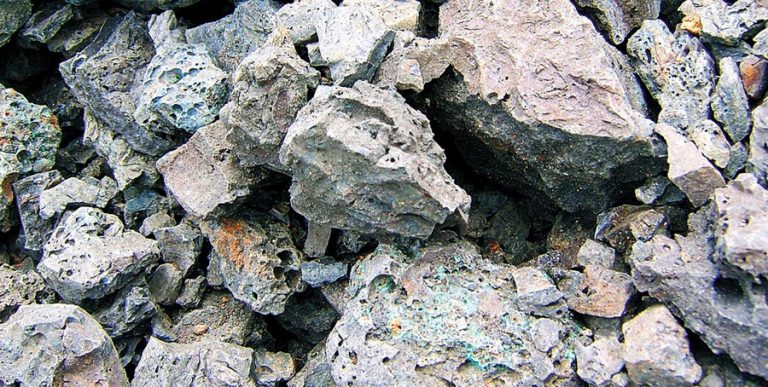
Cabinet has agreed to a policy change where all chrome ore will now be traded through the Minerals Marketing Corporation of Zimbabwe (MMCZ).

This was announced by the Permanent secretary of the Ministry of Information, Publicity and Broadcasting Services Mr Nick Mangwana.

https://twitter.com/nickmangwana/status/1600158723183296513

This is a developing story…