

Home Blog Page 307

Blackouts cripple RioZim operations

0

RioZim Limited (RioZim) says power supply challenges remain a key risk to the sustainability of its operations.

Despite the company putting in place diesel generators to lessen production stoppages, in its trading update for the third quarter (Q3) 2022, the group said it remained reliant on the power utility Zesa for consistent power supply to run optimally.

“Power supply challenges worsened during the quarter due to acute load shedding as the country battled with erratic local power generation coupled with inadequate supplementary power imports. Production was, therefore, significantly hampered during the quarter due to power supply challenges,” the group said.

“Power outages are taking up to 30% of the available production time, hence adversely affecting production in a very material way. Engagements with the power utility are ongoing on the rehabilitation of the unreliable power infrastructure mainly at Renco Mine.”

The group added that its subsidiary, Dalny Mine was placed under full care and maintenance due to inadequate foreign currency as it requires a huge capital investment to resuscitate underground operations.

Because of power supply challenges, inadequate foreign currency and lack of production at Dalny Mine, its gold production fell 6% compared to the same period last year.

 “Power and access to foreign currency earnings are critical to the needs of the company. Both of these continue to be extremely scarce. The company has had to invest heavily in diesel generators which required foreign currency and power generated by diesel largely costs more than normal power,” it said.

During the period, Cam and Motor Mine focused on stabilising and optimising production at its recently commissioned Biological Oxidation (BIOX) plant post commissioning in April 2022.

“Production increased at a steady rate throughout the period and closed the quarter with an 83% growth from the prior year comparative period. The mine operated its BIOX plant throughout the quarter and despite encountering some normal teething challenges, production steadily increased towards the optimal level. However, production at Cam and Motor was adversely affected by power outages,” the miner said.

“Dalny Mine was placed under care and maintenance during the period due to lack of open pit ore sources with consistent grades as the current pits are showing low payability. In order to sustain care and maintenance costs, the mine embarked on small-scale mining activities as the available open pit resources are uneconomic to mine using traditional large-scale mining methods.”

As for Renco Mine, production for the quarter declined by 15% compared to Q3 2021 mainly attributed to increased power supply challenges.

RioZim invested in additional generators to increase coverage of backup power in an effort to minimise production disruptions.

The Empress Nickel Refinery (ENR) remained under care and maintenance throughout the quarter.

Associate RZM Murowa (Private) Limited recorded a 24% growth in production compared to Q3 2021 at the back of the newly-commissioned high-volume 500tph plant which became operational at the beginning of the quarter.

The associate continued to process pre-mined low-grade ores from its extensive stockpiles albeit at increased volumes from the new plant.

Going forward, the group said it was focused on ramping up production to optimal levels for its two key projects; the BIOX plant project at Cam and Motor and the new processing plant at RZM Murowa (Private) Limited.

RioZim said it was engaging authorities in various capacities to raise foreign currency retention thresholds on export proceeds from the current 60% as this has proven to be inadequate considering the group’s requirements.

“Notwithstanding the measures implemented by the authorities to stabilise exchange rates, the pricing of local inputs remained substantially high due to speculative tendencies. Local inputs continued to be pegged at nefarious prices in local currency which left the company heavily reliant on the importation of raw materials that require foreign currency. With the company only retaining 60% of its export proceeds in USD, the company continued to be short of foreign currency to meet all its operational and capital expenditure requirements.” the group said.

Source: Newsday
BREAKING: Invictus Energy Chairman steps down

0

Australia Stock Exchange listed oil and gas exploration junior Invictus Energy Limited Chairman Dr Stuart Lake has stepped down from the company via a speech delivered at the company’s Annual General Meeting (AGM).

Sophia Takuva

The Invictus chairman recommended the company appoint a leader that is going to take it to the next level because it is nearing oil and gas discovery.

The following is Dr Lake’s speech,

“It has been my sincere honour to serve as a Non-Executive Director and the Chairman of Invictus Energy, and I am grateful to Scott Macmillan, our CEO, Mukoma Joe Mutizwa, the Deputy Chairman for his continued in-country support, Gabriel Chiappini Non-Executive Director and Company Secretary and prior Board members for this opportunity.

‘Due to personal circumstances, I am unable to dedicate the necessary time and focus required for the increasingly demanding role and I will be stepping down from the Board effective Monday, 28 November 2022. With the presence of hydrocarbons in our first Exploration well, this is an opportune time for the Company to bring in a new Chairman with a complementary skill set to lead the commercialisation efforts as the Company transitions from an explorer.

‘I have been fortunate to work collaboratively and strategically with my fellow board members on many positive and meaningful accomplishments during my tenure, including the signing of the PEDPA, finalising the PPSA, acquiring new seismic, receiving four farm-in offers, extending the licence area with the Sovereign Wealth Fund, conducting extensive pre-drill subsurface work to de-risk the portfolio and of course, drilling the first exploration well in Zimbabwe.

‘The well is hopefully the first step towards energy independence for Zimbabwe and the ability for Zimbabwe to supply energy to adjacent countries. The Government of Zimbabwe, our local partner One Gas Resources led by Paul Chimbodza and the local community support have been pivotal to this shared success. I thank those stakeholders and our shareholders for their continued support.

‘ I have full confidence in the leadership of the Company to manage, develop and optimise the opportunities going forward and wish our Company every success on its future pathway. I am a significant shareholder of the Company and intend on being a long-term shareholder and supporting the Company as it grows.

‘ While I am regrettably stepping down due to personal reasons, should my circumstances change, I would have no hesitation in re-joining the board of Invictus if there is an opportunity for me to do so.”

The importance of including CSR in the Mines bill

0

The inclusion of Corporate Social Responsibility (CSR) in the Mines and Minerals Amendment bill is of utmost importance as this will ensure that communities fully benefit from the extraction of resources found in their areas.

Currently, in Zimbabwe, there is no particular law that governs CSR, this means that majority of companies that are engaging in CSR initiatives are doing it out of their own free will.

The failure of the government to have a law that mandates miners to practice CSR has seen most mining communities living in abject poverty while mining firms would be reaping huge profits and at the same time destroying the future of the environment.

Chinese-owned mining operations in Zimbabwe and the Artisanal and Small Scale Miners (ASM) have been accused of only extracting resources without giving back to the communities in which they would be mining.

Globally, CSR within the mining sector has evolved to become a central part of mine-community relations. Mining companies now accept that the communities affected by their operations need to have basic services like water, health care, electricity and sanitation. Developing a mine presents an opportunity to improve conditions within these communities and unless the community benefits, the mine risks becoming an enclave.

What is CSR?

CSR is the continuing commitment by businesses to behave ethically and contribute to economic development while improving the quality of life of the workforce and their families as well as the community and society at large.

According to ISO 26000, social responsibility is not merely a “neutralizing” action applied at the end of production/distribution to fix what has been generated or displaced. Rather, it is a proactive mindset that should be incorporated across all levels of planning, execution, and stakeholder interaction.

In ISO 26000, social responsibility is described as a multi-faceted approach that, like quality, should be integrated into all aspects of how a company conducts its business.

Reasons for undertaking CSR

Reasons for undertaking CSR in communities are many ranging from moral and ethical to mere responsibility. Mining companies cause social problems such as environmental degradation, and pollution among others hence have a responsibility to solve those they have caused to prevent further social problems from arising. Hence corporations cannot escape responsibility for those impacts, whether they are positive, negative or neutral. Corporations rely on the contribution of a much wider set of constituencies or stakeholders in society (such as consumers, suppliers, and local communities), rather than just stakeholders as well as those of shareholders.

Why Should CSR be included in the Mines bill?

According to the Chairperson of the Parliamentary Portfolio Committee on Mines and Mining Development Hon Edmond Mkaratigwa, the Mines and Minerals Amendment bill will include ideas that are going to force mining companies to undertake CSR.

“There are a number of ideas but the loud and clear message is that CSR must be made part of our enforceable laws. Ideas are that whatever promises made before project implementation should be followed up and come to fruition. Also, the road network that they use should not be left worse off after extraction. There are many issues and these include contributing to local Trusts and facilitating such to ensure community and investor harmony. It should be further noted that these issues we appear to be forcing on investors may in the near future become a norm as competition shall rise and when such issues we are always raising may become part of the natural selection criteria of investors, as competition rises. Zimbabwe is not static, it is reasserting itself and it is important that investors heed to this call. Key advocacy points we have raised are transforming from mere Corporate Social Responsibility to Corporate Social Investment. Something that leaves sustainable benefits than something that legitimizes the resource curse outcomes common in many other developing countries. Ours is a leap forward and cascading benefits through possible local market enhancement so that we broaden our economy from over dependence on staples,” Mkaratigwa said.

Conclusion

Although mining companies like Zimplats, Mimosa, Unki, Caledonia, and Kuvimba Mining House among others have been leading in CSR, there is a general concern that a law governing CSR should be enacted to prevent mines from extracting without any responsibility.

Investment in Lithium industry pleasing – President Mnangagwa

0

President Emmerson Dambudzo Mnangagwa in his STATE OF THE NATION ADDRESS (SONA) at the opening of the fifth session of the ninth Parliament of Zimbabwe today said investment in the lithium mining sector was encouraging.

Rudairo Mapuranga

Speaking at the new parliament building in Mt Hampden Mnangagwa said there is notable growth in the gold, coal, chrome, Platinum Group Metal (PGM) and related minerals.

“In mining, output growth is evident in gold, coal, chrome, PGMs and related minerals. The commissioning of the Cam and Motor Mine Biox Plant, Radnor Mine and expansion of Blanket Mine, among others, coupled with contributions from artisanal miners, have resulted in increased gold production.

“Investments in the lithium sector are pleasing and encompass extraction through to value addition,” President Mnangagwa said.

Mnangagwa announced that the government was dealing with illicit financial flows brought about by illegal mining activities including side marketing of minerals. He said the government was strategizing to ensure that miners mine formally in an environment-friendly manner.

“Government is decisively dealing with illegal mining and smuggling of precious minerals. All players in the sector are once again urged to operate legally and in an environmentally sustainable manner,” he said.

Dr Mnangagwa also said that economic growth is outpacing the power supply in the country but pledged that the government was working on increased power generation.

“The economy is growing faster than power supply. The Hwange Unit 7 is expected to be commissioned by year-end. A further 300 MW from Unit 8 is expected to come on-stream by the second quarter of 2023.

“Efforts are ongoing to expand the country’s energy mix, with a focus on renewable energy,” Mnangagwa said.

Understanding The New Mining Royalties Regulation In Zimbabwe

0

Miners in Zimbabwe are obligated to pay royalties to the State from the minerals they would have extracted.

by Fungai Chimwamurombe and Nontokhozo Hope Moyo

Royalty is a charge that the government levies on the volume of minerals produced at a mine or the income or profit made from the sale of those minerals. These royalties are remitted to the Revenue Authority adding on to the state reserve. All issues regarding minerals in Zimbabwe are governed by the Mines and Minerals Act [Chapter 21:05] together with other ancillary legislation like the Reserve Bank of Zimbabwe Act [Chapter 22:15] together with the Finance Act.

Through Statutory Instrument 189 of 2022, the government of Zimbabwe has promulgated new regulations to the effect that mineral royalties are to be paid partly in kind and partly in monetary form. The mineral royalties are collected from minerals like gold, diamonds, platinum group metals, lithium and all other minerals deemed to be components of the reserves maintained by the Reserve Bank of Zimbabwe. These regulations have also caused timeous amendments to the Finance Act and the Reserve Bank of Zimbabwe Act so as to ensure the cooperation in application of legislation.

Royalties remitted to the Zimbabwe Revenue Authority in respect of gold and those minerals specified shall be paid on the basis of 50% in kind and 50% in monetary form. With regards the “in kind component”, miners have to submit actual minerals they would have extracted continuing 50% of the Royalty pegged on them. The 50% monetary component would be paid up as follows; 40% in the Zimbabwean dollar (ZWL) currency and 10% in foreign currency. Prior to the promulgation of these regulations, royalties were paid only in monetary form.

According to section 251 of the Mines and Minerals Act, miners are obliged to submit their royalty not later than the tenth day of each month. Any person who fails to pay their mining royalty to the Zimbabwe Revenue Authority shall be guilty of an offence and liable to payment of a fine and or imprisonment for a period not exceeding six months.

Many actors in the mining sector are encouraged not to be taken aback as the new regulations do not impose any increase in the rate of royalties further it comes as a benefit for the nation at large as the state revenue is increased.

Source: Mandaq


The content of this article is intended to provide a general guide to the subject matter. Specialist advice should be sought about your specific circumstances.

MMCZ appoints 8 coloured gemstones subagents

0

The Minerals Marketing Corporation of Zimbabwe (MMCZ) has appointed five entities and three individuals to be subagents following Statutory Instrument (SI) 256 of 2019 which allows subagents to buy semi-precious stones (coloured gemstones) from small-scale miners and sell the stones through the entity.

Anerudo Mapuranga

The three individuals are renowned Mineral Economic Expert Lyman Mlambo, Innocent Majoni and Givemore Karichi have been licensed to buy gemstones while Boldtouch Trading, Rawbright Mining Consultancy (PVT LTD), Suzan General Trading, Merit Diamond Cutting and Polishing and Passpoint publishers are the companies given the go-ahead to trade in gemstones in the country.

The MMCZ said the registration of subagents to become semi-precious stone traders in the country is still in progress, therefore, is calling for individuals and companies interested to apply.

“MMCZ wishes to inform Zimbabwean citizens (individuals and companies) that invitations to submit an expression of interest to be considered and licenced as MMCZ subagents are still open. The purchase of coloured gemstones and selling same through the Corporation will be done in accordance to the MMCZ Act, Chapter 21:04,” MMCZ said in a statement.

Through its General Manager Mr Tongai Muzenda, MMCZ is upbeat to tap into the global growing demand for coloured gemstones which are expected to improve every year by 4.4 per cent from 2020 to 2026 as it seeks to make a significant mark towards the achievement of the upper middle-income economy by 2030.

Muzenda said MMCZ was however going to first create a friendly environment for gemstone miners, traders and cutters by creating a local market centre.

“Our vision is to turn around the gemstones sector into a US$1 billion industry by 2030. This starts by creating reliable sources for gemstones. Development of convenient trading centres in gem-stone producing regions where miners link up with gemstone processors. In the end, we hope to see more cutting and polishing centres for gemstones, research hubs in tertiary institutions and technologies in cutting and polishing of coloured,” Muzenda said.

Official gold buying prices Wednesday 23 October 2022

0

Fidelity Gold Refinery (FGR) official gold buying prices Wednesday 23 October 2022.

SG 90% AND ABOVE US$53.23/g
SG ABOVE 85% BUT BELOW 90% US$52.39/g
SG ABOVE 80% BUT BELOW 85% US$51.83/g
SG ABOVE 75% BUT BELOW 80% US$51.27/g
SAMPLE BELOW 10g BUT ABOVE 5g US$50.43/g
FIRE ASSAY CASH US$53.23/g

NB: Fire Assay cash price is for gold above 100gs and no sample is deducted.
For the Fire Assay Transfer price, a sample of not more than 10g is deducted
A 2% royalty is charged on all deposits (Small-scale Miners)
A 5% royalty is charged to Primary Producers

Cash available. Fidelity Gold Refinery prices will be changing daily in relation to world market prices.

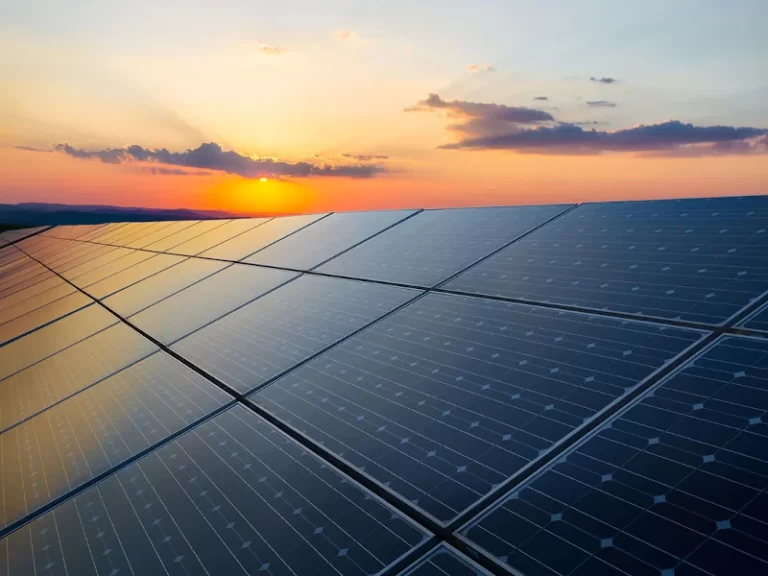
Mimosa to construct a 38MW solar power plant

0

Plans to construct a 38-megawatt Mimosa solar power plant to improve the provision of alternative energy for the company’s operations are underway.

The project will be carried out by Mimosa Mining Company (MMC), a producer of Platinum Group Metals (PGMs).

PPC Zimbabwe will establish a 10MW solar power plant at its Bulawayo plant, with 5MW set aside for internal use as well as the remainder fed into the national grid.

The country’s shift to investing in clean energy sources in line with commitments to adapt to and mitigate global climate change is backed by the alternative energy project.

Investment in alternative energy projects by such huge companies is expected to go a long way in enabling the company to address power outages. Additionally, the investment will help reduce expensive costs associated with alternative power. It will also improve operational efficiencies at a time when the country and also the region are experiencing subdued energy generation.

Mr. Steve Ndiyamba, general manager of MMC, said that their company must concentrate on renewable energy sources. He also claimed that they should also contribute to the reduction of carbon emissions.

He said that feasibility studies are currently being carried out on the Mimosa solar power plant. One of the results is expected to be the project cost.

Why the company is establishing the Mimosa solar power plant

According to Mr. Ndiyamba, to improve and supply power to the company’s operations, they have put plans in place to construct the power plant.

Furthermore, the company is committing millions of dollars to a plant optimization project to boost production. The country’s aim to achieve a US$12 billion mining industry by 2023 is on track.

The mine is expanding its mining activities and constructing a new tailings dam. It is also enhancing the efficiency of its processing.

A new tailings storage facility is being constructed for US$65 million.

A further US$38 million is being invested by the company in plant optimization. This will improve processing effectiveness. Additionally, it will also increase the amount of mineral ore the mine can recover.

The plant optimization project will be complete by the end of the year. It will boost output by 6% from its current capacity of 2,8 million metric tons of ore annually.

The mine is jointly owned by South African companies Sibanye-Stillwater and Impala Platinum. It is situated near Zvishavane town in the southern part of the Zimbabwean Great Dyke.

CR

Official gold buying prices Tuesday 22 October 2022

0

Fidelity Gold Refinery (FGR) official gold buying prices Tuesday 22 October 2022.

SG 90% AND ABOVE US$53.15/g
SG ABOVE 85% BUT BELOW 90% US$52.31/g
SG ABOVE 80% BUT BELOW 85% US$51.75/g
SG ABOVE 75% BUT BELOW 80% US$51.19/g
SAMPLE BELOW 10g BUT ABOVE 5g US$50.35/g
FIRE ASSAY CASH US$53.15/g

NB: Fire Assay cash price is for gold above 100gs and no sample is deducted.
For the Fire Assay Transfer price, a sample of not more than 10g is deducted
A 2% royalty is charged on all deposits (Small-scale Miners)
A 5% royalty is charged to Primary Producers

Cash available. Fidelity Gold Refinery prices will be changing daily in relation to world market prices.

Government to establish a gold centre in Mazowe

0

In an endeavour to curb illicit financial flows through the selling of gold through informal markets, the government has announced it will establish a gold service centre in Mazowe in December.

Rudairo Mapuranga

Mazowe is known for the heavy presence of artisanal and small-scale miners, the majority of whom have no capacity to process their minerals.

This has created a situation where the miners process their ore through third parties most of whom are believed to be smuggling the gold out of the country.

Zimbabwe’s mining sector, especially the extraction of gold, has lately been characterised by illicit leakages of gold and it is believed the establishment of gold centres could help restrict obscure movement of the yellow metal. The gold sector carries a huge potential for the Zimbabwean economy with small-scale miners producing (at this moment in 2022) over 67 per cent of gold receipts which has necessitated consistent efforts to support their production.

Speaking at the launch of Zimbabwe Miners for Economic Development (Miners for ED) Mashonaland Central Chapter at Jumbo Mine Stadium in Mazowe, the Minister of Mines and Mining Development Hon Winston Chitando said the government was going to establish a gold service centre to assist miners in processing their ores.

“In December to support the President’s vision for the country to become an upper middle-income economy by 2030, we are going to establish a gold service centre here in Mazowe to assist our miners to process their ores,” Minister Chitando said.

Speaking at the same event Zimbabwe Miners Federation (ZMF) Mashonaland Central Province Chairperson Christine Munyoro commended the government for the gesture saying miners in Mazowe have been losing out while processing ores at some private mills.

“Our miners were losing a lot of money while processing at private mills, the move by the government is welcomed and it will be of benefit to us and the government because all the gold will be sold through formal channels,” Munyoro said.

Gold service centres are aimed at giving the miners access to equipment and transportation services. The Cabinet has approved proposals for the establishment of gold centres across the country. Areas targeted for the facilities include Makaha, Odzi, Mount Darwin, Shamva, Mazowe and Silobela.

The country’s gold buyer and exporter, Fidelity Gold Refinery (FGR) officials will also be stationed at the centres directly or through approved buying agencies to buy all the gold produced.

Traditionally, Zimbabwe issues 2 500 mining titles per annum but due to increased appetite to invest in mining, applications have soared to about 15 000 per annum, a 500 per cent increase. Zimbabwe is home to the world’s third-biggest reserves of gold, platinum, diamond, chrome, iron ore, coal, lithium, and other minerals and a revived minerals sector would go a long way in fuelling an economic turnaround.