Home Blog Page 308

Official gold buying prices Monday 21 October 2022

0

Fidelity Gold Refinery (FGR) official gold buying prices Monday 21 October 2022.

SG 90% AND ABOVE US$53.49/g
SG ABOVE 85% BUT BELOW 90% US$52.65/g
SG ABOVE 80% BUT BELOW 85% US$52.09/g
SG ABOVE 75% BUT BELOW 80% US$51.52/g
SAMPLE BELOW 10g BUT ABOVE 5g US$50.68/g
FIRE ASSAY CASH US$53.49/g

NB: Fire Assay cash price is for gold above 100gs and no sample is deducted.
For Fire Assay Transfer price, a sample of not more than 10g is deducted
A 2% royalty is charged on all deposits (Small-scale Miners)
A 5% royalty is charged on Primary Producers

Cash available. Fidelity Gold Refinery prices will be changing daily in relation to world market prices.

Zim to ban exports of raw minerals and concentrates 

0

Zimbabwe will in days gazette a law that will ban exports of raw minerals and concentrates to enable the country to fully benefit from its mineral wealth without having to export more jobs.

Rudairo Mapuranga

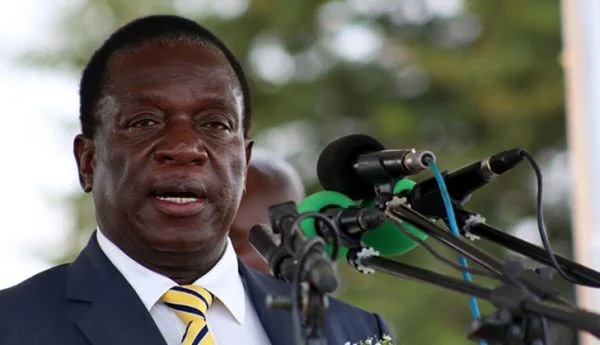
Speaking at the official commissioning of the US$67 million new Central Shaft Expansion Project at Blanket Mine in Gwanda on Thursday President Mnangagwa said the move to ban exports of raw lithium comes at a time when Chinese Nationals were getting the commodity at a song in Mberengwa depriving the people of fair value.

He said if the country was to achieve its vision of becoming an upper middle-income economy by 2030, greater effort was supposed to be made to ensure that the export of raw minerals and concentrates is been banned.

“In line with Vision 2030, greater efforts should be made towards value addition and beneficiation of minerals. We cannot as a country continue to export primary products including concentrates and ores. Recently in Mberengwa, we discovered that there was a mountain with nothing but lithium and our people were collecting this lithium ore and being paid something like US$100 when that same quantity will fetch more than a thousand to US$2000 and then exporting it unprocessed, so Zimbabwe loses. Within a few days I’m gazetting a law prohibiting what has been happening in Mberengwa,” Mnangagwa said.

Last year the Cabinet approved a ban on all exports of unprocessed chrome ore in order to protect the ferrochrome industry, which it says is integral in the country’s attainment of an envisioned US$12 billion industry by 2023.

A cumulative twenty-two chrome smelters are now operating and are shared among nine foreign and local companies.

Mine Managers urged to invest in research

0

Permanent Secretary in the Ministry of Mines and Mining Development Mr Pfungwa Kunaka has encouraged Mine Managers to take advantage of industrial hubs being spearheaded by the government to research on technologies that can propel the mining industry in Zimbabwe to achieve world-class status.

Rudairo Mapuranga

Speaking at the Association of Mine Managers of Zimbabwe‘s Annual General Meeting held at Elephant Hill Hotel in Victoria Falls which ran under the theme, Transition towards the present day 4th industrial revolution Kunaka said experts in the mining industry need to invest in research and development as the country seeks to achieve an upper middle-income economy by 2030.

“As mining experts, we need to invest in research and development. Zimbabwe has a framework that allows for research at various levels. It could be in universities where the sector can make use of industrial hubs that are being developed at these institutions,” Kunaka said.

He said as the Mine Managers were seeking to adopt the 4th industrial revolution, research was of importance as this will help in promoting and recognising safety and efficiency.

“Collectively, government and industry need quickly to formulate policies and frameworks that are responsive to the dictates of the 4IR. The policy matrix that is required includes mining fiscal regime, R&D, labour laws, investment framework etc. Under 4IR we have to adopt the technologies that promote and recognize safety and efficiency,” he said.

The Fourth Industrial Revolution, 4IR, or Industry 4.0, conceptualizes rapid change to technology, industries, and societal patterns and processes in the 21st century due to increasing interconnectivity and smart automation.

The digitisation of the mining sector and the broader economy should be seen as an opportunity to re-skill and re-direct workers into higher-value technology-driven jobs such as data mining and data analytics.

A greater emphasis on and investment in research and development funded by the mining industry at universities is seen as an important part of the mining sector’s future success. The creation of new academic and research chairs would lead to knowledge development and greater applied research.

The AMMZ celebrates 50 years this year. The technical arm of the mining industry as the AMMZ is sometimes referred to yesterday re-appointed Bulawayo Mining Company’s Elton Gwatidzo to lead the organisation for another year deputised by Unki Mine’s Abel Makura.

ZMF brings formalization to Mazowe gold fields

0

The Zimbabwe Miners Federation (ZMF) has taken a move to formalize, professionalize and regularize the work by illegal miners at the Mazowe gold fields by engaging Metallon Corporation which owns the shut-down mine to control the work at the mining claims.

Rudairo Mapuranga

Through its recently formed Zimbabwe Miners for Economic Development (Miners for ED) ZMF engaged Metallon Corporation so that those who have been mining illegally at the mining site are managed and also that people from Mazowe benefit from the resource that is mined in their area.

Speaking at the launch of Miners for ED Mashonaland Central Chapter at Mazowe gold fields, ZMF President Ms Henrietta Rushwaya said her organization was working to formalize the work of artisanal miners so that they can be a formal sector.

“We are trying to remove our people from illegal activities. We are trying to remove our people from being called nuisances by big companies who are owners of these areas where our people have been illegally mining. We are also trying to make government generate revenue from the day-to-day workings that will be taking place,” Rushwaya said.

Speaking at the same event, Mazowe Gold Fields (Jumbo Mine) Mine Manager Mr Allan Musikavanhu said his mine was supporting ZMF for the country to achieve a formalization process. He said they wanted to lead by example in assisting the growth and development of the artisanal mining sector.

“Over the years, artisanal miners have been called derogatory names like makorokoza, yes they have been invading most big operations and mining illegally but today marks a different chapter as the mine has initiated and designed programs to empower them and achieve ZMF initiative in formalizing the sector.

“In support of ZMF we have started a formalization process so that the artisanal miners will mine formally observing all set regulations and standards,” Musikavanhu said.

For the country to achieve the President’s vision to see the economy earning an upper middle-income status by 2030 and the mining industry fetching US$12 billion annually, formalization has been one of the strategies for the country.

Speaking at the event Minister of Mines and Mining Development Hon Winston Chitando commended the ZMF for having the vision to see that closed mines like Mazowe can for a time implement formalization of mining to support the formal selling of minerals.

“The issue of formalization is supported by the government because it encourages miners to sell their minerals through formal channels. It also creates orderly mining because the miners will be managed,” Chitando said.

ZMF Chairperson Tichaona Mharadze said the thrust by his organization was to see all illegal activities happening at disused or closed operations being done legally and formally to avoid environmental degradation and accidents.

“As ZMF we are engaging big mines to give our youth tributes for them to formalize operations so that we can control how they are digging to minimize environmental degradation,” Mharadze said.

AMMZ elects new office bearers for 2023

0

The Association of Mine Managers of Zimbabwe (AMMZ) has elected its new office bearers for the 2023 year.

Making the announcement at a colourful ceremony held on Friday the 18th of November 2022 at Elephant Hills Resort in Victoria Falls past President Mr Coburn Katanda said the new councillors are

  • Zimbabwe Platinum mines – Tawanda Mutiswa, Cloete Munjoma, Harmony Muzhizhizhi
  • Unki Mine – Omberai Mandingaisa
  • Bindura Nickel Corporation’s – Eddington Vere
  • Acol Chemicals – Ray Chiridza
  • Intrachem – Walter Madzimure
  • Pickstone – Alfred Madowe

2022’s President Mr Elton Gwatidzo from Bulawayo Mining Company (BMC) was re-elected President and will be deputized by Mining Systems and Innovation expert Abel Makura.

Makura replaces Innocent Guvakuva.

The AMMZ has been in existence for the past 50 years and was formed to advance the science and practice of Mining and supporting disciplines such as Survey, Geology, and Metallurgy. It is a vehicle for information exchange and dissemination of good practices and seeks to promote the study and growth of Mining and allied disciplines.

The AMMZ is an affiliate of the Chamber of Mines of Zimbabwe.

BREAKING: Abel Makura appointed AMMZ vice President

0

Abel Makura has been appointed Association of Mine Managers of Zimbabwe (AMMZ) vice President.

The Mining Systems and Innovation expert who is a section Manager at Anglo American-owned Unki Platinum mine was voted vice President at the ongoing AMMZ Annual general meeting and Conference currently underway at Elephant Hills resort in Victoria Falls.

Famed for developing innovative solutions, Makura developed a mining system for the achievement of a record 4000 square meters in a month at Anglo-American’s Unki Mine. The system is based on creating synergies between the key value drivers in the mining production cycle (drilling, support and lashing) and being able to sweat the asset by utilizing every bit of available time in the 24hr day.

Makura replaces Innocent Guvakuva. He deputises Bulawayo Mining Company’s Elton Gwatidzo who has been re-appointed President until the end of the 2023 year.

More to follow…

Mnangagwa commissions US$67 million central shaft

0

Today President Emmerson Mnangagwa commissioned the central mine shaft at Blanket Mine which is part of Caledonia Mining Corporation‘s US$150 million investment into the Gwanda-based gold mine.

US$67million went into the construction of the central shaft, while US$14 million went into the construction of the mine’s 12-megawatt solar plant which has since been connected to the national grid.

Commissioning the mining shaft, President Mnangagwa said besides the positive impact on the province’s Gross Domestic Product (GDP), the newly constructed plant will create more jobs from the current 500 to 1600 workers, while revenue is set to shoot up to US$148 million dollars from US$123 million.

“I challenge other mining houses to increase investment in their operations for the realisation of maximum value from our mineral resource base for the good of the economy and our people in general. As the government, we have made a bold decision to ensure that every citizen of Zimbabwe benefits from our natural resource endowment, now and into the future,” Mnangagwa said.

“Let me take this opportunity to confirm and advise all mining houses that my government does not accept royalties in US$ anymore, what we want is a fraction of that, so that we build our mineral reserves and benchmark our local currency against our stock of minerals as we also safeguard the interest of our future generations using our God-given resources. This is a game changer in the development of our country and I take pride in this development,” the head of state added.

President Mnangagwa also spoke about the need for the country to invest more in innovation as the country focuses on accelerated industrialisation.

“In line with Vision 2030 and the National Development Strategy, greater effort should be put towards the value addition and beneficiation of our mineral resources and other primary products. We cannot, as a country continue to be exporting primary products including concentrates. Our people must fully enjoy the benefits of moving up the value chain such as increased profitability and terms of trade as well as employment and empowerment opportunities,” noted the President.

With the mining industry being the country’s primary foreign currency earner, the increase in production by the Blanket Mine not only brings hope to the country but also feeds into the target of a US$12 billion mining economy by the end of 2023.

The 1200-metre shaft which gobbled in excess of US$67 million will see the mining giant’s gold output jumping from less than a quarter of a tonne per annum to 2.4 tonnes per annum.

In his statement, Caledonia Chief Executive Officer Mr Mark Learmonth commended efforts to make Zimbabwe an attractive mining jurisdiction.

“The increase in gold output will benefit all stakeholders in Blanket mine through increasing employment, higher profitability and increased contributions to the fiscus. Your Excellency, I would like to commend your government for continued efforts to make Zimbabwe a more attractive mining jurisdiction. This work is not in vain as evidenced by expanding mining output as well as Zimbabwe’s shortlisting as one of the most improved mining jurisdictions in the world,” said Learmonth said.

Industry captains who attended the commissioning of the shaft commended the Mnangagwa-led government for the path it has taken in transforming the mining sector.

Chamber of Mines Chief Executive Officer Mr Issac Kwesu said the development will see growth in mineral export.

“When you look at this project it means we expect growth in the mineral export. We expect an increase of 17% in gold only, coming from  the construction of this central shaft and this will take us to another level and the industry will never be the same again.”

Mines and Mining Development Minister Hon Winston Chitando said the shaft will see Blanket increase production.

“I am pleased to tell you that, the central shaft which is one of the deepest in the country will enable Blanket mine to increase production, which in turn is a step towards the attainment of the US$12 billion mining industry by 2023. The economies of scale arising from the central shaft will contribute to managing costs on this mine,” Chitando said.

About Caledonia Mining

Caledonia Mining is a profitable cash-generative gold producer with a strong growth profile, Caledonia’s primary asset is the Blanket Mine in Zimbabwe. By 2022 the Company plans to increase its annual production to 80,000 ounces.

The Company pays a quarterly dividend of 14 cents a share. The dividend has been increased 7 times & is a 104% increase from 6.875 cents announced in October 2019.

Caledonia is committed to evaluating investment opportunities in Zimbabwe; in November 2021 it entered into an option agreement to acquire the mining claims over  Maligreen and in July 2022 announced that it had signed an agreement to purchase Bilboes Gold Limited.

Kamativi in massive exploration drive

0

Kamativi Mining Company (KMC) is rapidly spearheading its exploration drive to transform the former tin mine into one of the biggest spodumene and Petalite ore body in Zimbabwe.

Rudairo Mapuranga

Recently Mining Zimbabwe visited the mining site to assess the progress of the potentially biggest lithium-producing project in the country and witnessed 8 Diamond drill rigs drilling at different locations to delineate the potential deposit.

Drilling

Lithium samples

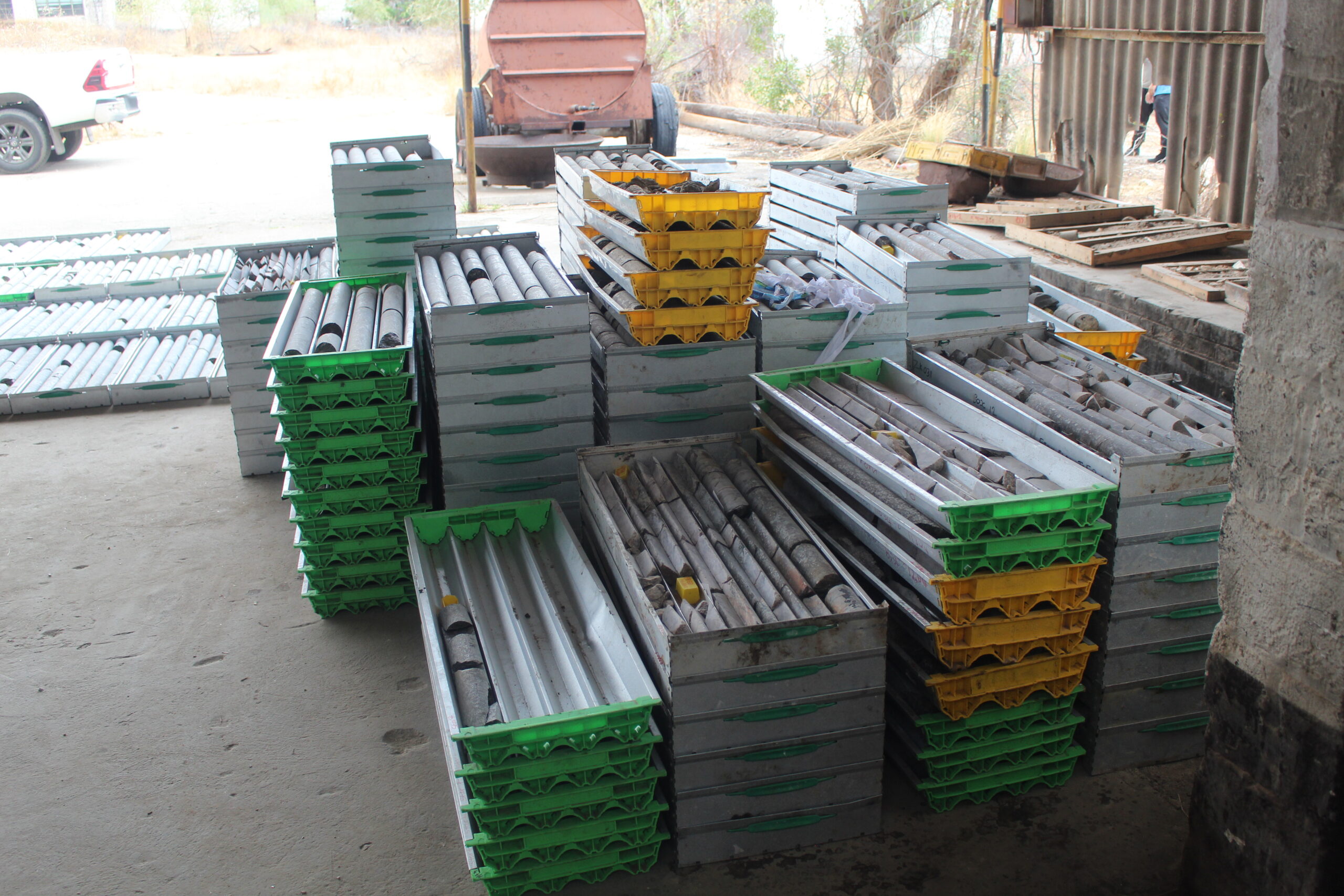
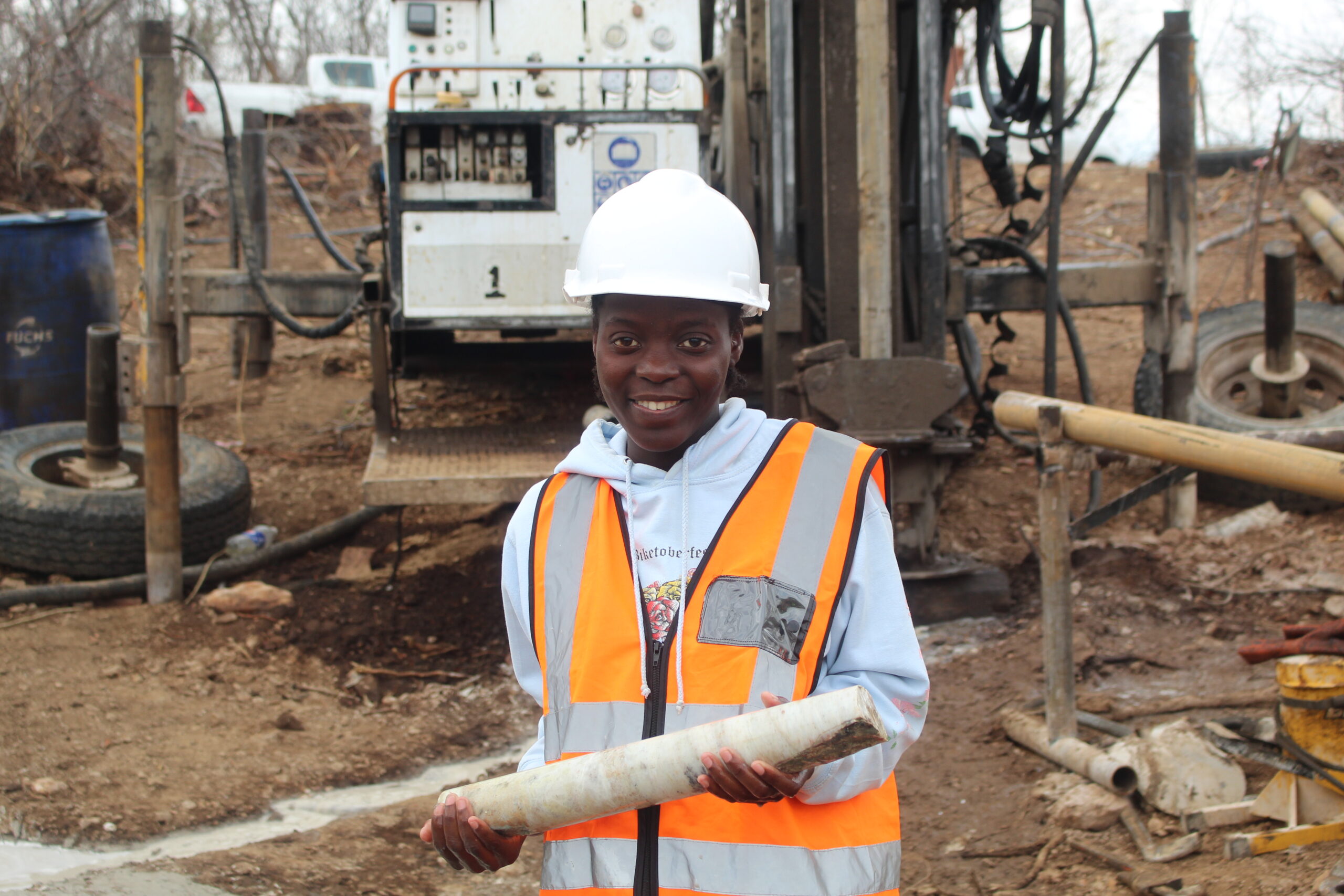
The exploration drilling at Kamativi Lithium Project is core drilling where samples of up to 300 m are being packaged for transportation to be tested. According to the site geologist at the KMC Miss Rutendo Chiota from the Midlands State University (MSU), some of the results have been submitted to the world-renowned geological group (Joint Ore Reserves Committee) JORC and KMC is currently awaiting a preliminary report.

According to Miss Chiota, the pegmatite ore body according to current results is going down to 250m down or more while the belt seems to be stretching for kilometres beyond the mining lease.

Ms Rutendo Chiota

The Drilling process penetrates deep into the ground and brings up samples of whatever is found are collected. If there is any mineralization at given points far beneath the surface, drilling can give a definitive answer by identifying available minerals, their quantities and location.

Between September 2021 and March 2022, Phase-one drilling commenced with 38 holes being drilled to the depth of 2140m . Phase-one drilling focuses on open-cast areas with shallow holes for Open Cast Mining.

Between April 2022 – June 2022, Phase-two drilling commenced and KMC managed to drill 28 holes of 5000m. The drilling was for underground mining and Mineral Processing research is still underway.

Phase-two detailed drilling of 100 holes of around 15000m is being carried out with detailed exploration for underground mining and resource report and feasibility study to be expected after drilling is completed.

To date, 4900m have been drilled from late September 2022 using the 8 rigs on site. Exploration is going to be upscaled by an additional 4 rigs which are expected to be on-site by early November 2022 (bringing the total number of rigs on-site to more than 12 rigs) in mid-November. The work will lead to locating the first mining area, designing for mining and carrying out mining activities.

lithium hole

“It is important to point out that we are using the Core drilling method. The core is an intact sample of the underground geology, which can be examined thoroughly by the geologist to determine the exact nature of the rock and any mineralization. To quantify the mineralization, and to define the shape, size and metal content of the deposit, a step-by-step procedure in exploration activities is required. At every step of this procedure, the geologists examine the information at hand, to recommend continuing the exploration efforts or not.

The objective is to be fairly certain that the deposit is economically viable by providing detailed knowledge of geology for a clear financial picture. Ore is an economic concept, defined as a concentration of minerals, which can be economically exploited and turned into a saleable product,” Executive Deputy General Manager Mr Jack Ye said.

Core drilling is also used to define the size and the exact boundaries of mineralization. This is important for determining ore grades being handled and vital for calculating the mineral reserves that will keep the mine running in the future. A strategically placed underground core drilling operation may also intersect new ore bodies in the neighbourhood.

The type of lithium dominant at KMC

According to Chiota, preliminary sample results have shown encouraging results for the mine hosting high-grade lithium spodumene, petalite with the mine having the potential to become one of the biggest lithium producers in Africa.

Spodumene is an essential supply of lithium to be used in ceramics, cell phones and car batteries, medicine, Pyroceram and as a fluent substance.

With the rise and popularity of Electric Vehicles (EVs) spodumene has become the most important commodity in the world with nearly all battery producers looking for mines that can supply them uninterruptedly spodumene for the future of the transport sector.

With Zimbabwe aiming to achieve a US$12 billion mining industry with the lithium industry expected to produce an annual revenue of US$0.5 billion annual revenue, KMC will have the potential to become one of the country’s biggest revenue generators.

Fidelity Gold Refinery opens a gold-buying office in Makaha

0

Fidelity Gold Refinery (FGR) has opened a gold-buying office in Makaha, Mutoko.

Makaha is an area known for small-scale mining activity and for years it had no Fidelity Agent near the area or nearby Mutoko centre. Miners were expected to travel to Marondera the capital of Mashonaland East province 148km away to sell their gold. Logically it was highly unlikely a miner would go that far to sell only a gram of gold as most if all the proceeds from their gold will be used up just by transport costs.

In a statement, the country’s sole buyer delivered the pleasant news, promising those who deliver instant cash.

“For your convenience Mutoko (Makaha) miners, we have opened a buying office at the Makaha shopping centre (Shije Building). Deliver your gold and get instant cash,” the statement read.

Fidelity has vastly improved on cash payments since the takeover of the current General Manager Mr Peter Magaramombe.

The coming in of Magaramombe has seen improved deliveries of gold to the country’s sole buyer and exporter. Gold deliveries to Fidelity Gold Refinery in the eight months to August 2022 grew by nearly 41 per cent to 22,3 tonnes from 13,2 tonnes in the same period a year ago.

The establishment of new gold buying centres across the country will boost deliveries and continued instant payments from Fidelity will surely aid in the attainment of the us$12 billion mining industry by 2023.

Cossy Rules awarded Philanthropy doctorate

0

Businessman and miner Cosmas Dhaka popularly known in the mining circles as Cossy Rules has been awarded an honorary Doctorate of Humane Letters Degree for the advancement of humanity by the International Institute of Philanthropy.

Rudairo Mapuranga

The Kadoma-born businessman, community leader, arts promoter and one of the most successful miners who own Cossy Rules Holdings is known throughout the country for his philanthropy work.

During the Covid-19 pandemic-induced lockdown Dr Cosmas Dhaka together with the Kadoma Miners Association donated food and PPE to many groups of people in Kadoma to reduce lockdown made stress and deaths in the city of gold.

Dr Dhaka has also invested in education and has over the years paid school fees for less-privileged and brilliant children at Waverly Primary School in Kadoma and also donated stationery.

Cossy Rules Holdings was awarded Mines and Mining Industry Company of the year at the Zimbabwe Business Awards held in Harare on 28 October 2022.

Speaking to Mining Zimbabwe Cossy said he had a passion for empathy and regard for the less privileged and a desire to make a difference in other people’s lives

“It is my duty to bless others as I have been blessed. I also support the government’s 2030 vision as this will indirectly or directly reduce poverty in the country,” Dr Dhaka said.

Dr Dhaka is also currently furthering his studies with a local university.