

Home Blog Page 312

Tharisa to raise US$50 million for Karo Platinum project

0

Tharisa has announced the opening of a fixed-income note offer by Karo Mining Holdings, a subsidiary of Tharisa, to raise US$50 million to be listed on the Victoria Falls Stock Exchange (VFEX).

The proceeds from the Bond will be applied to part-fund the Karo Platinum Project.

The capital raise forms part of a broader capital strategy by Tharisa to develop the Karo Platinum Project in Zimbabwe on time and on budget. Tharisa is a 70% shareholder in the Issuer, a company incorporated in the Republic of Cyprus, which in turn indirectly owns 85% of the Karo Platinum Project, with the Government of Zimbabwe holding the remaining 15% of the Project, on a free carry basis.

The Project is scheduled to commence production with first ore milled in July 2024. Ground-breaking is expected to take place in December 2022. A local earthworks contractor has been appointed and is expected to start onsite activities in December 2022, marking the beginning of the Karo construction phase.

The proceeds from the Bond issue, net of costs, will be used to part fund the development of the Karo Platinum Project, which has a total capital cost for phase one of US$391 million and is set to be the second world-class asset in Tharisa’s portfolio.

The Bond is US dollar denominated and will be issued in minimum denominations of US$2 500 by way of a private placement. The Bond is not rated and will be guaranteed by Tharisa. The minimum amount to be raised from the Bond is US$25 million. Should applications for less than this amount be received the Bond issue will not proceed. The Issuer reserves the right to increase the total aggregate issue amount, subject to approval by its Board and the guarantor, by delivering notice thereof to Note Holders.

The VFEX has approved the listing of the Bond on the VFEX, a subsidiary of the Zimbabwe Stock Exchange and established in a Special Economic Zone. Participation in the Bond will be by way of private placement and is not restricted to Zimbabwean financial institutions or residents.

Arxo Finance plc, a wholly owned subsidiary of Tharisa, which was established to provide funding to Tharisa group companies, has committed to subscribe for US$10 million of the Notes.

Phoevos Pouroulis, CEO of Tharisa, commented:

“This is a historic moment for Tharisa and our tier-one Karo Platinum Project on the Great Dyke in Zimbabwe. From our discussions to date with potential investors, both in Zimbabwe and abroad, we have received extremely positive feedback for this robust investment opportunity, boasting highly attractive returns. We expect strong participation from Zimbabwean investors.

“This interest stems from Tharisa’s strong track record in developing projects on time and on budget, as well as the outstanding fundamentals of the Karo Platinum Project. Zimbabwe has indicated it is open for business and through our interactions with all levels of Government, it is clear there is strong commitment to support Tharisa as we develop the Karo Platinum Project into a fully producing PGM mine.

“We look forward to welcoming investors on this exciting journey into a new operating jurisdiction. Our investment commitment by guaranteeing the Bond and investing US$10 million in the Notes demonstrates Tharisa’s support for not only the project but the economics of the Bond, benefitting from the protections afforded to investors by the Special Economic Zone.”

Bernard Pryor, MD of Karo Mining Holdings, commented:

“Developing a tier-one project in this unique geological setting comes once in a lifetime. Funding for any mining project remains key and I am delighted that we have not only received support from Tharisa in the form of early equity, but that Tharisa has committed to anchor this proposed bond raise. I look forward to engaging with stakeholders in Zimbabwe and beyond to ensure this Bond raise is completed successfully.”

Source: MRA

Zimbabwe nominated for improved mining jurisdiction award

0

Zimbabwe has been nominated for the improved mining jurisdiction by the Mines and Money London Outstanding Achievement Awards which will take place from the 29th of November to the first of December 2022.

The awards have seen Zimbabwe nominated together with the United Kingdom, the Kingdom of Saudi Arabia, Ecuador and Quebec for the year 2022.

The nomination will see the country or region/province/state’s most improved mining jurisdiction of the last 12 months awarded by an Awards Panel.

Winners of the mining investment world’s most prestigious annual awards recognising the industry’s standout performers, inspiring leaders and rising stars will be announced at the Mines and Money Awards for Outstanding Achievement in December 2022.

The coming in of Winston Chitando as the Minister of Mines and Mining Development has seen the Mining sector grow significantly with the sector on the verge of achieving a record US$8 billion in annual revenue by year-end.

Zimbabwe has been praised by the likes of Implats, Caledonia, Premier African Minerals, and Alrosa, among others as a very suitable mining destination.

Africa’s exploration spend slumping

0

Tullow Oil and The Metals Company non-executive director Sheila Khama, during her keynote address at the 2022 Council for Geoscience Summit on Wednesday, commented on her unease with the phrase ‘Africa is very rich in minerals’.

She described it as a “dangerous statement” that perpetuated the idea that Africa did not have to compete with the rest of the world for mineral exploration investment.

“While Africa is rich in certain minerals, Africa is not rich in all minerals.” Moreover, other countries on other continents also have these minerals and have fewer drawbacks, in terms of political stability, legislative certainty, and ease of doing business.

However, she stressed that the more people repeated the phrase, “the more we give the sense that the investors coming onto our shores need us more than we need them.”

And yet, over the last 20 years, the African share of exploration expenditure has declined significantly from what it was. Further, Khama noted that the vast majority of this spend had instead been reallocated to countries and regions where the environment, from an investment policy perspective, was considered more conducive.

“If you look at the perception of Africa’s mineral endowment, and the level of the exploration budgets, African countries underperform, not relative to other countries, but to its potential.”

She noted that Africa should, at the least, be attracting the same level of exploration spend as it had in previous years. “We should be seeing a spike now that there is a greater demand for minerals for transition to clean energy. But, believe it or not, when looking at Africa’s capacity to attract investment, the trend is downward.”

Khama also cited a PWC report on exploration expenditure, commenting that even a country as well-endowed as the Democratic Republic of the Congo, had in the last two years seen a drop in expenditure, owing to a perception of risk caused by political instability.

She implored the African geoscientific community to advocate for policies that complement mineral endowment – ones that were not indifferent to market trends, but that helped create an environment that attracted finance and appetite to fund exploration, scientific research, and project development.

Mining Weekly

SA man swindles Zim gold miners of US$154 000

0

A South African man with three names, Peter Coetzee, Van Tinder Vikus, and Johannes Jacobus Cornelius Naude yesterday appeared at the Harare Magistrates Court facing charges of duping local gold dealers of US$154 000.

Naude (54) of Pretoria, who was represented by lawyer Lucky Mauwa, was arraigned before magistrate Taurai Manuwere.

It is alleged that in the first count Naude approached one of the complainants, Gift Kudakwashe Mineji who is a miner at Pisto Mine, Kwekwe claiming that he was an investor and swindled them of money.

He later approached another complainant, Simba Dumbura, a gold miner at S and J Mining Syndicate, Penhalonga, Mutare, and duped him of some money using the same modus operandi.

The complainants lost US$154 000 to Naude and his accomplices only identified as Tanaka and Ruth, who are still at large.

On October 19, detectives heard that Naude was in Harare and they lured him to Glen Lorne, Harare under the pretext that they wanted to carry out a gold-buying transaction.

He was then arrested, but his accomplices, Tanaka and Ruth fled. – (Newsday)

Invictus in potential hydrocarbon findings

0

Invictus Energy Limited (IEL) says it has found some potential hydrocarbons — the principal constituents of petroleum and natural gas — several hundred metres into drilling its Mukuyu-1 well.

Invictus has made significant progress at the Cabora Bassa project, located in northern Zimbabwe near the Mozambican border since it started drilling several weeks back.

It has two drilling sites, the Mukuyu-1 and Baobob-1 well but drilling is ongoing at the former.

In an update released yesterday, Invictus reported that it had reached the second phase of drilling several hundred metres and identified hydrocarbons at a width of 12 ¼”.

“Since the last update, the 12 ¼” hole section has been completed and section Total Depth (“TD”) was called at 2021 metres measured depth (“MD”) in order to set the 9 ” casing near the base of a substantial regional seal above the primary targets,” it said.

“Following the completion of the first suite of wireline logging, a zone of interest in the secondary objective in the 200 Horizon target coincident with observed seismic amplitude anomalies was interpreted to contain potential hydrocarbons based on significantly elevated resistivity (two orders of magnitude above baseline) across a 10-15m interval from approximately 785m MD and separation between shallow, medium and deep resistivity readings.”

Invictus said further study of this zone revealed tight reservoir characteristics and complex mineralogy; and that it was, therefore, decided not to run the formation pressure/sampling wireline tool in the absence of the suitable sampling probe and packers.

“The decision was made with careful consideration of several factors, including the ability to obtain valid pressure measurements and fluid samples in tight reservoir and significantly overbalanced hole conditions with the increased risk of tool sticking and potential loss due to the heavy mud weight used in this hole section,” Invictus said.

Newsday

Mining contracts should be signed after consultation

0

To create a sustainable Environment Social and Governance (ESG) WorkPlan in Zimbabwe, it is vital for the government to sign mining contracts after a full report on consultation has been delivered, Mutoko Ward 5 Councilor Kwanisai Dende has said.

Rudairo Mapuranga

Speaking at the WorkPlan 4 Workshop on Assessing the Environment Social and Governance (ESG) in the mining sector in Zimbabwe hosted by the Association of Women in Mining in Africa (AWIMA) at Monomotapa Hotel in Harare today, Councilor Dende said communities need good roads, health facilities among others, therefore it was of importance for companies to meet communities first for consultation before Government issues mining certificates.

“The current Mines and Minerals Act does not look into the future of the country. Without sustainable plans for the future, the communities will suffer from the consequences of mining. Mining contracts should be signed by the government after consultations have already been done. Our communities need good roads, dusty roads are not ideal because they would want to be maintained every day.

“Health care facilities should be built.

“Proper exploration should be done, mining companies are moving out tonnes of ore but claiming to be still exploring for minerals,” Councilor Dende said.

Speaking at the same event National Environment Awareness Trust (NEAT) Founder and CEO Mr Timothy Chizuzu said a lot should be done in ensuring that ESG principles are well kept by miners.

He said the country was lagging on ESG principles especially when it comes to Artisanal and Small Scale Mining (ASM) because the country was not doing enough to educate the miners.

“Little is done to educate miners on best environment plans and rehabilitation of the environment. The Act should be clear on what the miner should do,” Chizuzu said.

Women vital in spearheading responsible sourcing

0

As the world is moving rapidly to consider responsible sourcing as it seeks transparency and accountability in the extraction industry, it is more meaningful when women are involved as they have for generations been left at the margins of decision-making and development, Chairperson for the Parliamentary Portfolio Committee on Mines and Mining Development Hon Edmond Mkaratigwa said.

Rudairo Mapuranga

Speaking at the Workshop on Assessing the Environment Social and Governance (ESG) in the mining sector in Zimbabwe hosted by the Zimbabwe Association of Women in Mining Associations (ZAWIMA) held at Monomotapa Hotel in Harare today, Hon Mkaratigwa said as gender vulnerability is rising, challenges for women are also increasing, therefore, it was of importance to include women in responsible sourcing guidelines and participation.

“Responsible sourcing is becoming a big issue for consideration in modern-day business. The world is becoming more responsible, transparent and accountable. It is even more meaningful when women are involved as they have traditionally been left at the margins of decision-making and development. The reason responsible sourcing is vital and particularly taking cognisant of the Environment, Social and Governance, this has also been a source of grievance in many developing countries. Such grievances cause natural resource conflicts, arouse latent tribal hatred, and cause the formation of terrorist groups.

“Advocacy that is going on globally is that sustainable development should be achieved. Gender vulnerabilities are rising instead of declining and energy poverty is a challenge impacting women and the girl child largely. Africa is further endowed with resources being required globally, but it has remained poor. Natural resource governance, therefore, remains fundamental as that is the main determinant of whether communities will benefit from resources extracted and sold globally. Diversification reduces the risk associated with most staples since there will be a fallback for nations. Those are some of the key issues that make your project more relevant in the country and the continent,” Hon Mkaratigwa said.

Speaking at the same event, Association of Women in Mining in Africa (AWIMA) Technical Lead Monica Gichuhi said women should take lead in making sure that regulations for ESG are speeded to allow responsible sourcing.

“Regulations to protect African minerals should be done now to protect communities,” she said.

ZAWIMA Chairperson Ms Kundai Chikonzo said women in mining in Zimbabwe were going to work flat out to ensure minerals in Zimbabwe are clean to be consumed by any market.

“We created ZAWIMA to ensure that women in mining in Zimbabwe are well represented and that responsible sourcing can be achieved through women’s participation,” she said.

Kundai Chikonzo elected ZAWIMA’s first chairperson

0

Matebeleland South miner Ms Kundai Chikonzo has been elected the first chairperson of the Zimbabwe Association of Women in Mining Associations (ZAWIMA) at the launch of the organization yesterday in Harare.

Anerudo Mapuranga

The launch of the Zimbabwe chapter of Women in Mining Associations also saw Gertrude Chimanikire from Mashonaland East being elected vice chairperson with Midlands-based vibrant miner Sophia Takuva elected as the Secretary of the Association. The purse of the Association will be under the leadership of Pamela Mutembwe from Mashonaland Central who was elected as the treasurer.

Three miners were elected committee members these are, Chiedza Chipangura from Mashonaland West, Melody Juma from Masvingo and Chipo Mazula from Mashonaland Central.

The launch of the Association was graced by many in the mining industry including the Zimbabwe Miners Federation (ZMF) represented by its CEO Mr. Wellington Takavarasha, Zimbabwe Environmental Law Association (ZELA) represented by Lynn Nyereyemhuka, the Ministry of Women Affairs, the Ministry of Mines and Mining Development, Fidelity Gold Refinery (FGR), Minerals Marketing Corporation of Zimbabwe (MMCZ) among other organizations.

Pomona Quarries acquires Zim’s largest hydraulic hammers from Pelgin

0

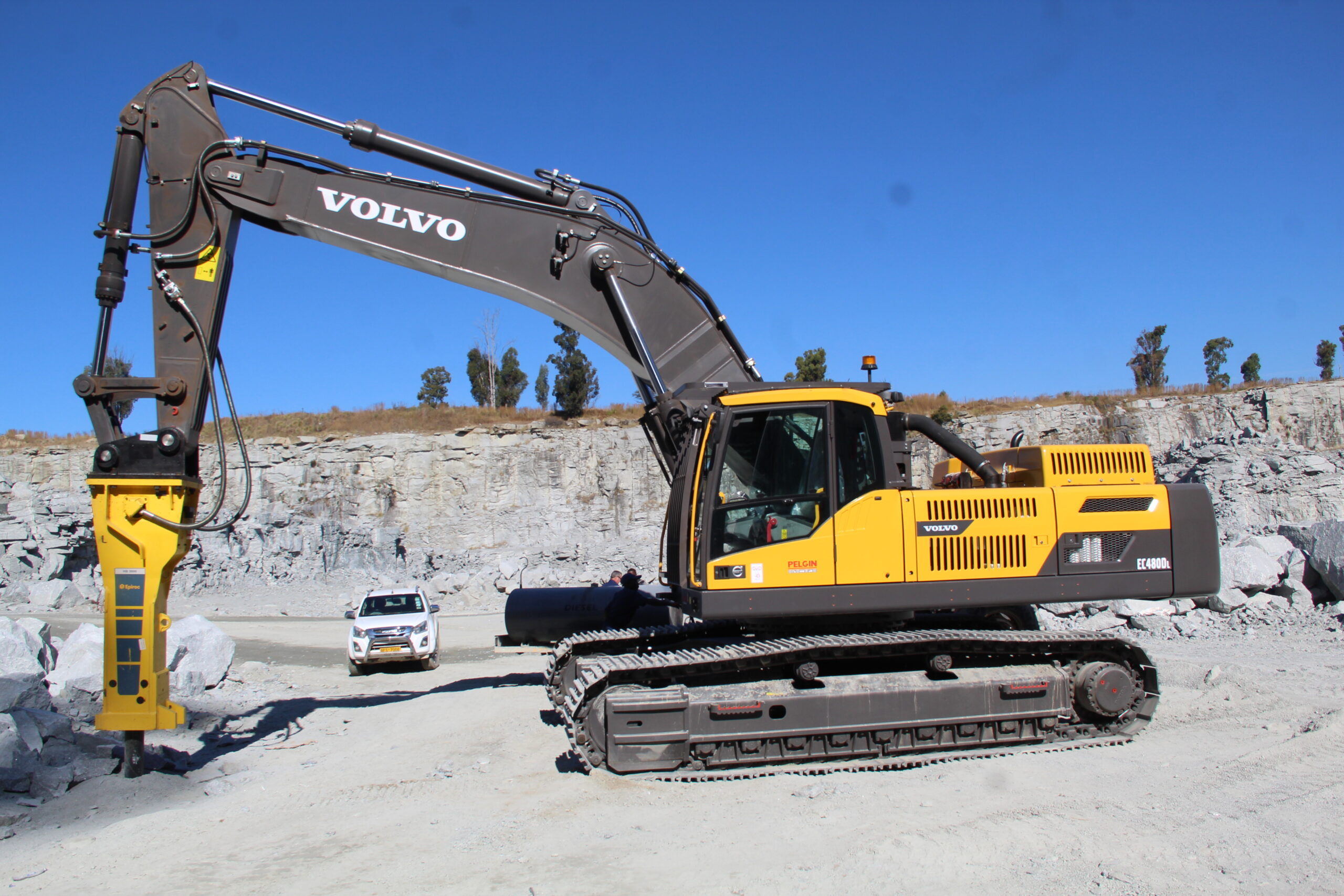
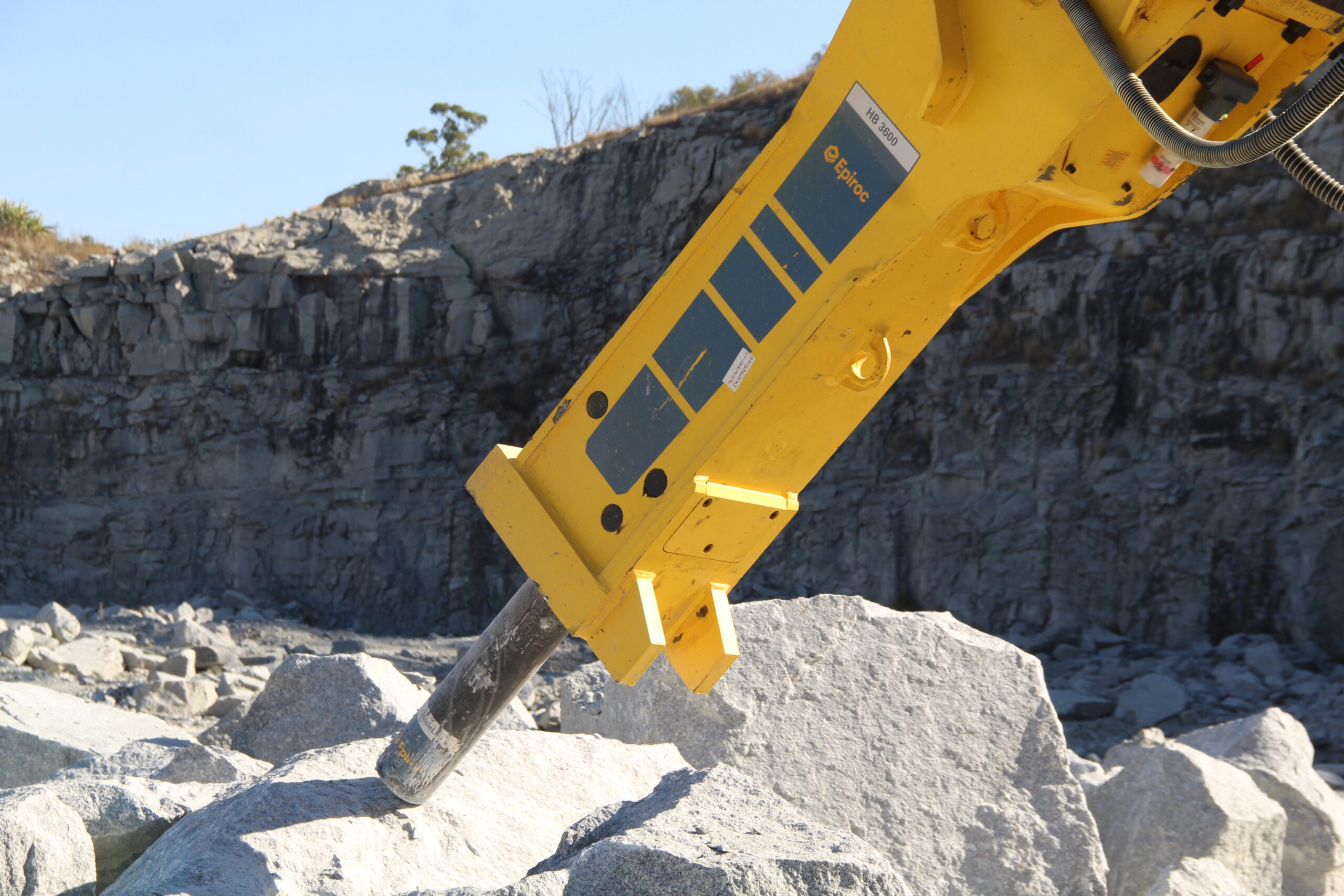
In an endeavor to increase production and reduce noise pollution at its quarry mining operation in Pomona Harare, one of the country’s biggest quarry extractors Pomona Stone Quarries acquired an EPIROC HB 3600 hammer from Zimbabwe’s official Volvo dealer, Pelgin Consulting Services.

Rudairo Mapuranga

Pelgin Managing Director Mr Gary Moorcroft handed over the EPIROC HB 3600 hammer to Collin Campbell of Pomona Stone Quarries at a ceremony held at the quarry extraction site in Pomona. An EPIROC HB 3600 hammer is one of the biggest hydraulic hammers in the country.

Although high efficiency has always been the focus in designing Epiroc hydraulic breakers, the HB 3600 units enjoy even greater efficiency than their predecessors in the heavy breaker range. Better utilization of the hydraulic input from the carrier has been achieved through innovative technology and the highest manufacturing standards.

According to Campbell, Pomona bought the hydraulic hammer from Pelgin to reduce noise pollution usually caused by blasting as well as to improve hammering speed.

“We were getting a lot of complaints from our neighbors, so this hammer will help reduce noise pollution and increase hammering time,” Campbell said.

The simultaneous purchase of the Volvo EC480DL Excavator is a perfect carrier for this large hammer. This Volvo Excavator is a 50-ton machine and compliments the other Volvo 70-ton excavator that is at Pomona Quarries. This also gives Pomona Quarries flexibility as the Volvo EC480DL can also be used as an excavator by removing the hammer and fitting the supplied bucket which is 2.66m3 in capacity.

Pomona Quarries acquires Zim’s largest hydraulic hammers from Pelgin 2

EPIROC HB 3600 Featuring Auto Control

AutoControl is a solution which boosts the productive performance of Epiroc hydraulic breakers. The system automatically controls the breaker’s output to suit the working conditions and rock hardness, thereby creating the perfect benefit for users: maximum blow frequency for soft materials, and maximum single-blow energy when things get tougher.

Advantages of Auto Control

  • helps to achieve consistently high productivity through the adjustment of single-blow energy and blow rate as from the first impact
    protects both the breaker and carrier unit during idle strokes
  • raises efficiency through energy recovery and precise control of piston movement under the most diverse working conditions
  • minimises the tendency of idle strokes in soft material
  • always starts with reduced single-blow energy
  • easy handling with “centring” of the tool

DustProtector II and VibroSilenced

This helps in protecting both the hammer unit and the bushings against damage as well as premature wear. This protective feature, unique with its two stages and only available with Epiroc hydraulic breakers, can optionally be installed on all HB breakers. With VibroSilence With this, it is no coincidence that Epiroc breakers are among the quietest on the market. This has been proven by measurements based on Directive 2000/14/EC, which gives a guaranteed sound power level of 121 dB (A).

WHY VOLVO ARTICULATED HAULERS ARE A CUT ABOVE THE REST

From developing the first series manufactured articulated haulier more than 55 years ago, Volvo Construction Equipment (Volvo CE) is continuing to dominate the field, with articulated hauliers that really pack a punch – delivering optimum performance at the lowest cost per ton.

Committed to innovation and development, Volvo CE continues to evolve its range of articulated hauliers, making them even smarter, more efficient and easier to operate.

Uptime is maximized too, whilst maintenance costs are kept to a minimum, reducing the total cost of ownership.

EFFICIENT OPERATION WITH HAUL ASSIST

The Haul Assist suite of tools is a game-changing solution designed to get the most out of the Volvo Articulated Hauler. Powered by a 10” Volvo Co-Pilot monitor – which is available on a variety of machines from hauliers and excavators to pavers – it provides valuable insight to help customers optimize the efficiency of their haul cycles and boost profitability.

A new addition to Haul Assist, the Tire Pressure Monitoring System enables the monitoring of tire pressure and temperature from the comfort of the cab. Inflation pressure having a marked impact on tire wear, and proactive monitoring is invaluable to optimize tire life as well as fuel efficiency, machine performance and operator comfort.

Map provides a real-time overview of the on-site traffic to help navigate around more effectively. The whereabouts of every machine and vehicle – irrespective of the type or brand – as well as visitors on site, are now visible, so long as they are connected to the map application. Alongside haul roads, Map also shows load and dump zones, and flags single-lane sections, restricted zones and speed-restricted areas helping to anticipate operating decisions and reduce unnecessary stops.

Also part of Haul Assist is On-Board Weighing, a proven tool that allows payload information to be viewed in real-time, helping to eliminate carry-back and overloading.

As well as boosting productivity, this also reduces excessive fuel consumption and machine wear and tear.

SMARTER PERFORMANCE

Pomona Quarries acquires Zim’s largest hydraulic hammers from Pelgin 3

Operator comfort has always been at the heart of design – from the centrally- positioned operator seat offering excellent visibility, through to user-friendly controls.

And a range of automated functions is now offering even more support to enhance ease of operation and performance.

Terrain Memory is a handy feature of the intelligent Volvo drivetrain that identifies and remembers slippery road segments to ensure optimized traction control and off-road mobility. OptiShift enables fast and smooth directional changes, whilst Downhill Speed Control automatically maintains a constant speed when operating on downward gradients; both these, and the Cruise control function, are fitted as standard since 2019 and are available for retrofit on older hauliers.

MAXIMIZING UPTIME, MINIMIZING MAINTENANCE COSTS

Not only easy to operate and highly efficient but Volvo Articulated Haulers are also designed to be easy to service. Daily or even weekly greasing is a thing of the past, required instead every 250 hours on a Volvo Articulated Hauler, the longest time interval in the industry. Add to this long engine service intervals – up to 1,000 hours on Stage V and Tier 4 Final models – and less than half the fluid volume of most of its counterparts when measured over the lifetime of the machine. The result is reduced maintenance requirements and consumables, helping to keep the machine at work while lowering maintenance costs and environmental impact.

The improvements introduced to Volvo Articulated Haulers are delivering both performance and cost advantages for customers. New work-enhancing tools and straightforward servicing are just some examples contributing towards more profitable – and sustainable – operations. All part of Volvo CE’s commitment to drive transformation in the industry and achieve its goal to have net zero value chain emissions by 2040.


This article first appeared in the Mine Entra 2022 issue of the Mining Zimbabwe Magazine

60/40 the elephant in the room is growing by the day

0

While the Mining industry races to reach annual revenue of US$12 billion by the end of 2023, the 60% foreign currency retention for large-scale producers might be a major cause to upset the achievement of the vision.

The export retention scheme allows miners to retain 60 percent of exported minerals in foreign currency while the remaining 40 percent is surrendered to the country’s central bank (the Reserve Bank of Zimbabwe ‘RBZ’) at the prevailing interbank rate. If the 60% is not utilised within four months, the central bank will confiscate another 25 percent to take the total surrender requirement to 65 percent.

Currently, the interbank exchange is slightly above ZWL 500 per US$1 while on the parallel market,  US$1 ranges between ZWL 1000 for soft currency and ZWL 800 for hard currency. With the above discrepancy between the formal exchange rate and the market rate, exporters are losing over 20 percent of their real earnings due to the surrendered earnings.

Miners are also paying taxes and electricity in foreign currency, foreign exchange regulations are a punitive tax to business viability.

Government measures to reduce inflation

It should however be noted that despite miners losing a lot of their money due to the exchange rate alone, the government has been working flat out to make sure that inflation is managed well to avoid a situation where miners lose.

Between 2015 and 2021, the country promulgated hundreds of statutory instruments (temporary measures) aligned with monetary policy and produced a plethora of exchange control regulations or statements in an effort to combat inflation.

Recently, the central Bank introduced gold coins which are meant to be a store of value for businesses, miners included.

The RBZ announced that 90 percent of the 4475 gold coins sold as of 10 August 2022 were sold in local currency with the government realizing ZW$3.7 billion from the sale of the coins.

According to RBZ governor Dr. John Mangudya, the high demand for gold coins will help the local currency gain in value and reduce inflation.

“As of 10 August 2022, 4475 gold coins had been sold realising ZW$3.7 billion of which 90% was paid in local currency and the balance in foreign currency, and evenly distributed throughout the agents.

“The high demand for the gold coins will assist in mopping up liquidity from the market and thus strengthen the demand and enhance the value of the local currency. The Bank shall continue to release additional gold coins into the market on an ongoing basis in line with demand,” Mangudya said.

However, Although gold coins might be an alternative for miners to return the true value of their mining operations, the coins are not allowed to be sold before 180 days after their purchase making it difficult again for miners to have sufficient operational funds.

60/40 forex retention pressuring miners

The large-scale mining sector has been hard-hit stubbornly by the cost of production, labour, and materials due to the current foreign currency retention offered by the government experts say is not viable.

The large-scale producers are of the view that the current foreign currency retention which is at 60 percent is an elephant in the room that is impacting production significantly.

According to Freda Rebecca Managing Director Mr. Eliakem Hove, the primary producers were pushing towards the government giving the miners 100 percent so that operations may not be affected making them significant to achieve the government’s vision for the mining industry contributing US$12 billion annual revenue.

He said that the 40 percent Zimbabwean dollar component aids in the increasing cost of production.

“Our position as the Chamber as well as Freda Rebecca 60/40 is not adequate we would actually want 100 percent, worst case 80/20. The Zim dollar component increases your cost currently sitting around 60 percent when trading, 60/40 is putting pressure on our side,” he said.

In a trading update, Bindura Nickel Corporation secretary Conrad Mukanganga said the adverse impact of the cost of local inputs and the increasing disparity between the auction foreign exchange rate, at which the company surrenders 40 percent of its revenue for Zimbabwe dollars, and the prevailing parallel market rate battered the mining company.

According to the Chairperson of the Geological Society of Zimbabwe Mr Kennedy Mtetwa operational costs in local currency are increasing due to high inflation on the parallel market and the failure by the central bank to provide all suppliers with the required foreign currency.

“Production costs going up in ZWL yet the exchange rate for 40% staying the same,” said Mtetwa.

Last year, diversified mining group RioZim during the first quarter of 2021 said it did not benefit from a 12 percent increase in average gold prices due to the reduction of the gold foreign currency retention threshold from 70 to 60 percent by the central bank.

The miner said the retention threshold impacted negatively on gold production by 10 percent.

When asked what Parliament was doing to ensure the 60/40 issue was addressed, Portfolio Committee on Mines and Mining Development Chairman Hon Edmond Mkaratigwa said Parly was open to getting details of modalities that work but the sector has also largely not been forthcoming of late.

“Parliament has always remained open to getting details of modalities that work. If you remember well, we stated during the time the 60/40% was achieved that, we must continue to engage until we get to where we desire. The best way is to get some new position papers so that we have the basis that justifies the new demands so that we represent while fully equipped. Parliament has raised these issues but the sector has also largely not been forthcoming of late. We are ready to hear what our constituents have in mind and as part of what they think works best for them and the national interest, for the broader good of all today and in the future,” Mkaratigwa said in an interview with Mining Zimbabwe.

Chamber of Mines President Collin Chibafa said the body will continue to fight on for improvement of the retention threshold.

“We cannot afford to give up. The Chamber of Mines continues to engage and lobby the RBZ and Government for an optimal foreign exchange framework for the mining industry. While the retention has remained at 60/40, we have seen some changes namely, allowing miners to pay a proportion of the royalties and taxes in local currency and the introduction of an incremental export incentive scheme that results in mining companies retaining 80% of export proceeds about a set threshold.  In addition, for mining companies that are listed on the Victoria Falls Stock Exchange, the retention on incremental incentives is set at 100%. We will continue to engage and lobby for improved retention levels to ensure mining companies are able to sustain and expand their output,” Chibafa said in an interview with Mining Zimbabwe.

It would be witless for primary producers to blame the authorities or vice versa if the country fails to attain the US$12 billion industry by 2023 if the journey continues divergently.