

Home Blog Page 311

BREAKING: Miners to now remit royalties to ZIMRA

0

The Zimbabwe Revenue Authority (ZIMRA) has advised miners and Mining companies to cease with immediate effect, remitting mining royalties to the Reserve Bank of Zimbabwe (RBZ) and remit to ZIMRA Commissioner General in compliance with the country’s mining and financial laws.

Rudairo Mapuranga

A mining royalty is a sovereign right to receive payment based on a percentage of the value of the mineral exported.

In Zimbabwe, mineral resources are taxed at varying percentages payable in different thresholds from the local currency, forex and in kind.

Last year, Finance Minister Mthuli Ncube requested mining companies to pay up to half of their royalties in local currency marking a u-turn on a 2020 decision requiring mining companies to pay the tax only in foreign currency, with President Emmerson Dambudzo Mnangagwa later on stating that companies will pay royalties to the government in the form of minerals (in kind) as a percentage of the mined resources.

According to a Public Notice released by ZIMRA, Royalties for platinum, palladium and lithium will be collected as 40 per cent in RTGS with the remaining 60 per cent in USD. Royalties for gold, diamonds and precious stones will be paid 40 per cent RTGS, 10 per cent foreign currency and 50 per cent in kind. And for all other minerals, it will be 50 per cent RTGS and 50 per cent foreign currency.

The following is the notice released by the revenue collection agency

“The Commissioner General of Zimbabwe Revenue Authority (ZIMRA) wishes to advise all mineral exporters and Financial Institutions of the following payment arrangements for mineral royalties with effect from 1 August 2023 until further notice:

“1. Any taxpayers that were remitting mining royalties to the Reserve Bank of Zimbabwe should cease doing so and remit the mining royalties to the Commissioner General in compliance with the Revenue Authority Act [Chp.23.11], Mines and Minerals Act [Chp 21.05] and the Finance Act [Chp. 23.04].

“2. Any correspondence already issued regarding payment of mining royalties in kind that contradicts the provisions of the Revenue Authority Act [Chp.23.11], Mines Minerals Act [Chp 21.05], and the Finance Act [Chp. 23.04] is not valid and not enforceable.

“3. The interim payment arrangements for royalties in kind are aimed at absorbing challenges being faced by taxpayers to account for the royalties in full and in kind.

“4. When remitting the Royalties, the Financial Institutions shall be required to prepare and submit a schedule of payments made to ZIMRA on or before the 10th day of the month following the month in which they were deducted.

“5. The mineral exporters (mining companies or persons) shall be required to complete the return Rev 5Cs in USD and ZWL respectively and submit it to ZIMRA on or before the 10th day of the month following the month in which they were deducted.

“6. Further guidance shall be provided in due course on the handling of royalties collected in kind.

“For any further clarification, kindly contact your nearest ZIMRA office,” It reads in part.

Gold buying prices Thursday 3 August 2023

Fidelity Gold Refinery (FGR) official gold buying prices Thursday 3 August 2023. See the Zimbabwe gold buying prices today.

SG 90% AND ABOVE US$59.06/g
SG ABOVE 85% BUT BELOW 90% US$58.44/g
SG ABOVE 80% BUT BELOW 85% US$57.81/g
SG ABOVE 75% BUT BELOW 80% US$57.19/g
SAMPLE BELOW 10g BUT ABOVE 5g US$56.25/g
FIRE ASSAY CASH US$59.38/g

NB: Fire Assay cash price is for gold above 100gs, no sample is deducted.
For the Fire Assay Transfer price, a sample of not more than 10g is deducted
A 2% royalty is charged on all deposits (small-scale miners)
A 5% royalty is set for Primary Producers

Cash available. Fidelity Gold Refinery prices will be changing daily about world market prices.

Fidelity Gold Refinery (FGR) opens a branch in Shamva

0

Shamva gold Miners can now benefit from a more convenient and hassle-free process of selling their gold, as the country’s sole buyer Fidelity Gold Refinery (FGR) opened a buying office at the Shamva Country Club. With this new development, miners can save time and travel expenses as FGR brings convenience to their doorstep.

In a statement on its Facebook page, FGR announced the news.

“For your convenience Shamva Miners, we have now opened a buying office at the Shamva Country Club,” the state entity said.

“Deliver your gold and get instant cash,” FGR concluded.

Shamva Miners have mainly relied on selling their gold to agents who usually buy at a lower price to sell for a profit. The miners often had to travel to Bindura where there is an FGR buying centre, which is time-consuming.

This not only incurred additional expenses but also created delays if miners were in need of emergency funds to replace or repair broken equipment or buy consumables like explosives. However, with the establishment of FGR’s buying office at their doorstep, miners can now easily sell their gold without the need for extensive travel or waiting periods.

The presence of a reputable and reliable gold buyer at the local club provides miners with a sense of reliability and security. FGR is renowned for ensuring that miners receive better value for their hard-earned gold. By eliminating intermediaries and directly dealing with FGR, miners can be confident in the accuracy of their payments.

Zimbabwe gold buying prices 2 August 2023

Fidelity Gold Refinery (FGR) official gold buying prices Wednesday 2 August 2023. See the Zimbabwe gold buying prices today.

SG 90% AND ABOVE US$59.16/g
SG ABOVE 85% BUT BELOW 90% US$58.53/g
SG ABOVE 80% BUT BELOW 85% US$57.90/g
SG ABOVE 75% BUT BELOW 80% US$57.28/g
SAMPLE BELOW 10g BUT ABOVE 5g US$56.34/g
FIRE ASSAY CASH US$59.47/g

NB: Fire Assay cash price is for gold above 100gs, no sample is deducted.
For the Fire Assay Transfer price, a sample of not more than 10g is deducted
A 2% royalty is charged on all deposits (small-scale miners)
A 5% royalty is set for Primary Producers

Cash available. Fidelity Gold Refinery prices will be changing daily about world market prices.

How the public benefits from Mining in Zimbabwe

0

One of the most common comments on the Mining Zimbabwe platform is “is Mining benefitting the country and its people?

While it is true that the environmental impact of mining activities is a concern, it is equally important to acknowledge the numerous socioeconomic advantages that mining brings to the public. From job creation and economic growth to improved infrastructure and technological advancements, mining offers astounding benefits that positively impact communities and entire nations.

In this article, Mining Zimbabwe sheds light on some of the key ways in which the public benefits from mining in Zimbabwe.

Job Creation and Economic Growth

Mining operations provide a substantial number of direct and indirect employment opportunities. These jobs encompass a wide range of positions, including mine workers, engineers, geologists, technicians, truck drivers, and more. Alongside these direct mining jobs, various supporting industries such as manufacturing, construction, logistics, and retail also thrive thanks to the demand generated by the mining sector. Media organisations like Mining Zimbabwe are also beneficiaries of the Mining Industry.

The resultant job creation not only bolsters the economy but also improves living standards. It empowers individuals to provide for themselves and their families, reducing unemployment rates and promoting overall economic stability. In turn, increased disposable income boosts consumption, further stimulating local businesses, and contributing to Zimbabwe’s economic growth. A good example is how Dallaglio’s revival of the Eureka Gold mine breathed life into the otherwise lacklustre town of Guruve.

Post-2000 has also seen the emergence and rise of Artisanal and Small-scale mining (ASM). It led to the formation of the Zimbabwe Miners Federation (ZMF), an organisation representing the ASM industry. It is the country’s biggest mining body with over 1.5 million members according to its website. This makes mining one of the biggest employers in the country with its membership making 100% remuneration in the much more stable us dollars.

Taxation and Government Revenue

The mining industry in Zimbabwe represents a significant contributor to the country’s tax income, which strengthens government finances and enables investment in various public services. Taxes associated with mining operations can include corporate income tax, royalties, and contributions to social programs. This revenue is crucial for funding education systems, healthcare services, infrastructure development, and other vital public projects. Consequently, mining facilitates the provision of better public facilities, improved healthcare access, and enhanced educational opportunities for citizens.

Infrastructure Development

Mining activities necessitate the development of essential infrastructure, including road networks, railways, ports, and power supply systems. These infrastructural developments not only support mining operations but also create vital transportation links, facilitating regional connectivity and accessibility. Improved transportation infrastructure benefits the public by enhancing trade, reducing logistical costs, and opening up previously isolated regions. Improved mining investments could be partly the reason why we have been seeing a reconstruction of major Highways like the Harare – Beitbridge road. Moreover, mining companies, as part of their social responsibility, often invest in community development projects such as schools, hospitals, and clean water initiatives, positively impacting local populations. ZIMPLATS a platinum giant owned by Impala Platinum has been leading in the construction of Clinics, Schools, roads and many others as part of its Corporate Social Responsibility (CSR).

Skills Development and Technological Advancements

Mining demands a diverse range of technical expertise. It provides ample opportunities for skills development and knowledge transfer. Mining operations require specialized training in engineering, geosciences, metallurgy, and environmental sciences, among others. By investing in training and education, mining companies contribute to the creation of a highly skilled workforce that can be utilized across various industries, driving economic diversification and innovation.

Furthermore, mining activities foster technological advancements. Mining companies invest heavily in research and development to enhance operational efficiency, minimize environmental impacts, and improve safety protocols. Such advancements often find wider applications beyond the mining sector, positively influencing other industries and further benefiting the nation as a whole.

Despite the valid concerns about environmental impact especially in the ASM sector, there is no denying that mining brings significant benefits to the public in Zimbabwe and many other countries. Job creation, economic growth, improved infrastructure, and technological advancements are just a few of the many advantages that mining operations offer.

While Zimbabwean communities (where mining is taking place) are now demanding a fixed percentage to be paid directly to them a lot still needs to be done to educate the public on how they benefit from mining. 

While mining has grown since 2017, it is crucial to note that we have barely scratched the surface therefore on its Mining cannot sustain the economy of Zimbabwe.

South Mining commended for its CSR strategy

0

HWANGE-based coking coal producer, South Mining (Pvt) Ltd was commended for its Corporate Social Responsibility (CSR) initiatives, including the construction of a state-of-the-art community library.

Rudairo Mapuranga

Education, in South Mining’s eyes, is a powerful tool for social cohesion, peace, and economic development. As such, they continue to invest in educational initiatives, believing it to be a vital instrument for poverty alleviation and progress.

Speaking at the South Mining Community Library Official Commissioning by First Lady DR. Auxillia Mnangagwa in Hwange on Thursday, the Minister of Mines and Mining Development Hon Winston Chitando said the CSR programs that South Mining has been doing are an indication for a company that is determined to promote government’s economic blueprint.

He also said that by investing in a library South Miming was concerned with the future Development of the country and called upon all Mines to emulate South Mining’s vision.

“What is important if you look for the economic history, no country started as developed, countries printed visions and developed themselves. The library came with a vision, and all the CSR statistics I have mentioned suggest that as a company South Mining is determined to help his Excellency the President in achieving his 2030 vision,” Hon Chitando said.

Capable of accommodating up to 100 pupils at a time, the library features a cutting-edge computer laboratory with internet access, online journals, and an extensive collection of books. The goal is to create a conducive environment for learning, laying a strong foundation for academic success and personal growth.

Speaking at the same event the First Lady Dr Auxillia Mnangagwa commended South Mining for coming up with a community library saying that it will cater for the changing world.

She also said that the library will help the girl child in breaking free from societal constraints to become leaders of tomorrow thereby helping in the achievement of the 2030 vision.

“This library will evolve with changing times, it will cater for the changing world. South Mining investing in this library is not only investing in the future but also assuring that the past is not forgotten.

“I come before you today to emphasize the importance for education for the girl child. Education is not only a fundamental right but a catalyst for social change and empowerment. When we educate the girl child, we equip them with the knowledge and skills they need to succeed to break free from societal constraints and become leaders in their communities. It is through education that we break the circle of inequality and discrimination, let us invest in the education of the girl child and in doing so we invest in the progress of our society as a whole,” Dr Mnangagwa said.

The CSR strategy

For South Mining to construct the state-of-the-art community library in Mpumalanga high-density suburb in Hwange. The Hwange local board donated 2 500m2 for this initiative. The library building itself takes up 700m2 and the librarian’s accommodation 100m2.

The construction of the community library as well as equipping it and the librarian’s four-roomed house was done at a cost of US$600 000. The well-equipped library will come in handy in offering a conducive environment for learners to study and lay a good foundation for them to excel in both their academic work and life in general.

To address the pressing issue of water access in rural areas, South Mining has drilled six boreholes, providing safe, clean drinking water for both humans and livestock. These boreholes have also facilitated the establishment of nutritional gardens, promoting food security and self-sustainability within the communities.

In addition to the library and water initiatives, South Mining has shown immense support for communal activities and social programmes. They constructed a community hall in Madumabisa, providing a gathering place for villagers during group activities, social support, and public information initiatives.

In addition to the above-mentioned community social responsibility actions by the company some activities that were undertaken include the construction of a football pitch in Madumabisa Village, the donation of a twin cab (Toyota Hilux) to the Hwange Rural District Council to enable its personnel to reach out to communities and areas with poor road networks.

Careen Madzore: Geology Technician to Business Dev Manager

0

Careen Madzore, began her career as a Geology Technician at Unki Mines in 2010, gradually advancing within the company’s Mineral Resources department before eventually relocating to South Africa where she now works as a Business Development Manager. Over the past three years, Careen held numerous management positions in Mining Business Development, both locally and internationally.

Mining Zimbabwe had a one-on-one interview with the Madzore and this is how it went.

Can you please tell me about yourself and how you ended up in your position (Mine Vision Systems)?

My name is Careen Madzore. I am employed by Mine Vision Systems as a Business Development Manager for Africa. I hold a Diploma in Mining Geology, Bachelor’s degree in Geology, a Certificate in Strata Control, a Post Graduate Diploma in Business Management and a Blasting licence. I am currently busy with my MBA.

I started my career at Unki Mines in 2010 as a Geology Technician. I held several positions within the Unki Mine Mineral Resources department before relocating to South Africa. Over the past 3 years, I held several management positions in Mining Business Development locally and internationally.

What does your company do and how has been business for the past 5 years?

Mine Vision Systems is a United States-based company which focuses on bringing vision-related technology and software algorithms to the mining industry. Mine Vision Systems is a pioneer in the underground 3D mapping space. The company aims to provide products and services which improve efficiency, safety, production and automation in mining through unmatched data collection and workflow. Mine Vision Systems invented the FaceCapture™ mapping system which utilizes world-class software to help acquire data for better and faster decisions. The FaceCapture™ mapping systems can be utilized in any underground mine.  Over the past 5 years, the company has been involved in a lot of research and design of better FaceCapture™mapping systems. The company has delivered more than 100 units worldwide.

What does it entail to be a Business Development Manager at Mine Vision Systems? 

As a Business Development manager, my role is to develop a strategy and roadmap for the sustainable growth of Mine Vision Systems in Africa by developing a network of contacts in the Mining Industry. I am also acting as an onsite technical expert working with existing customers to help them get the most out of the FaceCapture ™mapping system.

What is your strategy for future growth? 

Mine Vision System’s strategy is to grow the market share by developing new products to serve the mining industry. The company is also diversifying and developing in new markets. The goal is to have our FaceCapture™mapping system utilised in all the underground mines.

How have you responded to the increased regional competition?

Innovation- our product is innovative, unique and cost-effective which gives Mine Vision System a competitive advantage over competitors.

Do you see countries such as Zimbabwe becoming your major priorities for growth as a company? 

Zimbabwe is my priority, the mines are open to new technologies and innovative products. 60% of my sales come from Zimbabwe. The mining industry in Zimbabwe is expanding and the need for products and services is increasing.

You recently attended the Zimbabwe National Institute of Rock Engineering (ZINIRE) Annual General Meeting, what were the takeaways from the event? 

I was very impressed with the turnout of the Rock Engineering practitioners, almost all mines were represented. Rock Engineering is something which was lagging behind in the industry for long, through ZINIRE all mines are beginning to realise the importance of this event. As a supplier, I had an opportunity to meet my industry colleagues and showcase my company’s products and services.

Zimbabwe will host various mining events during the last quarter of 2023 like the Mine Entra, will your company be part of the gatherings? 

This is a good opportunity to showcase Mine Vision System products and services. Attending this event will allow me to network with my target clients, generate leads, attract new customers and build a good relationship with my customers.

As a woman, what advice can you give to young women who would want to be like you in future?

Own the decisions you make and own your career. If there’s something you want to do or an opportunity you want to take, go for it. Mining has nothing to do with gender. If you work hard you will excel. Through hard work, I rose from a mere technician to a continent representative. It’s a long and sometimes frustrating path, but keep on believing and developing yourself.

Zimbabwe gold buying prices today 1 August 2023

Fidelity Gold Refinery (FGR) official gold buying prices Tuesday 1 August 2023. See the Zimbabwe gold buying prices today.

SG 90% AND ABOVE US$59.87/g
SG ABOVE 85% BUT BELOW 90% US$59.23/g
SG ABOVE 80% BUT BELOW 85% US$58.60/g
SG ABOVE 75% BUT BELOW 80% US$57.97/g
SAMPLE BELOW 10g BUT ABOVE 5g US$57.02/g
FIRE ASSAY CASH US$60.18/g

NB: Fire Assay cash price is for gold above 100gs, no sample is deducted.
For the Fire Assay Transfer price, a sample of not more than 10g is deducted
A 2% royalty is charged on all deposits (small-scale miners)
A 5% royalty is set for Primary Producers

Cash available. Fidelity Gold Refinery prices will be changing daily about world market prices.

Court awards 1,4million to miners trapped underground for 2months

0

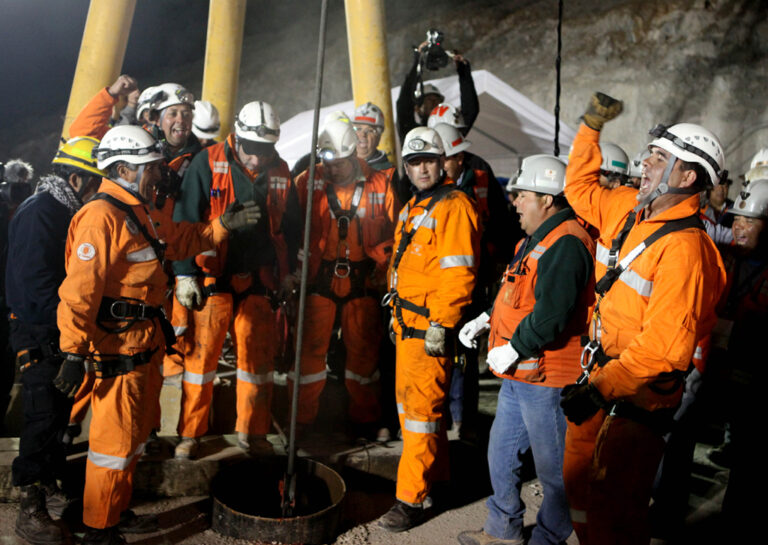
Chile’s Supreme Court awarded $1.4 million to 31 of the 33 miners that were trapped for two months in 2010, 700 metres below the surface in the San José mine located in the northern Atacama region.

The ruling of the top tribunal’s third courtroom notes that the Chilean State “incurred in a lack of service” as two of its agencies, the National Geology and Mining Service, Sernageomin, and the Labour Directorate, failed to comply with their legal obligation of conducting proper precautionary inspections.

According to the court, had such inspections been conducted, activities at the San José mine would not have been authorized.

On August 5, 2010, the San José gold and copper mine, a small deposit nestled among dusty, desert hills near the city of Copiapó, collapsed. The mine is owned by a company called San Esteban Primera.

No one knew whether the miners were alive or dead until they were able to convey a note to the surface in a probe sent down by authorities on August 22. “We are fine in the shelter, the 33 of us,” said the note, written in red ink.

Thirteen years after the accident, the Court issued the ruling in rejection of an appeal filed by the State Defense Council, which sought to reverse a ruling that ordered the treasury to compensate the rescued miners for moral damages. Thus, the men will receive about $48,000 each. The figure had been set in a resolution of the Santiago Court of Appeal in 2021.

Only two of the miners refused to take part in the legal action. The rest argued that proper monitoring and inspections from Sernageomin and the Labour Directorate would have prevented several safety and regulatory breaches by the company and, therefore, the incident that kept them underground for 69 days. The Supreme Court’s ruling, ultimately, upheld this argument.

In its final decision, the tribunal emphasized that Article 2, numeral 8 of Decree-Law No. 3,525, puts Sernageomin in charge of “guaranteeing that mining safety regulations are complied with and applying the respective sanctions to those who violate them; proposing the issuance of standards that tend to improve safety conditions in mining activities by technical and scientific developments; and requesting information about training programs and courses and sharing relevant information with those who work in extractive industries.”

Mining.com

New Alrosa Diamonds CEO hit by US sanctions

0

Pavel Marynichev, the recently appointed CEO of Alrosa, has been targeted by US sanctions, following in the footsteps of his predecessor Sergey Ivanov. According to IDEX Online, the US State Department revealed its decision earlier this month. The specific designation for Marynichev is linked to his involvement in the metals and mining sector of the Russian economy.

Marynichev, who previously served as a government official for the Republic of Sakha (Yakutia) with a focus on geology, assumed the role of Chairman and CEO at Alrosa for the next three years in May. The US State Department’s move forms part of its ongoing efforts to address Russia’s involvement in an “illegal war,” according to the piece.

While Alrosa has been officially under US sanctions since the onset of the war, the ban doesn’t apply to rough stones that are polished outside of Russia.

Source: israelidiamond