Home Blog Page 32

Sabi Gold Mine Exits Judicial Management After Major Turnaround

0

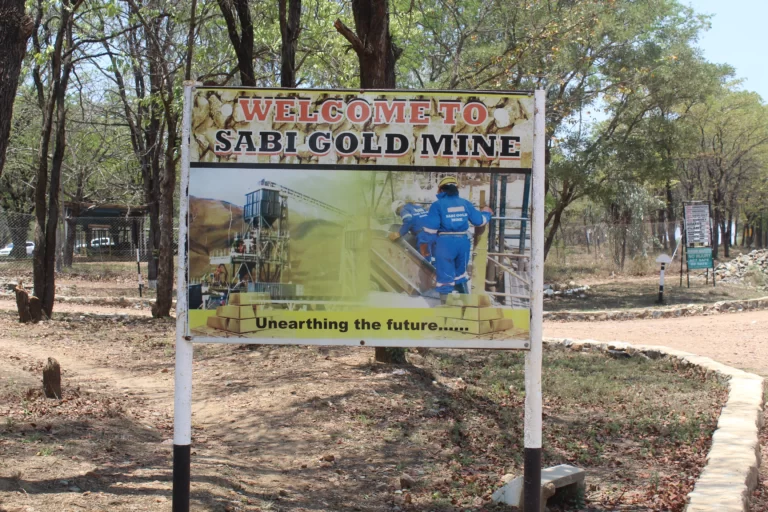
Sabi Gold Mine has officially exited judicial management, signalling a major recovery under the Zimbabwe Mining Development Corporation (ZMDC), Mining Zimbabwe can report.

The operation, placed under judicial management in 2014 due to severe financial distress, has clawed back from near collapse and is now producing an average of 448kg of gold per year.

The turnaround follows targeted interventions by ZMDC aimed at stabilising operations, boosting output, and restoring financial viability.

The recovery at Sabi is part of a broader effort by ZMDC to revitalise its mining portfolio. The corporation also manages gold operations at Jena, Elvington, and Golden Kopje mines. These efforts contribute to national ambitions to achieve upper-middle-income status by 2030.

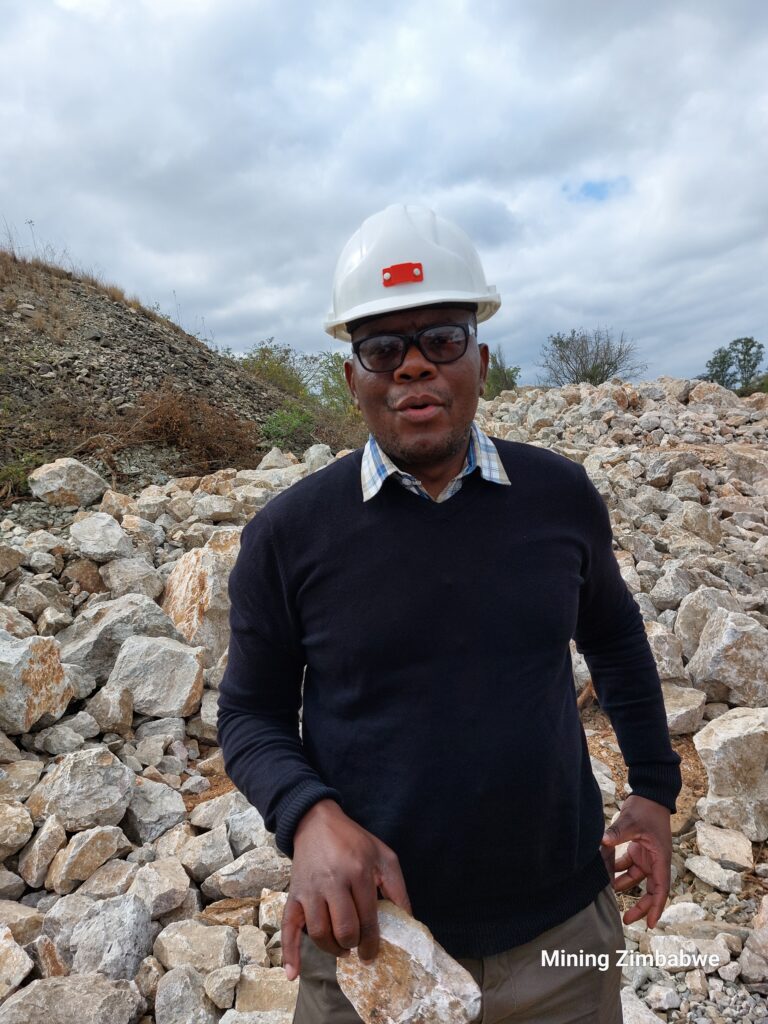
Exiting judicial management has restored confidence in Sabi’s long-term stability. The mine is now a high-yield, reliable asset, supporting local employment and boosting economic activity in the region. Chitambira notes that this achievement demonstrates how focused oversight can turn struggling mines into productive operations.

ZMDC is applying the same approach to other projects. Golden Kopje Mine in Chinhoyi is expected to reopen soon, adding around 200kg to the corporation’s annual gold output.

In the base metals sector, Sanyati Copper Mines has shown promising exploration results, with production projected to resume in the first quarter of 2027. This revival will diversify Zimbabwe’s mineral output and reduce reliance on imported copper.

The easing of Western sanctions on ZMDC last year has also opened access to global markets, investment, and technology. Sabi Gold Mine’s recovery highlights ZMDC’s renewed operational momentum and reinforces its role as a cornerstone of Zimbabwe’s mining-led economic growth.

China Pushes Back Against “Exaggerated Claims” as Debate Over Its Role in Zimbabwe’s Mining Sector Intensifies

0

China has urged a more balanced and evidence-based national conversation about its role in Zimbabwe’s mining sector, stating that many allegations circulating on social media and public platforms are distorted, unverified, or deliberately misleading, according to Mining Zimbabwe.

By Ryan Chigoche

Speaking at a recent event in the capital, the Chinese Ambassador to Zimbabwe, Zhou Ding, said a wave of misinformation aimed at discrediting Chinese companies had created an inaccurate impression of China’s footprint in Zimbabwe’s mining landscape.

“Certain narratives based on unverified information consistently and desperately smear Chinese enterprises. As we look into these allegations against Chinese companies and enterprises, unfortunately, we found that over 80% of them are exaggerated or fabricated, designed to incite xenophobia at very little cost,” he said. “Such tactics harm Zimbabwe’s business climate and discourage investors.”

He said this rising tide of distorted narratives often overshadows the scale of investment, job creation, value addition, and community development that accompany China’s partnership with Zimbabwe.

According to data shared in his remarks, more than 1,400 new Chinese companies have registered in Zimbabwe in the past three years, a significant portion of them in mining. Collectively, China–Zimbabwe trade and investment now support the livelihoods of more than one million people, with mining contributing more than half of this impact.

Major investors, including Dinson Iron and Steel Company, Huayou, and Sinomine, employ thousands of Zimbabweans and have partnered with vocational institutions to expand technical training and technology transfer.

The Ambassador linked Chinese investment to Zimbabwe’s broader economic agenda, including Vision 2030 and the National Development Strategy.

He welcomed government commitments to maintaining a predictable business environment and expressed confidence that the upcoming Mines and Minerals Bill would further strengthen the sector.

Major national projects undertaken with Chinese support were highlighted, including expansions at Hwange and Kariba South power stations, upgrades at Victoria Falls and R.G. Mugabe International Airport, nationwide borehole drilling, medical infrastructure improvements, and high-performance computing systems at the University of Zimbabwe.

Call for Responsible Journalism

Turning to the media, Zhou emphasised the need for professionalism and ethical reporting in an era where misinformation spreads rapidly across digital platforms. He said the Chinese Embassy stands ready to provide journalists with access to accurate, first-hand information on China–Zimbabwe cooperation.

Gold buying prices in Zimbabwe per gram/ ounce, 25 November 2025

0

Gold buying prices in Zimbabwe per gram/ ounce, 25 November 2025, from the official gold buyer and exporter Fidelity Gold Refinery (FGR).

1 oz = 31.1035 g

CategoryPrice ($/g)Price ($/oz)
SG 90% and ABOVE124.023,856.09
SG 85% and above but below 90%122.713,815.08
SG 80% and above but below 85%121.393,773.95
SG 75% and above but below 80%120.083,733.06
Sample 5g and above but below 10g118.113,671.47
Fire Assay CASH124.673,876.41


Note: The Fire Assay cash price applies to gold above 100g, with no sample deduction.

A sample of not more than 10g is deducted for the Fire Assay Transfer price.

ZRP Warns Public Against Illegal Gold Possession as Calls Grow to Modernise Outdated Laws

0

The Zimbabwe Republic Police (ZRP) has issued a strong warning to individuals and institutions found in possession of gold without the required permits or licences, stating that violators will be arrested and prosecuted in line with the Gold Trade Act and regulations under the Ministry of Mines and Mining Development.

The warning follows the recent arrest and conviction of Joseph Phiri, who was found in possession of 3,118 grams of gold without proper documentation. He was sentenced to five years in prison, and the gold was forfeited to the State.

While the ZRP is simply enforcing the existing regulations, there is a growing consensus that Zimbabwe’s gold laws require urgent reform to suit the current mining environment.

A follower on the Mining Zimbabwe Facebook page encouraged the lobbying of the removal of the law, which they labelled oppressive.

“We should lobby for the removal of such oppressive laws. We are Zimbabweans, and it is our gold. So are we saying there is no makorokoza, isn’t?. Who are the major producers of yellow metal?. 

“Iyi haichafanira kuva mhosva iyi. Maybe dai mati ukabatwa uchida kubuditsa munyika.bt also reserve gold mining only to citizens, period and not negotiable,” translated “This should no longer be a crime. Maybe if you were caught trying to export it to the country. BT also reserves gold mining only to citizens, period and not negotiable,” another said among over 50 comments made minutes after we posted the ZRP Press release on Facebook, which is our biggest platform.

The law that the ZRP is enforcing was crafted at a time when formal mining houses dominated production and artisanal mining barely existed.

In a country that has gold in every district, and with the majority of a total of 1.5 million artisanal miners being unregistered, it may be time to re-examine this law to suit modern-day gold mining, which is heavily dominated by Artisanal and small-scale miners.

Rebirth of Hilmax Engineering – A phoenix rising from the ashes

0

It is common knowledge that in February 2024, Hilmax Engineering went into corporate rescue. What may not be known by some is that on 31 July 2025, Hilmax came out of corporate rescue. Once a respected name in the industry, being put under corporate rescue left Hilmax shaken, tested, and its spirit subdued. It was a business burdened with uncertainty and lacking in credibility.

Written by: Mr J. P Mkushi

There are times in the life of almost every organisation when survival demands courage, honesty and unity. The former directors of Hilmax showed these traits by volunteering for the company to go into corporate rescue. This courageous decision could be the reason why Hilmax is still alive and well today.

While to many, Corporate Rescue seemed to be the end of Hilmax’s story, it was only the beginning. Like a phoenix rising from the ashes of its own destruction, Hilmax has begun its own journey of renewal and transformation. On 31 July 2025, Hilmax was bought by new shareholders under the supervision of the Corporate Rescue Practitioner and the authority of the Master of the High Court of Zimbabwe. The new shareholders took over the settlement of the Hilmax creditors and the dues to employees. They also undertook to provide the necessary working capital to bring the company back to an operational footing. For Hilmax, this was the birth of the journey of renewal and transformation. From mere survival, the focus shifted to revitalisation and the beginning of sustainable growth.

The new shareholders saw in Hilmax a company with enduring potential not only in its assets and operations but in the relationships it had cultivated over the years. It’s those relationships Hilmax wishes to revive and build on to stronger and higher levels than before. We are greatly encouraged by the fact that most of Hilmax’s long-standing partners remembered the value Hilmax had delivered in the past and that our outreach to re-establish business relationships with them has been met with trust and utmost professionalism. At the same time, new connections are being forged as we demonstrate renewed stability, purpose and a commitment to excellence. It is clear to us that Hilmax’s credibility has not been lost. It is ready to be built and expanded.

As the new shareholders, our focus and priority is very clear. This is to deal with every stakeholder, including employees, customers, suppliers and other business partners with honesty, integrity, transparency and consistency. These values will guide us on every step of the business rebuilding process and will shape the culture we are determined to entrench.

Rebuilding Hilmax will be an ongoing process. We are actively strengthening the governance and internal systems to ensure that accountability is embedded at every level of the organisation and that ethical practices are reinforced across the organisation. We would like to create a sustainable culture where trust and responsibility guide every decision we make.

One of our most critical challenges has been building trust and alignment across our team. Our employees are the heart of the whole organisation. Ensuring that they understand and embrace the company’s new direction has required open communication, consistent leadership and a clear demonstration of our own values in action. We are convinced that over time, as they see the organisation operating with integrity and purpose, confidence and commitment will be growing. While this has tested our rate of progress, we see it as part of renewal. Trust is not demanded; it is earned. Earning trust requires patience, fairness and consistent demonstration that integrity is not a slogan but a standard. Over time, as employees experience leadership that embodies these principles, confidence grows, and loyalties shift towards the Hilmax we are all building together.

Despite internal challenges, we are making significant strides. Our teams are reconnecting with clients, restoring confidence in our services and steadily reinforcing the Hilmax reputation for reliability and professionalism. Each success, large or small, strengthens the foundation on which we continue to build.

We are deeply grateful to the following:

  1. Our staff who have chosen to embrace our new direction
  2. Our clients who continue to trust us
  3. Our service providers and regulators who engage with us constructively
  4. Our suppliers who have warmly welcomed us back after the rescue status was lifted.

All these people’s collaboration is vital to our journey of transformation. Our recovery is powered by the people who believe, the teams who embraced change and are learning new systems and redefining what excellence means within the walls of Hilmax.

Our vision of the new Hilmax is to build an organisation that goes beyond just supplying goods and services. We would like to see a Hilmax that is at the forefront of the development of new and innovative industrial technologies, in tandem with worldwide technological developments. We want to offer solutions and development opportunities to Zimbabwe’s economy. Hilmax will deepen its presence in mining and industrial projects, introduce tech-driven service models and scale operations into regional markets. In short, Hilmax wants to be the partner of choice for engineering excellence in Zimbabwe and beyond.

What began as a rescue process has become a renewal process, rooted not in appearance but in principle. The road ahead remains challenging, but it is one we walk with clarity and conviction. Hilmax is still a work in progress, but it is also a work of purpose – proof that with transparency, honesty and resolve, even a turbulent past can lead to a stronger, more principled future.

Gold buying prices in Zimbabwe per gram/ ounce, 24 November 2025

0

Gold buying prices in Zimbabwe per gram/ ounce, 24 November 2025, from the official gold buyer and exporter Fidelity Gold Refinery (FGR).

1 oz = 31.1035 g

CategoryPrice ($/g)Price ($/oz)
SG 90% and ABOVE123.74$3,848.75
SG 85% and above but below 90%122.43$3,808.00
SG 80% and above but below 85%121.12$3,767.26
SG 75% and above but below 80%119.81$3,726.51
Sample 5g and above but below 10g117.85$3,665.55
Fire Assay CASH124.39$3,868.96


Note: The Fire Assay cash price applies to gold above 100g, with no sample deduction.

A sample of not more than 10g is deducted for the Fire Assay Transfer price.

Sandawana Mines Unveils Massive Lithium Resource, Unveils Phased Development Strategy for 3,882-Hectare Site

0

In a landmark revelation that underscores Zimbabwe’s potential as a global lithium powerhouse, Sandawana Mines has announced the discovery of a preliminary resource estimate of 60 million tonnes of lithium ore within just the first of three partitioned blocks of its vast mining claim, Mining Zimbabwe can report.

By Rudairo Mapuranga

The announcement was made by Sandawana Mines General Manager, Godwin Gambiza, during a detailed technical briefing on the sidelines of the recent Build, Operate, and Transfer (BOT) project update meeting held at the mine in Mberengwa. The update provides the most concrete data to date on the scale of the resource that underpins the planned $270 million lithium concentrator.

Gambiza detailed a methodical strategy for developing the mine’s 3,882-hectare (38.82 square kilometre) site. The company has partitioned the land into three distinct blocks:

Block A: Comprising 30% of the total area, and the current focus of exploration and the impending partnership with a Chinese consortium for the concentrator plant.

Block B: Encompassing 45% of the land.

Block C: Constituting the remaining 25%.

This phased approach allows the company to de-risk the project and attract targeted investment for each block.

“We are so far talking to other investors about Block B, talking to other investors about Block C,” Gambiza stated, highlighting the significant yet untapped opportunity that the partitioned strategy unlocks. “So you can see the opportunity that exists at Sandawana, how big and wide it is.”

The company’s exploration campaign, which commenced in late 2022 and early 2023, has been intensely focused on Block A. The work has been executed in two rigorous phases:

Phase One: Involved drilling an extensive 102,000 metres, which led to a JORC-compliant resource statement certifying 40 million tonnes of resource at an average grade of 1.4% lithium oxide.

Phase Two: Saw a further 27,000 metres of drilling, with all assays received from external ISO-certified labs.

The data from the second phase is now being used to update the block model, and preliminary indications point to a substantial increase in the resource.

“We are looking at increasing the resource size from the current 40 to sit at around 60 million tonnes of lithium ore,” Gambiza revealed. He emphasised the sheer scale of the find by noting, “And this is just Block A only… we only explored 45% of it.”

With a “bankable feasibility resource” now established in Block A, the project is poised to advance to the infrastructure and construction stage. The partnership with a consortium of Chinese firms, operating under a BOT model, is specific to developing Block A. The Chinese partners will finance, build, and operate the concentrator for a minimum of five years before transferring ownership back to Kuvimba.

This strategy allows Sandawana Mines to fund future exploration of Blocks B and C from the profits generated by Block A’s production. “Then, as we produce, from the profits that we generate, we also then allow or provide for CAPEX to embark on the next phase of exploration,” Gambiza explained, outlining a self-sustaining cycle of growth for the mine.

The planned concentrator, with a capacity to process 600,000 metric tonnes of ore annually, is slated for commissioning in early 2027, a timeline that Kuvimba CEO Trevor Barnard believes will coincide with a forecasted recovery in lithium prices.

This exploration success solidifies Sandawana’s position as a cornerstone of Zimbabwe’s mining future. As the only major lithium mine in the country that is wholly owned by Zimbabweans through its parent company, Kuvimba Mining House, its development is being closely watched as a barometer for the nation’s ambition to capture greater value from its mineral resources.


Govt Warns Small-Scale Miners of Increased Risks During Rainy Season

0

The Ministry of Mines and Mining Development has issued a warning to small-scale miners over the heightened risks associated with mining during the rainy season, Mining Zimbabwe reports.

By Ryan Chigoche

The warning comes in the wake of a recent incident in Kadoma, where six miners are feared dead following shaft floods. Not long ago, in Silobela, seven miners died after being trapped underground when the shaft flooded.

Mining accidents during the rainy season are not uncommon in Zimbabwe. According to the Chamber of Mines, fall-of-ground incidents remain the leading cause of mining deaths, often worsened by weak ground support and heavy rainfall, highlighting the persistent risks that small-scale miners face during the wet season.

In a statement issued by Mashonaland West Province Provincial Mining Director Shingirai Makumbe, miners were urged to exercise extreme caution during the rains.

“As the rainy season begins, the Ministry of Mines urges all small-scale and artisanal miners across the country to exercise extreme caution and prioritise safety in their operations. The onset of rains significantly increases the risk of fatal incidents in mining areas. Heavy downpours weaken ground structures, flood underground shafts, cause slope failures, and can result in sudden mine collapse. Many past accidents during this period have been linked to unsafe working conditions made worse by saturated soils and uncontrolled water inflows,” Makumbe said.

To enhance safety, the Ministry urged miners to:

  1. Avoid working in underground shafts or open pits with visible cracks, loose ground, or signs of water seepage.
  2. Reinforce all support structures regularly and inspect them throughout the rainy period.
  3. Ensure proper drainage systems are in place to reduce water accumulation around workings.
  4. Work in teams and maintain clear communication, avoiding isolated operations.
  5. Stay alert to weather forecasts and suspend operations during heavy rainfall or storms.

Miners are also advised to report hazardous conditions immediately to the Ministry of Mines, the Civil Protection Unit, other law enforcement agencies, and community leaders.

“Safety remains the highest priority. No amount of gold or other mineral output is worth the loss of life,” he concluded.

Police release the names of deceased miners from Etina shaft flooding

0

The Zimbabwe Republic Police (ZRP) has released the names of six miners who perished following an underground shaft flooding at Golden Reef Mine in Etina, Kadoma.

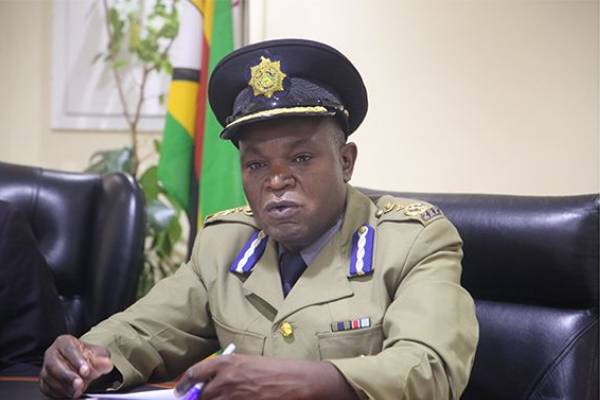
In a statement released on Friday, Police spokesperson Commissioner Paul Nyathi said the victims were trapped after water rushed into the shaft they were working in, causing a sudden and deadly inundation.

The deceased were identified as

  • Jacob Maposa, a male adult of plot 31 Umbark, Kadoma
  • Colleen Sibanda, a male adult of 31 Umbark, Kadoma
  • Nevers Makarichi, a male adult of 21 Umbark, Kadoma
  • Simbarashe Bangira, a male adult of plot 42, Umbark, Kadoma
  • Danai Mashoko, a male adult of plot 42 Umbark, Kadoma
  • Givemore Chiredzi, a male adult of Maratonga Village, Kadoma

Police urged miners across the country to exercise extreme caution, particularly during the rainy season when flooding risks increase.

“The Zimbabwe Republic Police reiterates that miners should strictly adhere to the country’s mining safety regulations to safeguard human lives. Above all, miners should avoid entering shafts that are prone to flooding, particularly during and after rainfall,” Commissioner Nyathi said.

The rainy season traditionally claims the lives at poorly managed mine sites across the country. Despite calls from relevant authorities and mining bodies, artisanal miners continue to lose their lives unnecessarily, prompting calls for artisanal mining to be stopped during the rainy season.

Investigations into the circumstances surrounding the incident are ongoing.

BREAKING: Gift Mapakame elected Mine Managers President

0

Gift Mapakame has been elected the Association of Mine Managers of Zimbabwe (AMMZ) President at the ongoing 2025 AMMZ Conference and AGM.

Makapame, whose tenure will run from now until November 2027, currently serves as the General Manager of Kuvimba-owned Shamva Gold Mine.

He will be deputised by RZM Murowa’s George Wayeni.

The following will serve as Council members.

Council Members

Abel Makura (Past President) Mototolo Mine RSA
Dave Matyanga – Secretariat
Ray Chiridza – Acol Chemicals
Lewis Munyoro – PAN AFRICAN
Eddington Vere – Kuvimba Mining House
Larnston Gowera – Vision ai
Sandres Sandres – Freda Rebecca
Elton Gwatidzo – Blanket Mine
Alfred Chinyere – Freda Rebecca
Coburn Katanda – Pickstone Peerless