Home Blog Page 321

The impact of tax incentives requires parliament scrutiny, Chidakwa

0

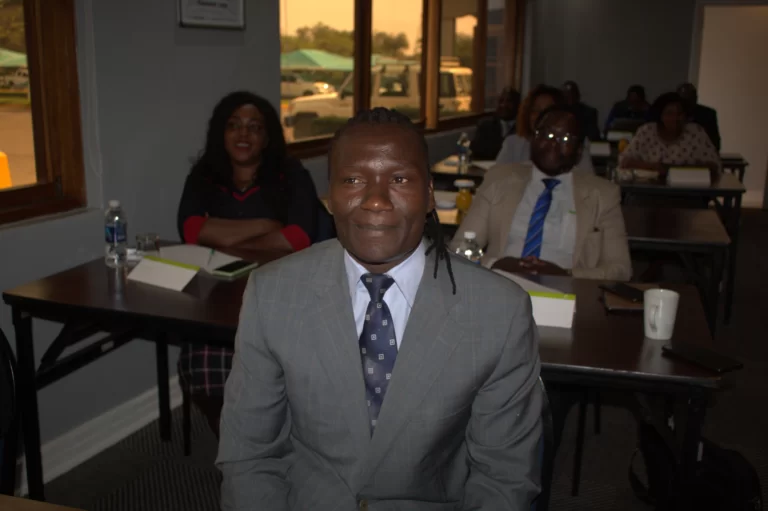
The Parliament of Zimbabwe needs to monitor and evaluate the impact of tax incentives as these hidden public expenditures deserve equal Parliamentary and public scrutiny as much as direct budget allocations, Chairperson of the Zimbabwean Caucus of the African Parliamentary Network on Illicit Financial Flows and Taxation Hon James Chidakwa said.

Sophia Takuva

Many mining companies in Zimbabwe like Great Dyke Investment, and Prospect Lithium Zimbabwe, among others, are listed under special economic zones (SEZ) where tax incentives schemes are included. The mining community has been raising red flags that tax incentives given to some mining firms will bleed the country of its much-needed foreign currency.

Speaking at the Zimbabwe Environmental Law Association (ZELA)‘s Champion MPs Capacity Building Programme with Zimbabwe Parliament Caucus on IFFs and Taxation Chidakwa said the country was confronted with a discourse of growing public demand for basic services such as health, education, water, power, food to mention a few. Therefore, optimizing public revenue, efficient and effective allocation and public spending is a necessity.

“How are we monitoring and evaluating the impact of tax incentives and are we doing a cost-benefit analysis? These hidden public expenditures deserve equal Parliamentary and public scrutiny as much as direct budget allocations. Apart from overly generous tax incentives, what are we doing to curb base erosion and profit shifting, aggressive tax planning by corporates and the wealthy to avoid paying a fair share of taxes in Zimbabwe despite generating substantial income from our economy? With festering informality, criminality, and corruption, how are we priming our role as Parliament to crank pressure on the executive to deliver on optimal tax revenue mobilization? While we focus on domestic initiatives to curb illicit financial flows, we must not lose sight of the big picture, the inequitable and sustainable global financial architecture that benefits developed countries as the primary destination for IFFs from Africa,” Hon Chidakwa said.

Chidakwa said, “Shifting focus from tax to debt. Do we need debt to finance public expenditure? Developed countries massively rely on debt to fund public expenditure, USA and Japan, are classic examples. Zimbabwe is facing a debt sustainability crisis. Debt servicing obligations, if honoured, will significantly thin much-needed investment in health and education.  Think about it, allegedly US$70 million facilitation fees for the loan for Plumtree to Forbes border post highway, the Chinese loan from collateralization of platinum resources. The linkage between debt and IFFs is fundamental in that toxic and hidden debts, their repayment, exorbitant borrowing costs, and the principal, are a tax burden on future generations, thereby posing a huge threat to intergenerational equity, an important constitutional principle of public financial management. Transparency, public participation, and accountability, just like tax revenue, should underpin debt governance in Zimbabwe,” he concluded.

Zimbabwe official gold buying prices 28 September 2022

0

Fidelity Gold Refinery (FGR) official gold buying prices Wednesday 28 September 2022.

SG 90% AND ABOVE US$49.91/g
SG ABOVE 85% BUT BELOW 90% US$49.12/g
SG ABOVE 80% BUT BELOW 85% US$48.60/g
SG ABOVE 75% BUT BELOW 80% US$48.07/g
SAMPLE BELOW 10g BUT ABOVE 5g US$47.28/g
FIRE ASSAY CASH US$49.91/g

NB: Fire Assay cash price is for gold above 100gs and no sample is deducted.
For FireAssay Transfer price, a sample of not more than 10g is deducted
2% royalty is charged on all deposits (Small-scale Miners)
5% royalty is charged on Primary Producers

Cash available. Fidelity Gold Refinery prices will be changing daily in relation to world market prices.

Weaknesses in gemstones policy results in illicit trade practices

0

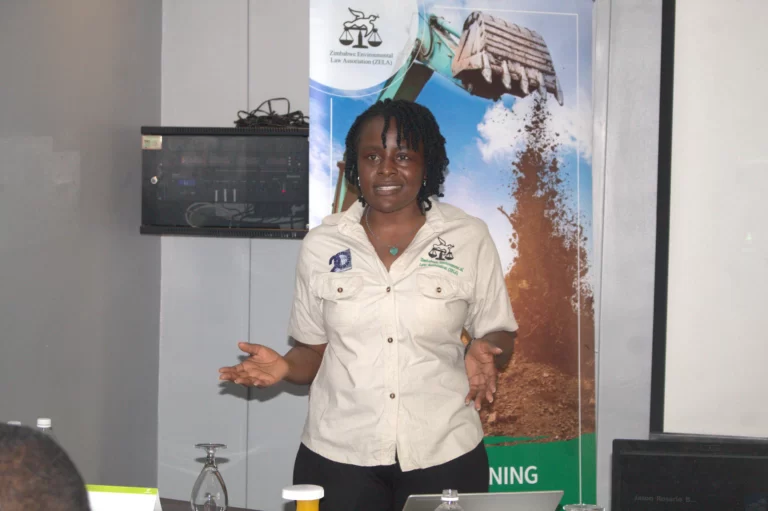
The weaknesses in laws, policies and institutional frameworks governing the gemstone sector in Zimbabwe, have resulted in illicit trade practices, Zimbabwe Environmental Law Society (ZELA) Programs Assistant Fadzai Midzi said.

Rudairo Mapuranga

According to Midzi Speaking at ZELA’s Champion Member of Parliament (MPs) capacity-building program with the Parliamentary caucus on Illicit Financial Flows (IFFs), the gemstone sector in Zimbabwe has no adequate legal instruments regulating it thereby contributing to massive illicit financial flows.

“While the Mines and Minerals Act mention precious stones, it is conspicuously silent on semi-precious stones.

“The Precious Stones Trade Act only regulates two precious stones, namely diamonds and emeralds and when read together with the Mines and Minerals Act, it implies that the latter Act’s definition of precious stones includes only diamonds and emeralds.

“However, the Precious Stones Trade Act leaves room for the Minister to include via a statutory instrument to expand the category of precious stones and perhaps semi-precious stones. The greatest worry in all this is that both Acts leave two precious stones and thirty-three plus semi-precious stones unregulated throughout their value chains.

“Weaknesses in policy, legislative and institutional frameworks governing the gemstone sector in Zimbabwe, have resulted in illicit trade practices.

“For all gemstones, the formal footprint on the value chain is very narrow (several stages are missing) resulting in offshoring of value – loss of foreign currency earnings, tax revenue, jobs and industrial linkages due to lack of local beneficiation and value addition,” Midzi said

Midzi said Artisanal and Small-scale Miners are being exploited by illegal gemstone traders who are not paying the real value of gemstones. She said pricing and valuation of the country’s gems is a very big challenge. Semi-precious and gemstones do not have a defined value as it’s based on a willing buyer willing seller.

“The sector is characterised by the existence of syndicates which include foreign buyers based in towns, local dealers who do the running for the foreign dealers, compromised security details (including the police and the military) at extraction sites, grossly exploited artisanal miners and transporters of gemstones who use informal and formal routes including airports and borders.

“In July 2020, the Ministry of Mines and Mining Development produced a draft policy on gemstones in Zimbabwe whose scope supposedly covers the whole value chain and all the other gemstones besides diamonds, which are covered by the Diamond Policy (Ministry of Mines and Mining Development, 2020).

“Most of these other gemstones have been exploited since the 1960s by small-scale miners except the Sandawana Mine which produces emeralds. Occurrences of gemstones are dotted all over the country.

“The fact that there are no large mines or MNEs mining gemstones in Zimbabwe apart from the diamonds eliminates the massive risk of abusive transfer pricing.

“The price we see on the internet do not represent the present transaction as they are just indicative of the previous sale. The pricing of our stones is also based on supply, demand and quality as compared to other countries.

“The only organization doing price valuation is MMCZ located in Harare while producers are all over the country, also they do not issue valuation certificates making it difficult to conclude a trading agreement,” she said.

Midzi said the government and other stakeholders have been neglecting the trade of semi-precious stones. She said formalization and regularization together with the recognition of gemstones mining and trading might not be enough to prevent illicit financial flows.

“The gemstone industries apart from diamonds and emeralds, generally, have been neglected by the government and other stakeholders like civil society.

“A draft legal framework to guide the mining and trade of semi-precious stones was formulated in 2019. In addition, the gemstone policy is in the pipeline.

“Generally, the four objectives mentioned by the Draft Gemstone Policy are all around formalization of the ASSM sector, which is expected to increase accountability in the sector.

“Questions arise around this. Is formalization of the ASSM sector alone enough a safeguard against illicit financial flows in the sector? Does that cover the whole value chain and plug loopholes and vulnerabilities in the whole chain? Should the policy not specifically speak to trade and trading systems, and the movement of people in and outside the country?

“On the trading side, the Precious Stones Trading Act (PSTA) defines precious stones as “… rough or uncut diamonds, or rough or uncut emeralds or any other substance which is, in terms of subsection (2), declared to be precious stones for the purposes of this Act.

“While it is a glaring gap that only diamonds and emeralds are mentioned by the PSTA, there is room for the Minister of Mines “…by notice in a statutory instrument, declare any substance to be precious stones for the purposes of this Act.”

“Unfortunately, the Minister of mines has never issued a Statutory Instrument (SI) to declare semi-precious stones as part of the standard definition of precious stones as required by the PSTA,” Midzi said.

What should be done?

Zimbabwe’s stones are finding their way into the international market outside formal channels. “The informal nature of the coloured-gemstone trade, combined with the inherent difficulty in valuing rough stones at the site of extraction, provides ample opportunity for criminal and corrupt actors to exploit and profit from it. This includes large-scale smuggling of stones, resulting in significant under-reporting of export and trade figures.”

According to Midzi, it is of importance to expedite the formulation and implementation of the gemstone policy. She said, the process must be inclusive and particularly involve local communities where gemstones are extracted and critical stakeholders like artisanal and small-scale mining associations, local government, civil society, buyers, jewellers, and vocational training colleges.

“Expedite the reforms of the Mines and Minerals Act and the Precious Stones Trade Act to foster a conducive environment for formal extraction and trade of gemstone to close legal and institutional gaps that facilitate illicit gemstone trade.

“Local governments must have clear strategies for harnessing the gemstones in their jurisdictions to transform local economic and social development outcomes.

“Political will is needed at local, national, regional, continental, and global levels to tackle the scourge of illicit trade of gemstones that are undermining efforts to achieve sustainable development in Zimbabwe.

“Incentives are needed to promote the fusion of skills for stone sculpturing that Zimbabwe is globally renowned for and jewellery making that is offshored along with value creation.

“Awareness raising of illicit gemstone trade is vital, and communities must be mobilised through the alternative mining indabas to engage with key stakeholders on leveraging gemstones for the promotion of local economic and social development,”

Youth urged to establish environment initiative groups

0

The Environmental Management Agency (EMA) has urged the youth to form their own environmental initiative group to help fight against environmental degradation caused by mining and other activities.

Presenting at this year’s Zimbabwe Alternative Mining Indaba (ZAMI) in Bulawayo EMA said it was of importance for the youth and children to be actively involved in preserving the future of the environment since they are the future.

The organisation said mining should follow environmental management strategies when doing their Environmental Impact Assessment (EIA) reports therefore the youth should also make sure that mining companies adhere to the environmental laws of the country.

It said the youth should ensure safety of the environment by creating environmental rehabilitation groups as well as ensuring that mining companies have an environmental rehabilitation plan.

“Mining companies should follow environmental management strategies in their EIA report. Waste (solid and effluent) and emissions suppression measures should always be in place. Rehabilitation of degraded areas should be done soon after the area is no longer being used. The youths must start their own environmental initiatives e.g. clean up groups, environmental youth networks, build a large social and environmental organisation,” EMA said.

Environmental laws

Section 73 of the constitution of Zimbabwe entrenches the environmental rights:

(1) every person has a right –

(a) to an environment that is not harmful to their health or wellbeing

(b) to have the environment protected for the benefit of present and future generations through reasonable legislative and other measures that –

(i) prevent pollution and ecological degradation

(ii) promote conservation

(iii)secure ecologically sustainable development and use of natural resources while promoting economic and social development

(2) the state must take measures to achieve the realization of the rights of this section

  1. THIS IS ALSO FURTHER EXPLAINED IN ENVIRONMENTAL MANAGEMENT ACT Cap 20.27, section 4 (1).

Environmental rights apply to and protect everyone including children.

Section 81 of the constitution, elaborates on the rights of children to non-discrimination, equal protection of the law, right to be heard, right to protection from economic exploitation, right to education, right to health services among others.

The duty to provide for and facilitate the right to an environment that is not harmful to the health or well-being of every person rests upon the state.

Also, non-state actors have a duty towards the implementation and fulfilment of these rights.

All non-state actors and all levels of government at the national, provincial and local levels have a constitutional duty to uphold and fulfil the environmental rights of children.

The environmental management act chapter 20.27 is the primary legislative instrument that provides for environmental management and governance.

The EM act Cap 20.27, provides general basic norms that may be used to introduce environmental legislation or to amend or maintain existing legislation

The EM act Cap 20.27, reflects what is in the constitution section 73, particularly, section 4 (1) of the act enshrines the right to a clean environment that is not harmful to health and the right to protection of the environment for the benefit of present and future generations.

It also provides for every citizen’s right to participate in the implementation of reasonable legislative policy and other measures to prevent pollution and environmental degradation.

Section 4 of the EM act, provides for the rights and principles of environmental management. E.g. Environmental management must place people and their needs at the forefront.

Section 4(1)(b) of the environmental management act provides that every person has a right to access environmental information.

Section 4(2)(d) provides that environmental education, environmental awareness and the sharing of knowledge must be promoted so as to increase the capacity of communities including children.

Youth Environmental participation

Environmental management agency has programs that involve the youth both in schools and out of schools. These include environmental clubs in schools, environmental debates and environmental competitions.

Environmental management agency has adopted the ‘catch them young initiative’, where all children are taken on board in environmental issues.

Children/ the youths are taking part in environmental programs such as clean-up campaigns and clean schools completions.

The youths and children in schools are also taking part in environmental projects such as nursery projects, waste management projects, plantations and orchard projects.

Corruption, tax evasions and incentives, major causes to illicit financial flows 

0

Criminal activities, corruption as well as tax evasion and tax incentives given to multinational corporations are the major causes of illicit financial flows (IFFs) in Africa.

Rudairo Mapuranga

Speaking at the Zimbabwe Environmental Law Association (ZELA)’s Champion Member of Parliament (MPs) capacity-building program with the Parliamentary caucus on Illicit Financial Flows (IFFs) and taxation Kenyan Finance researcher Everlyn Muendo said Multinational Corporations in Africa work flat out to make sure that they reduce tax liabilities by evading taxes through legal and illegal means bleeding African countries of the much needed foreign currency.

According to Muendo multi-national Corporations, especially those in the extractive industry are bleeding African countries of their taxes and revenues through different schemes like using lawyers to create tax evasion companies like Trusts, Private Voluntary Organizations (PVOs) among others as well as coming to invest indirectly through tax Haven countries like Mauritius.

“There are ways multinational Corporations are reaping off African countries that do not seem to be illegal but a form of illicit financial flows. The companies use lawyers to create companies that do not pay tax, and instead of coming directly to Zimbabwe or Africa, they come through Mauritius,” she said.

She said that the way Zimbabwe’s tax system in the mining industry is porous and a danger to the growth and development of the economy. She said the process and principle of double taxation creates a winner and loser with African countries losing at the hands of multi-national corporations.

“Double taxation agreements in reality are subject to massive tax abuse. African countries in the name of competing for Foreign Direct Investment (FDI) end up losing tax revenue. Many African governments including Zimbabwe are providing tax incentives in an effort to attract investment, therefore, ending up giving developed countries their resources for free in the name of attracting investment,” Muendo said.

She said African governments although they justify tax holidays by saying they provide FDI, the truth of the matter is that the holidays are based on politics more than on economics.

“Our tax system are favourable to the multinational corporation. Parliament urged to exercise a well-researched and informed oversight role to ensure that Africa does not lose from ‘legal illicit financial flows ‘ there should be due procedures that should be to countries coming in to extract natural resources.

“The people who set the global rules or double taxation are developed countries at the same time the same ones causing illicit financial flows.

“Africa should be the one dictating on tax laws than taking the laws from developed countries,” she said.

According to Chikomba Member of Parliament Hon Tatenda Mavetera in response to Muendo’s presentation, for the Parliament to help the government in coming with tax holidays, there is need to push for a clear legislative framework that benefits the country.

“As legislators, we need to assist our government so that they benefit from investments. We need proper legislation when it comes to tax holidays. There was revenue for Zimplats, initially, it was 15 per cent, then it was totally removed, and now it was introduced as 5 per cent. We need to take the bull by the balls,” Hon Matevera Tatenda said.

According to ZELA ‘s Tafara Chiremba, the parliament should take guard, to ensure that every deal is beneficial to our country.

“There is a need to ask important questions before treaties are signed. Parliament usually comes at the end of the agreement, that’s a real problem, parliament should come from the beginning. Parliament should not be just notified but be involved. Capital exporters will push for more benefits to the detriment of our countries,” Tafara said.

ASM operations a cause for concern in illicit financial flows

0

Due to its informal and semi-formal operations, the Artisanal and Small-scale Mining (ASM) sector is a hub breeding illicit financial flows in Zimbabwe.

Rudairo Mapuranga

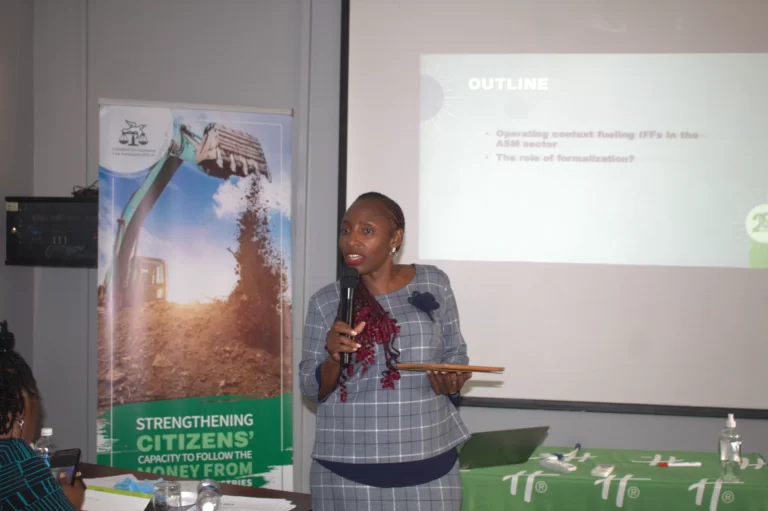
Speaking at Zimbabwe Environmental Law Association (ZELA)‘s Champion Member of Parliament (MPs) capacity-building program with the Parliamentary caucus on Illicit Financial Flows (IFFs), ZELA PROGRAMS OFFICER Joyce Machiri, said what the nation is producing is not a true reflection of the gold that is delivered to the country’s sole gold buyer and exporter, Fidelity Gold Refinery (FGR). She said, most ASM are being financed informally leading them to channel their gold to informal markets.

Machiri said, the legal framework governing ASM needs to be improved and the realities of gold mining taken into account in order to increase the chances of compliance by gold miners.

She said, there was a need to improve the data available on the ASM sector to ensure that formalization measures reflect the reality of the sector through more systematic monitoring of key data points, such as where mining takes place, how many people are involved, how much is produced and traded, etc., and greater digitalization and integration of monitoring systems, such as cadastral and inspection missions, regular ASM sector monitoring data, and inspections and controls at export points and customs.

“Smuggling in the ASM sector occurs partly due to the fact that artisanal miners, traders, and exporters face difficulties in the form of unnecessarily complicated administrative procedures, high fees, or rigid regulations that cannot meet their needs. Removing these barriers could lead to more supply chain actors operating formally and reduce incentives to smuggle products. Formalization would also make artisanal operators less vulnerable to exploitation, extortion, and onerous informal taxation

“Simplifying licensing and permit procedures and requirements for ASM operators and value chain actors, for example, by reducing the number of permits required.

“Promoting the financial inclusion of artisanal miners to combat their dependence on informal and sometimes abusive pre-financing relationships.

“Establishing an official network of gold buying, marketing, and export offices, particularly in reserved gold mining areas. This should include the establishment of local gold buying offices that pay as close to the world market price as possible and pay artisanal miners in a timely manner.

“Accelerating the formalization of the sector and the value chains of ASM and making gold mining a legitimate part of the economy alongside LSM would allow the sector to become a driver for peace and stability. This requires a shift in perspective, where state regulation of the sector aims to govern ASM through positive incentives.

“Formalization of the sector could also help marginalized and remote communities to take advantage of the economic, income, and livelihood opportunities gold mining presents, thereby mitigating grievances against the state,” Machiri said.

Zimbabwe official gold buying prices 27 September 2022

0

Fidelity Gold Refinery (FGR) official gold buying prices Tuesday 27 September 2022.

SG 90% AND ABOVE US$50.19/g
SG ABOVE 85% BUT BELOW 90% US$49.40/g
SG ABOVE 80% BUT BELOW 85% US$48.87/g
SG ABOVE 75% BUT BELOW 80% US$48.34/g
SAMPLE BELOW 10g BUT ABOVE 5g US$47.55/g
FIRE ASSAY CASH US$50.19/g

NB: Fire Assay cash price is for gold above 100gs and no sample is deducted.
For FireAssay Transfer price, a sample of not more than 10g is deducted
2% royalty is charged on all deposits (Small-scale Miners)
5% royalty is charged on Primary Producers

Cash available. Fidelity Gold Refinery prices will be changing daily in relation to world market prices.

Workers threaten to apply for placement of RioZim under judiciary management

0

Zimbabwe Stock Exchange-listed diversity miner, RioZim limited’s workers have threatened to apply for the placement of the company and its subsidiaries under corporate rescue as they deem the group to be under financial distress due to poor management which has led to its failure to look after the welfare of employees.

Rudairo Mapuranga

Writing to RioZim Chairperson Mr  Saleem Rashid Beebeejaun, Zimbabwe Diamond and Allied Mine Workers Union (ZDAMWU) General Secretary Justice Chinhema said workers are opting to put the group under judiciary management because they share the view that the poor performance of the group of companies is due to financial distress, gross undercapitalization and lack of proper management.

“Our members have reached a stage where they are initiating a process of applying for the placement of RioZim Limited and all its subsidiaries under corporate rescue in terms of Section 121 as read with Section 124 & 131 of the Insolvency Act Chapter 6.07.

“It has become very clear to the affected workers and other stakeholders including the Union (ZDAMWU) that the organisation is in financial distress. Workers for two (2) years were made to understand that the Biox plant is going to be a game changer for everyone, months down after the commissioning of the Biox plant, things have gone from bad to worse.

“Lower level workers have lost employment and the community of Chakari where Dalny mine was operating is now in darkness because Zesa switched off the whole community. The situation in the RioZim group points to a lack of strategic direction.

“Workers and other stakeholders share the view that the poor performances of the group of companies are due to financial distress, gross under capitalisation and lack of proper management. There is great variance on workers’ welfare and extravagance on the part of the shareholders. To be honest Mr Chairman we have lost confidence in the shareholders of the company and its management.  Workers have been living in abject poverty and facing hardships under the watch of the current management who have failed to find lasting solutions to all problems that affect parties to an employment contract.

“With all the above we are under instructions from our members to demand from you resolutions within (7) seven days in the following manner –All outstanding salaries be paid in full to everyone owed within the (7) seven days of receiving this letter. September salaries and all allowances be paid in full at once by the last day of September 2022.

“RioZim Limited through you Mr Chairman makes a pledge that going forward all salaries will be paid in full at the end of every month. No employee will be losing his/her employment because it is said workers are too many, instead the management team should see heads rolling. A financial re-capitalization is to be made in all the entities so as to secure jobs of current workers. In the event that you fail to address the above within the stated time, or chose to ignore, we are under instructions to immediately start the process of corporate rescue which we believe is long overdue.

“As you may appreciate, corporate rescue is meant to resurrect failing entities like Rio Zim. In our view, we should not wait until another mine collapses, and jobs lost, but diligence requires that we act now,” Chinhema said.

Chinhema also said that RioZim has been failing to pay its employees with most junior workers sent home without proper reasons.

“For the record, we have engaged the management of Cam & Motor Mine, Renco Mine, ENR, Murowa Diamonds and Dalny Mine on issues affecting workers. In some cases, meetings have been held, and in some cases our correspondence ignored. As we write to you, it is sad to note that Dalny mine has closed and workers’ contracts terminated and nothing paid to them, we are also aware that more than 400 workers who were signing fixed contracts are being terminated in phases. It has further come to our attention that there is rampant casualization of labour in your organisation  Mr Chairman, workers are employed to work and after working they expect to get paid their salaries in order to bring food to their families, pay school fees, medical bills for them and extended families, buy clothes and enjoy life of someone employed.

“We are totally surprised and disappointed by your organisation which we regard as one of the biggest employer and economic enabler in this country that it can subject its workers to the worst conditions like non-payment of wages when production is happening.

“The economic situation currently prevailing in our country requires that salaries and wages be paid promptly, when they are due and when they still have value.

“The ILO’s Decent Work Agenda states- Every person on earth should be able to have a job that enables them to live a good life in which their basic needs are met. Employment is a crucial factor for achieving this and after working every employee is entitled to a salary paid in full on time.

“The women and men who are working for RioZim Limited need an employer that take adequate measures to: Ensure that social protection and workers ‘rights are fully respected in labour laws and in practice. Ensure that the living standards of its workers and communities they leave are uplifted not poverty situation they find themselves in. Create jobs linked to standards and rights as well as social protection that gives workers the security they need to face the future with confidence not the current situation, which is causing more harm and already caused some workers to lose their jobs. Management and shareholders of RioZim are required by law to make sure workers live the life commensurate to the work they do.

“The conditions your organisation has subjected its employees is not expected from such an organisation like yours. Only fly-by-night organisations can do this to its workers and the worse part of it all is when we hear some managers are in the business of intimidating workers for asking their salaries.  This is contrary to the provisions of Section 2A, 5 & 6 of the Labour Act Chapter 28.01 together with ILO Convention No.95 and Section 65 of the Constitution of Zimbabwe,” Chinhema said.

Shock as Dalny Mine downgrades to small-scale

0

Chakari-based Dalny mine which shut down in July 2022 is currently in the process of building a small-scale plant at the mine’s locale in Chakari which will be operational on completion sources have revealed.

The struggling gold mine has been without power for the past 7 months and counting due to a huge electricity debt subsequently shutting down.

Workers unions have also decried RioZim’s poor workmanship accusing the miner of struggling to pay its debts, including timely paying workers.

In its trading update for the first quarter of 2022, RioZim blamed the lack of production at Dalny Mine on poor ground conditions and flooding. The company also indicated that the mine would be operational during the second quarter which never materialised leading to many workers losing jobs.

“There was no gold production at Dalny mine throughout the period. The mine suffered from poor ground conditions and flooding of its pits which rendered mining activities insurmountable. The mine is scheduled to resume operations in the second quarter after dewatering of the pits,” RioZim said through its trading update for the first quarter of 2022.

Reliable sources say there is a contractor building a small-scale plant on-site which is expected to be operational on completion, putting hopes of the Mineworkers’ return in jeopardy.

Mining Zimbabwe contacted RioZim’s Public Relations Officer Mr Wilson Gwatiringa who initially said he will get back with a response on allegations of the miner’s plans of downgrading.

“Good day, there have been reports that there is a small-scale plant that is currently being built at RioZim’s Dalny mine in Chakari, may you kindly confirm if this is true? If it is, why the downgrade and what will happen to the workers who were employed at the site,” this reporter asked Gwatiringa.

“I will get back to you soon,” Gwatiringa responded.

The reporter followed up 24 hours after to which Gwatiringa said the company does not have a comment which seems to be the norm whenever questions are posed to the company.

“We don’t have a comment,” Gwatiringa responded.

Meanwhile, RioZim workers intend to apply for RioZim to be placed under corporate rescue.

ZITF launches the Infrastructure and Built Exhibition (AfriConfex)

0

The Zimbabwe International Trade Fair (ZITF) Company has introduced a specialised expo dubbed the Infrastructure and Built Exhibition (AfriConfex).

The expo, which specifically targets buyers and sellers within the built environment value chain, is expected to take place at the ZITF grounds on 20 and 21 October this year.

The ZITF company runs other annual specialised expos such as Mine Entra, Scholastica as well as the Water, Sanitation and Hygiene (WASH).

ZITF board chairperson, Busisa Moyo, said the event would be the country’s biggest gathering of buyers and sellers within the entire built environment value chain, creating a single platform for knowledge sharing across the different sectors, sub-sectors and segments of production.

“The event comes at an opportune time given the Zimbabwean government’s infrastructural development plan to achieve a middle-class economy by 2030, and the fast-approaching end of the First Ten Year Implementation Plan (FTYIP) of Africa’s Agenda 2063 (2013 – 2023),” he said.

“Investment in large-scale infrastructure projects has been and continues to be one of the cornerstones of Zimbabwe’s National Development Strategy (NDS1), which outlines our roadmap to achieve economic growth and stability.”

Mpyo said the private sector and the government’s drive to improve the country’s infrastructure to sustain growth in the manufacturing sector and expand municipal utilities would continue to contribute to the growth in construction spending.

“Taking the above into consideration, it became apparent to us that the industry and market are primed for a stand-alone event outside Mine Entra (where building and construction had previously been showcased),” he explained.

The inaugural AfriConfex, Moyo said, would therefore provide a key platform for the sharing of local and regional experiences, technical knowledge exchange and a discussion of cross-cutting challenges, opportunities, and learnings with a view of drawing up actionable resolutions to achieve industry and economic growth.

He said the event was being organised in partnership with the Ministry of Transport and Infrastructural Development, and would run under the theme, “Solid Foundation. Stronger Future. – Exploring Linkages in the Infrastructure Value Chain.”

“The theme rallies the industry and its stakeholders to engage in solution-oriented discourse and implement catalytic actions aimed at the success and growth of the sector. The 2-day event, featuring exciting exhibition displays and a robust industry-driven conferencing programme will provide the platform for distinctive opportunities for business expansion, networking, and learning,” he said.

“Additionally, as indigenous contractors gear up to venture into regional and international markets, AfriConfex will provide dynamic, hands-on moments to stay ahead of trends, opportunities, and risks such as technology trends, international labour markets, and new legal backgrounds and regulations.”

Moyo added, “AfriConfex is expected to grow into an annual, pan-African calendar event for the industry and will explore various overarching themes including infrastructure development, planning and policy, financing of infrastructure projects, smart transport technologies, cities of the future (smart cities), new construction and architecture technology and solutions as well as safety planning and solutions.”

Mining Zimbabwe’s Equipment and technical focus Magazine will be distributed at the Expo.

New Ziana