

Home Blog Page 322

Emulate Zimplats, Invest in value addition!

0

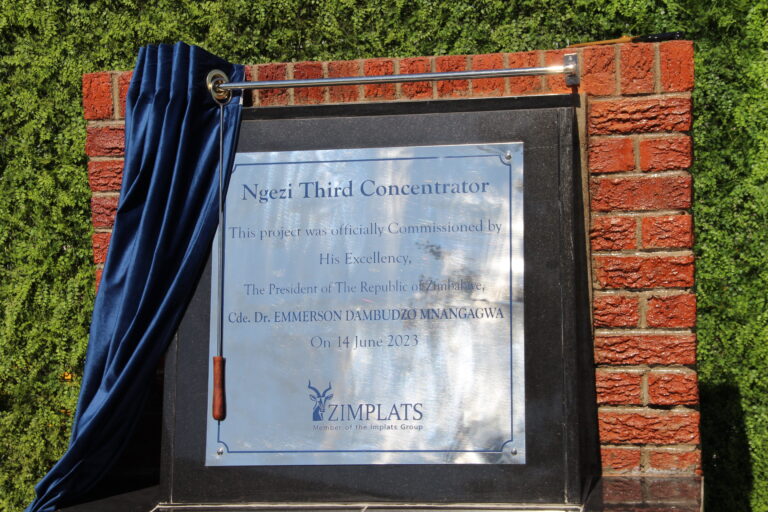
The Minister of Mines and Mining Development Hon Winston Chitando has urged Mining companies to emulate Zimplats’ initiative to invest in value addition and beneficiation to enable the country to benefit wholly from the proceeds of the mining sector.

Rudairo Mapuranga

Speaking at the Zimplats Expansion project commissioning ceremony in Ngezi on Wednesday, Minister Chitando commended Zimplats for establishing a value-addition plant at the same time encouraging other mining companies to follow suit.

He said companies should invest in new technologies and research for the sector to remain competitive.

“I urge other companies to follow in your footsteps and invest in value addition and beneficiation. Together, we can build a strong and prosperous economy that benefits all our people. As we move forward, we must continue to prioritize beneficiation and value addition in the mining industry. We must invest in new technologies, research, and development to ensure that we remain competitive and continue to add value to our mineral resources,” Minister Chitando said.

Speaking at the same event, the Permanent Secretary in the Ministry of Mines and Mining Development Mr Pfungwa Kunaka also said mining firms should prioritize value addition and beneficiation.

“As we celebrate the commissioning of this plant, let us remember that this is just the beginning. We must continue to prioritize beneficiation and value addition in the mining industry, and we must work together to invest in new technologies, research, and  development to ensure that we remain competitive and continue to add value to our mineral resources.”

“This plant represents a significant milestone in our country’s efforts to add value to our mineral resources and promote sustainable development in the mining industry,” Kunaka said.

The establishment of the plant is a testament to Zimbabwe’s commitment to value addition and beneficiation, which is critical for the growth and development of the country’s economy.

ZIMPLATS in one of its projects, intends to construct a Base Metal Refinery (BMR). This is another giant step forward in local mineral beneficiation and value addition, as the country moves towards full beneficiation of platinum in the country.

The sulphuric acid plant that the company intends to install will produce 100 kilotonnes per annum of sulphuric acid. The sulphuric acid will be used in the manufacturing of fertilizers in the country, thereby reducing acid imports.

ZIMPLATS also intends to develop a 110 MW solar power plant, with sufficient capacity to satisfy the needs of the company, including related mining and mineral beneficiation facilities.

Chibafa reflects on his tenure as Chamber of Mines President

0

The Chamber of Mines Zimbabwe (CoMZ) is a reputable organization that represents the mining industry in Zimbabwe. The Chamber’s President, who is at the forefront of the organization, plays a pivotal role in championing the sector’s interests and advocating for policies that support its growth. As Collin Chibafa’s tenure came to an end Mining Zimbabwe, spoke to the former President to find out more about his time in office.

Q: How has been your experience as the Chamber of Mines over the past two years?

A: I took over from Ms E Nerwande and have built on the cordial relationships she helped cultivate between the Chamber and its key stakeholder, the government. Our relationship with the government has been built on mutual trust and this has enabled us to be successful in fulfilling our purpose of promoting, encouraging, protecting and fostering the growth of the mining industry. The various arms of government have generally introduced supportive policy interventions and this has allowed us to unlock some of the hindrances that have tended to retard the growth of the sector. We have also been able to have constructive conversations in those instances where we have disagreed with proposed policy changes.

Therefore, on reflection, my tenure as the President of the Chamber has been both rewarding and challenging. My assumption of office as the President of the Chamber of Mines was at the height of the Covid-19 pandemic when activities in most sectors of the economy were on lockdown. The mining sector was not spared from these challenges and marginally grew by 3.4% in 2021, a sluggish growth from a Covid-19-induced contraction of -9% in 2020. Apart from Covid-19 challenges, other sector-specific challenges that dodged the mining sector include inadequate foreign exchange retention, fragile power supply, payment delays for gold and coal deliveries, as well as loss of value on the surrender portion of export earnings. With the support of our Executive Committee and Chamber Members, we have had continuous engagement with the government on these matters and experienced a level of success in addressing some of these challenges. This resulted in the improvement in the operating environment for the mining industry with the sector recovering to record a growth of 10% in 2022. This positive outturn also coincided with the boom in commodity prices which propelled mineral exports to a record US$5.6 billion in 2022, constituting almost 80% of national exports. I pass the baton on to my successor knowing that those challenges that remain are not insurmountable.

How has the Chamber of Mines evolved during your time as President?

During my tenure, I believe that the Chamber has restored its prime position as the leading voice with a key mandate to drive the development and growth of the mining industry as enshrined in its constitution. We have been able to improve our dialogue with the government regarding various policy and legislative matters including proposed changes to the Mines and Minerals Act, the proposed Minerals Development Policy as well as electricity, foreign exchange and fiscal matters. We also partnered in government’s efforts to combat the Covid-19 pandemic through donations at national and provincial levels. These public-private partnerships demonstrated our commitment to supporting the government in dealing with challenges facing the country. Our members also supported ZESA settle some of its debts to regional power utilities to ensure that they imported power to supplement the domestic supply.

How have advancements in technology impacted mining operations in recent years?

The mining industry has made robust efforts to adapt to technological advancements that enhance operational efficiency, safety and viability. We have seen the mechanization in some operations that have engineered out hazardous processes resulting in the removal of humans from hazards. We have also seen the automation of some processes, particularly in mineral processing, and the ability to monitor and control various aspects of the plant from remote locations. However, there is some way to go particularly for small to medium-scale operations. The shortage of capital is a major stumbling block to the adaption of technology in mining as some of the requirements are capital-intensive.

What steps do you think the industry should take to ensure responsible and sustainable mining practices?

Being a sustainable industry is something the Chamber of Mines takes seriously to ensure that mining survives and thrives into the future as an industry that is safer, more sustainable and efficient, and better harmonised with the needs of society. The mining sector has a responsibility to mine the mineral resources entrusted to it by government in a way that maximises the benefits to stakeholders and minimizes the impact on the environment and host communities where our mines are located.

Looking back, is there anything you would have done differently during your time as president?

I view what some people term failure as a learning opportunity that helps develop me to be a better individual. I have had the privilege of receiving strong support from the Council, Executive Committee and Secretariat of the Chamber in executing the decisions of the Chamber. Looking back, therefore, I am grateful for the various learning opportunities I have been able to grow from. So, I leave my role with a heart full of gratitude for the opportunity I have had to lead efforts to foster the growth of the country’s mining sector.

What do you see as the biggest opportunity for growth for the mining industry in the coming years?

Government and business need to continue on their journey of working together to address those remaining challenges that hinder the growth of the mining sector. Mining investments by nature is generally a long-term in nature. Therefore, government needs to continue improving the operating environment by balancing the short-term needs of the country and the long-term benefits that mining can deliver for the country. Zimbabwe is well endowed with a wide array of mineral resources and the country has certain distinct comparative advantages, such as an educated, productive, non-militant labour force and shallow ore bodies. However, our regulatory and fiscal environment could be better. By addressing this, government could unlock further growth of the mining sector. Capital tends to be tentative where there is unpredictability.

Finally, what legacy do you hope to leave behind for the mining Industry?

I hope to have left behind a legacy that reinforces the old adage that two are better than one, that government and business can work together to achieve a better outcome than either alone. The mining sector’s export earnings are at a record high. I pray that this record is broken next year as the sector continues to grow for the benefit of all Zimbabweans.

KMC Leads the way in benefiting the Local Community

0

Kamativi Mining Company (KMC) is making positive strides in benefiting the local community it is operating from.

The company has already generated a positive impact on the local community before commencing production which is set for October 2023.

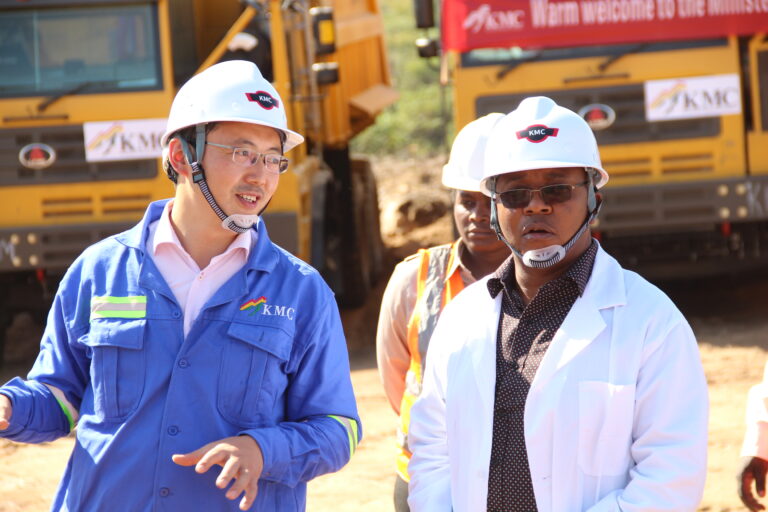
Speaking at the tour of the Lithium mine recently, Mines and Mining Development Deputy Minister Polite Kambamura said KMC is an excellent example of a company that cares about the community it is operating from.

“I want to thank you for working closely with the community. You have told me that you drilled eight boreholes of which five were dry holes, and three are currently providing water to the community. I saw some donations that you made to the local clinic. Keep on doing good. You are part of the community, so keep working with the community,” Kambamura said.

Kambamura said KMC’s approach is what the government is pushing for, and this is not only benefiting the community but also the economy as a whole. The company has employed a significant number of people from the local community.

This has a ripple effect on the local economy and will help reduce poverty in the area which has been having adverse challenges since the closure of the former tin mine in 1994.

“Currently, KMC is employing over 250 employees, with a bigger chunk of employees coming from the local community. One impressive thing is that the company has not waited to start production to work with the community. So we are looking forward to the company finishing the first and second phases, which will see the company employing 1500 locals,” Kambamura said.

KMC’s initiative is a good example of empowering local communities by providing them with accessible water sources, quality healthcare, and employment opportunities.

Speaking at the tour KMC Chairman said on full production KMC is expected to employ 1500 locals.

“We will be mining and processing 2 million tons of ore per year. So after the products are produced, they will be 1,500 jobs for the Zimbabweans.

He said the KMC is committed to restoring Kamativi to its former glory days.

“The development of industry, culture and other aspects will re-enact the glory of the whole community and make the community a place of prosperity and hope.  In addition to the development of the project, we are also committed to developing the community, including the culture and the commerce of the community, and also the education and the health care of the community, and to restore the glory of the community, make a great contribution to the Zimbabwean community and also contribute to Zimbabwe’s economic development and the realization of Vision 2030.” KMC Chairman said.

Kamativi Residents Association Secretary General Mathius Sibanda commended KMC for bringing employment to the mining town saying it is a step in the right direction. He said, once the lithium mining company reaches full production, with over 1500 people to be employed, the town’s GDP will also increase.

“Our children are already getting employed despite the mine not yet being in production. They have also expect to employ 1500 people from within this community and for that we are grateful. We had serious water challenges which exposed the community to water bone diseases that have now been eradicated with the introduction of boreholes and on behalf of the residents I would like to say we are proud to have KMC in our community,” Sibanda said.

With its commitment to value-added mineral exports, KMC is poised to be a significant player in the mining sector in the coming years. Investors will keep a keen eye on its progress, hoping to replicate its success when investing in other communities.

Zimbabwe gold buying prices 13 June 2023

Fidelity Gold Refinery (FGR) official gold buying prices Tuesday 13 June 2023. See the Zimbabwe gold buying prices for today.

SG 90% AND ABOVE US$59.64/g
SG ABOVE 85% BUT BELOW 90% US$58.70/g
SG ABOVE 80% BUT BELOW 85% US$58.07/g
SG ABOVE 75% BUT BELOW 80% US$57.45/g
SAMPLE BELOW 10g BUT ABOVE 5g US$56.50/g
FIRE ASSAY CASH US$59.64/g

NB: Fire Assay cash price is for gold above 100gs and no sample is deducted.
For the Fire Assay Transfer price, a sample of not more than 10g is deducted
A 2% royalty is charged on all deposits (small-scale miners)
A 5% royalty is charged to Primary Producers

Cash available. Fidelity Gold Refinery prices will be changing daily in relation to world market prices.

GDI promises homeownership for employees

0

Great Dyke Investments (GDI), has revealed its plans which are centred on providing employees with their own homes. This arrangement has been termed as a landscape, with building societies set to fund it.

GDI Chief Operating Officer and Kuvimba Mining House (KMH) technical director Munashe Shava said the strategy behind the GDI housing project is to promote homeownership among employees instead of offering them company accommodation. He said the company hoped that this arrangement will foster a longer-term relationship with the employer. Power and water have also been integrated into the project while logistics, including railway lines, will pass through the development.

“We want to ensure that instead of giving accommodation to employees, we want them to own their own accommodation. They should own the houses. The funding arrangements have also been done. It’s called a landscape. The financial institutions, the building societies, are actually going to fund it. …because it also has to do with its proximity to the capital, very close to Norton so the new development which is going to be in Norton is part of Norton.

“So automatically, employees will actually own houses. Not only that, but it will also encourage them to have a longer view of the relationship with the company,” Shava said.

According to GDI, all the licenses for the project are in place, and everything is set to begin soon. However, due to the pullout of one of its JV partners due to the Russian and Ukraine issues, the project’s recommencement will have a new strategy. The company stated that it would be back on the ground soon, and all preparations have been made.

“So everything is there. As we speak, I think you are all aware, the Russian and Ukraine issue brought in a new dimension to the project because the other JV partner was Russians and obviously, what was happening led to the pull-out of the project. So a new strategy has been put in place to recommence the project and that’s what we are waiting for. Very soon we should be back on the ground. Everything is in place,” Shava concluded.

REPORT: ILLICIT TRADING IN MINERALS AND MINERAL LEAKAGES

0

REPORT OF THE PORTFOLIO COMMITTEE ON DEFENCE, HOME AFFAIRS AND SECURITY SERVICES ON

THE SECURITY OF MINERALS: ILLICIT TRADING IN MINERALS AND MINERAL LEAKAGES


FOURTH SESSION – NITH PARLIAMENT

_____________________________________________________________________

Presented to Parliament September 2022

Get the full report HERE

Zimbabwe gold buying prices 12 June 2023

Fidelity Gold Refinery (FGR) official gold buying prices Monday 12 June 2023. See the Zimbabwe gold buying prices for today.

SG 90% AND ABOVE US$59.87/g
SG ABOVE 85% BUT BELOW 90% US$58.92/g
SG ABOVE 80% BUT BELOW 85% US$58.29/g
SG ABOVE 75% BUT BELOW 80% US$57.66/g
SAMPLE BELOW 10g BUT ABOVE 5g US$56.72/g
FIRE ASSAY CASH US$59.87/g

NB: Fire Assay cash price is for gold above 100gs and no sample is deducted.
For the Fire Assay Transfer price, a sample of not more than 10g is deducted
A 2% royalty is charged on all deposits (small-scale miners)
A 5% royalty is charged to Primary Producers

Cash available. Fidelity Gold Refinery prices will be changing daily in relation to world market prices.

Government urged to increase forex retention to 50pc

0

THE Government needs to raise the foreign currency retention rate of 12 percent that is remitted by mining companies to a more robust 50 percent. Such a move would invigorate the economy and spur the growth of local industries, a vital step towards reducing unemployment and addressing the prevailing trade imbalances, the chief executive officer of Buy Zimbabwe, Mr Munyaradzi Hwengwere has said.

Miners say they want to be allowed to keep 70 percent of their dollar earnings to allow them to import equipment and mining consumables, including fuel. Mining generates most of the export earnings for the country which is facing a severe shortage of dollars.

In an interview on the sidelines of the Zimbabwe National Chamber of Commerce (ZNCC) Midlands Annual Awards ceremony held over the weekend, Mr Hwengwere said for the economy to grow, there is a need to develop local industries.

“Right now mining is the largest foreign currency earner. Sadly, only 12 percent of the mining order book is domesticated in Zimbabwe which means the ability to create employment in other sectors is very low,” he said.

Mr Hwengwere said the first thing the Government needs to do is to significantly reduce the 12 percent to 50 percent.

“There is a need for the Government to force mining companies to retain at least 50 percent of foreign currency earnings to the country against the current 12 percent which leaves the country in dire need of foreign currency earnings. This development means mining companies will need to work on programmes to make sure that they support local industries and local businesses,” he said.

Added Mr Hwengwere, “Unless that happens we will remain in the same vicious circle of currency problems that we are having in the country. We still have huge trade imbalances, US$17 billion over the past 20 years that we have taken out to other countries.”

He said what needed to be done was the implementation of the Local Content Policy passed by the Cabinet.

“Its implementation of the local content policy that was passed by Cabinet to say mining companies cannot have anything above 50 percent. That needs to be implemented, there is a policy already but the implementation has not been thorough.

“So we just need to make sure that people know what they need to do, we need to make sure that for example bore mills and a lot of equipment can be secured in Zimbabwe.  Let’s just cut our imports, let us use the money to support local industries,” said Mr Hwengwere.

He said over 60 percent of foreign currency earnings in the mining sector come from Zimplats, Mimosa, and Unki Mines. As Buy Zimbabwe, he said they are advocating for the total ban of raw material exports to grow the local industries.

Chronicle

Kuvimba seeks internal resources to Fund Platinum project

0

Kuvimba Mining House (KMH) is planning to find its own resources to fund one of the country’s biggest platinum project, Great Dyke Investment (GDI) in Darwendale as the company seek to have full control of the project for the country.

Kelvin Sungiso

Last year, Russia’s Vi Holdings pulled out of the project located on the mineral-rich Great Dyke of Zimbabwe. The long-delayed project is expected to have a peak production capacity of 860,000oz of platinum group metals (PGM) a year.

Speaking at a Media tour on Friday, GDI Chief Operating Officer and KMH technical director Munashe Shava said the owners of the project have concluded that it would not be ideal to give such a big project to foreign investors as this would lead the country to lose focus related to mining growth.

According to Shava, the project which was initially planned to start production in 2021, has the potential to be exploited for five decades.

He said investors usually come with their own terms resulting in compromising on some of the plans intended for growth.

“For your own information, this project is now valued at over US$2.5 billion and with a life of mine of over 56 years. The approach now is to say let’s find our own resources to develop this project because it doesn’t make sense to bring in the Chinese, the Americans or other Investors who have got money to come here and get into a project of this magnitude. And also come in and bring in new conditions which might affect the strategy of having a Refinery because Investors will come with their arrangements,” Shava said.

He also said that GDI was planning to build a Refinery but he however said that for it to be feasible,  it was important for all the platinum producers to have one Refinery.

“Investment into the Refinery is no mean business and it also requires funding not probably from the operations or from the Investors. We might need to arrange a separate structure to be able to do that. It will be good for Zimbabwe as a country to have its own Refinery, there are no two ways about it, but it’s a journey that we need to walk and that conversation is underway within the Platinum Producers Association,” he said.

The Darwendale mining project includes the development of underground mining activities to extract PGM, as well as processing facilities.

Zimbabwe is seeking to exploit its reserves of platinum, which is used in catalytic converters to limit auto emissions, at a time when vehicle manufacturers are boosting the production of electric cars powered by lithium batteries.

Global miners chase critical minerals deals

0

Miners are using their strong balance sheets to reposition for long-term growth, particularly in critical minerals, which accounted for two-thirds of last year’s M&A deals, while gold deals were down 50% as precious metals’ dominance of M&A ended.

That is according to the latest PWC review of the global mining industry that also finds that governments are becoming a major player in the mining industry as advanced countries look to ensure they have access to the critical minerals needed for the green transition.

Though the total value of the top 40 M&A activity was steady in 2022 compared with the previous year, the composition changed as the race for critical minerals accelerated, with critical minerals deals up 151% and copper accounting for 85% of those deals. Miners prefer outright ownership to joint ventures, and there is an appetite for “transformational deals” such as Glencore’s $22bn offer for Teck Resources.

PWC SA’s Laetitia le Roux said mining companies were not the only players in the race, with sovereign wealth funds and carmakers also seeking deals. Further consolidation in the sector was expected.

The race for critical minerals has caused governments to enter into agreements with other governments to collaborate on securing supplies of these minerals, particularly copper, lithium and cobalt. Miners must now “reckon with a whole new set of industry dynamics”, with national governments having reconfigured the competitive landscape, the report shows. Governments, particularly in advanced countries, have put new rules and regulations in place, such as export curbs, as well as new incentives to explore for and beneficiate critical minerals.

Go elsewhere

SA is believed to have significant resources of critical minerals but it would require exploration to identify these. In terms of the regulatory environment, SA had no focus on critical minerals; there had not been much exploration nor much work to incentivise local beneficiation, PWC SA mining lead Andries Rossouw said.

“There is a real risk that if we don’t create an enabling environment for our mining industry the global mining companies will go elsewhere,” he said.

For existing mining companies in SA however, the regulatory environment is less of an issue than the energy, transport and water security issues constraining the sector.

The review shows globally miners are taking advantage of the low net debt and substantial cash holdings they have built up thanks to their capital discipline and the strong commodity prices they have experienced since 2016.

Revenue held steady last year for the top 40, though coal was the leading contributor for the first time since 2013. Earnings were down 3% however, due to pressure on costs.

In the coming year it was expected that prices would soften, costs would stabilise, capital spending would decrease but dividends would remain high, PWC said.

PWC’s top 40 list is again headed by Australia’s BHP and Rio Tinto, but Swiss-based Glencore has risen from fourth to third place on the rankings, ahead of Brazil’s Vale and China’s Shenhua Energy Company.

Anglo-American comes in at seventh place, but other SA miners rank between 30 and 40, led by Impala Platinum. Gold Fields, AngloGold Ashanti and Sibanye-Stillwater are the only other SA-based companies on the list.

Source: businesslive