Home Blog Page 328

Zimbabwe official gold buying prices Monday 5 September 2022

0

Fidelity Gold Refinery (FGR) official gold buying prices Monday 5 September 2022.

SG 90% AND ABOVE US$52.30/g
SG ABOVE 85% BUT BELOW 90% US$51.47/g
SG ABOVE 80% BUT BELOW 85% US$50.92/g
SG ABOVE 75% BUT BELOW 80% US$50.37/g
SAMPLE BELOW 10g BUT ABOVE 5g US$49.55/g
FIRE ASSAY CASH US$52.30/g

NB: Fire Assay cash price is for gold above 100gs and no sample is deducted.
For FireAssay Transfer price, a sample of not more than 10g is deducted
2% royalty is charged on all deposits (Small-scale Miners)
5% royalty is charged on Primary Producers

Cash available. Fidelity Gold Refinery prices will be changing daily in relation to world market prices.

Angola recovers a 160 carat diamond

0

Lucapa Diamond and its partners, Endiama and Rosas & Petalas have announced the recovery of a 160-carat white Type IIa diamond by Sociedade Mineira Do Lulo.

The 160-carat diamond is the 28th +100 carat diamond recovered at Lulo and was mined from the same alluvial mining block as the “Lulo Rose”, the 170-carat pink-coloured diamond recovered in July 2022. The 160-carat diamond is the 6th largest recovered at Lulo to date.

SML transitioned to the lezirias (flood plains) towards the end of the first half of 2022 (refer to ASX announcement 31 August 2022). Diamond recoveries have been strong with over 100
Specials (diamonds weighing more than 10.8 carats) recovered in the last two months.

Lucapa has interests in two diamond-producing mines in Angola (Lulo, in which LOM holds 40%) and Lesotho (Mothae, in which LOM holds 70%). The large, high-value diamonds produced from these two niche African diamond mines attract some of the highest prices per carat for rough diamonds globally.

The Lulo mine has been in commercial production since 2015, while the Mothae mine commenced commercial production in 2019. In 2021, through its wholly owned subsidiary, Australian Natural Diamonds Pty Ltd, Lucapa completed the strategic and transformative acquisition of the Merlin Diamond Project, a historic Australian mine containing a 4.4 million carat JORC (2012) compliant Mineral Resource with significant exploration potential.

The company published an Updated Scoping Study re-enforcing the significant economic potential for a long-life mine at Merlin with a production target of 2.1 million carats. A feasibility study is expected to be completed by Q3 2022.

Mining Review Africa

BREAKING: Zimbabwe Special Permits extended to June next year

0

South Africa’s Minister of Home Affairs, Aaron Motsoaledi has extended the validity of the Zimbabwe special permits by another six months.

The permits were set to expire at the end of this year, leaving thousands of Zimbabweans in the country with no choice but to return home or face being in the country illegally.

Civil society organisations, including the Helen Suzman Foundation, had turned to the courts to reverse the minister’s decision to terminate the Zimbabwean Exemption Permit (ZEP).

Motsoaledi has since appointed a Departmental Advisory Committee to assess the visa applications by affected by Zimbabweans.

The committee was led by Director-General, Dr Cassius Lubisi.

In a statement released on Friday, the department says Motosaledi received a report from the committee which stated that he should consider extending the validity period for the permits.

“The Minister has carefully considered the request and decided to extend the period by a further six months, that is, 31 December 2022 to 30 June 2023,” they say.

“Another factor considered by the Minister is that few Zimbabwe nationals have thus far applied for visas or waivers. To this end, the Minister has issued another directive,” reads the statement.

The department says the minister remains committed to affording affected Zimbabweans nationals another opportunity to apply for visas or waivers.

However, there will be no further extension reported Jacaranda FM.

“The department calls upon all the affected Zimbabwe nationals to make use of this window of opportunity and not wait for the last moment to lodge their applications as is the case now.”

Mining tycoon’s conviction may have cost him billionaire status

0

Beny Steinmetz, the Israeli mining tycoon fighting a bribery conviction, told a Swiss court that the scandal has taken a heavy toll on his reputation and suggested that it may even have cost him billionaire status.

On his first day of testimony, the one-time diamond trader said relations with his bankers have become more difficult since his conviction, given the headlines that followed the Geneva court ruling in January 2021.

“When my entourage reads what’s published in the press about me, they say ‘that isn’t the Beny Steinmetz we know,’” he said. “My financial situation has only deteriorated and it’s very complicated with the banks now.” While a precise figure of his fortune was hard to gauge, he said it was now between “$500-million and $1-billion, max.”

Steinmetz, 66, is seeking to convince a trio of judges that fundamental mistakes were made by the Swiss judges who misinterpreted how he won the rights to the Simandou iron-ore mine in Guinea.

Steinmetz, dressed in a grey suit and white open-necked shirt, made the comments in response to preliminary questions posed by chief prosecutor Yves Bertossa on Wednesday.

The businessman was found guilty of bribing public officials in Guinea to secure the concession for the vast mountain of ore worth billions of dollars and was sentenced to five years in prison and ordered to pay a penalty of 50 million Swiss francs ($52 million). The initial trial took place in Geneva as Steinmetz lived there until 2016.

Steinmetz said he retains just two homes, both in Israel with a value of $ 40 million to $50 -million. Asked by Bertossa to describe his annual income, he declined to comment. Steinmetz is expected to testify further on Thursday before the trial wraps up next week.

Mining Weekly

Zimbabwe official gold buying prices Friday 2 September 2022

0

Fidelity Gold Refinery (FGR) official gold buying prices Friday 2 September 2022.

SG 90% AND ABOVE US$51.74/g
SG ABOVE 85% BUT BELOW 90% US$50.93/g
SG ABOVE 80% BUT BELOW 85% US$50.38/g
SG ABOVE 75% BUT BELOW 80% US$49.84/g
SAMPLE BELOW 10g BUT ABOVE 5g US$49.02/g
FIRE ASSAY CASH US$51.74/g

NB: Fire Assay cash price is for gold above 100gs and no sample is deducted.
For FireAssay Transfer price, a sample of not more than 10g is deducted
2% royalty is charged on all deposits (Small-scale Miners)
5% royalty is charged on Primary Producers

Cash available. Fidelity Gold Refinery prices will be changing daily in relation to world market prices.

How to get in touch with Zimbabwe Miners Federation (ZMF)

0

Yesterday we published an article entitled “ZMF compiling youth in mining data for US$10m facility, deadline tomorrow”.

We received many enquiries on how the Zimbabwe Miners Federation (ZMF) can be contacted as many were interested in benefiting from the US$ 10 million facility.

What is the Zimbabwe Miners Federation (ZMF)

The Zimbabwe Miners Federation (ZMF) is a government initiative to effect sustainable growth and meaningful transformation of the artisanal and small-scale mining industry. It is Zimbabwe’s largest mining body with over 1.5 million members, which contributes an annual average of 60% of the total gold deliveries to Fidelity Printers and Refiners (FPR) the country’s sole gold buyer.

Zimbabwe Miners Federation’s birth was marked to represent and contribute to the development, growth, and empowerment of the artisanal and small-scale (ASM) miners in Zimbabwe. Established in 2003, the ZMF seeks to bring ASM into the mainstream economy through lobbying and support of ASM operations.

Part of the ZMF objectives is lobbying for the formalization and regularisation of artisanal miners, and small-scale miners. ZMF ensures that legislation in the country is conducive for ASM mining operations and at the same time developing a good rapport with the government.

ZMF links on a day-to-day basis, with its partners who are stakeholders which include but are not limited to government, investors, mining service providers, suppliers, and tertiary training institutions that complete the mineral value chain. ZMF has a total of 60 affiliate associations at the district and provincial levels. The total number of miners being represented according to the ZMF is currently at 1,500 000.

Its mission is to promote and ensure rational development and utilisation in a safe and sustainable environment of mineral resources for the socio-economic enhancement of the people of Zimbabwe.

Aims and Objectives

  • To lobby for the support, recognition and empowerment of all indigenous miners.
  • To create partnerships, and synergies to enable indigenous miners to access finance and credit for their mining operations.
  • To lobby the Government to enact policies that protect local indigenous small-scale miners and make small-scale mining a preserve for the local Zimbabweans.
  • Lobbying for the formalization of the Artisanal Miners.

Contacting ZMF

Zimbabwe Miners Federation (ZMF) can easily be contacted on its website zimminersfed.org.

Their user-friendly website has a live WhatsApp chat option that one can use to chat with the organisation’s consultants.

Their contact numbers are (+263)-242-447-950, 078 005 1695,071 708 6651.

Implats commits R50bn capex to mines, beneficiation, energy, decarbonisation

0

Platinum group metals (PGMs) company Implats, which generated free cash flow of R28.8-billion in the 12 months to June 30, said on Thursday that it had allocated R4.3-billion over the next five years to energy security and decarbonisation.

Gross profit totalled R41.3-billion at a gross margin of 35% with earnings before interest, taxes, depreciation and amortisation (Ebitda) of R53.4-billion at an Ebitda margin of 45%.

The Johannesburg Stock Exchange-listed company, headed by CEO Nico Muller, declared a final dividend of 1 050c a share, bringing the total dividend for the 2022 financial year to 1 575c a share.

The company closed the period debt free and with net cash of R26.5-billion excluding leases.

A suite of organic growth projects have been advanced and value-accretive acquisitive growth pursued amid rising input costs, constrained supply chains and labour market tightness particularly in Canada, the impacts of which were compounded by extended safety stoppages, intermittent power supply and periods of community unrest.

Implats is committed to a five-year, R50-billion capital investment programme to extend life-of-mine (LoM) development at several of its operations, increase beneficiation capacity, strengthen energy security and ensure the group meets its decarbonisation targets.

Of this capital investment, R9-billion is earmarked to expand its South African and Zimbabwean smelting and refining facilities.

In addition, around R8-billion will be invested across managed and joint venture South African mining operations over the next few years to extend LoM at producing mines, secure meaningful employment and entrench South Africa’s status as a stable and sustainable global PGMs producer, to support enduring benefits for all stakeholders.

Added to several other LoM extension projects at the Impala Rustenburg operation, Implats is confident of sustaining and growing total refined six element (6E) PGMs supply from its Southern African assets over the next decade.

Projects under study and in implementation at integrated processing assets will benefit the Southern African region’s production, reduce the group’s processing environmental footprint, and directly increase local beneficiation, positioning the region more competitively as a global mine-to-market PGMs producer.

Regarding the R4.3-billion allocated to ensure each operation has renewable energy in the mix to meet decarbonisation targets and strengthen energy security, Impala Canada is already 95% powered by renewable hydropower (5% natural gas), and Zimplats’ energy mix is 50:50 thermal to renewable hydropower.

Zimplats has obtained a 185 MW power generation licence, with the first phase of a solar photovoltaic (PV) project (35 MW, $37-million) in progress. This is the first large-scale project towards meeting the short-term (2030) decarbonisation target of a 30% reduction against the 2019 baseline, and it supports Implats’ stated ambition of achieving carbon neutrality by 2050.

In addition, several studies are underway — 33 MW of solar PV generation is at feasibility stage at Marula, and prefeasibility studies were completed at Impala Rustenburg and Impala Refineries — to establish additional renewable energy capacity of around 300 MW by 2030, with additional capacity possible. These studies are conducted in parallel to Implats’ programme to purchase electricity from independent power producers.

PROPOSED RBPLAT ACQUISITION

In November 2021, the proposed acquisition of Royal Bafokeng Platinum (RBPlat) was launched – a transaction with the potential to transform the outlook of its key western limb assets at Impala Rustenburg, while ensuring long-term sustainable PGMs production and continued economic benefits for the greater Rustenburg area and its communities.

Implats is pursuing the conclusion of the offer process associated with its proposed acquisition of RBPlat, with a key focus on securing outstanding regulatory approval from the Competition Tribunal.

Near-term operational focus is on re-establishing operational momentum at Impala Canada and Impala Rustenburg, ramping up installed milling capacity at Zimplats and Two Rivers and the timeous and cost-effective advancement of LoM extension, growth and environmental projects across its mining and processing assets.

Dollar basket pricing for 6E PGMs was 4% lower at $2 481/oz and rand revenue per 6E ounce sold decreased by 4% to R37 703/oz sold. Palladium and rhodium markets tightened with platinum remaining in surplus.

ZIMPLATS’ MINE REPLACEMENT, BENEFICIATION PROJECTS

In November 2021, the board approved the expansion of existing smelter capacity at Zimplats and the installation of sulphur dioxide abatement to mitigate its air quality impacts, at a total capital vote of $521-million. Together with the phased solar projects, this will result in an industry-leading environmental footprint for the Zimbabwean smelting facilities. This expansion will accommodate an additional 600 000 6E PGM ounces a year, the matte from which will be transported to the existing South African processing facilities for further refining.

The $468-million mine replacement projects focused on upgrading Bimha mine and developing the new Mupani mine, progressed well and remain ahead of schedule. Bimha and Mupani will replace the Ngwarati, Rukodzi and Mupfuti mines on their depletion.

The construction of an initial 0.9-million-tonne-a-year module at the third concentrator plant, at $104-million, together with associated additional mining fleet ($18-million) and infrastructure, is on schedule, with commissioning planned in the 2023 financial year.

In addition, studies are underway to refurbish and commission the base metal refinery at Zimplats, affirming its commitment to furthering in-country beneficiation.

IMPALA REFINERIES PROJECTS

The nature and quantum of ore feeds contributing to the group’s PGMs production continues to evolve over time, while ounce production is set to increase in line with Implats’ growth and beneficiation strategy, with R3.9-billion over five years being allocated to improving the South African refining facilities.

About R50-million has been approved to debottleneck sections of the Base Metals Refinery in Springs and expand treatment capacity by 10% in the medium term to provide room for future growth.

In addition, a new precious metals facility is being built, which includes three new processing sections and acquired utilities and ancillary areas. Feasibility studies into further capacity expansions at the South African base and precious metals refineries are also well advanced.

MARULA’S PHASE II EXPANSION PROJECT

The R5.1-billion Marula Phase II project was approved by the board during the year. It serves to replace production as the current Marula LoM depletes and includes a concentrator plant expansion allowing for incremental production growth. The project will deliver a 17-year LoM extension to 2039, with a 20% increase in milling capacity to 2.4-million tonnes a year.

TWO RIVERS’ EXPANSION, TAILINGS PROJECTS

In partnership with African Rainbow Minerals, Implats has committed R5.7-billion over the next five years to construct a new Merensky mine at the Two Rivers operation. The Merensky mining project will expand production by 180 000 6E ounces. Implats has a 46% stake in Two Rivers, but 100% of the 180 000 oz of 6E PGMs project production will be treated through the group’s smelting and refining facilities.

The 40 000-t-a-month upper group two (UG2) plant expansion has been commissioned, with mining rates ramping up to maintain higher annualised feed rates to secure increased ounce production.

Expansion of the tailings storage facility, which facilitates both the UG2 expansion and Merensky project, is nearing completion.

MIMOSA’S NORTH HILL PROJECT

The $90-million North Hill project will extend Mimosa’s LoM by 10 years to 2044 and sustain 227 000 t a month into the existing processing plant. The feasibility study has been completed and presented to the Mimosa board and a memorandum of understanding to support the project execution is under discussion with the Zimbabwean government. A plant optimisation project underway is aimed at improving process recoveries.

IMPALA CANADA MILL DECOUPLING PROJECT

A mill decoupling project at Impala Canada, approved in May 2021, will decouple the semiautogenous grinding mill from the crushing section to optimise the stability of milling capacity throughput and grind.

EIGHT EMPLOYEE FATALITIES

“It is with deep regret that the group reported eight employee fatalities in the year, with seven at its managed operations. The board of directors and the management team have extended their sincere condolences to the families and friends of our lost colleagues, and the group offers ongoing support to their families,” Implats stated in a release to Mining Weekly.

Following investigations in each case, the focus on visible leadership, mining discipline and targeted safety interventions has been renewed. A fatality-free final quarter followed the implementation of heightened safety measures.

SUSTAINABILITY AND ESG

Implats’ aspiration is to become an industry leader in environmental, social and governance (ESG), producing metals that sustain livelihoods beyond mining and create a better future. The groups’ achievements in sustainable development during the year were anchored by a sound environmental and social performance, an increase in capital allocation to ESG projects, and through prioritising safe, responsible, competitive and consistent operational delivery, while applying industry leading ESG practices.

During the year, Implats was honoured to be recognised for its outstanding ESG performance. The group retained, and in some cases improved, several important external rankings by leading global and regional agencies. Implats’ MSCI ESG Rating was upgraded to ‘A’ from ‘BBB,’ reflecting an improved approach to emissions and water management, and its strong governance structures. The group was also one of four JSE-listed metals and mining companies to be included in the S&P Global Sustainability Yearbook 2022 — and the only company, globally, awarded the Metals and Mining Industry Mover Award.

For the third consecutive year, Implats achieved an ‘A’ rating by the Carbon Disclosure Project for management of water security risk, a ‘B’ rating for climate change action and disclosures, and was included in the Bloomberg 2022 Gender-Equality Index. Implats remains a constituent of the FTSE4Good Index Series and the FTSE/JSE Responsible Investment Top 30 Index. All operations, bar Impala Canada, are ISO 14001:2015 certified, with three out of the five operations also ISO 45001:2018 certified. Impala Refineries holds the London Palladium and Platinum Markets Responsible Sourcing Standard certificate.

OPERATIONAL REVIEW

Implats navigated several operating challenges during the year. Extended safety stoppages, intermittent industrial action and power supply interruptions at Impala Rustenburg had a notable impact on production, while a storm-related provincial power outage and ongoing supply-chain and labour availability constraints hampered operational continuity at Impala Canada. Marula delivered record production in the period and Zimplats sustained production levels despite a complex operating environment and increased project activity.

Tonnes milled from managed operations decreased by 4%, to 22.36-million tonnes, with lower reported volumes at Impala Rustenburg and Impala Canada offsetting improved throughput at Marula and Zimplats.

Total 6E concentrate production of 3.17-million ounces was 4% lower and refined 6E production of 3.09-million ounces 6% lower.

Inflationary pressures from energy and consumables were compounded by the additional headcount and the payment of the previously signalled discretionary employee bonus in recognition of the strong financial performance in 2021. Total cash operating costs increased by 12%, with the impact of lower mined and refined volumes resulting in a 17% increase in unit costs to R17 364/6E oz.

Capital expenditure increased by 41% to R9.1-billion as investment accelerated across the mining and processing operations at Impala Rustenburg and several replacement and growth projects were initiated during the period.

Implats has six mining operations and its toll-refining business, Impala Refining Services. Its mining operations span the Bushveld Complex in South Africa, the Great Dyke in Zimbabwe and the Canadian Shield and include Impala Rustenburg, Zimplats, Marula, Impala Canada’s Lac des Iles, Mimosa and Two Rivers.

Implats employs more than 56 000 people across all operations and its metals, key to making many essential industrial, medical and electronic items, are key to a cleaner, greener world.

Implats actively develops markets for its PGM products, which are sold in South Africa, Japan, China, the US and Europe.

ZMF compiling youth in mining data for US$10m facility, deadline tommorrow

0

The Zimbabwe Miners Federation (ZMF) through its provincial youth secretaries across the nation is compiling youth data for the latter to benefit from the Minister of Mines and Mining Development Hon Winston Chitando’s US$10 million youth fund as a strategy to ramp up production for the achievement of the US$12 billion annual mining revenue by the end of 2023.

Rudairo Mapuranga

The Minister of Mines and Mining Development recently announced that the government was going to unveil a US$10 million fund to bankroll youth to motivate the youth as they are crucial in the achievement of the US$12 billion mining industry.

According to the Deputy Minister of Mines and Mining Development Dr Polite Kambamura, the mining sector has so far achieved US$6 billion in 2022 and is hoping the youth fund can help the industry achieve the US$8 billion target for 2022.

“We are happy that so far we have achieved 6 billion from the set target of 8 billion for the year 2022. We believe that capacitating youths will give further impetus in our drive to achieve the US$12 billion milestone,” Dr Kambamura said.

According to ZMF CEO Wellington Takavarasha, ZMF is compiling data for youth in mining in all provinces for those who have claims and those awaiting certificates.

“ZMF is working very closely with The Ministry of Mines and Mining Development in coming up with a database for youth in mining in all the Provinces (both registered and unregistered) for them to benefit from ZMF mining mechanization and loan enhancement program. We are therefore kindly requesting you to urgently compile and submit to the ZMF Head office all youth in mining under your Province below the age of 35 years by 1700 hours of Friday the 2nd of September 2022,” Takavarasha said.

Mines Portfolio Committee role, achievements, recommendations

0

As Zimbabwe heads for the December 2023, 12 Billion dollar Industry deadline, the industry must be kept abreast of developments and also informed about what is being done to address the challenges in the sector.

I spoke to a man on the verge of making history with the Mines and Minerals Act. A man who needs little to no introduction to those in the mining circles. A man tasked alongside his team to lead in the lawmaking process related to the sector, to conduct enquiries and hearings on matters of interest to the mining sector among others.

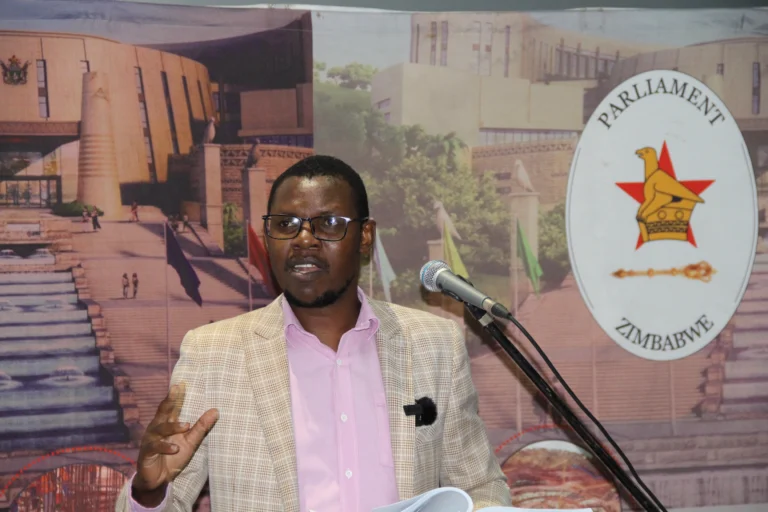
He is non-other than the Parliamentary Portfolio Committee on Mines and Mining Development Chairman, Hon Edmond Mkaratigwa. Hon. Mkaratigwa is a hands-on electrical Engineer, a businessman, and a politician who holds a Master’s Degree in Energy and Sustainability from the University of Cumbria, United Kingdom. Here is how the interview went.

What are the duties of the Portfolio Committee on Mines and Mining Development?

The Mines and Mining Development Portfolio Committee is the delegate of the Committee of the Whole House which is generally the National Assembly in this case. The Committee is established in line with the Standing Rules and Orders of the Parliament of Zimbabwe. That is to represent the sectoral interests in Parliament, to lead in law making process related to the sector, to conduct enquiries and hearings on matters of interest to the sector among others. Basically, we carry on with the broader Parliamentary mandate as enshrined in the Constitution but our work in narrowed to the Mines and Mining Development sector to ensure focused attention, easy capacitation for the task and a manageable responsibility and accountability framework.

What have been the committee’s 5 most received complaints?

The Committee has received many complaints and these include disputes in the sector. Relative to the mine disputes were issues around claims boundaries, ownership disputes where there are double allocations and inheritance issues where the owner of the mine died while in a syndicate or some kind of agreement and the family fails to claim their share of business due to poor contract drafting. Other complaints were on pollution of the environment by miners in communities they operate without compensation, exploitation of resources without environmental reclamation arrangements and infrastructure destruction by mining firms without the maintenance of the same. Basically, the lack of community benefits from mining proceeds topped while mineral pricing and payment arrangements have also been among the key complaints.

There is concern regarding growing disputes across the country. What has the committee done to have this addressed and what is being done to PMDs who have disputes growing under their watch?

Disputes have been growing and as a committee, we have conducted an inquiry in the gold sector to establish the facts on the causes of such and we presented the report to the House of Assembly. The PMDs largely needed more support from the Government because some of the challenges were a result of the challenges in the institution than individual. Problem individuals were being dealt in line with their employment codes and procedures and you might have seen the Ministry of Mines requesting miners to submit their documents to the PMDs throughout the country, meant to unblock some of the weaknesses that were in the system and manifesting in the different provinces.

There was an issue raised whereby the committee noted there was not really a way to know if some mines are being honest about what they are producing. Has the committee devised a way of getting estimates of what a mine produces?

The Committee recommended to the Ministry and some of the recommendations are already being implemented. You can see that there are monitors deployed in the different mines by government, to perform the government watchdog role for the sake of transparency and accountability. That is a good start and these people require to be empowered further technically for them to be able to perform their duties more effectively. The Ministry therefore has a good estimate of the production taking place at all major mines. In the Artisanal and Small-Scale Mines, Fidelity Printers is buying most of the gold and there are also mechanisms that support accountability at the moment, so there is a fair improvement in record of estimates of production in the country.

Do you foresee the country attaining the 12 billion Mining Industry by 2023?

Yes, actually the country is posed to exceed the target. There is already evidence that the country has managed to achieve the target and also exceeded it. A lot is happening and continues to happen in the sector that it is undoubtedly a success story.

You are well set to be the first Mines Parliamentary committee chairman in post-independent Zimbabwe who may preside over the successful amendment of the Mines and Minerals Act. What do Zimbabweans wish to see added and or removed in the new Act?

We are hugely in the tracks to ensure the amendment is successful as planned and this is a deliverable that we are not relenting on due to its centrality in unlocking many blockages bedevilling the Zimbabwean socio-politico environment and the broader economy. Zimbabweans have wanted the Computerised Cadastre System added, the relationship between the farmer and miner fully defined for co-existence, an improved version of the dispute handling mechanism, corporate social responsibility or community benefit in local exploitation of local natural resources among many others. Basically, there is need for consolidation of the natural resource ownership and management in the country, for the benefit of all and for sustainable national development.

There have been clashes from the issuance of land between RDCs across the country and the Mines Ministry and it’s still ongoing. Does the parliament have a solution in place to fix the problem?

These are land use disputes and these have to be defined fully in our legislation. There are overlaps in our laws and that warrants amendments of a host of laws towards legislative harmony. These laws have been too fragmented hence some are conflicting yet appearing to be championing the same vision. As Parliament, we have the solution and as the Committee particularly, we have highlighted these issues in all platforms where opportunity presented itself and where we created the opportunity, but the speed of implementation has been very slow as is usually the norm with the wheels of government, although at the moment, our position has remained that it should be business unusual. In our arsenal is the legislative role and we are ready to amend the relevant laws and we have represented our sectors and stated what they need at the moment, which is the laws that speak to their current challenges like the amendment to the Mines and Minerals Act still in the mill.

What has the committee achieved since you took over Chairmanship?

The Committee redefined itself to pragmatism that is more results-oriented, getting to extremes for a cause and being strategic to achieve cooperation towards the common national agenda, in our differentiated role. We have therefore engaged the government and there has been improvement in deliveries of gold for example, to Fidelity Printers and Refineries. The Committee also initiated, conducted, completed and presented an internationally acclaimed self-assessment exercise pre-Kimberly Diamond Certification assessment. That enabled us as a country to address our challenges together with the civil society, the executive and Parliament. In that respect, Zimbabwe proved willing to comply with international frameworks within the spirit of continuous improvement and re-engagement and that was taken as a lesson to our neighbouring countries and others globally. The Mines and Minerals Amendment Bill is work in progress and we are still believing that it is going to be our key achievement. We have also done much in addressing conflicts in the sector, which we commend ourselves as having achieved in dousing those fires significantly. The Committee also shares in the joys of achieving the $12 Billion Mining Vision as we monitored and evaluated the progress and addressed challenges we have seen along the way, towards achievement of government policy goals. A lot has been done and I can say we are doing much.

Safety has been of concern in small-scale mines. What are the committee’s recommendations for safe and responsible mining?

The Committee has recommended for the formalisation of the sector and also, the use of the government-initiated equipment purchase scheme for the sector so that it moves away from too much reliance on rudimentary ways of mining. The sector also requires capacity building which is ongoing and that should continue so as to save life. Decentralised emergency management systems including by the private sector should continue to be promoted to ensure early response.

Miners and mine workers across the country appreciate your committee’s enquiries and many wish the visits are increased and be more frequent. How many times per year do you conduct these visits, how should miners or mine workers request a visit and is there a chance of the committee increasing the visits?

The visits are mostly determined by the issues that need to be understood further, for national action. The visits can be as many but usually we respond to a need from the people we so dearly represent. Resource availability also comes in while due to the number of national issues given the expanse of the country, sometimes we also have to prioritise and focus on what is achievable within set timeframes. Miners and mine workers can request Parliament through petitioning Parliament where there is an issue of importance that warrants attention of the institution. In addition, engaging parliamentarians enables the matter to get space in the committee’s agendas. Further, airing issues through other representative bodies such as miner’s associations, fast tracks feedback to the Committee, which can trigger the desired action. The Committee is always ready to engage, listen and represent.

Large-scale Miners have for some time raised alarm about the 60% USD and 40zwl retention saying it is just not working for them and is stifling production. What is parliament doing about this?

Parliament has always remained open to get details of modalities that work. If you remember well, we stated during the time the 60/40% was achieved that, we must continue to engage until we get to where we desire. The best way is to get some new position papers so that we have basis that justifies the new demands so that we represent while fully equipped. Parliament has raised these issues but the sector has also largely not been forthcoming of late. We are ready to hear what our constituents have in mind, and as part of what they think work best for them and the national interest, for the broader good of all today and in the future.

Semi-precious miners have for years complained about the slow process in the export of their gemstones which they say a simple export of a handful of stones takes between 2 weeks and a month to get export clearance from the MMCZ. Is this not a catalyst for smuggling and what can parliament do to ensure the process is sped-up like it is in neighbouring Zambia? 

That is a catalyst for smuggling, opting for other alternative countries by investors and discouragement of investment in those minerals locally. The Committee has not shield away from interrogating those issues. We actually set as our first priority, ensuring efficiency and effectiveness in the sector and we have really surfaced most of these issues, including after getting hard evidence from private practitioners in the sector. It is still appalling to note that there are still such delays as in our approach, those are part of the fundamentals that can be dealt with internally without need for external resources. A change in work culture is key for national development and that has been emphasised at the outset of the New Dispensation led by H. E. the President Cde. Dr. E. D. Mnangagwa. In our committee following its reconstitution, we identified such gaps and tried much to address that including cutting unnecessary time wasted in some procedures as well as through reduction of overcentralisation and increasing on recruitment. Much has been done in that regard, to the extent of being granted a budget allocation through our intervention.

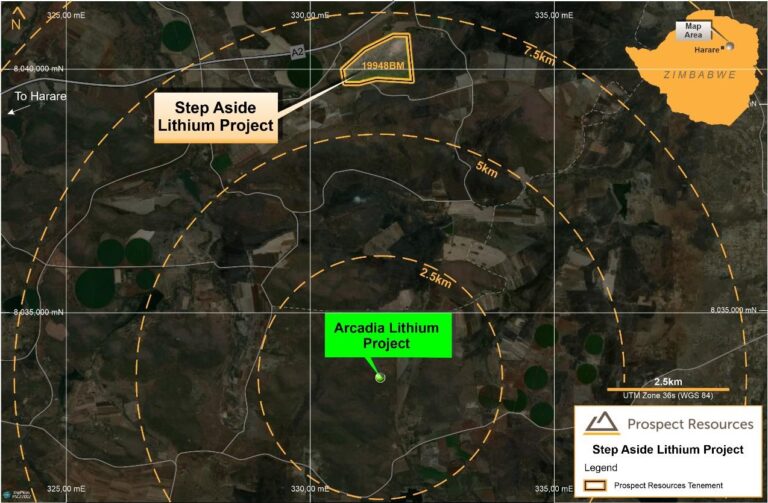
Zimbabwe may see a dramatic increase in lithium production as world giants have taken over Bikita and Acardia Lithium. With several countries committed to phasing out new gasoline and diesel engine vehicles by 2040, the recent growth in electric vehicle (EV) adoption has fuelled a global boom in lithium production. What is parliament doing to ensure Zimbabwe is the first priority for lithium products by 2040 when the world finally stops making gasoline engines?

Parliament is one among three and its role is complementary to overall government targets. Zimbabwe is open for business and the country has opened up to the nationals and international players. There is a market for all to see and we are inviting innovations from all and we can support those that need support to tap into the niche areas of their choice. Parliament has jointly called on the people of the world to take advantage of the opportunities that we have whilst they are still available. We have also recommended our universities to adapt a new model of higher education that inculcates a business mind and creation of wealth, and we are happy that is taking place. Zimbabwe will wait for a while, but no longer anymore, and so far, the gods are favouring us, as the country is now poised to build itself from within and by itself with the support of her friends and allies. The market of lithium is part of the coalescence of the market in our favour as much as we see the opportunities with diligence.

Artisanal Small-scale and foreign companies are paying the same mining fees to conduct mining business. Will we see a different pricing tier system in the new Act?

The new Act cannot regulate fees as these will change time and again, hence requiring continuous updating while lawmaking is a long-term and costly process. Fees are gazetted through statutory instruments and administrative directives and law-making requires the whole of government and citizenry’s participation. As a country, these fees may appear uniform but there could be reasons at the moment, to motivate investment by all, accepting certain costs, for the sake of certain short-term, medium-term and long-term benefits. Zimbabwe has been laying the foundation and it is now building the blocs for the superstructure, acknowledging the support from all willing locals and internationals, hence it is strategically embracing and maintaining relations in all and with all that share the national vision as laid out by the government and through His Excellency, the President of Zimbabwe, Cde. Dr. E. D. Mnangagwa.


This article first appeared in the Mine Entra 2022 edition of the Mining Zimbabwe Magazine

Fidelity official gold buying prices Thursday 1 September 2022

0

Fidelity Gold Refinery (FGR) official gold buying prices Thursday 1 September 2022.

SG 90% AND ABOVE US$52.40/g
SG ABOVE 85% BUT BELOW 90% US$51.58/g
SG ABOVE 80% BUT BELOW 85% US$51.02/g
SG ABOVE 75% BUT BELOW 80% US$50.47/g
SAMPLE BELOW 10g BUT ABOVE 5g US$49.65/g
FIRE ASSAY CASH US$52.40/g

NB: Fire Assay cash price is for gold above 100gs and no sample is deducted.
For FireAssay Transfer price, a sample of not more than 10g is deducted
2% royalty is charged on all deposits (Small-scale Miners)
5% royalty is charged on Primary Producers

Cash available. Fidelity Gold Refinery prices will be changing daily in relation to world market prices.