

Home Blog Page 337

3 Trucks smuggling lithium detained at Beitbridge border

0

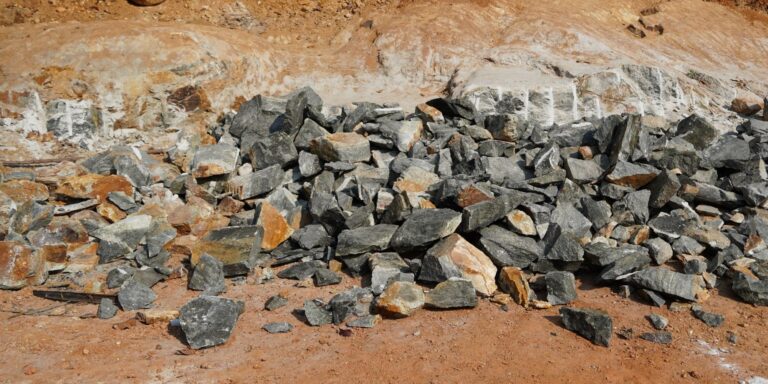
Beitbridge Border Post officials yesterday intercepted a consignment of lithium ore on three haulage trucks belonging to one Bernard Tafadzwa Mnangagwa.

The ore was being smuggled to South Africa and was declared as manganese, it is alleged.

Last week, the government banned exports of raw lithium with immediate effect in an effort to value-add its minerals and support local production and employment creation.

The ban was effected through Statutory Instrument (SI) 213 of 2022 titled Base Mineral Export Control (Unbeneficiated Lithium Bearing Ores) Order, 2022.

Officer commanding Beitbridge police district, Chief Superintendent Tichaona Nyongo referred all questions to Police General Headquarters.

Efforts to get a comment from national police spokesperson Assistant Commissioner Paul Nyathi were fruitless.

But yesterday morning, Mines and Mining Development Ministry officials arrived at the border post to attend to the trucks, now under police and Zimbabwe National Army guard.

It is understood that the raw mineral was extracted from places near Sandawana in Mberengwa, and transported to Bulawayo, where it was kept near Khami Cafe close to Bulawayo’s Vehicle Inspection Department.

The mineral was reportedly stored there to facilitate smuggling.

Lithium, a vital resource that is becoming increasingly important as the world shifts towards clean energy systems, has attracted significant attention from Zimbabwe as it seeks to maximise the value of this mineral.

The country has abundant deposits of lithium and, with rising global demand and firmer prices, it has become an attractive destination for investment in this resource.

Export bans have also been viewed as a way to create an industrial renaissance in Africa through value addition. In an effort to establish a vibrant lithium value chain in the country, the government recently announced a ban on raw lithium exports.

Newsday

Lithium prices to fall in 2023 – Wang Pingwei

0

Lithium is going to get less expensive in 2023, according to a Chinese supplier of the battery metal, potentially offering some relief to electric-vehicle makers squeezed by soaring costs.

Prices have already softened after a spectacular two-year rally labelled “insane” by Elon Musk and “unreasonable” by China’s BYD. The cool-off is poised to continue as more supply emerges to trim abnormally high margins for lithium producers, Wang Pingwei, chairman of Sinomine Resource Group said in an interview.

“We believe the gradual, downward trend for lithium will continue next year,” Wang said, predicting a fall of around a quarter from current levels that will still leave the company with “good” profits. Prices will not fall off a cliff as the market remains tight, said Wang, whose company operates mines in Zimbabwe and Canada.

Lithium’s relentless rise since 2020 has hurt buyers and contributed to the first annual increase in battery costs since BloombergNEF started tracking them nearly a decade ago. Benchmark prices in China are still about twice as high as the start of 2022 – despite declining this month – as demand from the fast-expanding EV sector outstrips supply.

Sinomine’s Wang said he sees lithium carbonate prices drifting to about 400,000 yuan a ton in 2023. That compares with 527,500 yuan at present and a record of nearly 600,000 yuan in mid-November, according to data from Asian Metal. The lower level would still offer good margins for Sinomine, he said.

Wang’s comments echo some other forecasts. More mine supply will push the market into a surplus next year and help soften prices, BYD’s Executive Vice-President Stella Li said earlier this month. China’s withdrawal of EV credits, as well as uncertainties over the pandemic and global economy, are also weighing on the outlook.

“Over the next 6 months, demand softness is likely to dominate the lithium price discussions as demand in China is challenged by zeroing subsidies and surging Covid-19 cases,” Alice Yu, senior analyst at S&P Global Market Intelligence said by email. “Consumers in the West face growing affordability issues.”

Sinomine wants to expand output worldwide, just as geopolitical tensions are growing with the US, Canada and others moving to restrict China’s role in the EV supply chain.

Wang’s firm was one of three Chinese companies ordered by Canada to divest stakes in Canadian-listed firms under tougher rules for foreign investment. Separately, it still owns the Tanco mine in Canada, as well as the Bikita lithium site in Zimbabwe.

“Our confidence to invest in more mines in North America is relatively low at present,” Wang said.

The company is currently in talks for potential projects in South America, and will continue to look for opportunities in Africa, where developing mines is easier than other jurisdictions, he said. Central Asia is another prospect – including Afghanistan once the security situation improves there, he said.

Sinomine currently has 25,000 tons of annual production capacity for battery-grade lithium hydroxide and carbonate. The company expects that to increase to 60,000 tons next year, and targets 100,000 tons capacity by 2025, Wang said.

SCMP

Kwekwe miner Chanakira Masuku faces gold ore theft charges

0

A Kwekwe gold dealer has been reported to police on charges of having stolen gold ore and other mining accessories from a mine at the centre of a boundary dispute.

According to a police report case number 5393592, Chanakira Masuku is accused of stealing about 1.5kg of gold, tonnes of gold ore worth over US$30 000, two drums of cyanide and caustic soda from Somerset 16 mine in Sosombe, Kwekwe.

Masuku is also accused of vandalising a perimeter fence of Somerset 16 mine owned by Mistopher Khan under registration number 24107. The mine was registered on September 10, 2002.

Records show that Masuku is the registered owner of Somerset 792 and 791 under registration number 32929 and 32928 respectively.

However, Masuku has been accused of encroaching into Khan’s Somerset 16 to loot gold ore and other mining accessories.

He was reported to Police on Monday.

Masuku when contacted for comment said the matter was in court.

“As far as I know, the case is in court and have no further comments to make,” Masuku said.

Newsday established that the theft case is not in court.

A few months ago, Masuku was reported to the Mines and Mining Development ministry on charges of encroaching into Somerset 16 and the neighbouring Old Crick mine 5 and Old Crick 11 owned by Ashraft Khan.

According to minutes of a dispute resolution meeting held on July 14, 2022, it was established that Masuku’s Somerset 792 was illegally pegged by some corrupt mining officials.

“Somerset 16 enjoys the priority of mining rights and no beacons from subsequent pegger should interfere with any of its established beacons,” the minutes read in part.

“Old Crick 5 does not share a boundary with Somerset 16. This should be maintained on the ground. Somerset 791 should adjust its location in line with section 177 (3) of the Mines and Mining Act by giving priority to Somerset 16 and Old Crick 5.

“Somerset 792 falls completely within Old Crick 11 and is recommended for cancellation. It was pegged in breach of section 31 of the Act”.

Source: Zim Independent

Zimbabwe blocks Diamond, Copper, Lithium, Nickel & REM applications

0

Zimbabwe has blocked Diamond, Copper, Lithium, Nickel & Rare Earth Mineral applications citing dishonesty by miners in declaring the discovery of different minerals from the ones they are registered for also, the five have been deemed strategic in the upcoming Mines and Minerals Amendment Bill.

In a letter addressed to the ten provincial Mining Directors, the secretary for Mines and Mining Development Mr Pfungwa Kunaka said the non-declaration has led to prejudice to the growth of the mining sector economy as in some instances high-value minerals are involved.

“This non-declaration has led to prejudice to the growth of the mining sector economy as in some instances high-value minerals are involved.

“Accordingly, you are hereby directed to ensure that on applications for inspection certificates, the applicants submit a declaration of the amount of work carried out as well as a declaration of minerals contained in the ore body being mined. This should be backed by an assay certificate issued by an approved laboratory.

Further, we have of late seen a flooding of applications for mining titles for minerals which have been deemed strategic in the upcoming Mines and Minerals Amendment Bill. It has thus become necessary that in the national interest, we temporarily stop acceptance and processing of applications for mining titles for the following minerals until further notice: diamonds, copper, lithium, nickel (and) rare earth minerals,” Kunaka said in a statement.

Zimbabwe seems to be on a path to block artisanal and small-scale miners from participating in certain sectors of mining.

While experts agree it goes a long way in the promotion of responsible mining it is more and more likely smaller players will resort to illegal mining which the government is struggling to contain with the country losing US$100 million each month, according to Home Affairs Minister Kazembe Kazembe. Experts have estimated the loss of revenue to be much higher.

The small-scale sector should not be left behind in the lithium revolution

0

Yesterday government gazetted Statutory Instrument (SI) 213 of 2022 which stated that no lithium-bearing ores, or un-beneficiated lithium whatsoever, shall be exported from Zimbabwe to another country except under written permission of the Minister.

The ban however excludes the export of lithium concentrates, which all the major lithium miners in the country are set to produce.

The SI has created uncertainty with some small-scale miners feeling that they may be sidelined by the announcement.

As the small-scale miners have for years carried the gold, chrome and semi-precious industries, they can also shine in lithium claims that may not be attractive to large-scale producers.

A typical example is the current gold production in Zimbabwe where the small-scale miners outperform primary producers. The small-scale miners trounced primary producers by a staggering 7311.61kg in submissions in 2021, and 2022 stats indicate that ASM miners submitted 22947.31kg with primary producers submitting 10361.67kg which is twice more gold than their counterparts.

As at November 30, 2022, the Henrietta Rushwaya-led miners delivered 22947.3158kg versus 10361.6738kg from Primary producers!

The government must find a long-lasting solution, mutually integrate and support small-scale lithium miners as the group has the potential to pull another shocker and lead in lithium submissions as more and more lithium discoveries continue across the country.

The government needs to create an efficient Lithium buying facility as they did with Fidelity Gold Refiners (FPR) and ensure small-scale producers are “TIMELY PAID” fair value of their minerals worth.

It is also imperative that the mistakes made on chrome buying are avoided as this has exposed miners to predatory buyers. Government should publish buying prices as they do with Fidelity Gold Refiners (FGR) to guide the local market ensuring our people are protected.

President Mnangagwa is well-known for popularising the statement “Leaving no one and no place behind” the small-scale sector should not be left behind in the lithium revolution. They have proved to be an asset in other sectors of the mining industry they can prove their worth in lithium with proper guidance and mechanisms in place.

Lithium deposits in Zimbabwe

Zimbabwe holds the largest reserves of Lithium in Africa. Areas of verified deposits in Zimbabwe include Goromonzi, Mudzi, Buhera, Bikita, Chegutu, Hwange, Harare, Insiza, Rushinga, Mutoko, Mutare and Hwange. However, Lithium has been discovered in areas such as Mberengwa, Kadoma and Bindura cementing the statement by veteran Geologist Mr Kennedy Mtetwa that “Zimbabwe is hamstrung by lack of exploration”.

BREAKING: Ionosphere begins lithium concentrates production

0

Ionosphere investments has begun lithium concentrates production at its Factory in Harare Bluffhill, Managing Director Mr Nyasha Chidoh has announced.

Priscah Chisara

The company aims to have a product ready for shipping by February 2023 and its targeted annual output is 36,000 tonnes of lithium concentrates.

Nyasha Chidoh Mirrorplex
Mr Nyasha Chidoh

Chidoh revealed plans to almost double Ionosphere’s targeted annual output to about 70 000 tonnes of lithium concentrates and this would place the company among the country’s top four producers.

“We see all the demand is there — significantly unmet demand — for battery-grade lithium in the next three years”

“Whoever is producing lithium in the coming three years is going to make abnormally high margins,” Chido said.

Lithium prices have risen tenfold to $75,000 a tonne since the beginning of 2021. A tight market has sparked a rush by carmakers to secure supplies of a commodity that, along with cobalt and nickel, is vital for electric vehicles.

Chido revealed that Ionosphere is one of the new battery metals companies to do value addition and it supported the move by the government to outlaw raw Lithium exports.

“Ionosphere investments is uniquely positioned as one of really only new battery metals companies to do value addition and is in support of the government’s decision to ban the export of raw lithium

About Ionosphere Investments

Ionosphere Investments is a leader in trading metals and minerals sourced from Zimbabwe. Built on detailed market intelligence, Ionosphere aims to grow consistently with the same integrity that laid its foundation.

The company intends to be a specific integrated mining and trading company with its core business built around Tin, Tantalum, Lithium and Beryl. It employs a 3-stage approach to the core strategy to make the business a long-term and sustainable supplier of Tantalite, Tin and Lithium Africa-specific minerals to the market.

To learn more about Ionosphere visit www.lonosphere.co.zw 

Karo lists on the Victoria Falls Stock Exchange (VFEX)

0

Karo Mining Holdings has listed its bond on the Victoria Falls Stock Exchange (VFEX).

It is the first debt instrument in the country, although the parent company, Tharisa PLC, is listed on the London and Johannesburg exchanges.

Karo Mining has issued a US$50 million three-year bond with an annual coupon rate of 9.5 per cent which is paid semi-annually.

Bartholomew Mswaka, VFEX vice chairperson, said the bond listing becomes the first instrument that has raised fresh money for portfolio investments since 2015.

He said the VFEX believes the bond listing will go a long way in reducing risk on investor portfolios.

“The listing of a bond by Karo Mining Holdings gives us great confidence as an exchange and we are grateful to the Karo management and shareholders for having confidence in our market,” Mswaka said.

“We are very much excited to welcome the very first debt instrument on our bourse since its inception in October 2020, making Karo Mining Holdings the seventh issuer on our exchange,” he added.

“The Zimbabwean bond market has not been active and the listing of Karo will revive the fixed income market and contribute towards development and deepening of capital markets.”

Clemence Chiduwa, Finance and Economic Development Deputy Minister presided over the listing ceremony and ringing of the bell in Victoria Falls.

“Government is particularly excited to see the listing of the first fixed income bond onto the VFEX and indeed the largest capital raise to date onto the VFEX at $32 million,” he said.

Karo is the latest issuer on VFEX after Bindura Nickel, Caledonia Mining, Nedbank Zimbabwe, Padenga, SeedCo International and Simbisa Brands.

VFEX was established in as a pioneer offshore financial services centre. It is denominated in United States dollars.

Zimbabwe Miners Federation (ZMF) applauds Govt Lithium ban

0

The Zimbabwe Miners Federation (ZMF) has supported the government’s decision to ban the export of raw lithium citing that the export of the ore has been prejudicing the government through loss of revenue which is detrimental to the country’s target of attaining the US$12 billion Mining industry by end of 2023.

Rudairo Mapuranga

The Zimbabwe Miners Federation (ZMF) through its President Ms Henrietta Rushwaya says that the export of raw lithium gave rise to leakages and serious job exports in the lithium subsector with other countries benefiting from jobs that could have been of native Zimbabweans.

The ZMF said the ban on raw lithium export would lead to job creation and transfer of skills to local experts thereby creating a green energy future for Zimbabwe.

“The ban is important because there have been a lot of leakages, loss of revenue on the government’s part, and not realizing the true value of the resource, which has a negative effect on the attainment us$12 billion mining industry by 2023.

“The ban will also lead to the participation of serious players in the beneficiation process, job creation for local indigenous Zimbabweans and skills transfer to locals by experts.

“The benefits derived in lithium processing are but not limited to: throughput gain, process stability, energy consumption reduction, and increased yield. We applaud the Government initiative to come up with the SI,” Rushwaya said.

The Minister of Mines and Mining Development Hon Winston Chitando through section 3 (1) (a) of the base Minerals Export Control Act with immediate effect gazetted an SI that states that no lithium-bearing ores, or un-beneficiated lithium whatsoever, shall be exported from Zimbabwe to another country except under written permission of the Minister.

Below is the Statutory Instrument (SI) in full:-

“UNDER the powers conferred upon me by section 3(1)(a) of the Base Minerals Export Control Act [Chapter 21:05], I, Winston Chitando, MP, Minister of Mines and Mining Development, by this my order direct that with immediate effect as follows:—

  1. This order may be cited as the Base Minerals Export Control (Unbeneficiated Lithium Bearing Ores) Order, 2022.
  2. In this order— “lithium-bearing ore” means any mineral ore containing lithium; “unbeneficiated lithium means any lithium in whatever form that has not undergone processing to an extent that would exempt it from the payment of export tax under section 12B (“Collection of tax on exportation of unbeneficiated lithium; determination of value thereof”) of the Value Added Tax Act [Chapter 23:12];
  3. (1) No lithium bearing ores, or unbeneficiated lithium whatsoever, shall be exported from Zimbabwe to another country except under written permit of the Minister given under subsection (2).

(2) On written application by any party—

(a) wishing to export samples of lithium-bearing ore or unbeneficiated lithium for assaying outside Zimbabwe;

or

“(b) to a miner or exporter of lithium upon production of written proof satisfactory to the Minister that there are exceptional circumstances justifying the exportation in question and that the lithium-bearing ores or un-beneficiated lithium in question have been valued in terms of section 12D (3) of the Value Added Tax Act [Chapter 23:12] for purposes of payment of the export tax on un-beneficiated lithium, that is to say—the market value thereof on the date of exportation has been determined by reference to a reputable metals exchange; or

“(ii) its value is reflected on any document required to be delivered in terms of the Customs and Excise Act [Chapter 23:02] for its exportation under that Act.

” 4. To avoid doubt—

(a) section 5 of the principal Act provides that “An order shall have effect notwithstanding anything inconsistent therewith in any other enactment or any trade or customs agreement to which the State is a party.”; and

“(b) section 6 of the principal Act provides that any person who contravenes or fails to comply with any order or with the terms and conditions of any permit issued to him or her under an order shall be guilty of an offence and liable to—

“(i) a fine not exceeding level 9 or twice the value of the base minerals in respect of which the offence is committed, whichever is the greater; or

(ii) imprisonment for a period not exceeding two years; or to both such fine and such imprisonment,” the SI read.

BREAKING: Zimbabwe lithium ban now in force

0

Zimbabwe has banned the export of raw lithium to enable value addition and beneficiation in an effort to see the country benefit from the clean energy revolution.

Rudairo Mapuranga

The country has been losing millions of dollars from raw lithium exports with President Emmerson Mnangagwa expressing discontent with the way the lithium clandestinely left the country. This has led the government through the Minister of Mines and Mining Development Hon Winston Chitando to ban the export of lithium through section

3 (1) (a) of Base Minerals Export Control Act [Chapter 21:05] in an effort to ensure that the vision of the President to see the country becoming an upper-middle income economy has been realized.

“UNDER the powers conferred upon me by section 3(1)(a) of the Base Minerals Export Control Act [Chapter 21:05], I, Winston Chitando, MP, Minister of Mines and Mining Development, by this my order direct that with immediate effect as follows:—

  1. This order may be cited as the Base Minerals Export Control (Unbeneficiated Lithium Bearing Ores) Order, 2022.
  2. In this order— “lithium-bearing ore” means any mineral ore containing lithium; “unbeneficiated lithium means any lithium in whatever form that has not undergone processing to an extent that would exempt it from the payment of export tax under section 12B (“Collection of tax on exportation of unbeneficiated lithium; determination of value thereof”) of the Value Added Tax Act [Chapter 23:12];
  1. (1) No lithium-bearing ores, or unbeneficiated lithium whatsoever, shall be exported from Zimbabwe to another country except under the written permit of the Minister given under subsection (2).

(2) On written application by any party—

(a) wishing to export samples of lithium-bearing ore or unbeneficiated lithium for assaying outside Zimbabwe;

or

“(b) to a miner or exporter of lithium upon production of written proof satisfactory to the Minister that there are exceptional circumstances justifying the exportation in question and that the lithium bearing ores or unbeneficiated lithium in question have been valued in terms of section 12D(3) of the Value Added Tax Act

[Chapter 23:12] for purposes of payment of the export tax on unbeneficiated lithium, that is to say—the market value thereof on the date of exportation has been determined by reference to a reputable metals exchange; or

“(ii) its value is reflected on any document required to be delivered in terms of the Customs and Excise Act [Chapter 23:02] for its exportation under that Act.

” 4. To avoid doubt—

(a) section 5 of the principal Act provides that “An order shall have effect notwithstanding anything inconsistent therewith in any other enactment or any trade or customs agreement to which the State is a party.”; and

“(b) section 6 of the principal Act provides that any person who contravenes or fails to comply with any order or with the terms and conditions of any permit issued to him or her under an order shall be guilty of an offence and liable to—

“(i) a fine not exceeding level 9 or twice the value of the base minerals in respect of which the offence is committed, whichever is the greater; or

(ii) imprisonment for a period not exceeding two years; or to both such fine and such imprisonment,” The Mines Minister said.

Dooms day for raw lithium export ban announced

0

The ban on the export of raw lithium is expected to be enshrined into the country’s laws this weekend President Emmerson Mnangagwa has announced.

In his address at a rally in Buhera north yesterday, the first citizen said it was shameful that people were invading areas with lithium, selling the resource at little amounts ranging from US$ 100/tonne yet when the lithium is processed reaches up to US$ 7000/tonne and smuggling the battery-making mineral.

“People are selling lithium for paltry amounts, yet when it is processed it reaches up to us$7000. Now we hear there are truckloads crossing the borders (South Africa). We had no law to prohibit this from happening. For those who were doing it, days are numbered because this very weekend we will gazette a law that will prohibit lithium ore from leaving the country. If you are caught doing so you will be jailed for a long long time.

This was not the first time Mnangagwa had mentioned his disdain for the way lithium clandestinely left Zimbabwe.

At the official commissioning of the US$67 million new Central Shaft Expansion Project at Blanket Mine in Gwanda last month President Mnangagwa said if the country was to achieve its vision of becoming an upper middle-income economy by 2030, greater effort was supposed to be made to ensure that the export of raw minerals and concentrates is been banned.

“In line with Vision 2030, greater efforts should be made towards value addition and beneficiation of minerals. We cannot as a country continue to export primary products including concentrates and ores. Recently in Mberengwa, we discovered that there was a mountain with nothing but lithium and our people were collecting this lithium ore and being paid something like US$100 when that same quantity will fetch more than a thousand to US$2000 and then exporting it unprocessed, so Zimbabwe loses. Within a few days I’m gazetting a law prohibiting what has been happening in Mberengwa,” Mnangagwa said at the time.

He also mentioned that he was aware that some of his colleagues were involved in the illegal trading and smuggling of the commodity.

Zimbabwe has the largest lithium reserves in Africa and the fifth-largest deposits worldwide. It has the highest number of Lithium projects under exploration on the continent and currently has several mines in the exploration and production phase. These are Bikita Minerals, Arcadia lithium mine, Sabi Star Lithium Mine, MIRRORPLEX Lithium project, Zulu Lithium and Tantalum Project, Step Aside Lithium project, and Kamativi Lithium project.