

Home Blog Page 342

Bindura Nickel pays tribute to David Brown

0

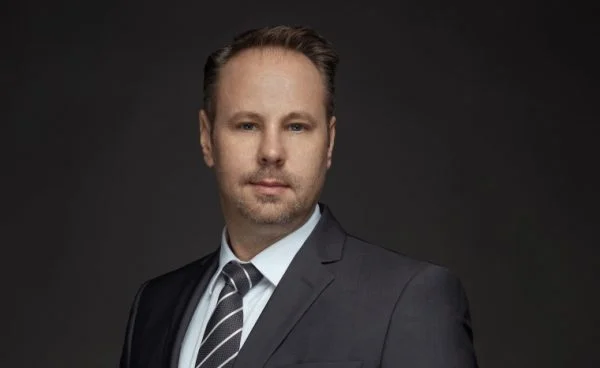
Bindura Nickel Corporation (BNC) became the latest in a string of big mining houses mourning mining guru, David Brown, who died in South Africa last week aged 59.

In a statement released at the weekend, BNC chairman Muchadeyi Masunda chronicled the accomplishment of a man whose work changed the lives of many in South Africa and Zimbabwe and singled out his drive towards “commendable community-oriented projects in and around Mhondoro Ngezi district of Mashonaland West province” during his tenure as Zimplats chairman about a decade ago.

“We join David’s widow, Julia, and children, Dan and Nicole, as well as friends, colleagues, Kuvimba Mining House (majority shareholder in BNC) and the mining industry in Zimbabwe and South Africa in mourning the passing on of an icon, a visionary and passionate leader whose immense contribution to the growth of the mining industry in both countries shall remain indelibly etched in our memories,” Masunda added.

At the time of his death, Brown was the chairman of Northam Platinum and former Impala Platinum CEO. Brown died of a heart attack on the 19th of June 2022. He was 59.

Brown was additionally the chairman of Northam Platinum and a director of Vodacom Group in South Africa.

“I am shocked and saddened at the sudden passing of David, a stalwart of the Southern African mining industry. He was not only Chairman of Northam’s board but a friend and colleague. He worked at board level in the sector for more than 23 years. My fellow board members and executive team join me in extending our sincerest sympathy to his family and loved ones, friends and colleagues. David instinctively knew that people are at the centre of all things mining.  He will be sorely missed,” Paul Dunne, CEO of Northam, said.

South Africa’s Telecoms giant Vodacom also expressed sadness at the passing of Brown.

“It’s with disappointment that Vodacom advises shareholders of the premature passing of David Brown,” the telecommunications firm stated in an announcement on Monday.

His death came as Northam Platinum is locked in a battle with rival Impala Platinum to take over Royal Bafokeng Platinum.

The mining veteran served as Chief Finance Officer and later CEO at Impala from 1999 to 2012, overseeing operations in South Africa and Zimbabwe. He has additionally led MC Mining, a coal producer.

He resigned as CEO at Kuvimba Mining however stayed on as a director at its Bindura Nickel Corp.

Trio nabbed for Rosa 10 Mine robbery

0

Police have arrested three suspects in connection with a mine robbery in Chiweshe.

Armed with a pistol the trio allegedly pounced on Rosa 10 mine where they allegedly stole 375 litres of diesel and seven tons of gold ore.

Speaking on their Twitter account the Police said,

“Police in Chombira arrested Tawanda Kedius Takaendesa (38) and Takesure Motsi (32) in connection with a case of robbery which occurred at Rosa 10 Mine, Chiweshe, on 24/06/22 at around 1930 hours. The suspects, together with one Lawrence Shereni, still at large, pounced at the mine while armed with an unidentified pistol and fired one shot on the ground before calling a group of unknown male adults to invade the mine. They allegedly vandalised floodlights at the mine and chased away the security guards before stealing 375 litres of diesel and seven tonnes of gold ore. The security guards apprehended the two suspects, and the Police impounded a Mercedes Benz (AFK 8474) and a BMW (AFA 9417) they used in committing the offence”.

Rosa mine 10 has been in the headlines after two top police officers were implicated in a US$500 000 gold ore loot at the mine.

These allegations are contained in a letter of complaint dated June 22 addressed to Police Commissioner-General Godfrey Matanga and copied to the Zimbabwe Anti-Corruption Commission and the Judicial Service Commission.

In the letter, the complainant Lawrence Shereni through Takaindisa Law Chambers alleged that Chief Superintendent Enock Masimba and Superintendent Ophius Gadzikwa were illegally removing gold ore from Rossa 10 Mine in contravention of a court order barring operations at the site.

“The High Court under case No 3366/22 ordered all mining operations to be stopped at the estate … until an executor to the estate has been appointed,” the lawyers wrote.

“It is an order of the High Court that whatever is to happen at the deceased’s estate i.e. Rosa 10 Mine should be in consultation with our client Lawrence Shereni, who is also a child and a beneficiary to the estate Rosa 10 Mine.”

It is alleged that the senior police officers were conniving with one of the beneficiaries of the estate, Yolanda Mututuma, to loot gold contrary to the order of the High Court.

Irish company gets 3 lithium exploration licences

0

Ireland-based exploration company Arkle Resources has received three licences, covering an area of 163ha, with a prospect for lithium in Zimbabwe.

Located in the Insiza District of the Matabeleland South Province, the licences cover a small area.

Following identification of the free ground, Arkle pegged the area and submitted an application for the licences.

In the late 1960s, the ground was subject to limited mining of lepidolite, a lithium-bearing mineral associated with spodumene.

The company said that the licences represent a ‘low-cost entry’ into Zimbabwe, one of the globe’s biggest lithium producers.

Arkle chairman John Teeling said: “The directors have long experience in Zimbabwe and are aware of the extensive history and potential for hard rock lithium in the country. The lithium is contained in spodumene/pegmatites.

“It is only recently that rising lithium prices and the potential of a massive supply gap to meet battery demand have made the extraction of hard rock lithium viable.

“We have examined what ground was available and been granted three licences, one of which was a small lepidolite producer – a lithium-associated mineral. We continue to examine additional opportunities in battery metals.”

Earlier this year, Arkle and its joint venture partner Group Eleven Resources started drilling on the Stonepark group of licences in Limerick, Ireland.

Group Eleven Resources has a 76.56% stake in the Stonepark project while Arkle owns the remaining 23.44% holding.

The property is located adjacent to Glencore’s Pallas Green deposit, which is said to be one of the world’s largest undeveloped zinc projects.

Eureka’s world class projections inspires Mine Managers

0

The emergence of Eureka Gold Mine in Guruve has put competitive pressure on gold mines in Zimbabwe, the Association of Mine Managers Zimbabwe (AMMZ) has noted.

Rudairo Mapuranga

Speaking to Mining Zimbabwe on the sidelines of the AMMZ Technical visit to Eureka Mine on Friday, Mine Managers President Engineer Elton Gwatidzo said that the Guruve-based mine has proven to be a force to reckon with in the gold mining industry.

Elton gwatidzo
AMMZ President addressing delegates at the Eureka Gold mine Technical visit in Guruve

Operating on one pit only Eureka Gold Mine has proven to be potentially the biggest gold producer in the country and is setting a mark for other mines.

“What is happening here is very impressive considering that it’s a gold operation. Capex invested here and the future projections, are all realistic and commendable.

“You will realize that in terms of moving this type of volume they are now probably the biggest operation in Zimbabwe, not to take away anything from Freda Rebecca which has been dominating this space. It is also encouraging that the Freda team that is here has been inspired as well. This also puts pressure on all other gold operations in Zimbabwe.

“In 2021, October, we went to Shamva Gold Mine and witnessed the potential that Shamva has in terms of gold output. What it means is that the bark should be taken over by other mining houses.

“In terms of claims, most big mines have adequate claims all what is needed is the exploration and investment into developing these mines. Eureka’s plans are very realistic and we witnessed that they are only mining one pit and within their vast mining claims they have the potential to do more, so this is very encouraging for the industry,” Gwatidzo said.

Speaking to Mining Zimbabwe at the event, Chamber of Mines Zimbabwe Chief Executive Officer Dr Issac Kwesu also noted that Eureka Gold Mine within its short production period plays a significant role in the achievement of the US$4 billion gold industry by 2023.

He said the mine is determined to meet production targets and in terms of Corporate Social Responsibility (CSR) the miner has done exceptionally well considering that they are a new kid on the block.

Isaac Kwesu
Chamber of Mines CEO standing at Eureka gold mine viewpoint

“If you notice when Eureka mine started last year, they started at a very low base. This year they are moving to 1.3 tonnes which is almost two and half times what they produced last year.

“If you look at the profile of their expected production pathway you can see that by 2023-24 they will be almost 3 times where they started and by 2028 they will be 2 tonnes which is a 4-fold increase. This is a remarkable increase and a significant contribution to the total gold output target for the nation which the mine has a significant role to play.

“Eureka Mine is located within the vicinity of the Guruve community and has a very important role to play in terms of employment creation and social community development.

“The miner has started doing quite a number of initiatives which is a big gesture considering that they have just started but already have an impact in the community,” Dr Kwesu said.

Mine managers of Zimbabwe pose for a photo at Eureka gold mine


Top cops implicated in a US$500 000 gold ore loot

0

Two top police officers have been implicated in a US$500 000 gold ore loot at a mine in Chiweshe, Mashonaland Central province.

These allegations are contained in a letter of complaint dated June 22 addressed to Police Commissioner-General Godfrey Matanga and copied to the Zimbabwe Anti-Corruption Commission and the Judicial Service Commission.

In the letter, the complainant Lawrence Shereni through Takaindisa Law Chambers alleged that Chief Superintendent Enock Masimba and Superintendent Ophius Gadzikwa were illegally removing gold ore from Rossa 10 Mine in contravention of a court order barring operations at the site.

“The High Court under case No 3366/22 ordered all mining operations to be stopped at the estate … until an executor to the estate has been appointed,” the lawyers wrote.

“It is an order of the High Court that whatever is to happen at the deceased’s estate i.e. Rosa 10 Mine should be in consultation with our client Lawrence Shereni, who is also a child and a beneficiary to the estate Rosa 10 Mine.”

It is alleged that the senior police officers were conniving with one of the beneficiaries of the estate, Yolanda Mututuma, to loot gold contrary to the order of the High Court.

“We are, however, surprised that senior officers of the law failed to interpret simple court orders and went on to promote criminal activities at Rosa 10 Mine. The same officers, despite being in possession of High Court orders, have even barred our client from coming to the mine despite High Court orders which sanction him to be present and to be consulted in all mining activities occurring at Rosa 10 Mine,” they wrote.

“We wish to state that there is no doubt that your officers are engaging in corrupt practices as these tactics were meant to ensure that they loot the gold ore in cahoots with one
Mututuma.”

The lawyers said Gadzikwa and Masimba once threatened Shereni against opening a police report on the looting of the gold ore at the mine.

“Gadzikwa is deeply involved to the extent that he even directed the officer in charge at Chombira Police Station, one Muringai, not to get involved in any issues to do with Rosa 10 Mine … so that Superintendent Gadzikwa could further his criminal activities at Rosa 10 Mine with his accomplices in the looting of tonnes of gold ore without a gold ore removal permit,” the lawyers added.

Source: Newsday

RioZim owners announce new 78% Shareholder to aid resuscitation

0

Sperrgebiet Diamond Mining (SDM) this week announced its majority equity investment by Global Emerging Markets Group (GEM), the miner said.

The mining company highlighted this among other investments adding that the resources division of the GEM Group holds mining and energy assets in Zimbabwe.

“The vision is to expand its footprint in these two sectors in southern Africa and the larger continent in the longer term. Their current African investments include a majority shareholding in RioZim which is one of the biggest gold producers in Zimbabwe,” the miner said in a statement on Monday.

SDM reported that additional capital investment has been solicited by the shareholders, culminating in a share sale transaction between the Namibian shareholders being the founders, Lewcor Holdings and its minority partners, David Sheehama, MSF Commercials, and the GEM Group.

“The equity transaction was well received by the government of Namibia and received approval from the Namibian Competition Commission and the Minister of Mines and Energy. The deal was finalised on May 20, 2022, with GEM group subsidiary obtaining 78% of the shareholding and Namibian shareholders retaining 22% inclusive of an Employees Trust of 2%.”

GEM Group’s current African investments include a majority shareholding in RioZim which is one of the biggest gold producers in Zimbabwe, the miner said.

“RZM Murowa which is one of the world’s leading diamond producers is an affiliate of RioZim. The company also owns a base metal refinery and an energy business unit focused on generating green energy and minimising the carbon footprint of its mining operations,” the miner said, adding that the group wishes to expand this portion of its business with its newly acquired mining asset in Namibia.”

SDM is a Namibian company that owns a combination of four onshore and offshore diamond mining licences in the restricted diamond areas around Lüderitz. Its mainland-based operation is located at Elizabeth Bay 40 km south of Lüderitz.

SDM acquired the mining asset from Namdeb Diamond Corporation in October 2020 and invested in the project through an environmental clean-up campaign and the care and maintenance of the existing main processing plant to recommission it.

“In Q4 2022, the company is gearing up to start-up operations at the historic production levels under Namdeb. The immediate next aim is to double production by mid-2023 by implementing an infield pre-treatment facility as the second phase. The company is amidst an aggressive recruitment drive, aiming to employ up to 180 people by the end of 2022, with a further increase during phase two,” the miner said.

Source: Economist

Zim stands to benefit from copper deposits

0

Zimbabwe has a chance to benefit from its huge copper deposits as the popularity of clean energy future continues to rise with Electric Vehicles (EVs) considered the future in the transport sector.

Rudairo Mapuranga

According to James Hyerczyk a mineral commodity expert in the United States, despite strong demand, copper supply is significantly lagging. And it’s only going to get worse with analysts forecasting copper demand potentially rising 350 per cent by 2050.

According to the Chamber of Mines Zimbabwe Chief Executive Officer Mr Isaac Kwesu, the country is currently generating nearly US$100 million from copper with some junior mining firms investing in copper exploration. He said that the country has the potential to benefit from copper price turnover and can become one of the major copper producers in Africa.

“We are equally blessed with copper endowments and currently we have a significant amount of copper coming out as a byproduct of PGMs. They have a significant amount, almost US$50 million and can reach up to US$100 million value of copper. We also have copper projects in areas surrounding Mhangura which were sub-economic during the low-price era with the high upturn, some of these projects are more certain that they will become viable. There is some exploration we understand is currently taking place implying that we will also be a major copper producer in the near future,“ Kwesu said.

The transfer to electric vehicles will not be possible without tons of new sources of copper because large amounts of copper are needed to build just one EV. In one conventional gas-powered car, 18 to 49 pounds of copper are needed to build one car, depending on engine size. However, in just one EV, a whopping 183 pounds of copper is needed to build one electric engine! That’s 4 to 10 times MORE copper.

With the soaring demand for EVs rising in the next decade, copper demand is also expected to explode. EVs are expected to increase 14X by 2030 from the 1.8 million EVs on the road in 2010 to over 25 million EVs by 2030. That’s over 23 million new EVs in operation this means if Zimbabwe takes the chance to mine copper it will benefit significantly from these developments.

Unlike lithium, which focuses mainly on clean batteries, copper’s importance to the green revolution goes way beyond building EV engines. In fact, copper plays an integral part in protecting the Electric Grid to Secure the Nation as copper is needed in virtually all stages of electric infrastructure – generation, transportation, distribution, and consumption.

ZMF encourages legal operations as ZRP nets more illegal miners

0

The Zimbabwe Miners Federation (ZMF) has called on miners to formalize their operations by adhering to the dictates of the law to avoid a situation where work is constantly being disrupted by law enforcement agents.

Rudairo Mapuranga

According to ZMF President Ms Henrietta Rushwaya, the Federation has a zero-tolerance mantra of no to illegal mining.  She said that the organisation’s offices are open for everyone to come and get investment advice.

“As small-scale miners, we are saying it is a crime to mine illegally in the country. And we are saying zero tolerance to illegal mining. We should be seen as being associated with constructive and proper mining, constructive in the sense that our mining should be guided by principles as stated in the mines and minerals act.  People are actually advised and allowed to come to our ZMF offices to find out how best they can be linked with proper mining houses and how best they get tributes from other registered miners,” Rushwaya said.

Since January this year, the Zimbabwe Republic Police (ZRP) under the operation “No To Machete Gangs” aimed at restoring sanity in the ASM, the Police arrested close to 3000 people. Illegal Miners are mostly a target of criminals usually referred to as machete gangs who have been causing havoc in the ASM sector.

According to Police spokesperson Asst-Comm Paul Nyathi, the operation is ongoing and those that resist risk being arrested and face deterrent sentences as the police are in constant contact with the judiciary.

Machete-wielding criminals are notorious for pouncing on small-scale and artisanal miners stealing their gold or gold ore and smuggling processed gold to neighbouring countries like South Africa and Botswana through the country’s porous borders.

The police restored order in mining areas after taking the machete gangs head-on, arresting large numbers of people and thwarting a wave of violence that threatened to disturb gold mining and consequently deliveries to Fidelity Gold Refinery (FGR).

Most of those arrested were fined since there was no evidence they had committed other criminal offences.

Those on the wanted list were sent to court for prosecution, facing various offences.

With the unemployment rate soaring and successive droughts immensely affecting subsistence farming in rural Zimbabwe, young people are resorting to a more lucrative alternative, artisanal and small-scale mining (ASM).

Zimbabwe is said to have over 4,000 gold deposits, and the Parliament of Zimbabwe estimates that some 500,000 small-scale miners in the country support up to three million dependents.

BREAKING: Mines Bill nearly ready

0

Edmond Mkaratigwa led Portfolio Committee on Mines and Mining Development might after a series of failures from previous Committees be the one to succeed in the implementation of the Mines and Minerals Amendment Bill.

Rudairo Mapuranga

Recently Mines and Mining Development Minister Hon Winston Chitando said that the work of drafting the Mines and Minerals Amendment Bill is now with the Attorney General’s Office, which is expected to conclude its work by month-end, bringing a possibility of the bill being tabled before Senate by the end of next month.

“The Mines and Minerals Amendment Bill is with the AG’s Office and we definitely expect that end of June, it would be done and then it will go to Cabinet,” Minister Chitando said.

The Bill was returned without approval by President Mnangagwa in 2018 after stakeholders expressed their concerns about the basic thrust of legal changes, and the consensus was that it needed to be redrafted to reflect the far more open and investor-friendly environment of the Second Republic.

The re-drafting of the bill did not prove to be heading in the right direction up until 2020 when Hon Mkaratigwa took over the chairmanship of the Mines and Mining Development Parliamentary Portfolio Committee.

According to Mkaratigwa, the Portfolio Committee took different initiatives to make sure that the bill is inclusive to avoid a situation where stakeholders’ concerns would not be taken into the drafting of the bill.

“From day one we sought to actually accelerate the drafting of the Mines and Minerals Amendment Bill, but bearing in mind of course that the stage that we were at, is what we refer to as the prebill stage. At that stage formally there is nothing that is expected from the parliament. The parliament process will kick in from the day that the Minister tables the bill in Parliament and according to the constitution we are then supposed to conduct public hearings thereafter as a Portfolio Committee. We are supposed to deliberate on public views and come up with our recommendations that the Minister will then have to factor in.

“In line with that, we had oral evidence sessions in Parliament whereby we called the Ministry and the institutions under the purview of the ministry and other stakeholders to try and understand where they were with the bill. This is at which stage, we realized that nothing was moving. We then decided to go the paradigmatic route by way of workshops which incorporated various stakeholders including the Ministry and that allowed a process that will actually make us relevant and not Altovise with the law in terms of following resolutions that will come out of a workshop that would cause us as a Portfolio Committee to get involved in the grafting of the bill.

“To that end as a Committee, we constituted a committee that was headed by Hon Davison Svuure to actually work closely with the grafting team from the Ministry of Mines as well as the Deputy Attorney General’s Office. At some stage, it became apparent that we needed to take these officers out of their busy office schedules in Harare and we booked them in a hotel outside Harare. We managed to achieve this complement of friends of the committee like ZELA who managed to meet some of the financial costs involved.

“This actually enabled the completion of the grafting and thereafter it began the prerogative of the Deputy Attorney General’s office to start decoding and crafting the graft bill into legal language so to speak. This process has taken a long time and we have been following up in between. We had other workshops just to buttress the same resolutions and come up with new resolutions because most of the resolutions were time-based and we realized in some instances that the time-lapse actually led to expiration and the effectiveness of the resolutions. And I must say that where we are today the bill stands complete and the Deputy Attorney General’s office has actually reverted back to the Ministry of Mines to say now they can maybe finalize attendance to the bill and be able to take it before the Cabinet Committee on legislation which they had done before but they were issues raised by the Cabinet Committee and which led to referring back the bill the Ministry,” Mkaratigwa said.

When President Mnangagwa referred back to the bill, the Chamber of Mines and other parties were reportedly unhappy with some sections of the Bill, including the definition of strategic minerals, which was thought to be “too broad” that it covered nearly all minerals.

There were concerns too, over provisions that seek to transfer administrative aspects of the pegging of claims from the principal Act to subsidiary legislation. Many stakeholders want the 1961 Mines and Minerals Act to be amended, arguing that it was no longer in sync with what is obtaining in the country today.

The 61-year-old law criminalises possession of gold, therefore making the work of small-scale miners illegal. Now, the Bill seeks to formalise the work of artisanal and small-scale gold miners, who have become critical in terms of gold mining and deliveries to Fidelity Printers and Refiners. Other progressive provisions in the Bill cover the protection of the environment, sustainable development and the establishment of the Safety, Health and Rehabilitation Fund.

Conglomerate admits to paying US$28 million in bribes

0

A British subsidiary of Glencore (LON: GLEN) formally pleaded guilty on Tuesday to the seven charges of bribery brought against the mining and commodities trader by the UK Serious Fraud Office (SFO), which relate to the firm’s oil operations in Africa.

Glencore Energy confessed to paying $28 million in bribes to secure preferential access to oil, including increased cargoes, valuable grades of oil and preferable dates of delivery in Cameroon, Equatorial Guinea, Ivory Coast, Nigeria and South Sudan.

The company, which also admitted to generating illicit profits between 2011 and 2016, will be sentenced on November 2 and 3, the SFO said.

The successful prosecution is the SFO’s third corporate conviction under the 2010 Bribery Act and makes Glencore the first company to admit to paying off an institution or person under those rules.

The anti-corruption office is still mulling prosecutions against individuals as it, so far, has not targeted any people at the company, triggering criticism.

Glencore has been the subject of multiple investigations in the UK, the United States and Brazil over the past four years for alleged money laundering and corruption.

The company announced in February it had set aside $1.5 billion to cover the costs of settlements it hoped to reach this year.

The Swiss firm in May tackled international bribery charges in the US, pleading guilty to violating the Foreign Corrupt Practices Act. Glencore agreed to pay $1.1 billion to resolve the case spanning seven countries. It also accepted separate fines for manipulating oil prices at US shipping ports.

It further agreed to pay more than $39.5 million under a resolution signed with the Brazilian Federal Prosecutor’s Office (MPF) in connection with its bribery investigation.

Glencore, which is also subject to investigations from Swiss and Dutch authorities, has said the timing of those probes remains uncertain but would expect any possible resolution to avoid duplicate penalties for the same conduct.