Home Blog Page 343

Implats expects limited impact from Rustenburg strike

0

A strike by contract workers at ZIMPLATS’ parent company, Impala Platinum’s Rustenburg operations in South Africa involved less than 8% of the mine’s workforce and was limited to two of its nine shafts, the company said on Monday.

The National Union of Metalworkers of South Africa (NUMSA) said its members working for three contracting companies engaged by Impala at Rustenburg had begun an indefinite strike on Monday over low pay.

“These contractors are exploiting workers by paying them a fraction of what their permanent colleagues earn for doing exactly the same job. These contract companies grossly exploit workers and Impala Platinum has shamefully washed its hands of the situation,” NUMSA said in a statement.

The three mining contractors were not immediately available to comment.

Impala spokesperson Johan Theron said the strike’s impact was limited because NUMSA has only 3,000 members out of the mine’s 45,000-strong workforce.

“It will only impact production at two of our small, high-cost, end-of-life shafts where the contractors do the mining,” Theron said.

The Rustenburg mine accounted for nearly half of Impala’s output of 2.93 million ounces of platinum group metals in its 2021 financial year.

Impala’s Johannesburg-listed shares were down a little more than 3% at 0926 GMT.

Mining.com

Is the 40 tonnes gold delivery achievable?

0

The country’s sole gold buyer and exporter Fidelity Gold Refinery (FGR) is targeting to buy 40 tonnes of gold this year, with experts optimistic that if the current incentives and timeous payments for gold deliveries are maintained a possibility to surpass the target remains in eyesight.

Rudairo Mapuranga

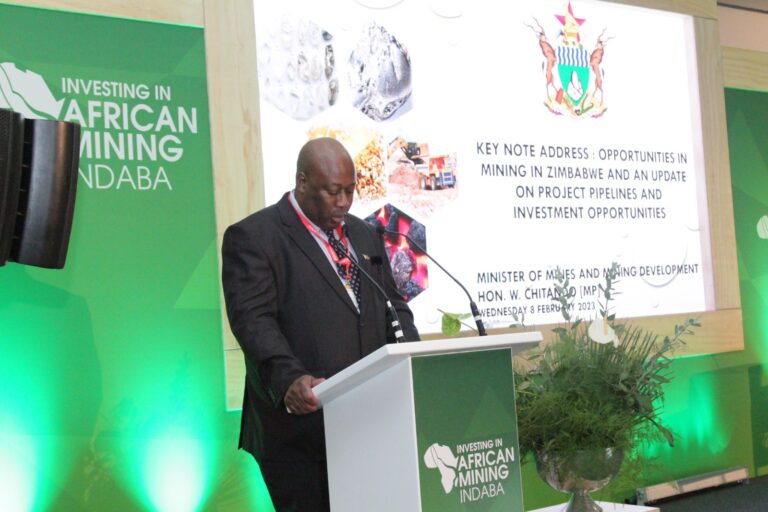
As the government is targeting to have a mining industry worth US$12bn by 2023 improved gold deliveries to FGR become significant. The Minister of Mines and Mining Development Hon Winston Chitando is confident that the target of 40 tonnes is achievable.

Minister Chitando said the government was optimistic gold output will reach 60 tonnes in 2022 and exceed 100 tonnes in 2023 following the mobilisation programme. The gold mobilisation programme, which seeks to enforce compliance by gold miners and buyers, increases accountability by stakeholders with the main goal of boosting gold deposits to FGR has fingerprints of the government all over in the achievement of the gold target.

“We are coming from a situation where we have a 2030 vision of Zimbabwe being a middle-income economy. We have at the same time the mining industry targeting to achieve US$12 billion and we are definite that we will achieve it by the end of next year. Specifically, today we are talking about gold and specifically gold mobilization.

“Taking a step back, last year we did well, 32 tonnes was good but it does not represent the full potential which the industry can deliver. This year as the Ministry responsible for Mines we are targeting gold deliveries of up to 60 tonnes,” Chitando said.

According to Chamber of Mines CEO Mr Isaac Kwesu, the target by FGR to mop gold of about 40 tonnes can be achieved due to the growing number of projects currently being developed. Kwesu also said that the government through the Ministry of Mines’ quest to mobilise gold and encourage miners to comply with the dictates of the law could also play a part in increasing deliveries.

“With the efforts to mobilise what is produced to be marketed through formal markets I think the target will be exceeded. There are a lot of projects underway, new projects as well as existing mines trying to increase capacity utilization. All this signals an increase in output for gold, so we are very optimistic,” Kwesu said.

Why are deliveries and production declining from the 2018 period?

In 2018, fidelity received a record 33.3 tonnes of gold deliveries with the United States Geological Survey reporting that a total of 35.1 tonnes was produced in the country the same year.

Experts have pointed to the rise in gold production from the period 2009-18 to currency stability coupled with 100 per cent forex retention which gave the miner increasing confidence to invest in the gold sector with a decline from 2018 attributed to policy inconsistency as well as poor foreign currency retention and rising inflation of the local currency.

Although gold is Zimbabwe’s top export, exports of yellow metal fell from US$1.64 billion in 2019 to US$981 million in 2020. The RBZ attributed the overall poor gold production in 2020 to COVID-19 lockdowns, suspected smuggling, fuel shortages, and antiquated technology.

Gold production and deliveries decline has been necessitated by the fact that Fidelity pays less than buyers in neighbouring South Africa and sometimes pays late. The partial payment in US dollar denominations and partially in Zimbabwe dollars determined by the official exchange rate is a catalyst to poor production and suspected smuggling.

The 60/40 forex retention is designed to save the central bank foreign exchange, something it has been perennially short of. But in the open market, the Zimbabwe dollar is worth less than half of its official value, causing huge losses to the miner.

The discrepancy means Fidelity pays substantially less for gold than international buyers, who tend to pay all in US dollars. The black market, where sellers can get straight US dollar payments immediately, therefore becomes an attractive option.

Before May 2020, large-scale miners were receiving 55 per cent of their payments in US dollars, which later increased to 70 per cent while small-scale miners were receiving 70 per cent later increased to 100 per cent spot but largely below international price. For large-scale producers, foreign currency is now back to 60 per cent in US dollars. The Chamber of Mines of Zimbabwe (COMZ), which is made up of mining companies and other industry bodies, has decried delays in payments from Fidelity saying they have been eroding producers’ profits.

According to Blanket Mine General Manager Mr Caxton Mangezi during Mines and Mining Development Parliamentary Portfolio Committee visit to the mine in November, the current foreign currency retention threshold for large-scale gold miners which is standing at 60 per cent is not sustainable for the growth and development of the mining sector and might lead miners to a possible shutdown of operations.

He said operational costs in local currency are increasing due to high inflation on the parallel market and the failure of the central bank to provide all suppliers with the required foreign currency at the auction rate. Mangezi said the retention was a form of the tax itself which makes it difficult for operations as costs are always rising due to inflation.

“One of the challenges that we are facing as a mine has to do with the 60/40 per cent gold retention. You could find that some miners could operate viably on a 60:40 basis but some of us could need 100 per cent forex retention due to the extent of our requirements. What we hope the Government will notice is that we comply with tax payments and as such once we also retain 100 per cent forex, that means we are also able to pay all our taxes in foreign currency,” he said at the time.

Steps by Fidelity to increase production and deliveries

Fidelity announced in mid-2021 that it will combat these underlying issues by allowing large-scale gold mining companies to export a portion of their bullion directly. It expects this measure to increase production by allowing companies to secure funding in the form of gold loans. The gold buying and exporting company hopes that direct payments will help prevent the illegal export of gold, estimated at US$1.2 billion per year by small-scale miners who extract most of the country’s gold.

According to FGR Acting General Manager Peter Magaramombe achieving the 100 tonnes of gold production and the delivery target was possible but all stakeholders in the gold industry were supposed to work together to ensure that gold production increases at the same time deliveries to Fidelity increase.

He said that plans were in place for Fidelity to increase its presence in all active regions (more gold buying centres).

Magaramombe said FGR is in the process of finalising the mechanism that will result in purchasing 5 grams and below from the artisanal and small-scale miners as a measure to mop all the gold mined by the ASM which sometimes ends up in the hands of smugglers.

The upward price review (100% USD cash to small-scale miners) and reduction of royalty to 1 per cent for small-scale miners and artisanal miners have played a major role in boosting gold deliveries from the two groups.

FGR, according to Magaramombe, has already identified areas where gold buying centres will be established in the coming year to enhance accessibility and convenience to artisanal and small-scale mining groups.

Conclusion

There is a need by the government through the Ministry of Finance and Economic development to see through the plights of gold producers as this might derail or upset the achievement of the 40 tonnes gold target.

The formal market must be competitive for the government to achieve the targets projected.

Chamber of Mines CEO said that if the official markets continue to be disadvantageous to the miner there is a possibility of the miners downing tools or selling to informal markets.

“Voluntary compliance is an issue of market forces that ensures that miners are paid timeously at a fair price. And naturally, you have no incentive to participate in illegal markets when the formal market is competitive.

“Remember, we account for gold deliveries through Fidelity but some of the output that is being produced is not being delivered to fidelity. So if all output found its way to the formal market that would be a quick win,” Kwesu said.

Former Kuvimba CEO, David Brown dies

0

David Brown, a former Kuvimba Mining House CEO, current chairman of Northam Platinum and former Impala Platinum CEO, died of a heart attack this past Sunday. He was 59.

Brown was additionally the chairman of Northam Platinum and lead unbiased director of Vodacom Group in South Africa.

“I am shocked and saddened at the sudden passing of David, a stalwart of the Southern African mining industry. He was not only Chairman of Northam’s board but a friend and colleague. He worked at board level in the sector for more than 23 years. My fellow board members and executive team join me in extending our sincerest sympathy to his family and loved ones, friends and colleagues. David instinctively knew that people are at the centre of all things mining.  He will be sorely missed,” Paul Dunne, CEO, Northam, said.

“It’s with disappointment that Vodacom advises shareholders of the premature passing of David Brown,” the telecommunications firm stated in an announcement on Monday.

Brown died from a coronary heart assault, stated three individuals acquainted with the state of affairs, asking to not be identified.

His death comes as Northam Platinum is locked in a battle with rival Impala Platinum to take over Royal Bafokeng Platinum.

The mining veteran served as Chief finance officer and later CEO at Impala from 1999 to 2012, overseeing property in each South Africa and Zimbabwe. He has additionally led MC Mining, a coal producer.

He resigned as CEO at Kuvimba Mining however stayed on as a director at its Bindura Nickel Corp.

“It has always been my intention to transition from executive roles to non-executive roles. When I joined it was always understood that this was the process I wanted to follow,” Brown said at the time.

Brown also told a South African mining publication that Zimbabwe held great potential, but it had been frustrating as “people were not listening when they should”.

Khumo Shuenyane will take over the function of lead director at Vodacom, the corporate stated.

Zim satellite launch, an exploration learning curve

0

Zimbabwe is set to launch its first satellite into orbit next month in a major milestone expected to enhance mineral exploration as the nation hopes that the mining industry has a major responsibility in economic revival.

Rudairo Mapuranga

Through the National Development Strategy_1 (NDS-1) the mining sector is expected to become a US$12 billion annual earner by 2023 from annual revenue of less than US$3 billion in 2017. This, therefore, makes mineral exploration of greater importance in the establishment of world-class mines.

According to the chairperson of the Parliamentary Portfolio Committee on Mines and Mining Development Hon Edmond Mkaratigwa, the launching of Zimbabwe’s first satellite will come as a learning curve for the government to invest in modern exploration technologies.

“I am aware that the satellite launch is due as part of the government’s development strategy. I am further aware of its capabilities, which is part of the reasons for the decision to have it launched and incorporated into the national development strategy. That is part of the key government deliverables and enablers and we anticipate that we will make maximum use of the technologies. Exploration requires the right technologies and as we are just launching our first, it’s also a learning curve and we should remain realistic so as to continue improving ourselves and our growth,” Mkaratigwa said.

The launching of the country’s first satellite into orbit is also expected to enhance monitoring of environmental hazards and droughts, mapping human settlements and disease outbreaks, among many other capabilities.

Additionally, these developments are part of the country’s plan to catch up with other nations and become an upper-middle-class economy by 2030. Moreso, President Mnangagwa pledged more support to the newly commissioned agency to see the growth of a technology innovation environment that supports the development and use of new technologies.

“Congratulations and well done for this first national space project which lays the foundation for space and scientific programmes. This is indeed a major step in enhancing the deployment of earth observation technologies in supporting the National Development Strategy,” Mnangagwa, said at the launch of the Zimbabwe Science Park and commissioning of the Zimbabwe National Geospatial and Space Agency (ZNGSA) on 13th September in 2021.

Omnia declares R1.4bn dividend, runs a loss in Zim

0

JSE-listed chemicals manufacturing group Omnia Holdings experienced favourable market conditions in the agriculture and mining sectors in the financial year ended March 31, including high commodity prices, which helped boost its operating profit by 123% year-on-year to R1.7-billion.

The board declared a total shareholder distribution of R1.4-billion, comprising an ordinary dividend of 275c apiece and a special dividend of 525c apiece.

The company says its latest results reflect an exceptional operating performance, which was enhanced by diligent strategic execution.

“Our renewed and integrated operating model, manufacturing excellence and optimised supply chain enabled increased agility and responsiveness to achieve increased sales volumes, while disciplined cost and working capital management further supported cash generation and enhanced profitability in a challenging macroeconomic environment,” notes CEO Seelan Gobalsamy.

Earnings before interest, taxes, depreciation and amortisation from continuing operations and excluding Zimbabwe increased by 57% year-on-year to R2.5-billion.

Headline earnings a share came to 672c, which was an 86% increase compared with the prior financial year ended March 31, 2021.

The group explains that hyperinflation remains an issue in Zimbabwe, with seasonal fluctuations in inventory, creditors and debtors impacting the monetary gain on hyperinflation. A net impact of hyperinflation on foreign exchange losses of R41-million was recognised in the financial year.

The company’s operations in Zimbabwe experienced an operating loss of R129 million in the year under review, compared with a profit of R364 million reported in the prior fiscal year.

In the year under review, Omnia divested from Umongo Petroleum for a cash consideration of R1 billion, which, together with improved operating cash generation across the group, resulted in a cash position of R2.4-billion at the end of the period.

However, strong cash generation was slightly offset by net working capital from continuing operations, which increased by 18% to R3.3-billion in the reporting year.

The company continues to manage its working capital cycle and introducing supply chain finance.

From a growth perspective, CFO Stephan Serfontein tells a South African publication Engineering News & Mining Weekly that Omnia is focused on trialling new biological and organic products for registration in South Africa and globally, as well as developing AgTech innovations and alternative low carbon dioxide emulsion technology. He mentions that the company is growing its agricultural biological products footprint in Europe, Asia and Australia.

On the mining side, Omnia remains focused on growing in the Asian Pacific, North American and African markets, particularly in Indonesia and Canada.

The company’s 5 MW solar farm, which is being constructed at a plant in Sasolburg, is due for completion towards the end of June.

This while Omnia’s civil construction for a reverse osmosis plant has started and will be commissioned by the end of June.

OPERATIONS

Omnia’s Agriculture segment delivered a 44% increase in net revenue from continuing operations, excluding Zimbabwe, to R11.2-billion, and more than doubled its operating profit to R1.2-billion.

The company explains that favourable planting conditions and higher average agriculture commodity prices led to increased sales volumes, while optimised procurement and production efficiencies supported the robust performance.

Omnia adds that logistics remain a challenge globally owing to reduced availability of shipping capacity.

Demand for biostimulants in Australia was stable and customer demand was met despite logistics constraints. Sales into new territories in Brazil boosted revenues and margin growth from that region, while the Southern African Community Development (SADC) region benefitted from a focused market approach and a broader offering.

Distribution and administration costs, as well as a fixed price contract in Zambia, did, however, place pressure on margins in the international agriculture business.

Looking ahead, customers are expected to adopt a cautious approach to early purchasing commitments for the coming season, which, together with higher commodity prices, may require increased stock levels.

Omnia explains that these demand dynamics will be carefully monitored and production plans will be appropriately aligned to respond to changing customer needs.

Consolidation and growth initiatives that have gained momentum will be prioritised across the SADC region.

Demand for biological products and technology solutions has been stimulated by technological advancements and adoption in the agriculture sector.

Omnia is looking to capitalise on these developments and remains focused on expanding its global biostimulant footprint through new distribution channels and strategic international partnerships.

The group’s investments in increasing humates production capacity will service this demand.

Meanwhile, the mining segment delivered a 29% increase in net revenue to R6.7-billion, supported by an increase in sales volumes in South Africa and the rest of Africa and a higher ammonia price environment.

A renewed focus on operating efficiencies drove an operating profit increase of 79% year-on-year to R514-million.

Mining in South Africa, in particular, delivered a robust performance, despite a highly competitive environment and lower mining production owing to inclement weather for most of the second half of the year.

Operational efficiencies, market expansion in the surface and underground segments and gains from large customer contracts underpinned the solid performance.

Mining production in Indonesia and the SADC was also disrupted by inclement weather.

Notwithstanding the volatile macro-environment, compounded by the impact of the Russia/Ukraine conflict and global supply chain challenges, the international division ensured that security of supply was maintained.

Further, Omnia notes that the majority of a large customer contract was retained in Zambia which contributed to the increase in volumes while sustainable localised business partnership models were implemented in the rest of the SADC and a three-year contract extension was secured with the division’s largest customer in West Africa.

In Canada, trials of technology and explosives systems in the underground market were successfully run and the transitioning for a major surface contract was starting to begin operations in the new financial year.

Protea Mining Chemicals’ strong performance was supported by robust growth in the battery metals and platinum group metal markets, which reinforced demand for its specialised metallurgical chemicals and services.

Increased sales of high-performance products and solutions in export markets, demonstrated sound supply chain management and security of supply for customers.

“The mining segment remains agile and well-positioned to continue overcoming challenges to deliver its diverse and reliable product and service offering to its customers.

“Current higher metal commodity prices bode well for mining production, globally, while some countries in SADC have seen a revitalisation of their mining activities resulting in strong demand,” the company states.

Further, net revenue from continuing operations in the Chemicals segment increased by 2% year-on-year to R3 billion and operating profit from continuing operations increased by 41% to R142 million.

Notwithstanding Covid-19-related supply chain challenges, shortages in chemicals in the second half and higher energy costs, Protea Chemicals delivered a resilient performance.

Omnia’s repositioning of the Chemicals segment in the first half of the year to focus on key strategic sectors and customer service, saw the business deliver a substantially improved performance. This was underpinned by the strength of Protea Chemicals’ supply chain capabilities, distribution footprint and ongoing transition to speciality chemicals and associated services.

Certain sectors within the business segment were affected more than others by Covid-19. The company explains that demand was maintained in the Hygiene and Health Care, Food and Pharma, and the Building and Construction sectors, while the profitability of the Agri Science business improved owing to robust demand.

The Life Science sector increased volume in the Food and Beverage subsector and a strong performance was delivered by the Watercare Solutions sector owing to increased demand for coagulants on the back of the heavy rains across South Africa.

Omnia says higher margins were supported by an improved speciality-functional chemical product mix and disciplined cost containment, which improved operational efficiencies.

After its restructure and repositioning, Protea Chemicals is now focused on speciality chemical products and solutions to deliver value for its customers across key sectors, which combined with a reliable and cost-effective supply chain, is anticipated to unlock growth.

The development of green, environment-friendly and alternative chemistries and technologies across key sectors is gaining momentum, while collaboration with partners in the hydrogen fuel cell market in the region is ongoing.

The company concludes that it will continue taking advantage of value-accretive growth opportunities, navigating headwinds and honouring commitments to stakeholders.

CHAIRPERSON INCOMING

Omnia has appointed Tina Eboka as chairperson-designate, who will succeed Ralph Havensteineffectively on September 21.

Havenstein will be retiring after serving for three years as chairperson of the group.

Eboka has served as an independent non-executive director of Omnia for more than six years. Her experience extends across both the private and public sectors, having served in various executive and non-executive roles in many industries.


Mnangagwa urges Bikita Minerals to Prioritise ESG, Value addition

0

As Bikita Minerals eyes becoming a global kingpin in the production of Lithium spodumene, President Emmerson Mnangagwa beseeched the company to prioritize value addition, beneficiation and investing in Environment, Social and Governance (ESG) for the country to benefit significantly from the lithium at the mine.

Rudairo Mapuranga

China’s Sinomine Resource Group, the owners of Bikita Minerals who early this year acquired the project, will invest US$200 million to build a plant and expand its existing mining operations as they seek to play a significant role in the achievement of the US$0.5 billion lithium industry by 2023.

Speaking at the groundbreaking Ceremony of Bikita Minerals Spodumene project last Friday, the President hinted that the company has the potential to emerge as a key player in the rise and popularity of the battery manufacturing industry. However, he also expressed concern that the company should not benefit alone from global achievement but the community in which it is located should also benefit.

He said that his government has implored the company, to prioritize the Bikita community as it mines in its environment and urged the company to take its workers and environment with great care.

“We have told them that under the second Republic we would want to see that lithium is essential to the growth and development of Zimbabwe’s economy. They told us that after two years the company will be generating US$500 million annually. We will come back here after two years to see what they could have done for the people.

“Companies are challenged to listen to their host communities and address their concerns. Communities must equally appreciate that investors are indispensable partners to the realisation of sustainable development and a higher quality of life for all.

“Mining companies must be good corporate responsible citizens, with Corporate Social, Environmental Social, and Governance aspects being critical components of their entities. Tangible socio-economic advantages and benefits should accrue to societies in which they operate. In undertaking their ventures, companies are challenged to listen to their host communities and address their concerns. Communities must on the other hand, equally appreciate that investors are indispensable partners in the realisation of sustainable development and a higher quality of life,

“For greater harmony and unity of purpose, mechanisms should be developed to improve transparency and accountability so that aspects of the project are understood, while grievances are heard and addressed. “The safety and treatment of employees is also a key component. Mining companies must strive to be model employers by treating and remunerating their workers appropriately,” Mnangagwa said.

In line with the Government’s minerals beneficiation thrust under which the Second Republic has given companies a minimum of two years to add value to minerals to ensure that Zimbabwe exports processed products and earns more from its rich mineral resources. President Mnangagwa said after making profits, mining companies should implement corporate social responsibility programmes toward creating a lasting legacy in their host communities.

“It is most fortunate that Zimbabwe boasts one of the world’s largest hard rock lithium deposits. As such our country is well-positioned to become a centre for research, development, exploitation and manufacturing of green energy and lithium-based solutions in Africa,

“The Bikita Minerals’ Spodumene Project is timely as spodumene is the main lithium-bearing mineral currently being explored and processed around the globe, due to its high lithium content and extensive occurrence

“It is my expectation that the development of the lithium mining sector in Zimbabwe will lead to the growth of value chain linkages in the manufacturing industry.

“I exhort mining companies across the country, including Sinomine Resource Group, to create synergies with the innovation hubs and industrial parks at our institutions of higher learning,” President Mnangagwa said.

According to Mnangagwa Bikita Minerals presents far-reaching possibilities as lithium and its compounds have several industrial applications that include use in the manufacture of heat-resistant glass and ceramics, lithium grease lubricants, flux additives for iron, steel and aluminium production, air treatment, as well as lithium batteries, among others.

“I, therefore, urge players in the lithium mining sub-sector to strategically position their business models informed by the fact that lithium demand will continue rising, particularly premised on the growing demand for electric vehicles. To date, this surge in demand has resulted in lithium prices skyrocketing over the past year thereby offering scope for increased investment in the sector,”

“It is my expectation that the development of the lithium mining sector in Zimbabwe will lead to the growth of value chain linkages in the manufacturing industry. This should translate into expanded local production of renewable energy technologies, ceramics, glass, lubricants and polymers, among other products. The investment by Sinomine Resource Group should, thus, not only end in the production of spodumene but should graduate to the production of battery-grade lithium and ultimately lithium-ion battery manufacturing entities,” Mnangagwa concluded.

Bikita Minerals acquisition a game changer – Isaac Kwesu

0

The acquisition of one of the country’s oldest mines by Chinese-owned Sinomine Resource Group is a game changer towards the achievement of the US$12 Billion mining industry, the Chamber of Mines of Zimbabwe CEO Mr Isaac Kwesu has said.

Rudairo Mapuranga

China’s Sinomine said the company will invest US$200 million to build a plant and expand its existing mining operations as they seek to play a significant role in the achievement of the US$0.5 billion lithium industry by 2023.

According to Kwesu, the coming in of Sinomine at Bikita Minerals will benefit Zimbabwe in the achievement of the country’s lithium development as the mine according to President Mnangagwa has the potential to become a global kingpin in the Li-ion battery making industry.

“The coming in of Sinomine is a massively positive development to the community and country at large let alone our mining sector to achieve US$12 billion mark as announced by the government. The mining industry is very illuminated with this massive project. Lithium is key in the beneficiation and value addition goals of the country and it will go a long way in assuring that the mining value chain has strong linkages to the manufacturing sector when it comes to the role of lithium in battery making. The Sinomine project will go a long way in assuring that Zimbabwe achieves its social-economic development agenda for mining,” Kwesu said.

Wang Pingwei, director of Sinomine Group, said the company is poised to play a bigger role in the development of a lithium value addition in Zimbabwe.

“In order to promote resource value, generate tax income and bring employment opportunities for the local communities, Sinomine has decided to invest 200 million U.S. dollars in phase one to renovate the existing facilities and build a new processing line with a capacity of up to 2 million metric tons per year,” Wang said. “When fully operational, Bikita Minerals will achieve an annual income of approximately 600 million U.S. dollars, over 15 million U.S. dollars in taxes, and create more than 1,000 job opportunities.”

Vice President Retired General Constantino Chiwenga said the country should maximize its rich lithium deposits to position itself as a player in new technologies.

“The lithium subsector should prioritize the development of a lithium-ion battery value chain. This would accelerate Zimbabwe’s transition to clean energy while also ensuring the strategic position in the global lithium-ion battery markets,” he said.

Chiwenga said the lithium subsector gives numerous opportunities to explore, which would create jobs and generate income for the country.

Zimbabwe possesses Africa’s largest lithium reserves and the fifth-largest globally. The growing global demand for electric vehicles and renewable energy has seen Chinese and American companies investing in lithium mining in recent years.

Zimplow records growth across segments

0

ZIMPLOW Holdings Limited (ZHL) recorded a 5% and 48% growth in revenue and profitability, respectively, in the first quarter as the company leans ‘pockets of opportunities in the market.

ZHL, a leading manufacturer and distributor of equipment in agriculture, mining, construction and power systems sectors, says despite foreign currency challenges in the first quarter it managed to take advantage of arising opportunities.

In its first-quarter trading update for the year, ZHL said it had experienced various problems due to the inflationary environment that rose 72,2% by the end of the period from 60,7% in December 2021.

“The group recorded a 5% and 48% growth in revenue and profitability in real terms respectively, despite the challenges obtaining in the domestic operating environment,” ZHL said.

“The board is encouraged by the resilient performance as Management continues to take advantage of pockets of opportunities in the market given the diversified structure of the group.”

ZHL said the first quarter of 2022 was characterised by foreign currency shortages culminating in exchange rate volatility and inflationary pressures, proving that the forex auction platform is moot.

Of all its segments, foreign currency shortages resulted in depressed volumes at ZHL’s earthmoving equipment subsidiary, Barzem, that was down 88% from the 2021 first quarter.

“The rate of inflation rose to 72.2% in March 2022 from 60.7% in December 2021. On the agricultural side, the softening of producer prices, together with the lower-than-expected rainfall for the 2021/22 season affected yields which gave rise to reduced disposal income by the farmer,” ZHL said.

“In addition, the Russia/Ukraine conflict continues to affect supply chains which in turn have resulted in a significant increase in input and operating costs, especially for those relying on fuel and fertilisers in their value chains. The power supply grid has been erratic, resulting in increased reliance on alternative power.”

For its agricultural segment, under its Farmec business unit, ZHL reported that the sale of tractors and implements volumes increased by 53% and 13% respectively. Meanwhile, parts sales and service capacity utilisation increased by 7% and 51%, respectively, against the comparative period.

ZHL’s Mealie Brand unit saw export implement volumes being up 26% in the period under review, from a 2021 comparative, despite local implements volumes dropping by 15% compared to last year.

The local business dropped to erratic rainfall and the hyperinflationary environment.

Under ZHL’s mining and infrastructure division, the CT Bolts division saw tonnage increase by 25% in fasteners sold, compared to the same period in the prior year.

In terms of ZHL’s Powermec subsidiary, a company that supplies agricultural equipment, national power cuts in the first quarter boosted sales.

“Volumes in gen-sets and solar equipment were 44% ahead of prior year whilst capacity utilisation increased by 71%. The top line improved by 230% in comparison to the same period in the prior year,” ZHL said.

Under ZHL’s logistics and automotive segment, its subsidiary, Scanlink, grew revenue by 64% in compared to the 2021 first quarter, on the back of a strong after-sales performance.

Meanwhile, Trentyre’s performance came at the back of significant supply chain realignments took a 14% drop in revenue as company recorded 21% growth in off the road tyres, lower than prior year performance for the commercial and consumer tyres.

“The steps taken by the Board which included the realignment of the Executive Management structure to Group strategy and the leveraging upon Group synergies has propelled the Group to a position of being a one stop shop for its customer base,” ZHL said, in an outlook.

“In addition, the new positioning in the earth moving market is expected to unlock the Group’s capability, infrastructure and expertise to deliver sustainable returns and fulfil value preservation objectives for all our stakeholders.”

Zimplats holds a safety symposium

0

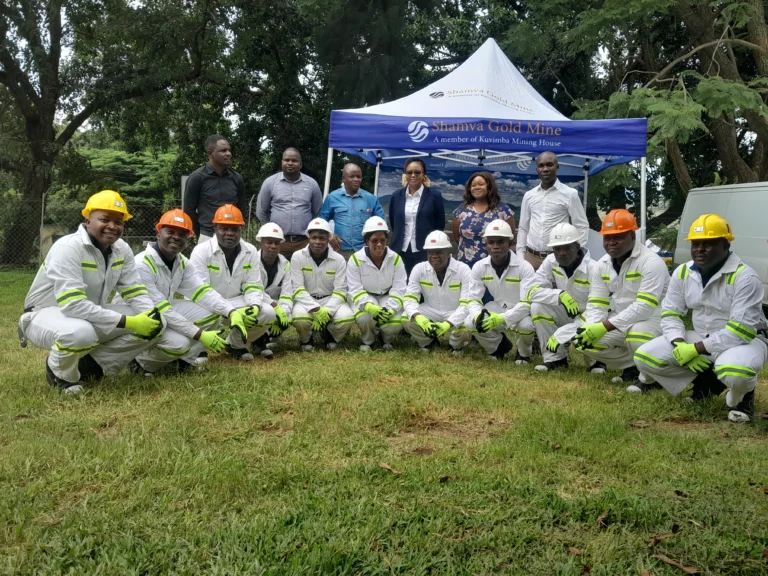
Zimplats held a safety symposium on the 16th of June 2022, for contractors who will be working with the company on various aspects of its $1.8bn expansion programme.

More than 160 participants representing over 70 contractors attended the symposium that was held at the company’s premises in Mhondoro- Ngezi. Zimplats is undertaking a US$1.8 billion expansion programme comprising nine projects which will be implemented over a 10-year period These include:

  • Development of Mupani mine to replace Rukodzi and Ngwarati mines at a cost of US$388 million.
  • Construction of a third Concentrator Plant at a cost of US$133million with nameplate capacity of 0.9Mtpa. Project is scheduled for commissioning in first-quarter FY2023
  • Implementation of the SMC concentrator tailings dam extension project to sustain the operation at the termination of the existing tailings storage facility (TSF) when it reaches its maximum design height of 43m.
  • Sulphur dioxide (SO2) emissions abatement (US$200m) and Smelter expansion (US$280m) projects at SMC
  • Platinum Group Metals (PGM) Base Metal refinery plant at SMC (US$200m)
  • Implementation of employee houses project in Turf, an additional 1052 houses and 340 houses in Chegutu (for SMC employees) at a cost of US$20m
  • 110 MWAC Solar power plant (US$201m), investment in the development of a 185MW solar photovoltaic plant
  • Hartley mine development (US$289m), to increase overall Zimplats ore production to 8.8Mtpa by FY2028.
  • Bimha mine upgrade (US$82m).

Zimplats believes that safety is of paramount importance in the rollout of these projects and that it is imperative to the attainment of sustainable business.

The expansion programme will bring together a significant number of contractors. Zimplats currently has nearly 7000 employees working at both the company’s Ngezi and Selous sites. Three thousand and five hundred of these are contract employees and the numbers are expected to double over the next five years.

Participants at the symposium were encouraged to invest in recognised systems, cultivating safe employee behaviour and creating a workplace environment that promotes safety.

Speaking at the symposium, the Managing Director for Zimplats, Mr Stanley Segula said, ‘as you bring together diverse business and safety cultures, there is need to align and ensure a common vision in the quest for zero harm.  We have embarked on a journey that will create measurable value for our stakeholders and on our country’s economy. We cannot travel this journey alone; we need to carry all our key stakeholders, including contractors, on board with us” as we seek to create a better future through the metals we produce and the way in which we do business.

He paid tribute to all the contractor company CEOs, M.D’s and senior management who attended the symposium, stating that,” for safety systems to work optimally and for zero harm to be achievable, company leaders need to be the drivers.  If all contractors working with Zimplats are committed to the safety agenda, we can deliver the various projects ahead of us safely..

Responding to the various presentations, a contractor representative commented, ‘Zero harm can be achieved by carrying out all risk assessments on all tasks and adhering to set standards and procedures. It’s about commitment and perseverance.”

At the end of the symposium, all the contractor companies signed a pledge committing to lead by example in cultivating a safe production culture, promoting values of respect, care and delivery, and supporting the quest for sustainable zero harm whilst subscribing to the various quality systems that are the bedrock of Zimplats’ operations.  The leaders also committed to enforce zero tolerance for any breaches of standards and procedures.

Bikita Minerals key in global battery industry revolution

0
Lithium-producer, Bikita Minerals has the potential to emerge as a key player in the rise and popularity of the battery manufacturing industry, President Emmerson Mnangagwa has hinted.
Rudairo Mapuranga
The President speaking at the groundbreaking ceremony of the Bikita Minerals Spodumene project in Bikita, Masvingo yesterday, said the mine will establish itself as significant in the battery manufacturing sector.
“With its investment Bikita Minerals will emerge as a key player in the battery manufacturing industry as well as other industries along the value chain,” President Mnangagwa said.
China Sinomine Resource Group, the owners who early this year acquired the project will invest US$200 million to build a plant and expand its existing mining operations as they seek to play a significant role in the achievement of the US$0.5 billion lithium industry by 2023.
For years Bikita Minerals has played an important role in global lithium production and is ranked as the fifth biggest lithium producer.
According to the Minister of Mines and Mining Development Hon Winston Chitando, the emergency of Sinomine at Bikita has seen the mine proving to be very significant in the lithium industry.
“Since Sinomine acquisition of Bikita Minerals, the firm has invested further in lithium exploration right now they have 7 drill rigs which are working in the concession.
“Sinomine has taken efforts to optimize what is on the ground and right now we have exports permits of Bikita Minerals which amount to US$40 million more than doubting the highest peak produced by Bikita over the past 5 years,” Minister Chitando said.